Beca Safety in Design (SiD) for 
NZ Industry 
Presentation to OHSIG Conference 
10th September 2014 
Jack Donaghy
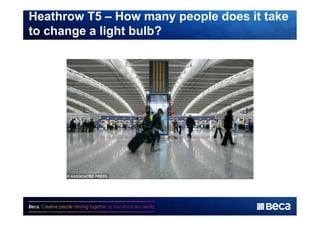
Heathrow T5 – How many people does it take 
to change a light bulb?
Agenda 
§ What is Safety in Design? 
§ Practical applications 
§ Why do SiD? 
§ Changing Legislative Environment 
§ Summary 
§ Questions
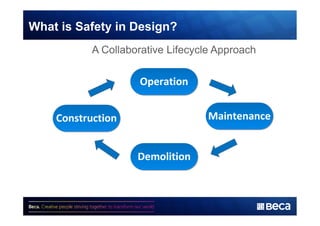
What is Safety in Design? 
A Collaborative Lifecycle Approach
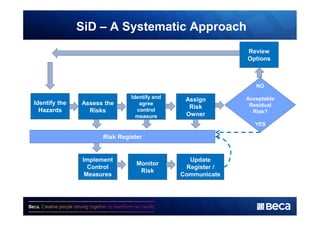
SiD – A Systematic Approach 
Identify the 
Hazards 
Assess the 
Risks 
Identify and 
agree 
control 
measure 
Implement 
Control 
Measures 
Monitor 
Risk 
Assign 
Risk 
Owner 
Update 
Register / 
Communicate 
Risk Register 
Review 
Options 
NO 
Acceptable 
Residual 
Risk? 
YES
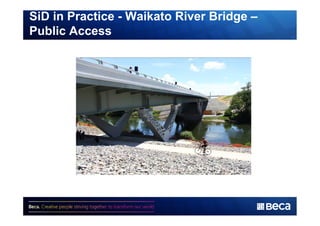
SiD in Practice - Waikato River Bridge – 
Public Access
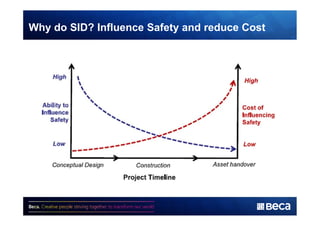
Why do SID? Influence Safety and reduce Cost
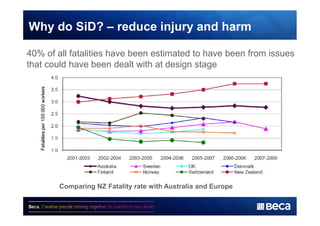
Why do SiD? – reduce injury and harm 
40% of all fatalities have been estimated to have been from issues 
that could have been dealt with at design stage 
Comparing NZ Fatality rate with Australia and Europe
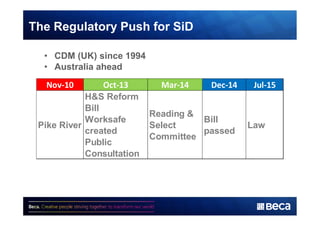
The Regulatory Push for SiD 
• CDM (UK) since 1994 
• Australia ahead 
Nov-10 Oct-13 Mar-14 Dec-14 Jul-15 
Pike River 
H&S Reform 
Bill 
Worksafe 
created 
Public 
Consultation 
Reading & 
Select 
Committee 
Bill 
passed Law
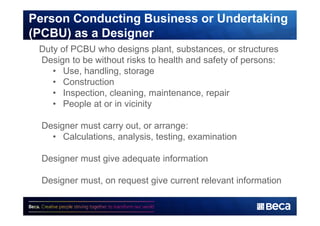
Person Conducting Business or Undertaking 
(PCBU) as a Designer 
Duty of PCBU who designs plant, substances, or structures 
Design to be without risks to health and safety of persons: 
• Use, handling, storage 
• Construction 
• Inspection, cleaning, maintenance, repair 
• People at or in vicinity 
Designer must carry out, or arrange: 
• Calculations, analysis, testing, examination 
Designer must give adequate information 
Designer must, on request give current relevant information
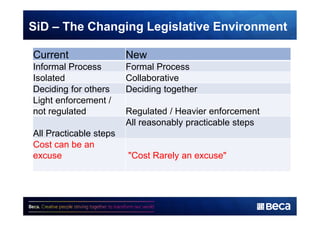
SiD – The Changing Legislative Environment 
Current New 
Informal Process Formal Process 
Isolated Collaborative 
Deciding for others Deciding together 
Light enforcement / 
not regulated Regulated / Heavier enforcement 
All reasonably practicable steps 
All Practicable steps 
Cost can be an 
excuse "Cost Rarely an excuse"
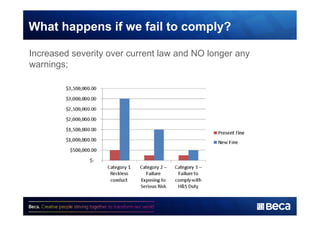
What happens if we fail to comply? 
Increased severity over current law and NO longer any 
warnings;
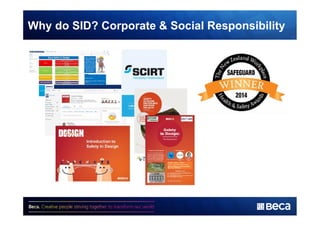
Why do SID? Corporate & Social Responsibility
Summary 
• Reduce potential injury and harm 
• Improved constructability and reduce whole of life 
costs 
• Systemised approach to record the decisions that 
will comply with new legislation 
• Examples that show value to the process are key in 
promoting SiD 
• Collaboration is key 
• Take Steps to be Ready Now
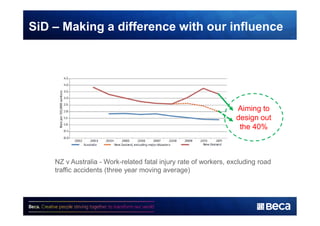
SiD – Making a difference with our influence 
Aiming to 
design out 
the 40% 
NZ v Australia - Work-related fatal injury rate of workers, excluding road 
traffic accidents (three year moving average)
Questions?

Safety in design for NZ industry

  • 1.
    Beca Safety inDesign (SiD) for NZ Industry Presentation to OHSIG Conference 10th September 2014 Jack Donaghy
  • 2.
    Heathrow T5 –How many people does it take to change a light bulb?
  • 3.
    Agenda § Whatis Safety in Design? § Practical applications § Why do SiD? § Changing Legislative Environment § Summary § Questions
  • 4.
    What is Safetyin Design? A Collaborative Lifecycle Approach
  • 5.
    SiD – ASystematic Approach Identify the Hazards Assess the Risks Identify and agree control measure Implement Control Measures Monitor Risk Assign Risk Owner Update Register / Communicate Risk Register Review Options NO Acceptable Residual Risk? YES
  • 6.
    SiD in Practice- Waikato River Bridge – Public Access
  • 7.
    Why do SID?Influence Safety and reduce Cost
  • 8.
    Why do SiD?– reduce injury and harm 40% of all fatalities have been estimated to have been from issues that could have been dealt with at design stage Comparing NZ Fatality rate with Australia and Europe
  • 9.
    The Regulatory Pushfor SiD • CDM (UK) since 1994 • Australia ahead Nov-10 Oct-13 Mar-14 Dec-14 Jul-15 Pike River H&S Reform Bill Worksafe created Public Consultation Reading & Select Committee Bill passed Law
  • 10.
    Person Conducting Businessor Undertaking (PCBU) as a Designer Duty of PCBU who designs plant, substances, or structures Design to be without risks to health and safety of persons: • Use, handling, storage • Construction • Inspection, cleaning, maintenance, repair • People at or in vicinity Designer must carry out, or arrange: • Calculations, analysis, testing, examination Designer must give adequate information Designer must, on request give current relevant information
  • 11.
    SiD – TheChanging Legislative Environment Current New Informal Process Formal Process Isolated Collaborative Deciding for others Deciding together Light enforcement / not regulated Regulated / Heavier enforcement All reasonably practicable steps All Practicable steps Cost can be an excuse "Cost Rarely an excuse"
  • 12.
    What happens ifwe fail to comply? Increased severity over current law and NO longer any warnings;
  • 13.
    Why do SID?Corporate & Social Responsibility
  • 14.
    Summary • Reducepotential injury and harm • Improved constructability and reduce whole of life costs • Systemised approach to record the decisions that will comply with new legislation • Examples that show value to the process are key in promoting SiD • Collaboration is key • Take Steps to be Ready Now
  • 15.
    SiD – Makinga difference with our influence Aiming to design out the 40% NZ v Australia - Work-related fatal injury rate of workers, excluding road traffic accidents (three year moving average)
  • 16.