Presented By : RajeshV. Chudasama
Subject
Fish By-Products and Waste Utilization (FPT - 304)
Fish liver oil
■ Therapeutic value of fish liver oils is known since very early days.
■ They are the most important sources of natural vitamins A and D.
However, with the advent of synthetic vitamin A at economic
price, liver oils lost their importance as source of vitamin A. Still
they are considered good source of vitamin D.
Classification of Livers
■ Weight of the liver, fat content and vitamin content depend on the species of fish, their age,
nutritional status ' and stage of spawning.
■ In cod and haddock, the liver accounts for 4 -9 per cent by weight of the whole fish, and the
liver contains as high as 45~70 per cent oil.
■ Liver accounts for as much as 10-25 per cent of the body weight in some species of sharks
which have large fatty liver having very high oil content in the range 60-75 per cent.
■ In halibut, tuna and whale the ‘liver amounts to 1 per cent of the body weight and contains 4-
25 per cent oil having high vitaminA and D potency.
■ Depending on oil and vitamin contents fish liver is classified into three groups viz.
High oil - low vitaminA potency
Low oil - high vitaminA potency
High oil - high vitamin A potency
Preservation of Liver
■ The golden rule to produce high quality light coloured oil with good odour, flavour and, containing
minimum free fatty acids is that the liver be removed from the fish and processed as quickly as
possible after catch. Fish liver is very susceptible to bacterial and lipolysis degradation. The method of
preservation chosen’ shall take into consideration these aspects as well as the length of preservation
needed.The liver may be separated. From the fish and preserved by one of the following methods;
■ Store in crushed ice in cold room.This will preserve the liver for a couple of days.
■ Store in frozen storage maintained at -18°C or belowThis can ensure safe storage for several months
■ Ther methods suggested for temporary preservation, of fish liver include the following :
■ Chopping the liver into small pieces, mixing with 10 per cent by weight of common salt and storing in
air-free air tight container.
■ Grindingthe liver and preserving with 0.25 per cent of its weight of formalin.
■ Grinding the liver and keeping in aqueous solution of 2 per cent sodium carbonate containing some
germicide like formaldehyde, phenol, resorcinol or alcohol.
Extraction of Oil
■ As fish livers differ widely in their oil content and vitamin potency the process
employed also may differ to suit the particular type of liver Extreme care is
needed in processing liver with low oil content of high vitamin potency where
the oil and the vitamin lire held closely connected to the proteinaceous
tissues of the liver.
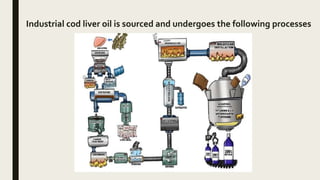
Industrial cod liver oil is sourced and undergoes the following processes
(a). Sourcing the Fish.
■ Depending on the producer, commercial cod liver oil could come from actual wild-caught cod, or it
could come from pollock or haddock (sourced from Alaska and/or Russia) or other fish species, both
wild-caught and farmed.
■ The international production of cod liver oil is regulated by only one rule—the final product must
match the specific EPA/DHA ratio found in raw cod liver oil. Cod liver oil contains about 9% EPA and
14% DHA, whereas fish oil generally contains about 18% EPA and 12% DHA. Cheaper oils are often
added to achieve the correct EPA/DHA balance.The oil, regardless of the country of origin, is then
bottled and sold as true Norwegian orArctic cod liver oil.

Fish Liver Oil.pptx

  • 1.
    Presented By :RajeshV. Chudasama Subject Fish By-Products and Waste Utilization (FPT - 304) Fish liver oil
  • 2.
    ■ Therapeutic valueof fish liver oils is known since very early days. ■ They are the most important sources of natural vitamins A and D. However, with the advent of synthetic vitamin A at economic price, liver oils lost their importance as source of vitamin A. Still they are considered good source of vitamin D.
  • 3.
    Classification of Livers ■Weight of the liver, fat content and vitamin content depend on the species of fish, their age, nutritional status ' and stage of spawning. ■ In cod and haddock, the liver accounts for 4 -9 per cent by weight of the whole fish, and the liver contains as high as 45~70 per cent oil. ■ Liver accounts for as much as 10-25 per cent of the body weight in some species of sharks which have large fatty liver having very high oil content in the range 60-75 per cent. ■ In halibut, tuna and whale the ‘liver amounts to 1 per cent of the body weight and contains 4- 25 per cent oil having high vitaminA and D potency. ■ Depending on oil and vitamin contents fish liver is classified into three groups viz. High oil - low vitaminA potency Low oil - high vitaminA potency High oil - high vitamin A potency
  • 4.
    Preservation of Liver ■The golden rule to produce high quality light coloured oil with good odour, flavour and, containing minimum free fatty acids is that the liver be removed from the fish and processed as quickly as possible after catch. Fish liver is very susceptible to bacterial and lipolysis degradation. The method of preservation chosen’ shall take into consideration these aspects as well as the length of preservation needed.The liver may be separated. From the fish and preserved by one of the following methods; ■ Store in crushed ice in cold room.This will preserve the liver for a couple of days. ■ Store in frozen storage maintained at -18°C or belowThis can ensure safe storage for several months ■ Ther methods suggested for temporary preservation, of fish liver include the following : ■ Chopping the liver into small pieces, mixing with 10 per cent by weight of common salt and storing in air-free air tight container. ■ Grindingthe liver and preserving with 0.25 per cent of its weight of formalin. ■ Grinding the liver and keeping in aqueous solution of 2 per cent sodium carbonate containing some germicide like formaldehyde, phenol, resorcinol or alcohol.
  • 5.
    Extraction of Oil ■As fish livers differ widely in their oil content and vitamin potency the process employed also may differ to suit the particular type of liver Extreme care is needed in processing liver with low oil content of high vitamin potency where the oil and the vitamin lire held closely connected to the proteinaceous tissues of the liver.
  • 6.
    Industrial cod liveroil is sourced and undergoes the following processes
  • 7.
    (a). Sourcing theFish. ■ Depending on the producer, commercial cod liver oil could come from actual wild-caught cod, or it could come from pollock or haddock (sourced from Alaska and/or Russia) or other fish species, both wild-caught and farmed. ■ The international production of cod liver oil is regulated by only one rule—the final product must match the specific EPA/DHA ratio found in raw cod liver oil. Cod liver oil contains about 9% EPA and 14% DHA, whereas fish oil generally contains about 18% EPA and 12% DHA. Cheaper oils are often added to achieve the correct EPA/DHA balance.The oil, regardless of the country of origin, is then bottled and sold as true Norwegian orArctic cod liver oil.