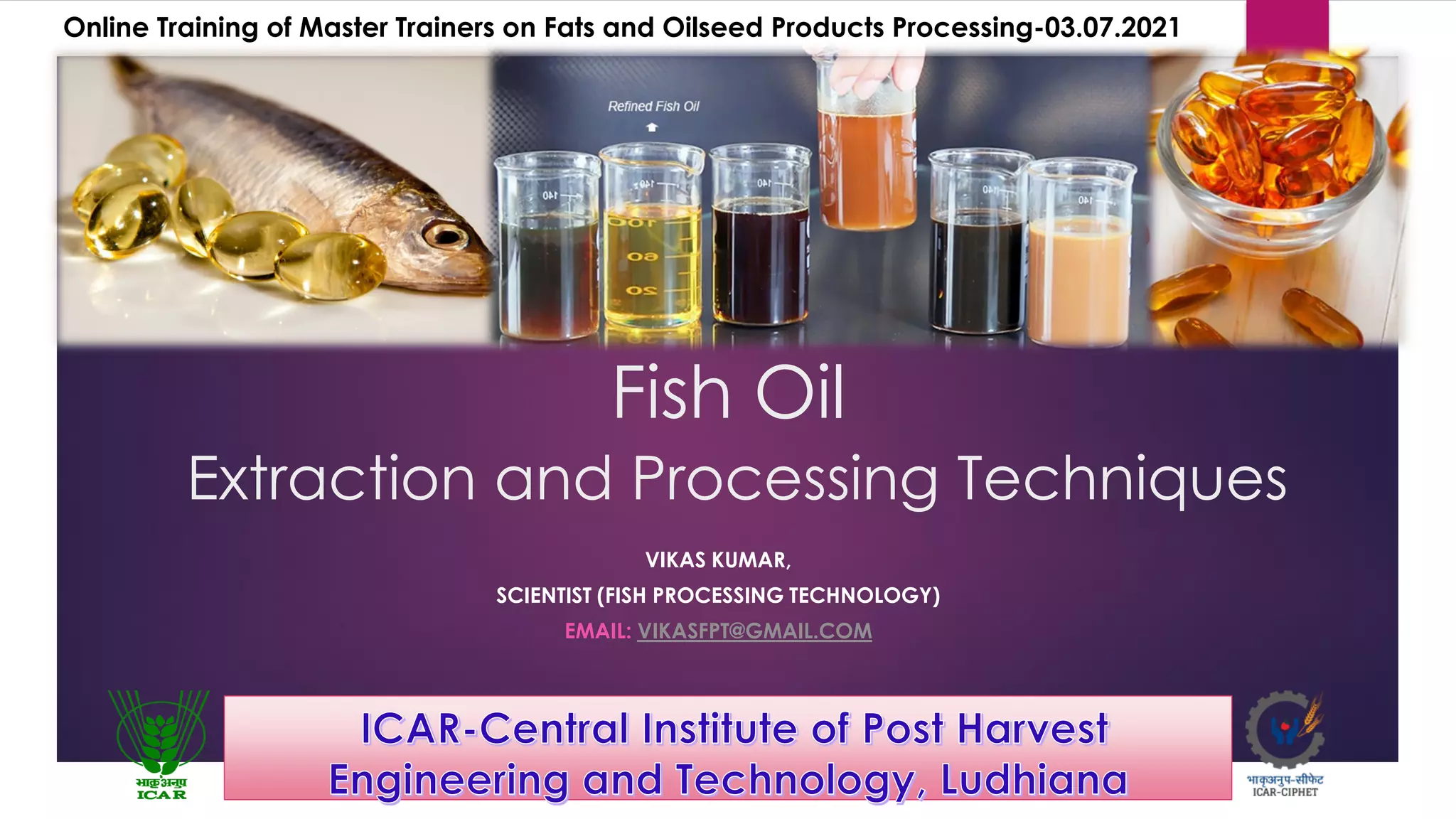
Fish Oil
Extraction and Processing Techniques
VIKAS KUMAR,
SCIENTIST (FISH PROCESSING TECHNOLOGY)
EMAIL: VIKASFPT@GMAIL.COM
Online Training of Master Trainers on Fats and Oilseed Products Processing-03.07.2021
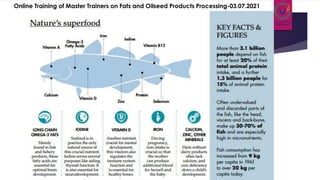
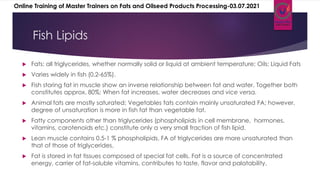
Fish Lipids
 Fats: all triglycerides, whether normally solid or liquid at ambient temperature; Oils: Liquid Fats
 Varies widely in fish (0.2-65%).
 Fish storing fat in muscle show an inverse relationship between fat and water. Together both
constitutes approx. 80%; When fat increases, water decreases and vice versa.
 Animal fats are mostly saturated; Vegetables fats contain mainly unsaturated FA; however,
degree of unsaturation is more in fish fat than vegetable fat.
 Fatty components other than triglycerides (phospholipids in cell membrane, hormones,
vitamins, carotenoids etc.) constitute only a very small fraction of fish lipid.
 Lean muscle contains 0.5-1 % phospholipids. FA of triglycerides are more unsaturated than
that of those of triglycerides.
 Fat is stored in fat tissues composed of special fat cells. Fat is a source of concentrated
energy, carrier of fat-soluble vitamins, contributes to taste, flavor and palatability.
Online Training of Master Trainers on Fats and Oilseed Products Processing-03.07.2021
Classification of fish based on lipid content
 Lean: <0.5% lipid; Semi-fatty: 05.-2 %; Fatty: >2%
 Unlike lean and semi-fatty fish, fat content of fatty fish exhibit wide fluctuations
depending on growth, maturity, feeding, spawning etc.
 Even numbered FAs are found in fatty fish: though odd numbered and
branched chain FA are not uncommon.
 Most of tropical fish (except pelagic species: sardine, mackerel, tuna etc.)
belong to low-fat and high-protein category.
Online Training of Master Trainers on Fats and Oilseed Products Processing-03.07.2021
Anatomical distribution of fats in fish
 Higher Fat (%) is always seen in ventral side than dorsal.
 Fat content can be seen to increase towards tail region and also from interior towards
exterior; Higher fat in tail region supports increased needs of energy for swimming;
Higher fat store on ventral region favours to reduce drag during swimming.
 In lean fish, the dark (red or lateral line) muscle has about twice the lipid of white
muscle.
 The lean muscle fish generally have more fat in livers (e.g. cod) which show seasonal
variation. In the fatty fish species, the muscle shows fluctuating levels of seasonal
variation in neutral fat.
 Fish fat is mainly found in dark muscle just below skin and in lateral line area. Some fish
stores fat in liver, others in head, peritoneum and belly flap.
Online Training of Master Trainers on Fats and Oilseed Products Processing-03.07.2021
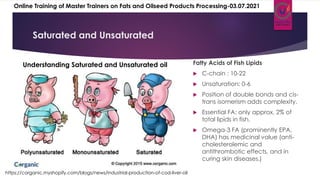
Saturated and Unsaturated
https://corganic.myshopify.com/blogs/news/industrial-production-of-cod-liver-oil
Fatty Acids of Fish Lipids
 C-chain : 10-22
 Unsaturation: 0-6
 Position of double bonds and cis-
trans isomerism adds complexity.
 Essential FA: only approx. 2% of
total lipids in fish.
 Omega-3 FA (prominently EPA,
DHA) has medicinal value (anti-
cholesterolemic and
antithrombotic effects, and in
curing skin diseases.)
Understanding Saturated and Unsaturated oil
Online Training of Master Trainers on Fats and Oilseed Products Processing-03.07.2021
General Characteristics of fish lipids
 Most of FA, whether saturated or unsaturated, have even no. of C-atoms in the molecules.
 Polyunsaturated double bonds are separated by methylene group and have cis-trans
configuration.
 Proportion of trans isomers, though thermodynamically more stable, is very negligible.
 Polyunsaturation with 5 or 6 double bonds per molecule: very common in fish unlike in other
plants/animals.
 Proportion of individual FA may vary sps. to sps.
FA in Indian water fish
 Important saturated FA: Myristic, palmitic and Stearic acid.
 Monounsaturated FA: Palmitoleic and Oleic acid
 Polyunsatuared FA: Arachidonic acid, Eicosapentaenoic Acid, Decosahexaenoic Acid
Online Training of Master Trainers on Fats and Oilseed Products Processing-03.07.2021
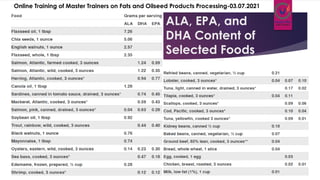
ALA, EPA, and
DHA Content of
Selected Foods
Online Training of Master Trainers on Fats and Oilseed Products Processing-03.07.2021
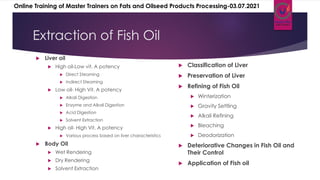
Extraction of Fish Oil
 Liver oil
 High oil-Low vit. A potency
 Direct Steaming
 Indirect Steaming
 Low oil- High Vit. A potency
 Alkali Digestion
 Enzyme and Alkali Digestion
 Acid Digestion
 Solvent Extraction
 High oil- High Vit. A potency
 Various process based on liver characteristics
 Body Oil
 Wet Rendering
 Dry Rendering
 Solvent Extraction
 Classification of Liver
 Preservation of Liver
 Refining of Fish Oil
 Winterization
 Gravity Settling
 Alkali Refining
 Bleaching
 Deodorization
 Deteriorative Changes in Fish Oil and
Their Control
 Application of Fish oil
Online Training of Master Trainers on Fats and Oilseed Products Processing-03.07.2021
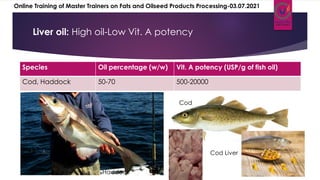
Liver oil: High oil-Low Vit. A potency
Species Oil percentage (w/w) Vit. A potency (USP/g of fish oil)
Cod, Haddock 50-70 500-20000
Cod
Haddock
Cod Liver
Online Training of Master Trainers on Fats and Oilseed Products Processing-03.07.2021
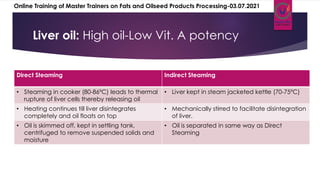
Liver oil: High oil-Low Vit. A potency
Direct Steaming Indirect Steaming
• Steaming in cooker (80-86ºC) leads to thermal
rupture of liver cells thereby releasing oil
• Liver kept in steam jacketed kettle (70-75ºC)
• Heating continues till liver disintegrates
completely and oil floats on top
• Mechanically stirred to facilitate disintegration
of liver.
• Oil is skimmed off, kept in settling tank,
centrifuged to remove suspended solids and
moisture
• Oil is separated in same way as Direct
Steaming
Online Training of Master Trainers on Fats and Oilseed Products Processing-03.07.2021
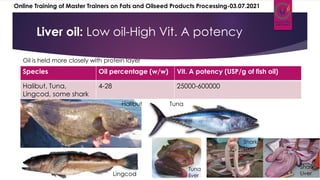
Liver oil: Low oil-High Vit. A potency
Species Oil percentage (w/w) Vit. A potency (USP/g of fish oil)
Halibut, Tuna,
Lingcod, some shark
4-28 25000-600000
Oil is held more closely with protein layer
Halibut
Lingcod
Tuna
Tuna
liver
Shark
Liver
Shark
Liver
Online Training of Master Trainers on Fats and Oilseed Products Processing-03.07.2021
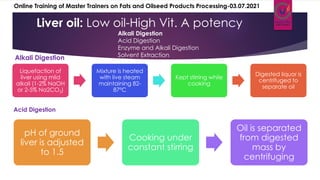
Liver oil: Low oil-High Vit. A potency
Alkali Digestion
Acid Digestion
Enzyme and Alkali Digestion
Solvent Extraction
Liquefaction of
liver using mild
alkali (1-2% NaOH
or 2-5% Na2CO3)
Mixture is heated
with live steam
maintaining 82-
87ºC
Kept stirring while
cooking
Digested liquor is
centrifuged to
separate oil
Alkali Digestion
Acid Digestion
pH of ground
liver is adjusted
to 1.5
Cooking under
constant stirring
Oil is separated
from digested
mass by
centrifuging
Online Training of Master Trainers on Fats and Oilseed Products Processing-03.07.2021
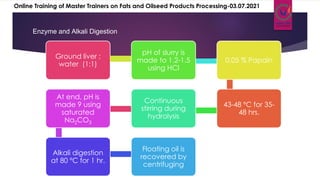
Enzyme and Alkali Digestion
Ground liver :
water (1:1)
At end, pH is
made 9 using
saturated
Na2CO3
Alkali digestion
at 80 ºC for 1 hr.
Floating oil is
recovered by
centrifuging
Continuous
stirring during
hydrolysis
pH of slurry is
made to 1.2-1.5
using HCl
0.05 % Papain
43-48 ºC for 35-
48 hrs.
Online Training of Master Trainers on Fats and Oilseed Products Processing-03.07.2021
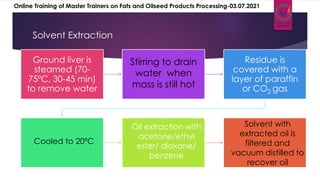
Solvent Extraction
Ground liver is
steamed (70-
75ºC, 30-45 min)
to remove water
Residue is
covered with a
layer of paraffin
or CO2 gas
Cooled to 20ºC
Stirring to drain
water when
mass is still hot
Oil extraction with
acetone/ethyl
ester/ dioxane/
benzene
Solvent with
extracted oil is
filtered and
vacuum distilled to
recover oil
Online Training of Master Trainers on Fats and Oilseed Products Processing-03.07.2021
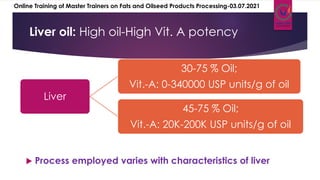
 Process employed varies with characteristics of liver
Liver oil: Low oil-High Vit. A potency
Liver oil: High oil-High Vit. A potency
Liver
30-75 % Oil;
Vit.-A: 0-340000 USP units/g of oil
45-75 % Oil;
Vit.-A: 20K-200K USP units/g of oil
Online Training of Master Trainers on Fats and Oilseed Products Processing-03.07.2021
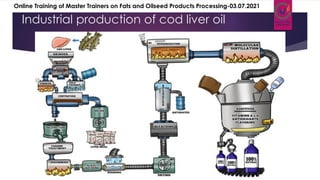
Industrial production of cod liver oil
Online Training of Master Trainers on Fats and Oilseed Products Processing-03.07.2021
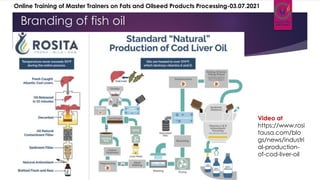
Branding of fish oil
Video at
https://www.rosi
tausa.com/blo
gs/news/industri
al-production-
of-cod-liver-oil
Online Training of Master Trainers on Fats and Oilseed Products Processing-03.07.2021
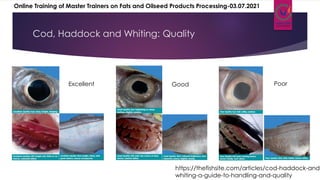
Cod, Haddock and Whiting: Quality
https://thefishsite.com/articles/cod-haddock-and-
whiting-a-guide-to-handling-and-quality
Excellent Good Poor
Online Training of Master Trainers on Fats and Oilseed Products Processing-03.07.2021
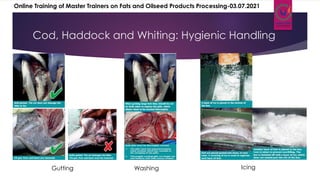
Cod, Haddock and Whiting: Hygienic Handling
Gutting Icing
Washing
Online Training of Master Trainers on Fats and Oilseed Products Processing-03.07.2021
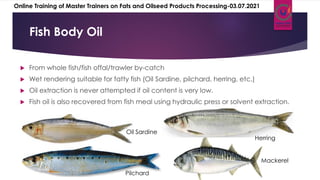
 From whole fish/fish offal/trawler by-catch
 Wet rendering suitable for fatty fish (Oil Sardine, pilchard, herring, etc.)
 Oil extraction is never attempted if oil content is very low.
 Fish oil is also recovered from fish meal using hydraulic press or solvent extraction.
Fish Body Oil
Oil Sardine
Pilchard
Herring
Mackerel
Online Training of Master Trainers on Fats and Oilseed Products Processing-03.07.2021
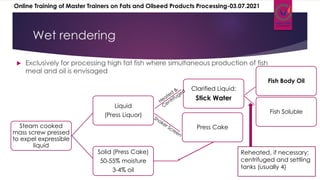
Wet rendering
 Exclusively for processing high fat fish where simultaneous production of fish
meal and oil is envisaged
Steam cooked
mass screw pressed
to expel expressible
liquid
Liquid
(Press Liquor)
Clarified Liquid:
Stick Water
Press Cake
Solid (Press Cake)
50-55% moisture
3-4% oil
Fish Body Oil
Fish Soluble
Reheated, if necessary;
centrifuged and settling
tanks (usually 4)
Online Training of Master Trainers on Fats and Oilseed Products Processing-03.07.2021
 Is done if there’s enough oil in fish meal for recovery
 Hydraulic Pressing can be followed by Cooker Drier
 Quality turns inferior because colour gets darkened by reaction of oil
with heated metal surface.
Dry Rendering
 Expensive, hence not popular for fish body oil extraction
 Quality of oil is inferior to that obtained by wet rendering process.
Solvent Extraction
Online Training of Master Trainers on Fats and Oilseed Products Processing-03.07.2021
Refining
 Undesirable materials in fish oil: suspended matter, FFA, oil soluble coloring matter, volatile
odoriferous & flavor bearing compounds, saturated glycerides etc.
 Winterization: Cold clearing
 Saturated and high melting glycerides in oil crystallize at refrigerated temp (usually 5ºC).
 Glycerides separated on cooling is rich in stearic acid: Stearines
 Saturated glycerides is filtered in a chilled room and thereby improving drying properties of clear oil.
 Gravity Settling
 Oil is maintained in a fully liquid state for several days
 Coarse suspended matter settles at bottom by gravity; Oil is drawn from top
 For removing colloidal and fine suspended matter, clear oil is firstly blown with moist steam at 100ºC for some
time and then allowed to cool.
 Common salt is added to break the formed emulsion; After settling, condensed water and oil water emulsions
are centrifuged to separate oil.
Online Training of Master Trainers on Fats and Oilseed Products Processing-03.07.2021
 Alkali Refining
 A very effective and widely employed method for complete removal of FFA and various
colour producing materials.
 Dilute NaOH or Conc. Na₂CO₃ is added to heated oil and stirred vigorously; A little excess
NaOH ensures complete neutralization of FFA
 After short period mixture settles; settlings called ‘foots’ are sold as soap stock.
 In continuous process, NaOH is appropriately blended with oil continuously at 20-30ºC; then
heated to 55-70ºC in a heat exchanger to break emulsion
 Centrifuged to separate foots, washed free of alkali and centrifuged to separate oil
Bleaching
 Natural greenish or reddish color de to carotenoids or chlorophylls
 Fish oils highly unsaturated so chemical bleaching not desirable
 Adsorptive bleaching using Fuller’s earth, activated charcoal, etc.
 Oil is heated with adsorbent (120-140ºC for about 1 hr); then filtered.
Online Training of Master Trainers on Fats and Oilseed Products Processing-03.07.2021
 Characteristic odour of fish body oil is due to presence of oxidation
products of highly unsaturated Fas, free or in triglyceride form
 For edible purpose, deodorization is essential
 When oil is hydrogenated, odors are lost
 Placing heated oil in a vacuumed tower and allowing it to cascade
over steam in countercurrent direction remove odoriferous
compounds (aldehydes and ketones) and destroy peroxides and
carotenoid pigments.
Deodorization
Online Training of Master Trainers on Fats and Oilseed Products Processing-03.07.2021
Changes in fish lipids during processing & preservation
 1. Hydrolysis:
 mainly due to action of lipase;
 results in release of FFA that subsequently cause protein denaturation
 Lipolysis continues at ambient temp; can be prevented by storing at low temp (-10ºC).
 2. Oxidation: more serious and complex problems than hydrolysis
 Due to high degree of unsaturation of FFA in fish lipids
 Accelerated by contact with oxygen, other oxidizing agent, elevated temperature and catalyst (e.g.
Cu, Fe)
 Oxidation once initiated will propagate itself though free radical mechanism
 Naturally occurring or synthetic anti-oxidants (BHA, BHT, propylgalate) (usually @ 0.1-0.2%) during
processing of fish oil can minimize oxidative damage.
 Lipoxidases gets inactivated by heating (80-100ºC), therefore its not a serious problems in oil
extracted using heat.
Online Training of Master Trainers on Fats and Oilseed Products Processing-03.07.2021
 3. Flavor reversion:
 Deodorized fish oils, on storage, develop a fishy odor and flavor similar or not to original fishy
flavor; phenomenon is called flavor reversion.
 Due to oxidation of deodorized oil or chemical combination of nitrogenous compounds with
highly unsaturated triglycerides in presence of peroxides.
 Control of deterioration in fish oil
 Use of anti-oxidants:
 Synthetic (Hydroquinone, pyrogallol, catechol, para amino benzoic acid, butylated hydroxyl anisole etc.)
 natural (tocopherol, phosphatides, Gallic acid, gum guaiac, nordihydroguiaretic acid, ascorbic acid)
 Stabilization by means of a very slight halogention and storing under an inert gas like Nitrogen
Online Training of Master Trainers on Fats and Oilseed Products Processing-03.07.2021
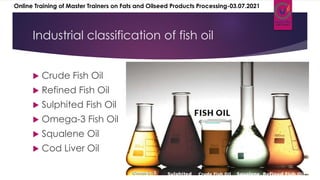
Industrial classification of fish oil
 Crude Fish Oil
 Refined Fish Oil
 Sulphited Fish Oil
 Omega-3 Fish Oil
 Squalene Oil
 Cod Liver Oil
Online Training of Master Trainers on Fats and Oilseed Products Processing-03.07.2021
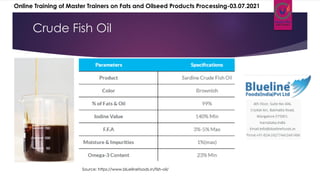
Crude Fish Oil
Source: https://www.bluelinefoods.in/fish-oil/
Online Training of Master Trainers on Fats and Oilseed Products Processing-03.07.2021
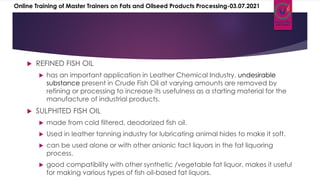
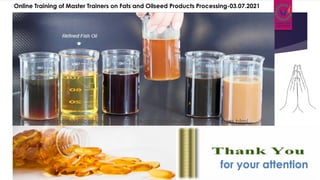
 REFINED FISH OIL
 has an important application in Leather Chemical Industry. undesirable
substance present in Crude Fish Oil at varying amounts are removed by
refining or processing to increase its usefulness as a starting material for the
manufacture of industrial products.
 SULPHITED FISH OIL
 made from cold filtered, deodorized fish oil.
 Used in leather tanning industry for lubricating animal hides to make it soft.
 can be used alone or with other anionic fact liquors in the fat liquoring
process.
 good compatibility with other synthetic /vegetable fat liquor, makes it useful
for making various types of fish oil-based fat liquors.
Online Training of Master Trainers on Fats and Oilseed Products Processing-03.07.2021
OMEGA -3 FISH OIL
 Omega-3 fish oil supply comes from deep ocean waters, not farm-raised fish.
 State-of-the-art purification processes remove mercury and ensure high levels of fish oil purity and
concentration, guaranteed to pass the stringent standards of the Global Organization for EPA and DHA.
 Supportive but not conclusive research shows that consumption of EPA and DHA omega-3 fatty acids may
reduce the risk of coronary heart disease. Treat rheumatoid arthritis: joint stiffness and swelling caused by this
painful condition may lessen because of the inflammation-fighting actions of omega-3s. Control diabetes:
nerve problems and heart disease are complications of this chronic condition. Omega-3 Fish oils may help by
preventing nerve damage and possibly raising hdl (“good”) cholesterol. Ease symptoms of lupus, psoriasis and
eczema: in people with lupus, omega-3s appear to control inflammation in the joints, skin, kidneys, and other
body tissues. Minimize crohn’s disease symptoms: when taken long term for preventive purposes, the essential
fatty acids in fish oils will keep inflammation in the digestive tract under control. Delay the onset of raynaud’s
disease symptoms: omega-3s inhibit inflammation within vessels, making fish oils potentially useful in stalling the
numbness, tingling, and other symptoms resulting from exposure to cold air.
 It Has Varied Application In Curing 1. Cancer; 2. Cardio Vascular Disease; 3. Inflammation; 4. Developmental
Disorders; 5. Mental Health; 6.Cognitive Aging
Online Training of Master Trainers on Fats and Oilseed Products Processing-03.07.2021
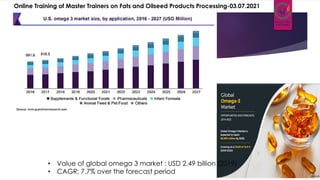
• Value of global omega 3 market : USD 2.49 billion (2019)
• CAGR: 7.7% over the forecast period
Online Training of Master Trainers on Fats and Oilseed Products Processing-03.07.2021
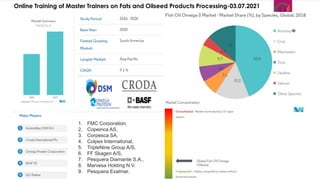
1. FMC Corporation,
2. Copeinca AS,
3. Corpesca SA,
4. Colpex International,
5. TripleNine Group A/S,
6. FF Skagen A/S,
7. Pesquera Diamante S.A.,
8. Marvesa Holding N.V.
9. Pesquera Exalmar.
Online Training of Master Trainers on Fats and Oilseed Products Processing-03.07.2021
 SQUALENE OIL
 Squalene is most commonly sourced from shark liver oil.
 Squalene is a PUFA that helps body absorb cholesterol. It can also be transformed in
our bodies into HDL cholesterol, which helps lower the levels of bad (LDL) cholesterol.
 Squalene can help generate oxygen through a chemical reaction where oxygen is
released from water molecules. Having more oxygen in body increases metabolism.
 Its health benefits includes: regulating immune response, antioxidant effects,
absorption of vitamins and cholesterol, chemo-preventive properties, reducing the
damage from chemotherapy, anti radioactive properties, skin health, and cell health.
 COD LIVER OIL
 Oil extracted from Atlantic cod livers.
 a dietary supplement having best sources of omega 3 fatty acids (EPA and DHA) and
relatively high amounts of vitamin A and vitamin D.
Online Training of Master Trainers on Fats and Oilseed Products Processing-03.07.2021
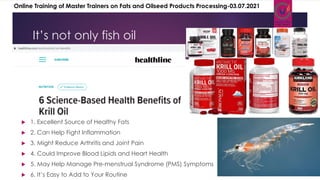
 1. Excellent Source of Healthy Fats
 2. Can Help Fight Inflammation
 3. Might Reduce Arthritis and Joint Pain
 4. Could Improve Blood Lipids and Heart Health
 5. May Help Manage Pre-menstrual Syndrome (PMS) Symptoms
 6. It’s Easy to Add to Your Routine
It’s not only fish oil
Online Training of Master Trainers on Fats and Oilseed Products Processing-03.07.2021
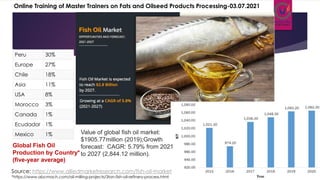
Source: https://www.alliedmarketresearch.com/fish-oil-market
*https://www.abcmach.com/oil-milling-projects/3ton-fish-oil-refinery-process.html
Value of global fish oil market:
$1905.77million (2019);Growth
forecast: CAGR: 5.79% from 2021
to 2027 (2,844.12 million).
Global Fish Oil
Production by Country*
(five-year average)
Peru 30%
Europe 27%
Chile 18%
Asia 11%
USA 8%
Morocco 3%
Canada 1%
Ecudador 1%
Mexico 1%
Online Training of Master Trainers on Fats and Oilseed Products Processing-03.07.2021
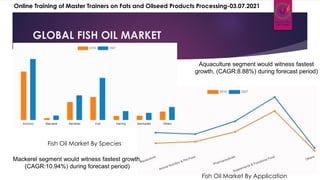
GLOBAL FISH OIL MARKET
Fish Oil Market By Species
Fish Oil Market By Application
Aquaculture segment would witness fastest
growth, (CAGR:8.88%) during forecast period)
Mackerel segment would witness fastest growth,
(CAGR:10.94%) during forecast period)
Online Training of Master Trainers on Fats and Oilseed Products Processing-03.07.2021
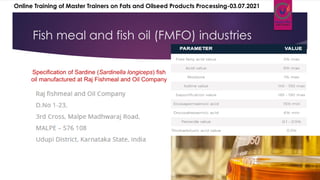
Fish meal and fish oil (FMFO) industries
Specification of Sardine (Sardinella longiceps) fish
oil manufactured at Raj Fishmeal and Oil Company
Online Training of Master Trainers on Fats and Oilseed Products Processing-03.07.2021
https://www.abcmach.com/oil-milling-projects/3ton-fish-oil-refinery-process.html
for your attention
Online Training of Master Trainers on Fats and Oilseed Products Processing-03.07.2021

Fish oil extraction and processing techniques

  • 1.
    Fish Oil Extraction andProcessing Techniques VIKAS KUMAR, SCIENTIST (FISH PROCESSING TECHNOLOGY) EMAIL: VIKASFPT@GMAIL.COM Online Training of Master Trainers on Fats and Oilseed Products Processing-03.07.2021
  • 2.
    Online Training ofMaster Trainers on Fats and Oilseed Products Processing-03.07.2021
  • 3.
    Fish Lipids  Fats:all triglycerides, whether normally solid or liquid at ambient temperature; Oils: Liquid Fats  Varies widely in fish (0.2-65%).  Fish storing fat in muscle show an inverse relationship between fat and water. Together both constitutes approx. 80%; When fat increases, water decreases and vice versa.  Animal fats are mostly saturated; Vegetables fats contain mainly unsaturated FA; however, degree of unsaturation is more in fish fat than vegetable fat.  Fatty components other than triglycerides (phospholipids in cell membrane, hormones, vitamins, carotenoids etc.) constitute only a very small fraction of fish lipid.  Lean muscle contains 0.5-1 % phospholipids. FA of triglycerides are more unsaturated than that of those of triglycerides.  Fat is stored in fat tissues composed of special fat cells. Fat is a source of concentrated energy, carrier of fat-soluble vitamins, contributes to taste, flavor and palatability. Online Training of Master Trainers on Fats and Oilseed Products Processing-03.07.2021
  • 4.
    Classification of fishbased on lipid content  Lean: <0.5% lipid; Semi-fatty: 05.-2 %; Fatty: >2%  Unlike lean and semi-fatty fish, fat content of fatty fish exhibit wide fluctuations depending on growth, maturity, feeding, spawning etc.  Even numbered FAs are found in fatty fish: though odd numbered and branched chain FA are not uncommon.  Most of tropical fish (except pelagic species: sardine, mackerel, tuna etc.) belong to low-fat and high-protein category. Online Training of Master Trainers on Fats and Oilseed Products Processing-03.07.2021
  • 5.
    Anatomical distribution offats in fish  Higher Fat (%) is always seen in ventral side than dorsal.  Fat content can be seen to increase towards tail region and also from interior towards exterior; Higher fat in tail region supports increased needs of energy for swimming; Higher fat store on ventral region favours to reduce drag during swimming.  In lean fish, the dark (red or lateral line) muscle has about twice the lipid of white muscle.  The lean muscle fish generally have more fat in livers (e.g. cod) which show seasonal variation. In the fatty fish species, the muscle shows fluctuating levels of seasonal variation in neutral fat.  Fish fat is mainly found in dark muscle just below skin and in lateral line area. Some fish stores fat in liver, others in head, peritoneum and belly flap. Online Training of Master Trainers on Fats and Oilseed Products Processing-03.07.2021
  • 6.
    Saturated and Unsaturated https://corganic.myshopify.com/blogs/news/industrial-production-of-cod-liver-oil FattyAcids of Fish Lipids  C-chain : 10-22  Unsaturation: 0-6  Position of double bonds and cis- trans isomerism adds complexity.  Essential FA: only approx. 2% of total lipids in fish.  Omega-3 FA (prominently EPA, DHA) has medicinal value (anti- cholesterolemic and antithrombotic effects, and in curing skin diseases.) Understanding Saturated and Unsaturated oil Online Training of Master Trainers on Fats and Oilseed Products Processing-03.07.2021
  • 7.
    General Characteristics offish lipids  Most of FA, whether saturated or unsaturated, have even no. of C-atoms in the molecules.  Polyunsaturated double bonds are separated by methylene group and have cis-trans configuration.  Proportion of trans isomers, though thermodynamically more stable, is very negligible.  Polyunsaturation with 5 or 6 double bonds per molecule: very common in fish unlike in other plants/animals.  Proportion of individual FA may vary sps. to sps. FA in Indian water fish  Important saturated FA: Myristic, palmitic and Stearic acid.  Monounsaturated FA: Palmitoleic and Oleic acid  Polyunsatuared FA: Arachidonic acid, Eicosapentaenoic Acid, Decosahexaenoic Acid Online Training of Master Trainers on Fats and Oilseed Products Processing-03.07.2021
  • 8.
    ALA, EPA, and DHAContent of Selected Foods Online Training of Master Trainers on Fats and Oilseed Products Processing-03.07.2021
  • 9.
    Extraction of FishOil  Liver oil  High oil-Low vit. A potency  Direct Steaming  Indirect Steaming  Low oil- High Vit. A potency  Alkali Digestion  Enzyme and Alkali Digestion  Acid Digestion  Solvent Extraction  High oil- High Vit. A potency  Various process based on liver characteristics  Body Oil  Wet Rendering  Dry Rendering  Solvent Extraction  Classification of Liver  Preservation of Liver  Refining of Fish Oil  Winterization  Gravity Settling  Alkali Refining  Bleaching  Deodorization  Deteriorative Changes in Fish Oil and Their Control  Application of Fish oil Online Training of Master Trainers on Fats and Oilseed Products Processing-03.07.2021
  • 10.
    Liver oil: Highoil-Low Vit. A potency Species Oil percentage (w/w) Vit. A potency (USP/g of fish oil) Cod, Haddock 50-70 500-20000 Cod Haddock Cod Liver Online Training of Master Trainers on Fats and Oilseed Products Processing-03.07.2021
  • 11.
    Liver oil: Highoil-Low Vit. A potency Direct Steaming Indirect Steaming • Steaming in cooker (80-86ºC) leads to thermal rupture of liver cells thereby releasing oil • Liver kept in steam jacketed kettle (70-75ºC) • Heating continues till liver disintegrates completely and oil floats on top • Mechanically stirred to facilitate disintegration of liver. • Oil is skimmed off, kept in settling tank, centrifuged to remove suspended solids and moisture • Oil is separated in same way as Direct Steaming Online Training of Master Trainers on Fats and Oilseed Products Processing-03.07.2021
  • 12.
    Liver oil: Lowoil-High Vit. A potency Species Oil percentage (w/w) Vit. A potency (USP/g of fish oil) Halibut, Tuna, Lingcod, some shark 4-28 25000-600000 Oil is held more closely with protein layer Halibut Lingcod Tuna Tuna liver Shark Liver Shark Liver Online Training of Master Trainers on Fats and Oilseed Products Processing-03.07.2021
  • 13.
    Liver oil: Lowoil-High Vit. A potency Alkali Digestion Acid Digestion Enzyme and Alkali Digestion Solvent Extraction Liquefaction of liver using mild alkali (1-2% NaOH or 2-5% Na2CO3) Mixture is heated with live steam maintaining 82- 87ºC Kept stirring while cooking Digested liquor is centrifuged to separate oil Alkali Digestion Acid Digestion pH of ground liver is adjusted to 1.5 Cooking under constant stirring Oil is separated from digested mass by centrifuging Online Training of Master Trainers on Fats and Oilseed Products Processing-03.07.2021
  • 14.
    Enzyme and AlkaliDigestion Ground liver : water (1:1) At end, pH is made 9 using saturated Na2CO3 Alkali digestion at 80 ºC for 1 hr. Floating oil is recovered by centrifuging Continuous stirring during hydrolysis pH of slurry is made to 1.2-1.5 using HCl 0.05 % Papain 43-48 ºC for 35- 48 hrs. Online Training of Master Trainers on Fats and Oilseed Products Processing-03.07.2021
  • 15.
    Solvent Extraction Ground liveris steamed (70- 75ºC, 30-45 min) to remove water Residue is covered with a layer of paraffin or CO2 gas Cooled to 20ºC Stirring to drain water when mass is still hot Oil extraction with acetone/ethyl ester/ dioxane/ benzene Solvent with extracted oil is filtered and vacuum distilled to recover oil Online Training of Master Trainers on Fats and Oilseed Products Processing-03.07.2021
  • 16.
     Process employedvaries with characteristics of liver Liver oil: Low oil-High Vit. A potency Liver oil: High oil-High Vit. A potency Liver 30-75 % Oil; Vit.-A: 0-340000 USP units/g of oil 45-75 % Oil; Vit.-A: 20K-200K USP units/g of oil Online Training of Master Trainers on Fats and Oilseed Products Processing-03.07.2021
  • 17.
    Industrial production ofcod liver oil Online Training of Master Trainers on Fats and Oilseed Products Processing-03.07.2021
  • 18.
    Branding of fishoil Video at https://www.rosi tausa.com/blo gs/news/industri al-production- of-cod-liver-oil Online Training of Master Trainers on Fats and Oilseed Products Processing-03.07.2021
  • 19.
    Cod, Haddock andWhiting: Quality https://thefishsite.com/articles/cod-haddock-and- whiting-a-guide-to-handling-and-quality Excellent Good Poor Online Training of Master Trainers on Fats and Oilseed Products Processing-03.07.2021
  • 20.
    Cod, Haddock andWhiting: Hygienic Handling Gutting Icing Washing Online Training of Master Trainers on Fats and Oilseed Products Processing-03.07.2021
  • 21.
     From wholefish/fish offal/trawler by-catch  Wet rendering suitable for fatty fish (Oil Sardine, pilchard, herring, etc.)  Oil extraction is never attempted if oil content is very low.  Fish oil is also recovered from fish meal using hydraulic press or solvent extraction. Fish Body Oil Oil Sardine Pilchard Herring Mackerel Online Training of Master Trainers on Fats and Oilseed Products Processing-03.07.2021
  • 22.
    Wet rendering  Exclusivelyfor processing high fat fish where simultaneous production of fish meal and oil is envisaged Steam cooked mass screw pressed to expel expressible liquid Liquid (Press Liquor) Clarified Liquid: Stick Water Press Cake Solid (Press Cake) 50-55% moisture 3-4% oil Fish Body Oil Fish Soluble Reheated, if necessary; centrifuged and settling tanks (usually 4) Online Training of Master Trainers on Fats and Oilseed Products Processing-03.07.2021
  • 23.
     Is doneif there’s enough oil in fish meal for recovery  Hydraulic Pressing can be followed by Cooker Drier  Quality turns inferior because colour gets darkened by reaction of oil with heated metal surface. Dry Rendering  Expensive, hence not popular for fish body oil extraction  Quality of oil is inferior to that obtained by wet rendering process. Solvent Extraction Online Training of Master Trainers on Fats and Oilseed Products Processing-03.07.2021
  • 24.
    Refining  Undesirable materialsin fish oil: suspended matter, FFA, oil soluble coloring matter, volatile odoriferous & flavor bearing compounds, saturated glycerides etc.  Winterization: Cold clearing  Saturated and high melting glycerides in oil crystallize at refrigerated temp (usually 5ºC).  Glycerides separated on cooling is rich in stearic acid: Stearines  Saturated glycerides is filtered in a chilled room and thereby improving drying properties of clear oil.  Gravity Settling  Oil is maintained in a fully liquid state for several days  Coarse suspended matter settles at bottom by gravity; Oil is drawn from top  For removing colloidal and fine suspended matter, clear oil is firstly blown with moist steam at 100ºC for some time and then allowed to cool.  Common salt is added to break the formed emulsion; After settling, condensed water and oil water emulsions are centrifuged to separate oil. Online Training of Master Trainers on Fats and Oilseed Products Processing-03.07.2021
  • 25.
     Alkali Refining A very effective and widely employed method for complete removal of FFA and various colour producing materials.  Dilute NaOH or Conc. Na₂CO₃ is added to heated oil and stirred vigorously; A little excess NaOH ensures complete neutralization of FFA  After short period mixture settles; settlings called ‘foots’ are sold as soap stock.  In continuous process, NaOH is appropriately blended with oil continuously at 20-30ºC; then heated to 55-70ºC in a heat exchanger to break emulsion  Centrifuged to separate foots, washed free of alkali and centrifuged to separate oil Bleaching  Natural greenish or reddish color de to carotenoids or chlorophylls  Fish oils highly unsaturated so chemical bleaching not desirable  Adsorptive bleaching using Fuller’s earth, activated charcoal, etc.  Oil is heated with adsorbent (120-140ºC for about 1 hr); then filtered. Online Training of Master Trainers on Fats and Oilseed Products Processing-03.07.2021
  • 26.
     Characteristic odourof fish body oil is due to presence of oxidation products of highly unsaturated Fas, free or in triglyceride form  For edible purpose, deodorization is essential  When oil is hydrogenated, odors are lost  Placing heated oil in a vacuumed tower and allowing it to cascade over steam in countercurrent direction remove odoriferous compounds (aldehydes and ketones) and destroy peroxides and carotenoid pigments. Deodorization Online Training of Master Trainers on Fats and Oilseed Products Processing-03.07.2021
  • 27.
    Changes in fishlipids during processing & preservation  1. Hydrolysis:  mainly due to action of lipase;  results in release of FFA that subsequently cause protein denaturation  Lipolysis continues at ambient temp; can be prevented by storing at low temp (-10ºC).  2. Oxidation: more serious and complex problems than hydrolysis  Due to high degree of unsaturation of FFA in fish lipids  Accelerated by contact with oxygen, other oxidizing agent, elevated temperature and catalyst (e.g. Cu, Fe)  Oxidation once initiated will propagate itself though free radical mechanism  Naturally occurring or synthetic anti-oxidants (BHA, BHT, propylgalate) (usually @ 0.1-0.2%) during processing of fish oil can minimize oxidative damage.  Lipoxidases gets inactivated by heating (80-100ºC), therefore its not a serious problems in oil extracted using heat. Online Training of Master Trainers on Fats and Oilseed Products Processing-03.07.2021
  • 28.
     3. Flavorreversion:  Deodorized fish oils, on storage, develop a fishy odor and flavor similar or not to original fishy flavor; phenomenon is called flavor reversion.  Due to oxidation of deodorized oil or chemical combination of nitrogenous compounds with highly unsaturated triglycerides in presence of peroxides.  Control of deterioration in fish oil  Use of anti-oxidants:  Synthetic (Hydroquinone, pyrogallol, catechol, para amino benzoic acid, butylated hydroxyl anisole etc.)  natural (tocopherol, phosphatides, Gallic acid, gum guaiac, nordihydroguiaretic acid, ascorbic acid)  Stabilization by means of a very slight halogention and storing under an inert gas like Nitrogen Online Training of Master Trainers on Fats and Oilseed Products Processing-03.07.2021
  • 29.
    Industrial classification offish oil  Crude Fish Oil  Refined Fish Oil  Sulphited Fish Oil  Omega-3 Fish Oil  Squalene Oil  Cod Liver Oil Online Training of Master Trainers on Fats and Oilseed Products Processing-03.07.2021
  • 30.
    Crude Fish Oil Source:https://www.bluelinefoods.in/fish-oil/ Online Training of Master Trainers on Fats and Oilseed Products Processing-03.07.2021
  • 31.
     REFINED FISHOIL  has an important application in Leather Chemical Industry. undesirable substance present in Crude Fish Oil at varying amounts are removed by refining or processing to increase its usefulness as a starting material for the manufacture of industrial products.  SULPHITED FISH OIL  made from cold filtered, deodorized fish oil.  Used in leather tanning industry for lubricating animal hides to make it soft.  can be used alone or with other anionic fact liquors in the fat liquoring process.  good compatibility with other synthetic /vegetable fat liquor, makes it useful for making various types of fish oil-based fat liquors. Online Training of Master Trainers on Fats and Oilseed Products Processing-03.07.2021
  • 32.
    OMEGA -3 FISHOIL  Omega-3 fish oil supply comes from deep ocean waters, not farm-raised fish.  State-of-the-art purification processes remove mercury and ensure high levels of fish oil purity and concentration, guaranteed to pass the stringent standards of the Global Organization for EPA and DHA.  Supportive but not conclusive research shows that consumption of EPA and DHA omega-3 fatty acids may reduce the risk of coronary heart disease. Treat rheumatoid arthritis: joint stiffness and swelling caused by this painful condition may lessen because of the inflammation-fighting actions of omega-3s. Control diabetes: nerve problems and heart disease are complications of this chronic condition. Omega-3 Fish oils may help by preventing nerve damage and possibly raising hdl (“good”) cholesterol. Ease symptoms of lupus, psoriasis and eczema: in people with lupus, omega-3s appear to control inflammation in the joints, skin, kidneys, and other body tissues. Minimize crohn’s disease symptoms: when taken long term for preventive purposes, the essential fatty acids in fish oils will keep inflammation in the digestive tract under control. Delay the onset of raynaud’s disease symptoms: omega-3s inhibit inflammation within vessels, making fish oils potentially useful in stalling the numbness, tingling, and other symptoms resulting from exposure to cold air.  It Has Varied Application In Curing 1. Cancer; 2. Cardio Vascular Disease; 3. Inflammation; 4. Developmental Disorders; 5. Mental Health; 6.Cognitive Aging Online Training of Master Trainers on Fats and Oilseed Products Processing-03.07.2021
  • 33.
    • Value ofglobal omega 3 market : USD 2.49 billion (2019) • CAGR: 7.7% over the forecast period Online Training of Master Trainers on Fats and Oilseed Products Processing-03.07.2021
  • 34.
    1. FMC Corporation, 2.Copeinca AS, 3. Corpesca SA, 4. Colpex International, 5. TripleNine Group A/S, 6. FF Skagen A/S, 7. Pesquera Diamante S.A., 8. Marvesa Holding N.V. 9. Pesquera Exalmar. Online Training of Master Trainers on Fats and Oilseed Products Processing-03.07.2021
  • 35.
     SQUALENE OIL Squalene is most commonly sourced from shark liver oil.  Squalene is a PUFA that helps body absorb cholesterol. It can also be transformed in our bodies into HDL cholesterol, which helps lower the levels of bad (LDL) cholesterol.  Squalene can help generate oxygen through a chemical reaction where oxygen is released from water molecules. Having more oxygen in body increases metabolism.  Its health benefits includes: regulating immune response, antioxidant effects, absorption of vitamins and cholesterol, chemo-preventive properties, reducing the damage from chemotherapy, anti radioactive properties, skin health, and cell health.  COD LIVER OIL  Oil extracted from Atlantic cod livers.  a dietary supplement having best sources of omega 3 fatty acids (EPA and DHA) and relatively high amounts of vitamin A and vitamin D. Online Training of Master Trainers on Fats and Oilseed Products Processing-03.07.2021
  • 37.
     1. ExcellentSource of Healthy Fats  2. Can Help Fight Inflammation  3. Might Reduce Arthritis and Joint Pain  4. Could Improve Blood Lipids and Heart Health  5. May Help Manage Pre-menstrual Syndrome (PMS) Symptoms  6. It’s Easy to Add to Your Routine It’s not only fish oil Online Training of Master Trainers on Fats and Oilseed Products Processing-03.07.2021
  • 38.
    Source: https://www.alliedmarketresearch.com/fish-oil-market *https://www.abcmach.com/oil-milling-projects/3ton-fish-oil-refinery-process.html Value ofglobal fish oil market: $1905.77million (2019);Growth forecast: CAGR: 5.79% from 2021 to 2027 (2,844.12 million). Global Fish Oil Production by Country* (five-year average) Peru 30% Europe 27% Chile 18% Asia 11% USA 8% Morocco 3% Canada 1% Ecudador 1% Mexico 1% Online Training of Master Trainers on Fats and Oilseed Products Processing-03.07.2021
  • 39.
    GLOBAL FISH OILMARKET Fish Oil Market By Species Fish Oil Market By Application Aquaculture segment would witness fastest growth, (CAGR:8.88%) during forecast period) Mackerel segment would witness fastest growth, (CAGR:10.94%) during forecast period) Online Training of Master Trainers on Fats and Oilseed Products Processing-03.07.2021
  • 40.
    Online Training ofMaster Trainers on Fats and Oilseed Products Processing-03.07.2021
  • 41.
    Online Training ofMaster Trainers on Fats and Oilseed Products Processing-03.07.2021
  • 42.
    Online Training ofMaster Trainers on Fats and Oilseed Products Processing-03.07.2021
  • 43.
    Online Training ofMaster Trainers on Fats and Oilseed Products Processing-03.07.2021
  • 44.
    Fish meal andfish oil (FMFO) industries Specification of Sardine (Sardinella longiceps) fish oil manufactured at Raj Fishmeal and Oil Company Online Training of Master Trainers on Fats and Oilseed Products Processing-03.07.2021
  • 45.
    https://www.abcmach.com/oil-milling-projects/3ton-fish-oil-refinery-process.html for your attention OnlineTraining of Master Trainers on Fats and Oilseed Products Processing-03.07.2021