Surimi and Surimi based Products
Surimi
 Surimi is a mechanically deboned, washed
(bleached) and stabilised fish flesh.
 It is an intermediate product used in the preparation
of a variety of ready to eat seafood such as
Kamaboko, fish sausage, crab legs and imitation
shrimp products.
 Ideally, surimi should be made from low-value, white-
fleshed fish with excellent gelling ability and which
are abundant and available year-round.
What are Surimi products?
 "Surimi" is a Japanese term literally meaning "minced
meat" derived from fish
 This high protein paste is often used as the primary
ingredient in a variety of ways to make "Surimi-
based products".
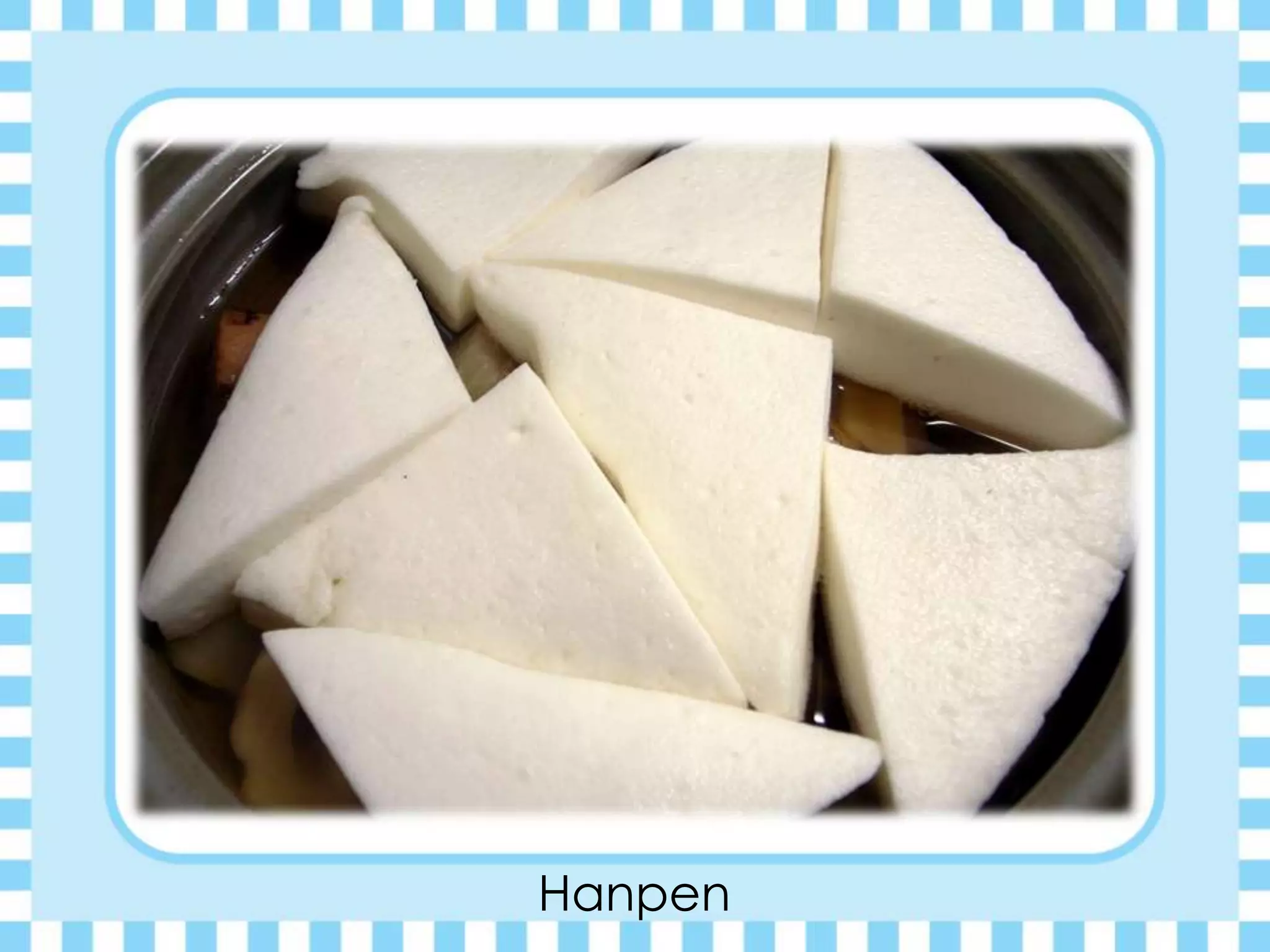
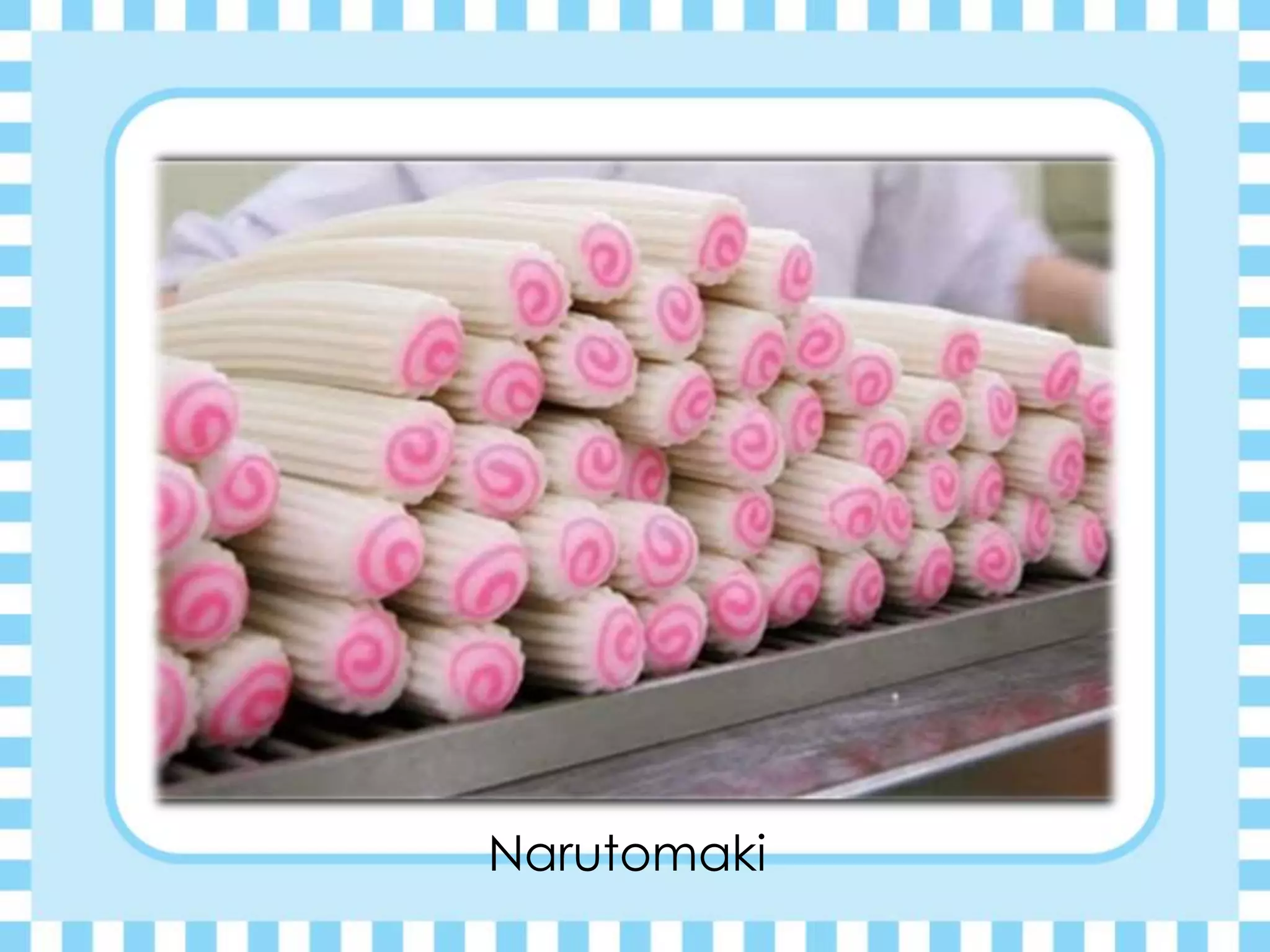
 The fish balls, crabsticks, fish cake, chikuwa,
narutomaki, satsuma age, hanpen are the
examples of surimi based products.
Fish Ball
Fake Crab Sticks
Satsuma-age
Hanpen
Kamaboko
Narutomaki
i
Fish Cake
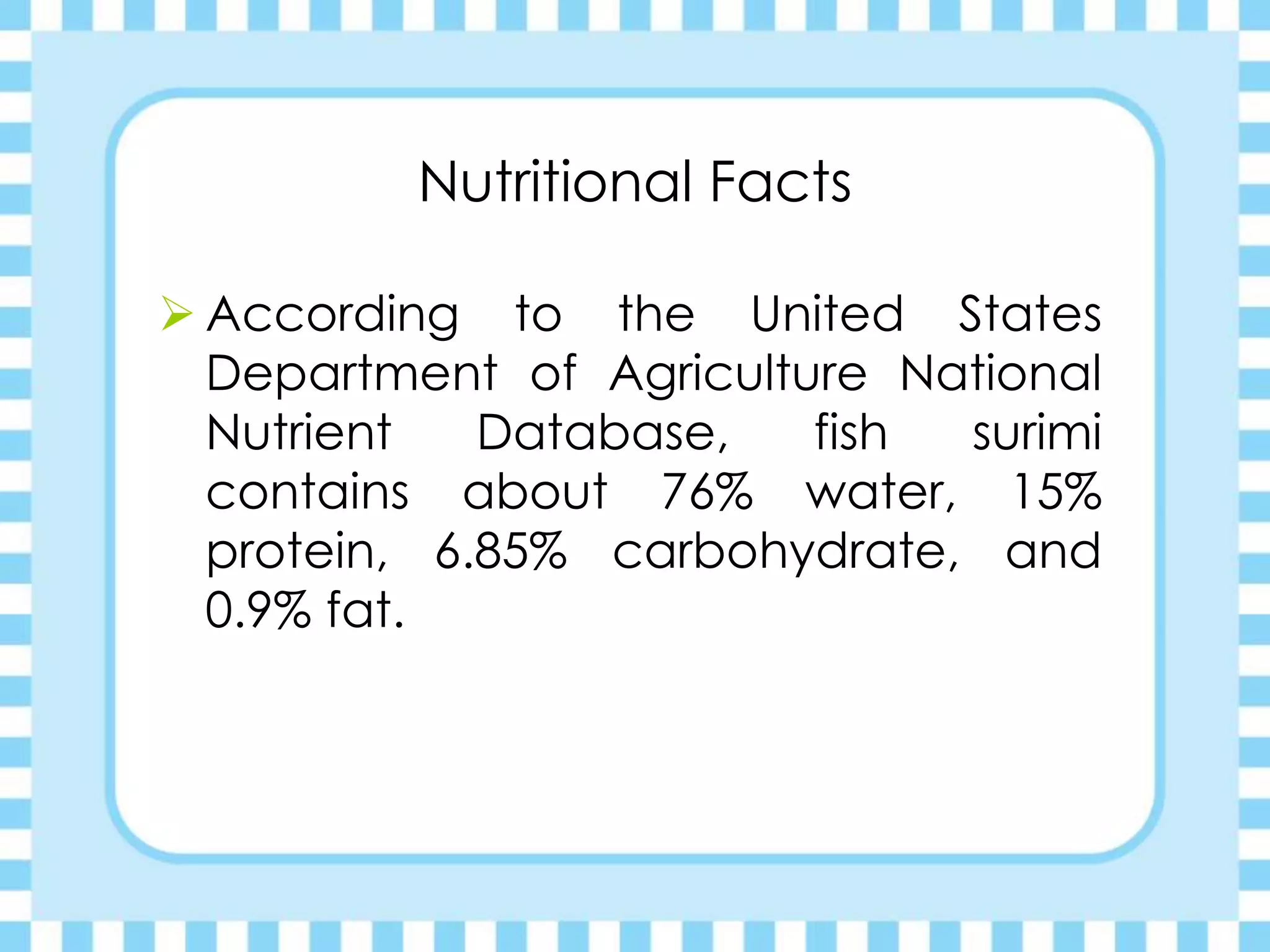
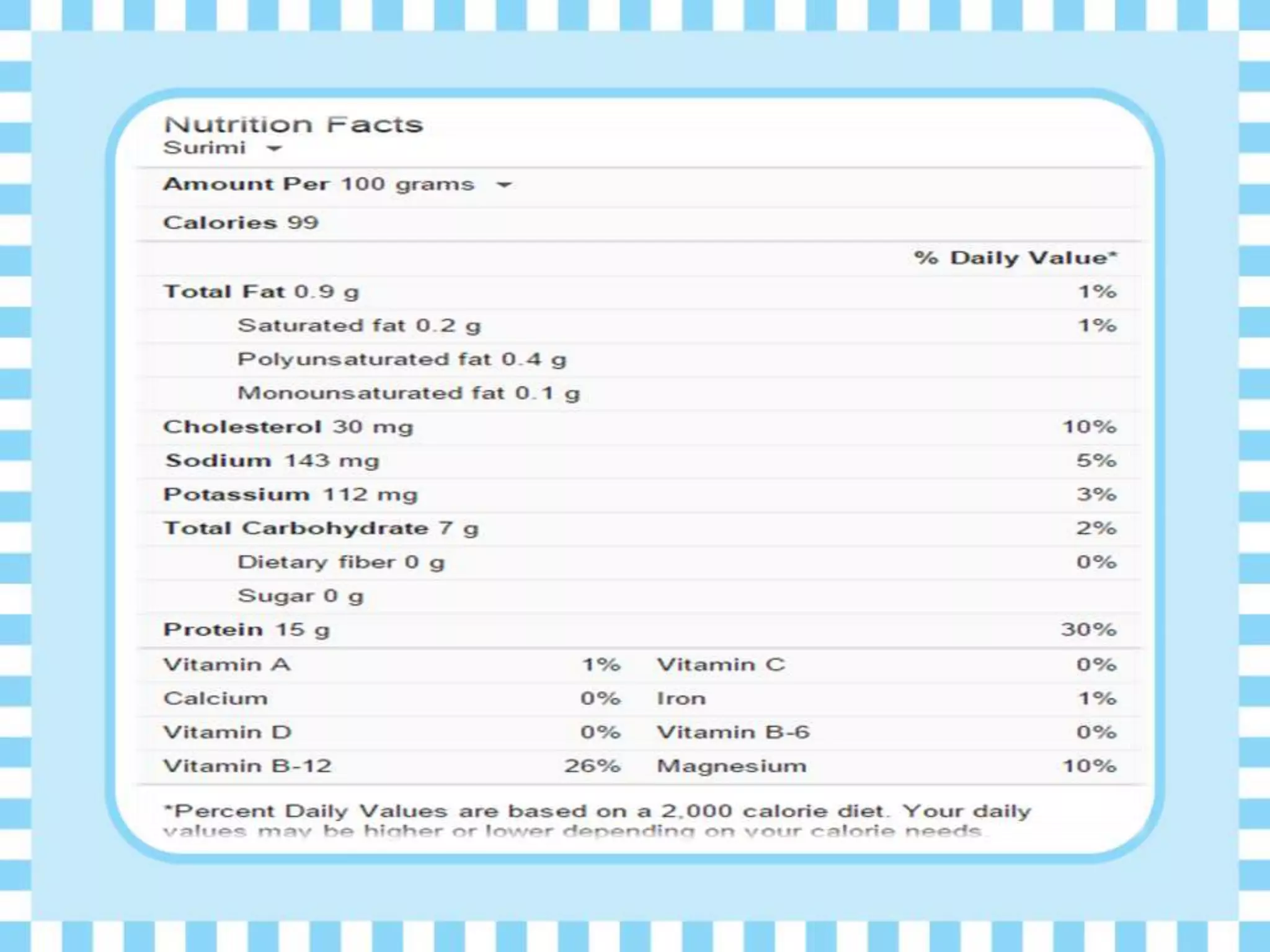
Nutritional Facts
 According to the United States
Department of Agriculture National
Nutrient Database, fish surimi
contains about 76% water, 15%
protein, 6.85% carbohydrate, and
0.9% fat.
The fishes used to make surimi
include:
 Alaska pollock
 Atlantic cod
 Big-head pennah croaker
 Golden threadfin bream
 Various shark species
 Swordfish
 Tilapia
 Florida black bass
Uses and Products
 In Asian cultures, surimi is eaten as a food in its own right
and seldom used to imitate other foods. In Japan fish
cakes (kamaboko) and fish sausages, as well as other
extruded fish products, are commonly sold as cured
surimi.
 In Chinese cuisine, fish surimi, often called "fish paste", is
used directly as stuffing or made into balls.
 Balls made from lean beef and pork surimi often are
seen in Chinese cuisine.
Common Misconceptions about
Surimi
 1.100% Fish Surimi products always has better texture &
flavour- Surimi-based products made from 100% fish
will be tough and chewy.
 2. Frozen Surimi products cannot last for a long period-
Frozen Surimi-based products can last longer than
fresh fish.
 3. Surimi products has low production standards &
quality ingredients- Technology for the production of
Surimi-based products has progressed over the years
in compliance to higher standards in hygiene and
meat quality.
What We need to know about
Surimi :
 Surimi is a Japanese word that literally means “ground
meat”.
 To make surimi, the lean meat from white fleshed fish such
as pollock is pulverized into a thick paste.
 The assortment of additives may include other fish
products, but it is usually egg whites, oils, salt, starches,
and spices.
 Food manufacturers love Surimi because it enables them
to take cheap fish and upgrade it to a taste and
mouthfeel of the most expensive fish meats – crab and
lobster.
 Approximately 2% of the world’s fish catch is processed
into some sort of surimi paste.
 Originating in Japan several centuries ago,
surimi is a uniquely functional food ingredient
made of fish proteins and used in surimi
seafood products.
 Surimi consists of fish proteins that are refined
through heading, gutting and mincing the
fish, then washing, removing water, and
freezing the remaining protein.
Surimi and surimi based products

Surimi and surimi based products

  • 1.
    Surimi and Surimibased Products
  • 2.
    Surimi  Surimi isa mechanically deboned, washed (bleached) and stabilised fish flesh.  It is an intermediate product used in the preparation of a variety of ready to eat seafood such as Kamaboko, fish sausage, crab legs and imitation shrimp products.  Ideally, surimi should be made from low-value, white- fleshed fish with excellent gelling ability and which are abundant and available year-round.
  • 3.
    What are Surimiproducts?  "Surimi" is a Japanese term literally meaning "minced meat" derived from fish  This high protein paste is often used as the primary ingredient in a variety of ways to make "Surimi- based products".  The fish balls, crabsticks, fish cake, chikuwa, narutomaki, satsuma age, hanpen are the examples of surimi based products.
  • 4.
  • 5.
  • 6.
  • 7.
  • 8.
  • 9.
  • 10.
  • 11.
    Nutritional Facts  Accordingto the United States Department of Agriculture National Nutrient Database, fish surimi contains about 76% water, 15% protein, 6.85% carbohydrate, and 0.9% fat.
  • 13.
    The fishes usedto make surimi include:  Alaska pollock  Atlantic cod  Big-head pennah croaker  Golden threadfin bream  Various shark species  Swordfish  Tilapia  Florida black bass
  • 14.
    Uses and Products In Asian cultures, surimi is eaten as a food in its own right and seldom used to imitate other foods. In Japan fish cakes (kamaboko) and fish sausages, as well as other extruded fish products, are commonly sold as cured surimi.  In Chinese cuisine, fish surimi, often called "fish paste", is used directly as stuffing or made into balls.  Balls made from lean beef and pork surimi often are seen in Chinese cuisine.
  • 15.
    Common Misconceptions about Surimi 1.100% Fish Surimi products always has better texture & flavour- Surimi-based products made from 100% fish will be tough and chewy.  2. Frozen Surimi products cannot last for a long period- Frozen Surimi-based products can last longer than fresh fish.  3. Surimi products has low production standards & quality ingredients- Technology for the production of Surimi-based products has progressed over the years in compliance to higher standards in hygiene and meat quality.
  • 16.
    What We needto know about Surimi :  Surimi is a Japanese word that literally means “ground meat”.  To make surimi, the lean meat from white fleshed fish such as pollock is pulverized into a thick paste.  The assortment of additives may include other fish products, but it is usually egg whites, oils, salt, starches, and spices.  Food manufacturers love Surimi because it enables them to take cheap fish and upgrade it to a taste and mouthfeel of the most expensive fish meats – crab and lobster.  Approximately 2% of the world’s fish catch is processed into some sort of surimi paste.
  • 18.
     Originating inJapan several centuries ago, surimi is a uniquely functional food ingredient made of fish proteins and used in surimi seafood products.  Surimi consists of fish proteins that are refined through heading, gutting and mincing the fish, then washing, removing water, and freezing the remaining protein.