Downloaded 429 times

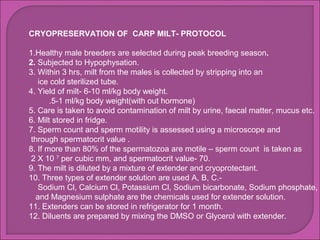


Cryopreservation of fish gametes involves preserving living cells like sperm at -196°C so they remain viable for long periods. While cryopreservation of sperm has been successful, freezing fish eggs is more challenging due to their large size and complex structure. The key principles of cryopreservation involve freezing, storing, and thawing cells at carefully controlled rates to minimize damage. Cryoprotectants like DMSO are used to reduce ice formation and cell injury during freezing and thawing. This technique allows fish breeding all year, genetic improvement, and conservation of endangered species.


