by :
Dr. Jaynarayan Bairwa pt
PRE AND POST OPERATIVE
PHYSIOTHERAPY IN CARDIAC
SURGERY
THE ROLE OF PHYSIOTHERAPY IN
CARDIAC SURGERY
Cardiac surgical procedures change respiratory mechanics,
defecting in lung dysfunction. The physical therapists play an
important role in the preparation and rehabilitation of
individuals who are undergoing cardiac surgery, as they have
a large quantity of techniques.
Breathing exercises with and without the use of devices, and
respiratory muscle training in preoperative period of cardiac
surgery in reducing postoperative pulmonary complications.
Pre-operative Physiotherapy
> physiotherapist prior to your surgery and they will provide
education on what is required to facilitate your recovery as
smoothly as possible.
>Breathing exercises
Breathing exercises are very important to prevent chest
complications after surgery such as chest infection or lung
collapse.
> Practice of deep breathing exercises before the operation,
it will be easier to do these afterwards.
>Support coughing
After operation it is important to cough to clear any
sputum. The chest wound is supported by holding a
pillow or rolled up towel firmly against the chest and
leaning slightly forward.
Physiotherapy post Cardiac
Surgery
>Exercises after the operation
These exercises helps to remove the secretions produced
from the lung lining after a general anesthetic and which, if
left in the lungs, can lead to pneumonia.
1. Deep Breathing Exercises
Take 5 deep breaths every hour and then huff and cough
to clear any phlegm from your lungs.
Use spirometer and take 5 breaths every hour.
2. Leg exercise
The following exercises increase the blood circulation
and assist in preventing clots forming in the legs and
chest.
> Repeat 10 times every hour
(a) Ankle Exercises
(i) Move feet up and down at the ankles. Repeat
10 times every hour.
(ii) Move feet together in circles. Repeat 10
times every hour.
(b) Quadriceps Exercises
Press the back of knees against the bed. heels should
lift off the bed at the same time.
(c) Gluteal Exercises
Tighten your buttocks together, hold for 5 seconds and
relax.
(d) Straight Leg Raising
Lift the leg off the bed, keeping knee straight.
> As well as breathing exercises, physio need to
start stretching exercises to prevent stiffness .
> These need to be done twice daily and
are to be done slowly.
1. Extension in Sitting
Begin sitting tall, with your back and neck straight,
shoulders back slightly. Gently take your neck
backwards, looking up towards the ceiling
until you feel a mild to moderate
stretch pain-free. Repeat 5 times.
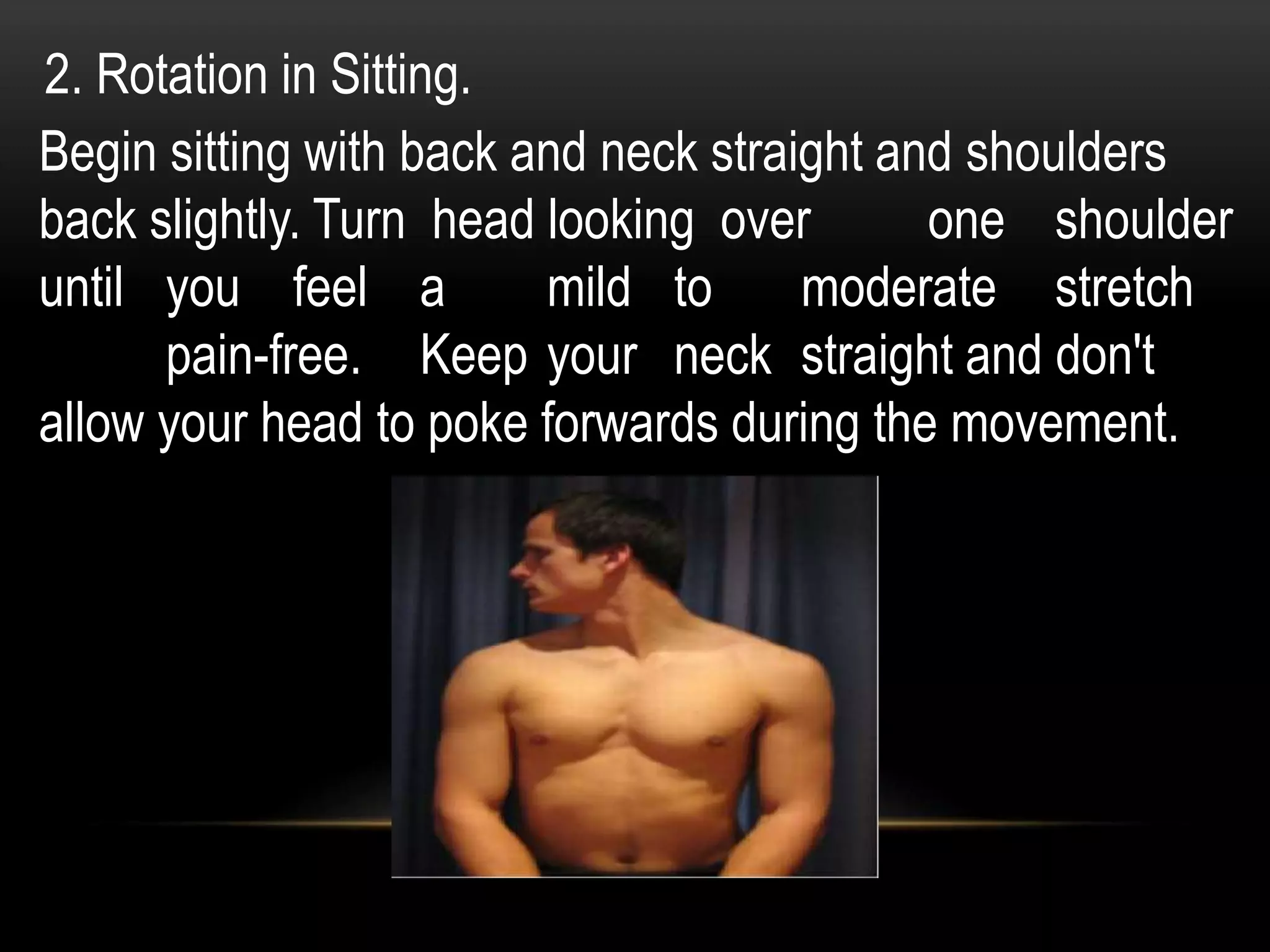
Begin sitting with back and neck straight and shoulders
back slightly. Turn head looking over one shoulder
until you feel a mild to moderate stretch
pain-free. Keep your neck straight and don't
allow your head to poke forwards during the movement.
2. Rotation in Sitting.
3. Rotation in Sitting
Begin sitting tall, with arms across chest.
Keeping legs still,gently rotate to one side
until feel a mild to moderate stretch that is pain free.
Repeat 10 times to each side
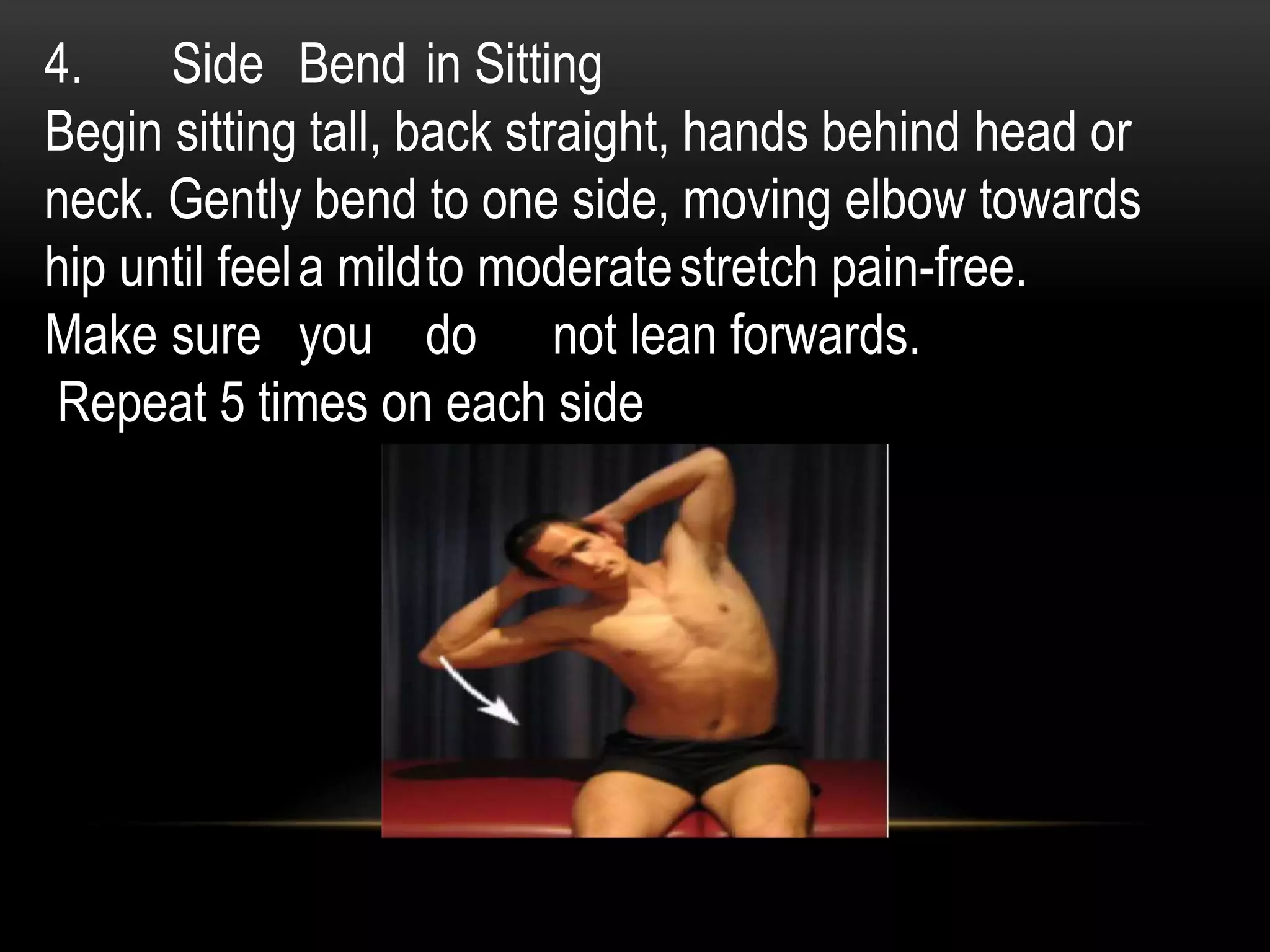
4. Side Bend in Sitting
Begin sitting tall, back straight, hands behind head or
neck. Gently bend to one side, moving elbow towards
hip until feela mildto moderatestretch pain-free.
Make sure you do not lean forwards.
Repeat 5 times on each side
5. Shoulder Extension
Begin standing tall, with neck and back straight. Gently
take arm backwards until feel a mild to moderate stretch
pain free. Repeat 5 times
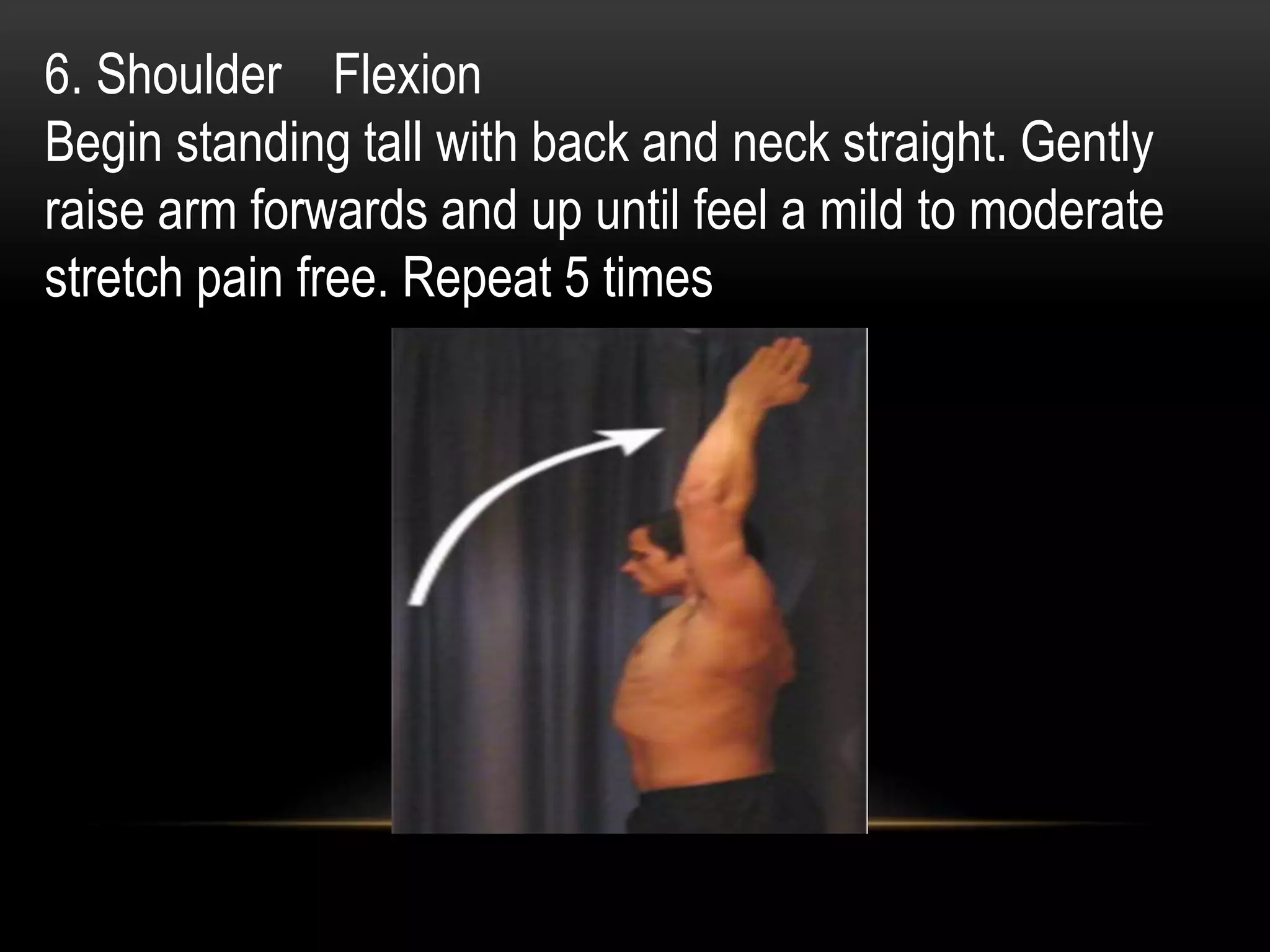
6. Shoulder Flexion
Begin standing tall with back and neck straight. Gently
raise arm forwards and up until feel a mild to moderate
stretch pain free. Repeat 5 times
Not to do
…..
>DO NOT walk if you feel unwell or if
the weather is inclement.
>DO NOT go up hills..
>DO NOT take your dog!!
>DO NOT push a heavy
shopping trolley
Physiotherapy in cardiac surgery   copy

Physiotherapy in cardiac surgery copy

  • 1.
    by : Dr. JaynarayanBairwa pt PRE AND POST OPERATIVE PHYSIOTHERAPY IN CARDIAC SURGERY
  • 2.
    THE ROLE OFPHYSIOTHERAPY IN CARDIAC SURGERY Cardiac surgical procedures change respiratory mechanics, defecting in lung dysfunction. The physical therapists play an important role in the preparation and rehabilitation of individuals who are undergoing cardiac surgery, as they have a large quantity of techniques. Breathing exercises with and without the use of devices, and respiratory muscle training in preoperative period of cardiac surgery in reducing postoperative pulmonary complications.
  • 3.
    Pre-operative Physiotherapy > physiotherapistprior to your surgery and they will provide education on what is required to facilitate your recovery as smoothly as possible. >Breathing exercises Breathing exercises are very important to prevent chest complications after surgery such as chest infection or lung collapse. > Practice of deep breathing exercises before the operation, it will be easier to do these afterwards.
  • 4.
    >Support coughing After operationit is important to cough to clear any sputum. The chest wound is supported by holding a pillow or rolled up towel firmly against the chest and leaning slightly forward.
  • 5.
    Physiotherapy post Cardiac Surgery >Exercisesafter the operation These exercises helps to remove the secretions produced from the lung lining after a general anesthetic and which, if left in the lungs, can lead to pneumonia. 1. Deep Breathing Exercises Take 5 deep breaths every hour and then huff and cough to clear any phlegm from your lungs. Use spirometer and take 5 breaths every hour.
  • 6.
    2. Leg exercise Thefollowing exercises increase the blood circulation and assist in preventing clots forming in the legs and chest. > Repeat 10 times every hour
  • 7.
    (a) Ankle Exercises (i)Move feet up and down at the ankles. Repeat 10 times every hour. (ii) Move feet together in circles. Repeat 10 times every hour.
  • 8.
    (b) Quadriceps Exercises Pressthe back of knees against the bed. heels should lift off the bed at the same time.
  • 9.
    (c) Gluteal Exercises Tightenyour buttocks together, hold for 5 seconds and relax.
  • 10.
    (d) Straight LegRaising Lift the leg off the bed, keeping knee straight.
  • 11.
    > As wellas breathing exercises, physio need to start stretching exercises to prevent stiffness . > These need to be done twice daily and are to be done slowly.
  • 12.
    1. Extension inSitting Begin sitting tall, with your back and neck straight, shoulders back slightly. Gently take your neck backwards, looking up towards the ceiling until you feel a mild to moderate stretch pain-free. Repeat 5 times.
  • 13.
    Begin sitting withback and neck straight and shoulders back slightly. Turn head looking over one shoulder until you feel a mild to moderate stretch pain-free. Keep your neck straight and don't allow your head to poke forwards during the movement. 2. Rotation in Sitting.
  • 14.
    3. Rotation inSitting Begin sitting tall, with arms across chest. Keeping legs still,gently rotate to one side until feel a mild to moderate stretch that is pain free. Repeat 10 times to each side
  • 15.
    4. Side Bendin Sitting Begin sitting tall, back straight, hands behind head or neck. Gently bend to one side, moving elbow towards hip until feela mildto moderatestretch pain-free. Make sure you do not lean forwards. Repeat 5 times on each side
  • 16.
    5. Shoulder Extension Beginstanding tall, with neck and back straight. Gently take arm backwards until feel a mild to moderate stretch pain free. Repeat 5 times
  • 17.
    6. Shoulder Flexion Beginstanding tall with back and neck straight. Gently raise arm forwards and up until feel a mild to moderate stretch pain free. Repeat 5 times
  • 18.
    Not to do ….. >DONOT walk if you feel unwell or if the weather is inclement. >DO NOT go up hills.. >DO NOT take your dog!! >DO NOT push a heavy shopping trolley

Editor's Notes

  • #3 Cardiac surgical procedures change respiratory mechanics, defecting in lung dysfunction. The physical therapists play an important role in the preparation and rehabilitation of individuals who are undergoing cardiac surgery, as they have a large quantity of techniques.
  • #19 Not to do