FIREWALL FUNDAMENTALS

                     Mẫn Thắng
         manvanthang@gmail.com


                                 9/24/2011
OBJECTIVES

    Introduction to Firewall

    Firewall Taxonomy

    Firewall Architectures

    Firewall Planning & Implementation

    Firewall Limitations


                                          2
INTRODUCTION

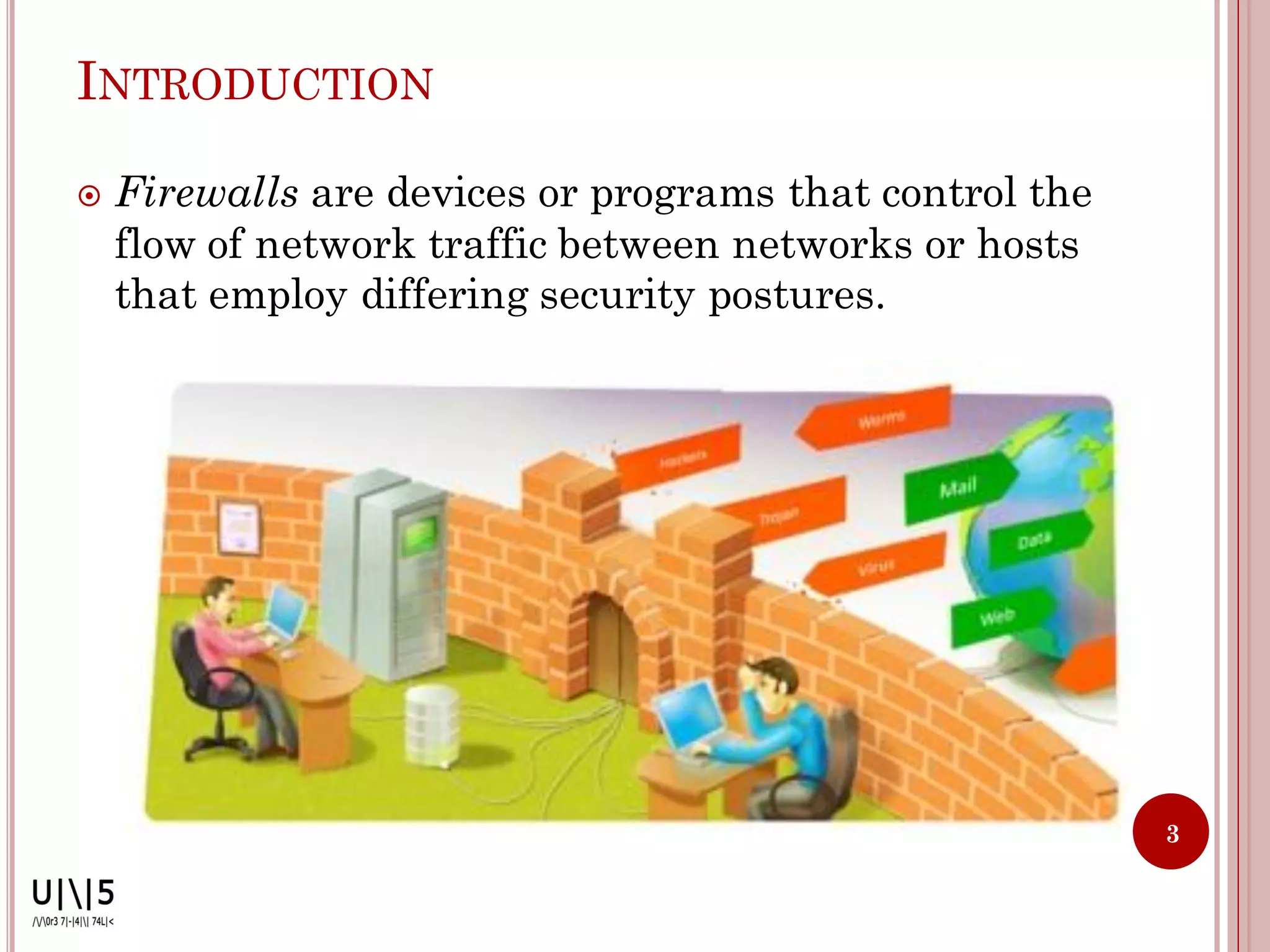
   Firewalls are devices or programs that control the
    flow of network traffic between networks or hosts
    that employ differing security postures.


                                                         3
INTRODUCTION

   What can firewalls do?
       Manage and control network traffic
       Authenticate access
       Act as an intermediary
       Protect resources
       Record and report on events

   Firewalls operate at Layers 2, 3, 4, and 7 of the OSI
    model


                                                            4
INTRODUCTION

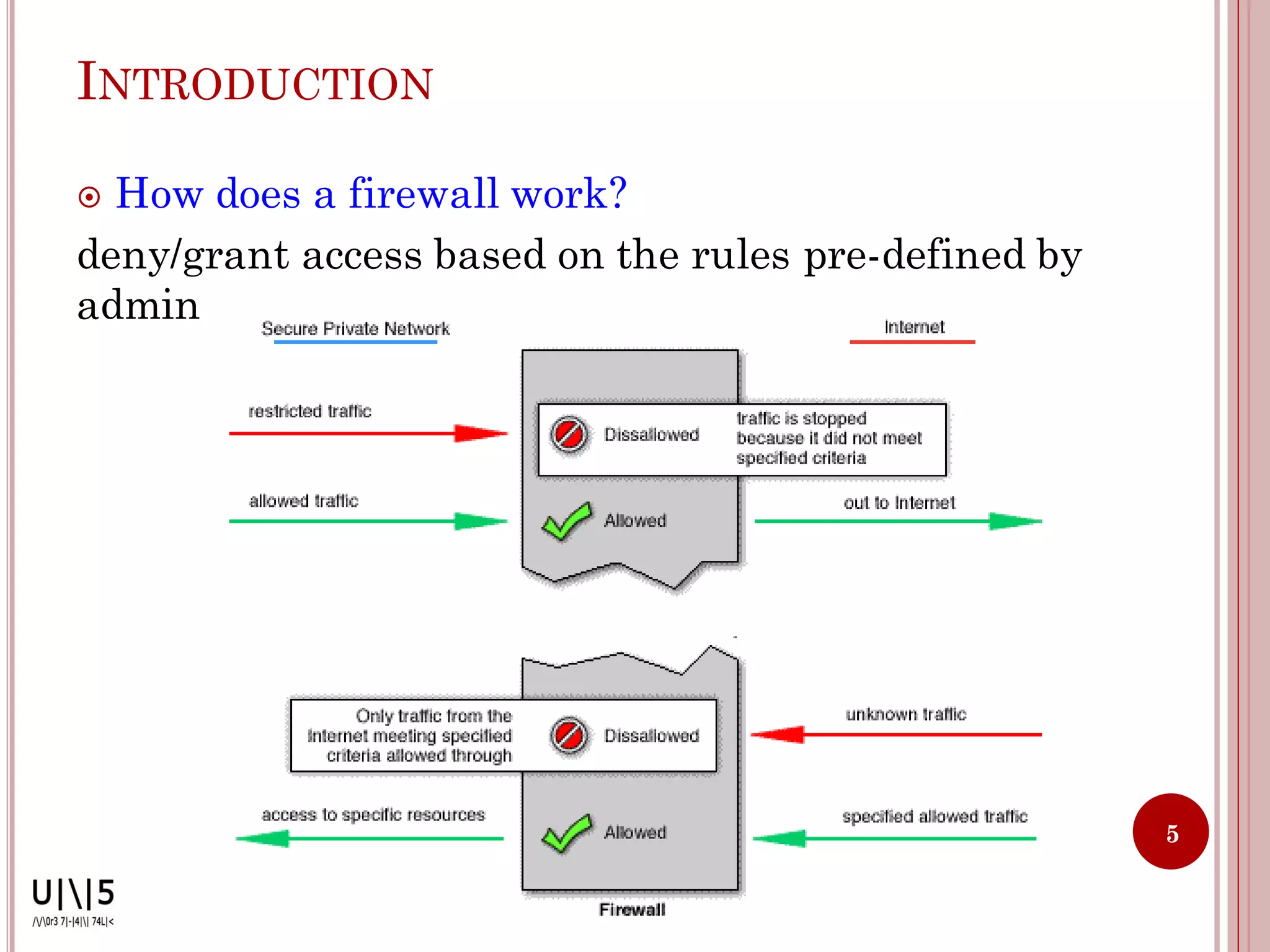
 How does a firewall work?
deny/grant access based on the rules pre-defined by
admin


                                                      5
TAXONOMY

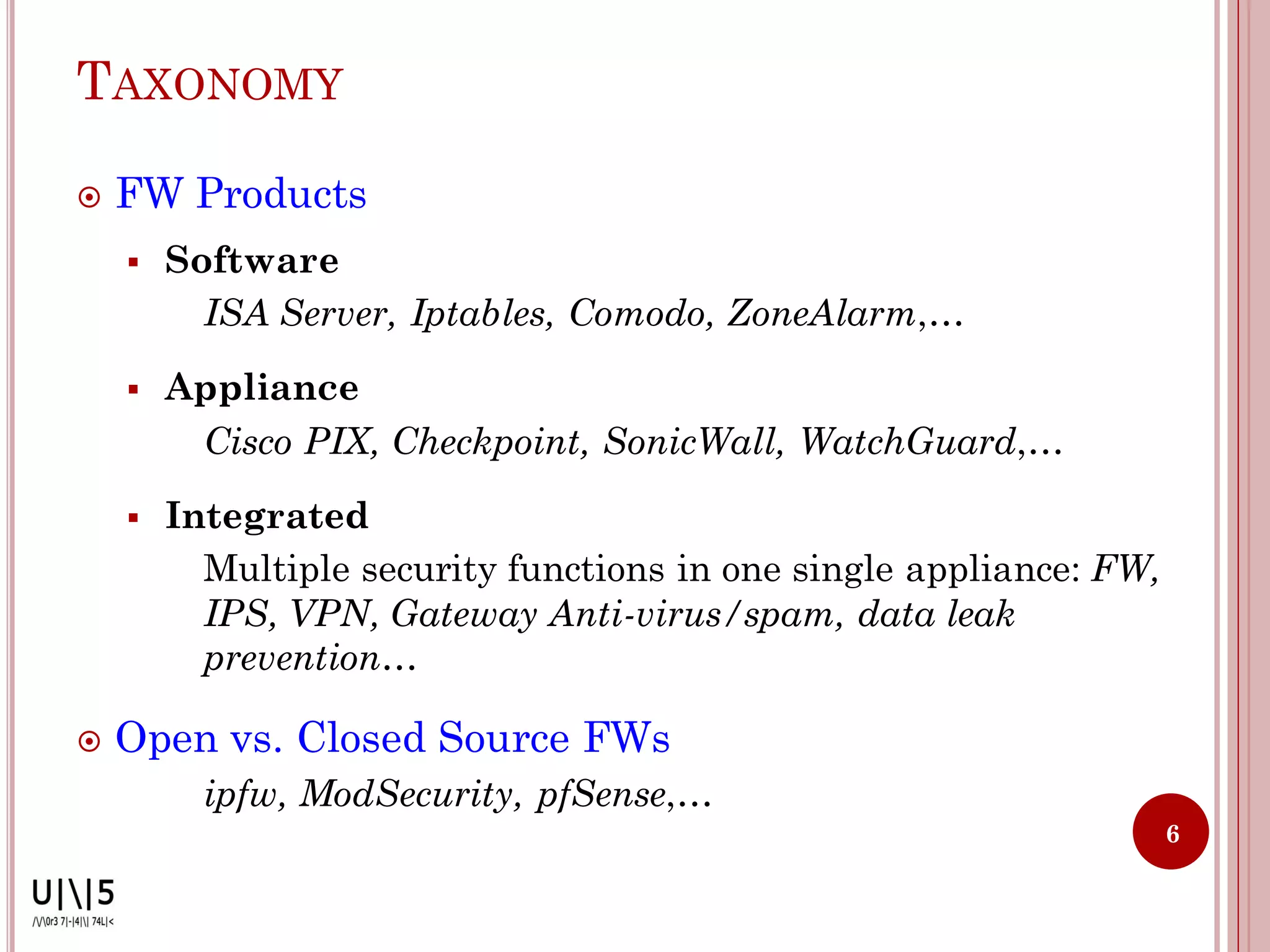
   FW Products
       Software
          ISA Server, Iptables, Comodo, ZoneAlarm,…

       Appliance
         Cisco PIX, Checkpoint, SonicWall, WatchGuard,…

       Integrated
          Multiple security functions in one single appliance: FW,
          IPS, VPN, Gateway Anti-virus/spam, data leak
          prevention…

   Open vs. Closed Source FWs
          ipfw, ModSecurity, pfSense,…
                                                                     6
TAXONOMY
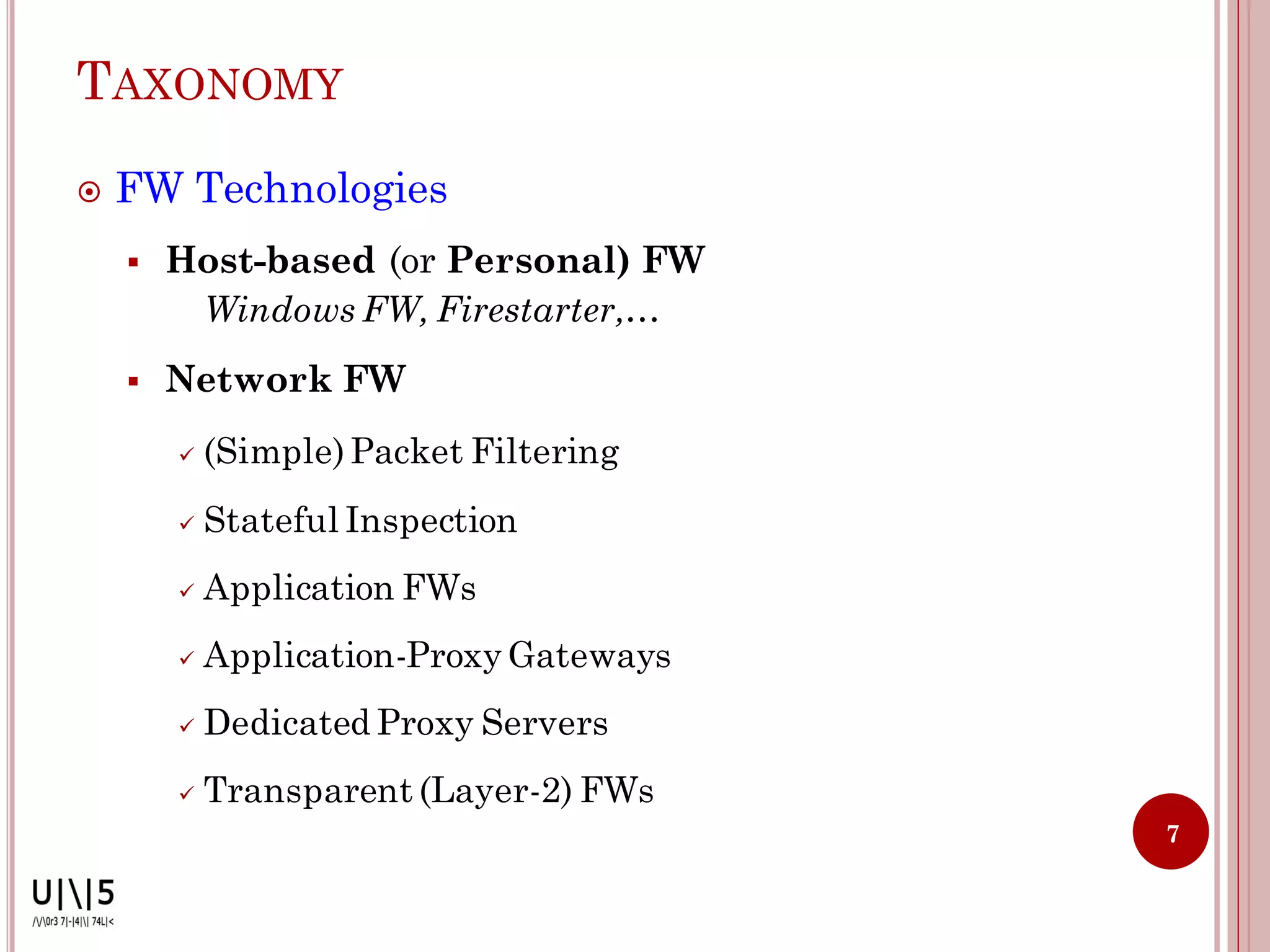
   FW Technologies
       Host-based (or Personal) FW
         Windows FW, Firestarter,…
       Network FW
           (Simple) Packet Filtering
           Stateful Inspection
           Application FWs
           Application-Proxy Gateways
           Dedicated Proxy Servers
           Transparent (Layer-2) FWs
                                         7
TAXONOMY

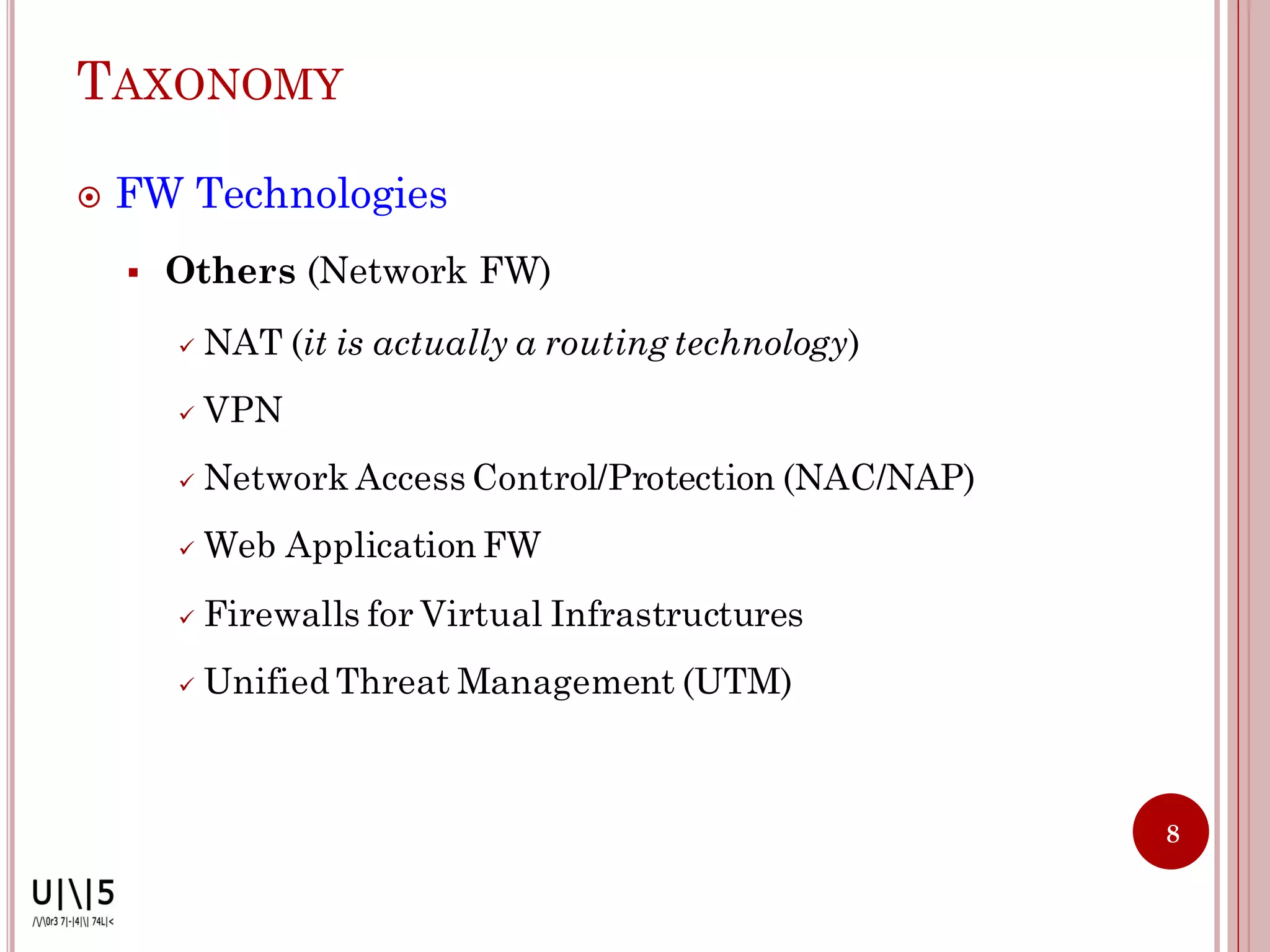
   FW Technologies
       Others (Network FW)
           NAT (it is actually a routing technology)
           VPN
           Network Access Control/Protection (NAC/NAP)
           Web Application FW
           Firewalls for Virtual Infrastructures
           Unified Threat Management (UTM)


                                                          8
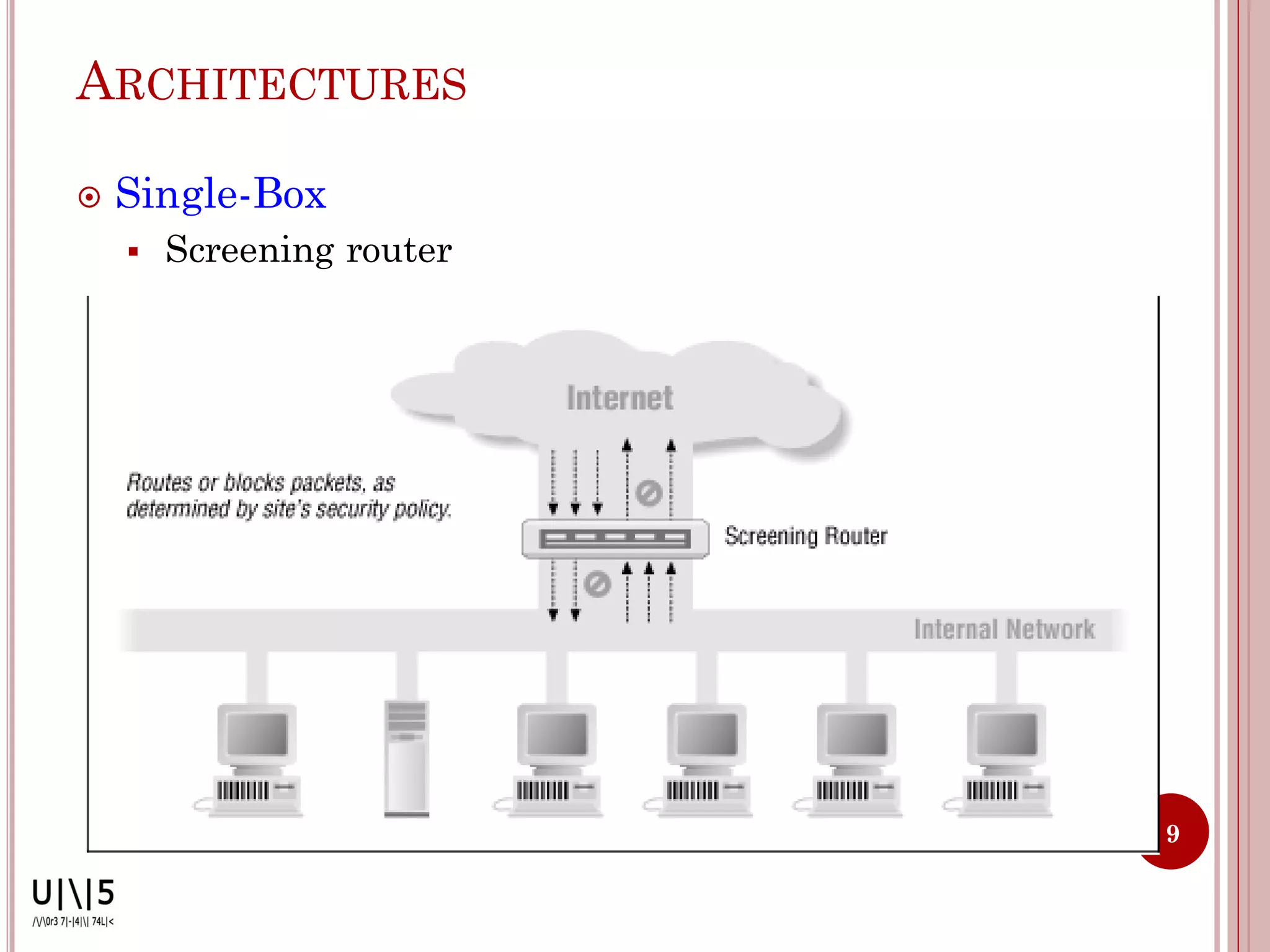
ARCHITECTURES

   Single-Box
       Screening router


                           9
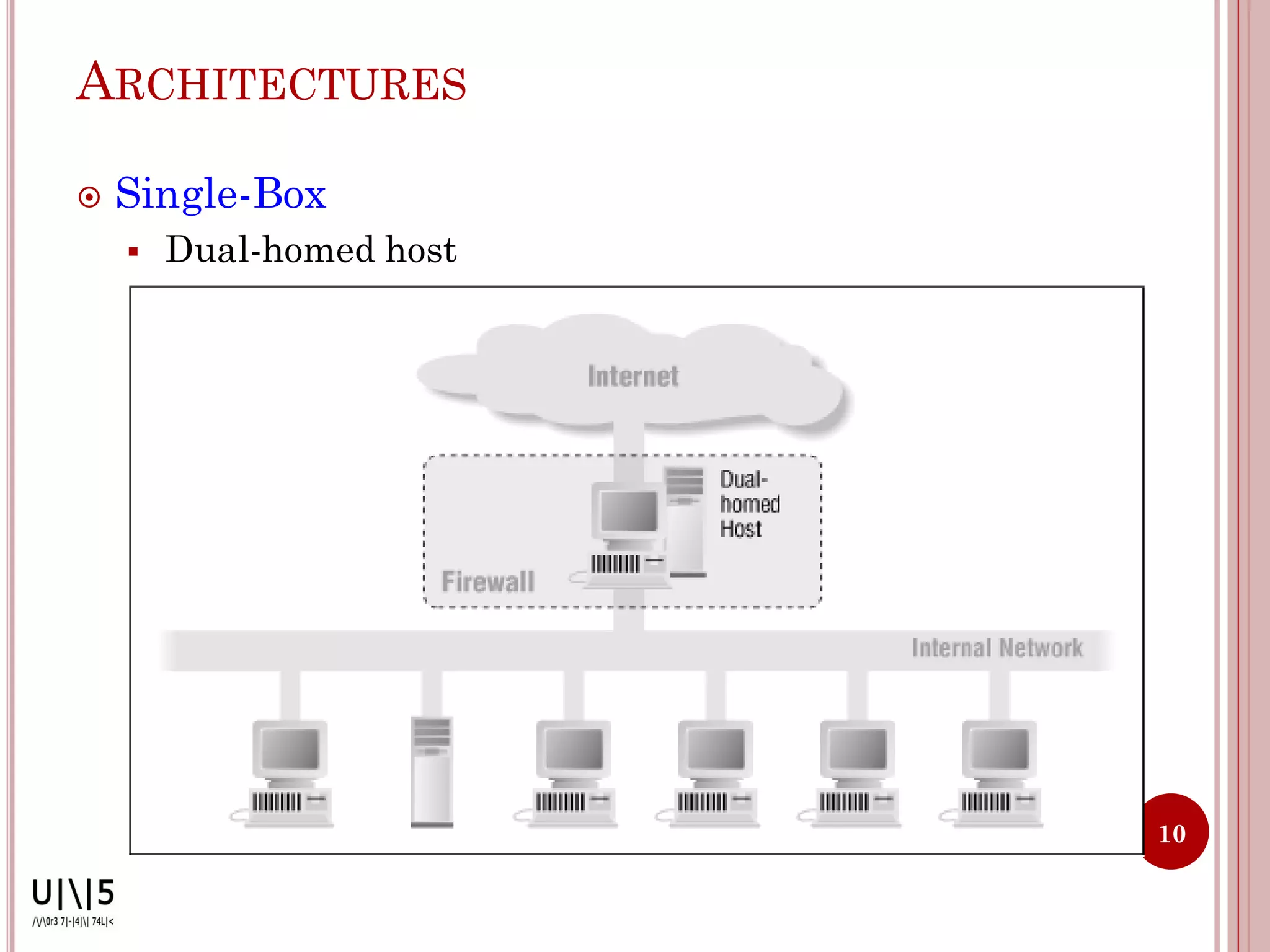
ARCHITECTURES

   Single-Box
       Dual-homed host


                          10
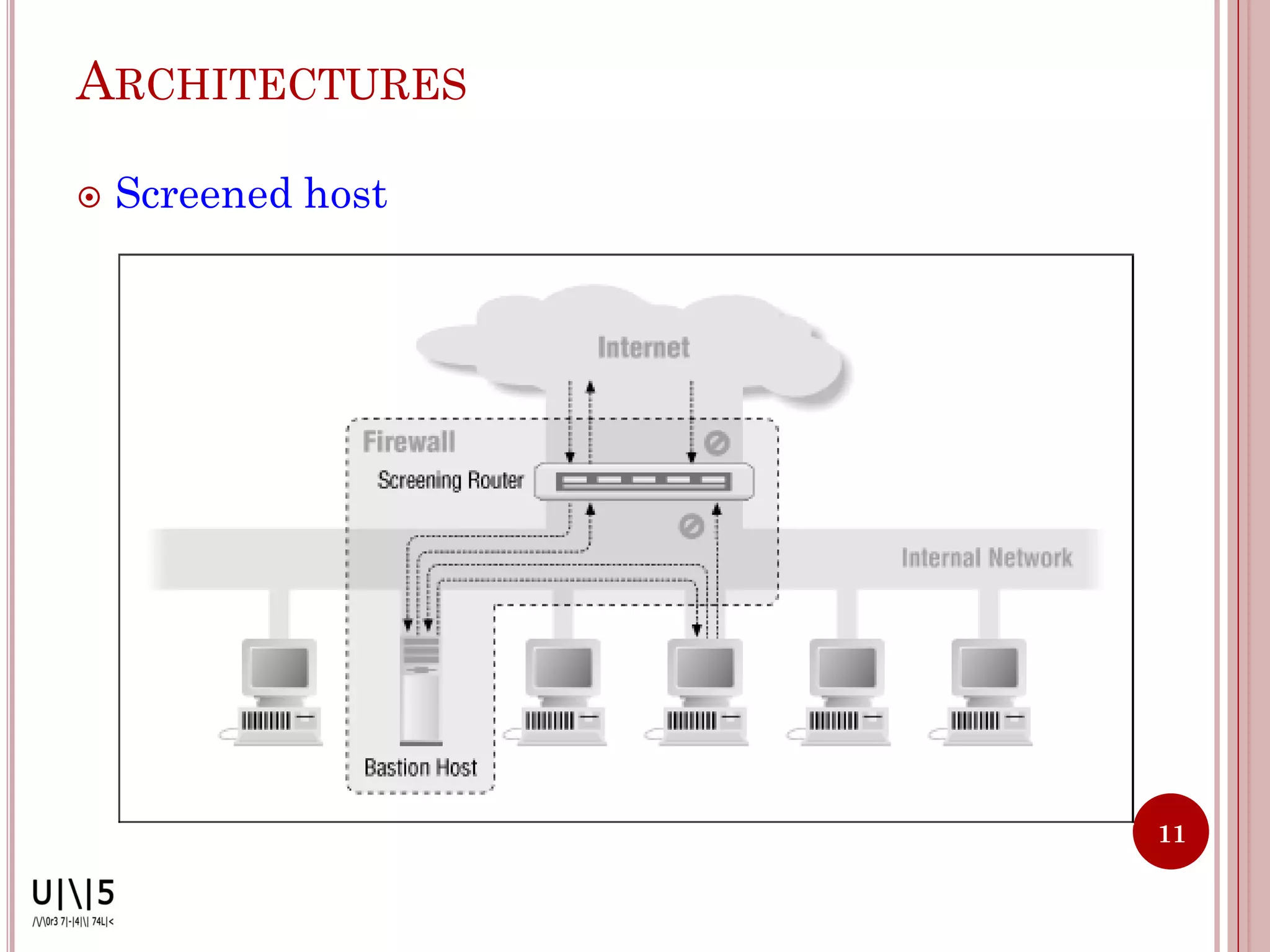
ARCHITECTURES

   Screened host


                    11
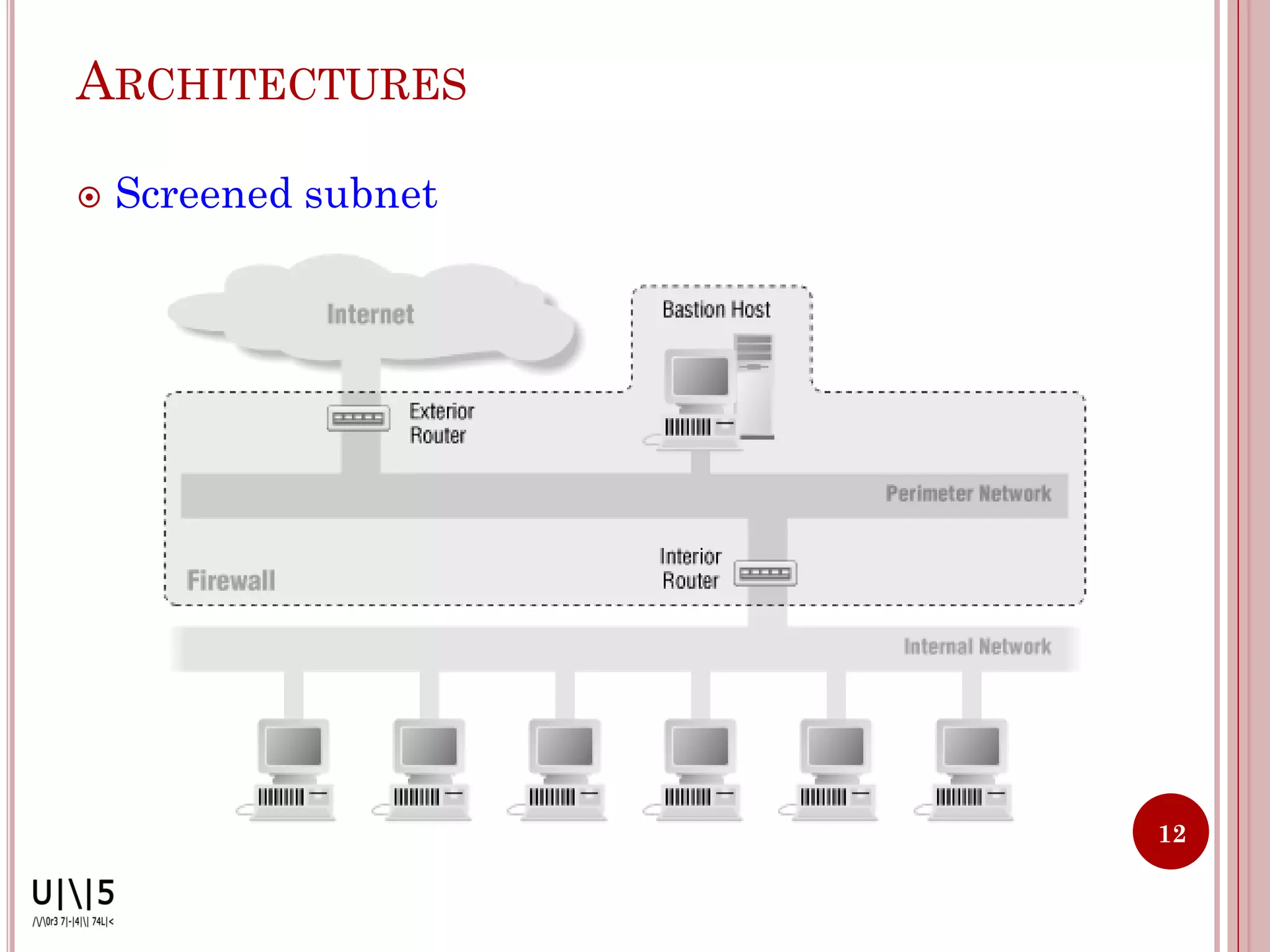
ARCHITECTURES

   Screened subnet


                      12
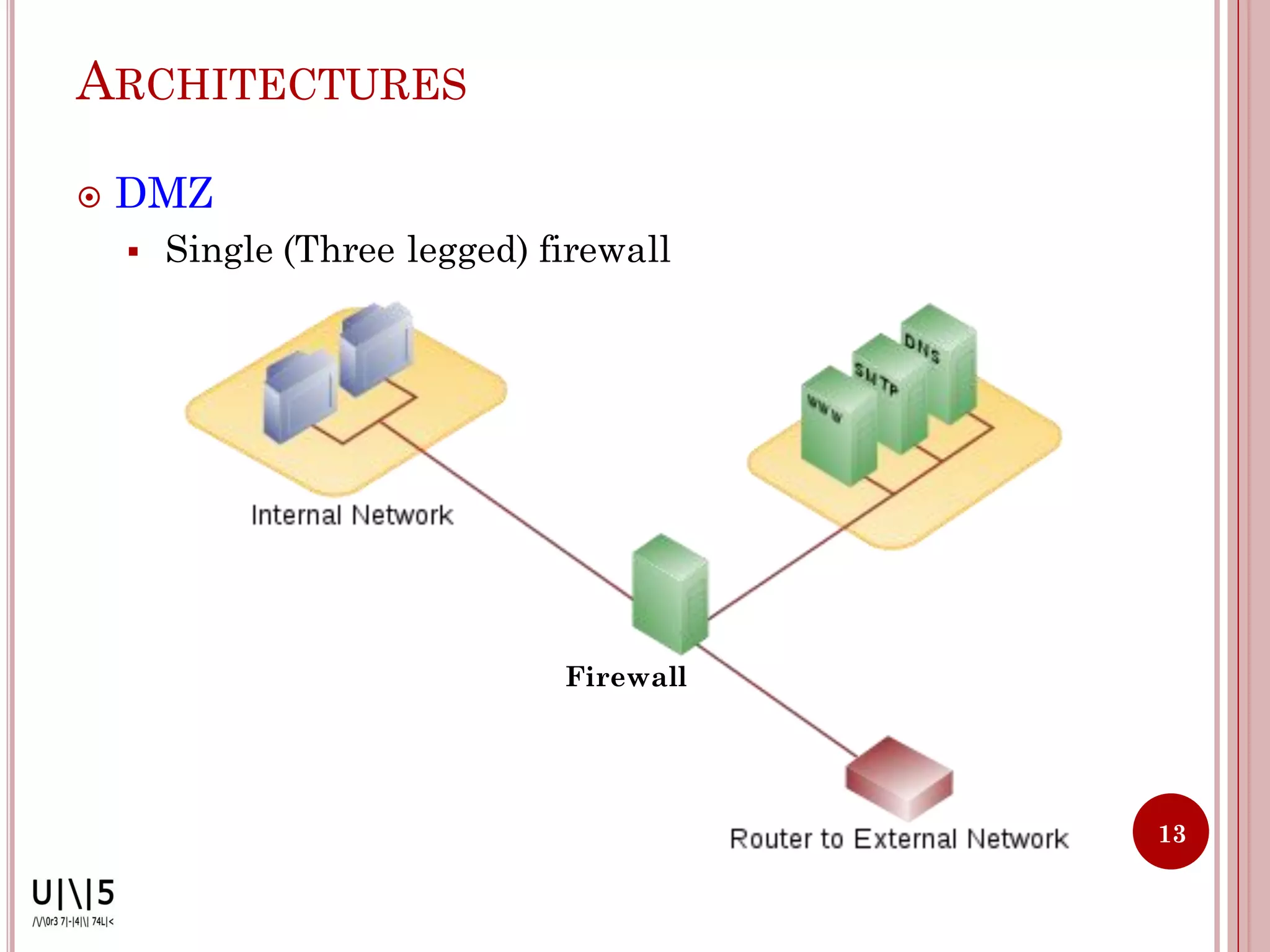
ARCHITECTURES

   DMZ
       Single (Three legged) firewall


                               Firewall


                                          13
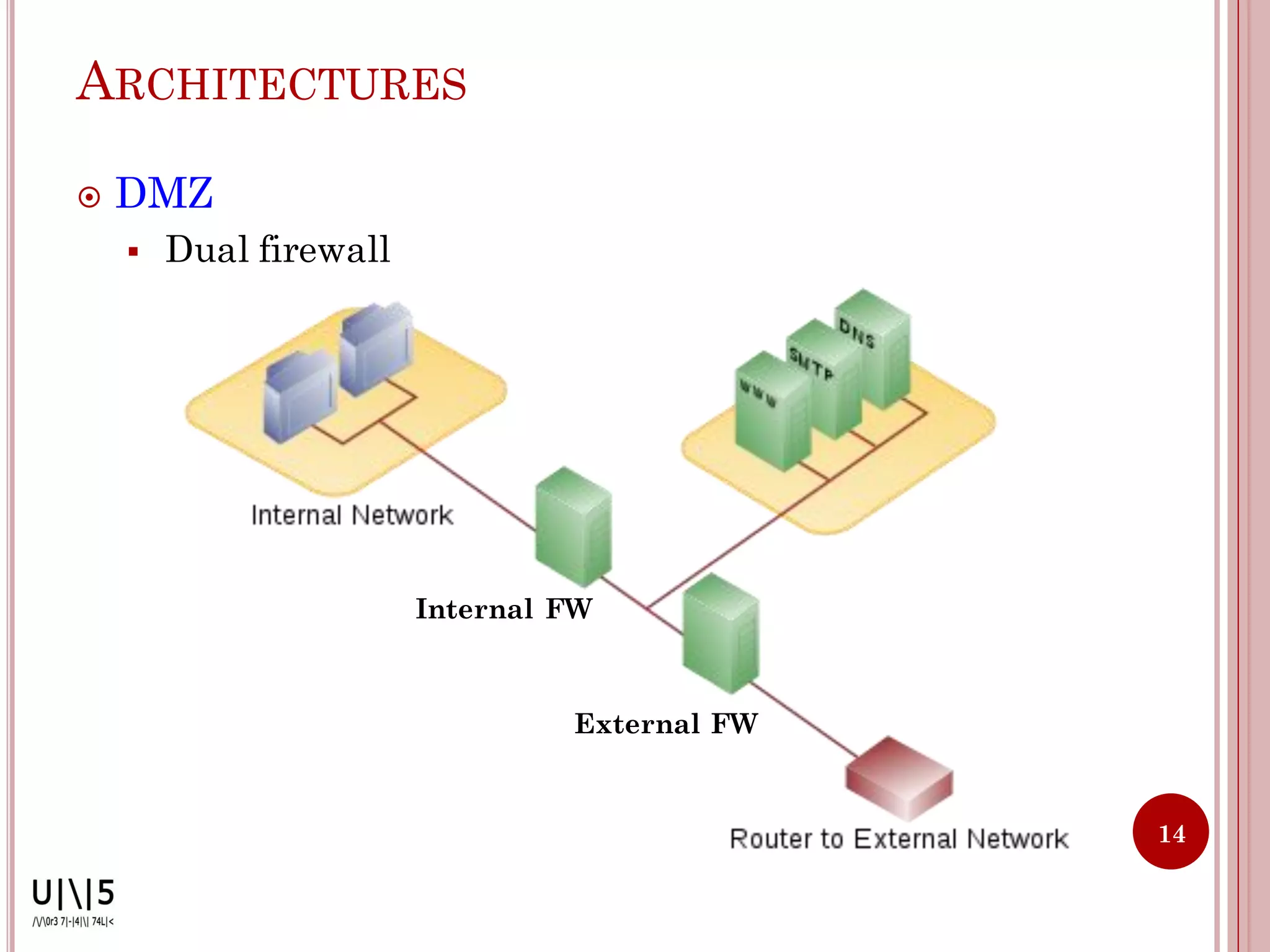
ARCHITECTURES

   DMZ
       Dual firewall


                        Internal FW


                                 External FW


                                               14
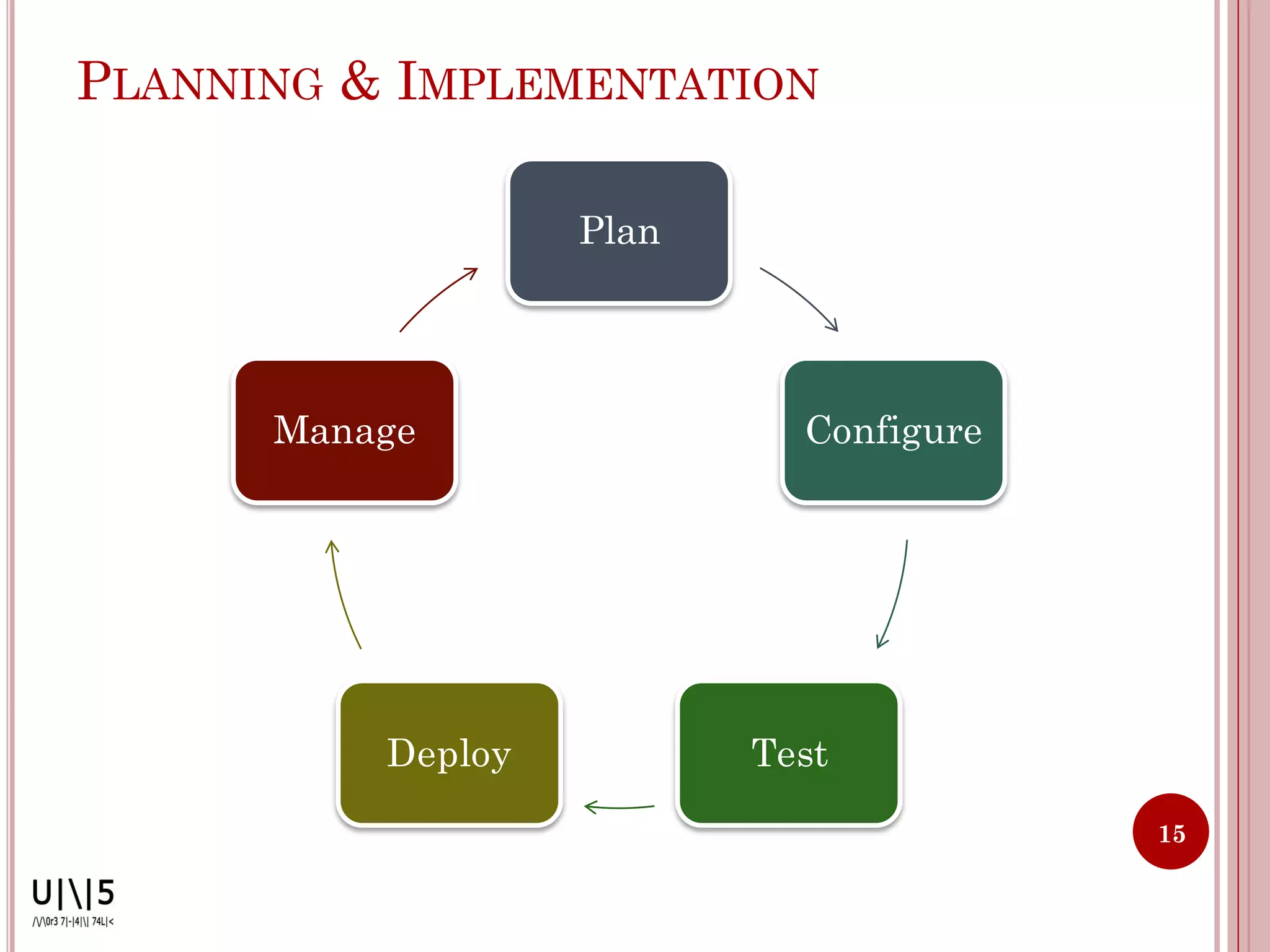
PLANNING & IMPLEMENTATION

                   Plan


      Manage                Configure


          Deploy          Test
                                        15
LIMITATIONS

   What a firewall CAN’T protect against:

       viruses/malwares
       internal threats (disgruntled workers, poor
        security policy…)
       attacks that do not traverse the firewall (social
        engineering, personal modems or unauthorized
        wireless connections…)
       attacks on services that are allowed through the
        firewall (HTTP, SMTP, FTP…)

                                                            16
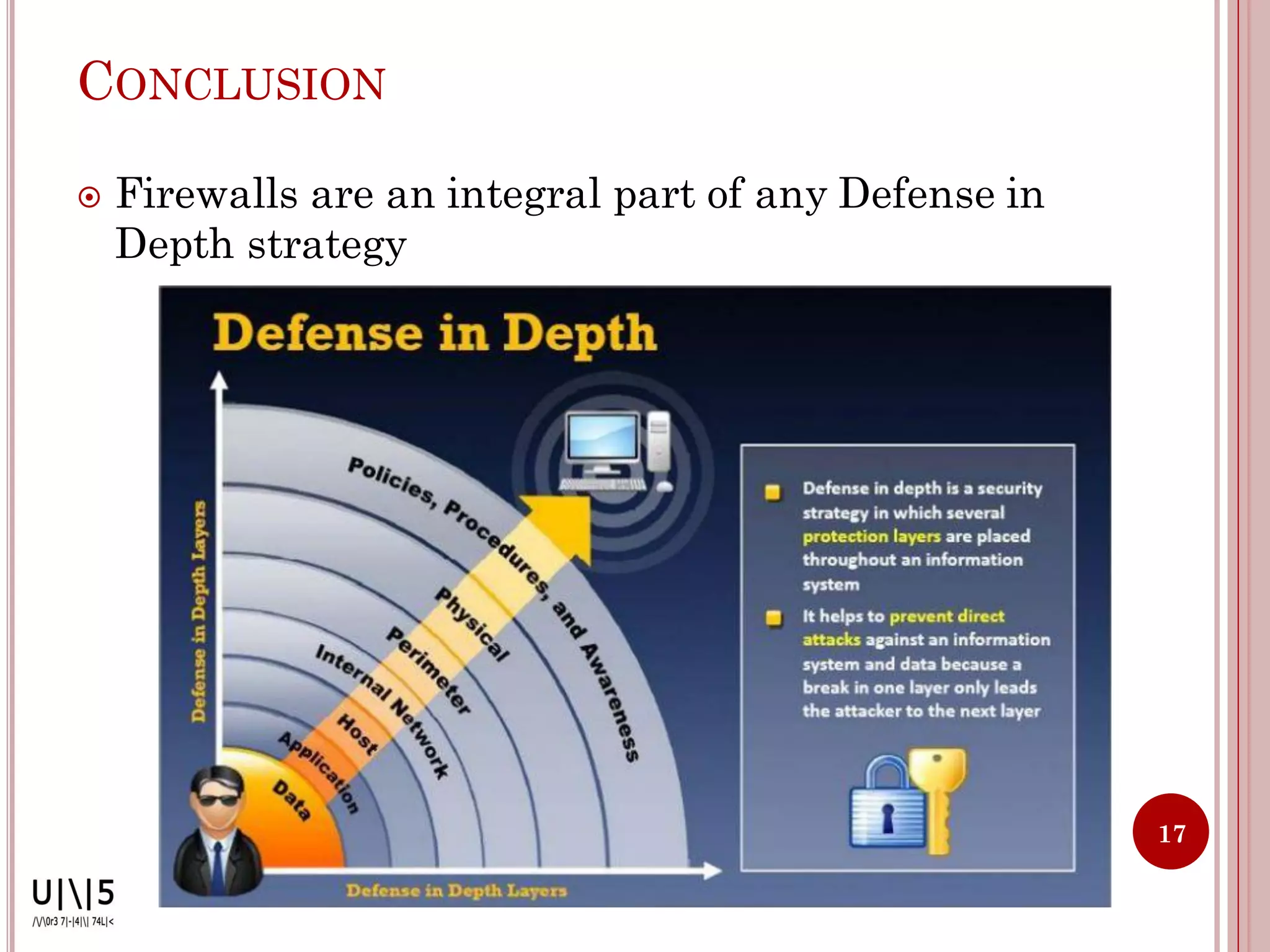
CONCLUSION

   Firewalls are an integral part of any Defense in
    Depth strategy


                                                       17
REFERENCES

[1] Firewall Fundamentals, Cisco Press (2006)

[2] Tactical Perimeter Defense, Element K (2007)

[3] Module 16 of CEH v7, EC-Council (2010)

[4] Building Internet Firewalls 2nd Edition, O'Reilly
(2000)

[5] Guidelines on Firewalls and Firewall Policy, NIST
(2009)

                                                        18
THANKS FOR YOUR ATTENTION!

          Q&A


                             19

Firewall fundamentals

  • 1.
    FIREWALL FUNDAMENTALS Mẫn Thắng manvanthang@gmail.com 9/24/2011
  • 2.
    OBJECTIVES  Introduction to Firewall  Firewall Taxonomy  Firewall Architectures  Firewall Planning & Implementation  Firewall Limitations 2
  • 3.
    INTRODUCTION  Firewalls are devices or programs that control the flow of network traffic between networks or hosts that employ differing security postures. 3
  • 4.
    INTRODUCTION  What can firewalls do?  Manage and control network traffic  Authenticate access  Act as an intermediary  Protect resources  Record and report on events  Firewalls operate at Layers 2, 3, 4, and 7 of the OSI model 4
  • 5.
    INTRODUCTION  How doesa firewall work? deny/grant access based on the rules pre-defined by admin 5
  • 6.
    TAXONOMY  FW Products  Software ISA Server, Iptables, Comodo, ZoneAlarm,…  Appliance Cisco PIX, Checkpoint, SonicWall, WatchGuard,…  Integrated Multiple security functions in one single appliance: FW, IPS, VPN, Gateway Anti-virus/spam, data leak prevention…  Open vs. Closed Source FWs ipfw, ModSecurity, pfSense,… 6
  • 7.
    TAXONOMY  FW Technologies  Host-based (or Personal) FW Windows FW, Firestarter,…  Network FW  (Simple) Packet Filtering  Stateful Inspection  Application FWs  Application-Proxy Gateways  Dedicated Proxy Servers  Transparent (Layer-2) FWs 7
  • 8.
    TAXONOMY  FW Technologies  Others (Network FW)  NAT (it is actually a routing technology)  VPN  Network Access Control/Protection (NAC/NAP)  Web Application FW  Firewalls for Virtual Infrastructures  Unified Threat Management (UTM) 8
  • 9.
    ARCHITECTURES  Single-Box  Screening router 9
  • 10.
    ARCHITECTURES  Single-Box  Dual-homed host 10
  • 11.
    ARCHITECTURES  Screened host 11
  • 12.
    ARCHITECTURES  Screened subnet 12
  • 13.
    ARCHITECTURES  DMZ  Single (Three legged) firewall Firewall 13
  • 14.
    ARCHITECTURES  DMZ  Dual firewall Internal FW External FW 14
  • 15.
    PLANNING & IMPLEMENTATION Plan Manage Configure Deploy Test 15
  • 16.
    LIMITATIONS  What a firewall CAN’T protect against:  viruses/malwares  internal threats (disgruntled workers, poor security policy…)  attacks that do not traverse the firewall (social engineering, personal modems or unauthorized wireless connections…)  attacks on services that are allowed through the firewall (HTTP, SMTP, FTP…) 16
  • 17.
    CONCLUSION  Firewalls are an integral part of any Defense in Depth strategy 17
  • 18.
    REFERENCES [1] Firewall Fundamentals,Cisco Press (2006) [2] Tactical Perimeter Defense, Element K (2007) [3] Module 16 of CEH v7, EC-Council (2010) [4] Building Internet Firewalls 2nd Edition, O'Reilly (2000) [5] Guidelines on Firewalls and Firewall Policy, NIST (2009) 18
  • 19.
    THANKS FOR YOURATTENTION! Q&A 19