1
Running in Production
Thang Man
Lead Cloud Engineer
FimPlus Digital
@Barcamp Saigon 2016
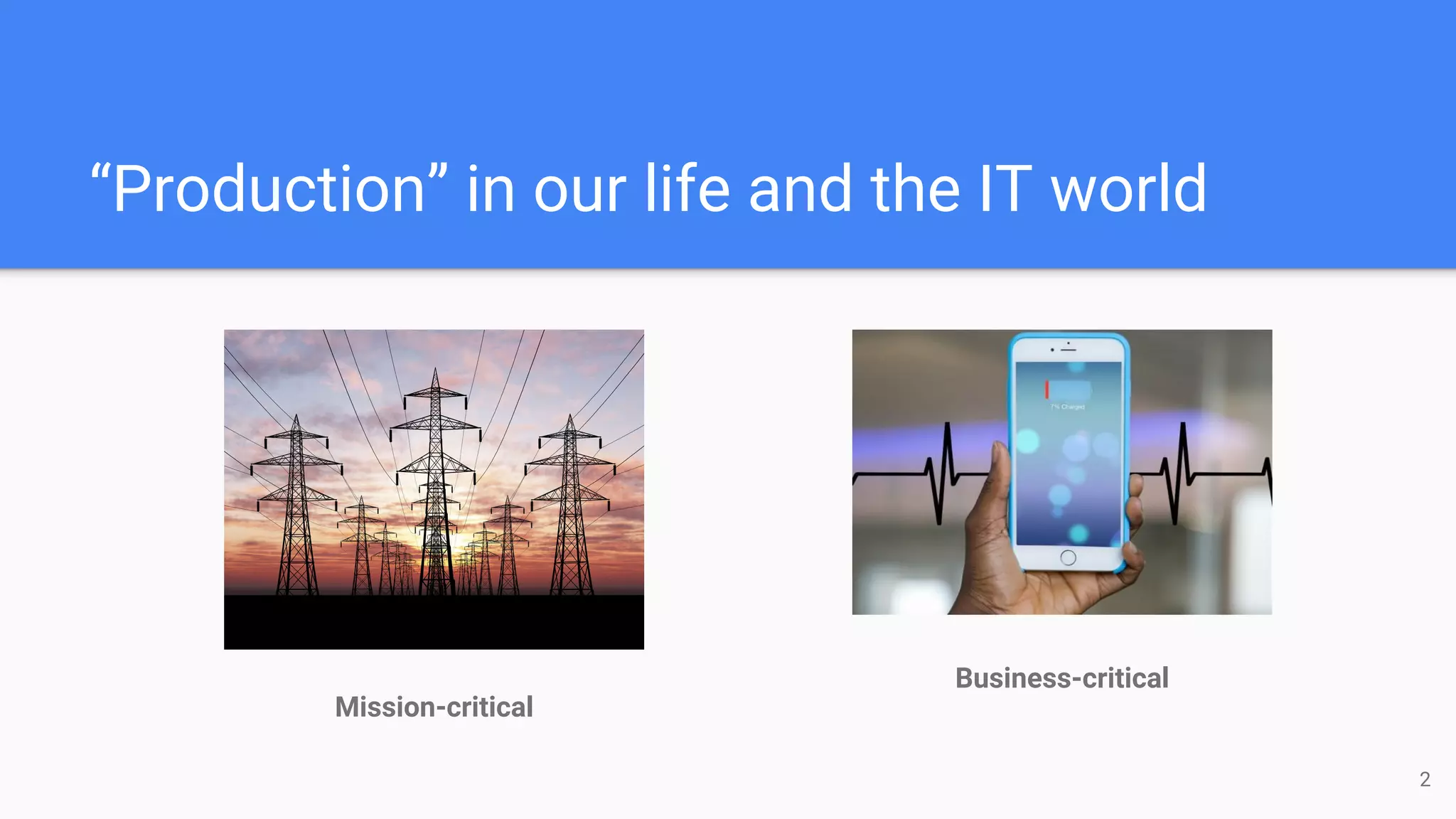
Mission-critical
Business-critical
2
“Production” in our life and the IT world
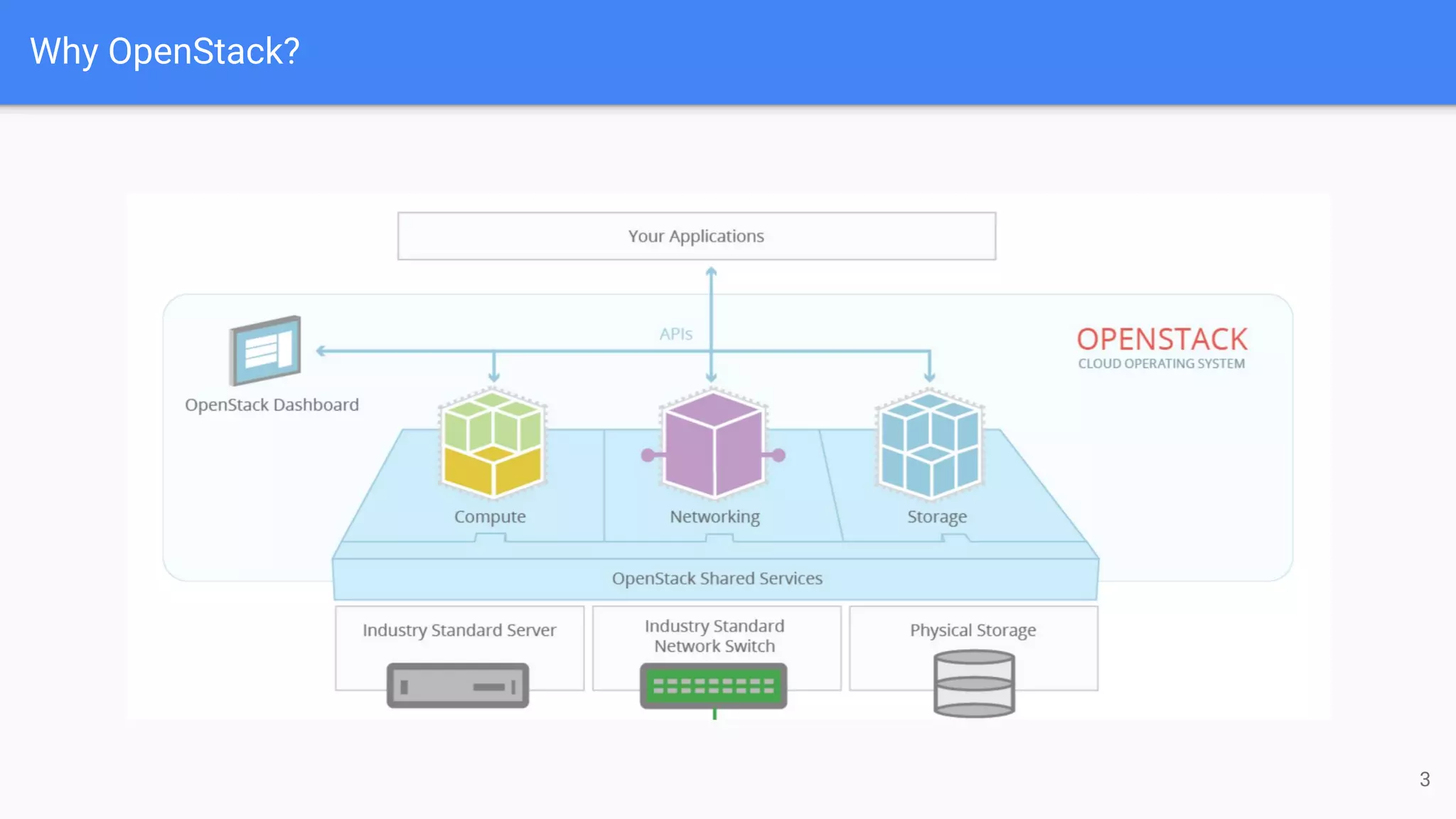
Why OpenStack?
3
Our Demand Workloads
for Infrastructure
4
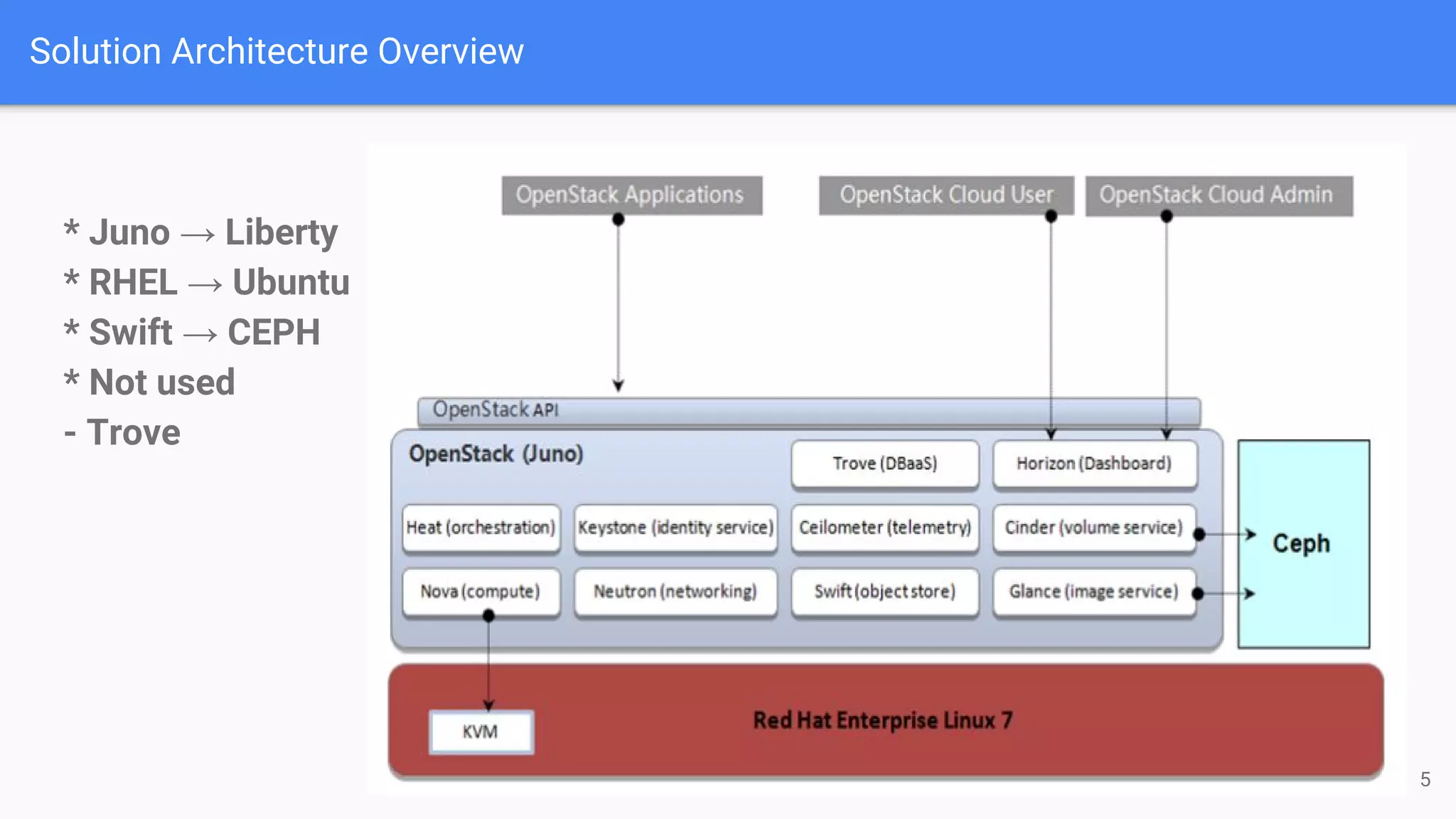
Solution Architecture Overview
* Juno → Liberty
* RHEL → Ubuntu
* Swift → CEPH
* Not used
- Trove
5
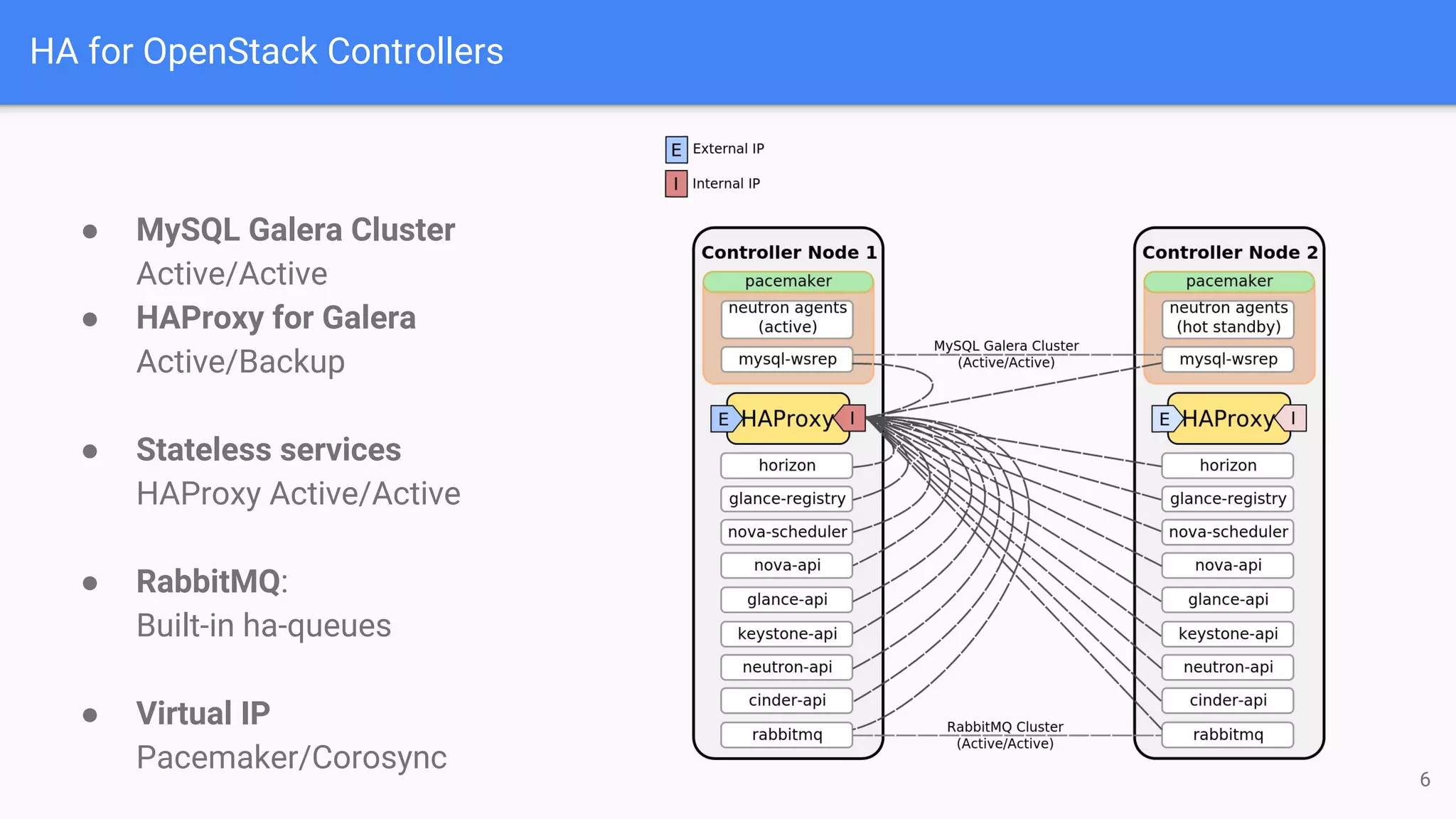
HA for OpenStack Controllers
● MySQL Galera Cluster
Active/Active
● HAProxy for Galera
Active/Backup
● Stateless services
HAProxy Active/Active
● RabbitMQ:
Built-in ha-queues
● Virtual IP
Pacemaker/Corosync
6
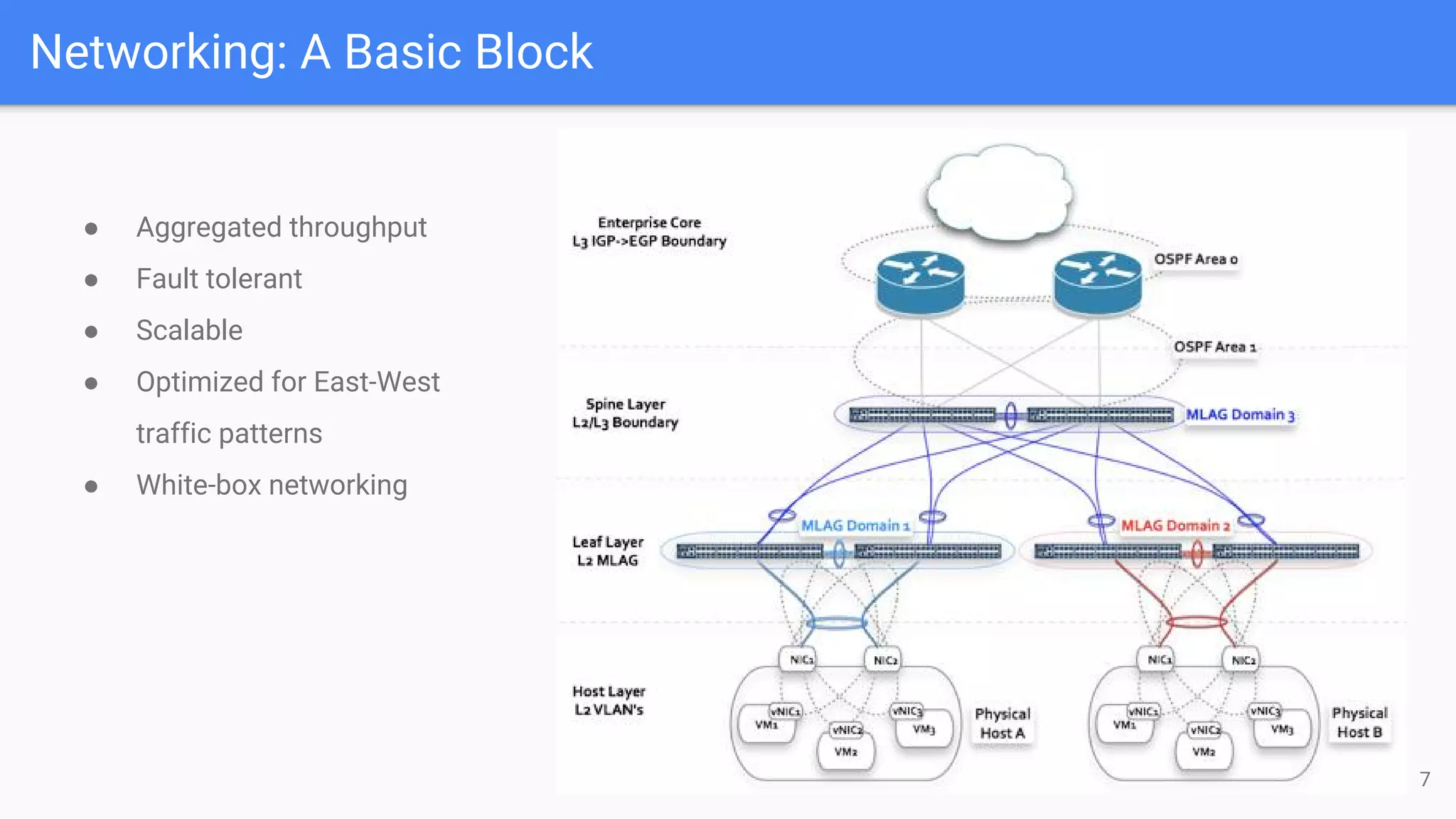
Networking: A Basic Block
● Aggregated throughput
● Fault tolerant
● Scalable
● Optimized for East-West
traffic patterns
● White-box networking
7
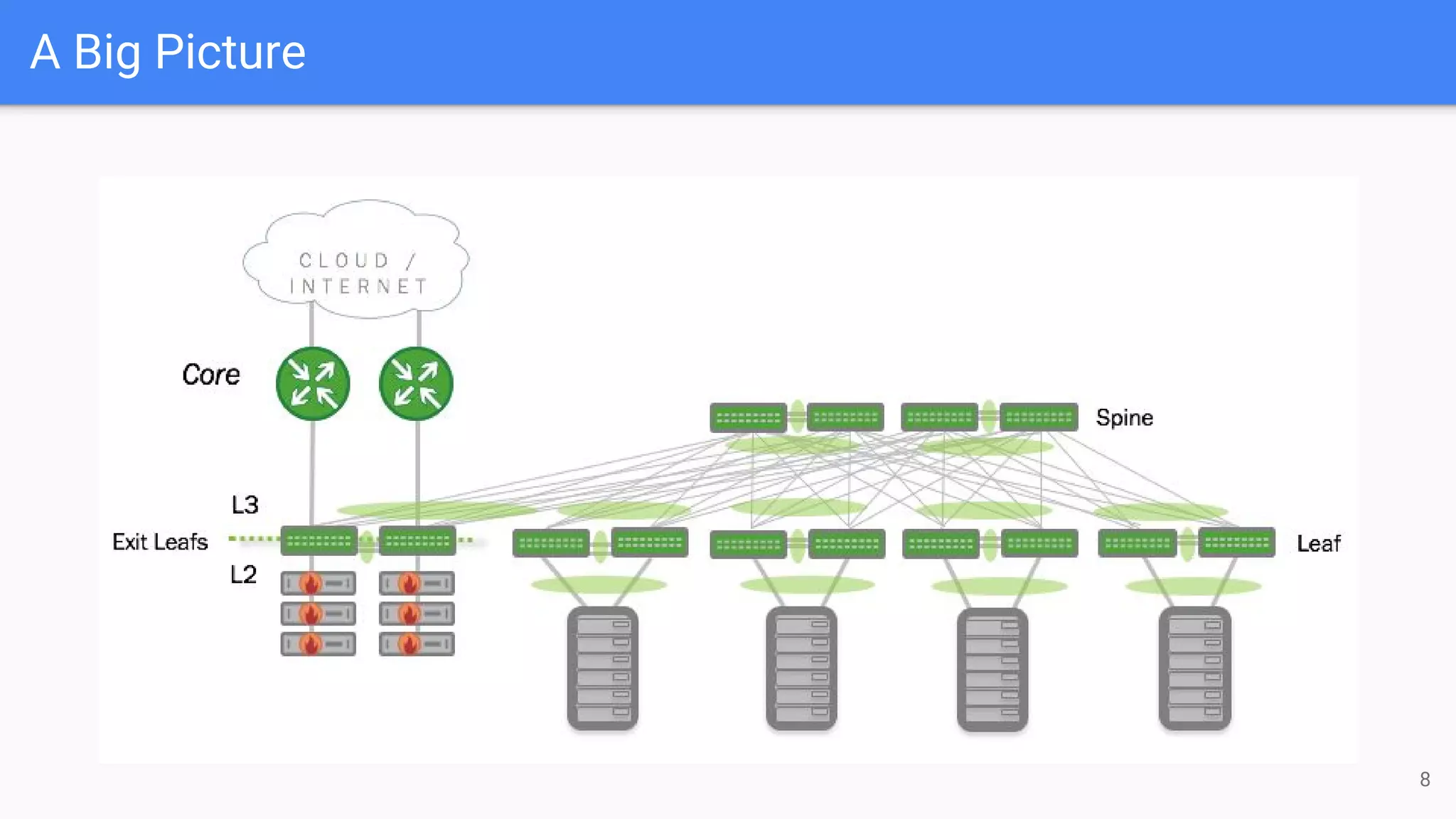
A Big Picture
8
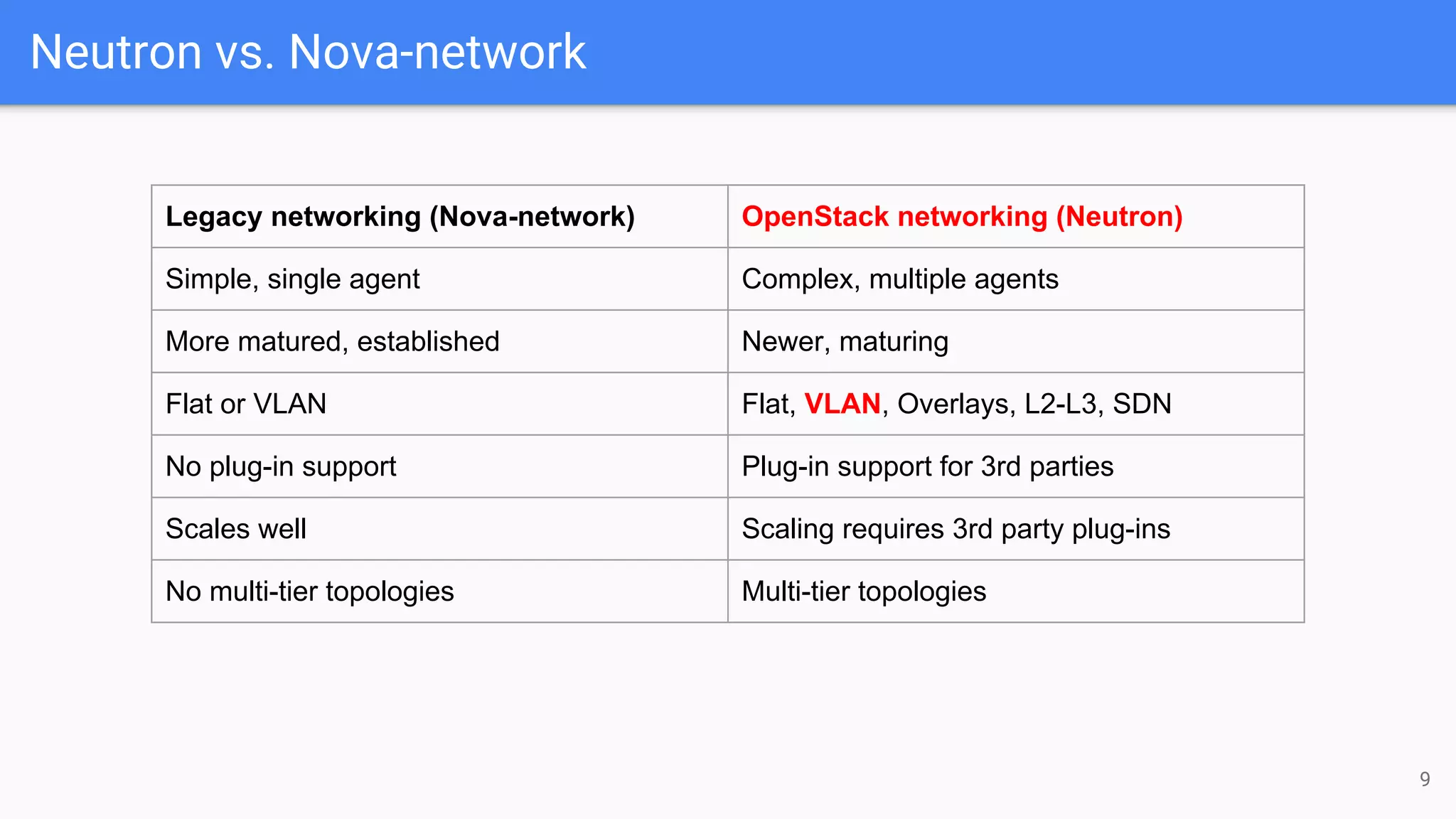
Neutron vs. Nova-network
Legacy networking (Nova-network) OpenStack networking (Neutron)
Simple, single agent Complex, multiple agents
More matured, established Newer, maturing
Flat or VLAN Flat, VLAN, Overlays, L2-L3, SDN
No plug-in support Plug-in support for 3rd parties
Scales well Scaling requires 3rd party plug-ins
No multi-tier topologies Multi-tier topologies
9
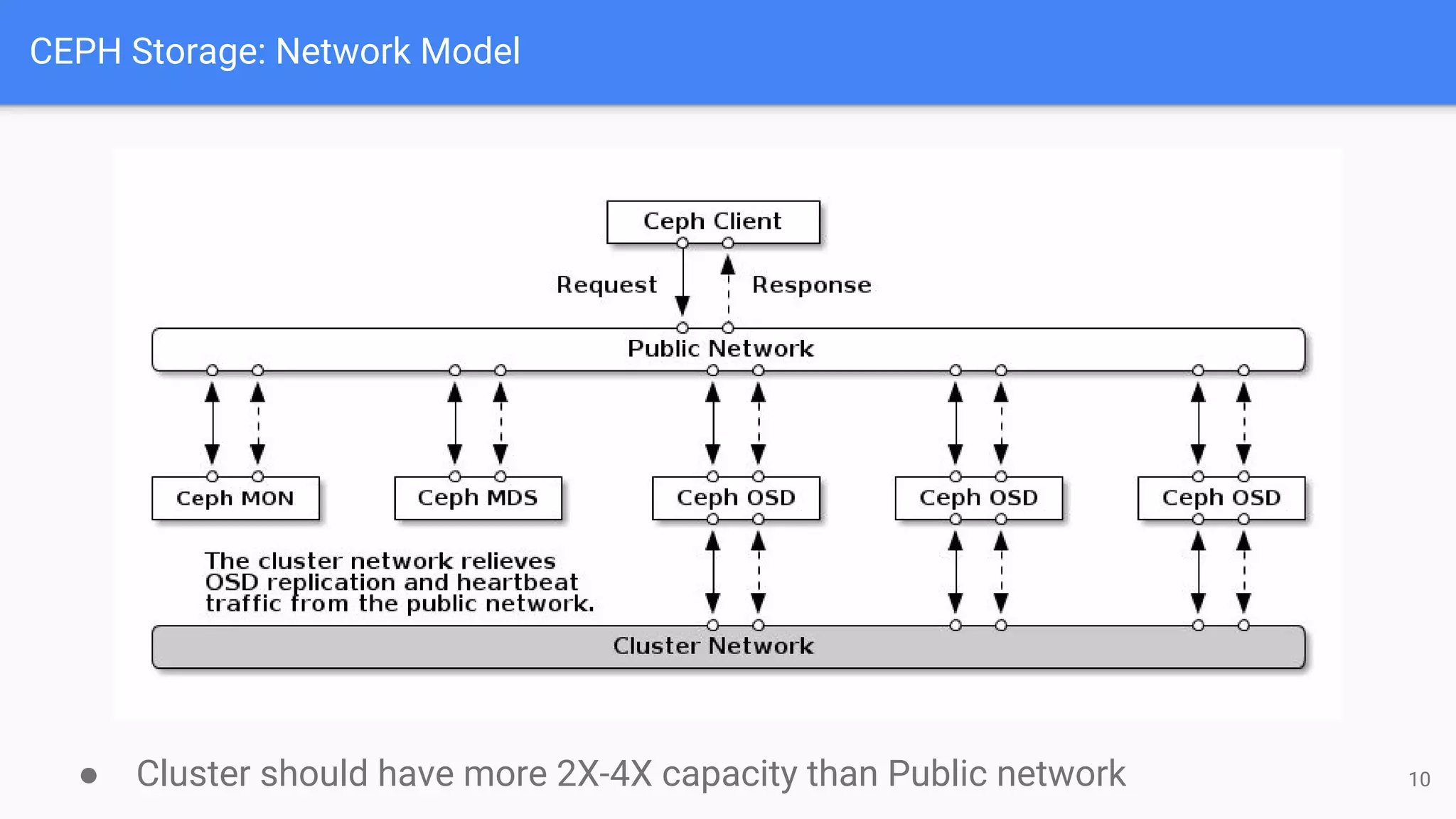
CEPH Storage: Network Model
● Cluster should have more 2X-4X capacity than Public network 10
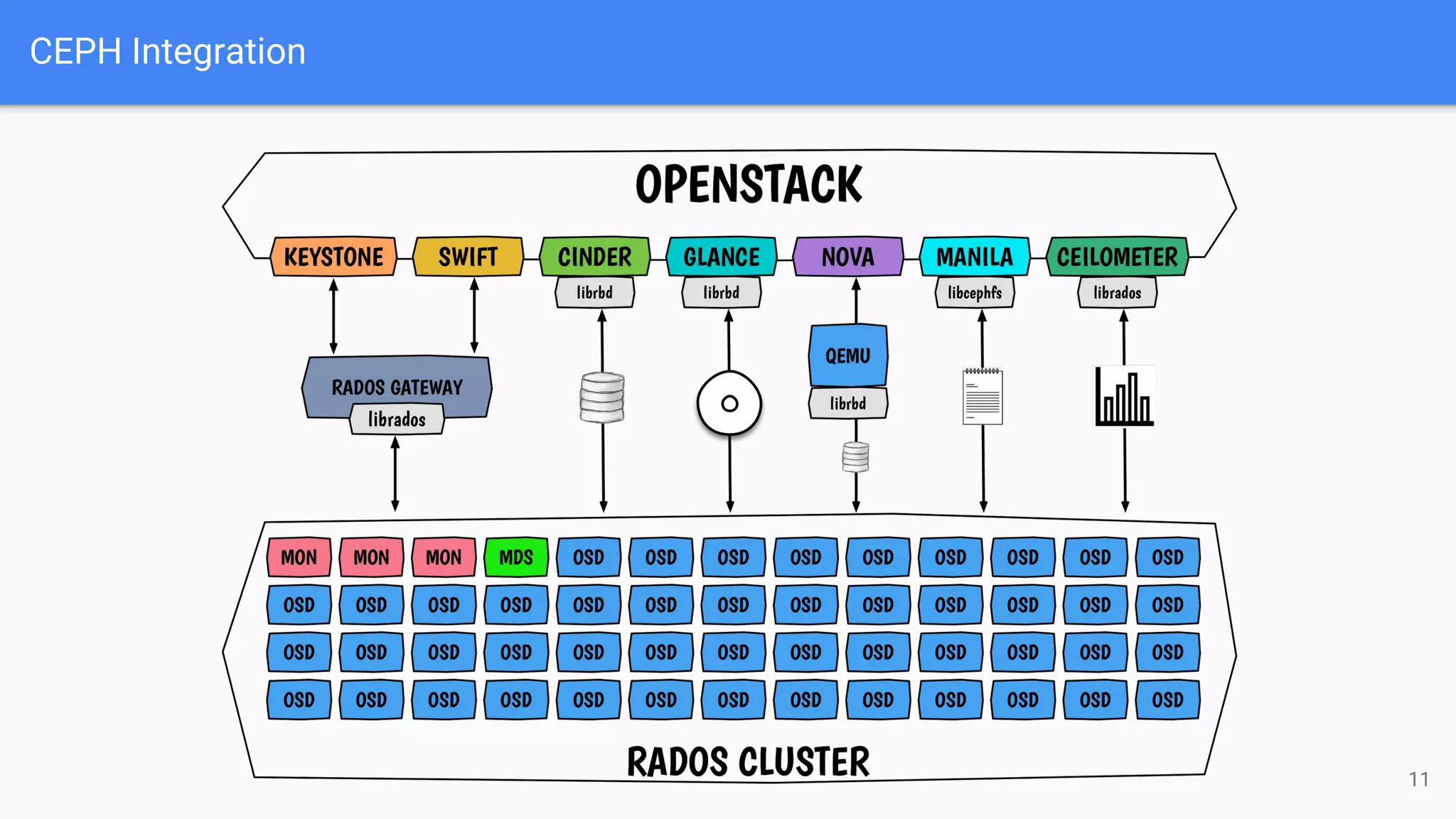
CEPH Integration
11
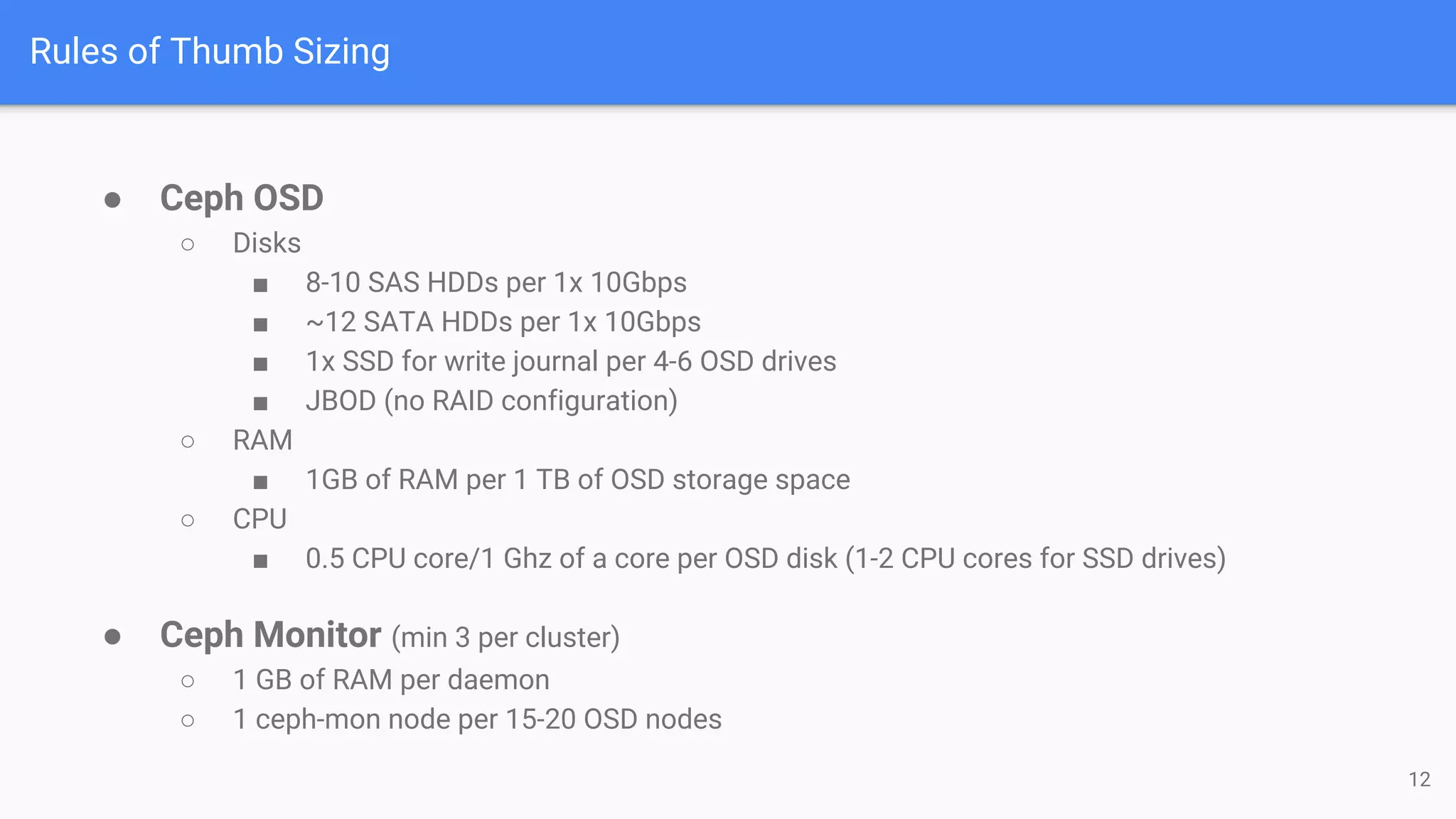
Rules of Thumb Sizing
● Ceph OSD
○ Disks
■ 8-10 SAS HDDs per 1x 10Gbps
■ ~12 SATA HDDs per 1x 10Gbps
■ 1x SSD for write journal per 4-6 OSD drives
■ JBOD (no RAID configuration)
○ RAM
■ 1GB of RAM per 1 TB of OSD storage space
○ CPU
■ 0.5 CPU core/1 Ghz of a core per OSD disk (1-2 CPU cores for SSD drives)
● Ceph Monitor (min 3 per cluster)
○ 1 GB of RAM per daemon
○ 1 ceph-mon node per 15-20 OSD nodes
12
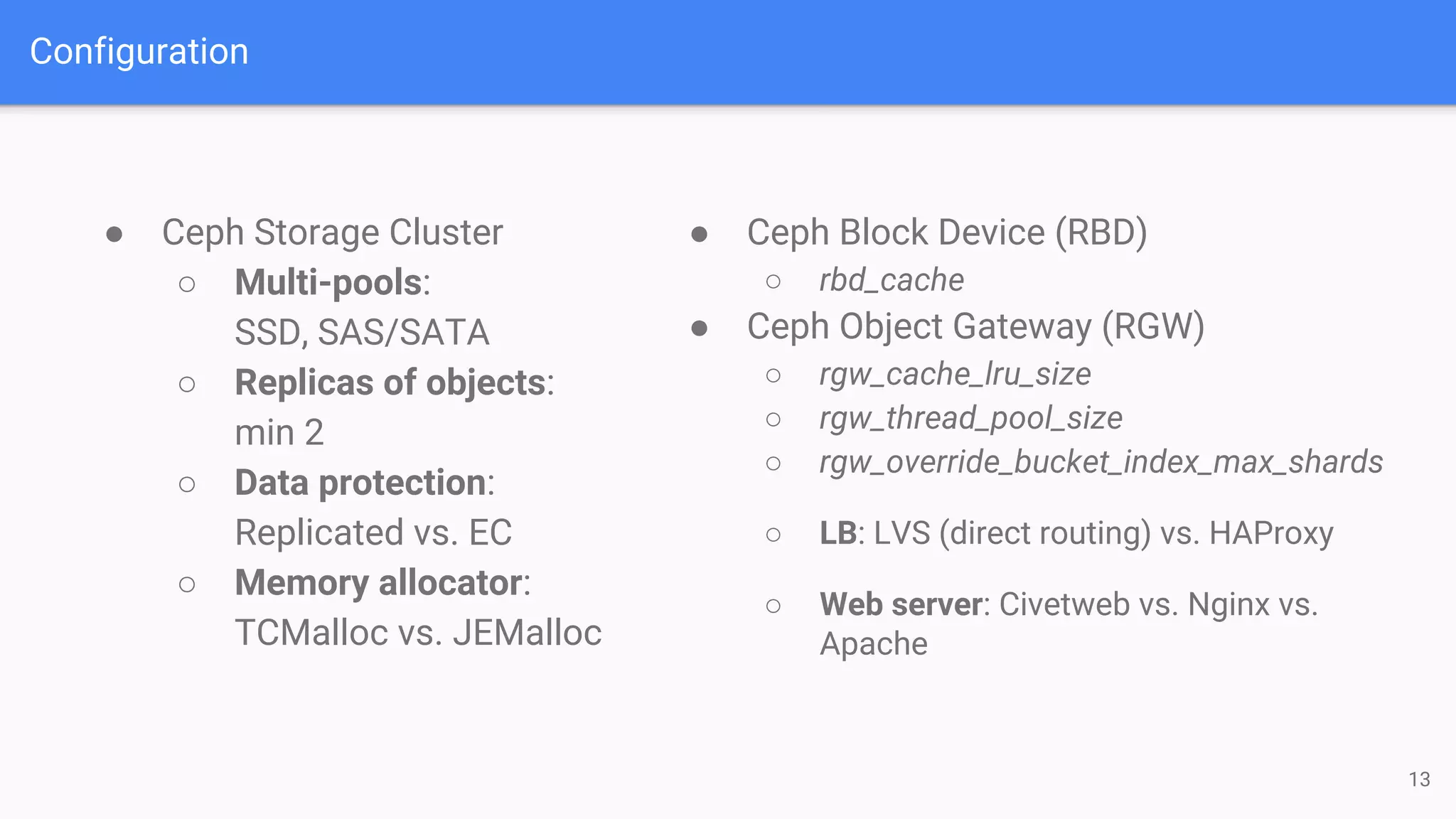
Configuration
● Ceph Storage Cluster
○ Multi-pools:
SSD, SAS/SATA
○ Replicas of objects:
min 2
○ Data protection:
Replicated vs. EC
○ Memory allocator:
TCMalloc vs. JEMalloc
13
● Ceph Block Device (RBD)
○ rbd_cache
● Ceph Object Gateway (RGW)
○ rgw_cache_lru_size
○ rgw_thread_pool_size
○ rgw_override_bucket_index_max_shards
○ LB: LVS (direct routing) vs. HAProxy
○ Web server: Civetweb vs. Nginx vs.
Apache
Compute
● Specialized hardwares
○ GPU
○ SSD locality
○ Encryption keys in USB devices
● Scheduling on specific hosts (e.g. KVM, XenServer), hardwares
○ Host Aggregates
● Separating critical workloads from others
○ Availability Zones
14
Compute (cont.)
● High performance computing for VMs (*)
○ No overcommit (RAM, CPU)
○ CPU Pinning
○ NUMA Topology awareness
● High availability for VMs
○ Live/Cold Migration
○ Evacuation
○ resume_guests_state_on_host_boot=true
● Scalability for VMs
○ Resize
(*) http://www.slideshare.net/vietstack/vietopenstack-meetup-7th-high-performance-vm
15
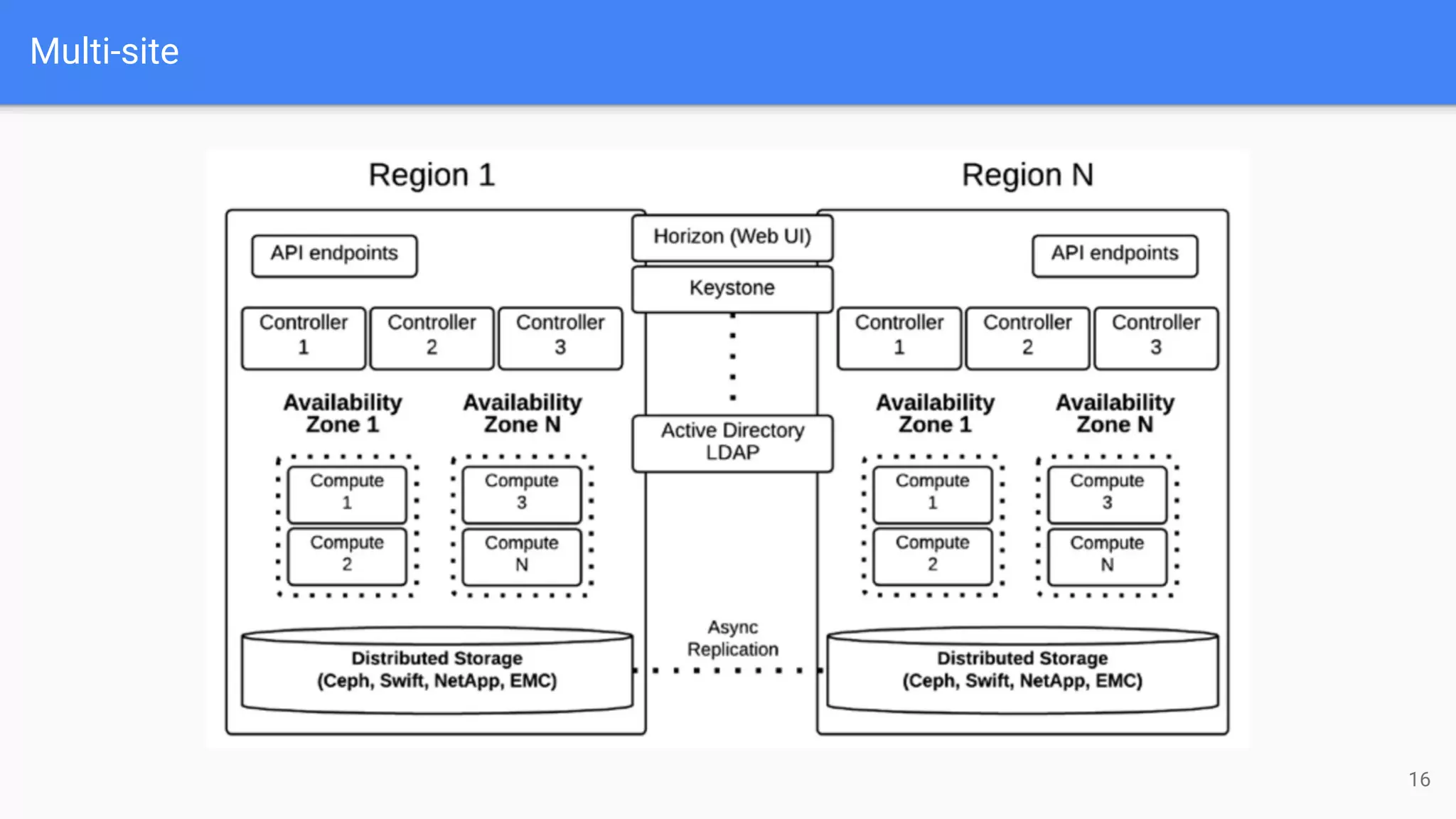
Multi-site
16
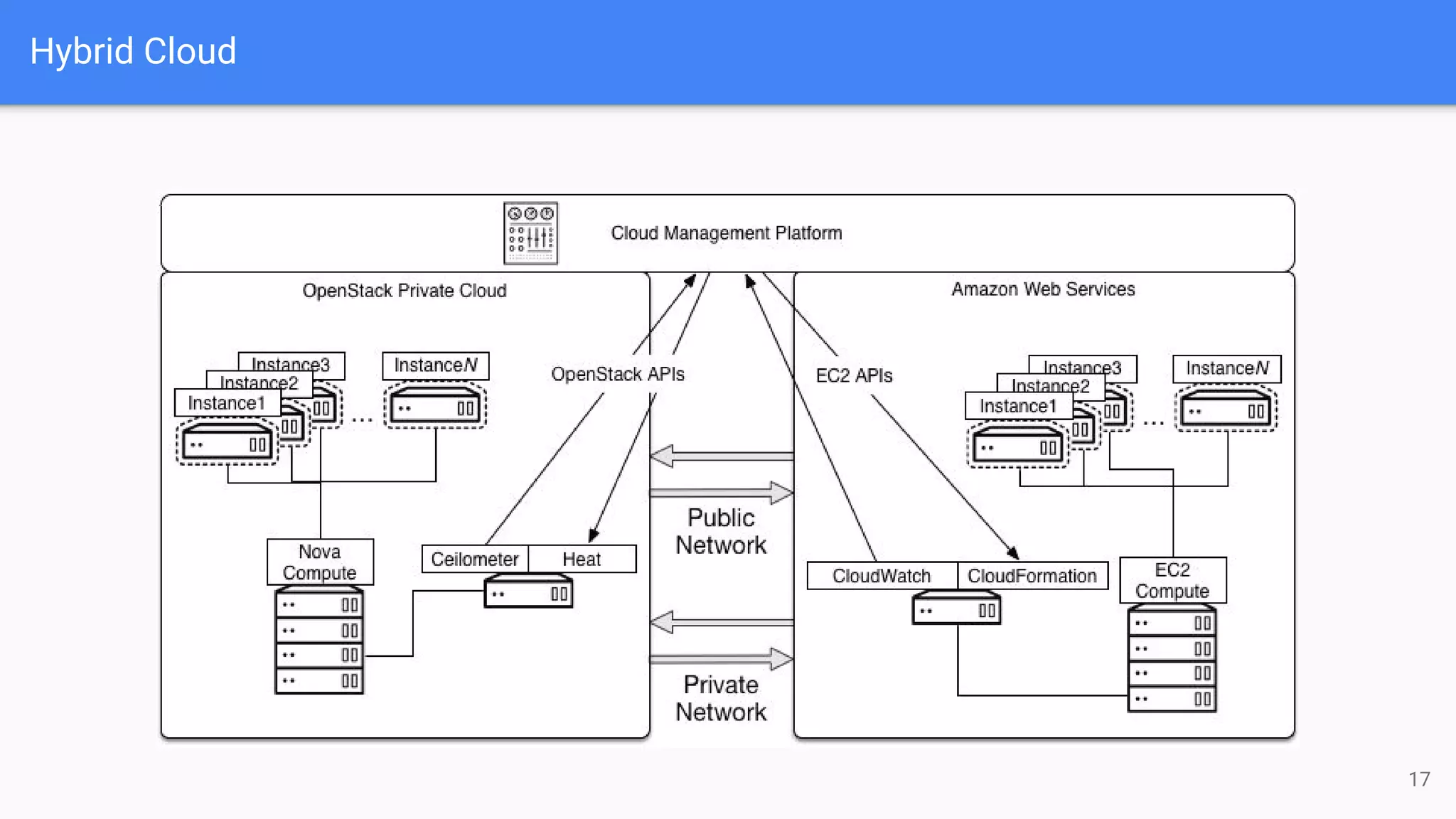
Hybrid Cloud
17
Hybrid with
18
https://cloudplatform.googleblog.com/2016/04/OpenStack-users-backup-your-Cinder-volumes-to-Google-Cloud-Storage.html
Some Lessons Learned
19
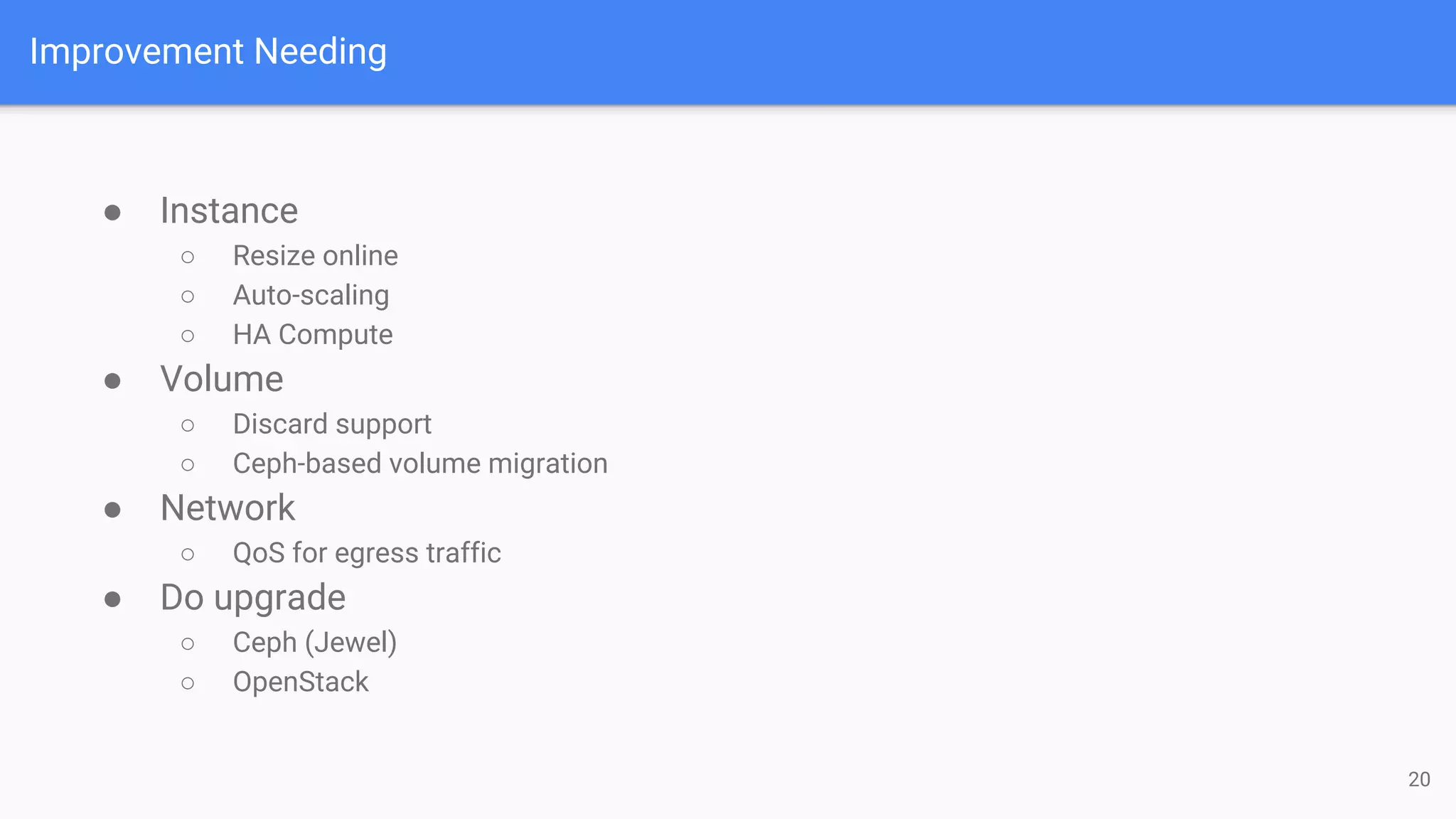
Improvement Needing
● Instance
○ Resize online
○ Auto-scaling
○ HA Compute
● Volume
○ Discard support
○ Ceph-based volume migration
● Network
○ QoS for egress traffic
● Do upgrade
○ Ceph (Jewel)
○ OpenStack
20
21
Skilled people we need
● Linux Internals
● TCP/IP Networking
● Automation
● System Programming
● Performance Oriented
Image Reference
(1) https://images.google.com
(2) https://www.openstack.org
(3) http://ceph.com
(4) https://cumulusnetworks.com
(5) https://www.redhat.com
(6) https://www.mirantis.com
(7) https://www.arista.com
(8) http://www.sebastien-han.fr
22
Questions and
Thanks!
23
@mvthang
manvanthang@gmail.com

Running OpenStack in Production - Barcamp Saigon 2016