






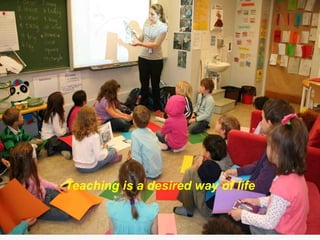
![Compulsory Education ( Peruskoulu)
This includes grades 1-9 and is designed for all
students 7-16 years old.
Grades 1-6 of peruskoulu are referred to as
Primary Education;
Grades 7-9 are referred to as Lower Secondary
Education. [A year of preschool (for students 6
years old ) is offered prior to the peruskoulu;
however, the text does not indicate that preschool
is part of compulsory education.]](https://image.slidesharecdn.com/finnishlessonssummary-160331072557/85/Finnish-lessons-summary-23-320.jpg)




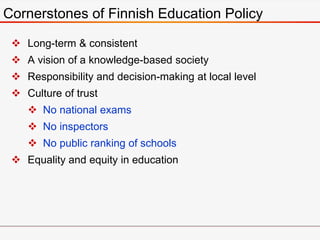
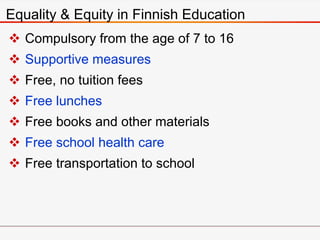


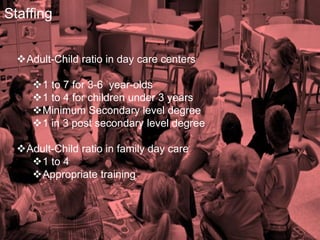


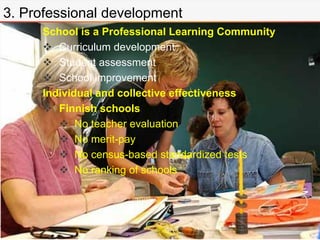


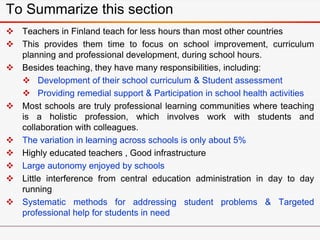









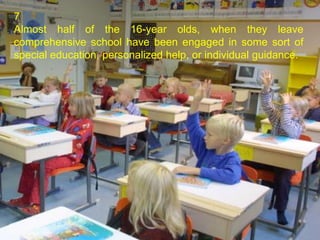


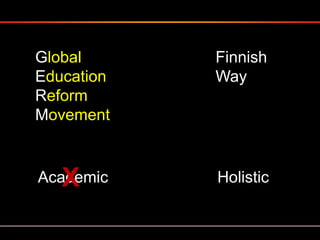










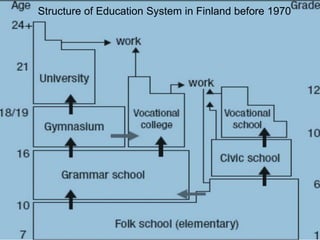
Finland's education system has undergone significant reforms since the 1960s-1970s. It moved from a tracked system with mediocre outcomes to a comprehensive school model with equity and inclusion as guiding principles. This led to improved performance over time. The book outlines key aspects of Finland's education system including 9 years of compulsory schooling, student-centered learning, well-trained teachers with master's degrees, school autonomy, less emphasis on standardized testing, and equitable access to education for all students. One of the book's main messages is that, unlike many other systems, the Finnish system has not been influenced by market-based competition or high-stakes testing.


