Finding Free Full Text PMC Articles within
The National Library of Medicine’s

PUBMED
Database

Mark D. Puterbaugh
Information Services Librarian
Eastern University, Warner Memorial Library, St. Davids, PA
mputerba@eastern.edu
Tuesday, February 4, 2014
Presented by
Mark D. Puterbaugh
Information Services Librarian

Warner Memorial Library
Eastern University
St. Davids, PA 19087
PubMed and PubMed Central (PMC)

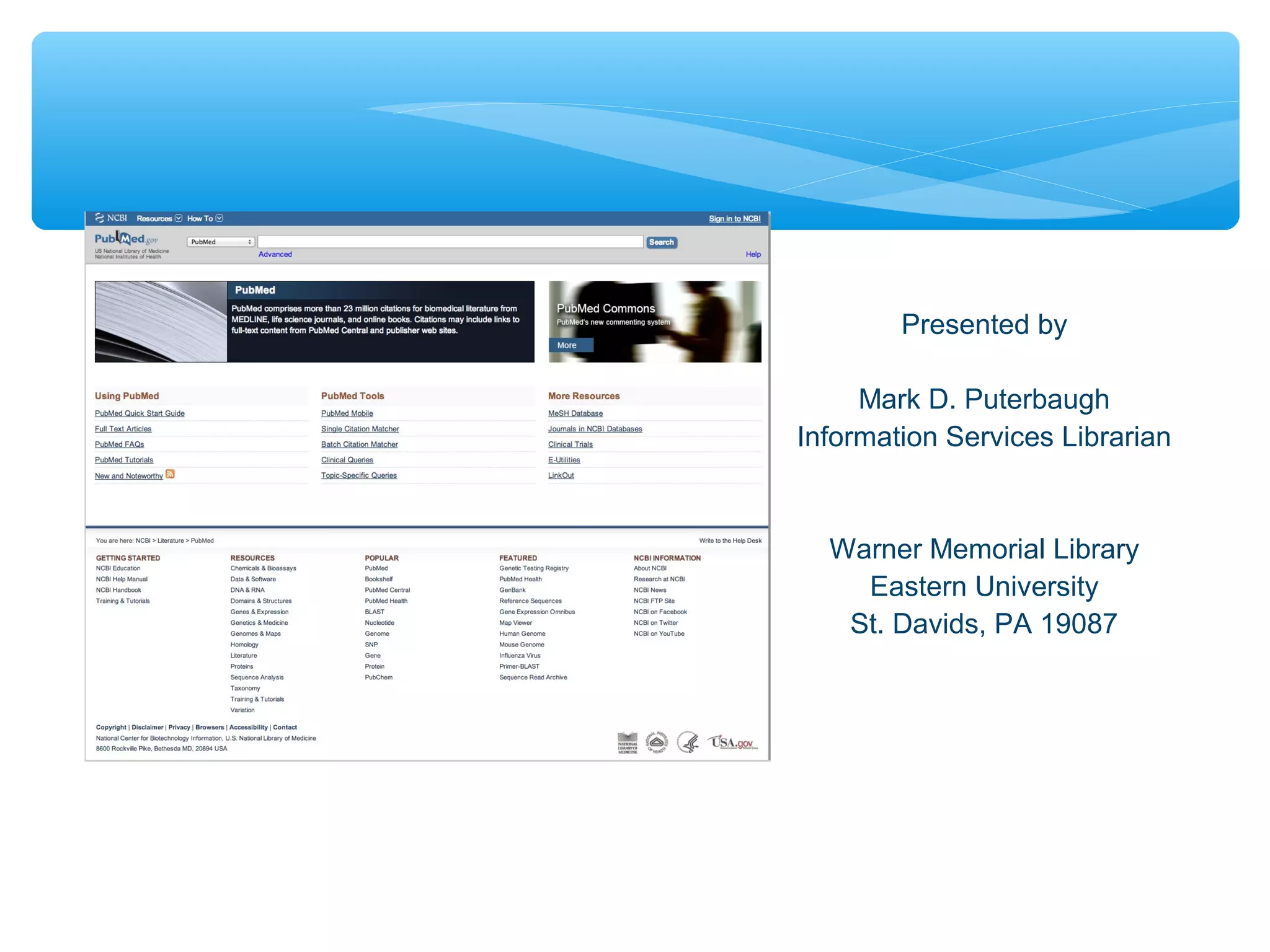
PubMed comprises over 22 million citations for biomedical literature
from MEDLINE, life science journals, and online books. PubMed
citations and abstracts include the fields of biomedicine and health,
covering portions of the life sciences, behavioral sciences, chemical
sciences, and bioengineering. PubMed also provides access to
additional relevant web sites and links to the other NCBI molecular
biology resources.
PubMed is a free resource that is developed and maintained by the
National Center for Biotechnology Information (NCBI), at the U.S.
National Library of Medicine (NLM), located at the National Institutes
of Health (NIH).
http://www.ncbi.nlm.nih.gov/pubmed
While primarily a citations resource, searches in PubMed can be
limited to locate full-text articles from publications freely available in
the National Library of Medicines’ PMC journal archive.
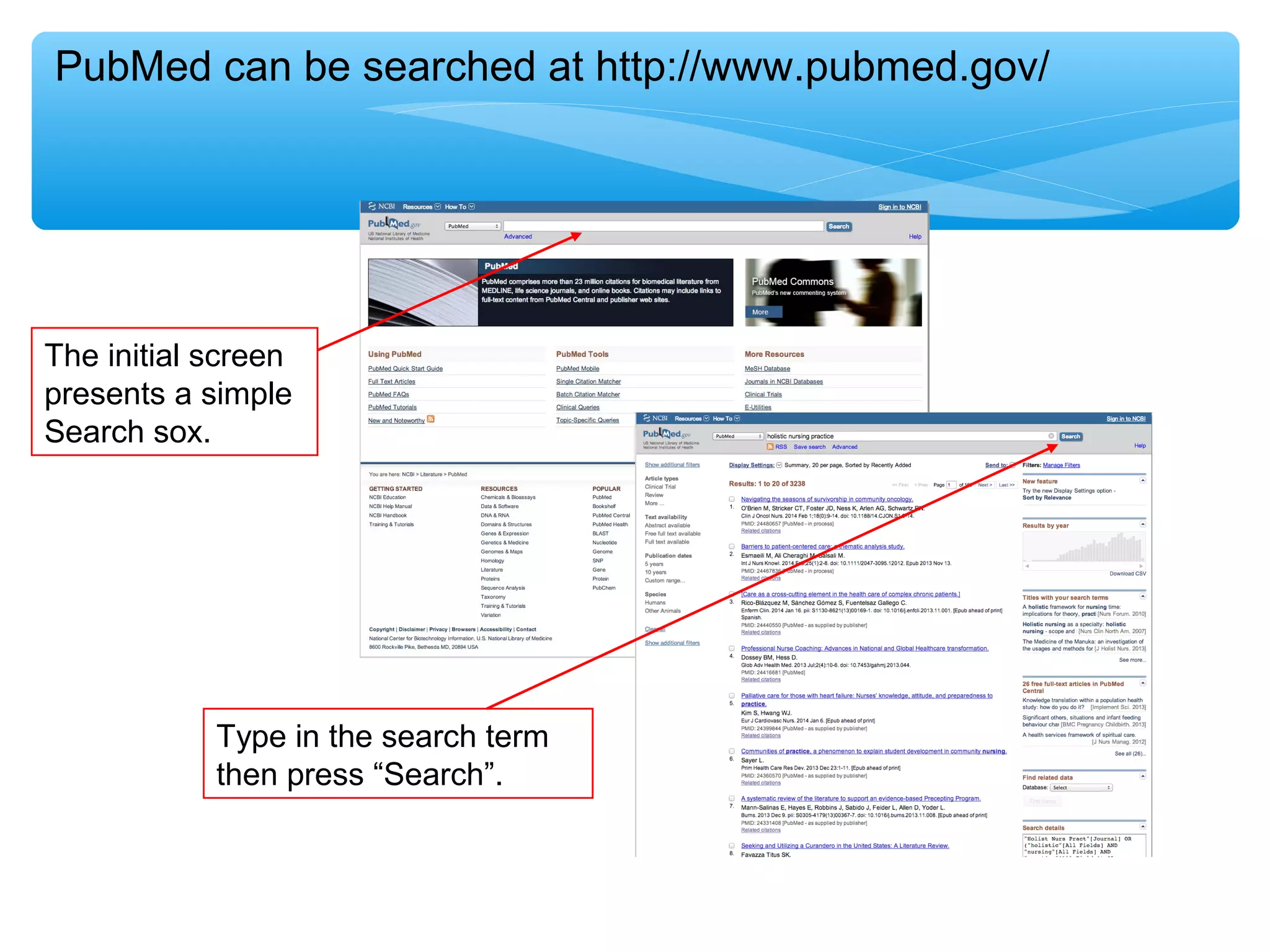
PubMed can be searched at http://www.pubmed.gov/

The initial screen
presents a simple
Search sox.

Type in the search term
then press “Search”.
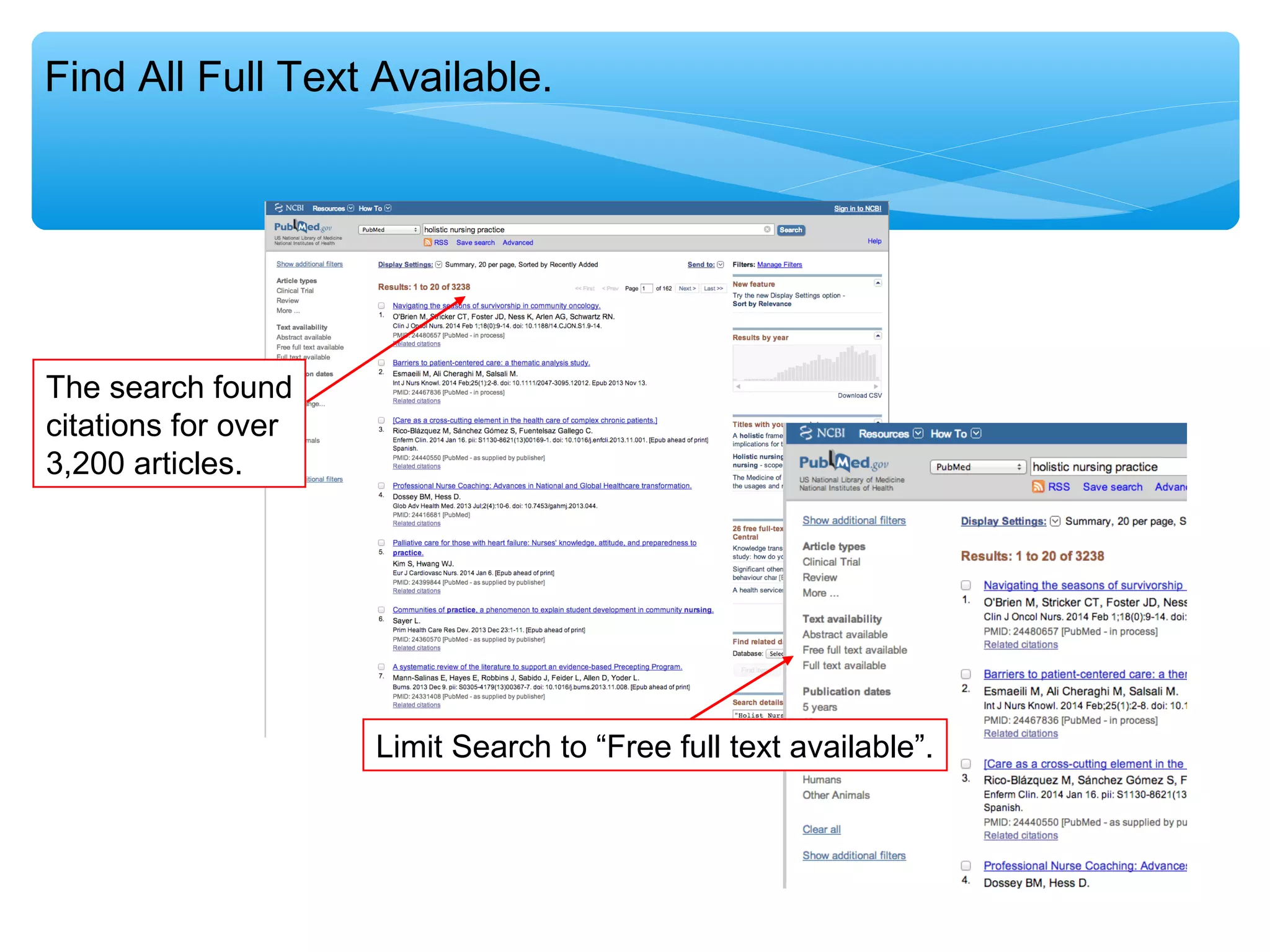
Find All Full Text Available.

The search found
citations for over
3,200 articles.

Limit Search to “Free full text available”.
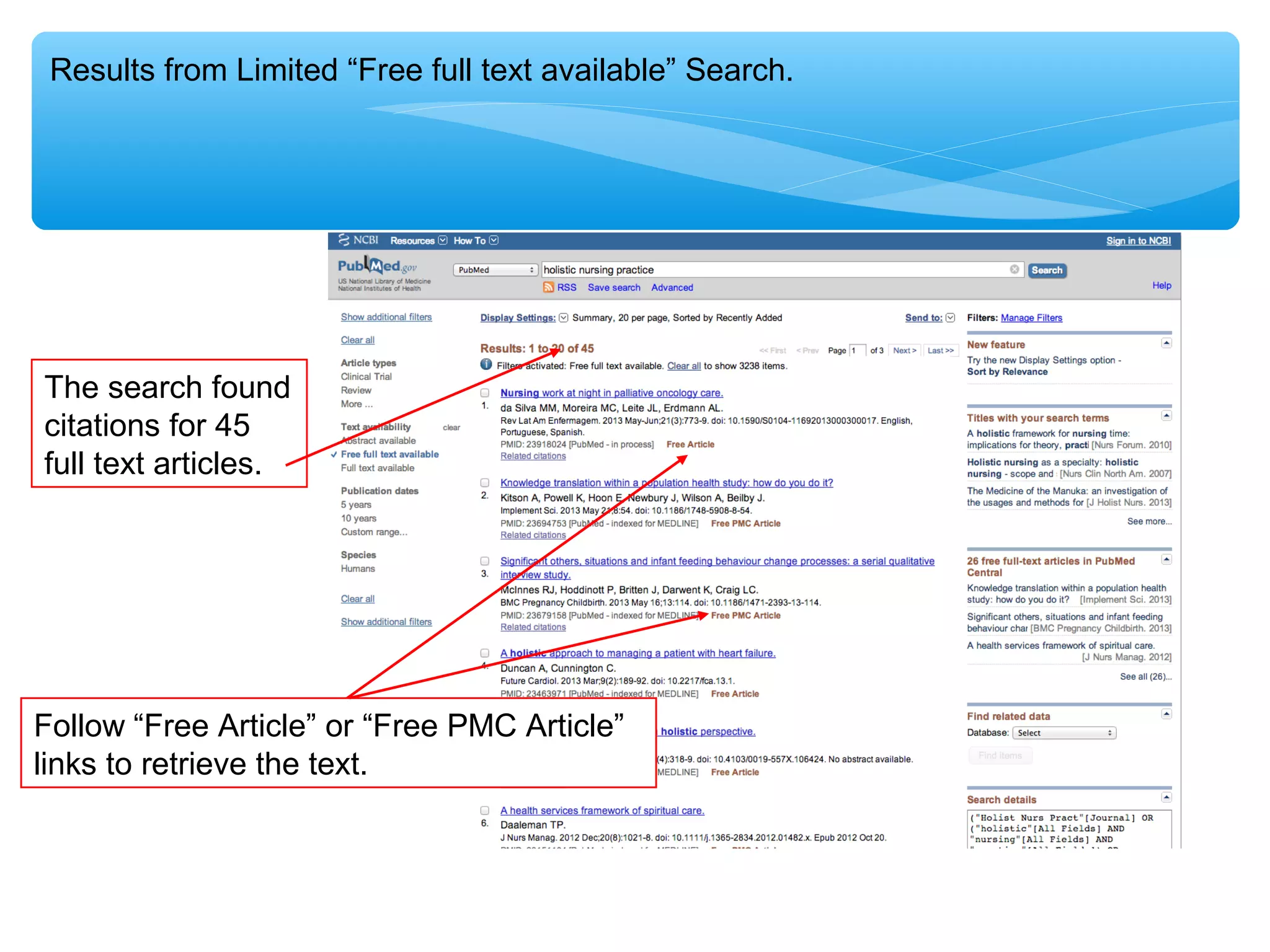
Results from Limited “Free full text available” Search.

The search found
citations for 45
full text articles.

Follow “Free Article” or “Free PMC Article”
links to retrieve the text.
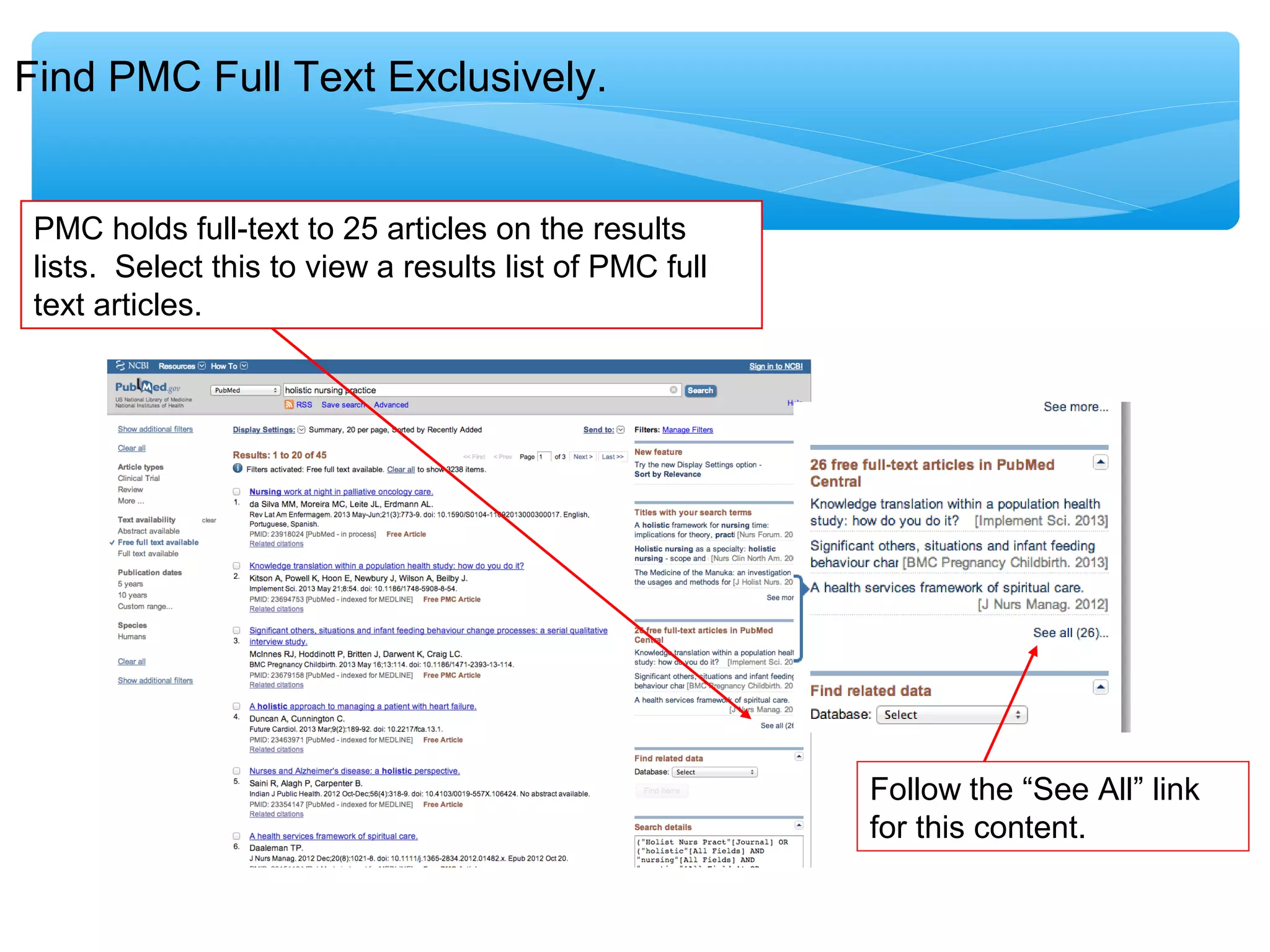
Find PMC Full Text Exclusively.

PMC holds full-text to 25 articles on the results
lists. Select this to view a results list of PMC full
text articles.

Follow the “See All” link
for this content.
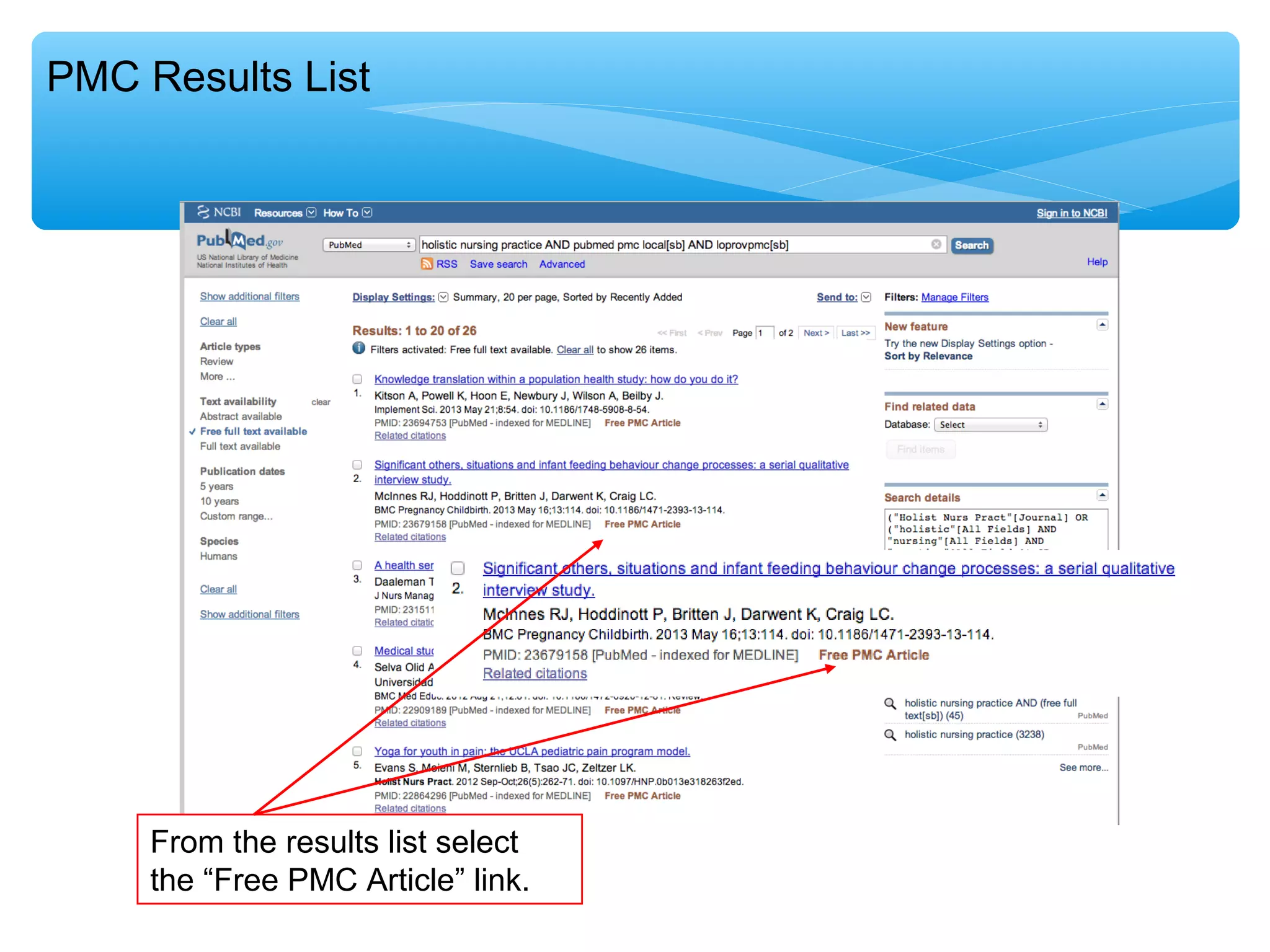
PMC Results List

From the results list select
the “Free PMC Article” link.
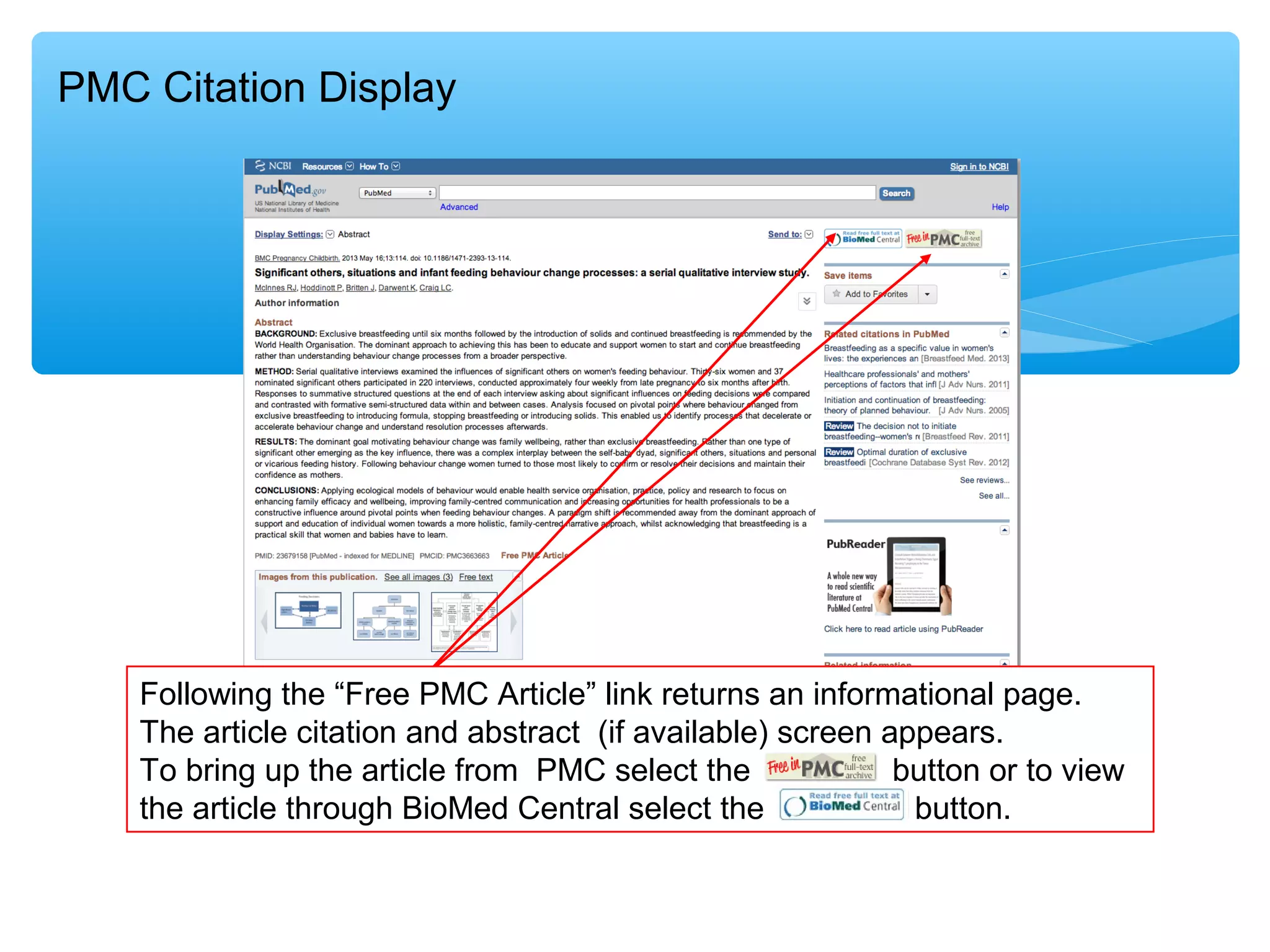
PMC Citation Display

Following the “Free PMC Article” link returns an informational page.
The article citation and abstract (if available) screen appears.
To bring up the article from PMC select the
button or to view
the article through BioMed Central select the
button.
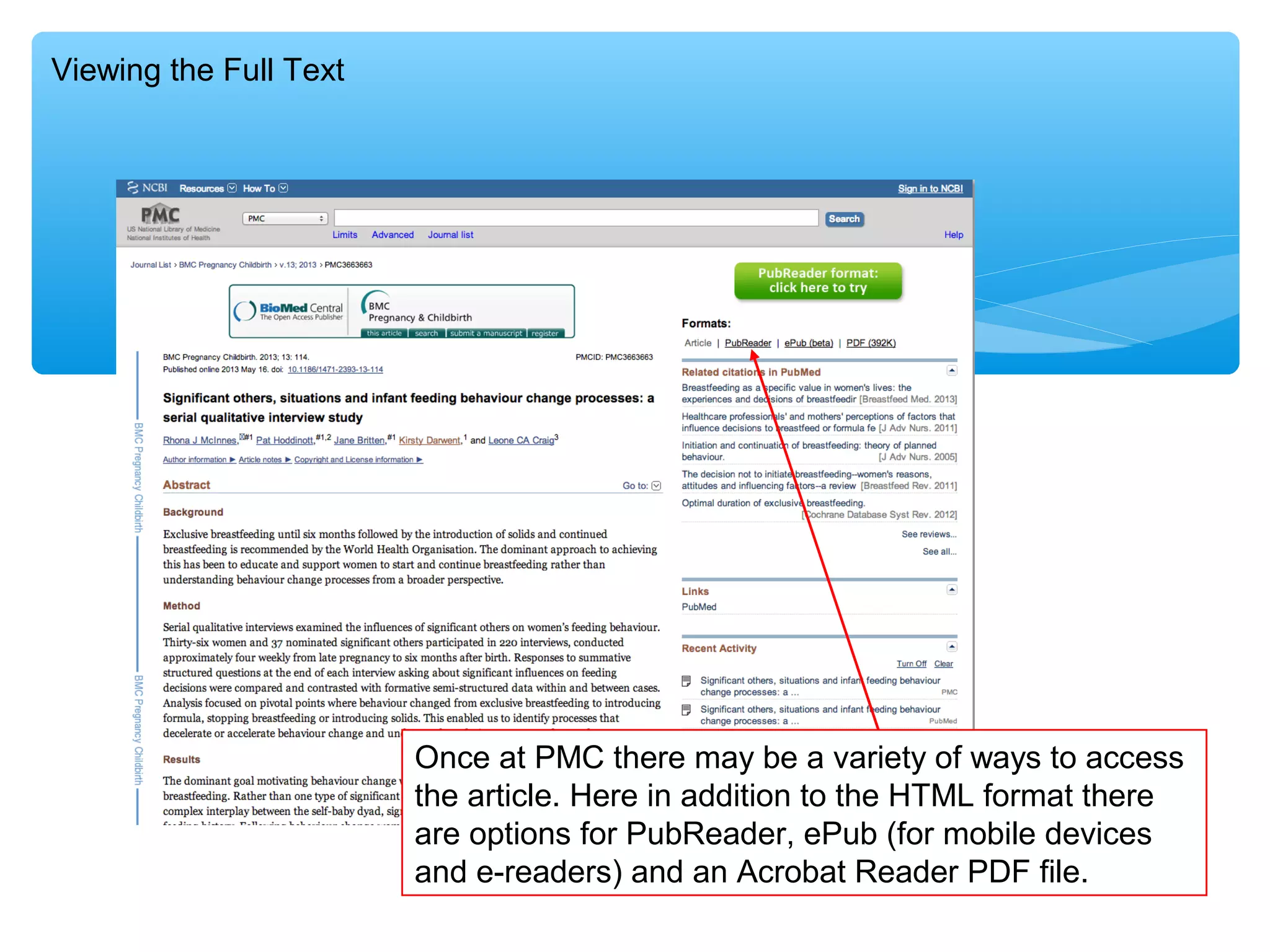
Viewing the Full Text

Once at PMC there may be a variety of ways to access
the article. Here in addition to the HTML format there
are options for PubReader, ePub (for mobile devices
and e-readers) and an Acrobat Reader PDF file.
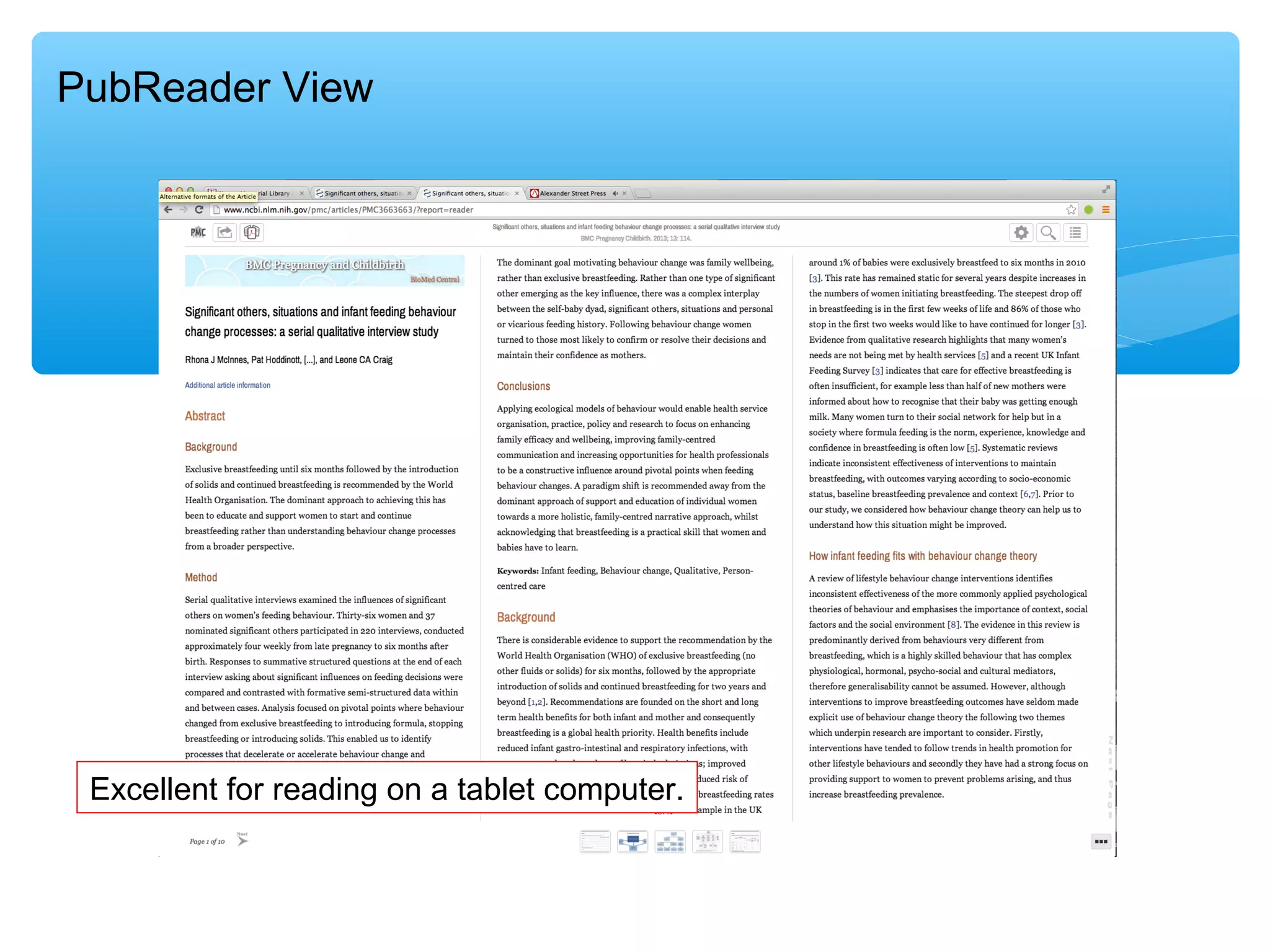
PubReader View

Excellent for reading on a tablet computer.
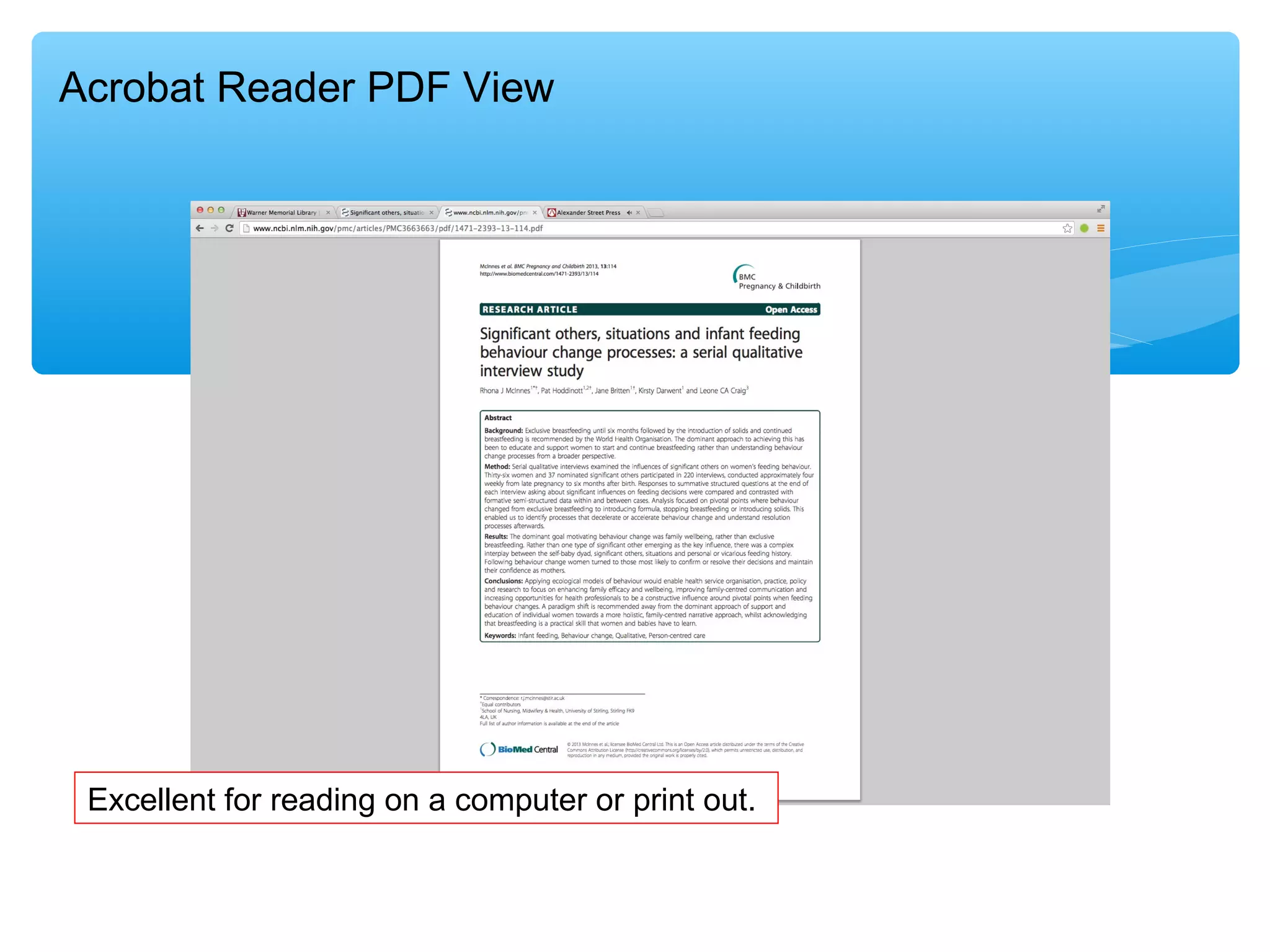
Acrobat Reader PDF View

Excellent for reading on a computer or print out.
Pros & Cons
Pros
• The articles are from professional or peer-reviewed publications.
•This method can provide the searcher with immediate access to
full-text articles.
Cons
• This search eliminates many important articles found in PubMed.
• Leaves the researcher dependent on a small sampling of
relevant resources. This can be frustrating.

While the list of free full text academic publications found on the
Web and in PMC is growing, the set is small compared to the vast
amount of literature produced.

Consult with a librarian, they can help you find further
resources for your research.

Finding Free Full-text PubMed Central Articles in PubMed

  • 1.
    Finding Free FullText PMC Articles within The National Library of Medicine’s PUBMED Database Mark D. Puterbaugh Information Services Librarian Eastern University, Warner Memorial Library, St. Davids, PA mputerba@eastern.edu Tuesday, February 4, 2014
  • 2.
    Presented by Mark D.Puterbaugh Information Services Librarian Warner Memorial Library Eastern University St. Davids, PA 19087
  • 3.
    PubMed and PubMedCentral (PMC) PubMed comprises over 22 million citations for biomedical literature from MEDLINE, life science journals, and online books. PubMed citations and abstracts include the fields of biomedicine and health, covering portions of the life sciences, behavioral sciences, chemical sciences, and bioengineering. PubMed also provides access to additional relevant web sites and links to the other NCBI molecular biology resources. PubMed is a free resource that is developed and maintained by the National Center for Biotechnology Information (NCBI), at the U.S. National Library of Medicine (NLM), located at the National Institutes of Health (NIH). http://www.ncbi.nlm.nih.gov/pubmed While primarily a citations resource, searches in PubMed can be limited to locate full-text articles from publications freely available in the National Library of Medicines’ PMC journal archive.
  • 4.
    PubMed can besearched at http://www.pubmed.gov/ The initial screen presents a simple Search sox. Type in the search term then press “Search”.
  • 5.
    Find All FullText Available. The search found citations for over 3,200 articles. Limit Search to “Free full text available”.
  • 6.
    Results from Limited“Free full text available” Search. The search found citations for 45 full text articles. Follow “Free Article” or “Free PMC Article” links to retrieve the text.
  • 7.
    Find PMC FullText Exclusively. PMC holds full-text to 25 articles on the results lists. Select this to view a results list of PMC full text articles. Follow the “See All” link for this content.
  • 8.
    PMC Results List Fromthe results list select the “Free PMC Article” link.
  • 9.
    PMC Citation Display Followingthe “Free PMC Article” link returns an informational page. The article citation and abstract (if available) screen appears. To bring up the article from PMC select the button or to view the article through BioMed Central select the button.
  • 10.
    Viewing the FullText Once at PMC there may be a variety of ways to access the article. Here in addition to the HTML format there are options for PubReader, ePub (for mobile devices and e-readers) and an Acrobat Reader PDF file.
  • 11.
    PubReader View Excellent forreading on a tablet computer.
  • 12.
    Acrobat Reader PDFView Excellent for reading on a computer or print out.
  • 13.
    Pros & Cons Pros •The articles are from professional or peer-reviewed publications. •This method can provide the searcher with immediate access to full-text articles. Cons • This search eliminates many important articles found in PubMed. • Leaves the researcher dependent on a small sampling of relevant resources. This can be frustrating. While the list of free full text academic publications found on the Web and in PMC is growing, the set is small compared to the vast amount of literature produced. Consult with a librarian, they can help you find further resources for your research.