

TRAINING DESIGN
Principles of Training Design
 Structure

 Openness and Flexibility

 Relevance

 Compatibility

 In-Process Evaluation and Feedback

 Transferability

 Cost-Effectiveness
Definition

 Training is a planned and systematic
   effort to modify or develop knowledge,
   skills, and attitudes to achieve effective
   performance in an activity or range
   of activities.

 Its purpose, in the work situation, is to
   enable an individual to acquire abilities
   (competencies), in order that he or she
   can perform adequately a given task or job.
Goals & Objectives
       To bridge performance gap

       To receive proper results of training
        plan

       To know required skills in the
        Facilitator

       To know effectiveness of training

       To exhibit required skills in delegation
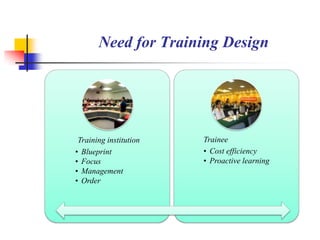
Need for Training Design


 Training institution   Trainee
• Blueprint             • Cost efficiency
• Focus                 • Proactive learning
• Management
• Order
Outline of a Training Design
   Title
   Rationale of the Training
   Objectives of the Training
   Course Outline
   Learning Methodology
   Time Frames
   Dates and Venue
   Evaluation Method
   Resource Speakers/Persons
   Training Cost
Methods of Training


           •                                            •


                                          FACILITATOR
LECTURER


               Leader-centered                              Participant-centered
           •   Presentation-driven                      •   Experience-driven
           •   Content-heavy                            •   Application-heavy
           •   “Sage in Stage”                          •   “Guide on the Side”
           •   “Tell everything you can                 •   “Never do for learners
               in time allotted”                            what they can do for
                                                            themselves”
Advantages of Training Design
            It provides direction to the trainees or
               participants
              It gives more information concerning the
               training program
              It keeps the trainer focused (especially on
               the things that the trainees “must know”)
              Increased                           Employee
               Motivation, Satisfaction, and Morale
              Increased Efficiency
              Reduction in Employee Turnover
              Increased Innovation in Strategies and
               Products
              Risk Management
Evaluation
Some Issues To Address Through Evaluation:
 Did the participant acquire the knowledge and skills
   that the training was suppose to provide?

 Were the trainers knowledgeable about training
   content?

 Were the activities interesting and effective?
 Was the training format appropriate?
 Is more training on this or related topic needed to
   support the participants in their work?
Training Cycle

Evaluation of   Training Needs
  Program          Analysis


 Conduct of       Design of
  Program         Program
Final training design

Final training design

  • 1.
  • 2.
    Principles of TrainingDesign  Structure  Openness and Flexibility  Relevance  Compatibility  In-Process Evaluation and Feedback  Transferability  Cost-Effectiveness
  • 3.
    Definition  Training isa planned and systematic effort to modify or develop knowledge, skills, and attitudes to achieve effective performance in an activity or range of activities.  Its purpose, in the work situation, is to enable an individual to acquire abilities (competencies), in order that he or she can perform adequately a given task or job.
  • 4.
    Goals & Objectives  To bridge performance gap  To receive proper results of training plan  To know required skills in the Facilitator  To know effectiveness of training  To exhibit required skills in delegation
  • 5.
    Need for TrainingDesign Training institution Trainee • Blueprint • Cost efficiency • Focus • Proactive learning • Management • Order
  • 6.
    Outline of aTraining Design  Title  Rationale of the Training  Objectives of the Training  Course Outline  Learning Methodology  Time Frames  Dates and Venue  Evaluation Method  Resource Speakers/Persons  Training Cost
  • 7.
    Methods of Training • • FACILITATOR LECTURER Leader-centered Participant-centered • Presentation-driven • Experience-driven • Content-heavy • Application-heavy • “Sage in Stage” • “Guide on the Side” • “Tell everything you can • “Never do for learners in time allotted” what they can do for themselves”
  • 8.
    Advantages of TrainingDesign  It provides direction to the trainees or participants  It gives more information concerning the training program  It keeps the trainer focused (especially on the things that the trainees “must know”)  Increased Employee Motivation, Satisfaction, and Morale  Increased Efficiency  Reduction in Employee Turnover  Increased Innovation in Strategies and Products  Risk Management
  • 9.
    Evaluation Some Issues ToAddress Through Evaluation:  Did the participant acquire the knowledge and skills that the training was suppose to provide?  Were the trainers knowledgeable about training content?  Were the activities interesting and effective?  Was the training format appropriate?  Is more training on this or related topic needed to support the participants in their work?
  • 10.
    Training Cycle Evaluation of Training Needs Program Analysis Conduct of Design of Program Program