WATER SUPPLY SYSTEM
BASIC OPERATIONS
Prepared by RCAP Solutions
For PADEP
1
Introduction
 Basics of Water Supply
2
Drinking Water Sources
 Surface Water
 Groundwater
3
Surface Water: Advantages
 Easily accessible
 Large volumes of water
 Surface reservoirs for storage
4
Surface Water: Disadvantages
 Exposure to contaminants
 Expensive filtration
5
Groundwater: Advantages
 Less treatment
 Consistency
 Availability
6
Groundwater: Disadvantages
 Chemical contamination
 Hardness
 Multiple wells
 Location
7
Groundwater Treatment Processes
8
Groundwater Treatment Processes
 Not very complex
 Mainly disinfection
 Covered later
9
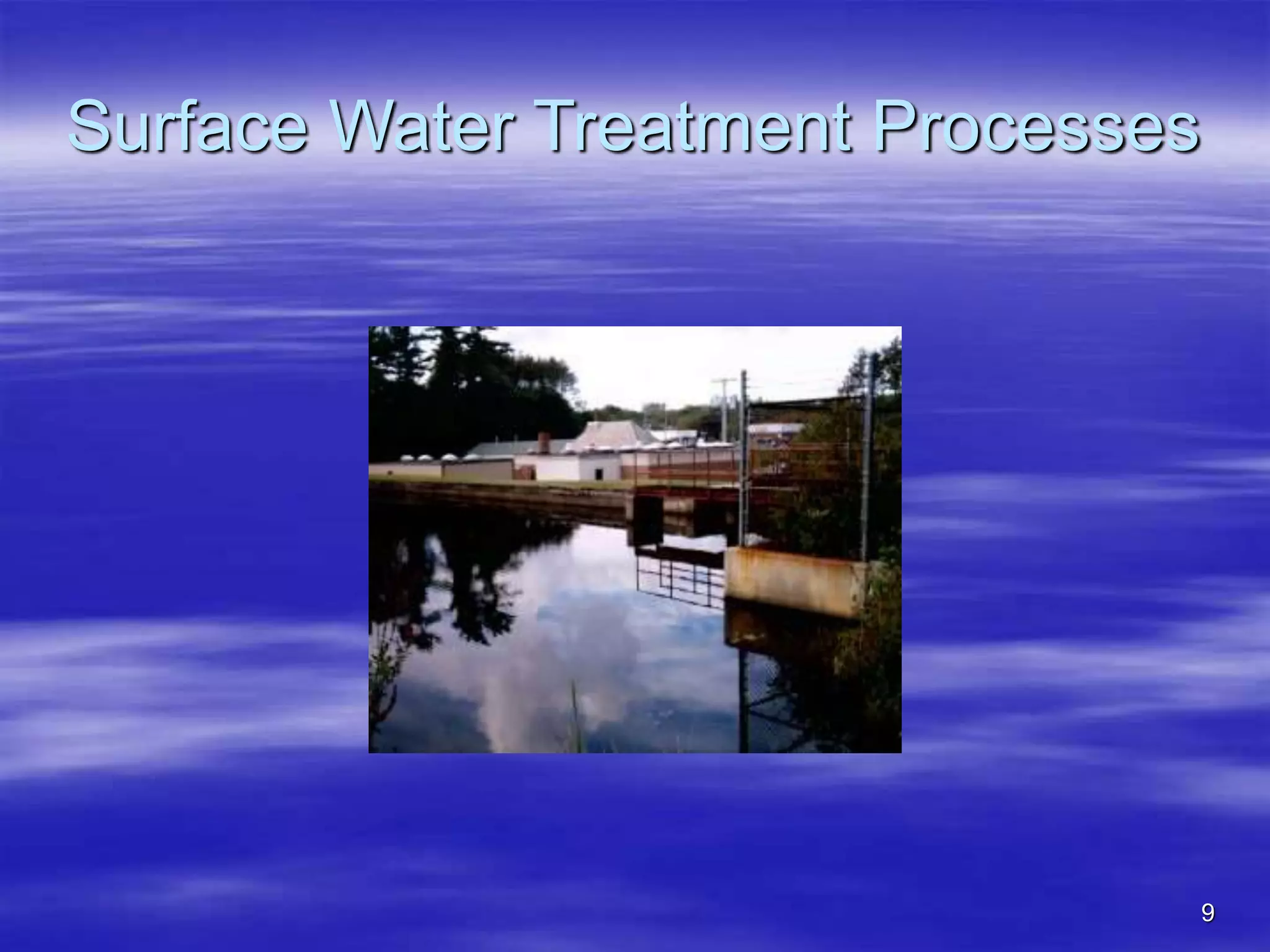
Surface Water Treatment Processes
10
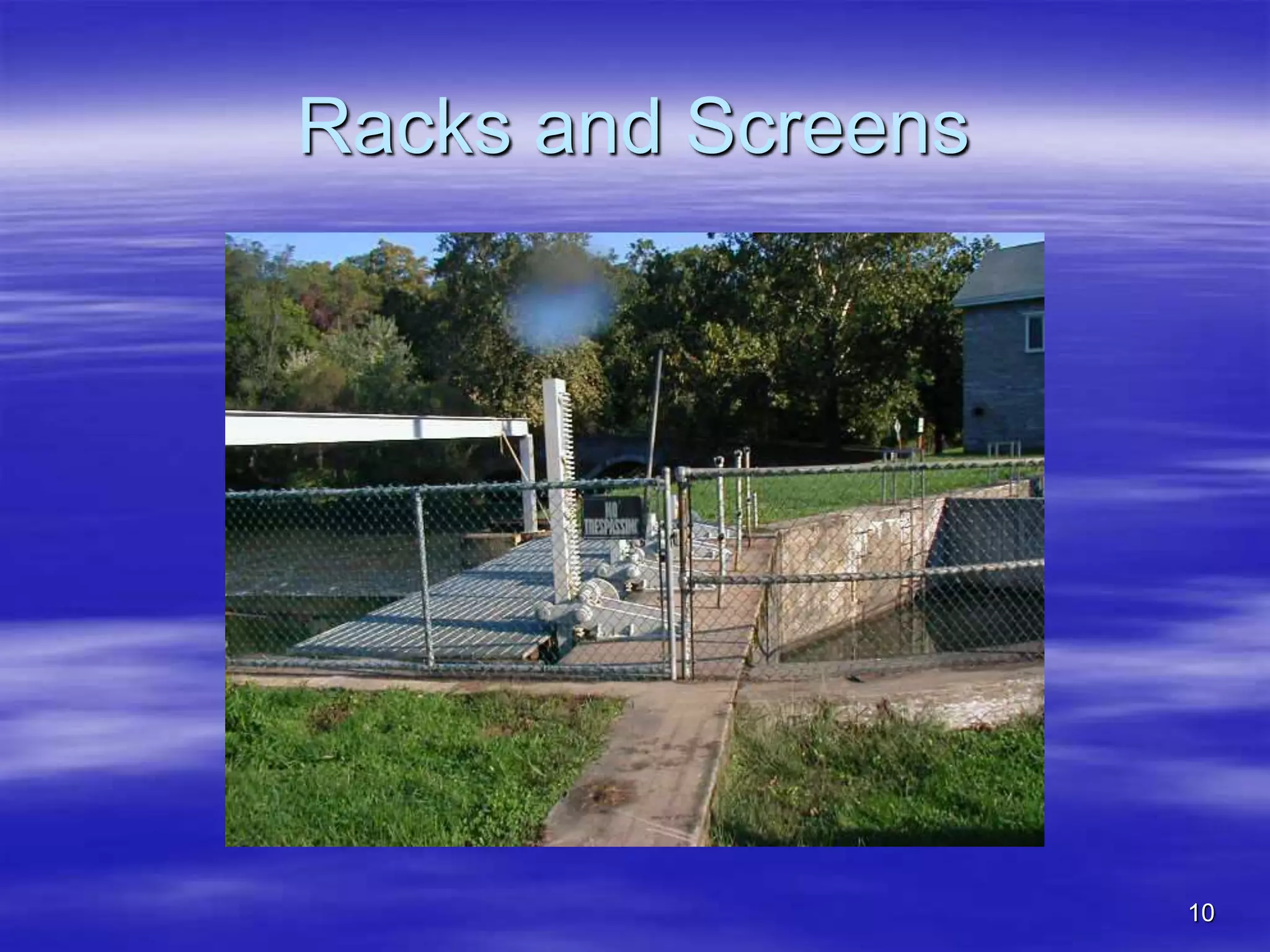
Racks and Screens
11
Racks and Screens
 Prevent debris
 Pipes and pumps
 Straining pasta
12
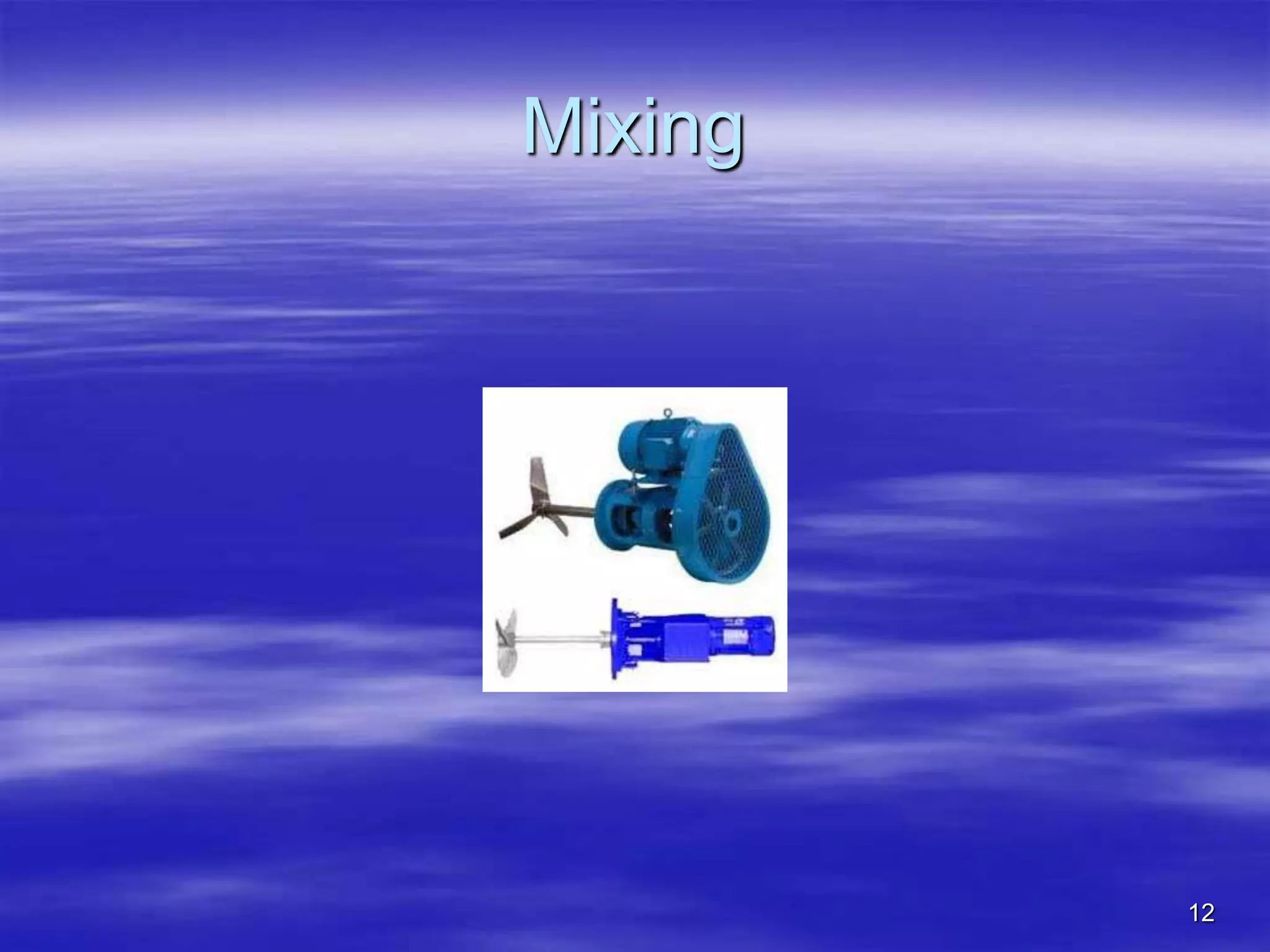
Mixing
13
Mixing
 Coagulant
 Suspended particles
14
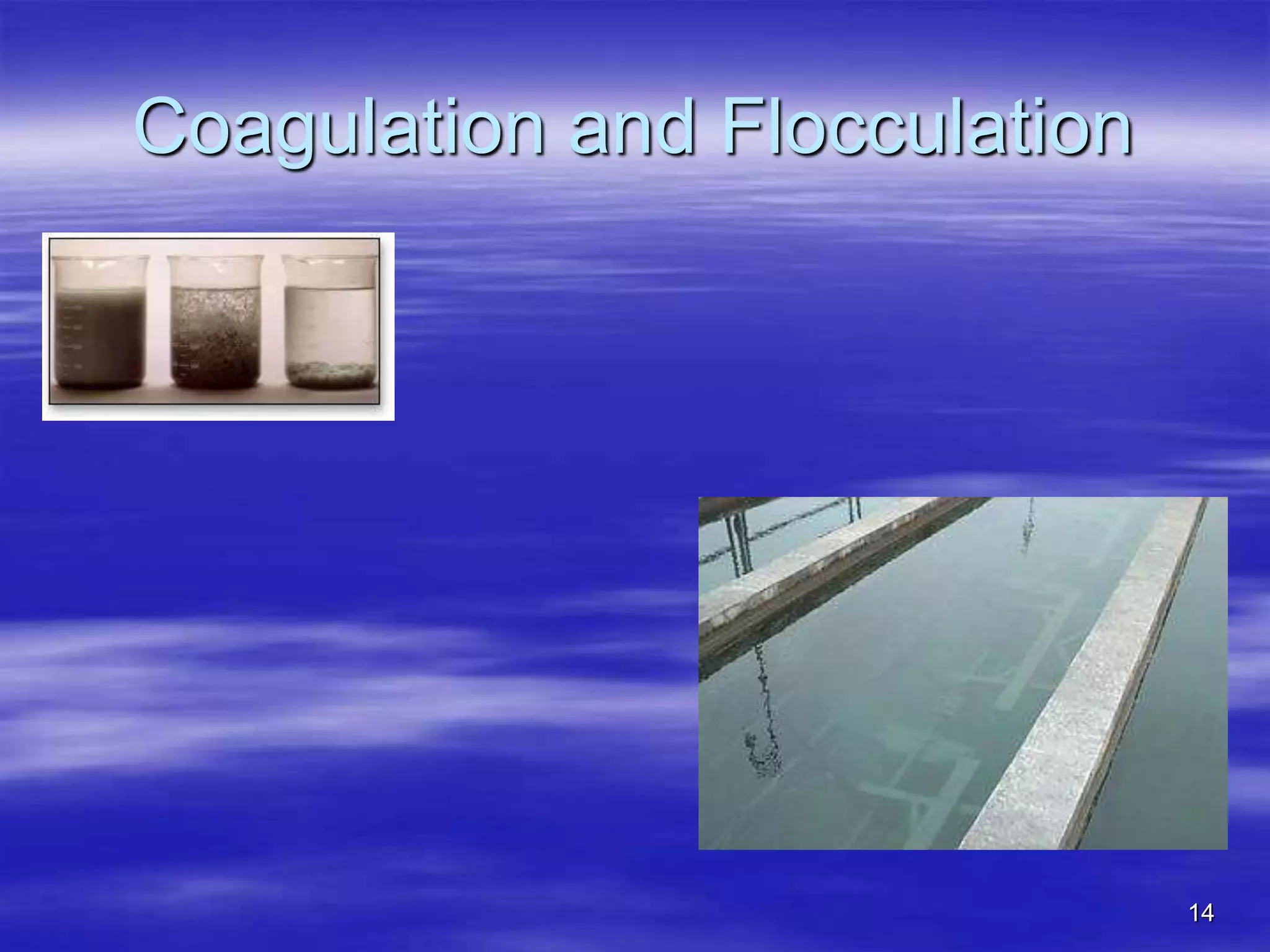
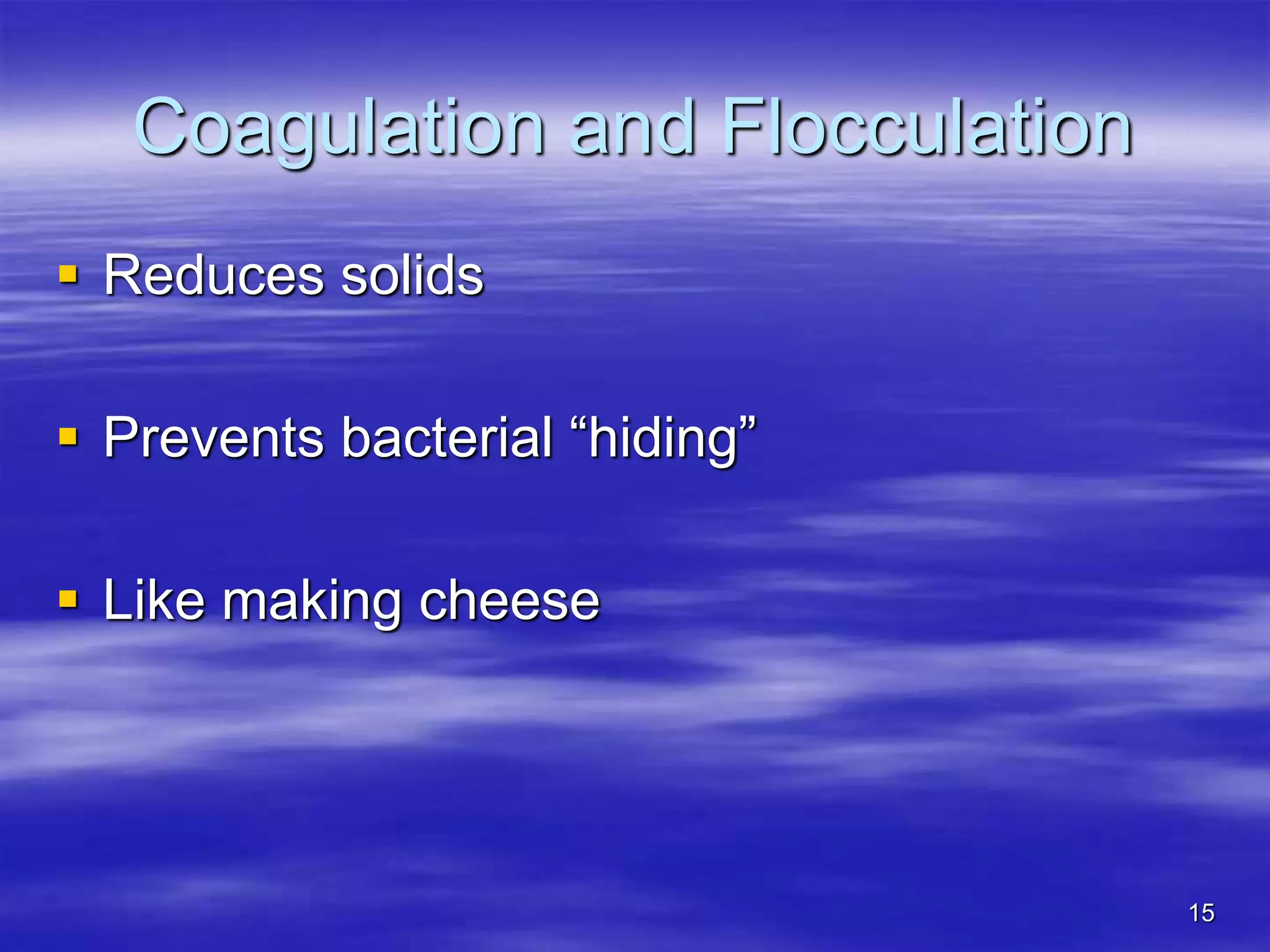
Coagulation and Flocculation
15
Coagulation and Flocculation
 Reduces solids
 Prevents bacterial “hiding”
 Like making cheese
16
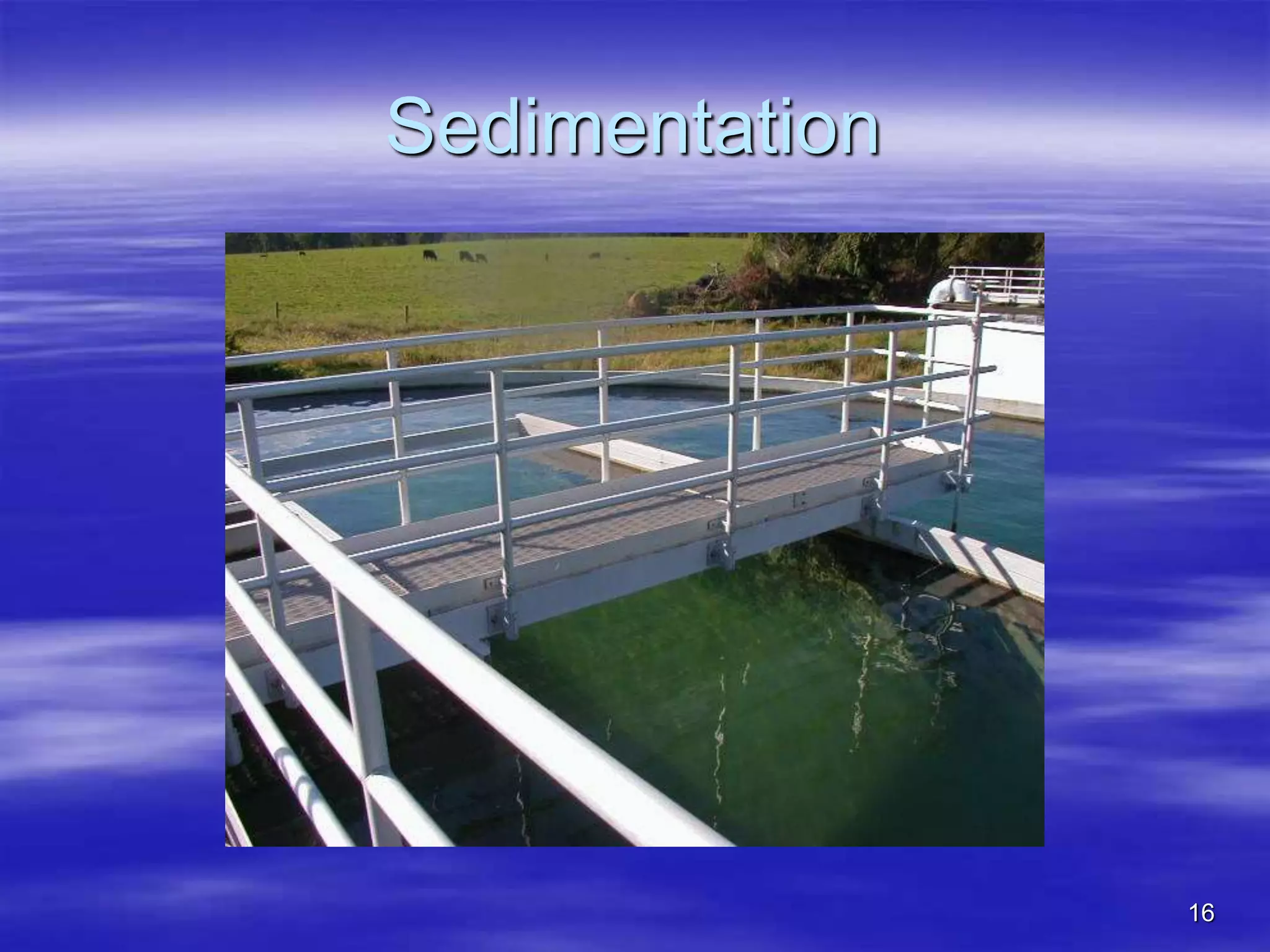
Sedimentation
17
Sedimentation
 Presedimentation
 Basins
 Solids loading reduction
 Sludge removal
18
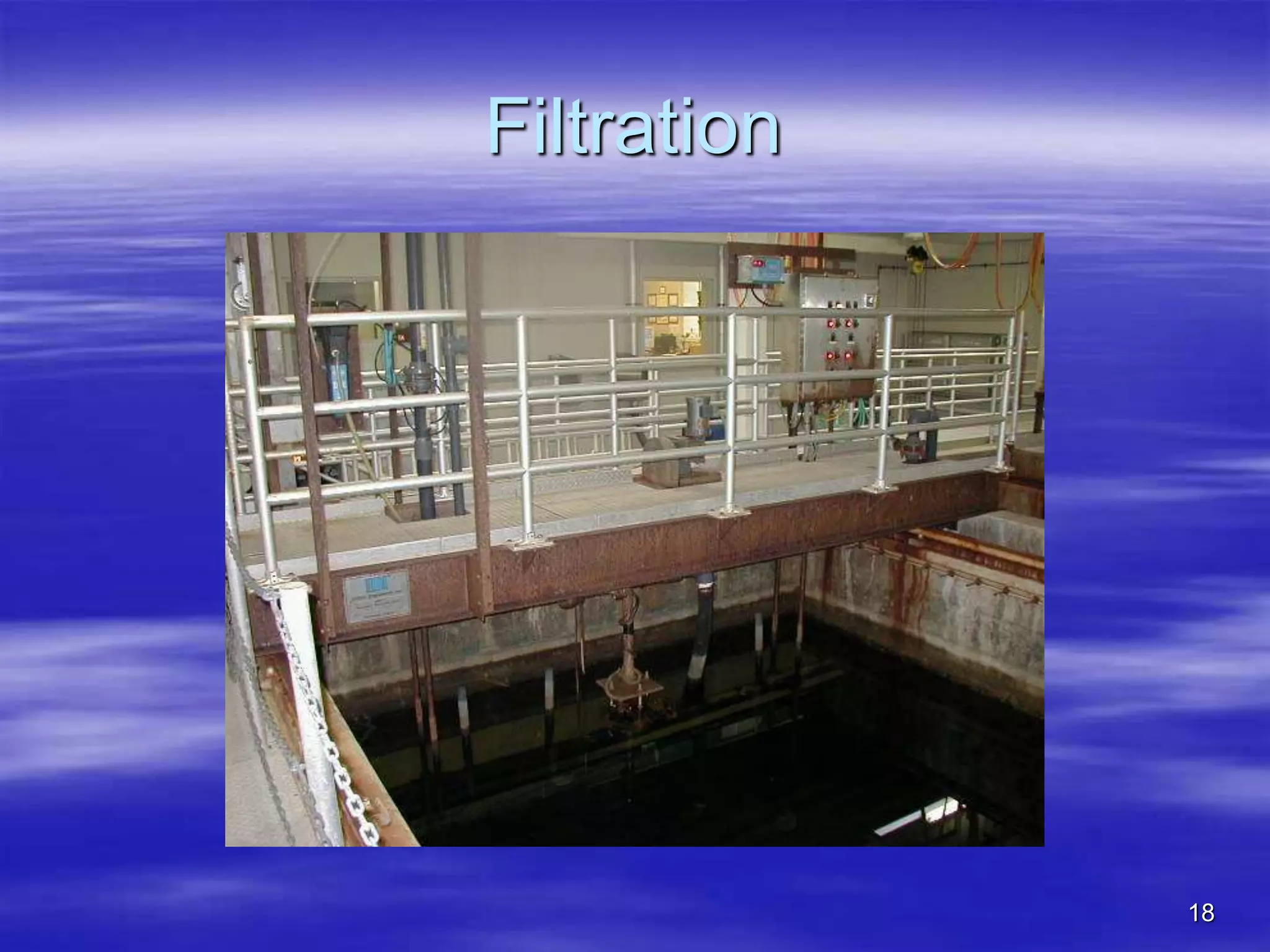
Filtration
19
Filtration
 Solids and floc removal
 Physical
 Chemical
 Biological
20
Types of Filtration
 Slow Sand
 Conventional Filtration
21
Types of Filtration
 Direct Filtration
 Diatomaceous Earth
22
Types of Filtration
 Membrane Filtration
 Bag and Cartridge Filters
23
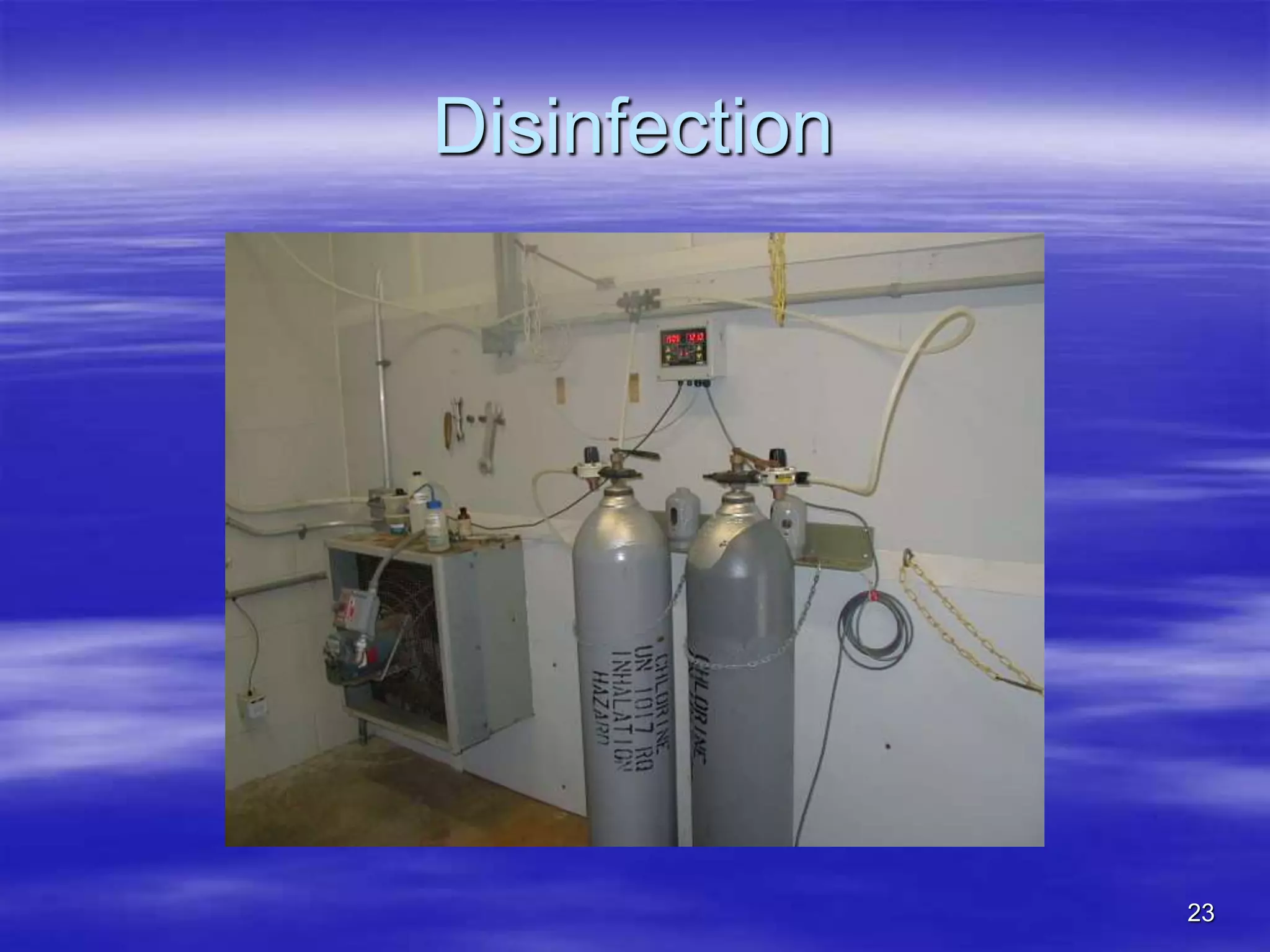
Disinfection
24
Disinfection
 Disease-causing organisms
 Chlorine
 Ozone and Ultraviolet Radiation
25
Disinfection: Chlorine
 Chlorine Gas
 Sodium Hypochlorite
26
Disinfection: Chlorine
 Calcium Hypochlorite
 Chlorine may form carcinogens
27
Disinfection: Ultraviolet Light
 Penetrates most cell walls
 No toxic residuals
 Short contact times; easy to operate
 Unsuitable for some water sources
28
Disinfection: Ozone
 O3
 Shorter contact time
 Capital costs
 O&M
29
Other Typical Treatment Processes
 Iron and manganese removal
 Corrosion control
 These are source dependent
30
Iron and Manganese Removal
 Various techniques
 Aeration
 Sequestration
 Ion exchange
31
Corrosion Control
 Prevents degradation
 Adjust water characteristics
32
Exercise
 Exercise!!!
 Complete the fill-in-the blank questions
33
Distribution System Facilities
 Pumps
 Storage facilities
 Transmission mains
 Valves and hydrants
 Meters
34
Pumps
 Provide lift
 Do not generally create pressure
 Major part of O&M costs
35
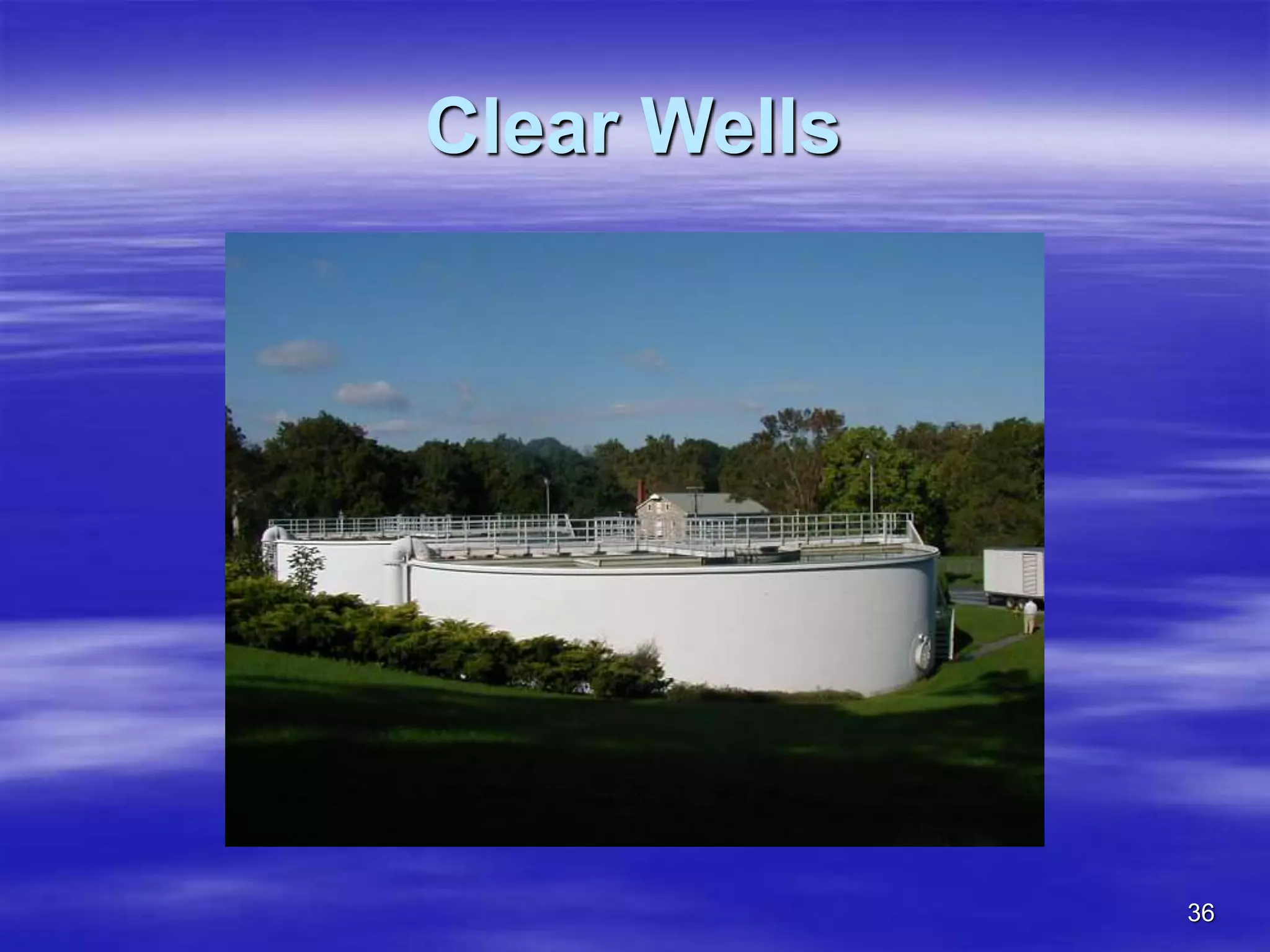
Storage Facilities
 Clear wells
 Stand pipes
 Elevated storage tanks
36
Clear Wells
37
Clear Wells
 Large concrete reservoirs
 Constant rate of operation
38
Stand Pipes
 Located on the ground
 Require little maintenance
39
Elevated Storage Tanks
 Supporting structures
 Use gravity
 Filled in off-peak hours
40
Transmission Mains
System Design
 Branching systems
 Loop or grid systems
41
Transmission Mains
Materials
 Cast iron
 Ductile iron
 Plastic (polyvinylchloride – PVC)
42
Valves and Hydrants
 Valves
 Wet barrel hydrants
 Dry barrel hydrants
43
Meters
 Throughout the system
 Used for billing and to identify loss
 Lowers usage
 Replacement program
44
Exercise
 Exercise time!!!
 Fill in the graphic and answer the questions
45
Summary
 Key points
46
References and Resources
 See your workbooks for details

fin1_water_supply_slides.ppt