
PRESENTED TO:
ENGR. NADEEM AHMAD
PRESENTED BY:
Gulfam Hussain
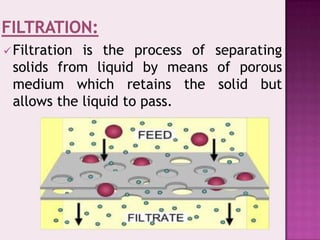
Filtration is the process of separating
solids from liquid by means of porous
medium which retains the solid but
allows the liquid to pass.
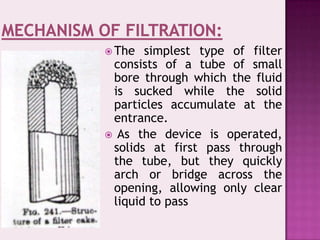
 The simplest type of filter
consists of a tube of small
bore through which the fluid
is sucked while the solid
particles accumulate at the
entrance.
 As the device is operated,
solids at first pass through
the tube, but they quickly
arch or bridge across the
opening, allowing only clear
liquid to pass
 The filtering area.
 The difference in pressure between two sides of
the filter.
 The average cross section of the pores within
the filter cake.
 The number of pores per unit area of the
septum.
 The thickness of the filter cake.
 Pressure type: pressure is applied to push the
liquid through the filter bed. Fluids flow through a
filter due to a difference in pressure fluid flows
from the high pressure side to the low pressure
side of the filter, leaving some material behind.
 The liquid may flow through the filter by the
force exerted by a pump.
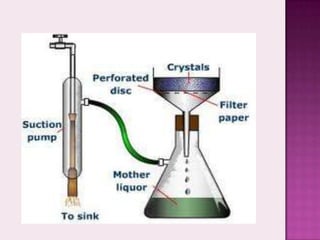
 Suction type: suction is applied to pull the liquid
through the filter bed. It is a chemistry laboratory
technique which allows for a greater rate of
filtration.
 (used in chemical laboratories, for mineral
dressing in which interest centers on the cake)
Cake filters:
 Cake filters are the type most frequently used
in mineral processing, where the recovery of
large amounts of solids from fairly
concentrated slurries is the main requirement.
 Those where the main requirement is the
removal of small amounts of solid from
relatively dilute suspensions are known as
screening or clarification filters.
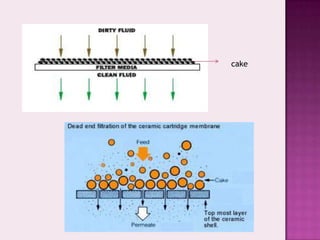
cake
Advantage:
 higher fluid capacity per square foot of
filtering surface,
 better control of cake formation,
 possibility of better washing of cake.
Disadvantage:
 A great disadvantage is that they are
intermittent (stopping and starting at regular
intervals) instead of continuous.
DRYING.
 The drying of is the last operation
performed in the mineral processing
plant.
 It reduces the cost of transport and is
usually aimed at reducing the moisture
content to about 5% by weight.
 Dust losses are often a problem if the
moisture content is lower.
Rotary thermal dryers:
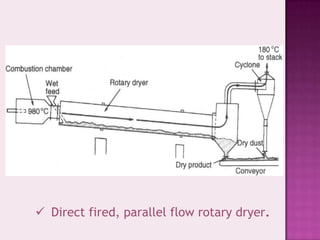
 Rotary thermal dryers are often used.
 These consist of a relatively long cylindrical
shell mounted on rollers.
 Driven at a speed of up to 25 rev/min.
 The shell is at a slight slope, so that material
moves from the feed to discharge end under
gravity.
 Hot gases, or air, are fed in either at the feed
end to give parallel flow or at the discharge
to give counter-current flow.
 Direct fired, parallel flow rotary dryer.
Methods of heating or drying:
Direct Method:
 The method in which the hot gases pass
through the material in the dryer.
 The direct-fired is the dryer most commonly
used in the minerals industry.
Indirect Method:
 The method in which the material is in an
inner shell, heated externally by hot gases.
 The indirect-fired type being used when the
material must not contact the hot combustion
gases.
 The product from the dryers is often
stockpiled, before being loaded on to trucks
or rail-cars as required for shipment.
 The containers may be closed, or the surface
of the contents sprayed with a skin-forming
solution, in order to eliminate dust losses.

Filtration

  • 1.
    PRESENTED TO: ENGR. NADEEMAHMAD PRESENTED BY: Gulfam Hussain
  • 2.
    Filtration is theprocess of separating solids from liquid by means of porous medium which retains the solid but allows the liquid to pass.
  • 3.
     The simplesttype of filter consists of a tube of small bore through which the fluid is sucked while the solid particles accumulate at the entrance.  As the device is operated, solids at first pass through the tube, but they quickly arch or bridge across the opening, allowing only clear liquid to pass
  • 4.
     The filteringarea.  The difference in pressure between two sides of the filter.  The average cross section of the pores within the filter cake.  The number of pores per unit area of the septum.  The thickness of the filter cake.
  • 5.
     Pressure type:pressure is applied to push the liquid through the filter bed. Fluids flow through a filter due to a difference in pressure fluid flows from the high pressure side to the low pressure side of the filter, leaving some material behind.  The liquid may flow through the filter by the force exerted by a pump.  Suction type: suction is applied to pull the liquid through the filter bed. It is a chemistry laboratory technique which allows for a greater rate of filtration.  (used in chemical laboratories, for mineral dressing in which interest centers on the cake)
  • 7.
    Cake filters:  Cakefilters are the type most frequently used in mineral processing, where the recovery of large amounts of solids from fairly concentrated slurries is the main requirement.  Those where the main requirement is the removal of small amounts of solid from relatively dilute suspensions are known as screening or clarification filters.
  • 8.
  • 9.
    Advantage:  higher fluidcapacity per square foot of filtering surface,  better control of cake formation,  possibility of better washing of cake. Disadvantage:  A great disadvantage is that they are intermittent (stopping and starting at regular intervals) instead of continuous.
  • 10.
    DRYING.  The dryingof is the last operation performed in the mineral processing plant.  It reduces the cost of transport and is usually aimed at reducing the moisture content to about 5% by weight.  Dust losses are often a problem if the moisture content is lower.
  • 11.
    Rotary thermal dryers: Rotary thermal dryers are often used.  These consist of a relatively long cylindrical shell mounted on rollers.  Driven at a speed of up to 25 rev/min.  The shell is at a slight slope, so that material moves from the feed to discharge end under gravity.  Hot gases, or air, are fed in either at the feed end to give parallel flow or at the discharge to give counter-current flow.
  • 12.
     Direct fired,parallel flow rotary dryer.
  • 13.
    Methods of heatingor drying: Direct Method:  The method in which the hot gases pass through the material in the dryer.  The direct-fired is the dryer most commonly used in the minerals industry. Indirect Method:  The method in which the material is in an inner shell, heated externally by hot gases.  The indirect-fired type being used when the material must not contact the hot combustion gases.
  • 14.
     The productfrom the dryers is often stockpiled, before being loaded on to trucks or rail-cars as required for shipment.  The containers may be closed, or the surface of the contents sprayed with a skin-forming solution, in order to eliminate dust losses.