FIELD TESTS
John Alfred Abalos
BPE- SPE 3
Field Tests
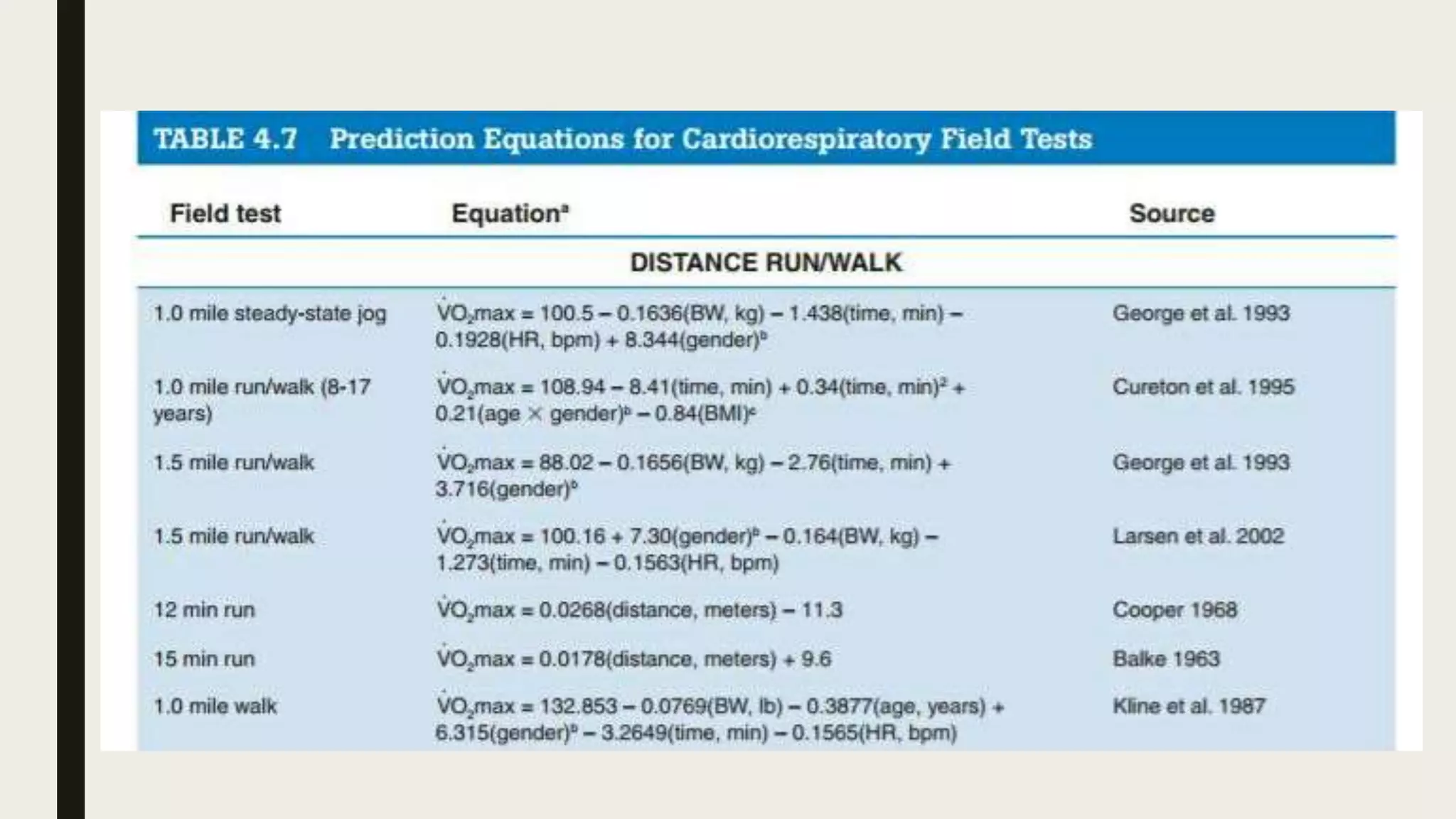
■ A number of performance tests, such as distance
runs, have been deviced to predict VO2 max.
■ These tests are practical, inexpensive, less time-
consuming, and easy to administer to large
groups.
■ Can be used to classify the cardiorespiratory
fitness level of healthy men(<40 yrs old) and
women(<50 yrs old).
Field Tests
■Cant be use to detect CHD because
HR, ECG, and BP are usually not
monitored during the performance.
■Most field tests used to assess
cardio respiratory endurance
involve...
Bench Stepping
Field Tests
■ And require that clients be able to accurately measure
their post exercise.
■ Pollock, Broida, and Kendrick(1972) found that with
practice, men could learn to measure their own pulse
rates accurately.
■ Prior to administering field tests that requires the
measurement of heart rate, you should teach your clients
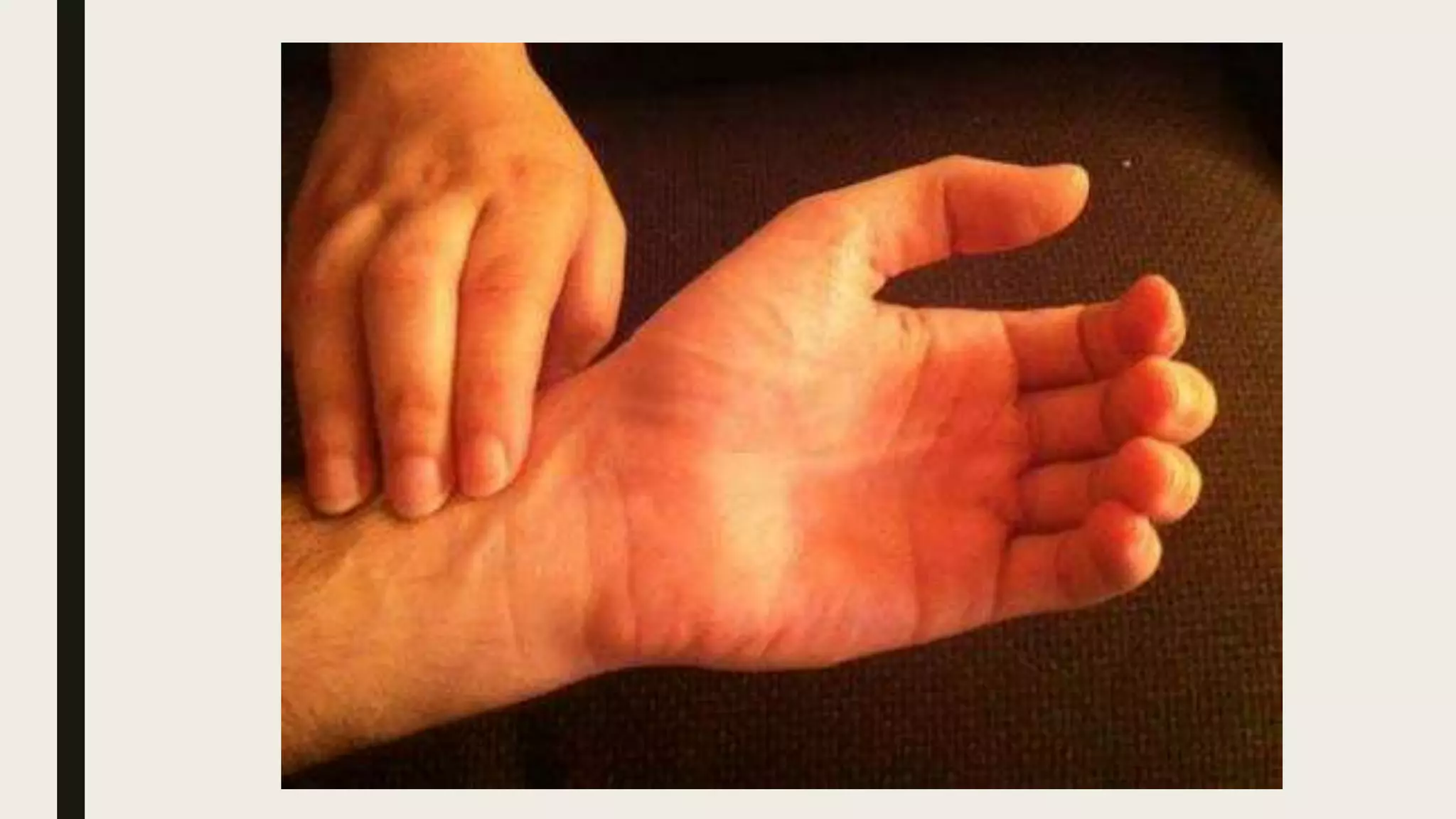
how to measure their PR using the palpation technique.
Measuring Pulse Rate
1. Use your middle and index finger rather than thumb in
feeling the pulse.
2. Do not apply heavy pressure.
3. Count the number of pulse beats for either 6-, 10-, or 15-
second period.
4. Convert the pulse counts into BPM using multipliers. 6-
second count times 10, 10-second count times 6, and
15-second count times 4.
5. Remember the value and record on your score card.
DISTANCE RUN TESTS
Distance Run Tests
■ Most commonly used distance runs involve
distances of 1 or 1.5 miles to evaluate
aerobic capacity.
■ Based on the assumption that the more fit
individual will be able to run a given distance
in less time or run a greater distance in a
given period of time.
Distance Run Tests
■Using factor analysis, Disch,
Frankiewicz, and Jackson 1975
noted that runs greater than 1 mile
tended to load exclusively on the
endurance factor rather than the
speed factor.
Distance Run Tests
■ Endurance running performance may
be influenced by other factors such as
motivation, percent fat(Cureton et al
1978; Katch et al 1973), running
efficiency, and lactate threshold(Costill
and Fox 1969).
Distance Run Tests
■Generally, the longer the run, the
higher the correlation with VO2
max. Based on this observation, it is
recommended that you select a test
with a distance of atleast 1 mile or
duration of at least 9 minutes.
Distance Run Tests
■ The most widely used distance run
tests are the nine or twelve minute runs
and 1 or 1.5 mile runs. Some physical
fitness test batteries for children and
adolescents recommended using either
1 minute or 1 mile run test.
NINE-OR TWELVE-
MINUTE RUN TEST
ONE AND ONE
HALF MILE RUN/
WALK TEST
ONE MILE
JOGGING TEST
WALKING TEST
Walking Test
■ Resquires only fast walkings
■ Test was developed and validated for a large,
heterogenous sample of 86 women and 83
men(Kline, 1987)
■ The cross validation analysis resulted in a high
validity coefficient and small standard error of
estimate indicating that the one mile walking test
yields a valid submaximal assessment of
estimated VO max.
Walking Test
■To administer this test, instruct your
client to walk one mile as quickly as
possible and to take their HR
immediately at the end of the test by
counting the pulse for 15 seconds.
STEP TEST
Step Test
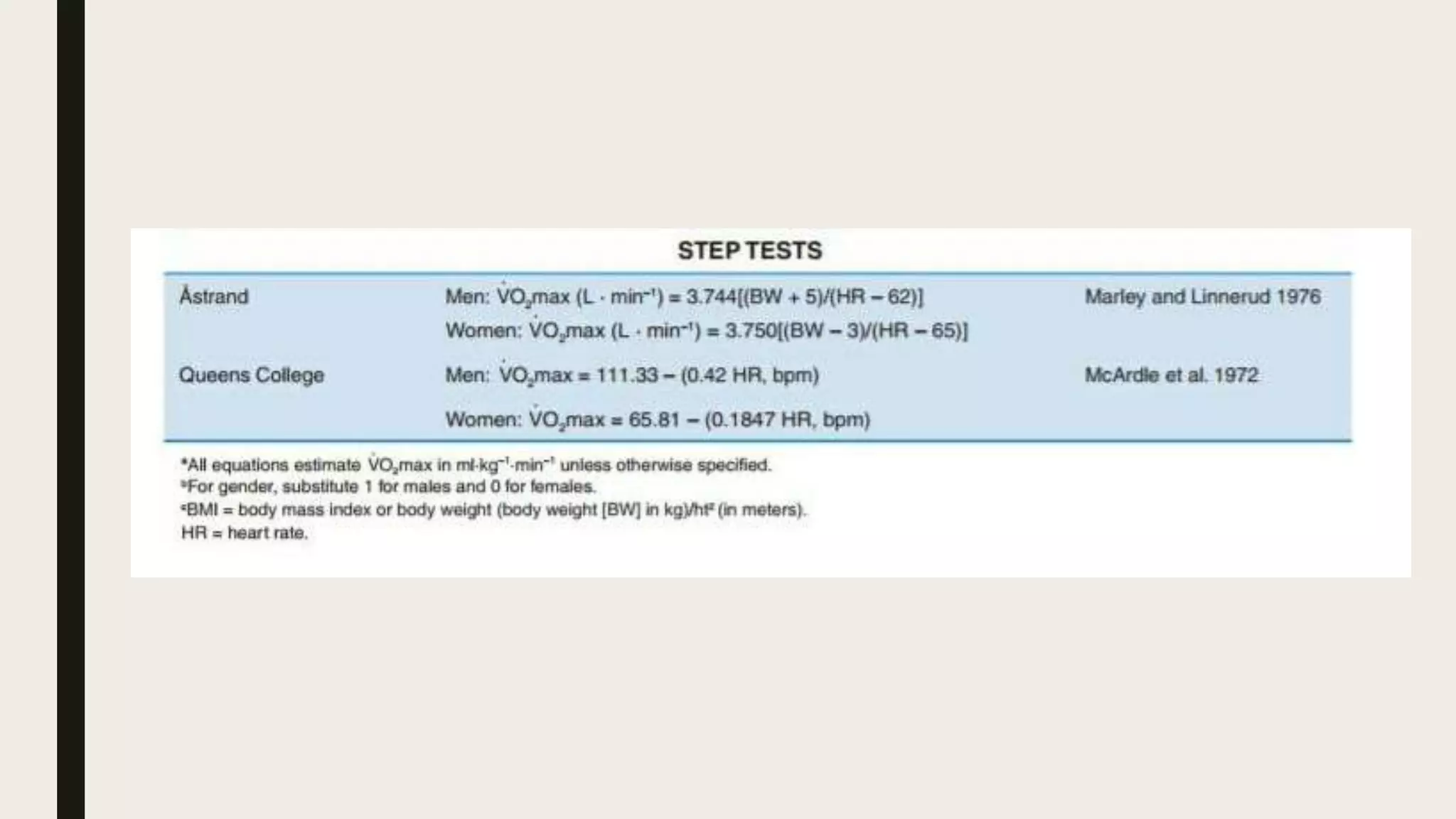
■ The major advantage of using step test to assess
cardio-respiratory fitness is that they can be
administered to large groups in a field situation
without expensive equipment or highly trained
personnel.
■ Most of the step tests use post exercise and
recovery HR to evaluate aerobic fitness, what
they do provide an estimate of the individual’s
VO2 max
Step Test
■ The validity of step test is highly dependent
on the accurate measurement of pulse rate.
Step tests that use recovery HR tend too
possess lower validity than those using the
time required for the HR to reach a specified
level while performing standardized work
load.
Field Tests

Field Tests

  • 1.
    FIELD TESTS John AlfredAbalos BPE- SPE 3
  • 2.
    Field Tests ■ Anumber of performance tests, such as distance runs, have been deviced to predict VO2 max. ■ These tests are practical, inexpensive, less time- consuming, and easy to administer to large groups. ■ Can be used to classify the cardiorespiratory fitness level of healthy men(<40 yrs old) and women(<50 yrs old).
  • 3.
    Field Tests ■Cant beuse to detect CHD because HR, ECG, and BP are usually not monitored during the performance. ■Most field tests used to assess cardio respiratory endurance involve...
  • 8.
  • 9.
    Field Tests ■ Andrequire that clients be able to accurately measure their post exercise. ■ Pollock, Broida, and Kendrick(1972) found that with practice, men could learn to measure their own pulse rates accurately. ■ Prior to administering field tests that requires the measurement of heart rate, you should teach your clients how to measure their PR using the palpation technique.
  • 11.
    Measuring Pulse Rate 1.Use your middle and index finger rather than thumb in feeling the pulse. 2. Do not apply heavy pressure. 3. Count the number of pulse beats for either 6-, 10-, or 15- second period. 4. Convert the pulse counts into BPM using multipliers. 6- second count times 10, 10-second count times 6, and 15-second count times 4. 5. Remember the value and record on your score card.
  • 12.
  • 13.
    Distance Run Tests ■Most commonly used distance runs involve distances of 1 or 1.5 miles to evaluate aerobic capacity. ■ Based on the assumption that the more fit individual will be able to run a given distance in less time or run a greater distance in a given period of time.
  • 14.
    Distance Run Tests ■Usingfactor analysis, Disch, Frankiewicz, and Jackson 1975 noted that runs greater than 1 mile tended to load exclusively on the endurance factor rather than the speed factor.
  • 15.
    Distance Run Tests ■Endurance running performance may be influenced by other factors such as motivation, percent fat(Cureton et al 1978; Katch et al 1973), running efficiency, and lactate threshold(Costill and Fox 1969).
  • 16.
    Distance Run Tests ■Generally,the longer the run, the higher the correlation with VO2 max. Based on this observation, it is recommended that you select a test with a distance of atleast 1 mile or duration of at least 9 minutes.
  • 17.
    Distance Run Tests ■The most widely used distance run tests are the nine or twelve minute runs and 1 or 1.5 mile runs. Some physical fitness test batteries for children and adolescents recommended using either 1 minute or 1 mile run test.
  • 18.
  • 19.
    ONE AND ONE HALFMILE RUN/ WALK TEST
  • 21.
  • 22.
  • 23.
    Walking Test ■ Resquiresonly fast walkings ■ Test was developed and validated for a large, heterogenous sample of 86 women and 83 men(Kline, 1987) ■ The cross validation analysis resulted in a high validity coefficient and small standard error of estimate indicating that the one mile walking test yields a valid submaximal assessment of estimated VO max.
  • 24.
    Walking Test ■To administerthis test, instruct your client to walk one mile as quickly as possible and to take their HR immediately at the end of the test by counting the pulse for 15 seconds.
  • 25.
  • 26.
    Step Test ■ Themajor advantage of using step test to assess cardio-respiratory fitness is that they can be administered to large groups in a field situation without expensive equipment or highly trained personnel. ■ Most of the step tests use post exercise and recovery HR to evaluate aerobic fitness, what they do provide an estimate of the individual’s VO2 max
  • 27.
    Step Test ■ Thevalidity of step test is highly dependent on the accurate measurement of pulse rate. Step tests that use recovery HR tend too possess lower validity than those using the time required for the HR to reach a specified level while performing standardized work load.