Joseph Contreras
Cache la Poudre River
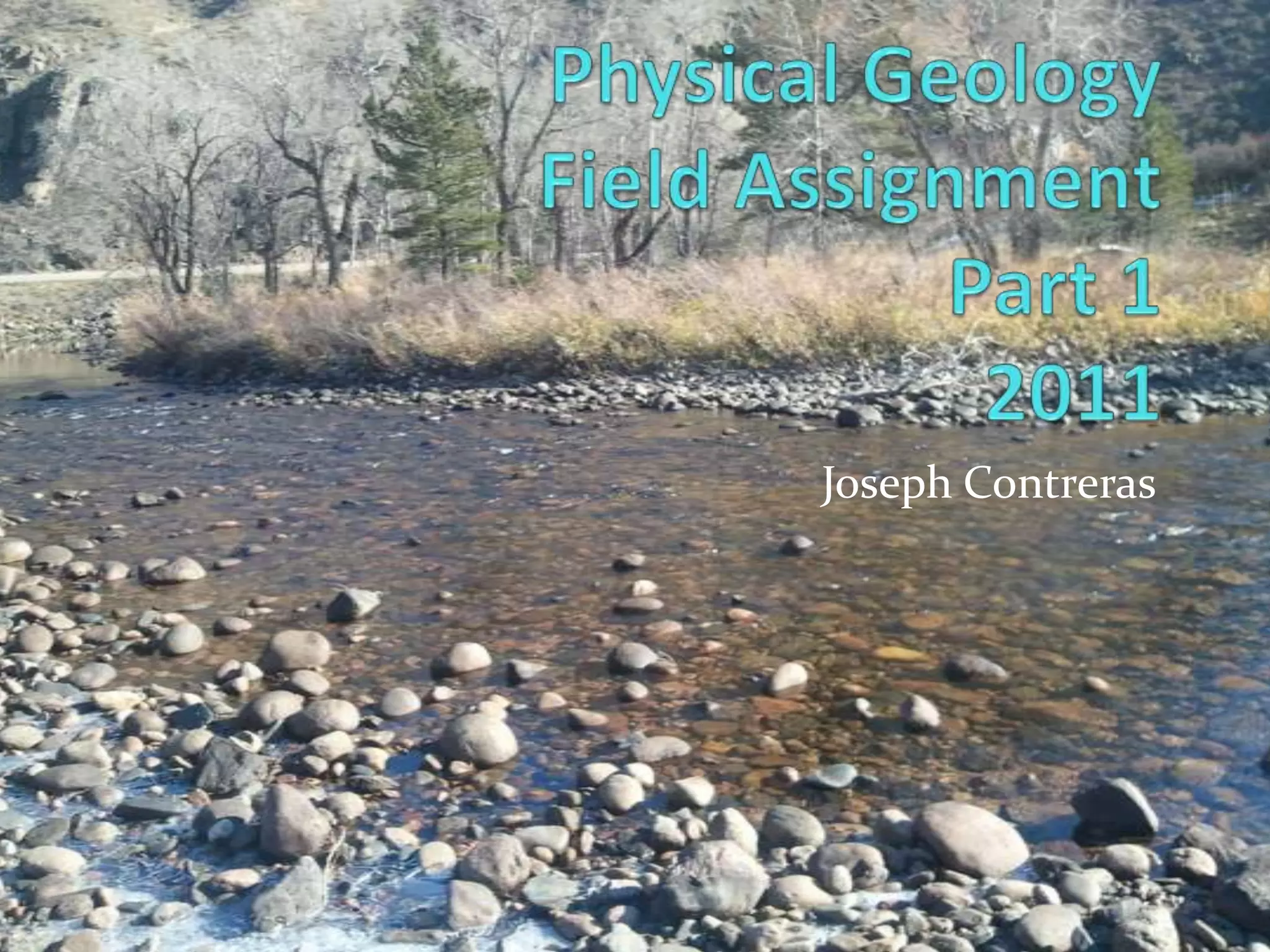
 The Cache la Poudre River or the Poudre River as locals
  refer to it originates in the Rocky Mountain National
  Park in Colorado and flows into the South Platte
  River. Located east of the continental divide in the
  northern front range of Colorado, the river travels 126
  miles east through Roosevelt National Park and
  descends over 7,000 feet.
 The canyon has been home to native Americans for
  centuries. Evidence of their presence such as: fire
  hearths, burial sites, tipi rings, and rock shelters have
  been located in the canyon.
Igneous Rocks
 Igneous rock is formed by the cooling and
 solidification of magma or lava. Igneous rocks can
 form below the surface as intrusive(plutonic) rocks or
 they can form on the surface as extrusive(volcanic)
 rocks.
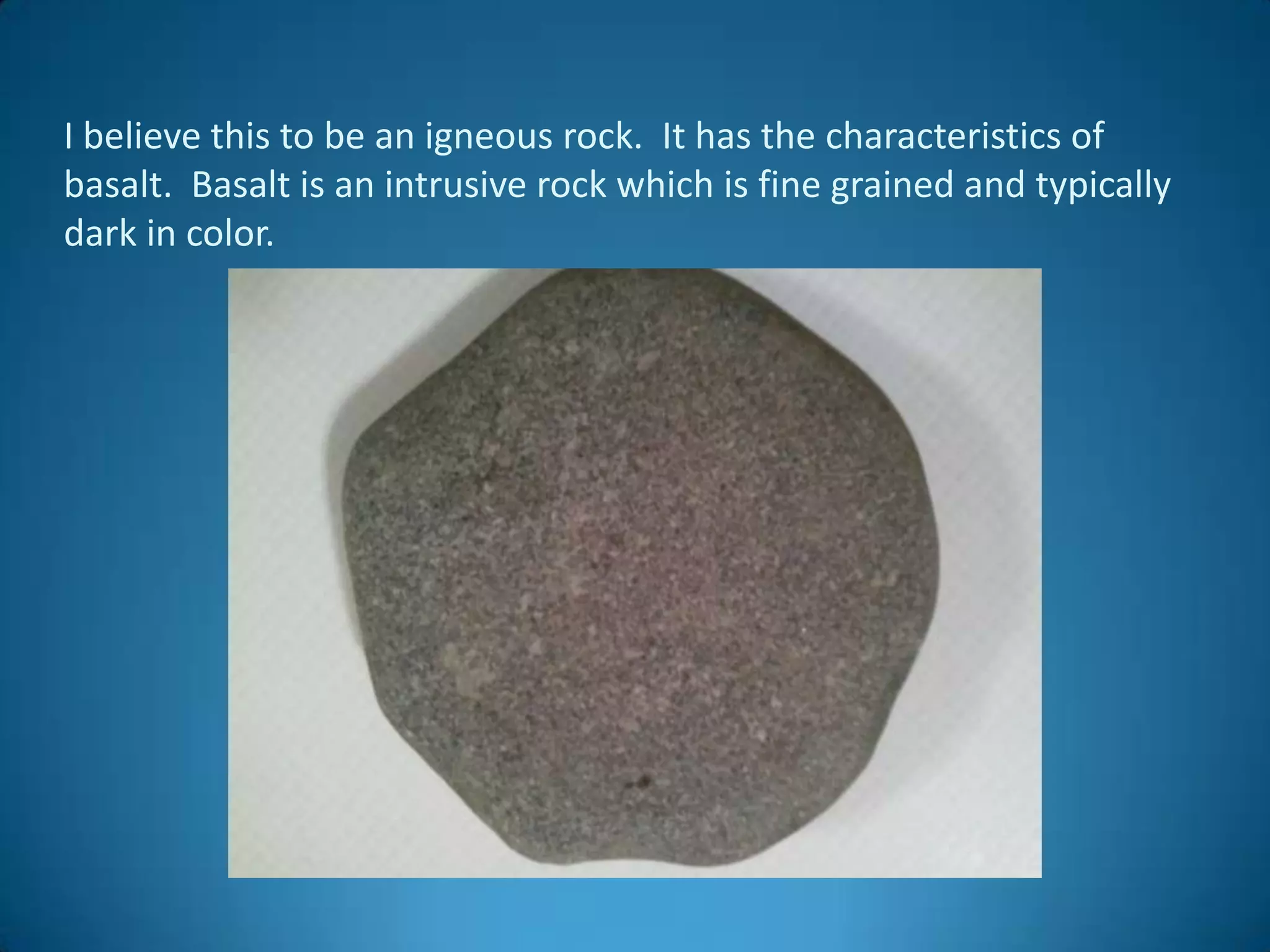
I believe this to be an igneous rock. It has the characteristics of
basalt. Basalt is an intrusive rock which is fine grained and typically
dark in color.
Sedimentary Rocks
 Sedimentary rocks are formed by the deposition of
 material at the Earth’s surface and within bodies of
 water. Sediment is produced when preexisting rocks
 are broken down by weathering processes. This
 sediment then moves by various forces such as: gravity,
 water, wind, and glacial ice. Over time the layers of
 sediment succumb to the forces of compaction and
 cementation to form rock.
I believe this to be a sedimentary rock. The various layers of
sediment are easily scene. The rock appears to be a dark sandstone
with rings or clay.
This appears to be heavily weathered sandstone. The rock
contains uniform sand sized grains throughout.
Metamorphic Rocks
 Metamorphic rocks are formed when an existing rock
 is subjected to intense heat and/or pressure. The
 parent rock of a metamorphic rock may be an igneous,
 sedimentary, or even a metamorphic rock. Pressure
 from within the Earth or tectonic processes may cause
 a rock to change.
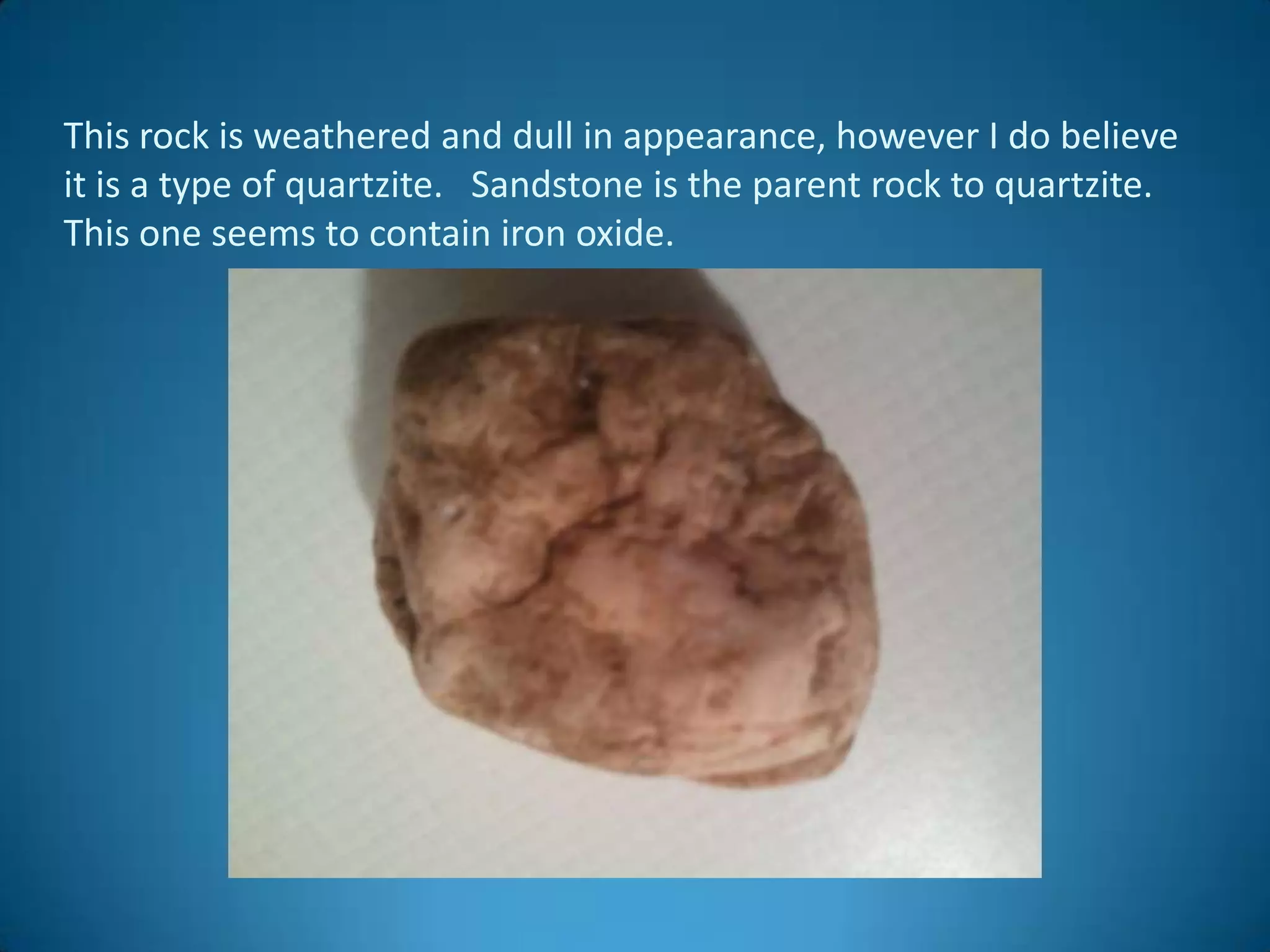
I believe this to be a metamorphic rock. Gneiss is what this rock
likely is. Gneiss are medium to course grained banded rocks. I can
see this rock once had clear bands but it appears these bands have
been broken by forces of heat and pressure.
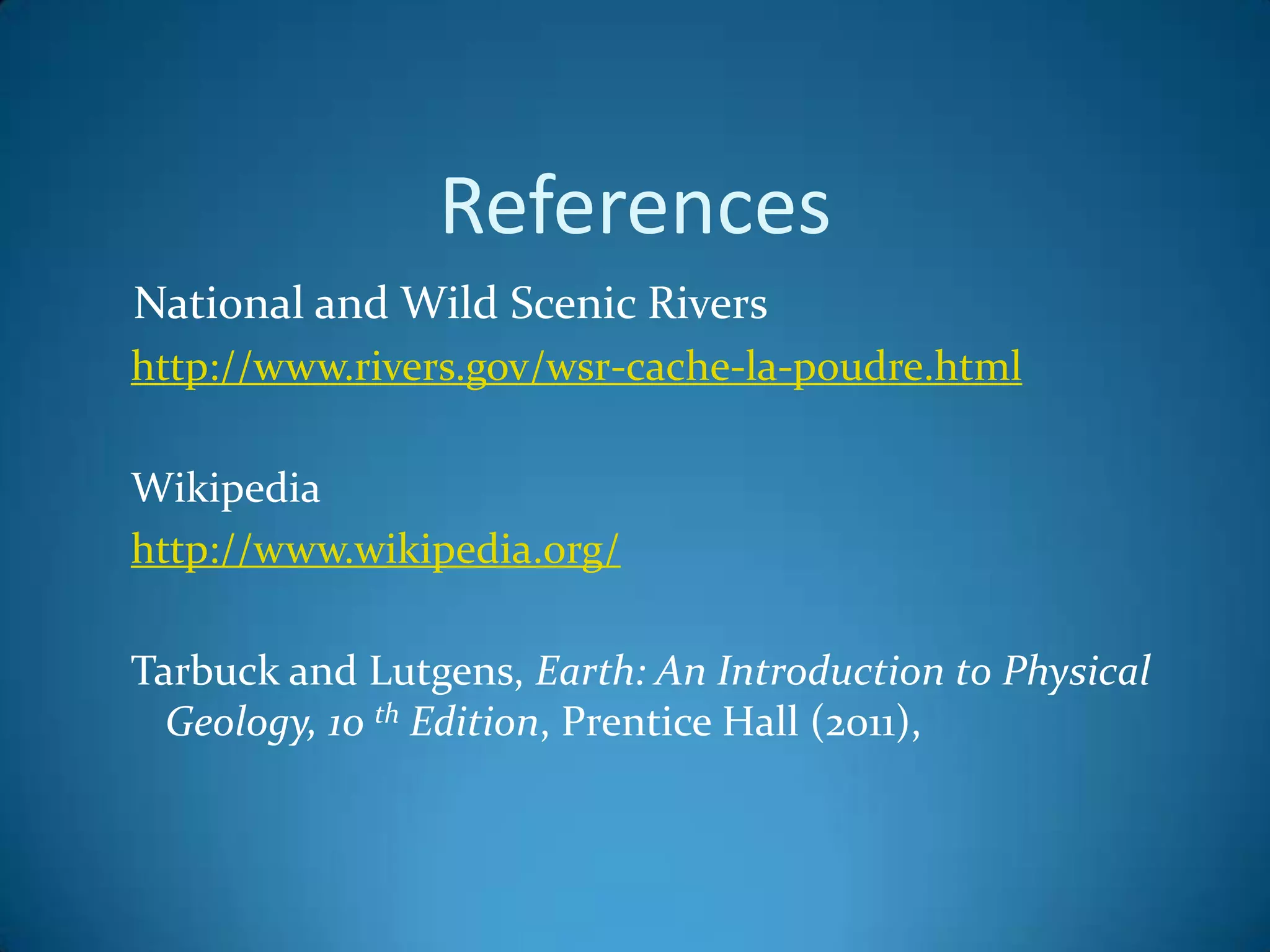
This rock is weathered and dull in appearance, however I do believe
it is a type of quartzite. Sandstone is the parent rock to quartzite.
This one seems to contain iron oxide.
References
National and Wild Scenic Rivers
http://www.rivers.gov/wsr-cache-la-poudre.html

Wikipedia
http://www.wikipedia.org/

Tarbuck and Lutgens, Earth: An Introduction to Physical
  Geology, 10 th Edition, Prentice Hall (2011),

Field assignment 1

  • 1.
  • 2.
    Cache la PoudreRiver  The Cache la Poudre River or the Poudre River as locals refer to it originates in the Rocky Mountain National Park in Colorado and flows into the South Platte River. Located east of the continental divide in the northern front range of Colorado, the river travels 126 miles east through Roosevelt National Park and descends over 7,000 feet.  The canyon has been home to native Americans for centuries. Evidence of their presence such as: fire hearths, burial sites, tipi rings, and rock shelters have been located in the canyon.
  • 3.
    Igneous Rocks  Igneousrock is formed by the cooling and solidification of magma or lava. Igneous rocks can form below the surface as intrusive(plutonic) rocks or they can form on the surface as extrusive(volcanic) rocks.
  • 4.
    I believe thisto be an igneous rock. It has the characteristics of basalt. Basalt is an intrusive rock which is fine grained and typically dark in color.
  • 5.
    Sedimentary Rocks  Sedimentaryrocks are formed by the deposition of material at the Earth’s surface and within bodies of water. Sediment is produced when preexisting rocks are broken down by weathering processes. This sediment then moves by various forces such as: gravity, water, wind, and glacial ice. Over time the layers of sediment succumb to the forces of compaction and cementation to form rock.
  • 6.
    I believe thisto be a sedimentary rock. The various layers of sediment are easily scene. The rock appears to be a dark sandstone with rings or clay.
  • 7.
    This appears tobe heavily weathered sandstone. The rock contains uniform sand sized grains throughout.
  • 8.
    Metamorphic Rocks  Metamorphicrocks are formed when an existing rock is subjected to intense heat and/or pressure. The parent rock of a metamorphic rock may be an igneous, sedimentary, or even a metamorphic rock. Pressure from within the Earth or tectonic processes may cause a rock to change.
  • 9.
    I believe thisto be a metamorphic rock. Gneiss is what this rock likely is. Gneiss are medium to course grained banded rocks. I can see this rock once had clear bands but it appears these bands have been broken by forces of heat and pressure.
  • 10.
    This rock isweathered and dull in appearance, however I do believe it is a type of quartzite. Sandstone is the parent rock to quartzite. This one seems to contain iron oxide.
  • 11.
    References National and WildScenic Rivers http://www.rivers.gov/wsr-cache-la-poudre.html Wikipedia http://www.wikipedia.org/ Tarbuck and Lutgens, Earth: An Introduction to Physical Geology, 10 th Edition, Prentice Hall (2011),