FEEDBACK CONTROL OF
HORMONE SECREION
PREPARED BY FATIMA SUNDUS
Feedback Control of Hormone Secretion
Negative Feedback Prevents Overactivity of Hormone Systems.
• After a stimulus causes release of the hormone, conditions or products
resulting from the action of the hormone tend to suppress its further
release.
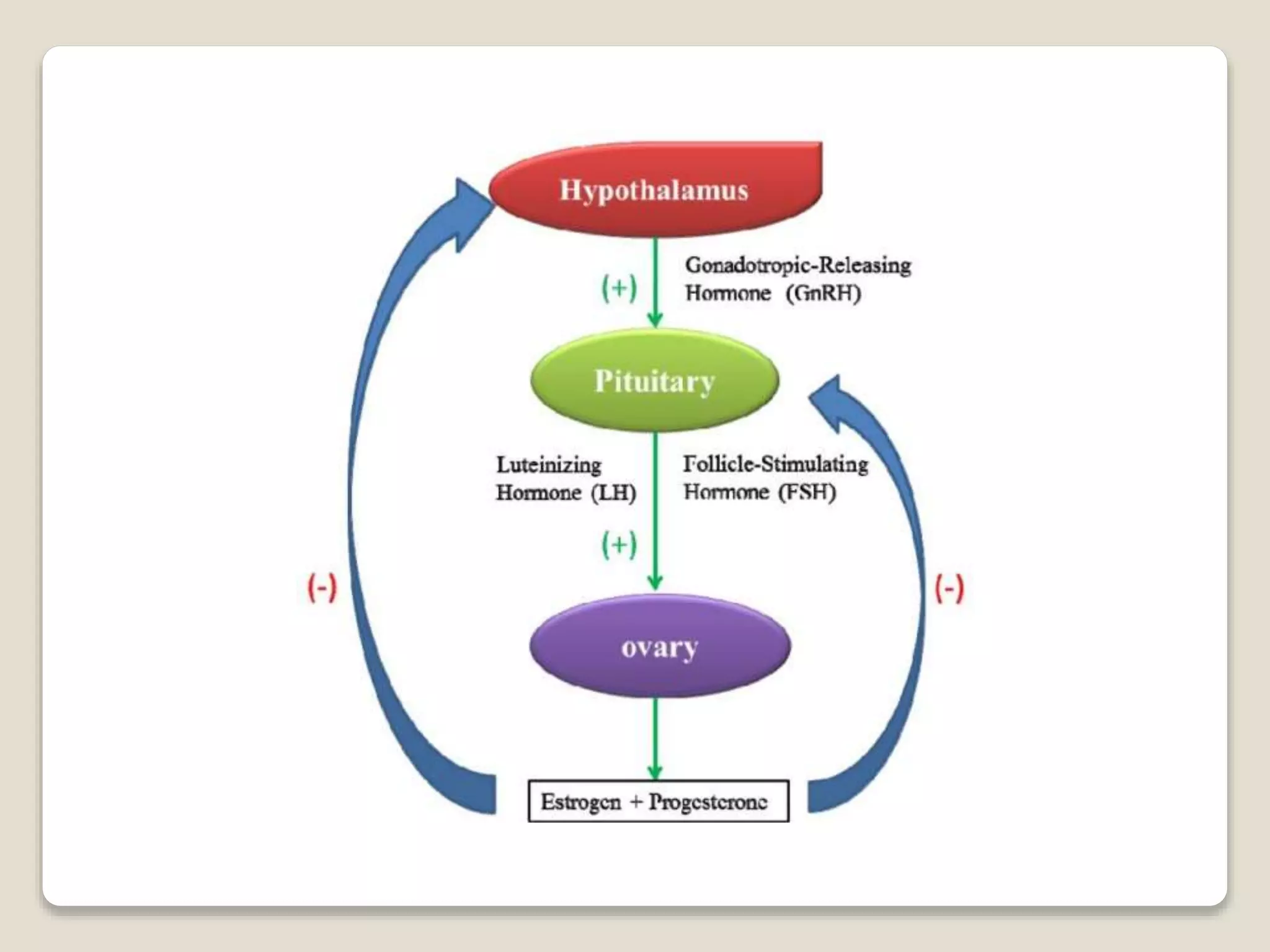
• In other words, the hormone (or one of its products) has a negative
feedback effect to prevent oversecretion of the hormone or overactivity at
the target tissue.
• Feedback regulation of hormones can occur at all levels, including gene
transcription and translation steps involved in processing hormones or
releasing stored hormones.
• The controlled variable is sometimes the degree of activity of the target tissue
rather than the synthesis or secretory rates of the hormone.
• Therefore, only when the target tissue activity rises to an appropriate level
will feedback signals to the endocrine gland become powerful enough to slow
further secretion of the hormone.
Surges of Hormones Can Occur with Positive
Feedback.
• In a few cases, positive feedback occurs when the biological action of
the hormone causes additional secretion of the hormone.
• One example of this is the surge of luteinizing hormone (LH) that
occurs as a result of the stimulatory effect of estrogen on the anterior
pituitary before ovulation.
• The secreted LH then acts on the ovaries to stimulate additional
secretion of estrogen, which in turn causes more secretion of LH.
• Eventually, LH reaches an appropriate concentration and typical
negative feedback control of hormone secretion is then exerted.
Cyclical Variations Occur in Hormone Release.
• Superimposed on the negative and positive feedback control of
hormone secretion are periodic variations in hormone release that are
influenced by seasonal changes, various stages of development
and aging, the diurnal (daily) cycle, and sleep.
• For example, the secretion of growth hormone is markedly increased
during the early period of sleep but is reduced during the later stages of
sleep.
• Oscillations of endocrine singaling are driven, in part by circardian
clocks.
• The suprachiasmatic nucleus (SCN) of the hypothalamus serves as
a “master clock” that control rhythmic patterns of biological clocks in
many parts of the body, including neuroendocrine cells and endocrine
glands.
Transport of Hormones in the Blood
Water-soluble hormones (peptides and catecholamines) are dissolved in
the plasma and transported from their sites of synthesis to target tissues,
where they diffuse out of the capillaries, into the interstitial fluid, and
ultimately to target cells.
Steroid and thyroid hormones, in contrast, circulate in the blood while
being mainly bound to plasma proteins.
Usually less than 10 percent of steroid or thyroid hormones in the plasma
exist free in solution.
For example, more than 99 percent of the thyroxine in the blood is bound
to plasma proteins.
However, protein-bound hormones cannot easily diffuse across the
capillaries and gain access to their target cells and are therefore biologically
inactive until they dissociate from plasma proteins.
The relatively large amounts of hormones bound to proteins serve as
reservoirs, replenishing the concentration of free hormones when they are
bound to target receptors or lost from the circulation.
Binding of hormones to plasma proteins greatly slows their clearance from
the plasma.
“Clearance” of Hormones from the Blood
Two factors can increase or decrease the concentration of a hormone in the
blood.
1) One of these is the rate of hormone secretion into the blood.
2) The second is the rate of removal of the hormone from the blood, which is
called the metabolic clearance rate.
This is usually expressed in terms of the number of milliliters of plasma
cleared of the hormone per minute.
To calculate this clearance rate, one measures
(1) the rate of disappearance of the hormone from the plasma (e.g.,
nanograms per minute)
(2) the plasma concentration of the hormone (e.g., nanograms per milliliter
of plasma).
Then, the metabolic clearance rate is calculated by the following formula:
Metabolic clearance rate = Rate of disappearance of hormone from the plasma
Concentration of hormone
The usual procedure for making this measurement is the following:
 A purified solution of the hormone to be measured is tagged with a
radioactive substance.
 Then the radioactive hormone is infused at a constant rate into the blood
stream until the radioactive concentration in the plasma becomes steady.
 At this time, the rate of disappearance of the radioactive hormone from the
plasma equals the rate at which it is infused, which gives one the rate of
disappearance.
 At the same time, the plasma concentration of the radioactive hormone is
measured using a standard radioactive counting procedure.
 Then, using the formula just cited, the metabolic clearance rate is calculated
Hormones are “cleared” from the plasma in several ways, including
(1) metabolic destruction by the tissues
(2) binding with the tissues
(3) excretion by the liver into the bile
(4) excretion by the kidneys into the urine
For certain hormones, a decreased metabolic clearance rate may cause an
excessively high concentration of the hormone in the circulating body fluids.
For example excessive steroid hormones accumulate when the liver is
diseased because these hormones are conjugated mainly in the liver and
then “cleared” into the bile.
Most of the peptide hormones and catecholamines are water soluble
and circulate freely in the blood.
They are usually degraded by enzymes in the blood and tissues and rapidly
excreted by the kidneys and liver, thus remaining in the blood for only a
short time
For example, the half-life of angiotensin II circulating in the blood is less
than a minute.
Hormones that are bound to plasma proteins are cleared from the blood
at much slower rates and may remain in the circulation for several hours
or even days.
The half-life of adrenal steroids in the circulation, for example, ranges
between 20 and 100 minutes
whereas the half-life of the protein-bound thyroid hormones may
be as long as 1 to 6 days

FEEDBACK CONTROL OF HORMONE SECRETION.pptx

  • 1.
    FEEDBACK CONTROL OF HORMONESECREION PREPARED BY FATIMA SUNDUS
  • 2.
    Feedback Control ofHormone Secretion Negative Feedback Prevents Overactivity of Hormone Systems. • After a stimulus causes release of the hormone, conditions or products resulting from the action of the hormone tend to suppress its further release. • In other words, the hormone (or one of its products) has a negative feedback effect to prevent oversecretion of the hormone or overactivity at the target tissue.
  • 3.
    • Feedback regulationof hormones can occur at all levels, including gene transcription and translation steps involved in processing hormones or releasing stored hormones. • The controlled variable is sometimes the degree of activity of the target tissue rather than the synthesis or secretory rates of the hormone. • Therefore, only when the target tissue activity rises to an appropriate level will feedback signals to the endocrine gland become powerful enough to slow further secretion of the hormone.
  • 4.
    Surges of HormonesCan Occur with Positive Feedback. • In a few cases, positive feedback occurs when the biological action of the hormone causes additional secretion of the hormone. • One example of this is the surge of luteinizing hormone (LH) that occurs as a result of the stimulatory effect of estrogen on the anterior pituitary before ovulation. • The secreted LH then acts on the ovaries to stimulate additional secretion of estrogen, which in turn causes more secretion of LH. • Eventually, LH reaches an appropriate concentration and typical negative feedback control of hormone secretion is then exerted.
  • 6.
    Cyclical Variations Occurin Hormone Release. • Superimposed on the negative and positive feedback control of hormone secretion are periodic variations in hormone release that are influenced by seasonal changes, various stages of development and aging, the diurnal (daily) cycle, and sleep. • For example, the secretion of growth hormone is markedly increased during the early period of sleep but is reduced during the later stages of sleep.
  • 7.
    • Oscillations ofendocrine singaling are driven, in part by circardian clocks. • The suprachiasmatic nucleus (SCN) of the hypothalamus serves as a “master clock” that control rhythmic patterns of biological clocks in many parts of the body, including neuroendocrine cells and endocrine glands.
  • 9.
    Transport of Hormonesin the Blood Water-soluble hormones (peptides and catecholamines) are dissolved in the plasma and transported from their sites of synthesis to target tissues, where they diffuse out of the capillaries, into the interstitial fluid, and ultimately to target cells. Steroid and thyroid hormones, in contrast, circulate in the blood while being mainly bound to plasma proteins. Usually less than 10 percent of steroid or thyroid hormones in the plasma exist free in solution. For example, more than 99 percent of the thyroxine in the blood is bound to plasma proteins.
  • 10.
    However, protein-bound hormonescannot easily diffuse across the capillaries and gain access to their target cells and are therefore biologically inactive until they dissociate from plasma proteins. The relatively large amounts of hormones bound to proteins serve as reservoirs, replenishing the concentration of free hormones when they are bound to target receptors or lost from the circulation. Binding of hormones to plasma proteins greatly slows their clearance from the plasma.
  • 12.
    “Clearance” of Hormonesfrom the Blood Two factors can increase or decrease the concentration of a hormone in the blood. 1) One of these is the rate of hormone secretion into the blood. 2) The second is the rate of removal of the hormone from the blood, which is called the metabolic clearance rate. This is usually expressed in terms of the number of milliliters of plasma cleared of the hormone per minute.
  • 13.
    To calculate thisclearance rate, one measures (1) the rate of disappearance of the hormone from the plasma (e.g., nanograms per minute) (2) the plasma concentration of the hormone (e.g., nanograms per milliliter of plasma). Then, the metabolic clearance rate is calculated by the following formula: Metabolic clearance rate = Rate of disappearance of hormone from the plasma Concentration of hormone
  • 14.
    The usual procedurefor making this measurement is the following:  A purified solution of the hormone to be measured is tagged with a radioactive substance.  Then the radioactive hormone is infused at a constant rate into the blood stream until the radioactive concentration in the plasma becomes steady.  At this time, the rate of disappearance of the radioactive hormone from the plasma equals the rate at which it is infused, which gives one the rate of disappearance.  At the same time, the plasma concentration of the radioactive hormone is measured using a standard radioactive counting procedure.  Then, using the formula just cited, the metabolic clearance rate is calculated
  • 15.
    Hormones are “cleared”from the plasma in several ways, including (1) metabolic destruction by the tissues (2) binding with the tissues (3) excretion by the liver into the bile (4) excretion by the kidneys into the urine For certain hormones, a decreased metabolic clearance rate may cause an excessively high concentration of the hormone in the circulating body fluids. For example excessive steroid hormones accumulate when the liver is diseased because these hormones are conjugated mainly in the liver and then “cleared” into the bile.
  • 16.
    Most of thepeptide hormones and catecholamines are water soluble and circulate freely in the blood. They are usually degraded by enzymes in the blood and tissues and rapidly excreted by the kidneys and liver, thus remaining in the blood for only a short time For example, the half-life of angiotensin II circulating in the blood is less than a minute. Hormones that are bound to plasma proteins are cleared from the blood at much slower rates and may remain in the circulation for several hours or even days.
  • 17.
    The half-life ofadrenal steroids in the circulation, for example, ranges between 20 and 100 minutes whereas the half-life of the protein-bound thyroid hormones may be as long as 1 to 6 days