FDA/EC/ WHO
Expectations for Validation
of Computer Systems
FDA/EC/ WHOFDA/EC/ WHO
Expectations for ValidationExpectations for Validation
of Computer Systemsof Computer Systems
M. LuqmanM. Luqman
Assistant Manager ValidationAssistant Manager Validation
M. Luqman 2
Validation
• Establishing DOCUMENTED
EVIDENCE which provides a high
degree of assurance that a specific
process will consistently produce a
product meeting its
PREDETERMINED SPECIFICATIONS
and quality attributes.
M. Luqman 3
Validation
• Must have knowledge that the
process used to make the product, be
it software or hardware, is going to
produce a product that is consistent
from lot to lot, unit to unit.
M. Luqman 4
Software Validation
• Establishing by objective evidence
that the software conforms with
user needs and intended uses of
those functions that have been
allocated to the software.
M. Luqman 5
Software Verification
• Confirmation that the output of a
particular phase of development meets all
of the input requirements for that phase
• Verification Activities
– Testing
– Walk throughs
– Code and document inspection
M. Luqman 6
Life Cycle Activities
• Risk Management/Hazard Analysis
• Requirements Analysis and Specification
• Design
• Implementation
• Integration
• Validation
• Maintenance
M. Luqman 7
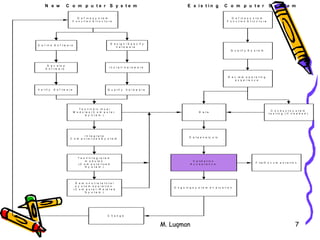
D e f i n e s y s t e m
F u n c t i o n S t r u c t u r e
D e f i n e s y s t e m
F u n c t i o n S t r u c t u r e
D e f i n e S o f t w a r e
D e s i g n / S p e c i f y
h a r d w a r e
D e v e l o p
S o f t w a r e
V e r i f y S o f t w a r e
T e s t I n d i v i d u a l
M o d u l e s ( C o m p u t e r
S y s t e m )
I n t e g r a t e
C o m p u t e r i z e d S y s t e m
T e s t I n t e g r a t e d
m o d u l e s
( C o m p u t e r i z e d
S y s t e m )
D e m o n s t r a t e t o t a l
s y s t e m o p e r a t i o n
( C o m p u t e r - R e l a t e d
S y s t e m )
C h a n g e
Q u a l i f y S y s t e m
R e v i e w o p e r a t i n g
e x p e r i e n c e
D a t a
C o n d u c t s y s t e m
t e s t i n g ( i f n e e d e d )
D a t a a n a l y s i s
V a l i d a t i o n
A c c e p t a n c e
O n g o i n g s y s t e m e v a l u a t i o n
N e w C o m p u t e r S y s t e m E x i s t i n g C o m p u t e r S y s t e m
I n s t a l l h a r d w a r e
Q u a l i f y h a r d w a r e
F i l e D o c u m e n t a t i o n
M. Luqman 8
FDA / WHO / EC Inspection
• What documentation do you have for
the software?
– Requirement Specifications
– Design
– Test plans and results
– Validation Plans and Reports
– Hazard Analysis
– Criticality Analysis
M. Luqman 9
Requirement
Specifications
• Complete
• Correct
• Consistent
• Current
• Verifiable
• Traceable
• Unambiguous
M. Luqman 10
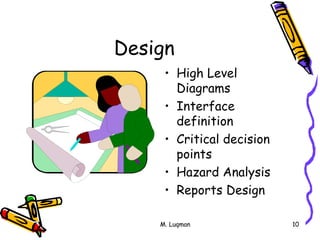
Design
• High Level
Diagrams
• Interface
definition
• Critical decision
points
• Hazard Analysis
• Reports Design
M. Luqman 11
Test Plans and Results
• Matrix to map to Requirements
• Specific so that they are repeatable
• Test thoroughness based on criticality
or hazard analysis
• Expected results stated
• Complete reporting of actual results
• Reviewed and signed off
M. Luqman 12
Validation Plans and
Reports
• Review of all documentation
• Any deviations reviewed and categorized
• Critical areas are fixed
• Minor areas, SOPs put in place
• User manual complete and correct
• Signed off as released
M. Luqman 13
Important Elements of
Validation Program:
• Training of personnel on software validation
and guidelines on what software products
have to be validated.
• Defined internal procedures for conducting
the validation program, including standards
for writing specifications, guidelines for
validating process software, and forms for
identifying and tracking safety hazards.
M. Luqman 14
Important Elements of
Validation Program:
• Training/requiring programmers to retain their
testing documentation.
• Allocation of resources to conduct the
validation program
• Development of a validation program that
focus resources on critical areas.
• Use of documentation templates, measurement
tools and checklists where appropriate
M. Luqman 15
Important Elements of
Validation Program:
• Communication between programmers
and the QA/QC personnel and QA/QC
functions that contribute to the
development efforts.
• Application of software validation and
QA/QC techniques early in the
software development process.
M. Luqman 16
Software Scenarios
• Off-The-Shelf Software
• Custom Designed Software
• Developed In-House
• Maintained Software
M. Luqman 17
Off-The-Shelf Software
• Word processing
• Spreadsheet / Database
• Information Management
M. Luqman 18
Off-The-Shelf Software
• Word processing
– Meets Requirements
M. Luqman 19
Off-The-Shelf Software
• Spreadsheet / Database
– Meets Requirements
– Key Functions perform properly
– Validation of created Formulas, Scripts,
and Routines
M. Luqman 20
Off-The-Shelf Software
• Information Management
– Meets Requirements
– Hardware installed properly
– Key Functions perform properly
– Integration between software and
hardware
M. Luqman 21
Custom Designed
• Requirement Specification
• Key Functions perform properly
• Software Development Documents
and Validation done by Vendor
M. Luqman 22
Written In-House
• Complete Software Development
Documentation
• Validation
M. Luqman 23
Maintained Software
• Software Development
Documentation for changes to
software
• Validation of Changes
• Integration to rest of software
program.
M. Luqman 24
•Questions
Thank you for your time and attention!

FDA/EC/WHO Expectations for Computer System Validation

  • 1.
    FDA/EC/ WHO Expectations forValidation of Computer Systems FDA/EC/ WHOFDA/EC/ WHO Expectations for ValidationExpectations for Validation of Computer Systemsof Computer Systems M. LuqmanM. Luqman Assistant Manager ValidationAssistant Manager Validation
  • 2.
    M. Luqman 2 Validation •Establishing DOCUMENTED EVIDENCE which provides a high degree of assurance that a specific process will consistently produce a product meeting its PREDETERMINED SPECIFICATIONS and quality attributes.
  • 3.
    M. Luqman 3 Validation •Must have knowledge that the process used to make the product, be it software or hardware, is going to produce a product that is consistent from lot to lot, unit to unit.
  • 4.
    M. Luqman 4 SoftwareValidation • Establishing by objective evidence that the software conforms with user needs and intended uses of those functions that have been allocated to the software.
  • 5.
    M. Luqman 5 SoftwareVerification • Confirmation that the output of a particular phase of development meets all of the input requirements for that phase • Verification Activities – Testing – Walk throughs – Code and document inspection
  • 6.
    M. Luqman 6 LifeCycle Activities • Risk Management/Hazard Analysis • Requirements Analysis and Specification • Design • Implementation • Integration • Validation • Maintenance
  • 7.
    M. Luqman 7 De f i n e s y s t e m F u n c t i o n S t r u c t u r e D e f i n e s y s t e m F u n c t i o n S t r u c t u r e D e f i n e S o f t w a r e D e s i g n / S p e c i f y h a r d w a r e D e v e l o p S o f t w a r e V e r i f y S o f t w a r e T e s t I n d i v i d u a l M o d u l e s ( C o m p u t e r S y s t e m ) I n t e g r a t e C o m p u t e r i z e d S y s t e m T e s t I n t e g r a t e d m o d u l e s ( C o m p u t e r i z e d S y s t e m ) D e m o n s t r a t e t o t a l s y s t e m o p e r a t i o n ( C o m p u t e r - R e l a t e d S y s t e m ) C h a n g e Q u a l i f y S y s t e m R e v i e w o p e r a t i n g e x p e r i e n c e D a t a C o n d u c t s y s t e m t e s t i n g ( i f n e e d e d ) D a t a a n a l y s i s V a l i d a t i o n A c c e p t a n c e O n g o i n g s y s t e m e v a l u a t i o n N e w C o m p u t e r S y s t e m E x i s t i n g C o m p u t e r S y s t e m I n s t a l l h a r d w a r e Q u a l i f y h a r d w a r e F i l e D o c u m e n t a t i o n
  • 8.
    M. Luqman 8 FDA/ WHO / EC Inspection • What documentation do you have for the software? – Requirement Specifications – Design – Test plans and results – Validation Plans and Reports – Hazard Analysis – Criticality Analysis
  • 9.
    M. Luqman 9 Requirement Specifications •Complete • Correct • Consistent • Current • Verifiable • Traceable • Unambiguous
  • 10.
    M. Luqman 10 Design •High Level Diagrams • Interface definition • Critical decision points • Hazard Analysis • Reports Design
  • 11.
    M. Luqman 11 TestPlans and Results • Matrix to map to Requirements • Specific so that they are repeatable • Test thoroughness based on criticality or hazard analysis • Expected results stated • Complete reporting of actual results • Reviewed and signed off
  • 12.
    M. Luqman 12 ValidationPlans and Reports • Review of all documentation • Any deviations reviewed and categorized • Critical areas are fixed • Minor areas, SOPs put in place • User manual complete and correct • Signed off as released
  • 13.
    M. Luqman 13 ImportantElements of Validation Program: • Training of personnel on software validation and guidelines on what software products have to be validated. • Defined internal procedures for conducting the validation program, including standards for writing specifications, guidelines for validating process software, and forms for identifying and tracking safety hazards.
  • 14.
    M. Luqman 14 ImportantElements of Validation Program: • Training/requiring programmers to retain their testing documentation. • Allocation of resources to conduct the validation program • Development of a validation program that focus resources on critical areas. • Use of documentation templates, measurement tools and checklists where appropriate
  • 15.
    M. Luqman 15 ImportantElements of Validation Program: • Communication between programmers and the QA/QC personnel and QA/QC functions that contribute to the development efforts. • Application of software validation and QA/QC techniques early in the software development process.
  • 16.
    M. Luqman 16 SoftwareScenarios • Off-The-Shelf Software • Custom Designed Software • Developed In-House • Maintained Software
  • 17.
    M. Luqman 17 Off-The-ShelfSoftware • Word processing • Spreadsheet / Database • Information Management
  • 18.
    M. Luqman 18 Off-The-ShelfSoftware • Word processing – Meets Requirements
  • 19.
    M. Luqman 19 Off-The-ShelfSoftware • Spreadsheet / Database – Meets Requirements – Key Functions perform properly – Validation of created Formulas, Scripts, and Routines
  • 20.
    M. Luqman 20 Off-The-ShelfSoftware • Information Management – Meets Requirements – Hardware installed properly – Key Functions perform properly – Integration between software and hardware
  • 21.
    M. Luqman 21 CustomDesigned • Requirement Specification • Key Functions perform properly • Software Development Documents and Validation done by Vendor
  • 22.
    M. Luqman 22 WrittenIn-House • Complete Software Development Documentation • Validation
  • 23.
    M. Luqman 23 MaintainedSoftware • Software Development Documentation for changes to software • Validation of Changes • Integration to rest of software program.
  • 24.
    M. Luqman 24 •Questions Thankyou for your time and attention!