Fantastic
  Fiber
What’s So Good About Fiber?

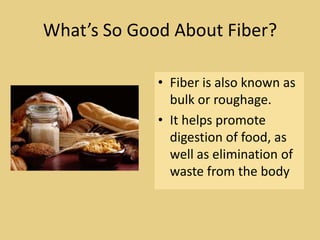
             • Fiber is also known as
               bulk or roughage.
             • It helps promote
               digestion of food, as
               well as elimination of
               waste from the body
What are the Two Types of Fiber?


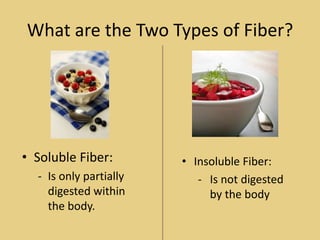
• Soluble Fiber:        • Insoluble Fiber:
  - Is only partially      - Is not digested
    digested within          by the body
    the body.
What do the two fibers do?
Soluble Fiber:           Insoluble Fiber:
• Slows down digestion   • Helps move food
• Reduces cholesterol      through the digestive
• Reduces insulin and      track
  glucose levels         • Traps and removes
                           harmful substances
                           from the intestinal track
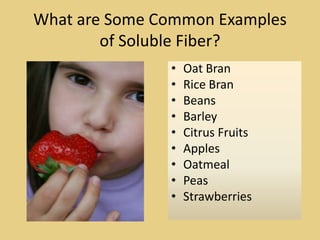
What are Some Common Examples
        of Soluble Fiber?
               •   Oat Bran
               •   Rice Bran
               •   Beans
               •   Barley
               •   Citrus Fruits
               •   Apples
               •   Oatmeal
               •   Peas
               •   Strawberries
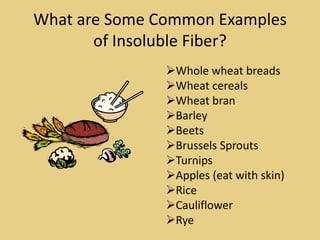
What are Some Common Examples
       of Insoluble Fiber?
               Whole wheat breads
               Wheat cereals
               Wheat bran
               Barley
               Beets
               Brussels Sprouts
               Turnips
               Apples (eat with skin)
               Rice
               Cauliflower
               Rye
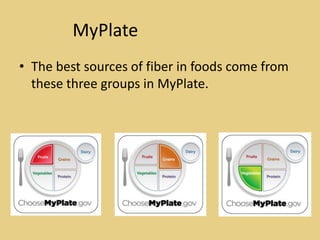
MyPlate
• The best sources of fiber in foods come from
  these three groups in MyPlate.
Serving Sizes
         The National Institute
         of Health recommends
         that we should get
         between 25 and 38
         grams of fiber per day.
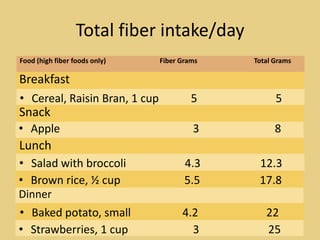
Total fiber intake/day
Food (high fiber foods only)   Fiber Grams   Total Grams

Breakfast
• Cereal, Raisin Bran, 1 cup            5          5
Snack
• Apple                                 3          8
Lunch
• Salad with broccoli                 4.3     12.3
• Brown rice, ½ cup                   5.5     17.8
Dinner
• Baked potato, small                4.2        22
• Strawberries, 1 cup                  3        25
Recap
• Dietary fiber comes mainly from cereals, fruits
  and vegetables.
• There are two types of fiber: soluble and
  insoluble.
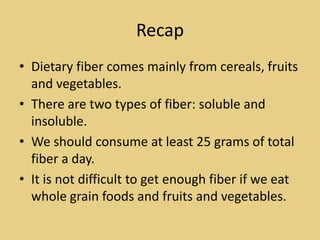
• We should consume at least 25 grams of total
  fiber a day.
• It is not difficult to get enough fiber if we eat
  whole grain foods and fruits and vegetables.
Mission:
                        To promote healthier lives through research and education in
                        nutrition and preventive medicine.

                        The Pennington Center has several research areas, including:
                        Clinical Obesity Research
                        Experimental Obesity
Authors:                Functional Foods
                        Health and Performance Enhancement
Heli Roy, PhD, RD       Nutrition and Chronic Diseases
Beth Kalicki            Nutrition and the Brain
                        Dementia, Alzheimer’s and healthy aging
                        Diet, exercise, weight loss and weight loss maintenance
Division of Education   The research fostered in these areas can have a profound impact on
Pennington Biomedical   healthy living and on the prevention of common chronic diseases,
                        such as heart disease, cancer, diabetes, hypertension and
Research Center         osteoporosis.
                        The Division of Education provides education and information to the
                        scientific community and the public about research findings, training
10/10                   programs and research areas, and coordinates educational events for
                        the public on various health issues.
                        We invite people of all ages and backgrounds to participate in the
                        exciting research studies being conducted at the
                        Pennington Center in Baton Rouge, Louisiana. If you would like to
                        take part, visit the clinical trials web page at www.pbrc.edu or call
                        (225) 763-3000.

Fantastic fiber

  • 1.
  • 2.
    What’s So GoodAbout Fiber? • Fiber is also known as bulk or roughage. • It helps promote digestion of food, as well as elimination of waste from the body
  • 3.
    What are theTwo Types of Fiber? • Soluble Fiber: • Insoluble Fiber: - Is only partially - Is not digested digested within by the body the body.
  • 4.
    What do thetwo fibers do? Soluble Fiber: Insoluble Fiber: • Slows down digestion • Helps move food • Reduces cholesterol through the digestive • Reduces insulin and track glucose levels • Traps and removes harmful substances from the intestinal track
  • 5.
    What are SomeCommon Examples of Soluble Fiber? • Oat Bran • Rice Bran • Beans • Barley • Citrus Fruits • Apples • Oatmeal • Peas • Strawberries
  • 6.
    What are SomeCommon Examples of Insoluble Fiber? Whole wheat breads Wheat cereals Wheat bran Barley Beets Brussels Sprouts Turnips Apples (eat with skin) Rice Cauliflower Rye
  • 7.
    MyPlate • The bestsources of fiber in foods come from these three groups in MyPlate.
  • 8.
    Serving Sizes The National Institute of Health recommends that we should get between 25 and 38 grams of fiber per day.
  • 9.
    Total fiber intake/day Food(high fiber foods only) Fiber Grams Total Grams Breakfast • Cereal, Raisin Bran, 1 cup 5 5 Snack • Apple 3 8 Lunch • Salad with broccoli 4.3 12.3 • Brown rice, ½ cup 5.5 17.8 Dinner • Baked potato, small 4.2 22 • Strawberries, 1 cup 3 25
  • 10.
    Recap • Dietary fibercomes mainly from cereals, fruits and vegetables. • There are two types of fiber: soluble and insoluble. • We should consume at least 25 grams of total fiber a day. • It is not difficult to get enough fiber if we eat whole grain foods and fruits and vegetables.
  • 12.
    Mission: To promote healthier lives through research and education in nutrition and preventive medicine. The Pennington Center has several research areas, including: Clinical Obesity Research Experimental Obesity Authors: Functional Foods Health and Performance Enhancement Heli Roy, PhD, RD Nutrition and Chronic Diseases Beth Kalicki Nutrition and the Brain Dementia, Alzheimer’s and healthy aging Diet, exercise, weight loss and weight loss maintenance Division of Education The research fostered in these areas can have a profound impact on Pennington Biomedical healthy living and on the prevention of common chronic diseases, such as heart disease, cancer, diabetes, hypertension and Research Center osteoporosis. The Division of Education provides education and information to the scientific community and the public about research findings, training 10/10 programs and research areas, and coordinates educational events for the public on various health issues. We invite people of all ages and backgrounds to participate in the exciting research studies being conducted at the Pennington Center in Baton Rouge, Louisiana. If you would like to take part, visit the clinical trials web page at www.pbrc.edu or call (225) 763-3000.

Editor's Notes

  • #2 Say: Does anyone know what dietary fiber is?(pause to let students respond, then click to next slide.)
  • #3 Say: Fiber is also known as bulk roughage. It helps your body to digest food, as well as get rid of wastes. Fiber helps us feel full after a meal because if fills our stomach, and it helps us eliminate waste and go to the bathroom regularly.
  • #4 Say: There are two types of fiber. So, who can tell me the two types of fiber are?(wait for student response and verify whether or not their answer is correct)Say: That’s correct. Soluble fiber and Insoluble fiber are the two types of fiber. Does anyone know the difference between the two?(wait for student response and verify whether or not their answer is correct. If no one raises their hand, proceed to tell them…)Say: Soluble fiber is only partially digested within the body, while Insoluble fiber is not digested by the body at all. Both types of fiber are healthy for us and we should have some of each every day.
  • #6 Say: Does anyone know an example of soluble fiber?(Pause and let students respond)Say: As you all now know, soluble fiber is partially digested within the body. Some common examples include: oat bran, rice bran, beans, barley, citrus fruits, apples, oatmeal, peas, and strawberries.How many of you eat some of these foods?(Pause and let students respond)Say: Foods that are rich in soluble fiber have been shown to reduce low density lipoproteins or LDL (bad) cholesterol levels. It may also decrease your risk for heart disease.
  • #7 Say: Does anyone know any examples of insoluble fiber?(Pause and let students respond)Say: Some examples of insoluble fiber may include: whole wheat breads, wheat cereals, wheat bran, barley, beets, Brussels sprouts, turnips, apple skins, rice, cauliflower, and rye. Are any of these common in your diet?(Pause and let students respond)Say: Does anyone know what insoluble fiber does for your body?(Pause and let students respond)Say: Insoluble fiber has been shown to improve the speed at which food moves through the body and decreases the risk of heart disease. It helps you be able to feel fuller longer, causing you to eat less.
  • #8 Say: The best sources of fiber in foods come from three different groups from MyPlate: the grain group. This provides both soluble and insoluble fiber. Wheat fiber is mainly insoluble while oatmeal and beans have a lot of soluble fiber. The vegetable group. Most vegetables have fiber in them. Vegetables such as sweet potatoes, potatoes, broccoli, particularly in the stalk, peas, beans, corn, lentils, and carrots are good sources of fiber.The fruit group. Many fruits have fiber in them: apples, oranges, peaches, melons, bananas, grapes, berries etc. If you eat your fruit with the skin on, such as apples, you get more fiber. The fiber is in the skin and cell walls.
  • #9 Say: The National Institute of Health recommends that men over age and younger, should get 38 pounds of fiber per day. Women ages 50 and younger should get 25 grams of fiber daily. So the next time that you plan on preparing a meal, question yourself about how much fiber you are getting. Your body will be thankful you did.