


Facing the Future
of Technology and
Learning
Maria H. Andersen, Ph.D
CEO, Coursetune
Core Adjunct Faculty, Westminster College
Email: maria@Coursetune.com
Twitter: @busynessgirl
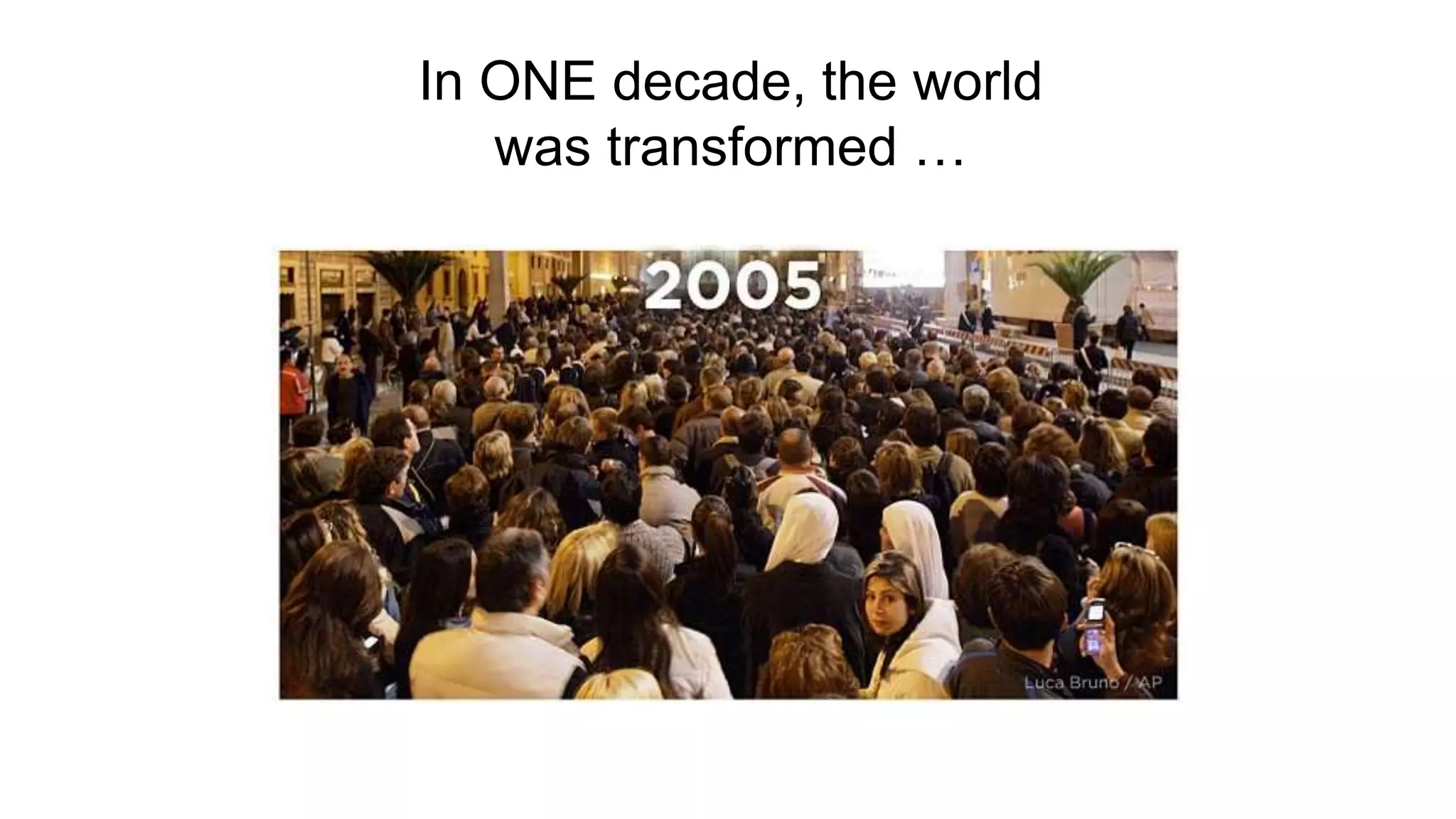
In ONE decade, the world
was transformed …
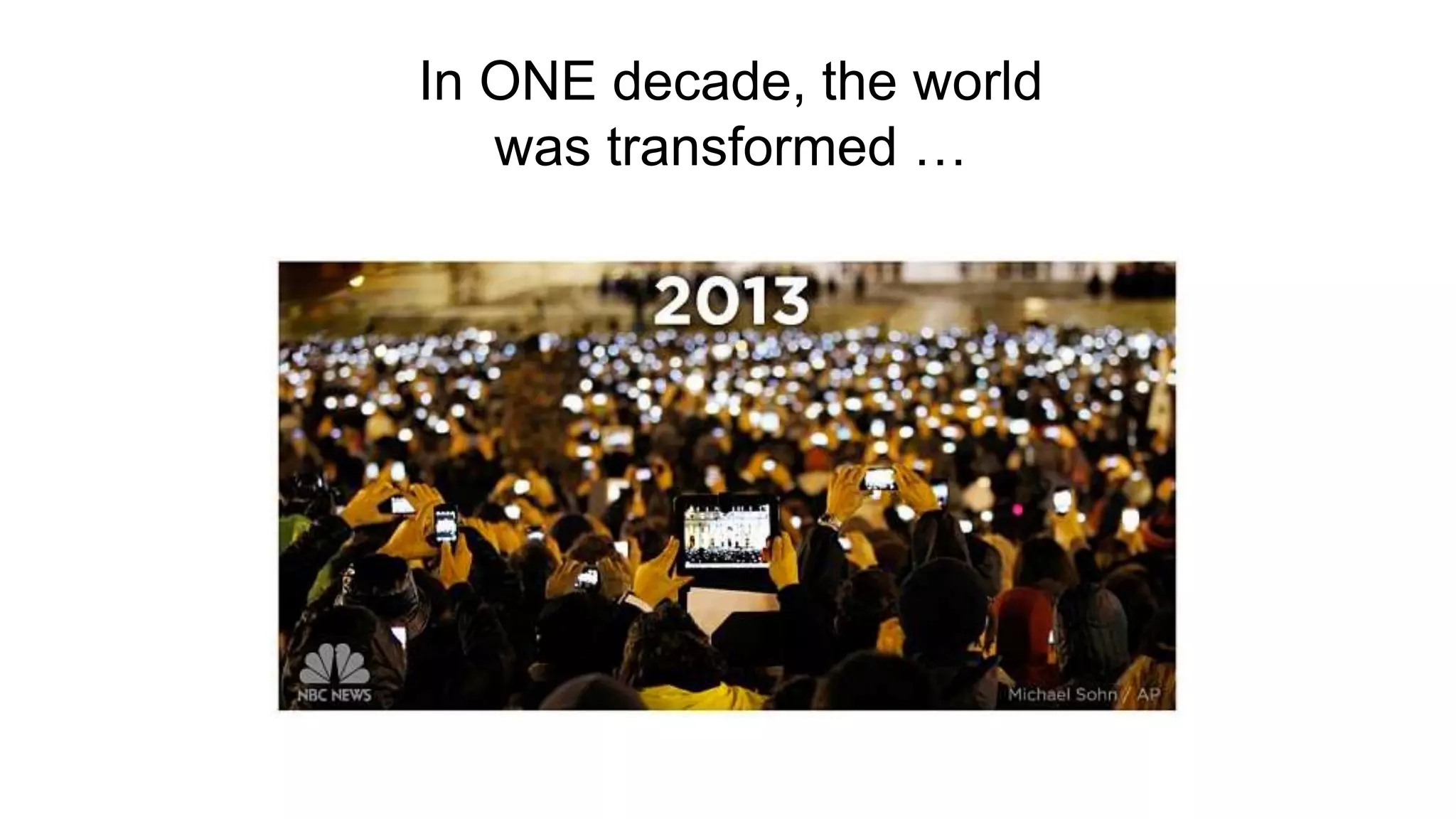
In ONE decade, the world
was transformed …
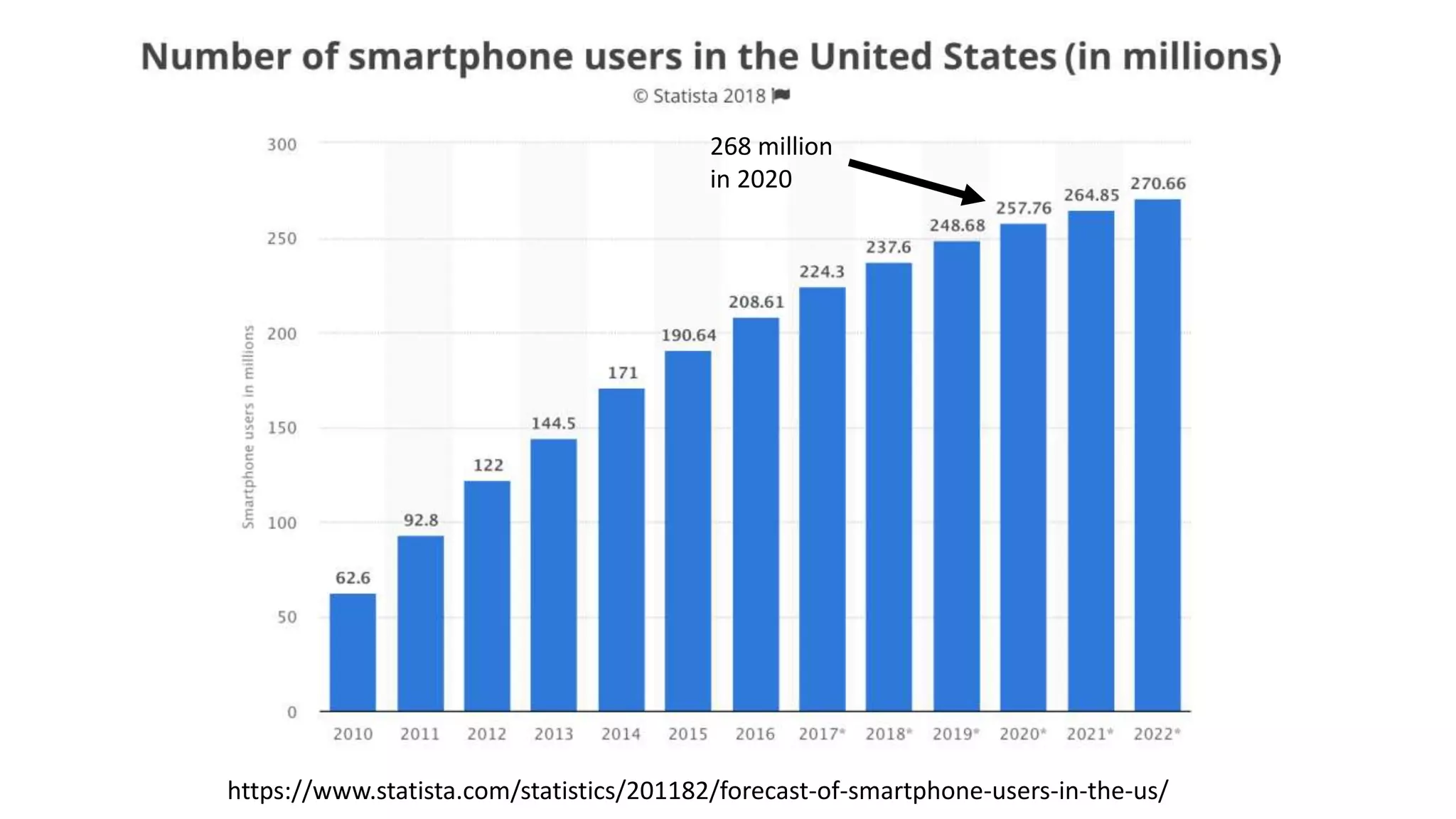
https://www.statista.com/statistics/201182/forecast-of-smartphone-users-in-the-us/
268 million
in 2020
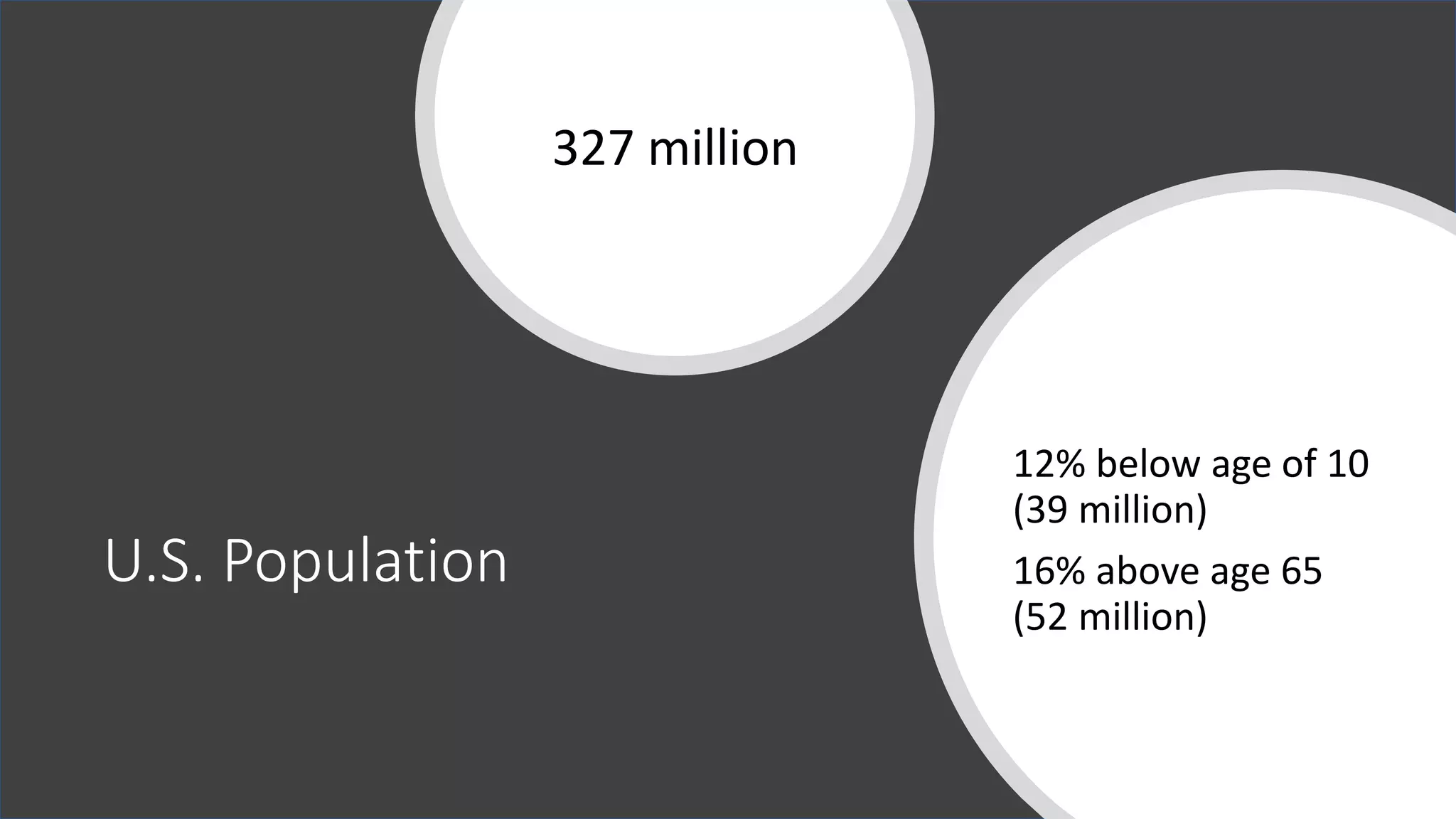
U.S. Population
327 million
12% below age of 10
(39 million)
16% above age 65
(52 million)
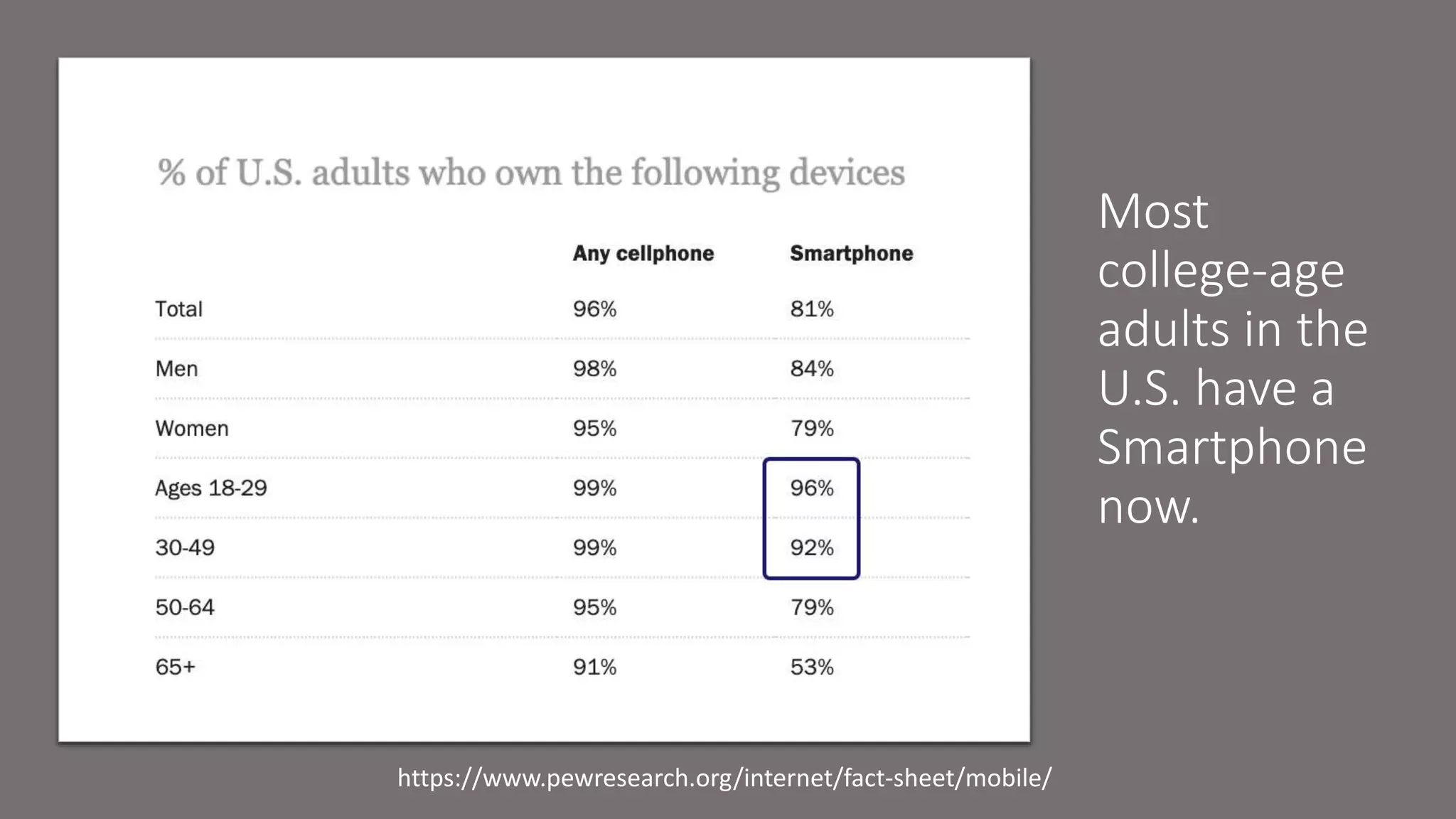
Most
college-age
adults in the
U.S. have a
Smartphone
now.
https://www.pewresearch.org/internet/fact-sheet/mobile/
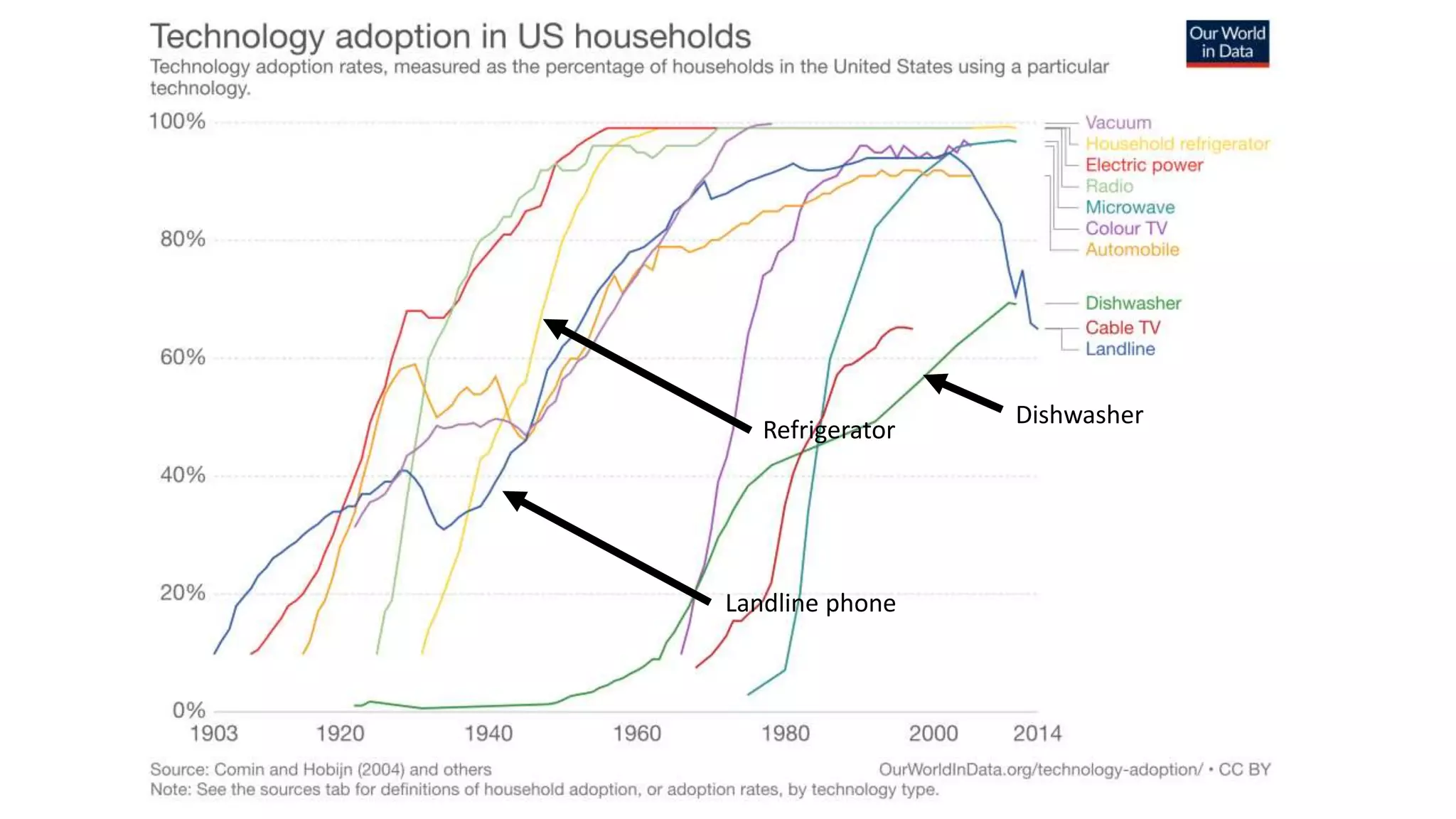
Refrigerator
Dishwasher
Landline phone
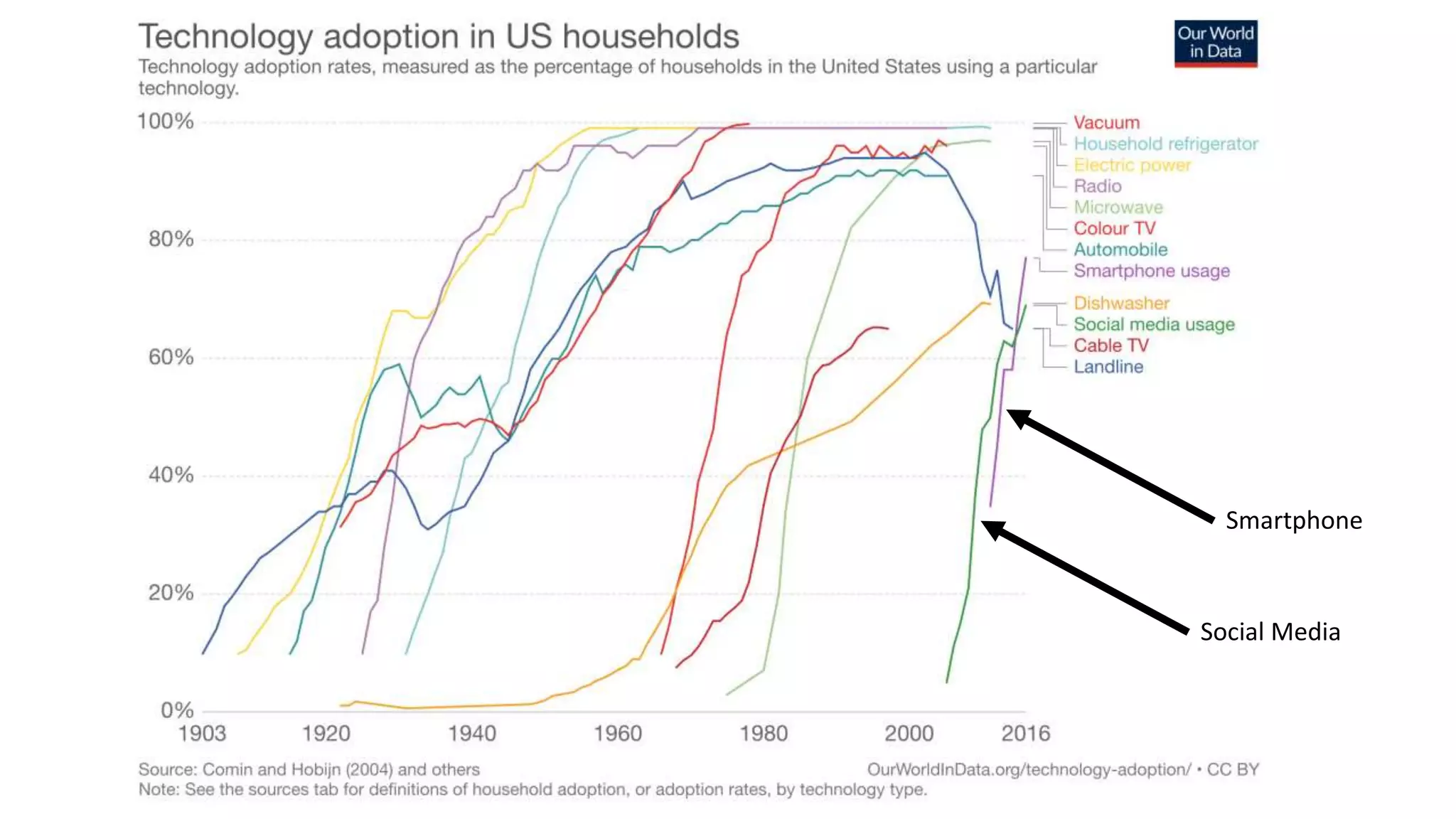
Smartphone
Social Media
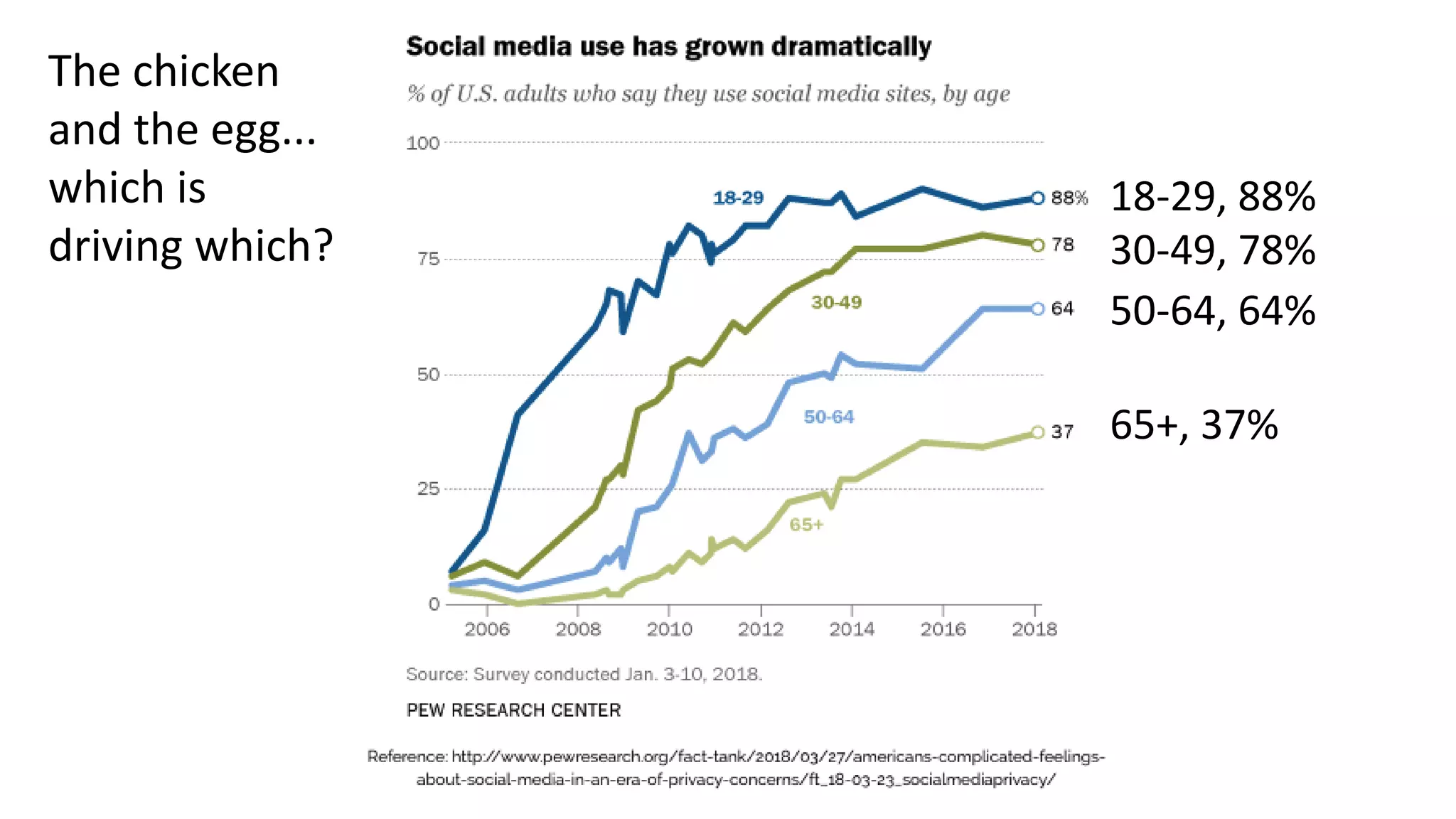
18-29, 88%
65+, 37%
50-64, 64%
30-49, 78%
The chicken
and the egg...
which is
driving which?
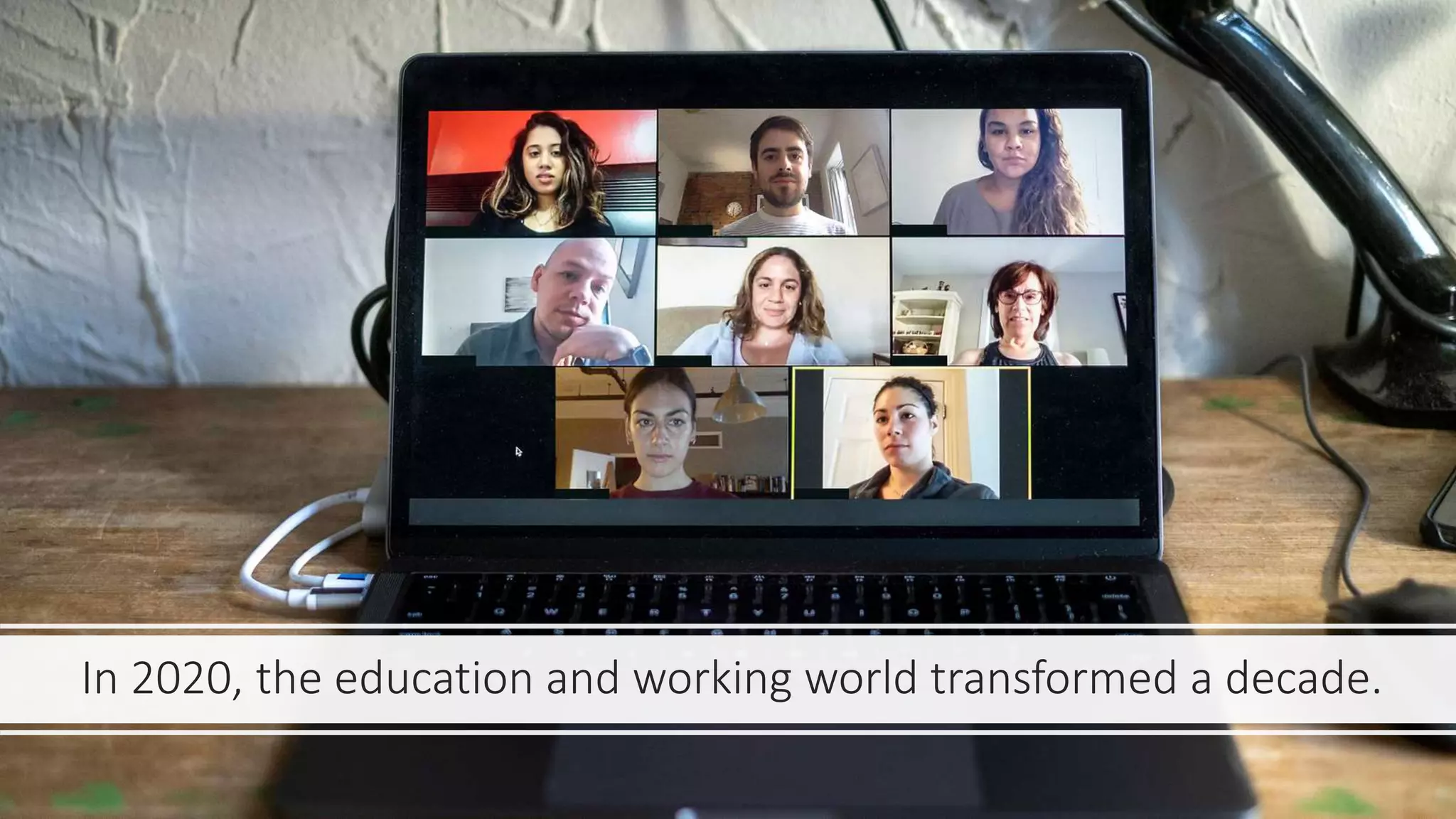
In 2020, the education and working world transformed a decade.
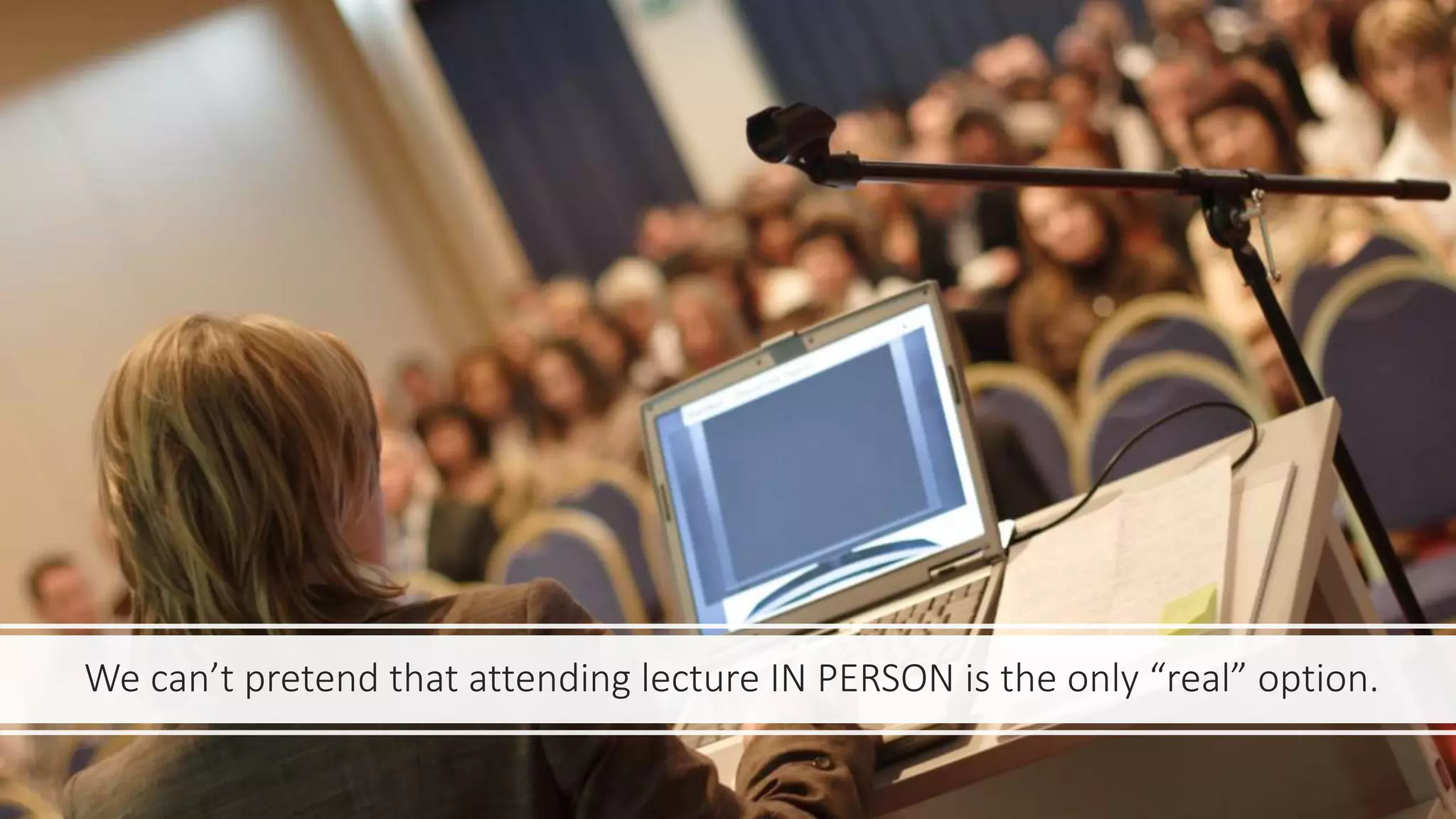
We can’t pretend that attending lecture IN PERSON is the only “real” option.
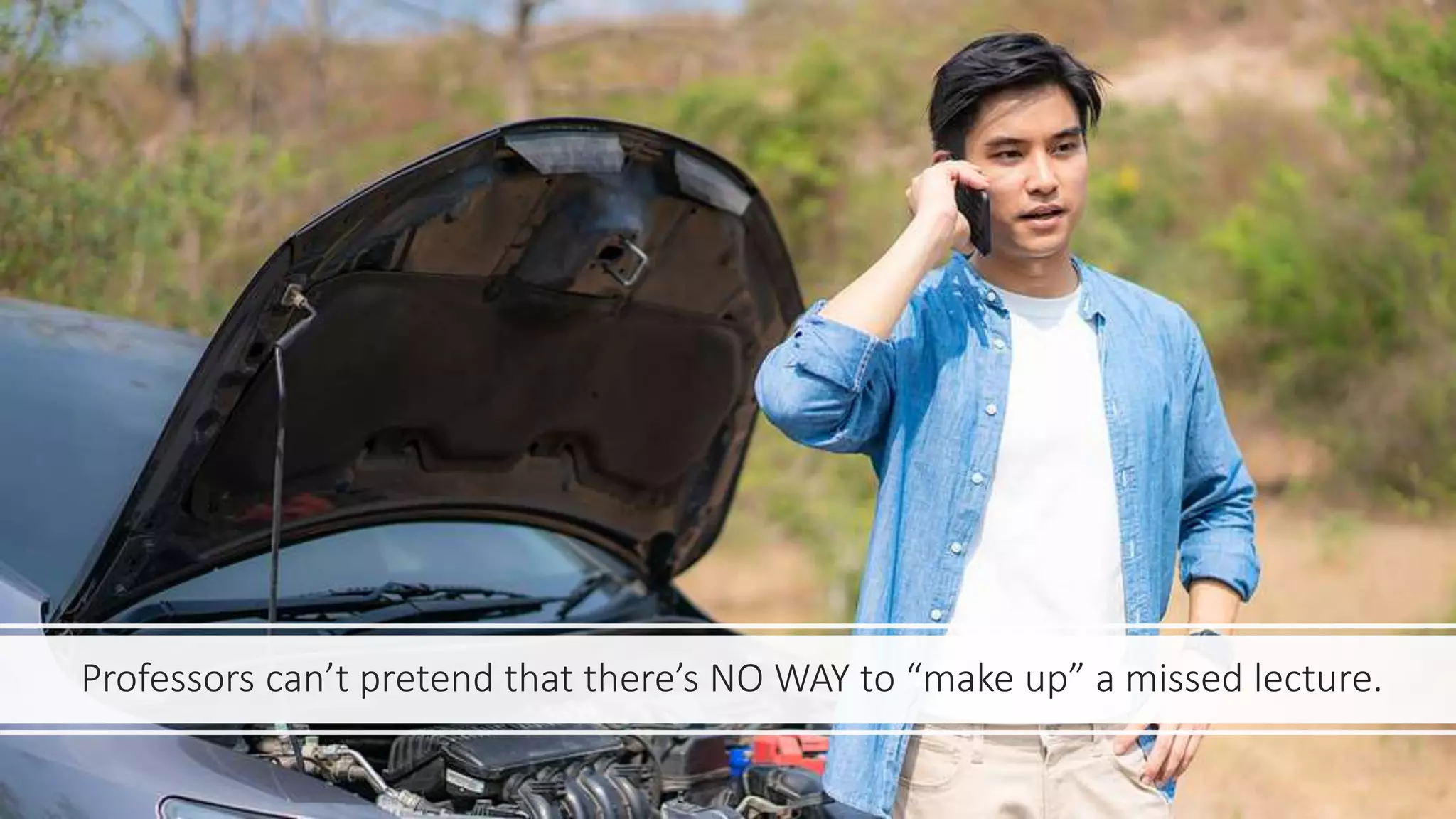
Professors can’t pretend that there’s NO WAY to “make up” a missed lecture.
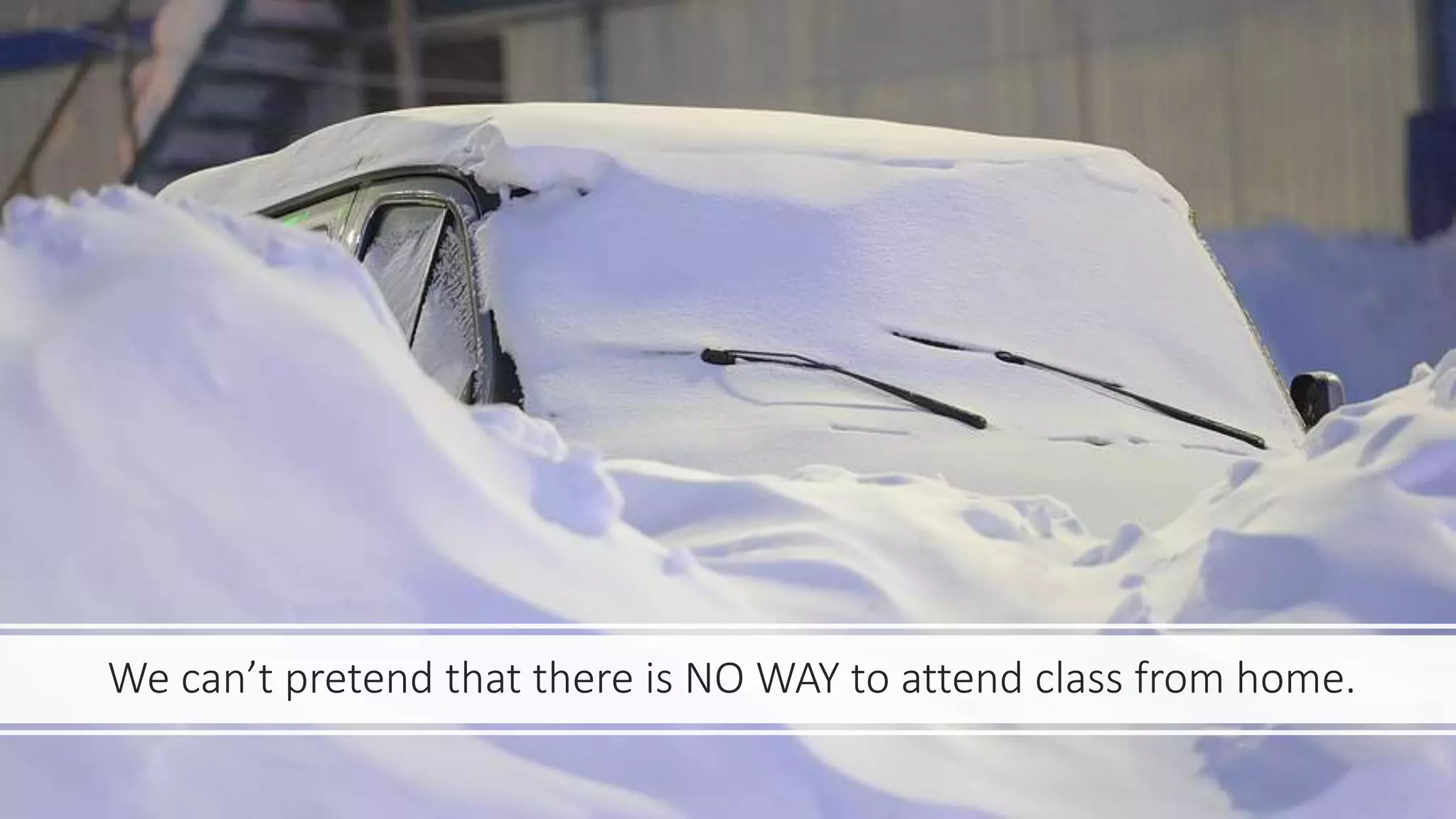
We can’t pretend that there is NO WAY to attend class from home.
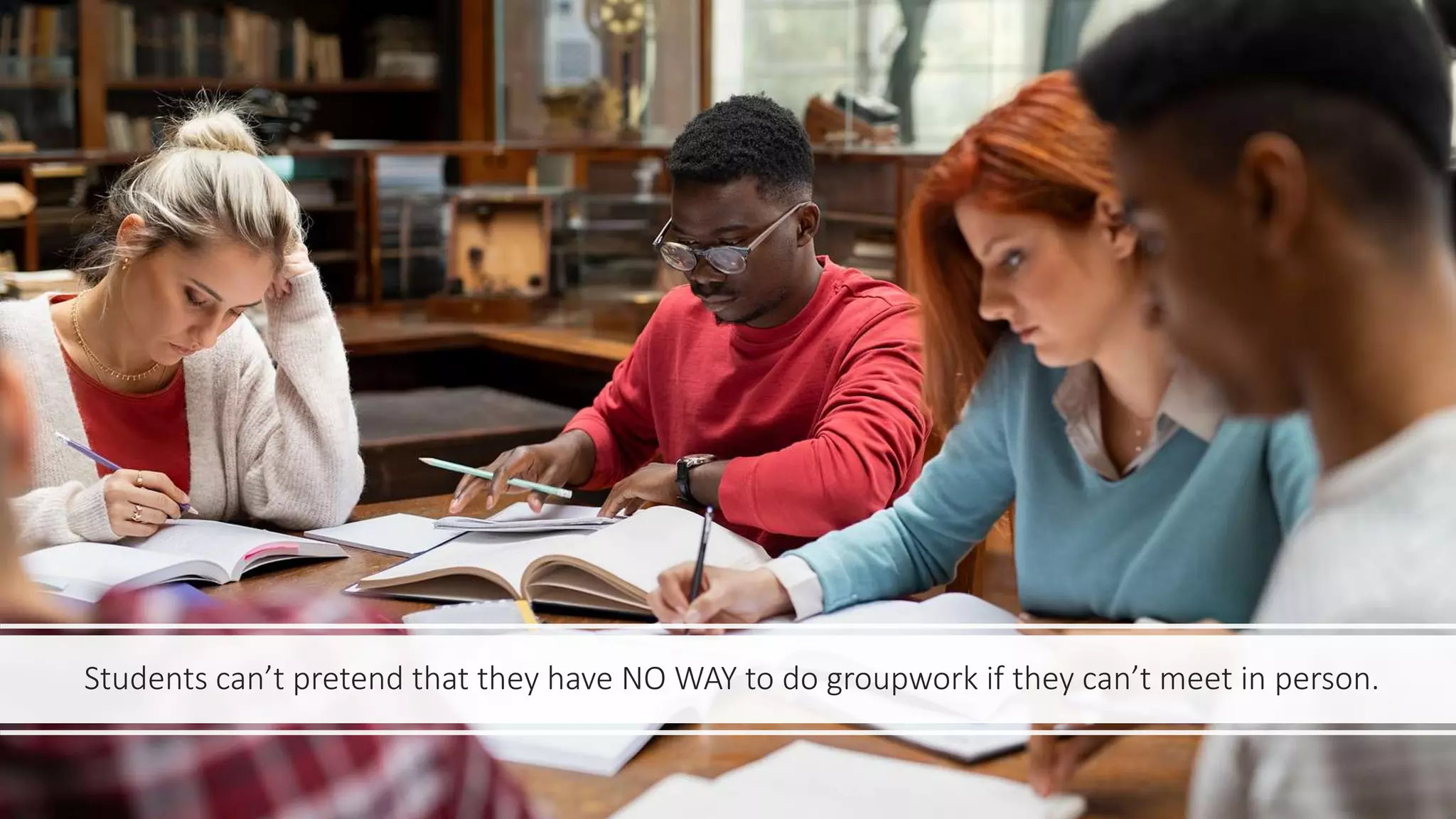
Students can’t pretend that they have NO WAY to do groupwork if they can’t meet in person.
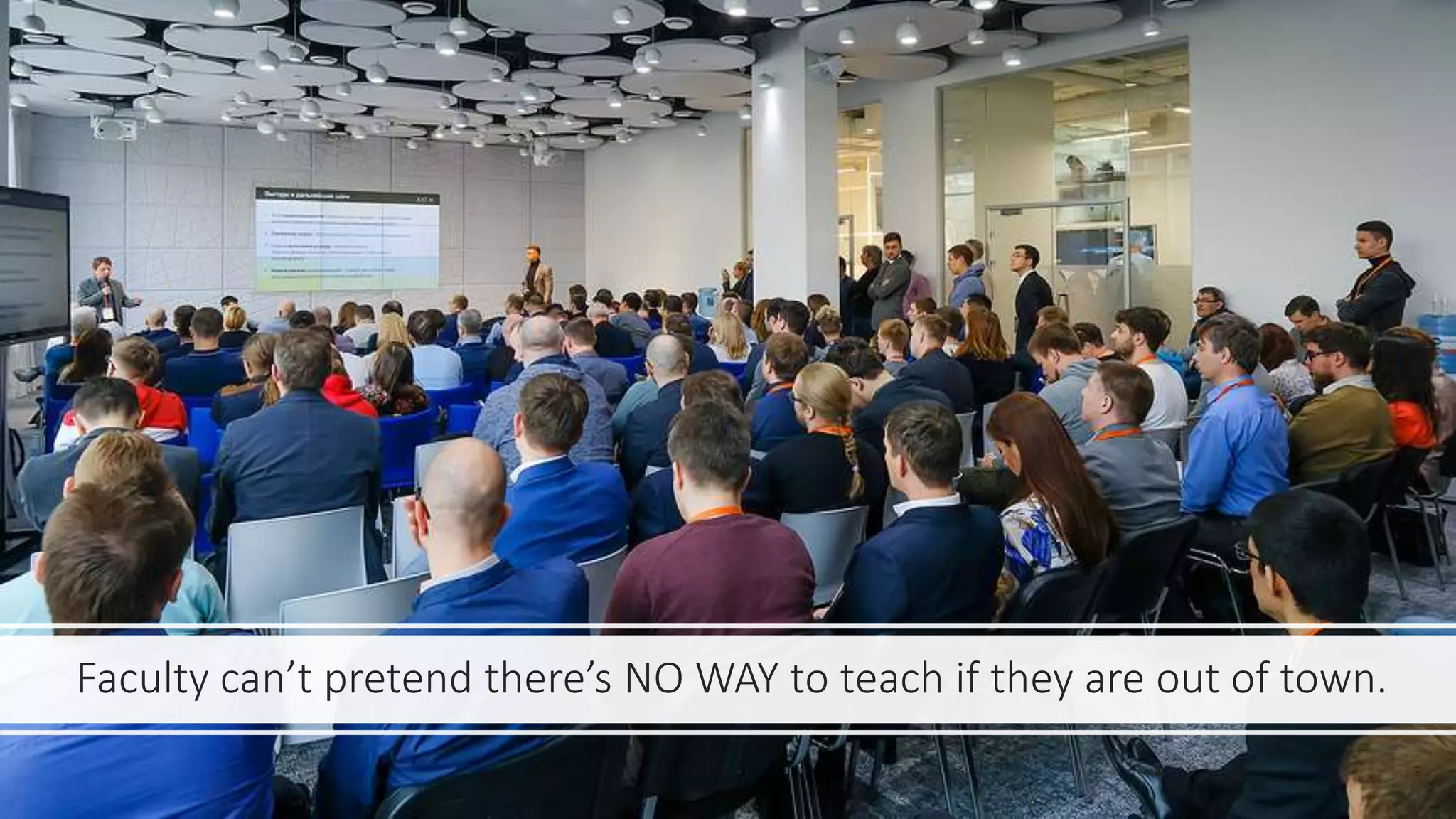
Faculty can’t pretend there’s NO WAY to teach if they are out of town.
We can’t pretend that the ONLY options are Online, F2F, and Hybrid.
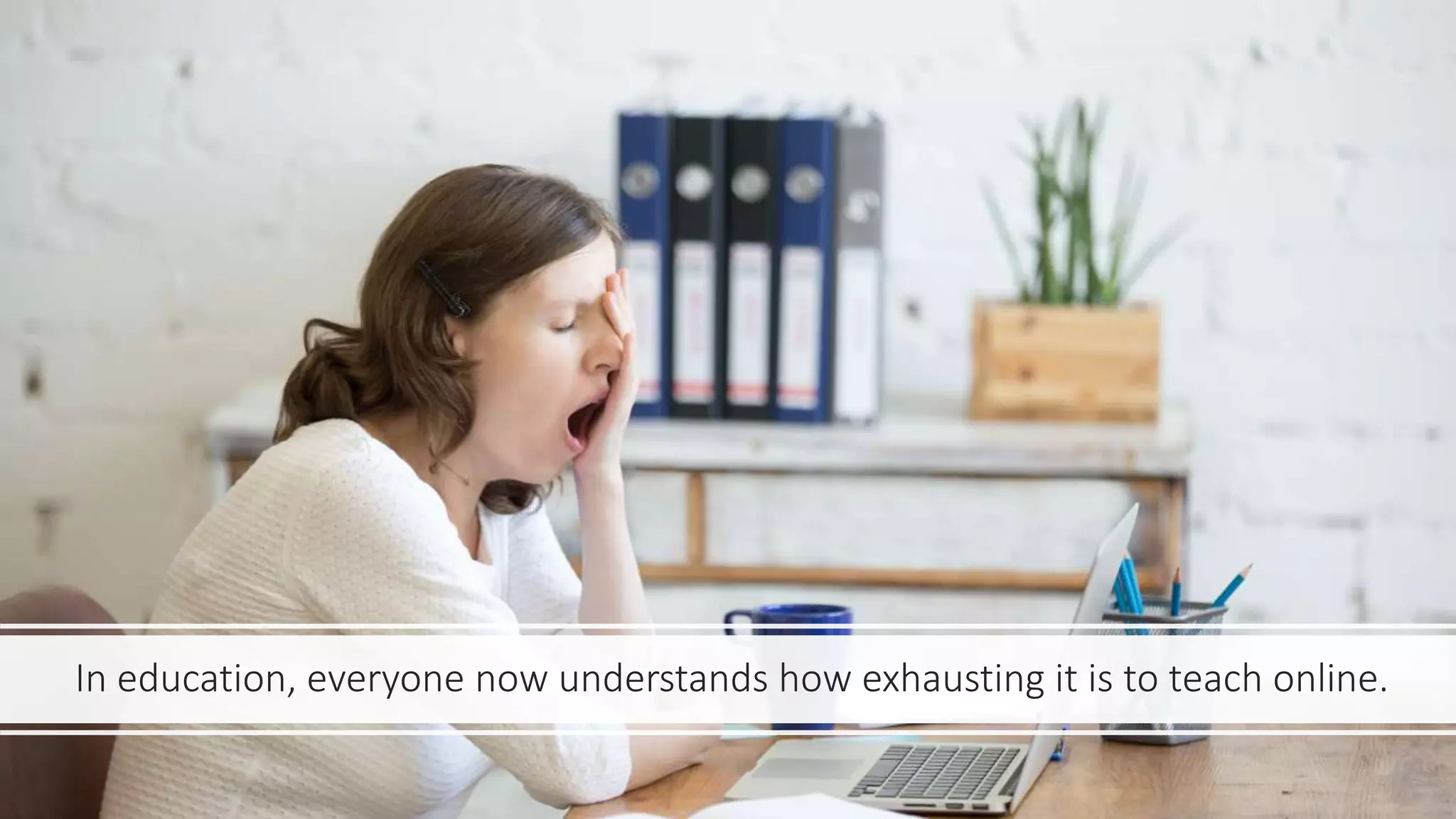
In education, everyone now understands how exhausting it is to teach online.
In the world, ONLINE learning has taken a huge reputation hit.
The state of
technology is
rapidly changing.
How has “getting
information” changed in the
last three decades?
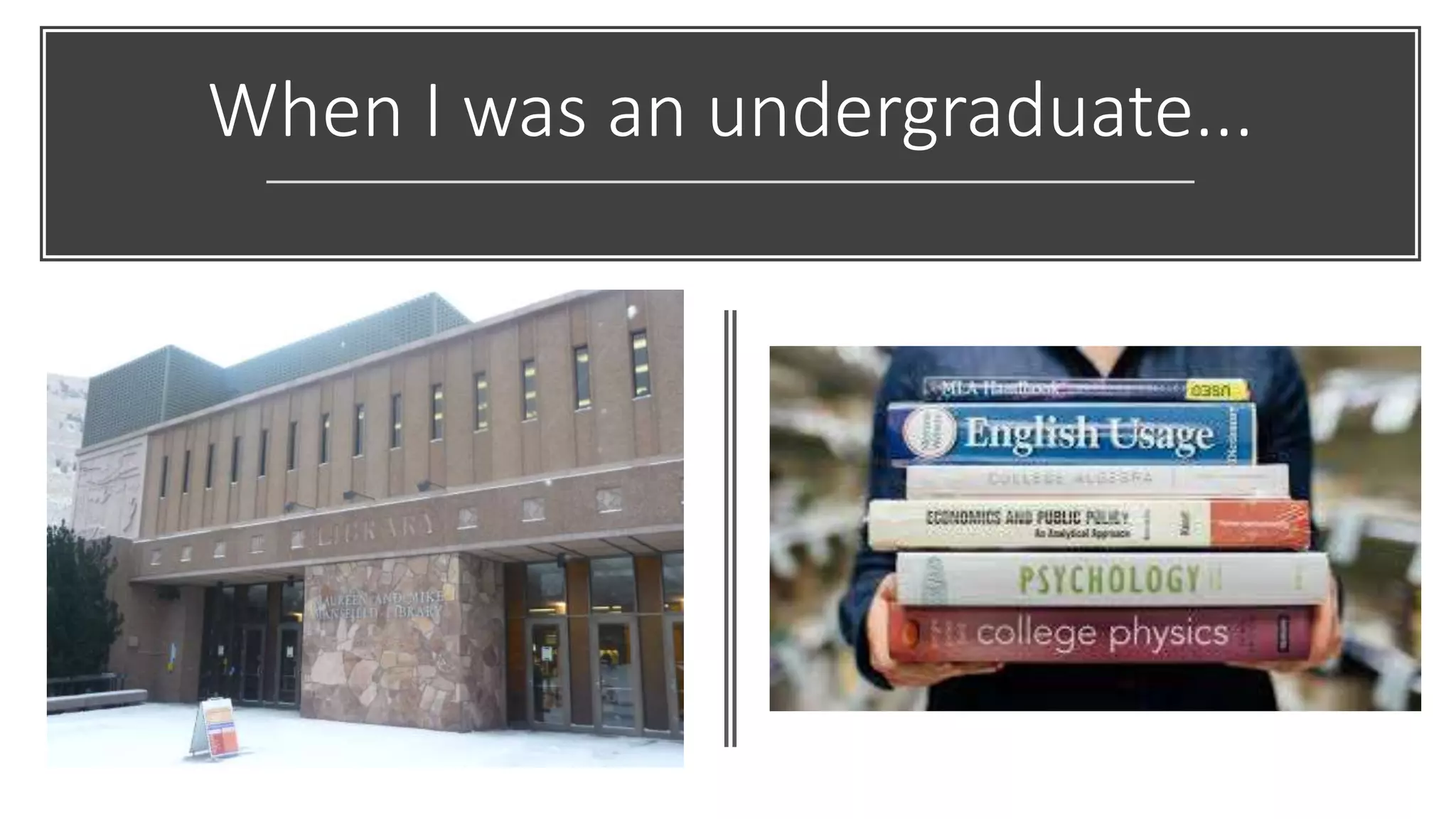
When I was an undergraduate...
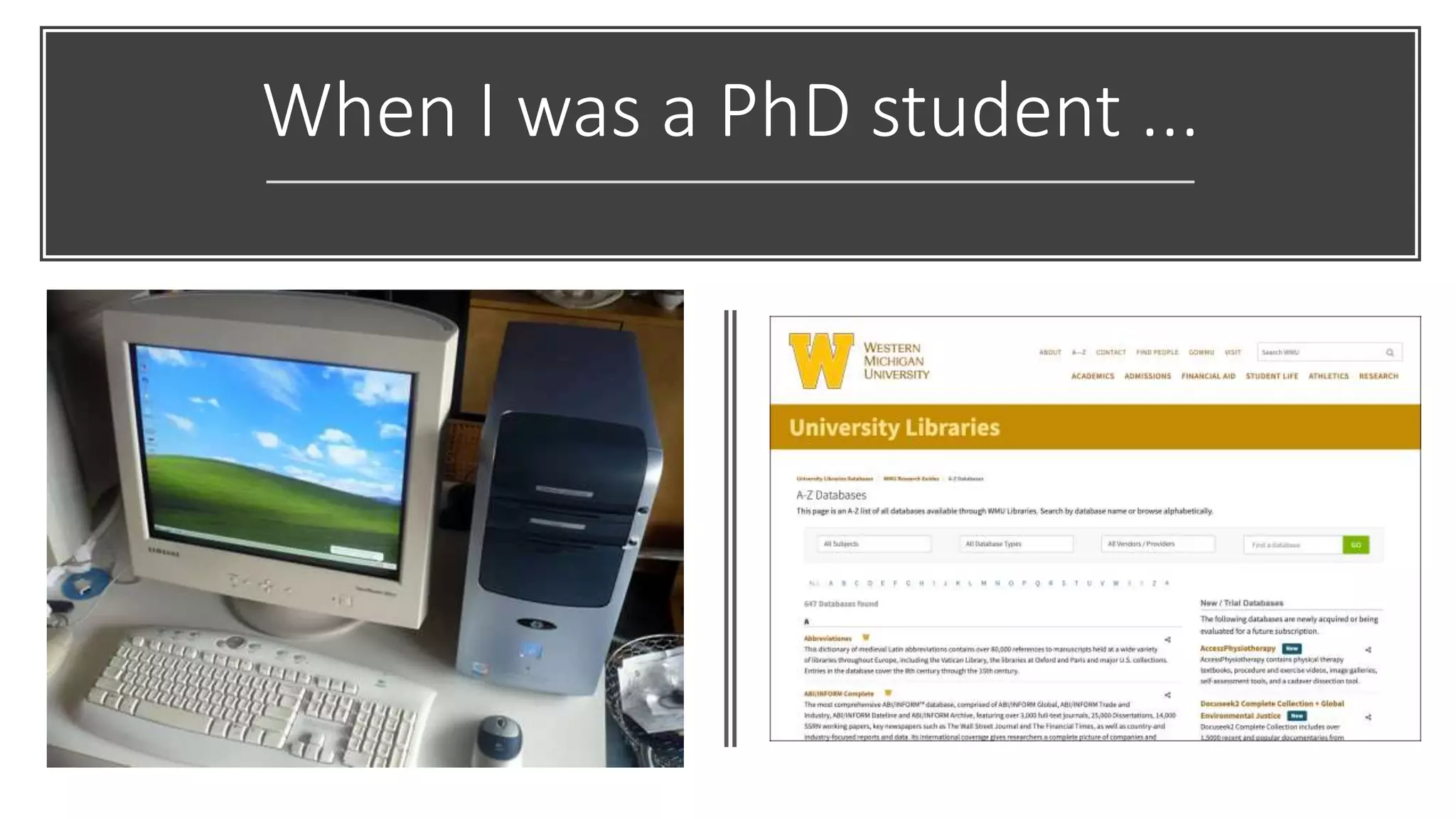
When I was a PhD student ...
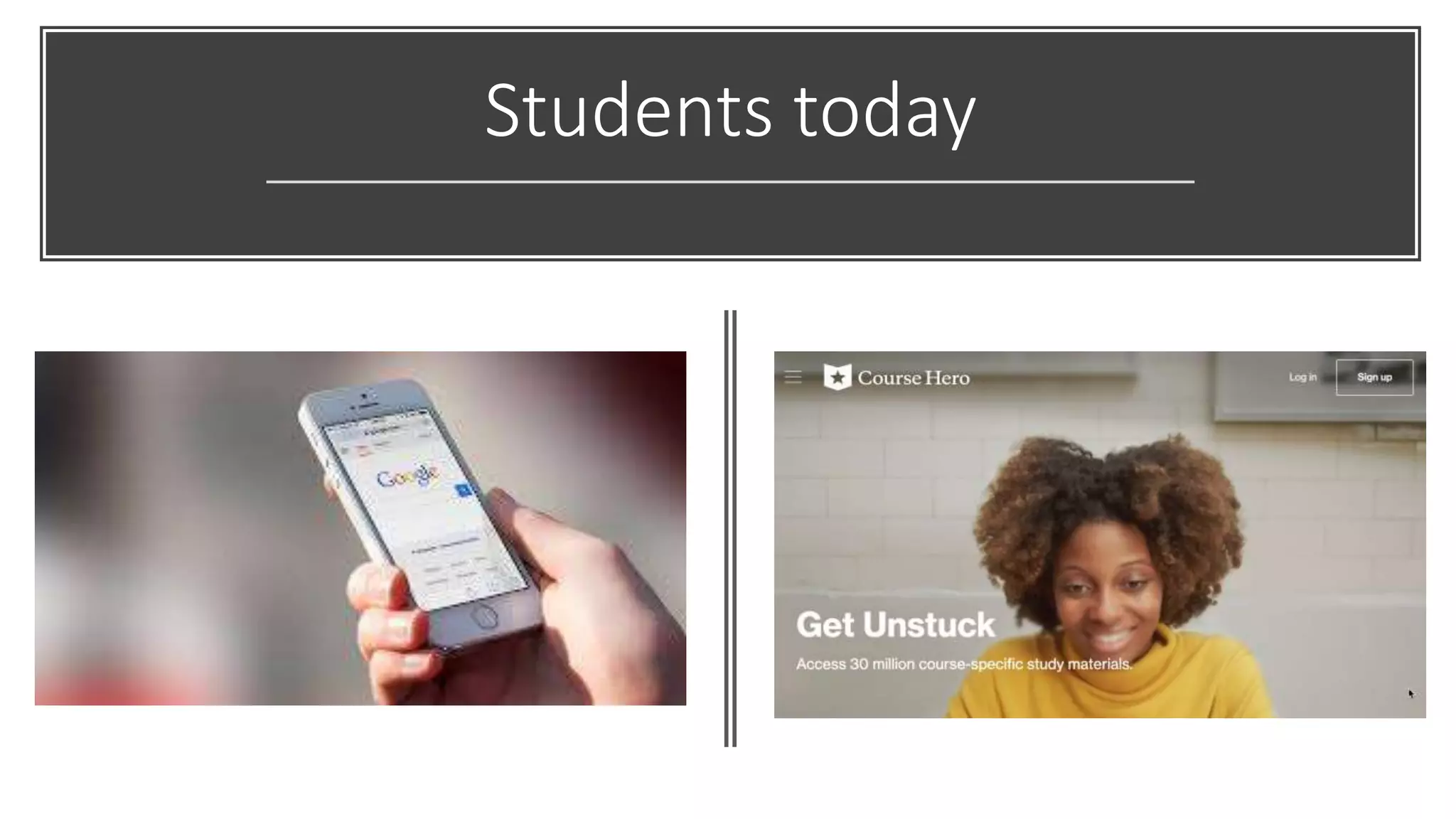
Students today
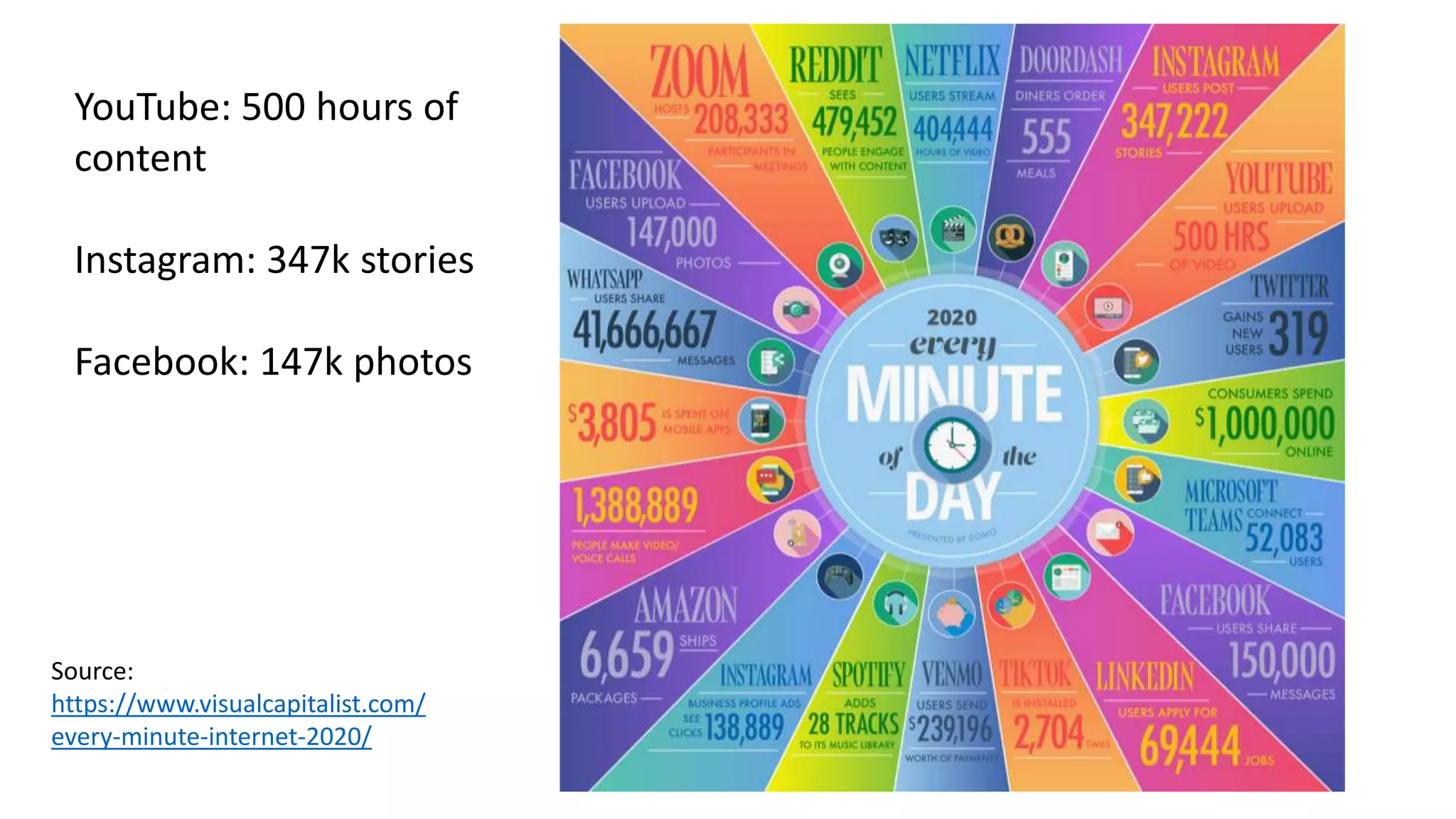
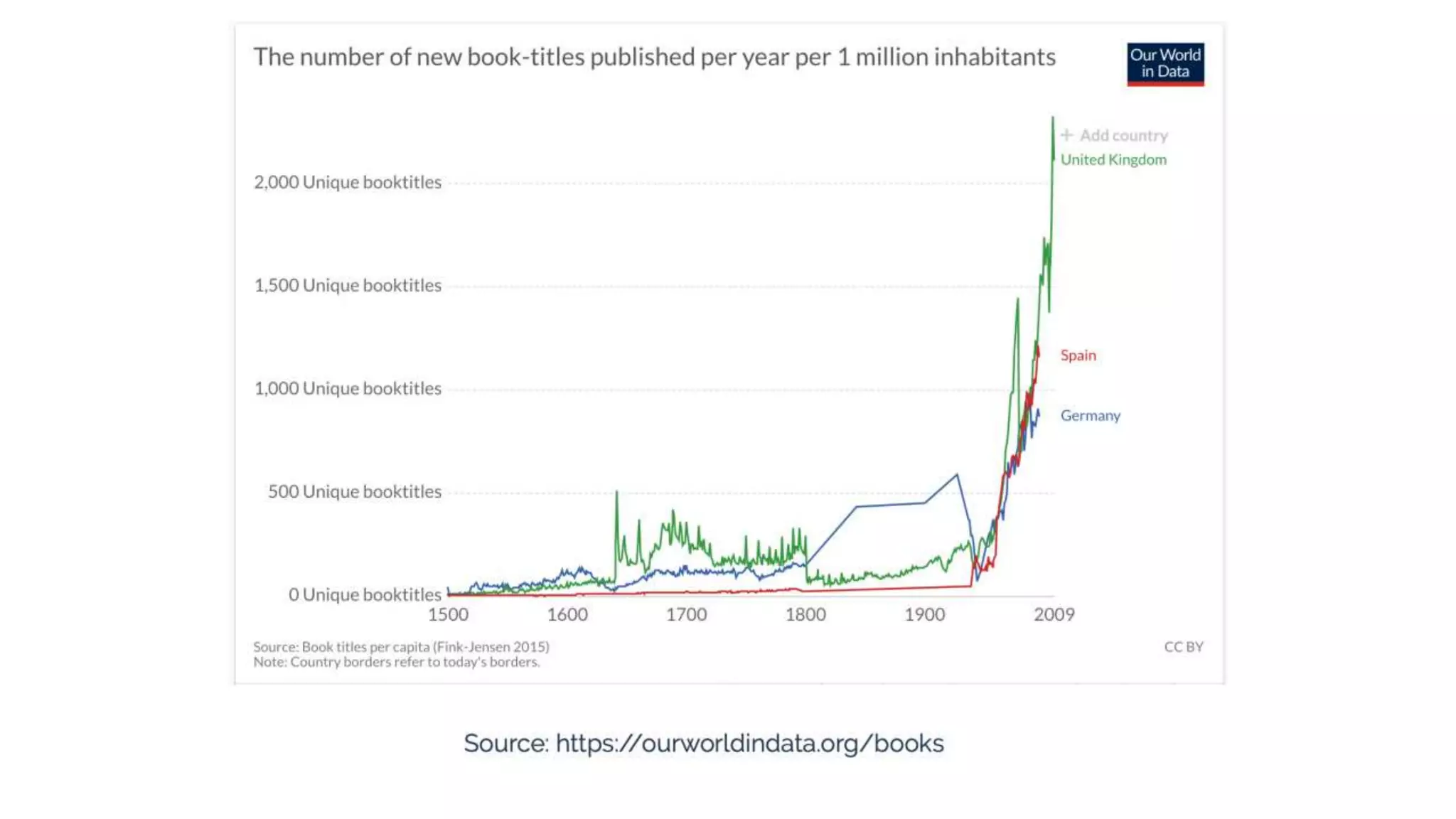
“Every two days now we create as much information
as we did from the dawn of civilization up until 2003.”
- Eric Schmidt, quoted in 2003 (CEO of Google)
Source:
https://www.visualcapitalist.com/
every-minute-internet-2020/
YouTube: 500 hours of
content
Instagram: 347k stories
Facebook: 147k photos
And where is that
information coming from?
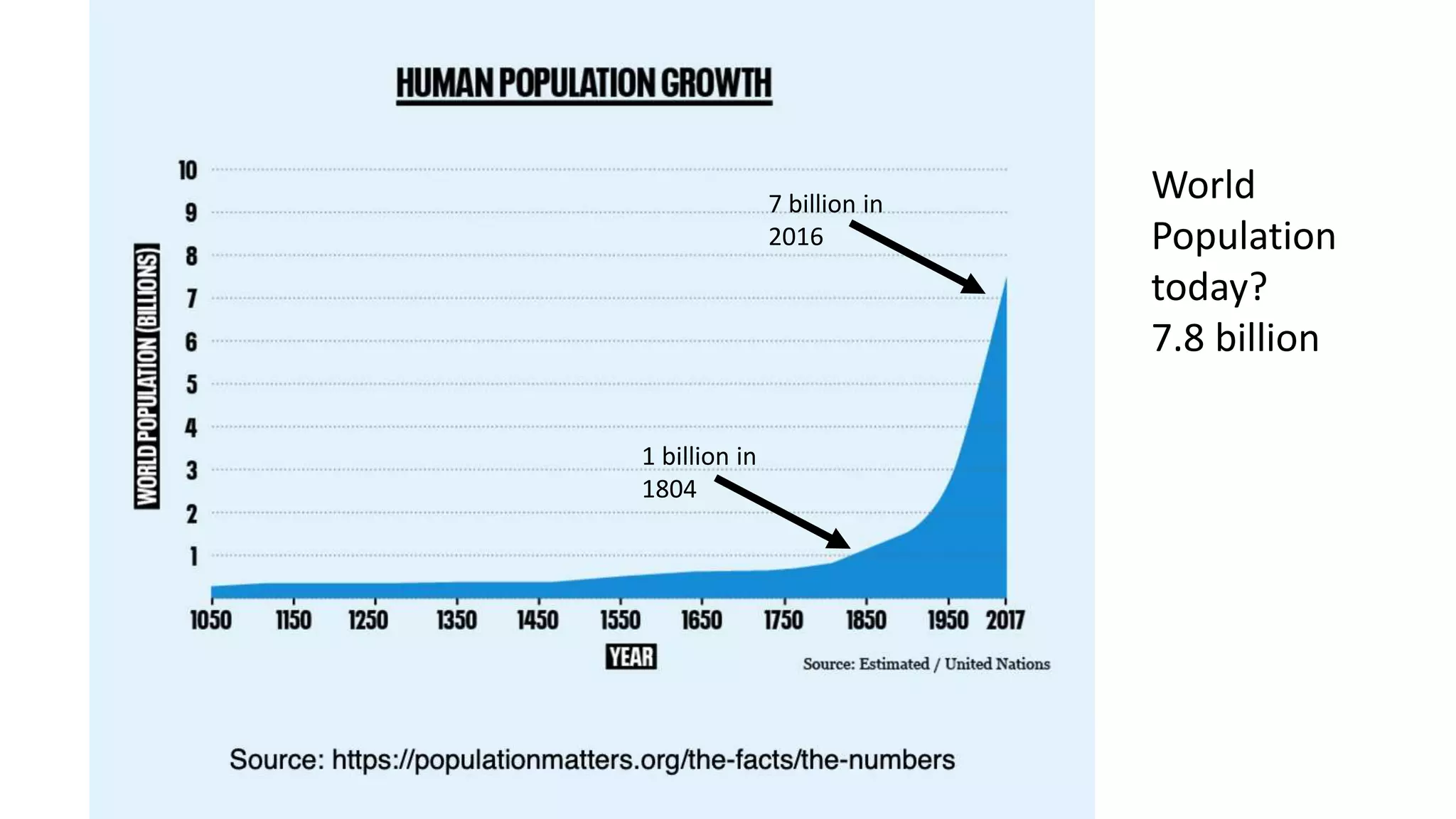
1 billion in
1804
7 billion in
2016
World
Population
today?
7.8 billion
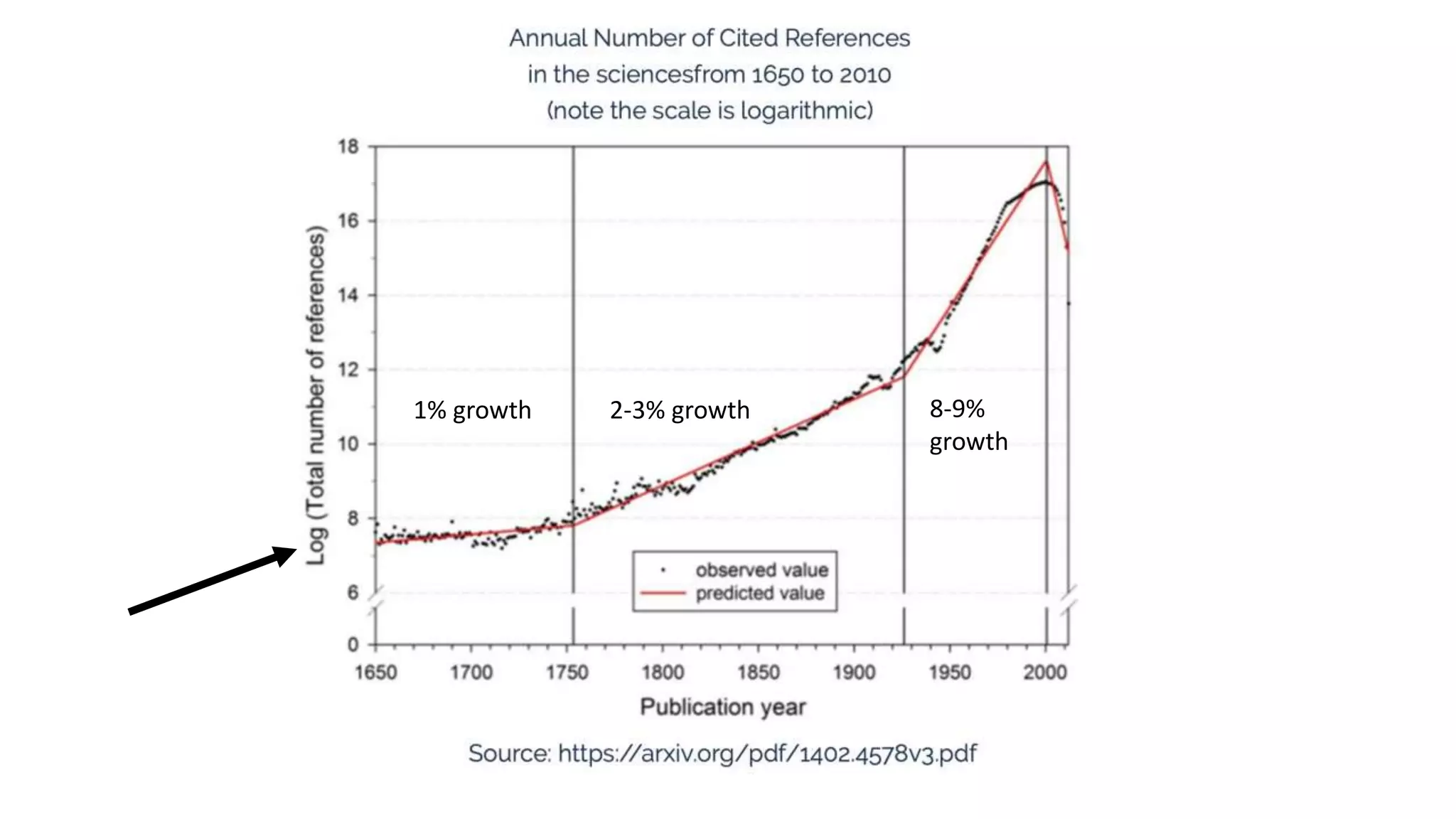
1% growth 2-3% growth 8-9%
growth
The state of
technology is rapidly
changing.
AND
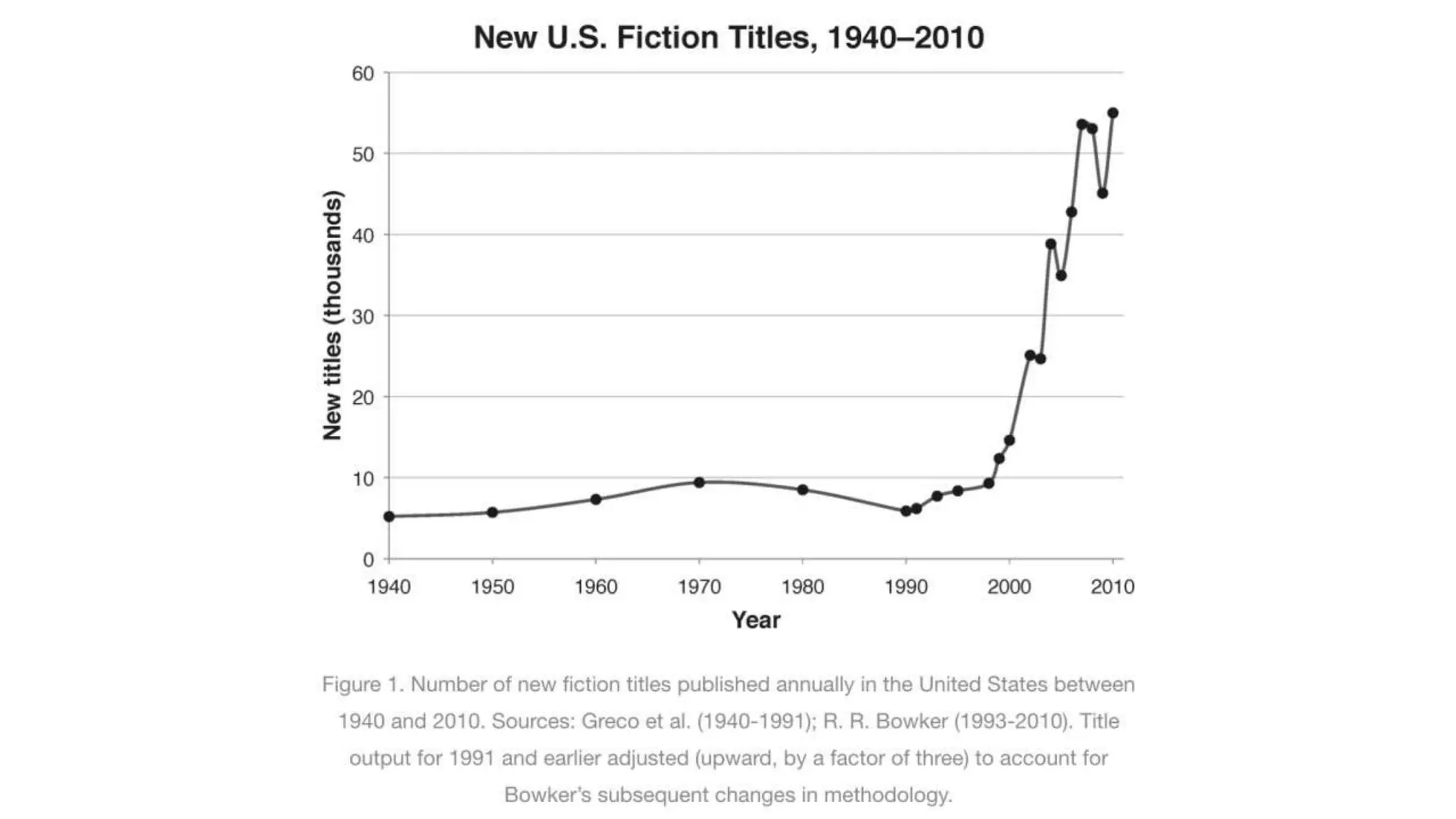
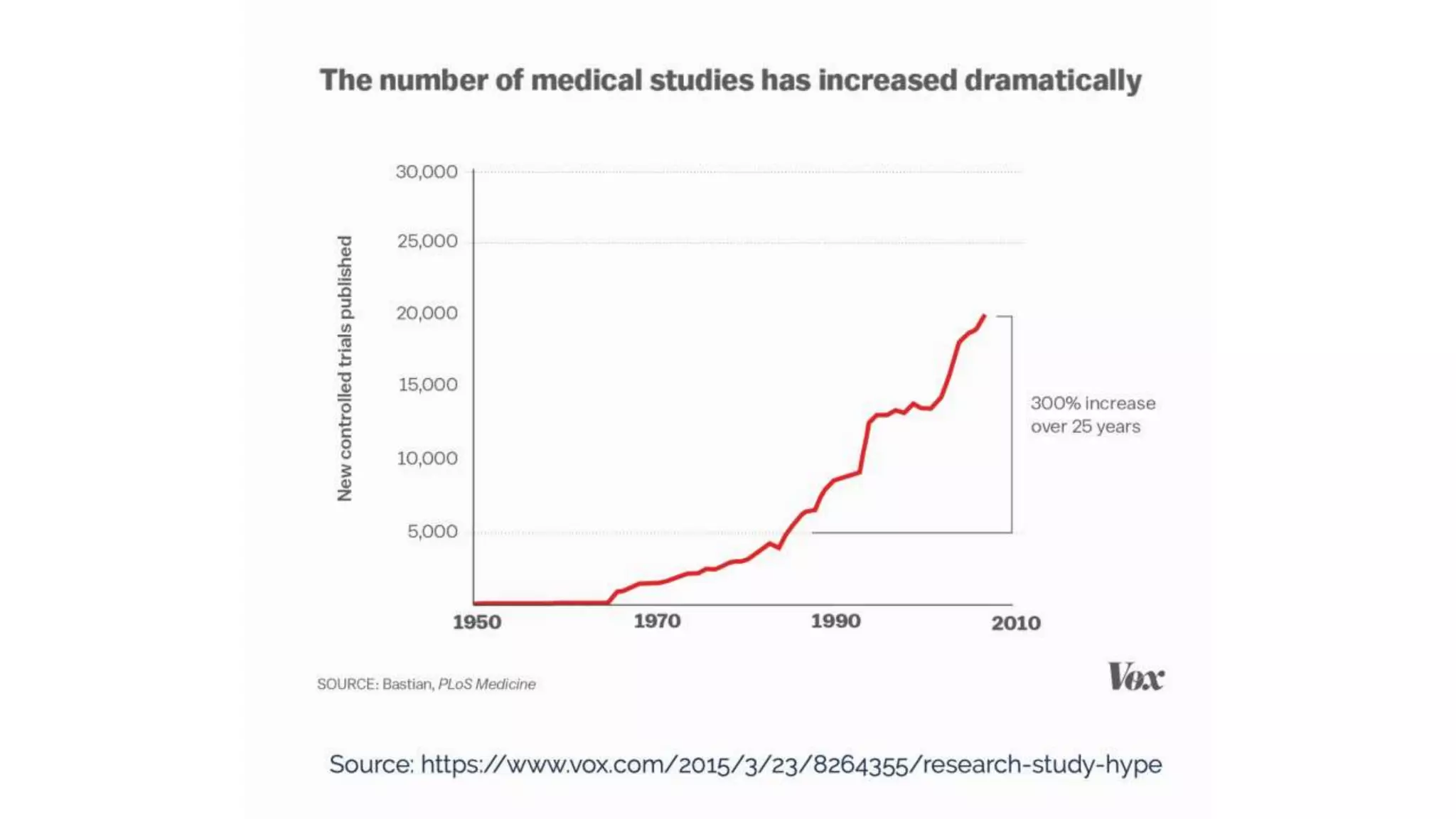
The amount of data
is rapidly increasing.
Why does the
rise of raw
information
matter?
It is this rapid rise in
information that is
bringing AI to fruition.
Two kinds of AI
Artificial Narrow
Intelligence (ANI)
Artificial General
Intelligence (AGI)
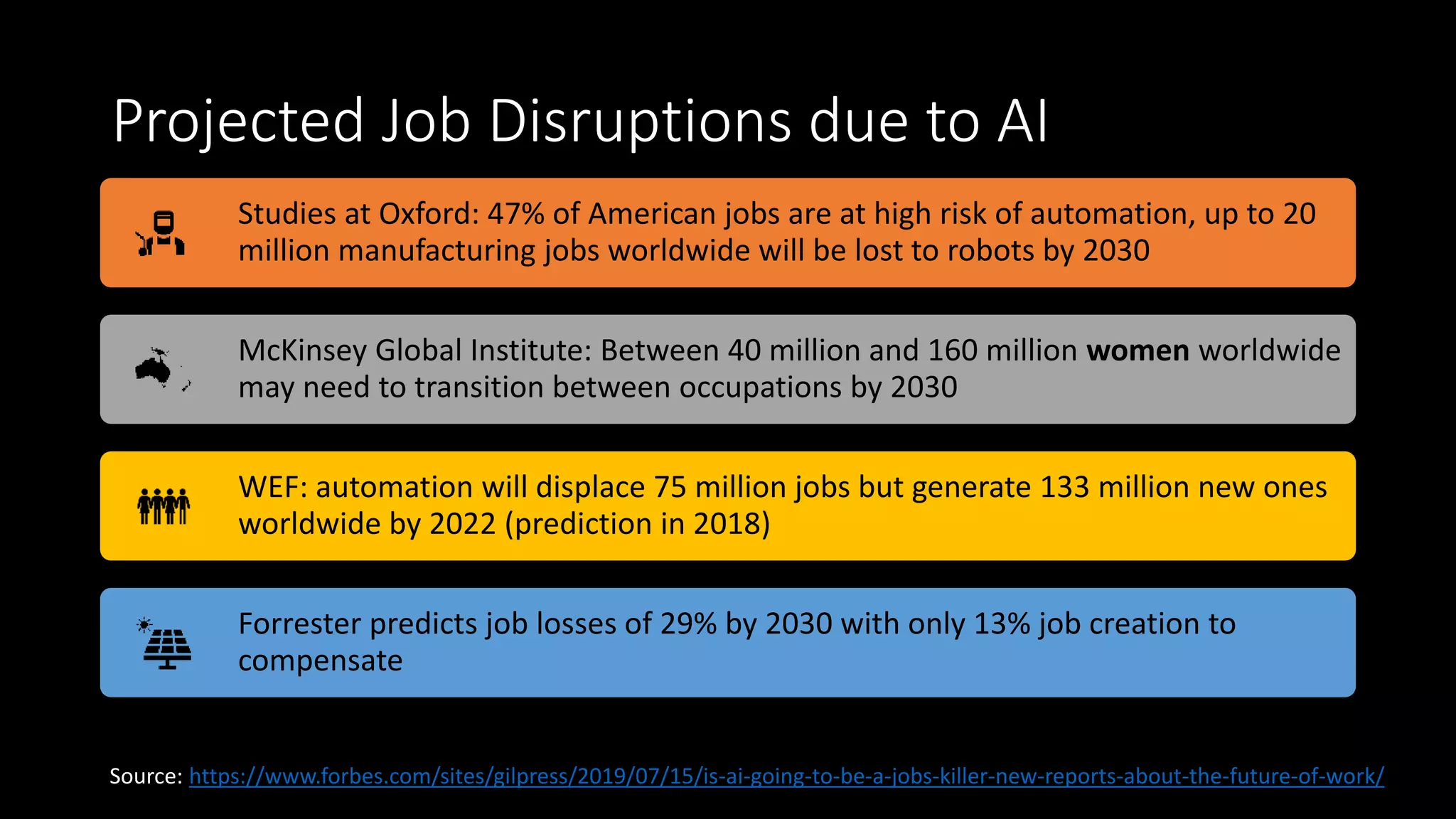
Projected Job Disruptions due to AI
Studies at Oxford: 47% of American jobs are at high risk of automation, up to 20
million manufacturing jobs worldwide will be lost to robots by 2030
McKinsey Global Institute: Between 40 million and 160 million women worldwide
may need to transition between occupations by 2030
WEF: automation will displace 75 million jobs but generate 133 million new ones
worldwide by 2022 (prediction in 2018)
Forrester predicts job losses of 29% by 2030 with only 13% job creation to
compensate
Source: https://www.forbes.com/sites/gilpress/2019/07/15/is-ai-going-to-be-a-jobs-killer-new-reports-about-the-future-of-work/
Forrester: 73% of all cubicle-related jobs lost by 2030
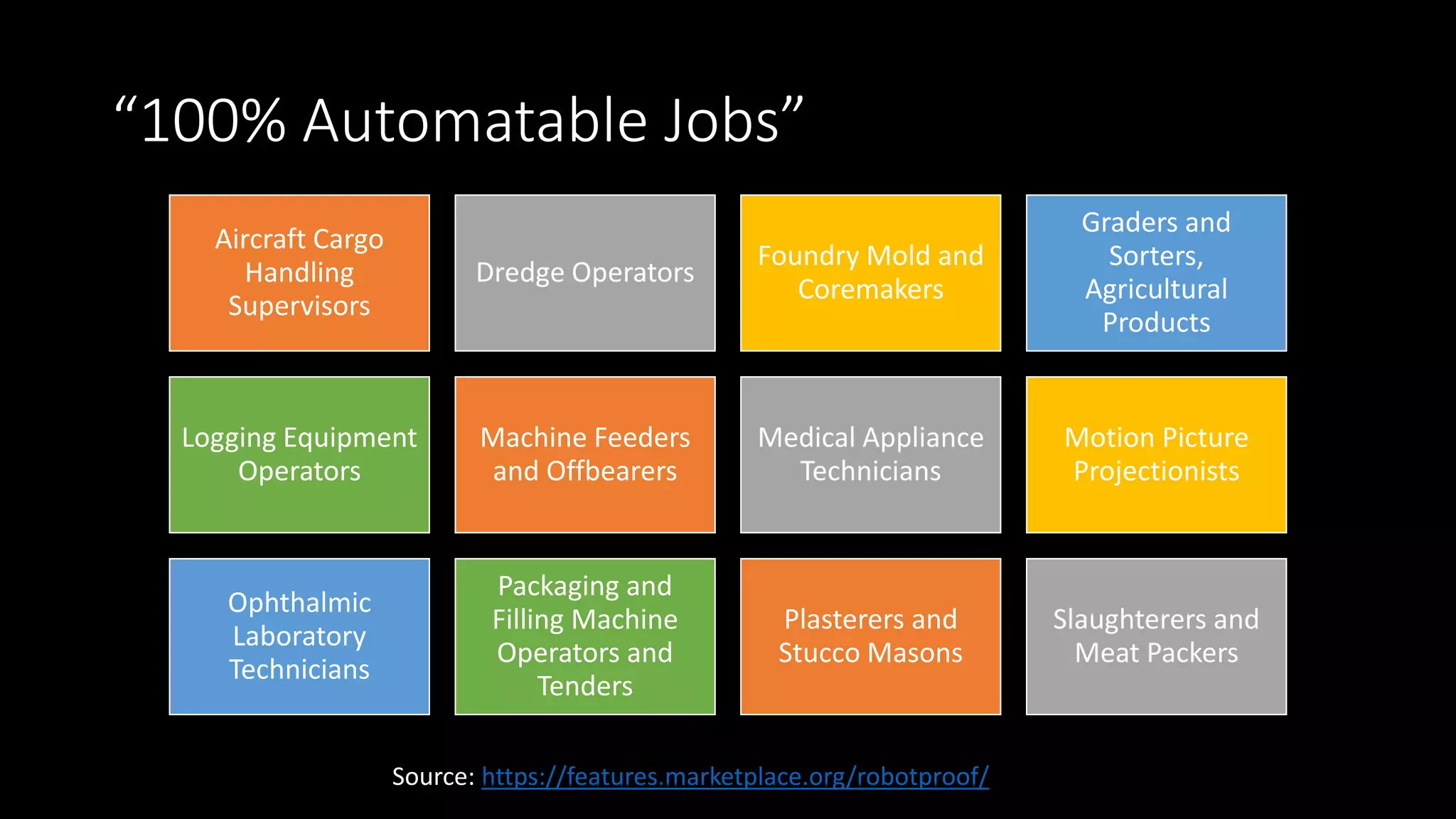
“100% Automatable Jobs”
Aircraft Cargo
Handling
Supervisors
Dredge Operators
Foundry Mold and
Coremakers
Graders and
Sorters,
Agricultural
Products
Logging Equipment
Operators
Machine Feeders
and Offbearers
Medical Appliance
Technicians
Motion Picture
Projectionists
Ophthalmic
Laboratory
Technicians
Packaging and
Filling Machine
Operators and
Tenders
Plasterers and
Stucco Masons
Slaughterers and
Meat Packers
Source: https://features.marketplace.org/robotproof/
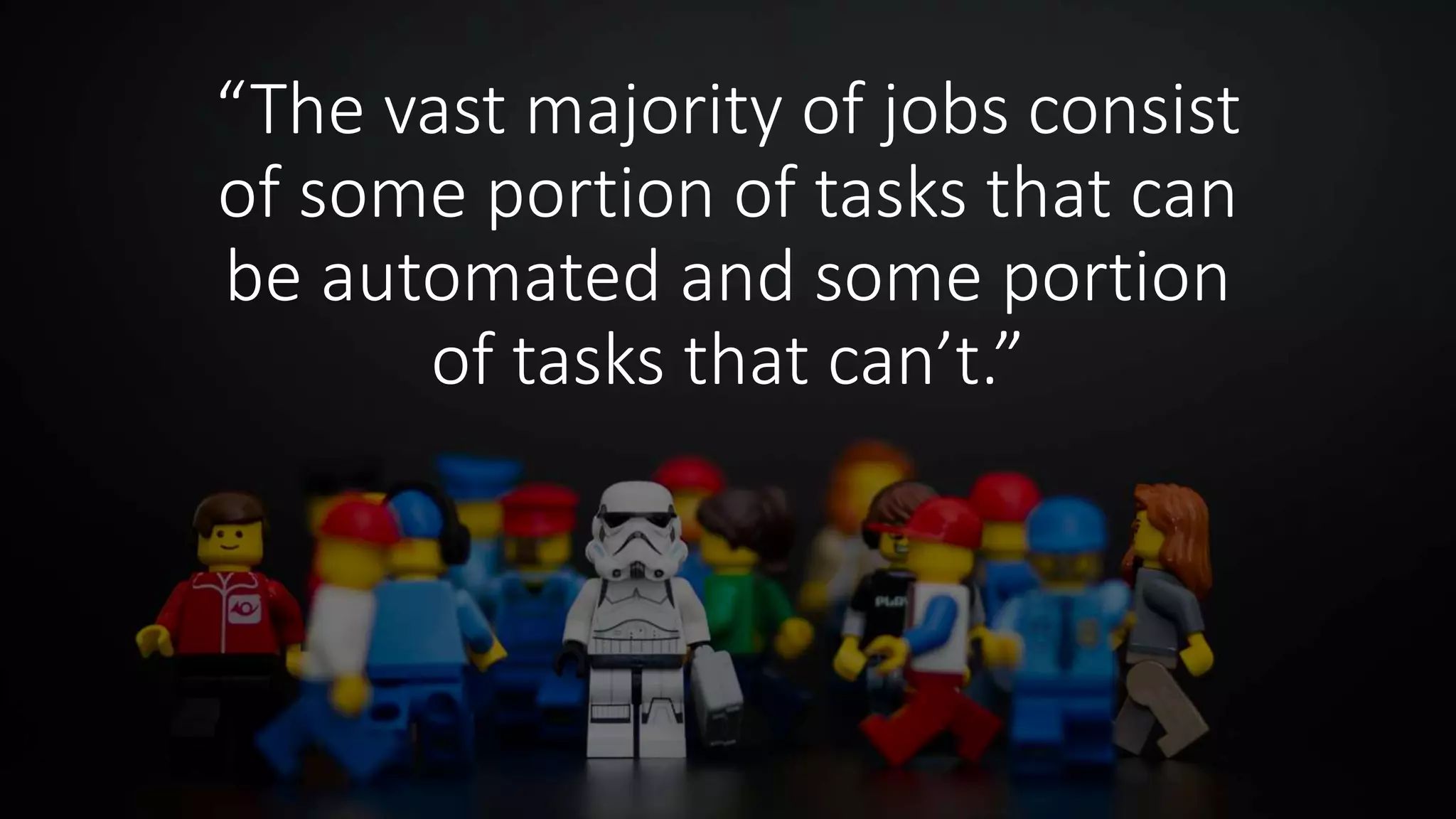
“The vast majority of jobs consist
of some portion of tasks that can
be automated and some portion
of tasks that can’t.”
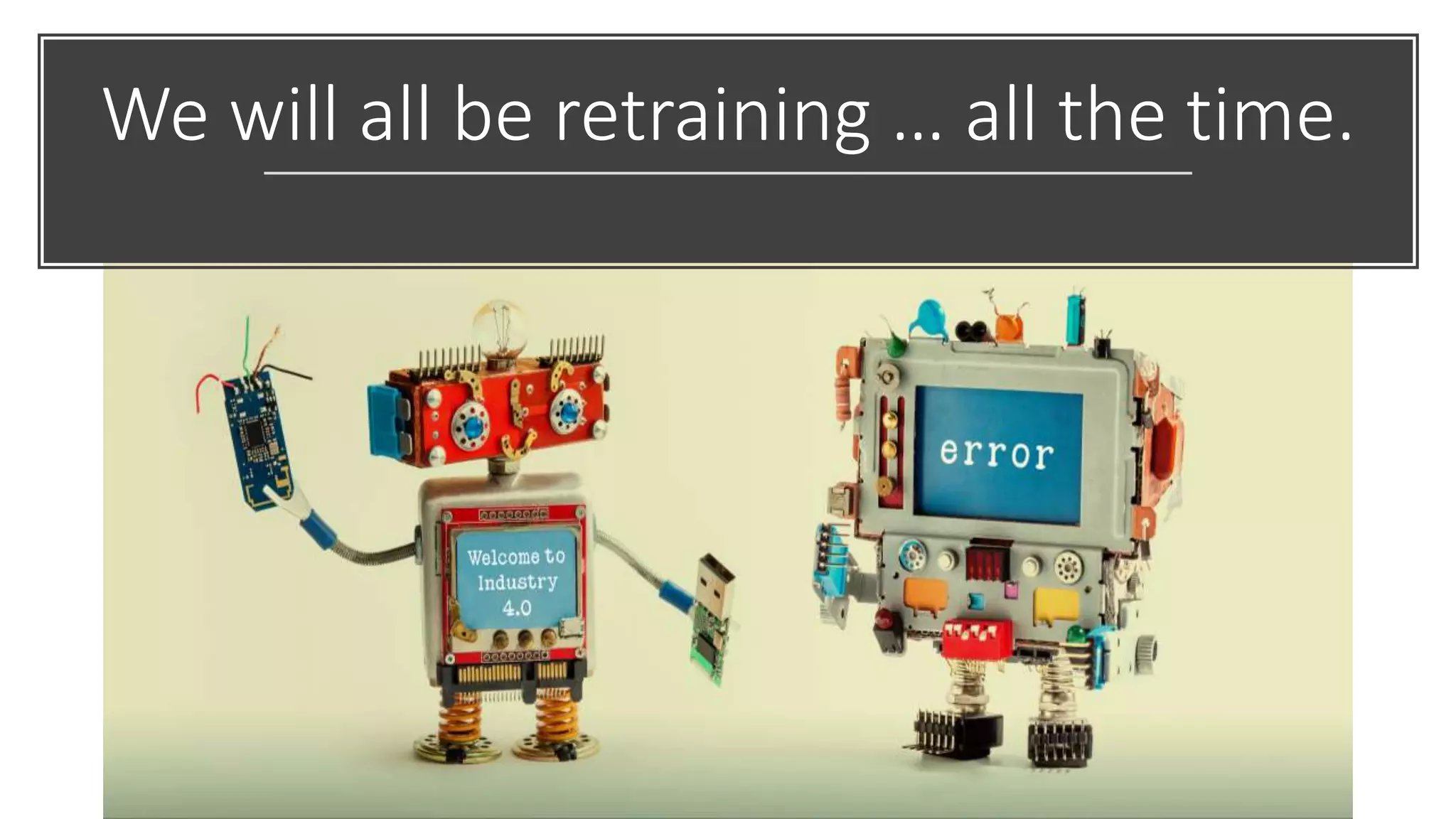
We will all be retraining … all the time.
(deep breaths and kittens)
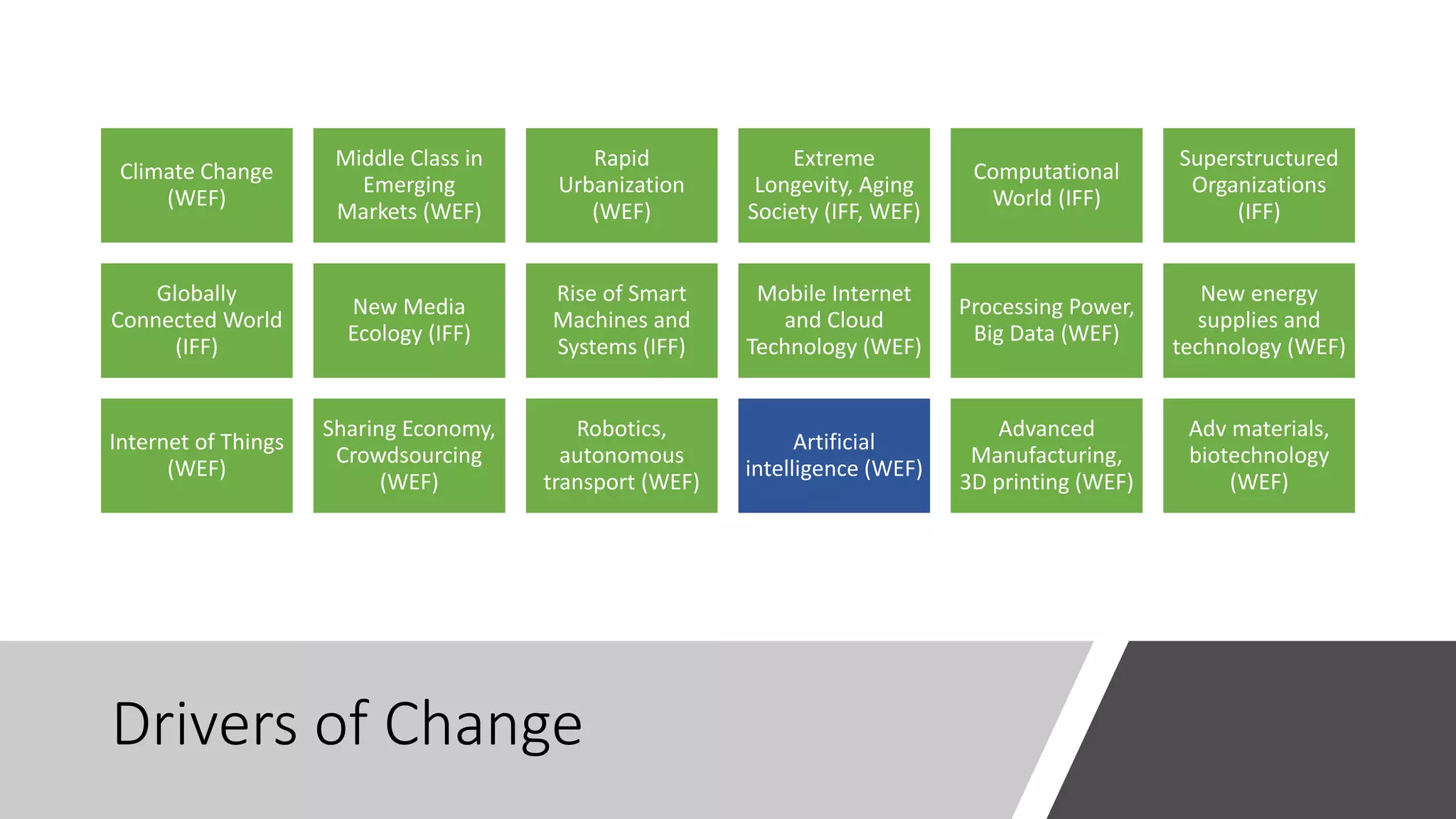
Drivers of Change
Climate Change
(WEF)
Middle Class in
Emerging
Markets (WEF)
Rapid
Urbanization
(WEF)
Extreme
Longevity, Aging
Society (IFF, WEF)
Computational
World (IFF)
Superstructured
Organizations
(IFF)
Globally
Connected World
(IFF)
New Media
Ecology (IFF)
Rise of Smart
Machines and
Systems (IFF)
Mobile Internet
and Cloud
Technology (WEF)
Processing Power,
Big Data (WEF)
New energy
supplies and
technology (WEF)
Internet of Things
(WEF)
Sharing Economy,
Crowdsourcing
(WEF)
Robotics,
autonomous
transport (WEF)
Artificial
intelligence (WEF)
Advanced
Manufacturing,
3D printing (WEF)
Adv materials,
biotechnology
(WEF)
Drivers of Change
Climate Change
(WEF)
Middle Class in
Emerging
Markets (WEF)
Rapid
Urbanization
(WEF)
Extreme
Longevity, Aging
Society (IFF, WEF)
Computational
World (IFF)
Superstructured
Organizations
(IFF)
Globally
Connected World
(IFF)
New Media
Ecology (IFF)
Rise of Smart
Machines and
Systems (IFF)
Mobile Internet
and Cloud
Technology (WEF)
Processing Power,
Big Data (WEF)
New energy
supplies and
technology (WEF)
Internet of Things
(WEF)
Sharing Economy,
Crowdsourcing
(WEF)
Robotics,
autonomous
transport (WEF)
Artificial
intelligence (WEF)
Advanced
Manufacturing,
3D printing (WEF)
Adv materials,
biotechnology
(WEF)
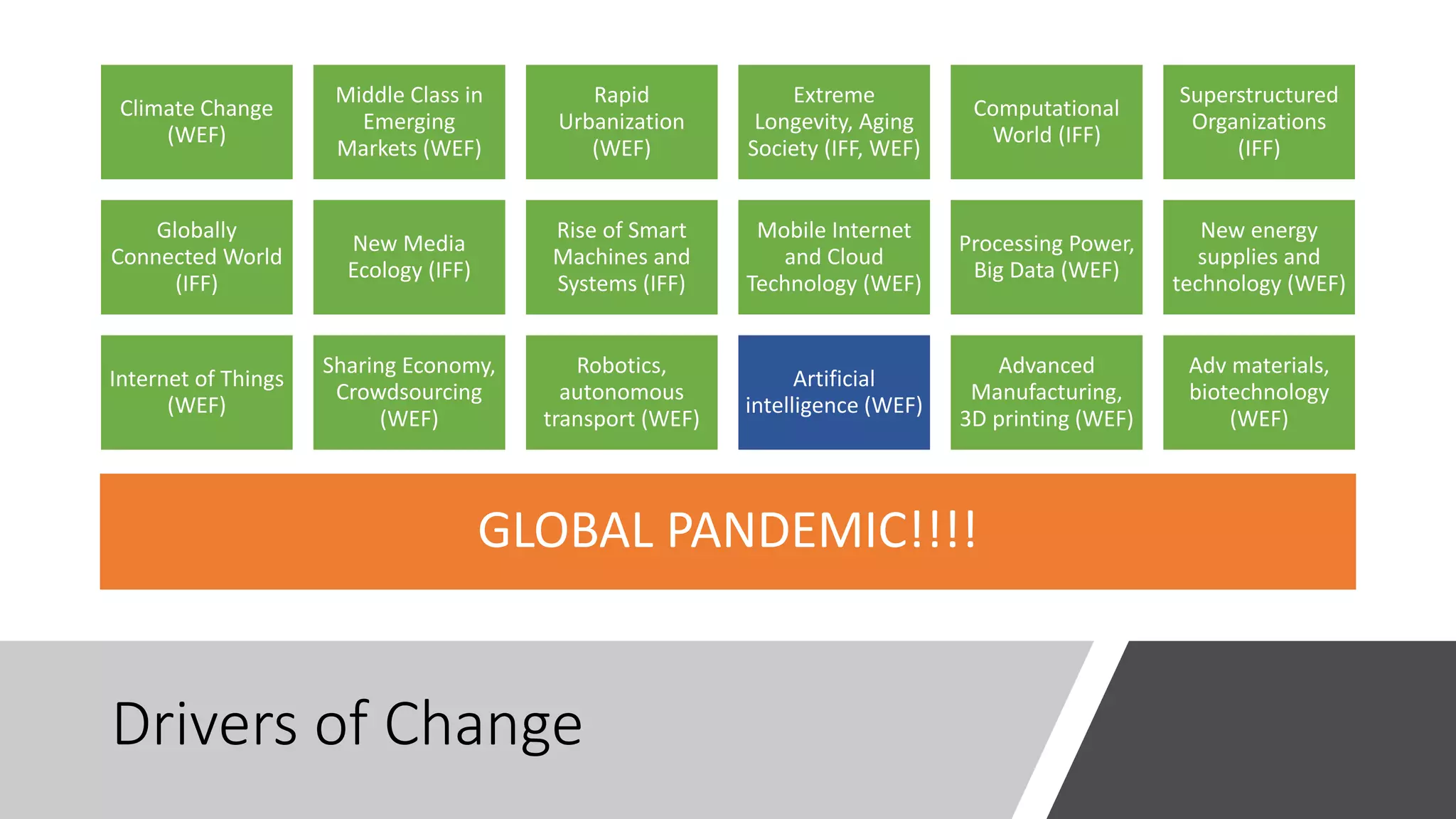
GLOBAL PANDEMIC!!!!
What have you had to learn since
leaving school?
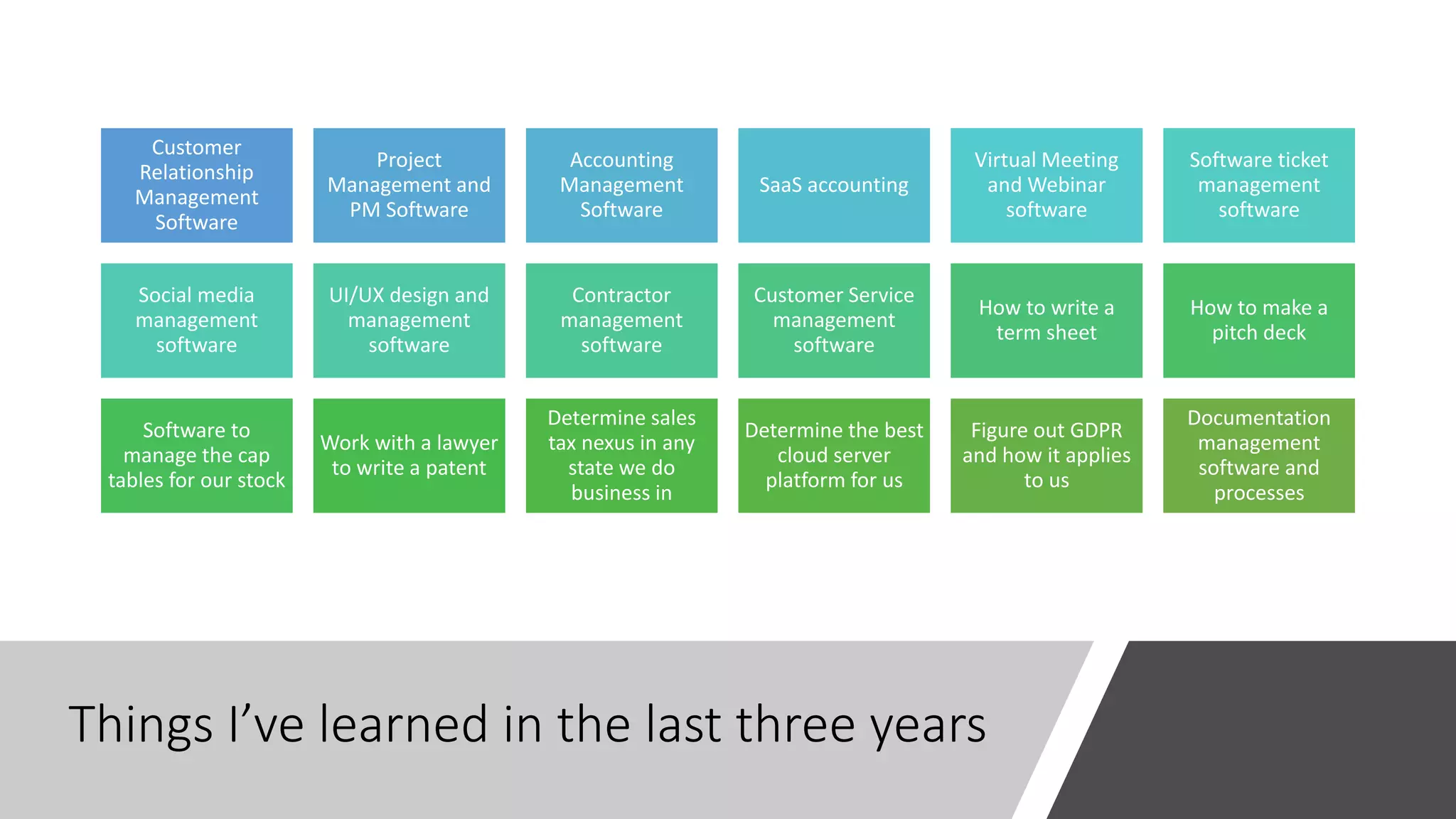
Things I’ve learned in the last three years
Customer
Relationship
Management
Software
Project
Management and
PM Software
Accounting
Management
Software
SaaS accounting
Virtual Meeting
and Webinar
software
Software ticket
management
software
Social media
management
software
UI/UX design and
management
software
Contractor
management
software
Customer Service
management
software
How to write a
term sheet
How to make a
pitch deck
Software to
manage the cap
tables for our stock
Work with a lawyer
to write a patent
Determine sales
tax nexus in any
state we do
business in
Determine the best
cloud server
platform for us
Figure out GDPR
and how it applies
to us
Documentation
management
software and
processes
The state of technology
is rapidly changing.
The amount of data is
rapidly increasing.
AND
Careers are rapidly
changing.
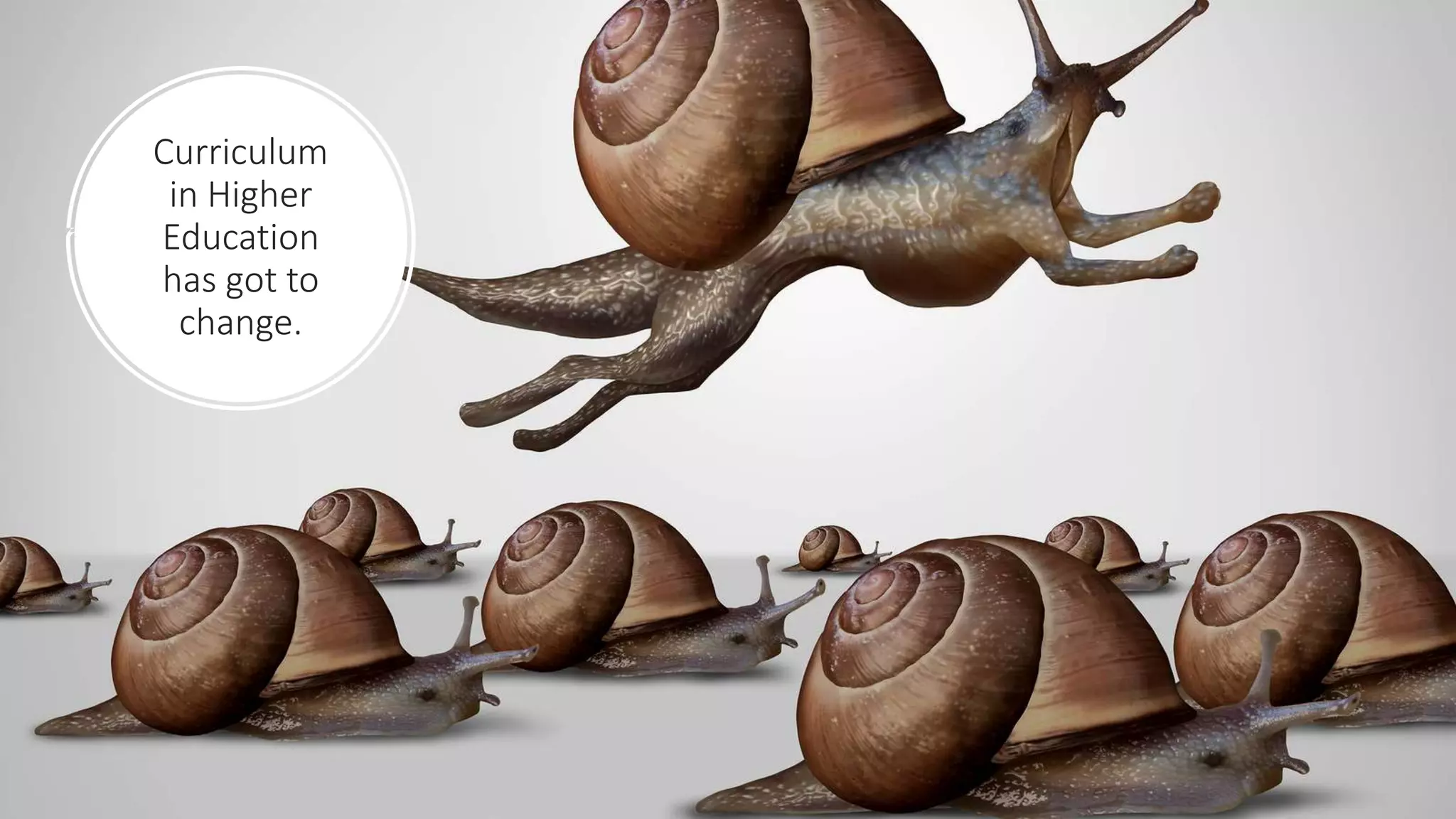
Curriculum
in Higher
Education
has got to
change.
1. People should be
able to attend
college for one year
and be able to
upgrade their job.
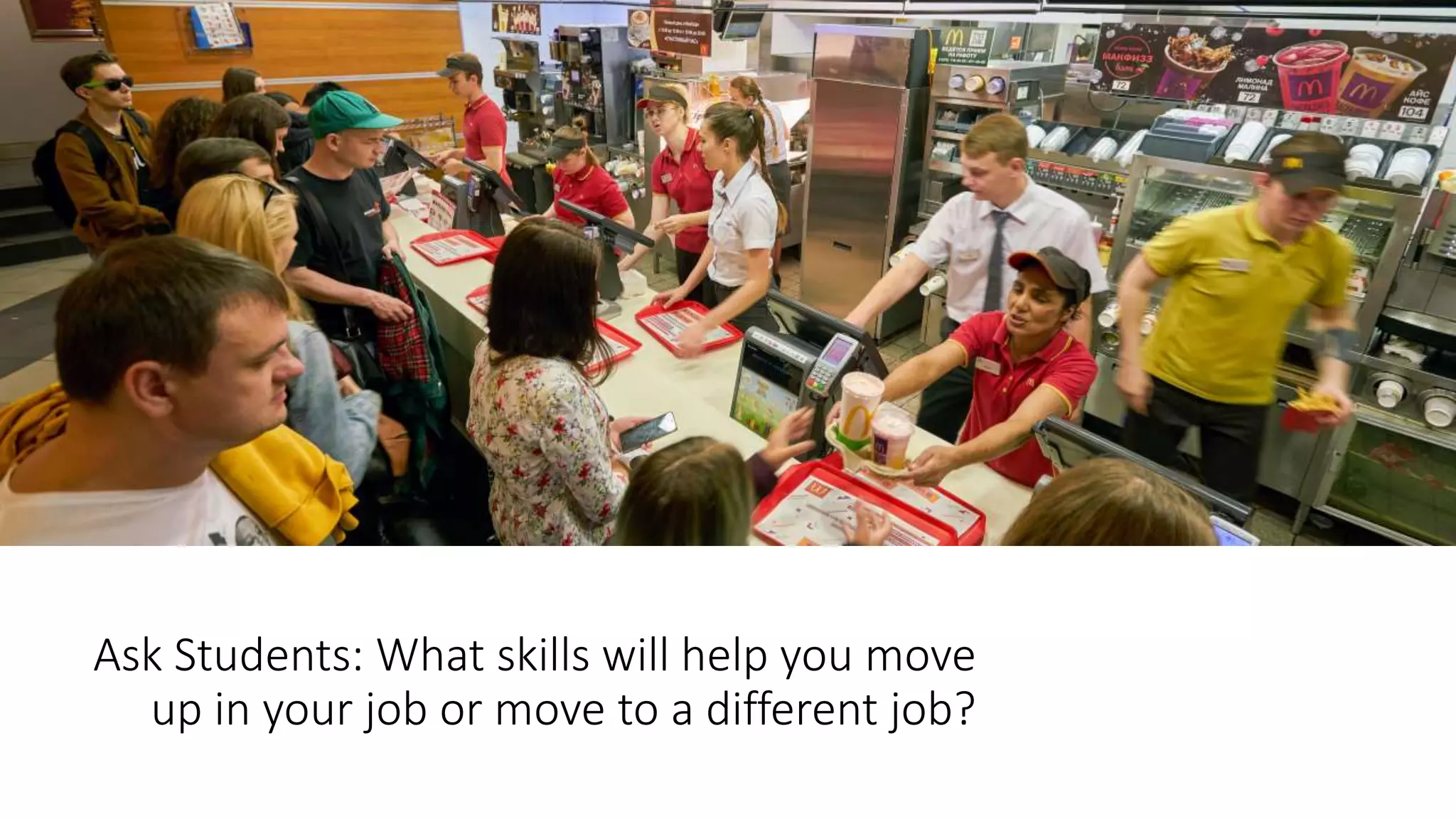
Ask Students: What skills will help you move
up in your job or move to a different job?
2. Rethink
depth of
knowledge.
Search and Application
over Memorization
You couldn’t memorize all the information
in your field even if you wanted to.
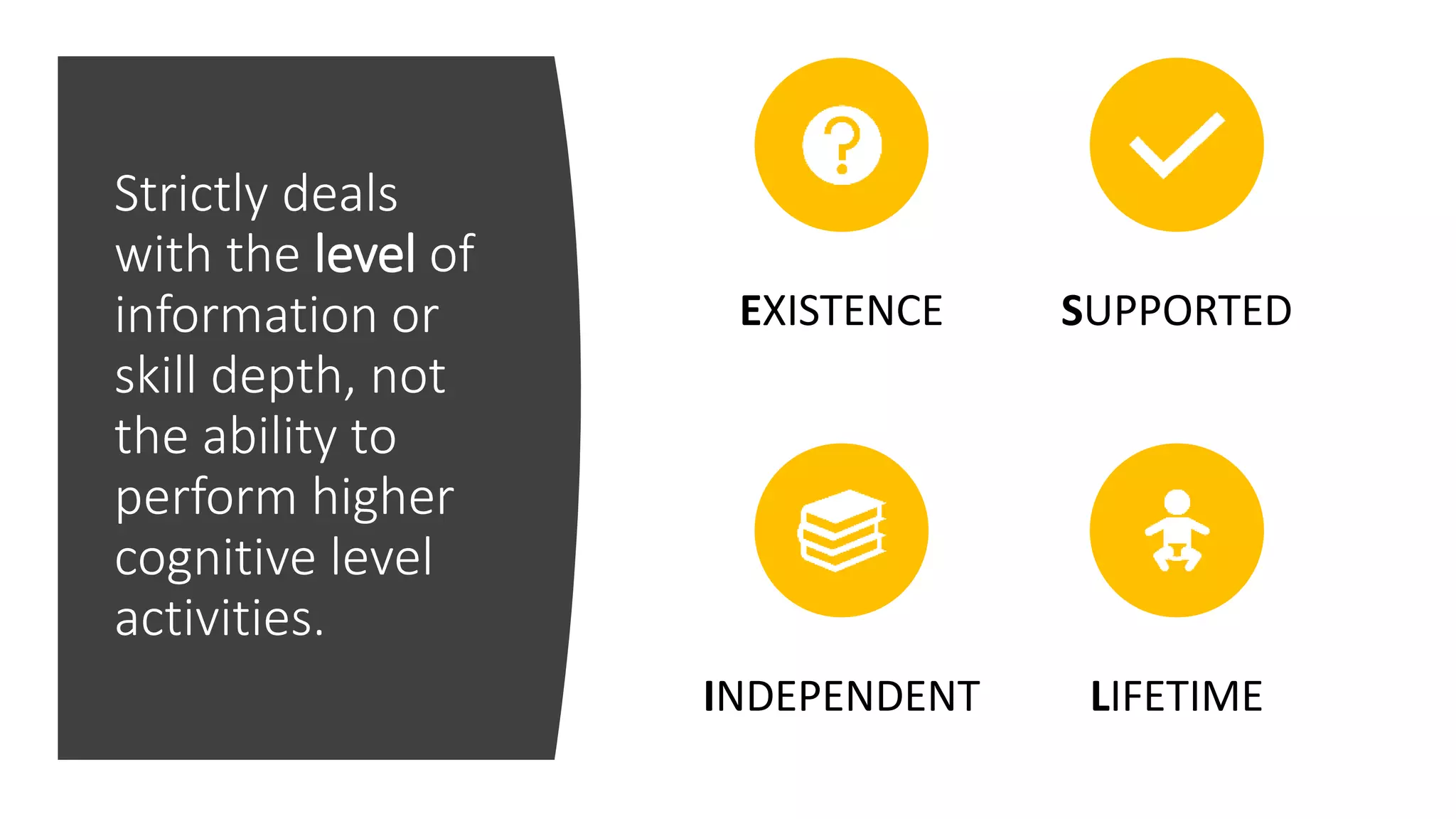
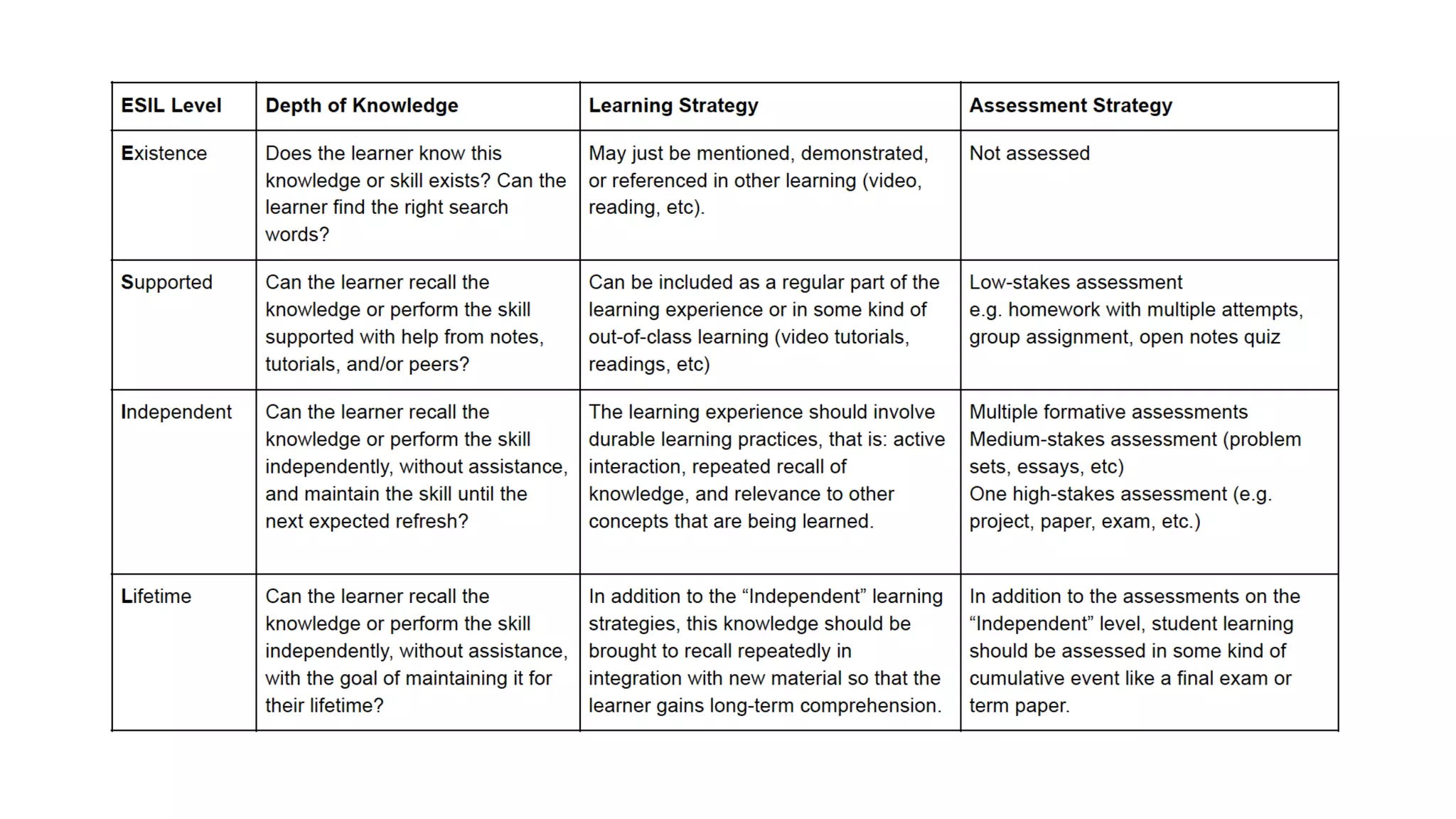
ESIL LENS
Strictly deals
with the level of
information or
skill depth, not
the ability to
perform higher
cognitive level
activities.
EXISTENCE SUPPORTED
INDEPENDENT LIFETIME
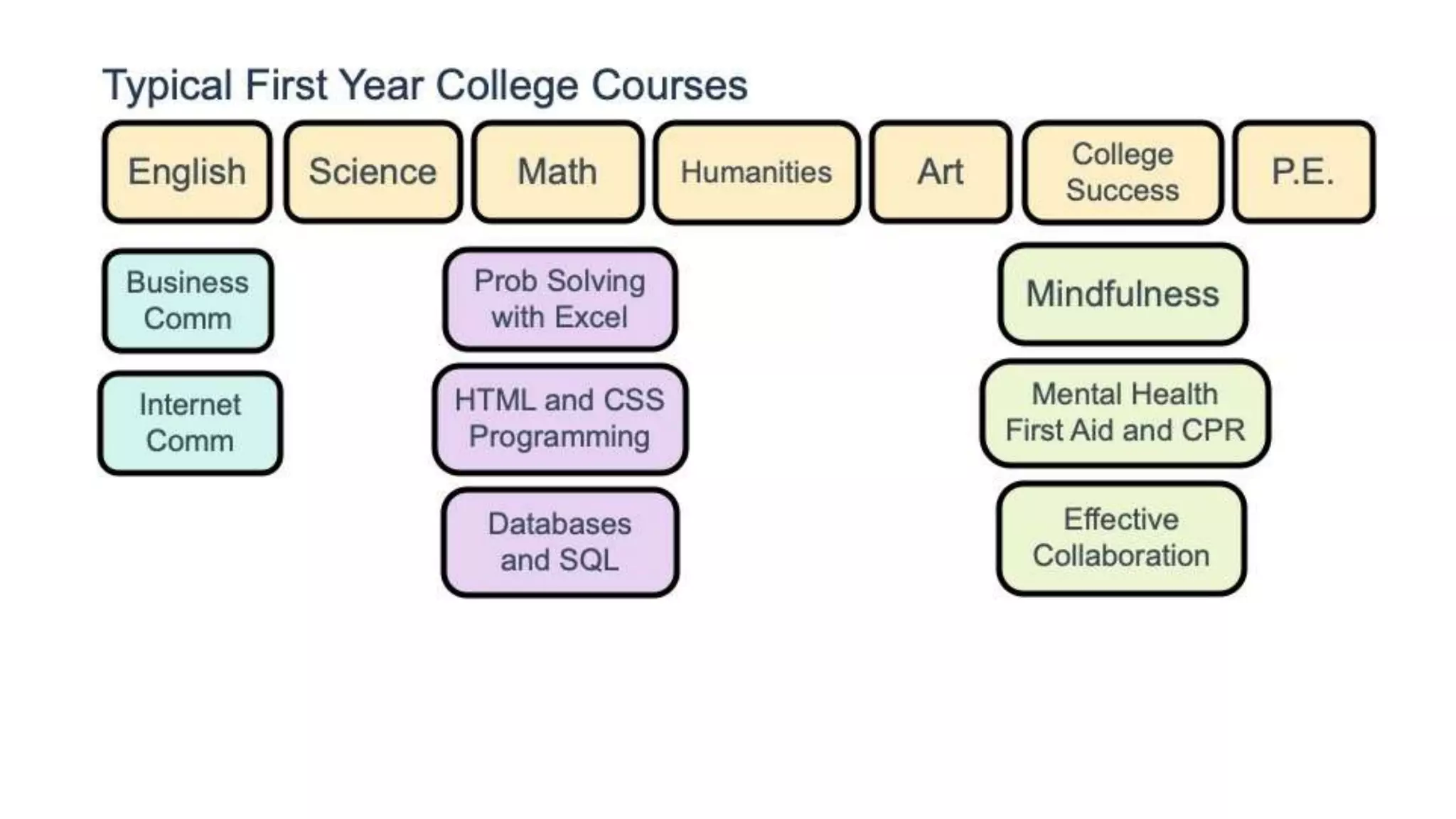
3. Streamline the existing
courses to make space to
teach more relevant
material at the right
depth.
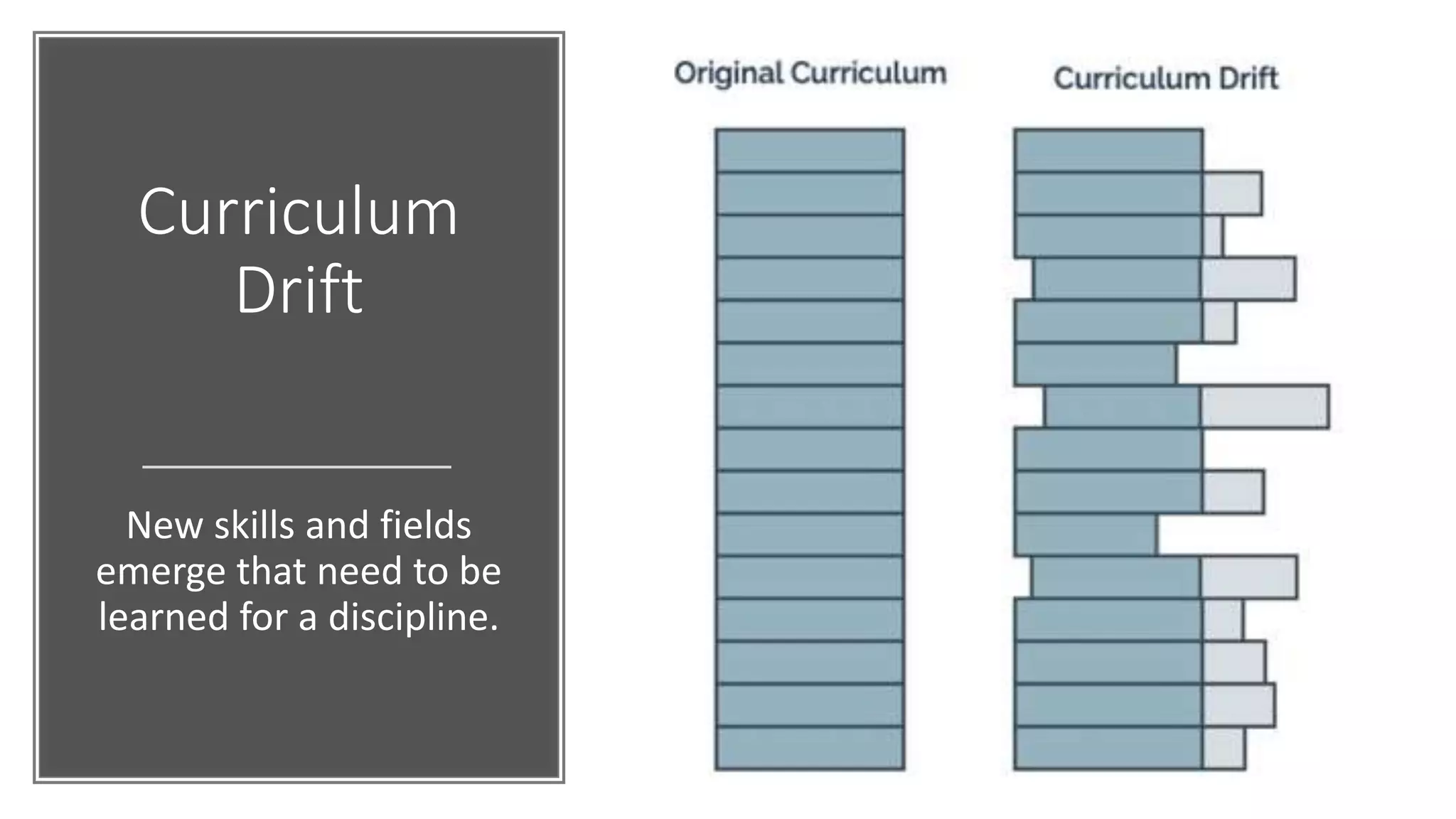
Curriculum
Drift
New skills and fields
emerge that need to be
learned for a discipline.
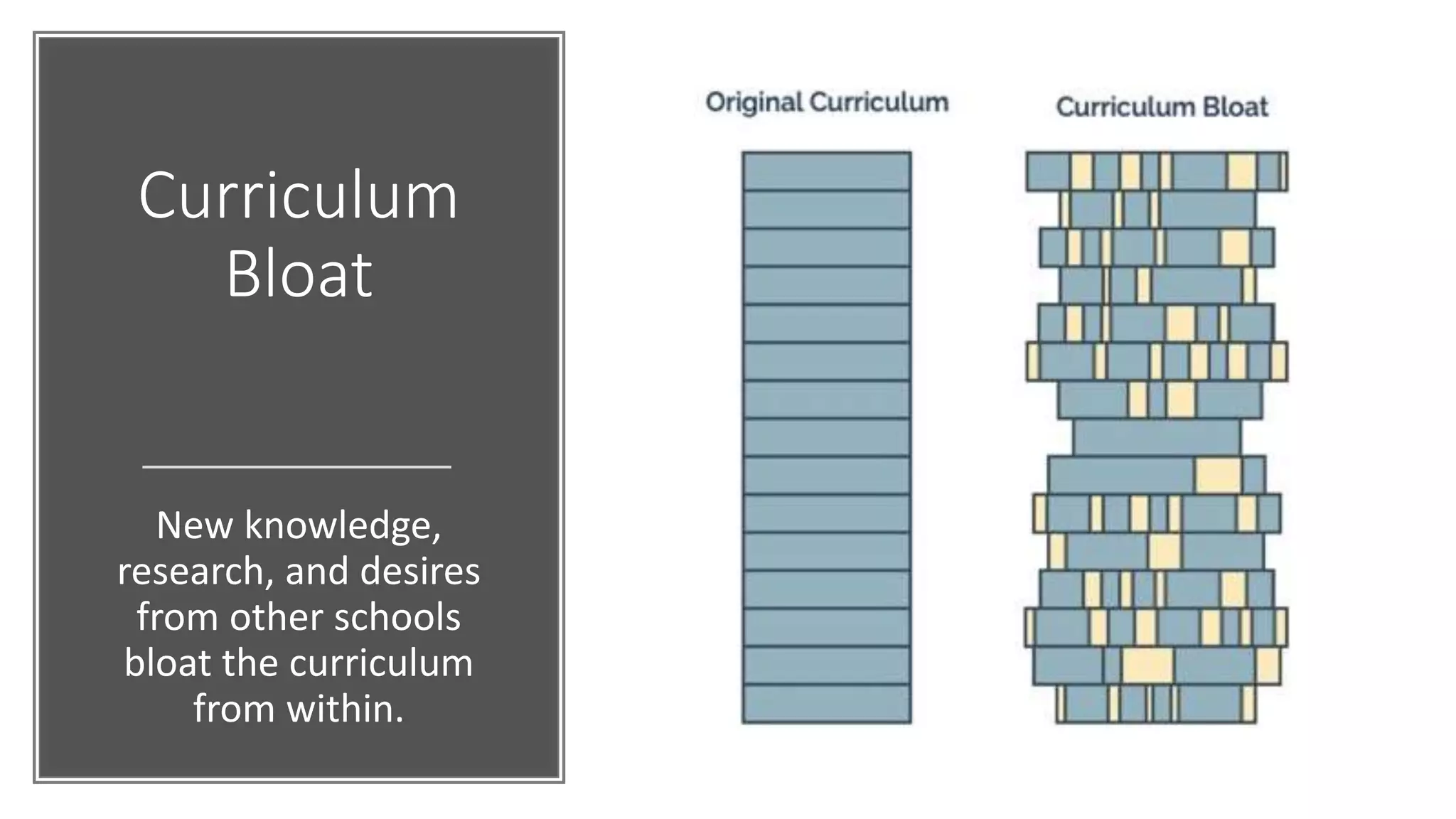
Curriculum
Bloat
New knowledge,
research, and desires
from other schools
bloat the curriculum
from within.
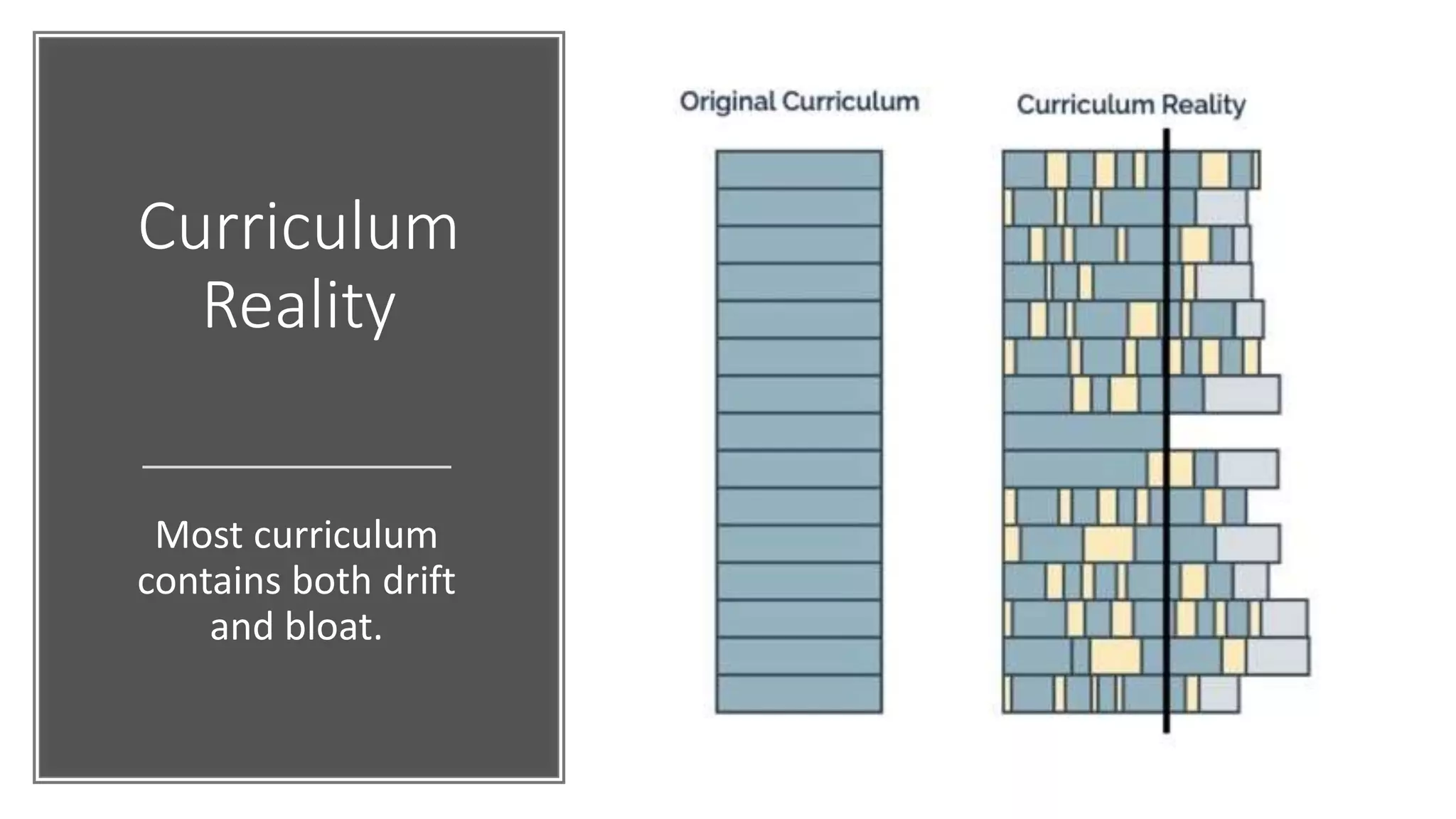
Curriculum
Reality
Most curriculum
contains both drift
and bloat.
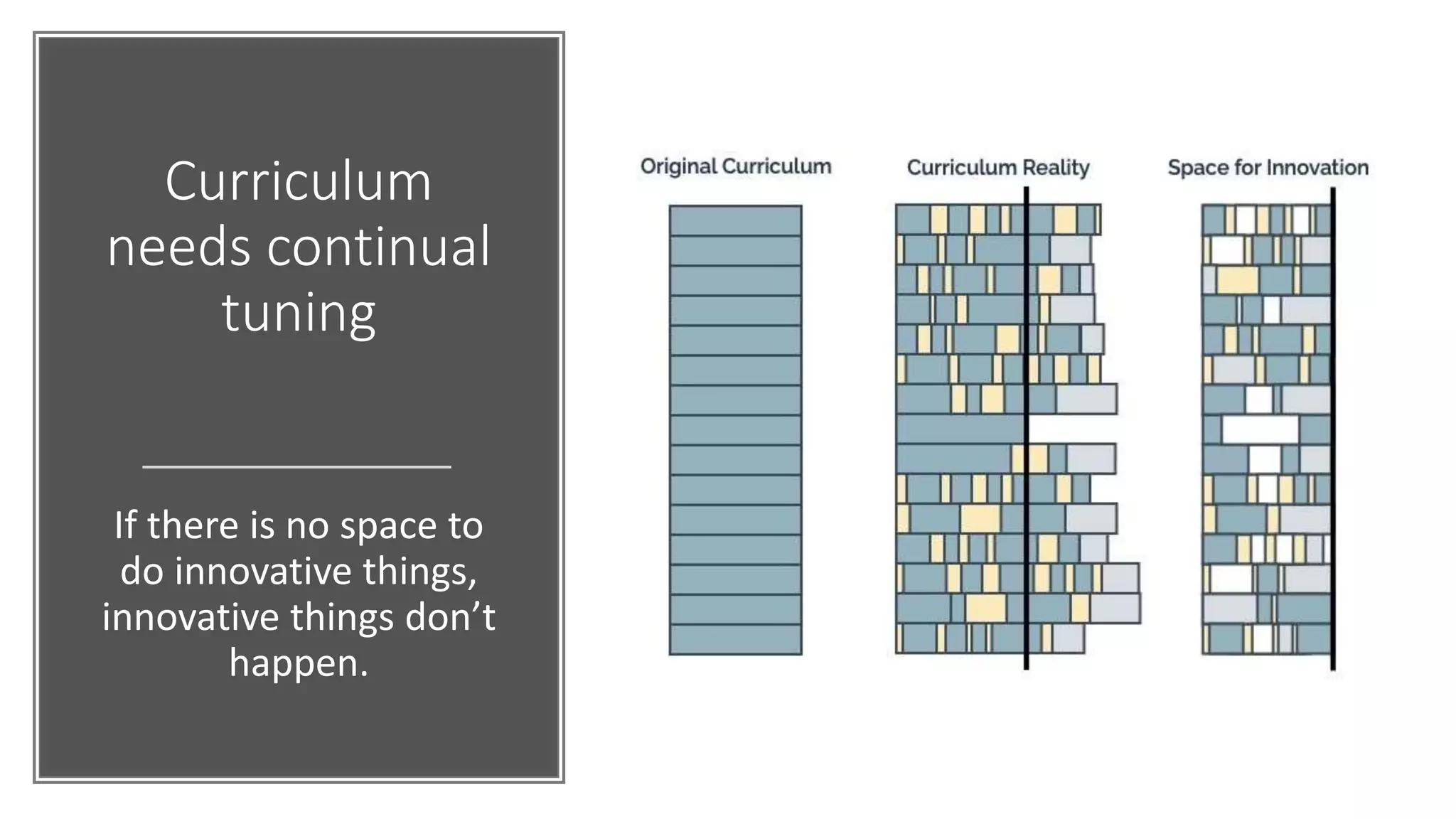
Curriculum
needs continual
tuning
If there is no space to
do innovative things,
innovative things don’t
happen.
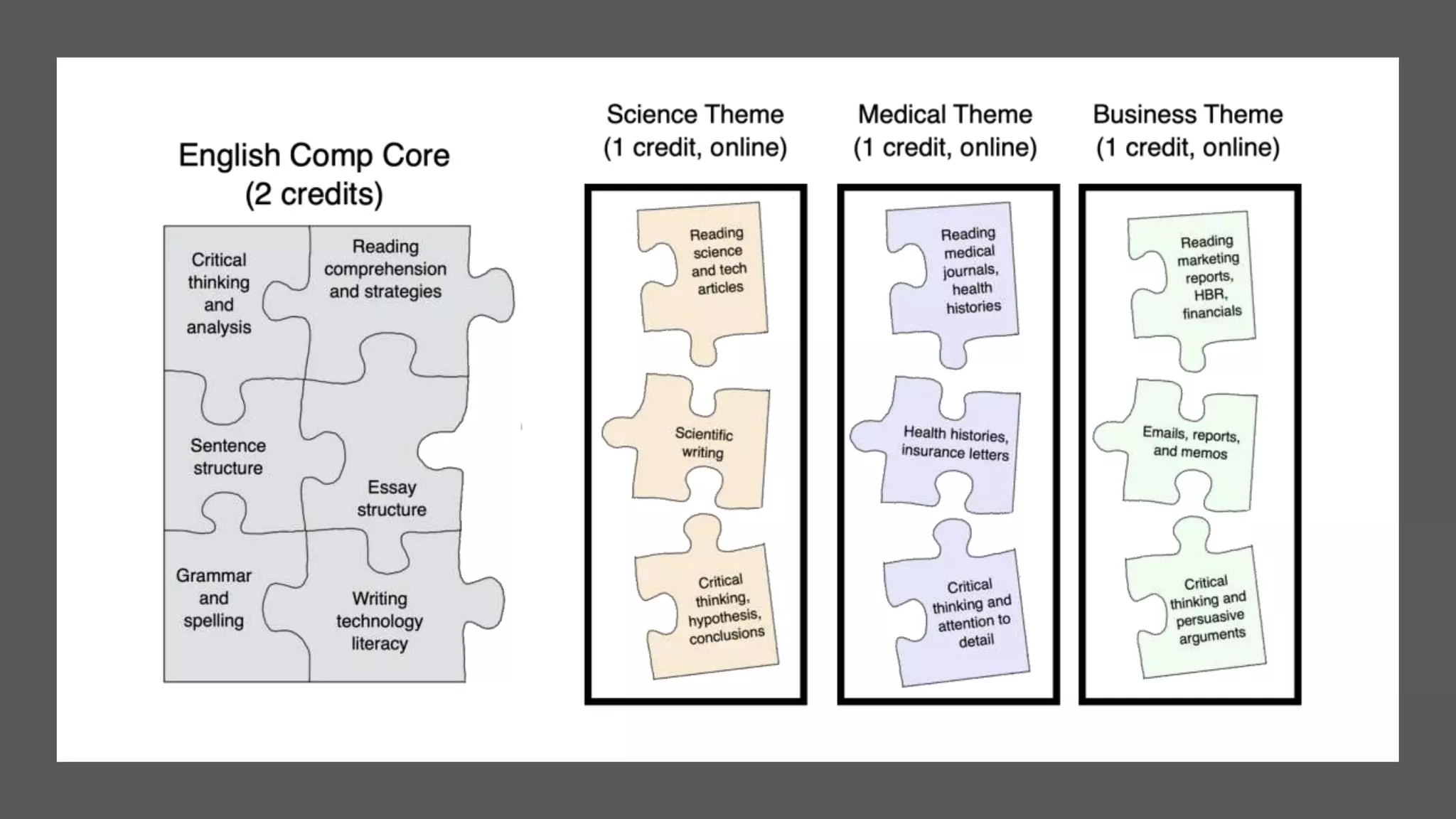
4. Expertise is a moving
target. Make the courses
themselves more flexible
by splitting the credits
into fixed and variable.
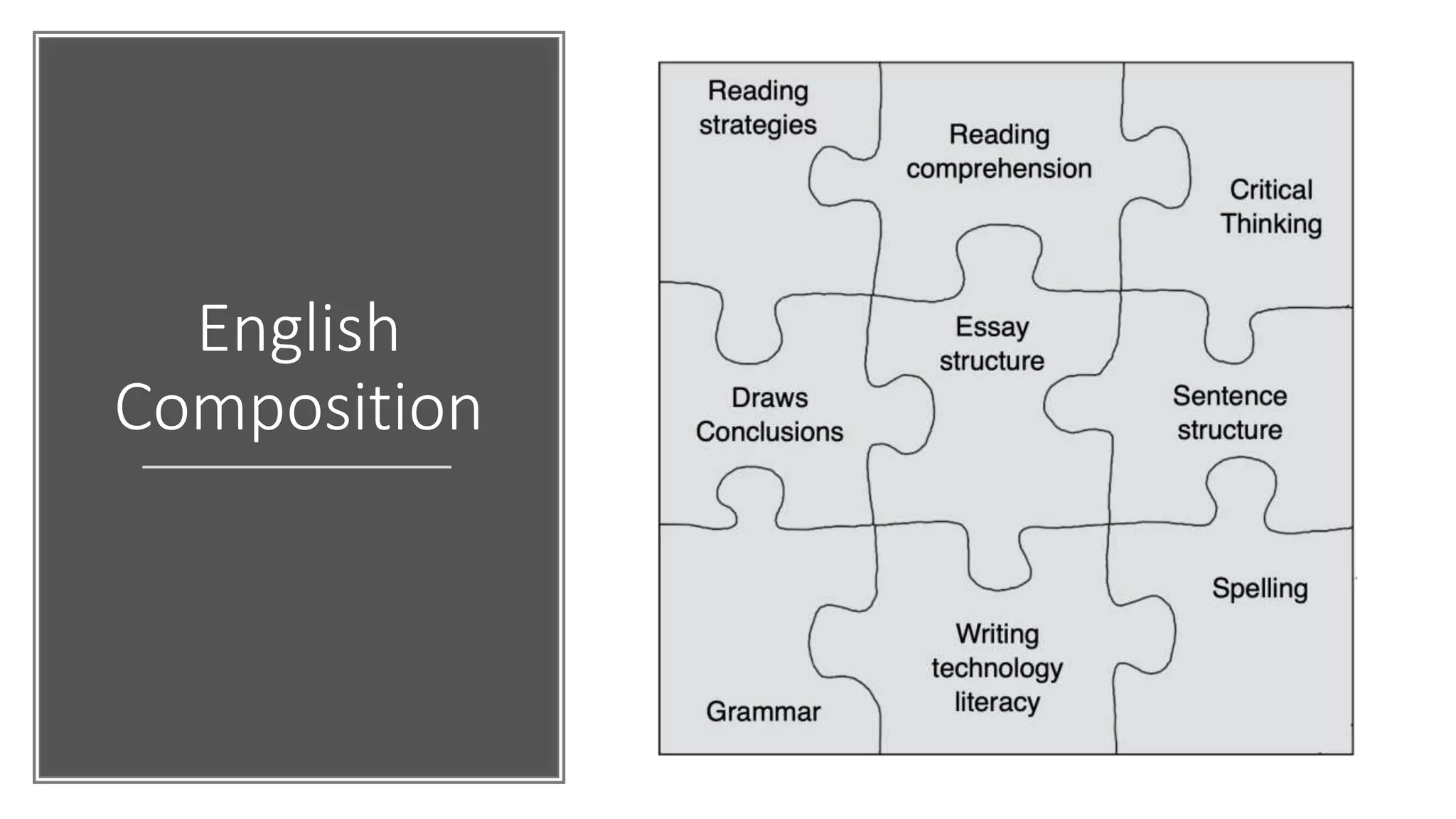
English
Composition
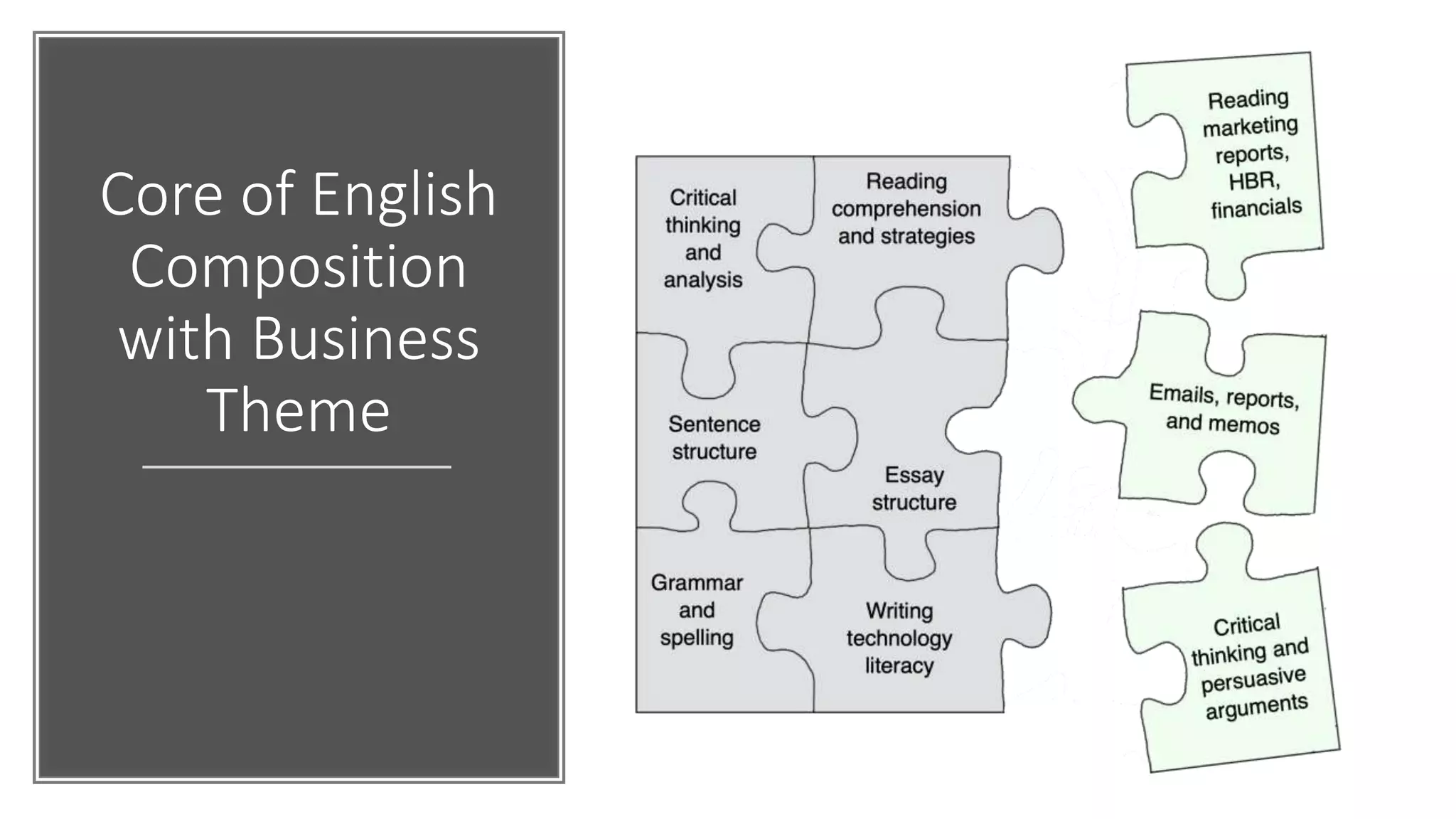
Core of English
Composition
with Business
Theme
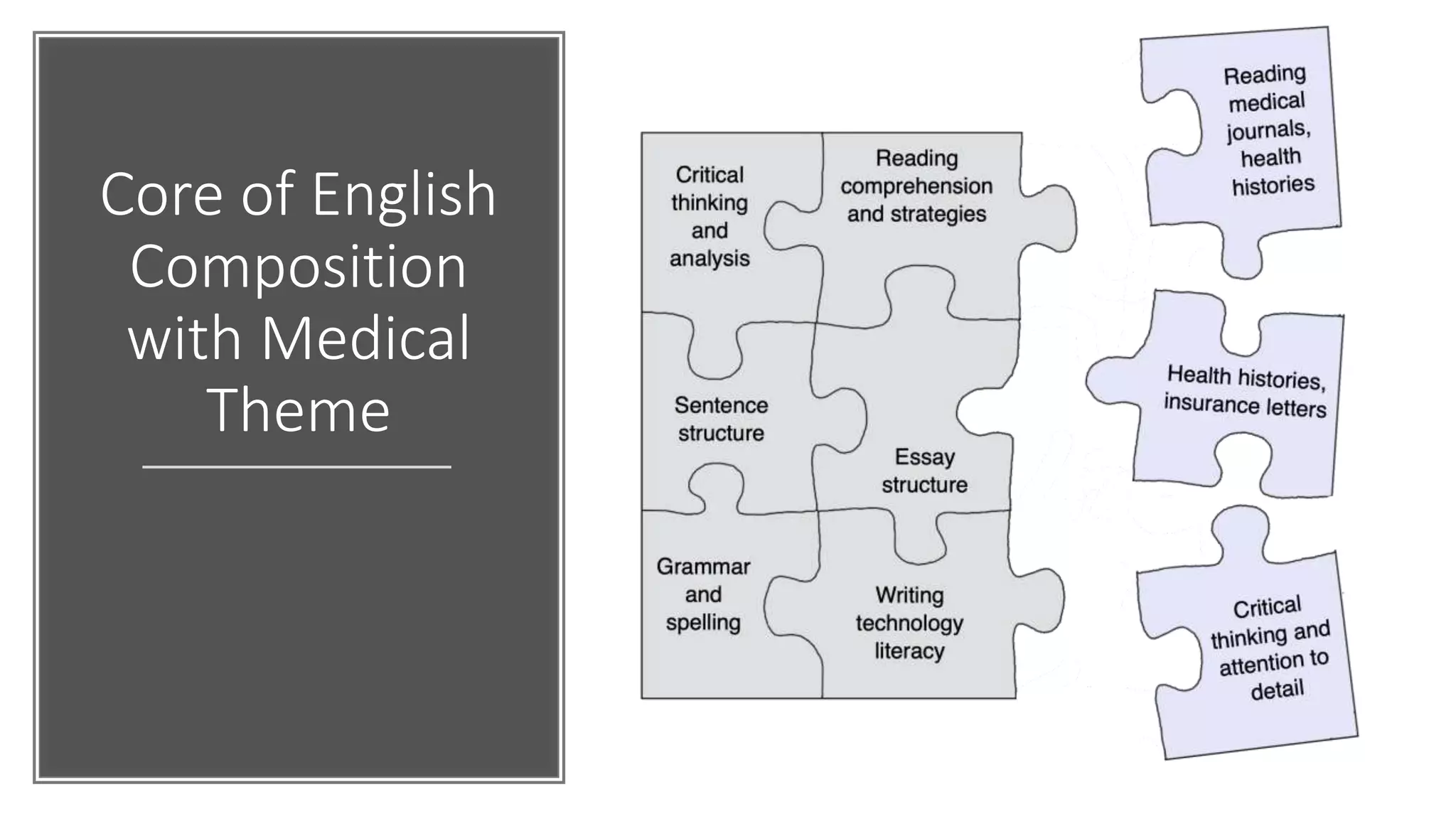
Core of English
Composition
with Medical
Theme
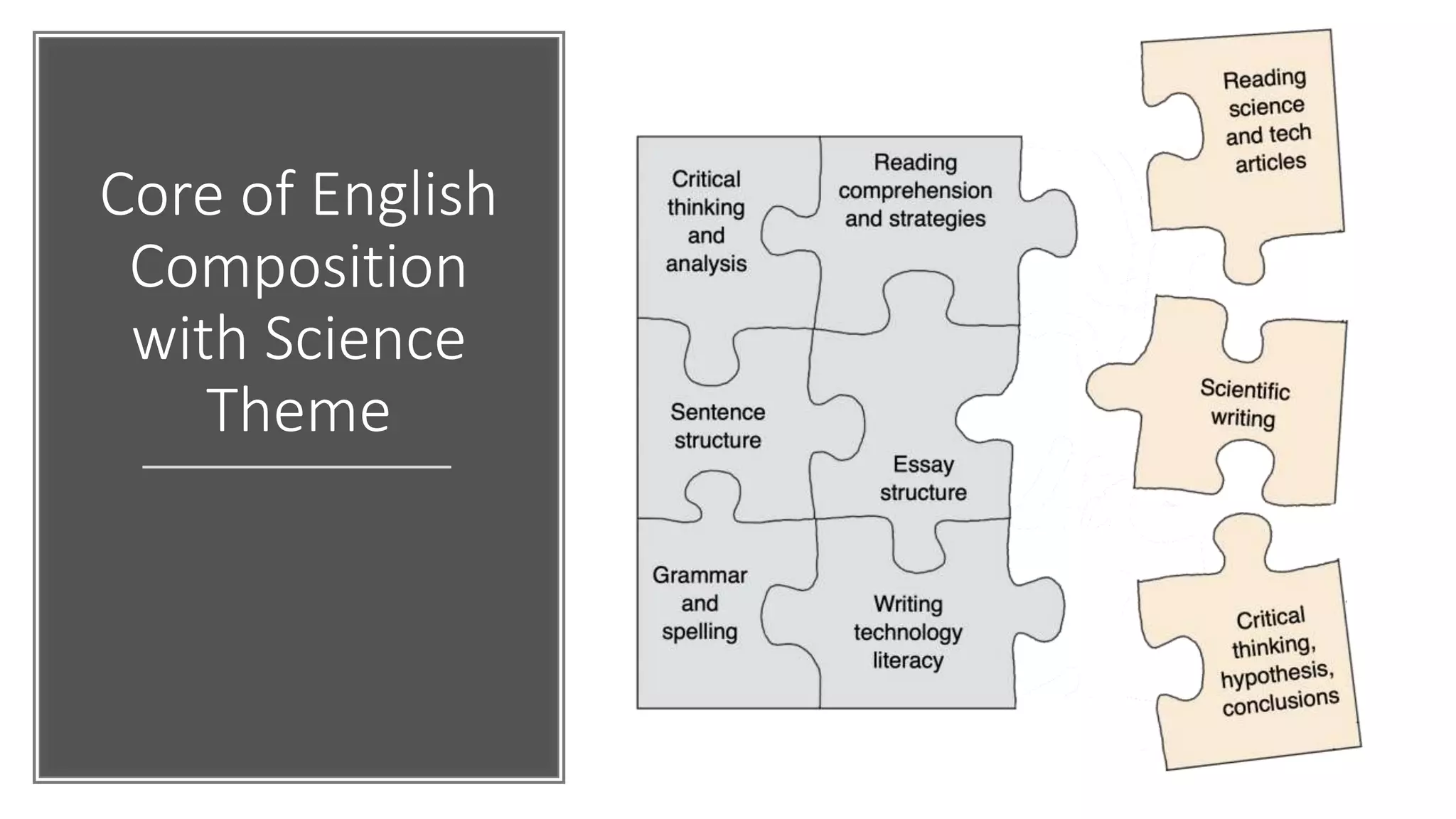
Core of English
Composition
with Science
Theme
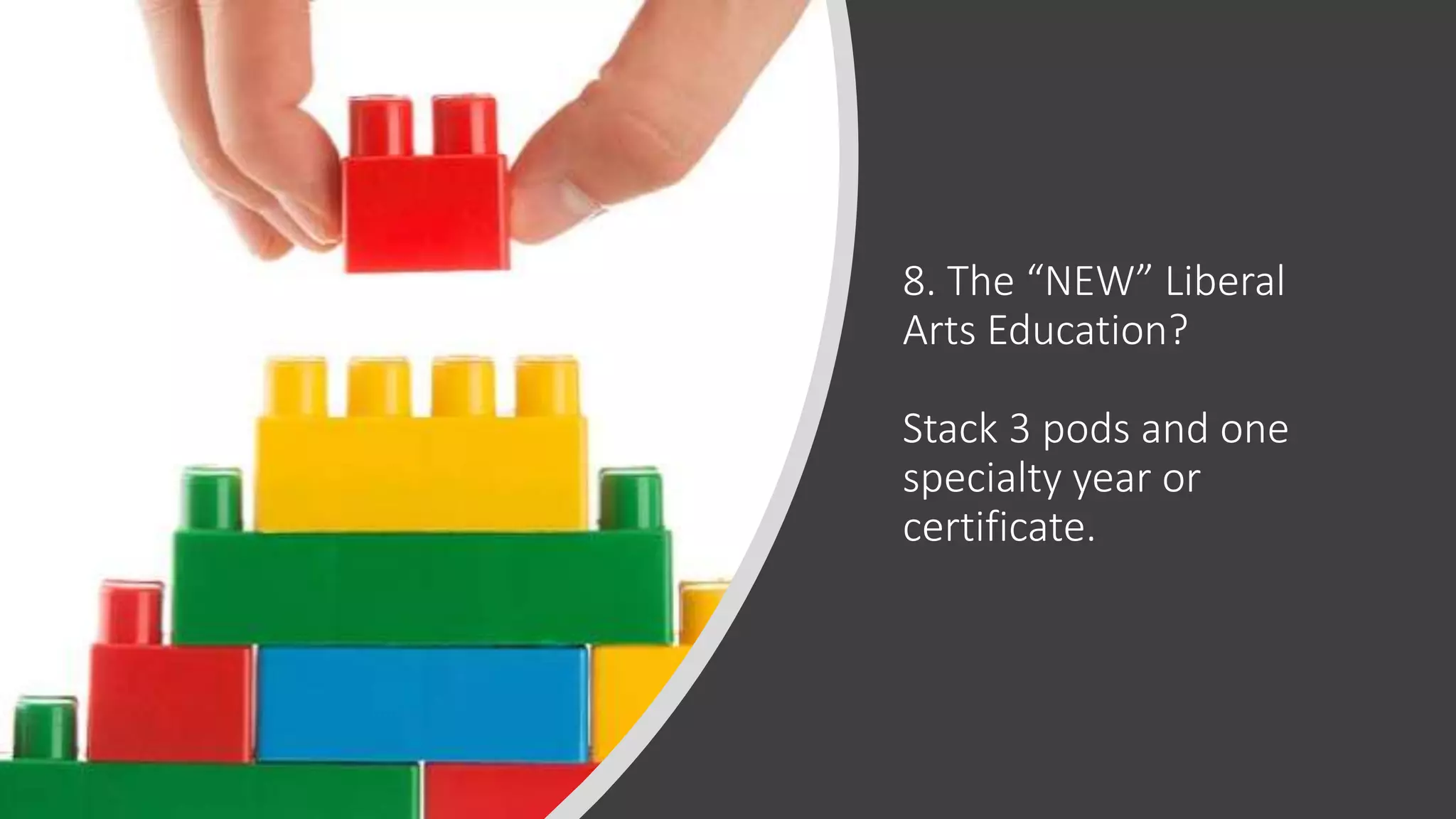
8. The “NEW” Liberal
Arts Education?
Stack 3 pods and one
specialty year or
certificate.
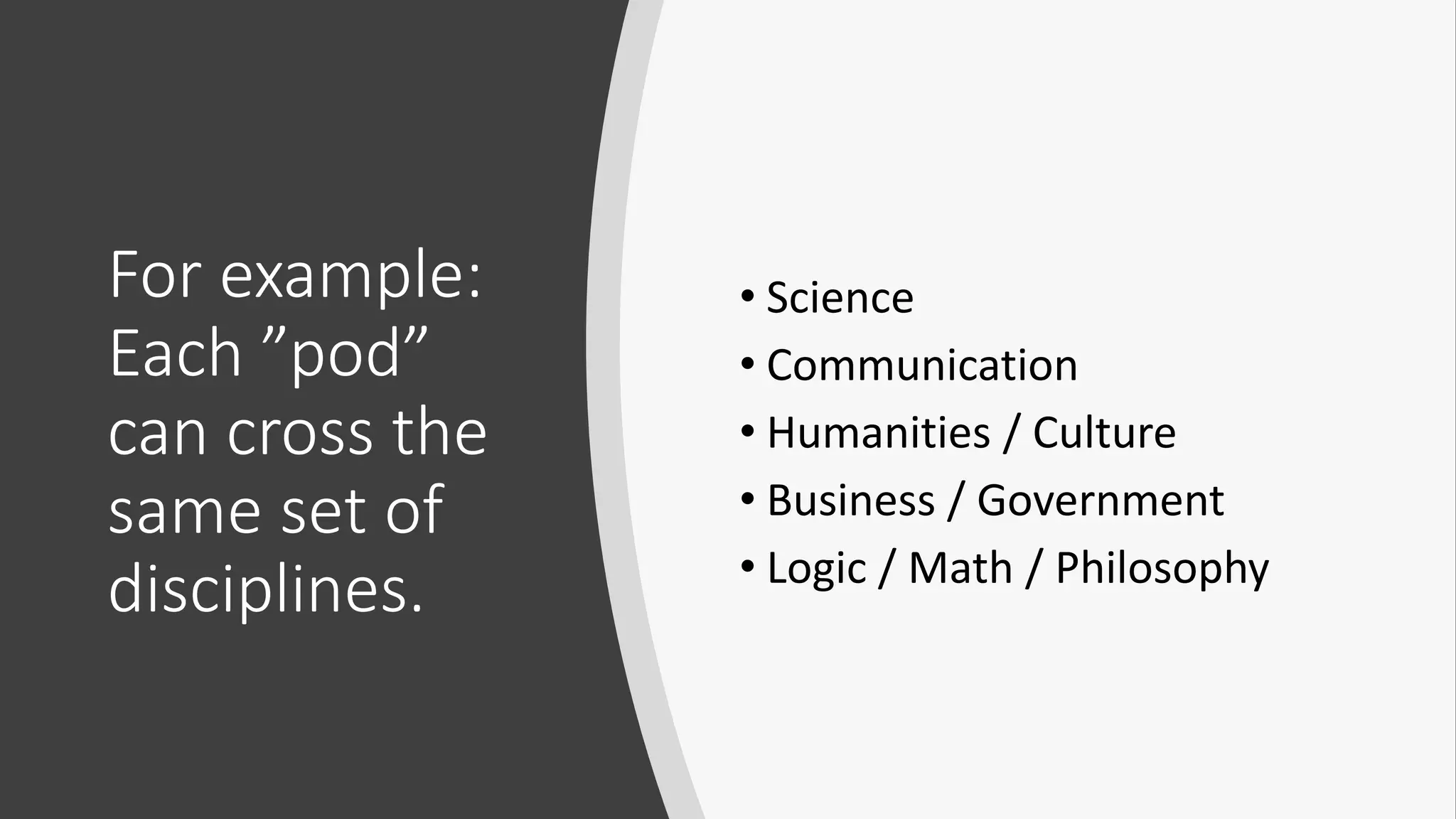
For example:
Each ”pod”
can cross the
same set of
disciplines.
• Science
• Communication
• Humanities / Culture
• Business / Government
• Logic / Math / Philosophy
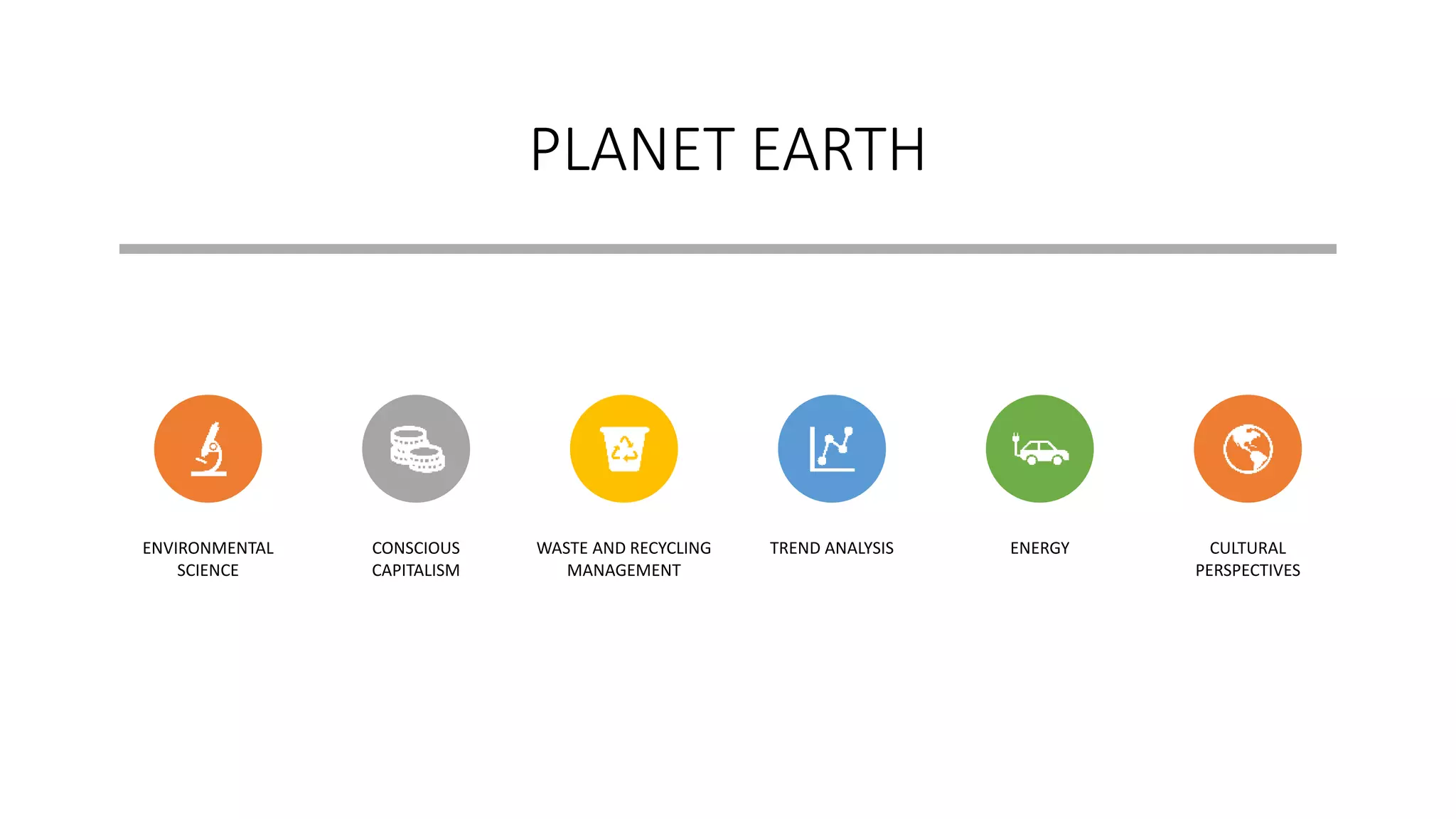
PLANET EARTH
ENVIRONMENTAL
SCIENCE
CONSCIOUS
CAPITALISM
WASTE AND RECYCLING
MANAGEMENT
TREND ANALYSIS ENERGY CULTURAL
PERSPECTIVES
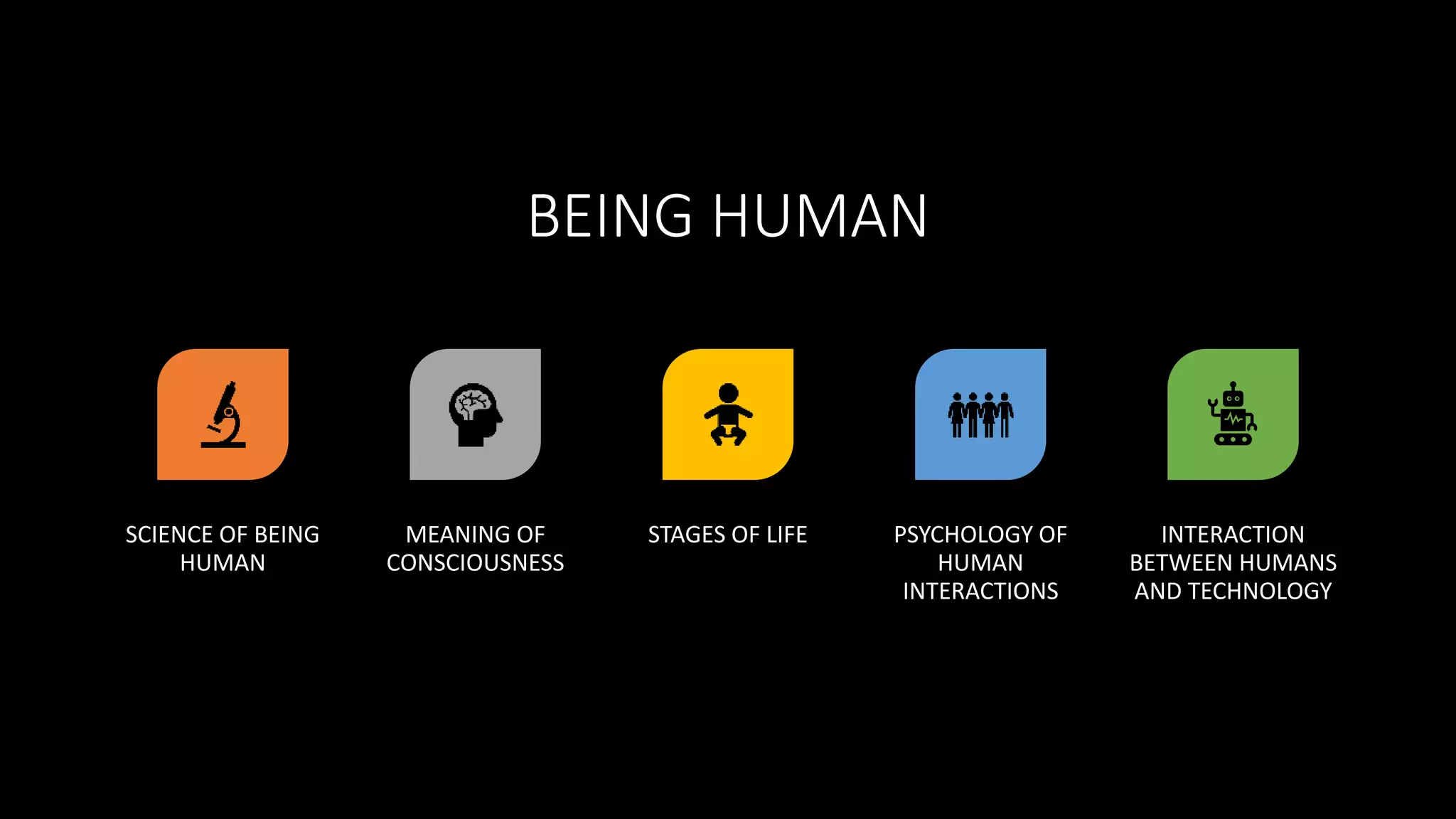
BEING HUMAN
SCIENCE OF BEING
HUMAN
MEANING OF
CONSCIOUSNESS
STAGES OF LIFE PSYCHOLOGY OF
HUMAN
INTERACTIONS
INTERACTION
BETWEEN HUMANS
AND TECHNOLOGY
We simultaneously live
in awe of technology and
in fear of it.
"In 50 years there will be
only 10 institutions in
the world delivering
higher education"
- Sebastian Thrun, founder Udacity, 2012
"We think of it like a robot
tutor in the sky that can
semi-read your mind and
figure out what your
strengths and weaknesses
are, down to the percentile"
- Jose Ferreira, founder Knewton, 2015
“Anyone that can be
replaced by a computer
should be.”
- Arthur C. Clarke
We need to step up and face this future instead of hiding from it.
Questions?
Maria H. Andersen, Ph.D
maria@coursetune.com
busynessgirl@gmail.com
Twitter: @busynessgirl
Insta, FB, Twitter:
graphsintheworld
busynessgirl.com

Facing the Future of Technology and Learning OLC Nov 2020

  • 1.
    Facing the Future ofTechnology and Learning Maria H. Andersen, Ph.D CEO, Coursetune Core Adjunct Faculty, Westminster College Email: maria@Coursetune.com Twitter: @busynessgirl
  • 2.
    In ONE decade,the world was transformed …
  • 3.
    In ONE decade,the world was transformed …
  • 4.
  • 5.
    U.S. Population 327 million 12%below age of 10 (39 million) 16% above age 65 (52 million)
  • 6.
    Most college-age adults in the U.S.have a Smartphone now. https://www.pewresearch.org/internet/fact-sheet/mobile/
  • 7.
  • 8.
  • 9.
    18-29, 88% 65+, 37% 50-64,64% 30-49, 78% The chicken and the egg... which is driving which?
  • 10.
    In 2020, theeducation and working world transformed a decade.
  • 11.
    We can’t pretendthat attending lecture IN PERSON is the only “real” option.
  • 12.
    Professors can’t pretendthat there’s NO WAY to “make up” a missed lecture.
  • 13.
    We can’t pretendthat there is NO WAY to attend class from home.
  • 14.
    Students can’t pretendthat they have NO WAY to do groupwork if they can’t meet in person.
  • 15.
    Faculty can’t pretendthere’s NO WAY to teach if they are out of town.
  • 16.
    We can’t pretendthat the ONLY options are Online, F2F, and Hybrid.
  • 17.
    In education, everyonenow understands how exhausting it is to teach online.
  • 18.
    In the world,ONLINE learning has taken a huge reputation hit.
  • 19.
    The state of technologyis rapidly changing.
  • 21.
    How has “getting information”changed in the last three decades?
  • 22.
    When I wasan undergraduate...
  • 23.
    When I wasa PhD student ...
  • 24.
  • 25.
    “Every two daysnow we create as much information as we did from the dawn of civilization up until 2003.” - Eric Schmidt, quoted in 2003 (CEO of Google)
  • 26.
  • 27.
    And where isthat information coming from?
  • 28.
    1 billion in 1804 7billion in 2016 World Population today? 7.8 billion
  • 31.
    1% growth 2-3%growth 8-9% growth
  • 34.
    The state of technologyis rapidly changing. AND The amount of data is rapidly increasing.
  • 35.
    Why does the riseof raw information matter? It is this rapid rise in information that is bringing AI to fruition.
  • 36.
    Two kinds ofAI Artificial Narrow Intelligence (ANI) Artificial General Intelligence (AGI)
  • 37.
    Projected Job Disruptionsdue to AI Studies at Oxford: 47% of American jobs are at high risk of automation, up to 20 million manufacturing jobs worldwide will be lost to robots by 2030 McKinsey Global Institute: Between 40 million and 160 million women worldwide may need to transition between occupations by 2030 WEF: automation will displace 75 million jobs but generate 133 million new ones worldwide by 2022 (prediction in 2018) Forrester predicts job losses of 29% by 2030 with only 13% job creation to compensate Source: https://www.forbes.com/sites/gilpress/2019/07/15/is-ai-going-to-be-a-jobs-killer-new-reports-about-the-future-of-work/
  • 38.
    Forrester: 73% ofall cubicle-related jobs lost by 2030
  • 39.
    “100% Automatable Jobs” AircraftCargo Handling Supervisors Dredge Operators Foundry Mold and Coremakers Graders and Sorters, Agricultural Products Logging Equipment Operators Machine Feeders and Offbearers Medical Appliance Technicians Motion Picture Projectionists Ophthalmic Laboratory Technicians Packaging and Filling Machine Operators and Tenders Plasterers and Stucco Masons Slaughterers and Meat Packers Source: https://features.marketplace.org/robotproof/
  • 40.
    “The vast majorityof jobs consist of some portion of tasks that can be automated and some portion of tasks that can’t.”
  • 41.
    We will allbe retraining … all the time.
  • 42.
  • 43.
    Drivers of Change ClimateChange (WEF) Middle Class in Emerging Markets (WEF) Rapid Urbanization (WEF) Extreme Longevity, Aging Society (IFF, WEF) Computational World (IFF) Superstructured Organizations (IFF) Globally Connected World (IFF) New Media Ecology (IFF) Rise of Smart Machines and Systems (IFF) Mobile Internet and Cloud Technology (WEF) Processing Power, Big Data (WEF) New energy supplies and technology (WEF) Internet of Things (WEF) Sharing Economy, Crowdsourcing (WEF) Robotics, autonomous transport (WEF) Artificial intelligence (WEF) Advanced Manufacturing, 3D printing (WEF) Adv materials, biotechnology (WEF)
  • 44.
    Drivers of Change ClimateChange (WEF) Middle Class in Emerging Markets (WEF) Rapid Urbanization (WEF) Extreme Longevity, Aging Society (IFF, WEF) Computational World (IFF) Superstructured Organizations (IFF) Globally Connected World (IFF) New Media Ecology (IFF) Rise of Smart Machines and Systems (IFF) Mobile Internet and Cloud Technology (WEF) Processing Power, Big Data (WEF) New energy supplies and technology (WEF) Internet of Things (WEF) Sharing Economy, Crowdsourcing (WEF) Robotics, autonomous transport (WEF) Artificial intelligence (WEF) Advanced Manufacturing, 3D printing (WEF) Adv materials, biotechnology (WEF) GLOBAL PANDEMIC!!!!
  • 45.
    What have youhad to learn since leaving school?
  • 46.
    Things I’ve learnedin the last three years Customer Relationship Management Software Project Management and PM Software Accounting Management Software SaaS accounting Virtual Meeting and Webinar software Software ticket management software Social media management software UI/UX design and management software Contractor management software Customer Service management software How to write a term sheet How to make a pitch deck Software to manage the cap tables for our stock Work with a lawyer to write a patent Determine sales tax nexus in any state we do business in Determine the best cloud server platform for us Figure out GDPR and how it applies to us Documentation management software and processes
  • 47.
    The state oftechnology is rapidly changing. The amount of data is rapidly increasing. AND Careers are rapidly changing.
  • 48.
  • 49.
    1. People shouldbe able to attend college for one year and be able to upgrade their job.
  • 52.
    Ask Students: Whatskills will help you move up in your job or move to a different job?
  • 53.
  • 54.
    Search and Application overMemorization You couldn’t memorize all the information in your field even if you wanted to.
  • 55.
  • 56.
    Strictly deals with thelevel of information or skill depth, not the ability to perform higher cognitive level activities. EXISTENCE SUPPORTED INDEPENDENT LIFETIME
  • 58.
    3. Streamline theexisting courses to make space to teach more relevant material at the right depth.
  • 59.
    Curriculum Drift New skills andfields emerge that need to be learned for a discipline.
  • 60.
    Curriculum Bloat New knowledge, research, anddesires from other schools bloat the curriculum from within.
  • 61.
  • 62.
    Curriculum needs continual tuning If thereis no space to do innovative things, innovative things don’t happen.
  • 63.
    4. Expertise isa moving target. Make the courses themselves more flexible by splitting the credits into fixed and variable.
  • 64.
  • 65.
  • 66.
  • 67.
  • 69.
    8. The “NEW”Liberal Arts Education? Stack 3 pods and one specialty year or certificate.
  • 70.
    For example: Each ”pod” cancross the same set of disciplines. • Science • Communication • Humanities / Culture • Business / Government • Logic / Math / Philosophy
  • 71.
    PLANET EARTH ENVIRONMENTAL SCIENCE CONSCIOUS CAPITALISM WASTE ANDRECYCLING MANAGEMENT TREND ANALYSIS ENERGY CULTURAL PERSPECTIVES
  • 72.
    BEING HUMAN SCIENCE OFBEING HUMAN MEANING OF CONSCIOUSNESS STAGES OF LIFE PSYCHOLOGY OF HUMAN INTERACTIONS INTERACTION BETWEEN HUMANS AND TECHNOLOGY
  • 73.
    We simultaneously live inawe of technology and in fear of it.
  • 74.
    "In 50 yearsthere will be only 10 institutions in the world delivering higher education" - Sebastian Thrun, founder Udacity, 2012
  • 75.
    "We think ofit like a robot tutor in the sky that can semi-read your mind and figure out what your strengths and weaknesses are, down to the percentile" - Jose Ferreira, founder Knewton, 2015
  • 76.
    “Anyone that canbe replaced by a computer should be.” - Arthur C. Clarke
  • 77.
    We need tostep up and face this future instead of hiding from it.
  • 78.
    Questions? Maria H. Andersen,Ph.D maria@coursetune.com busynessgirl@gmail.com Twitter: @busynessgirl Insta, FB, Twitter: graphsintheworld busynessgirl.com

Editor's Notes

  • #3 St Peters Basilica when Pope Benedict XVI was elected, 15 May 2005
  • #4 Pope Francis, 13 March 2013 Did you know that the average American now looks at their phone 80 times a day?
  • #6 327 million, approx. 12% below age of 10 and 16% above age of 65. Maybe 277 million who will use a smartphone.
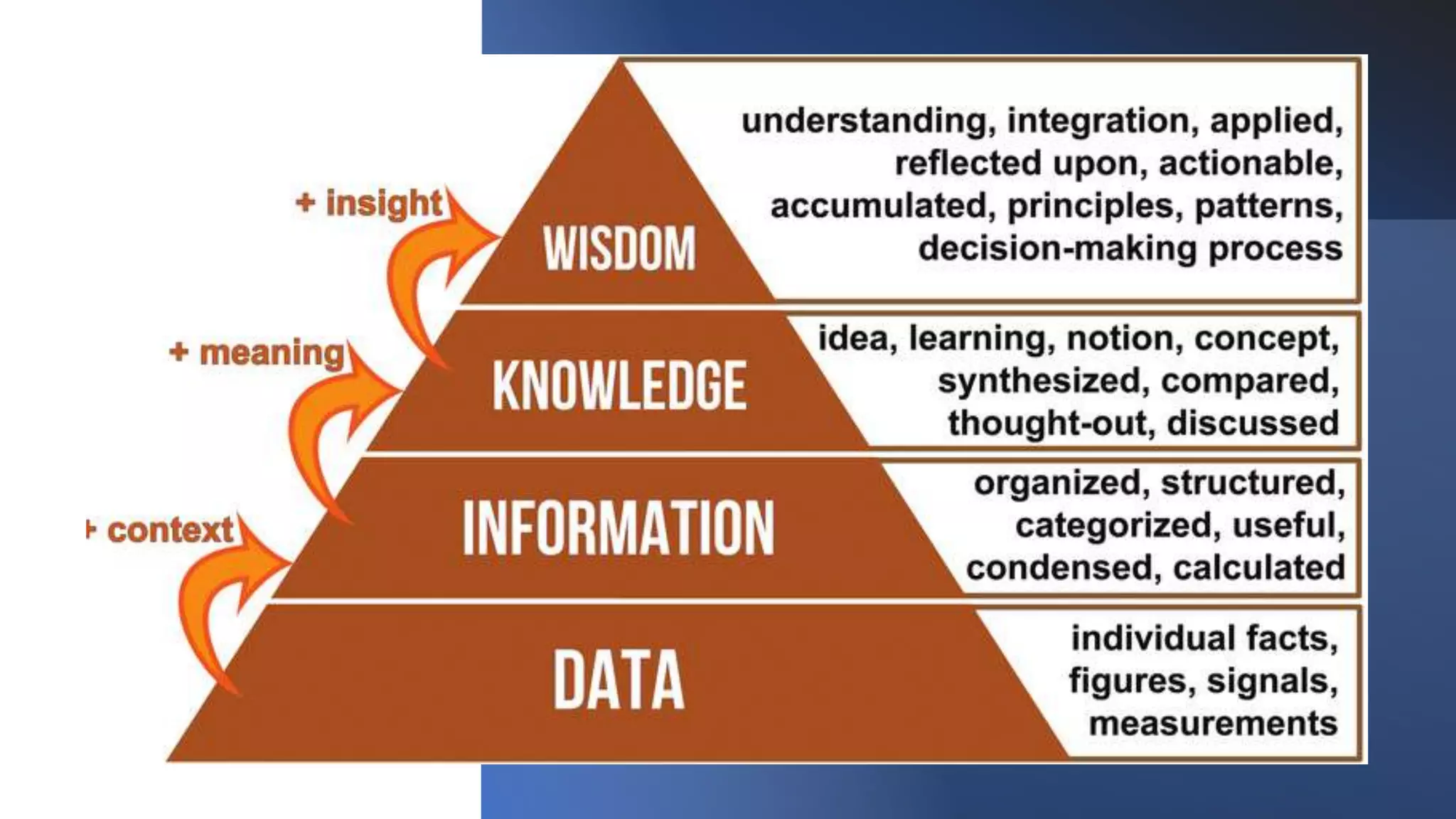
  • #26 Information is now wisdom
  • #29 In 1804, the world population hit 1 billion people. In 2016 it hit 7 billion (212 years later).
  • #32 Era 1: Growth rates in science 1% Era 2: Growth rates in science 2-3% Era 3: Growth rates in science 8-9%
  • #39 Forrester projects that 73% of all cubicle-related jobs—think clerical tasks like data entry—will be automated by 2030, equating to over 20 million jobs eliminated.
  • #43 I thought you might need some cheering up.
  • #44 How much of this is in your curriculum, and I don’t just mean high level curriculum?
  • #45 How much of this is in your curriculum, and I don’t just mean high level curriculum?
  • #52 Maybe we should begin by asking new students where they currently work and what job they think they could move into the quickest? Then plan their schedule.
  • #55 First, we can’t even memorize it all if we tried. Is it even possible to become an expert in a field with the amount of information and research rising so quickly?
  • #75 Travel agents, journalists law clerks, proofreaders, lecturers?
  • #76 Travel agents, journalists law clerks, proofreaders, lecturers?
  • #77 Travel agents, journalists law clerks, proofreaders, lecturers?