Downloaded 28 times


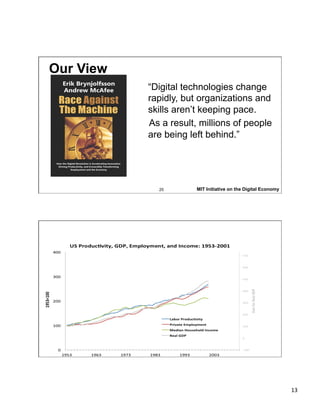




The document discusses the transition to the "Second Machine Age", where computers, software, big data, and machine intelligence are increasingly able to perform tasks that were previously only doable by humans. This represents a shift from the first Industrial Revolution where machines augmented physical human power. The automation of mental work could both complement and substitute for human labor. While digital technologies create economic growth, they also risk widening inequality between high-skilled workers and those with mid- or low-skills, between capital and labor, and between "superstar" companies and others. Addressing these challenges will require reinventing society and the economy to keep up with accelerating technological change.


