What does
teaching math
look like in 2020?
Maria H. Andersen, Ph.D.
Director of Learning & Innovation
Area9 Labs
[a guide for K-12 educators]
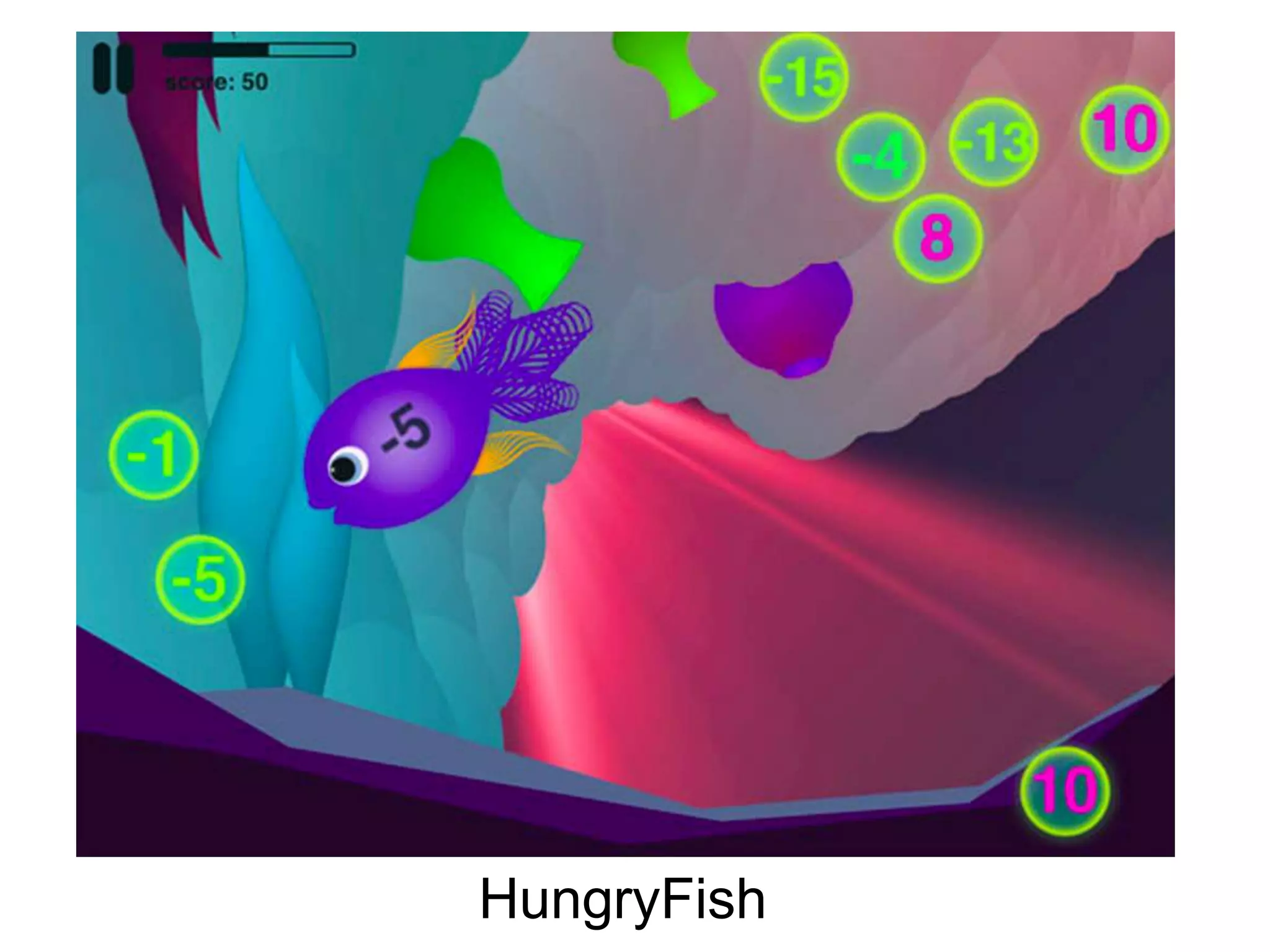
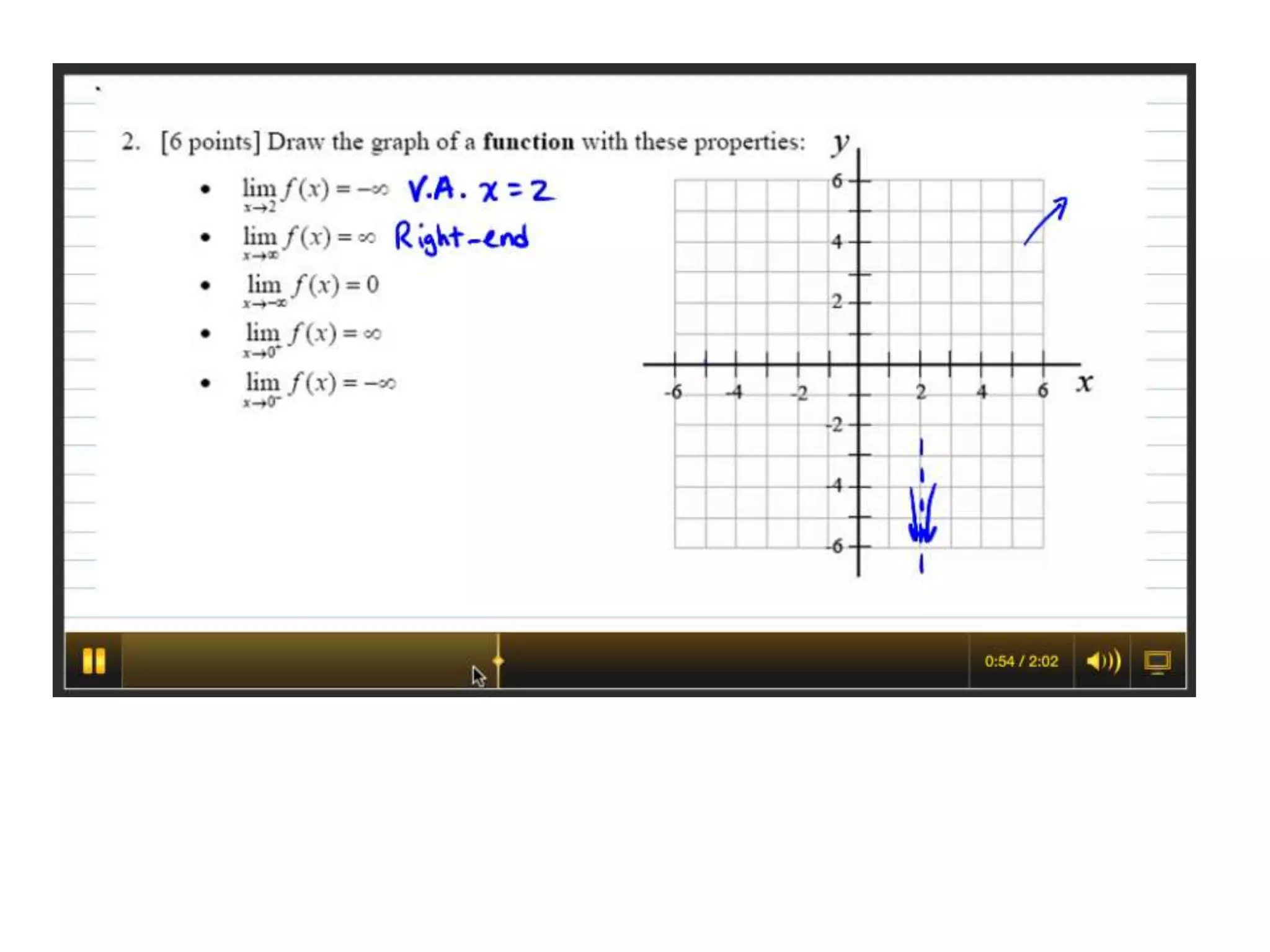
HungryFish
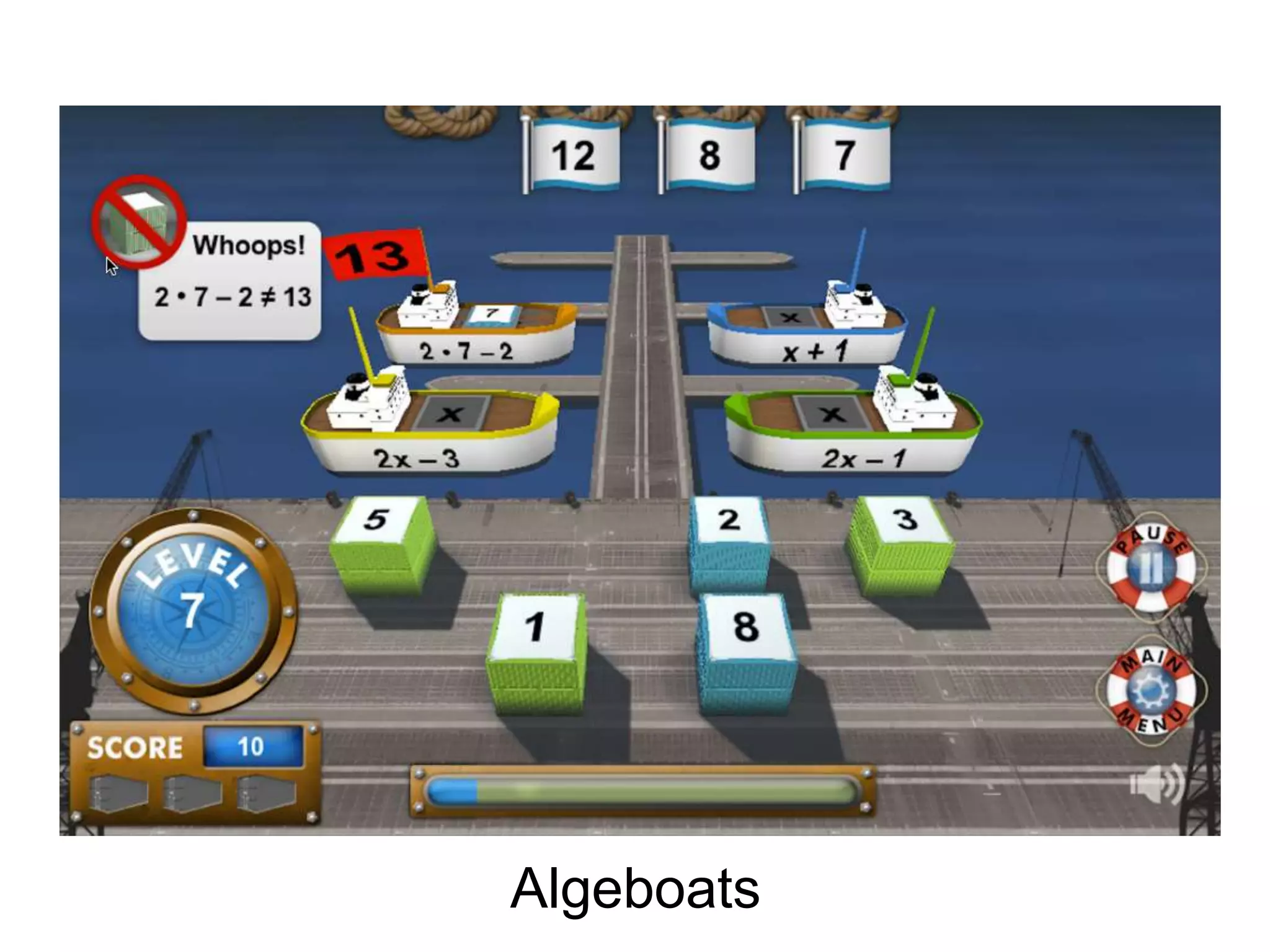
Algeboats
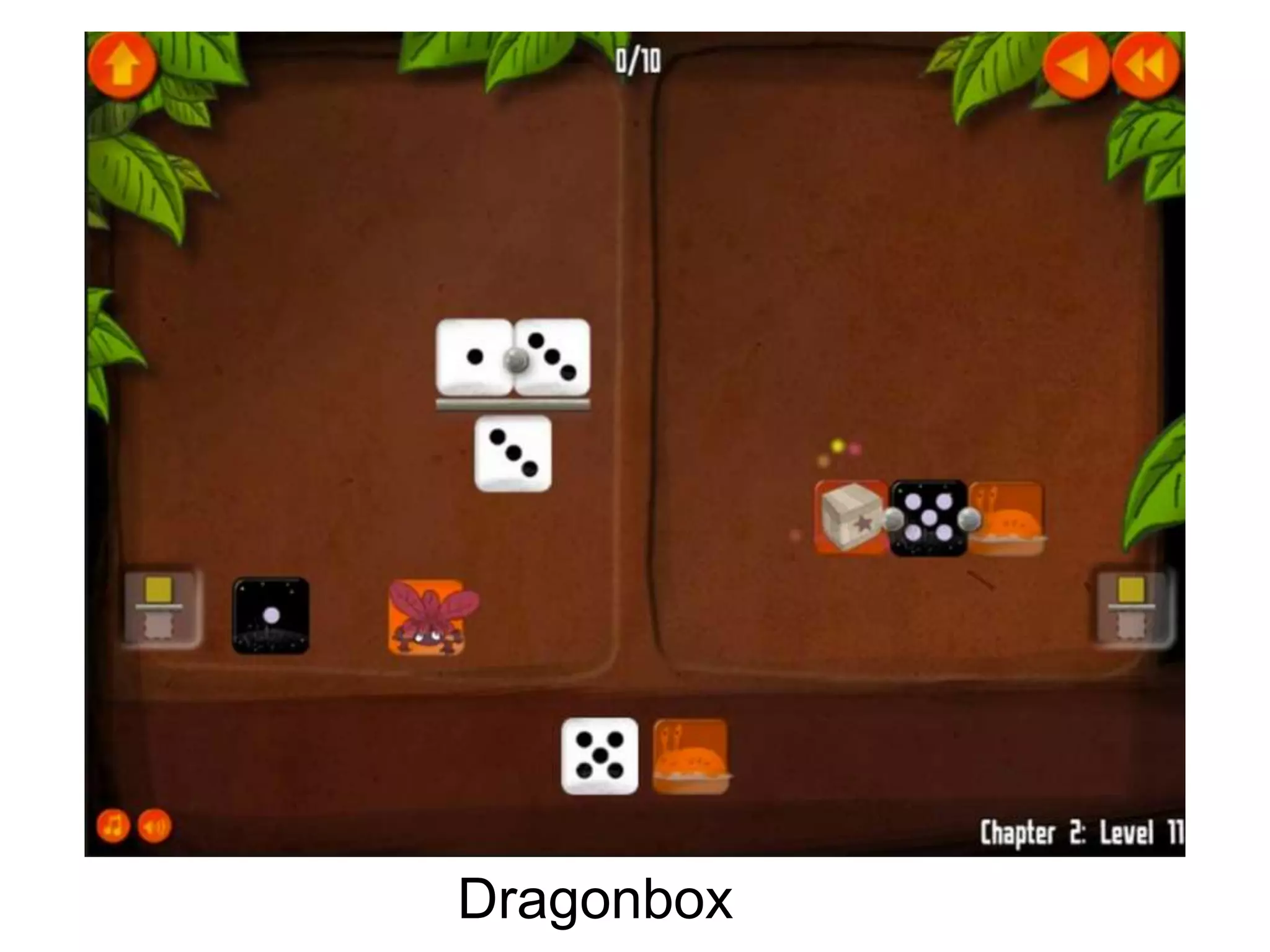
Dragonbox
Before we can understand the
future of math teaching, we
need to experience a bit of a
paradigm shift.
Do you think you
know what reading
looks like?
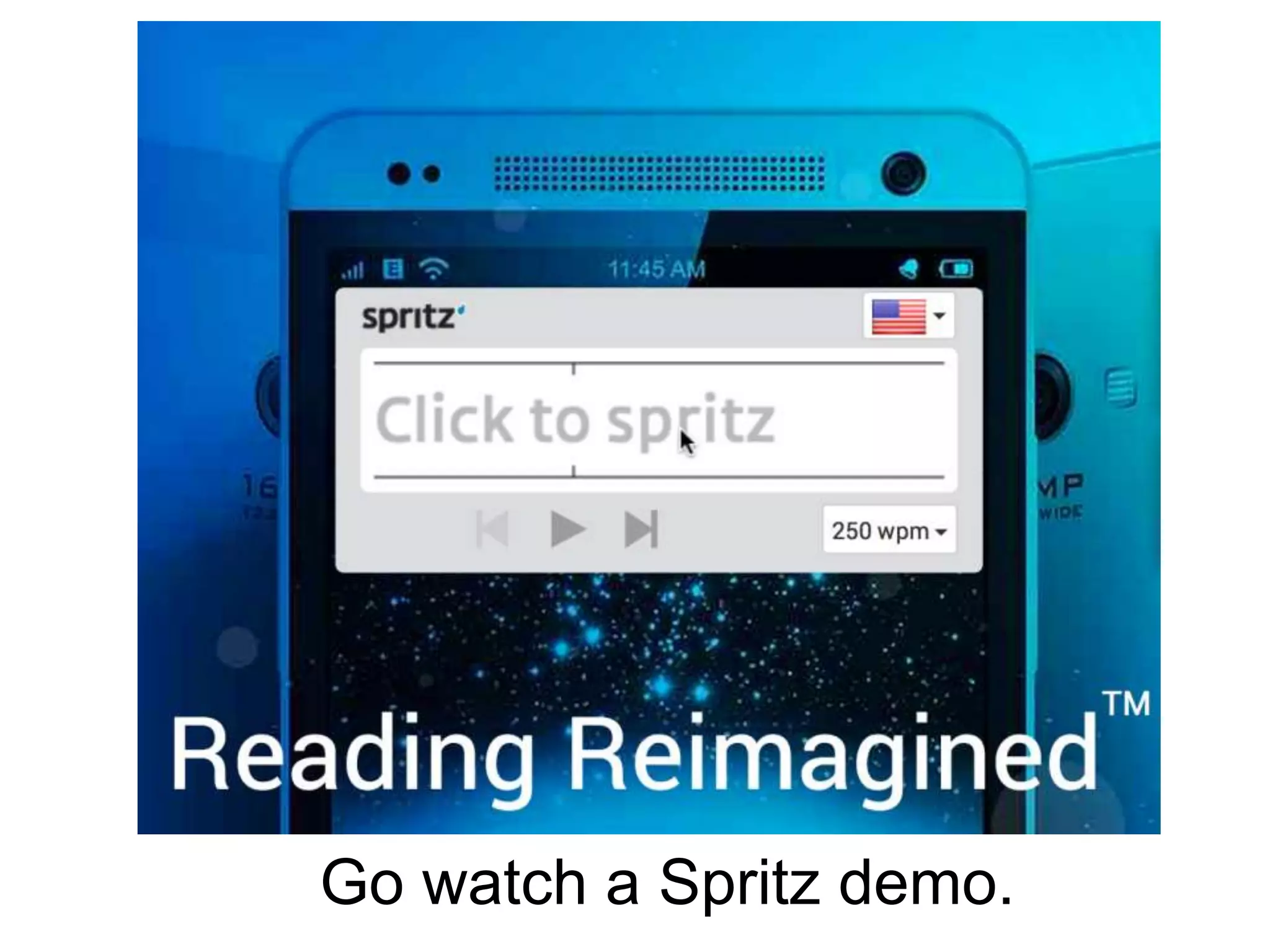
Go watch a Spritz demo.
Just because we’re
used to it, this does not
mean it is “the way.”
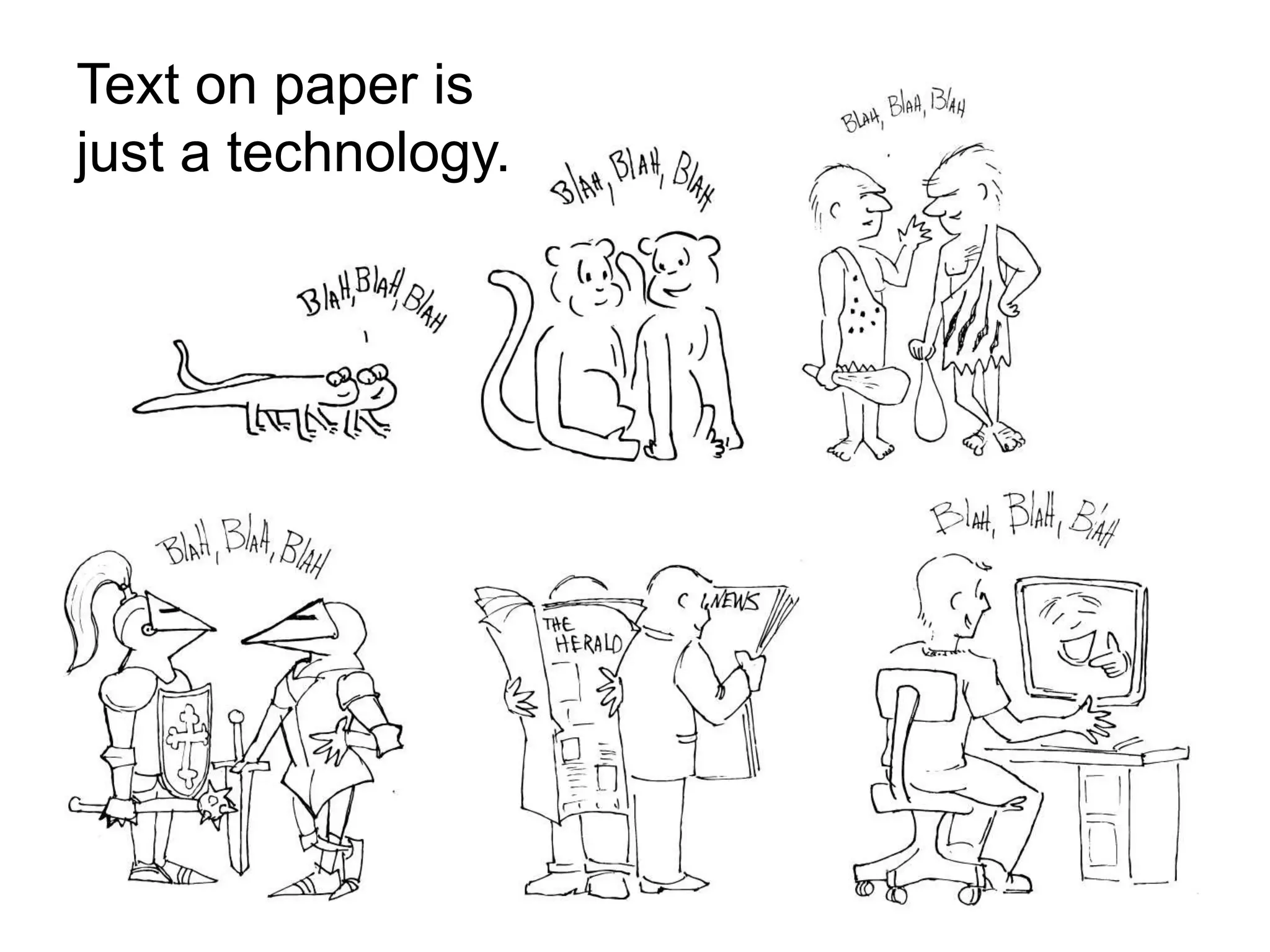
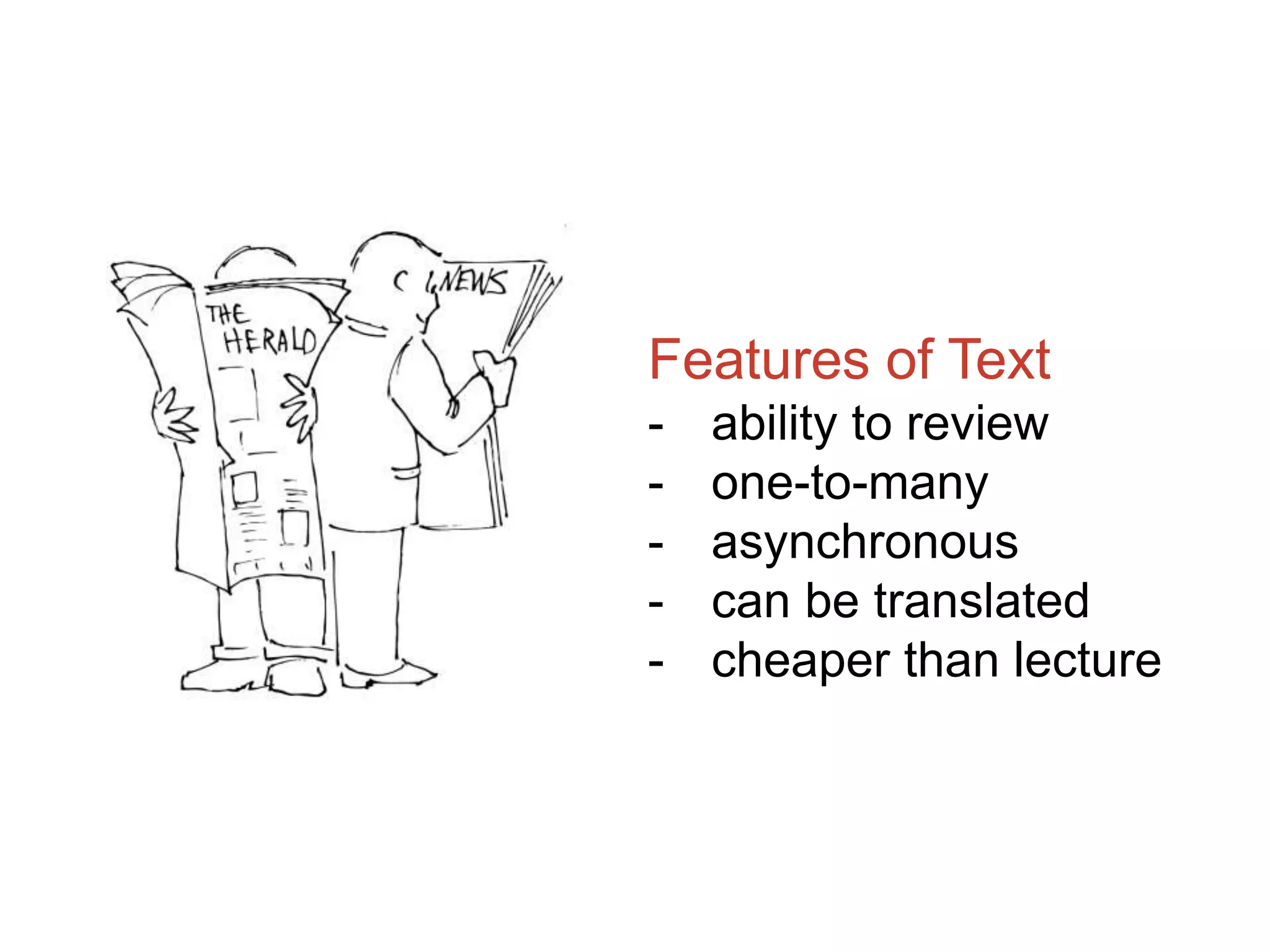
Text on paper is
just a technology.
Features of Text
- ability to review
- one-to-many
- asynchronous
- can be translated
- cheaper than lecture
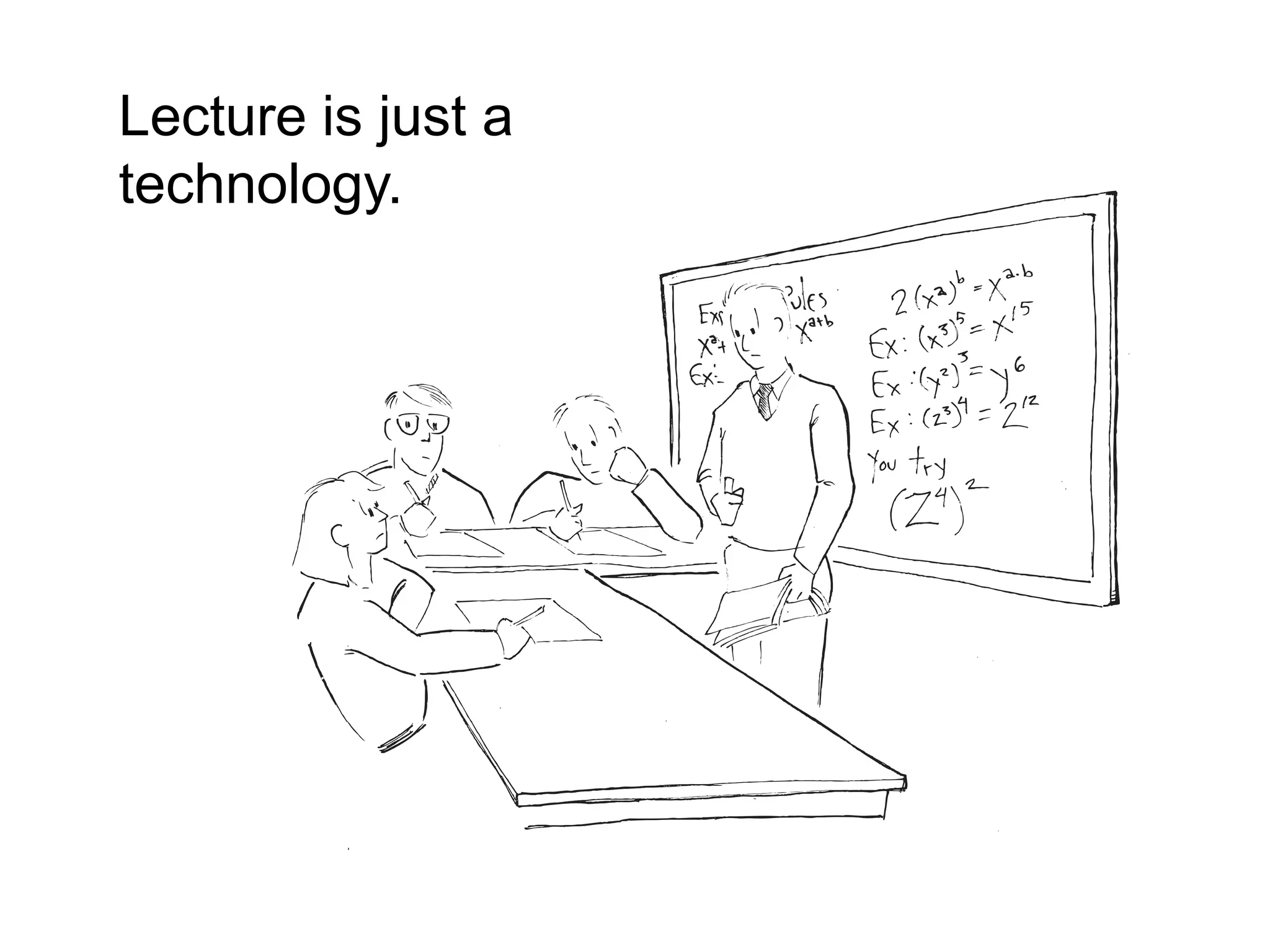
Lecture is just a
technology.
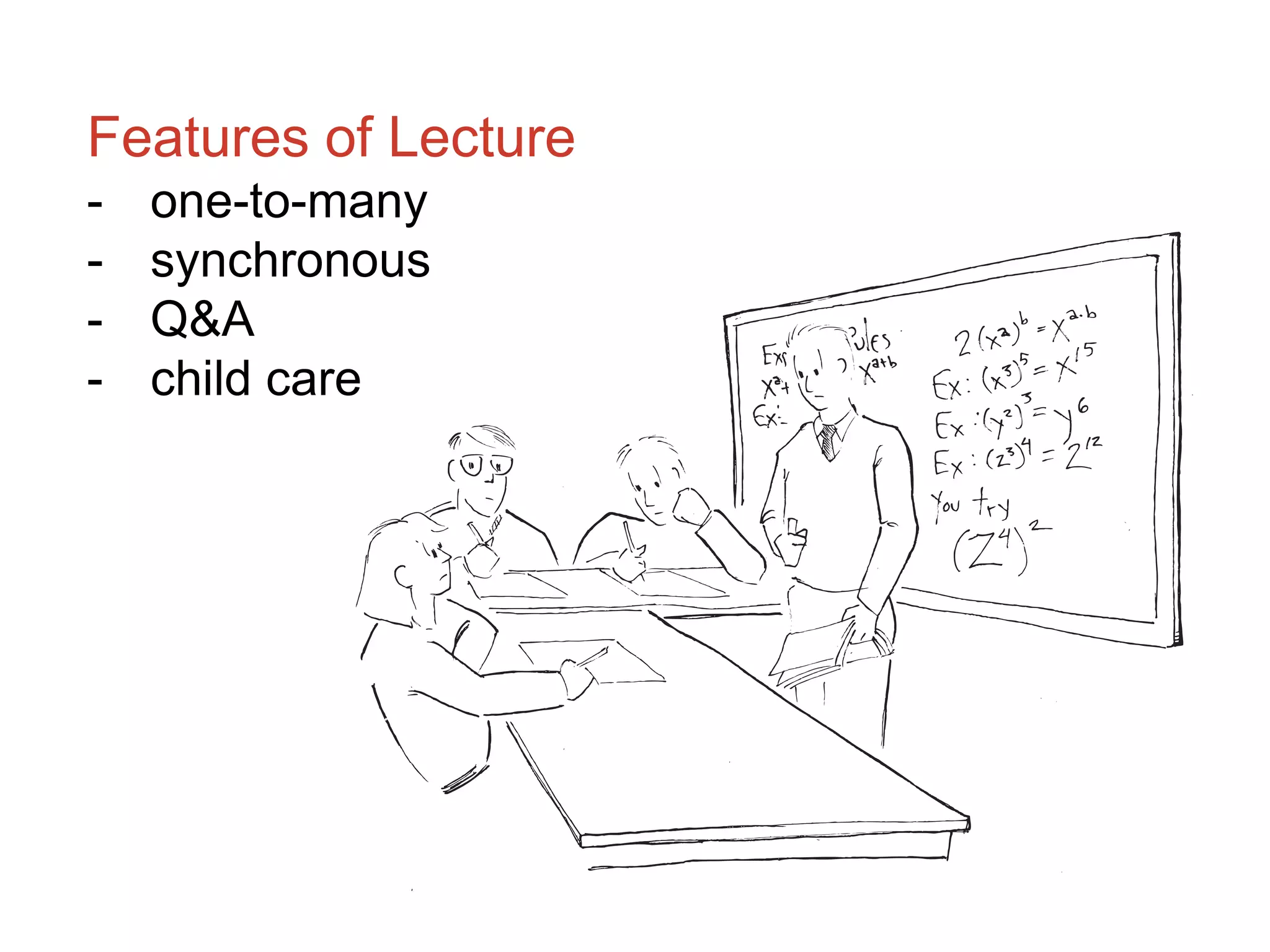
Features of Lecture
- one-to-many
- synchronous
- Q&A
- child care
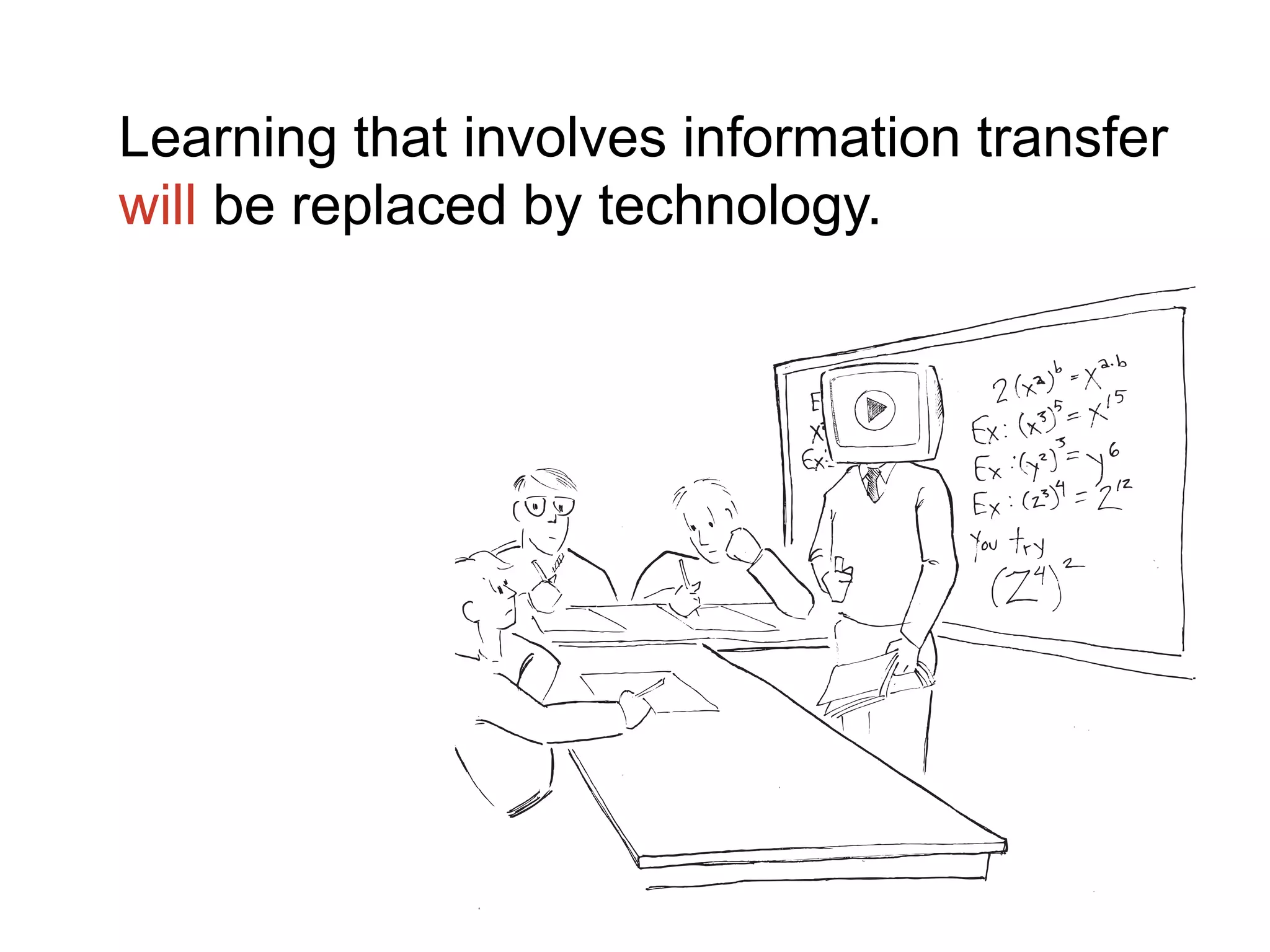
Learning that involves information transfer
will be replaced by technology.
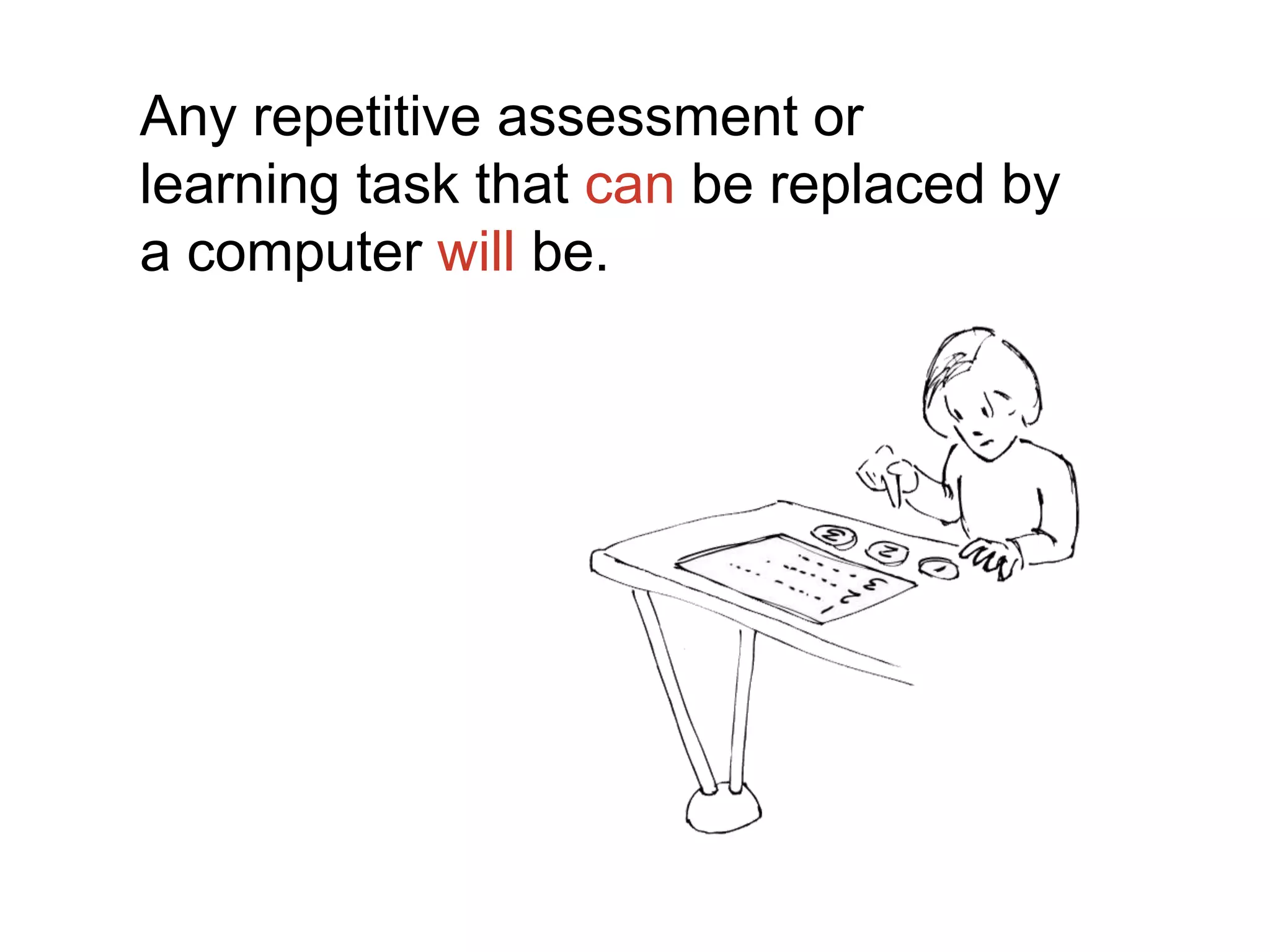
Any repetitive assessment or
learning task that can be replaced by
a computer will be.
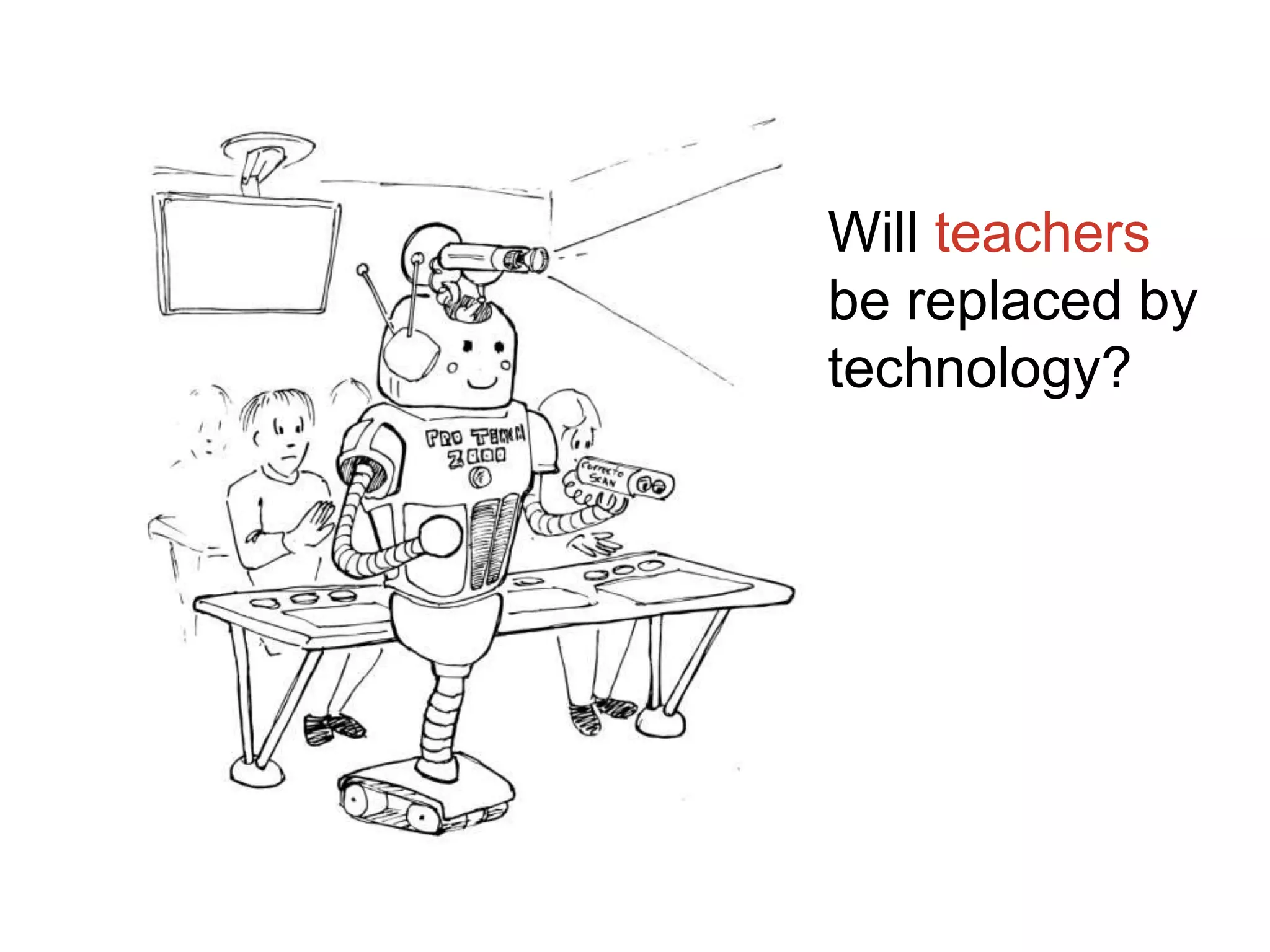
Will teachers
be replaced by
technology?
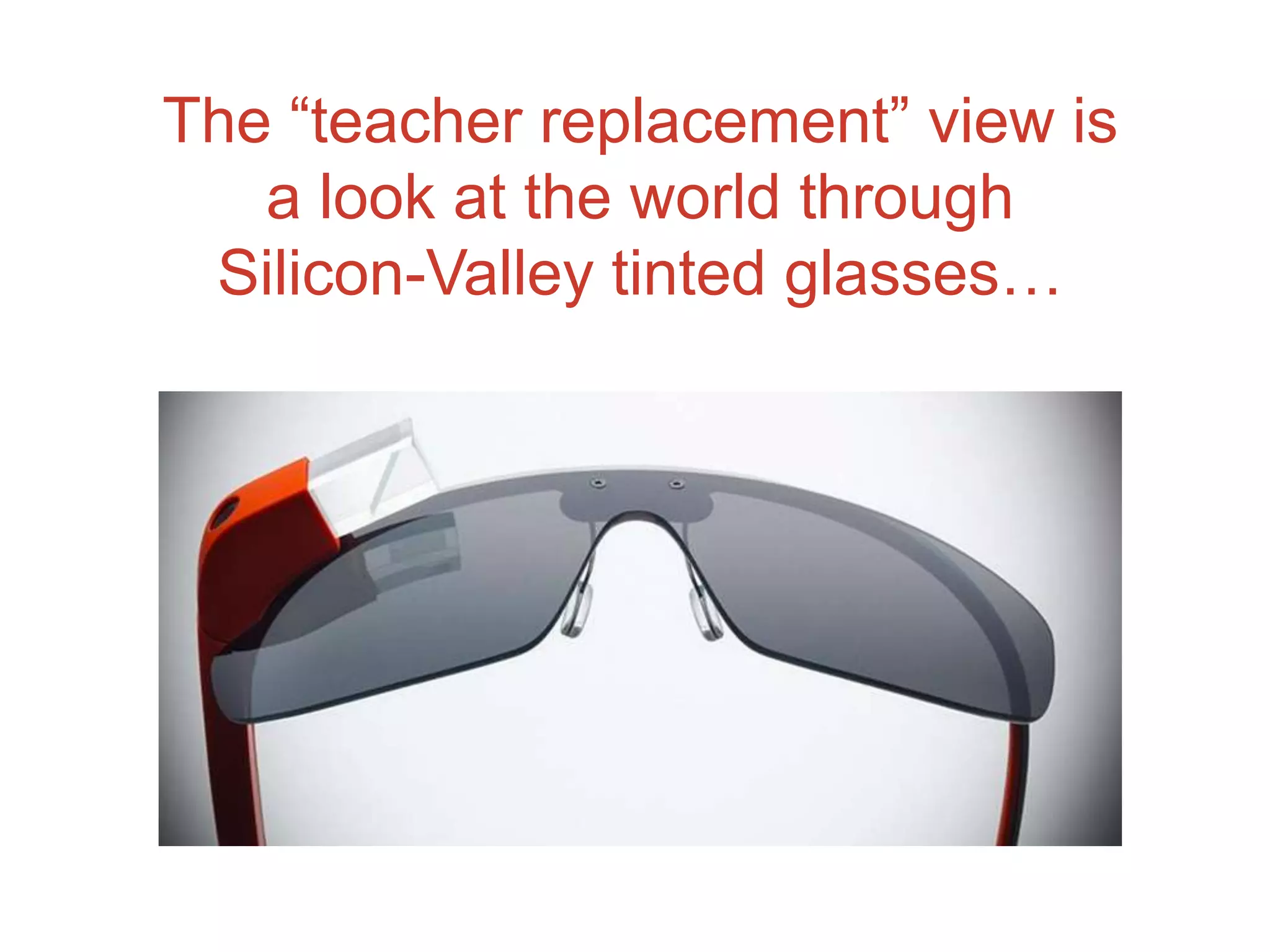
The “teacher replacement” view is
a look at the world through
Silicon-Valley tinted glasses…
Or maybe it’s the
Lake Wobegon of Silicon Valley…
Where all the learners are motivated,
everyone has Internet, and the only
thing standing between a student and
their success is affordable access.
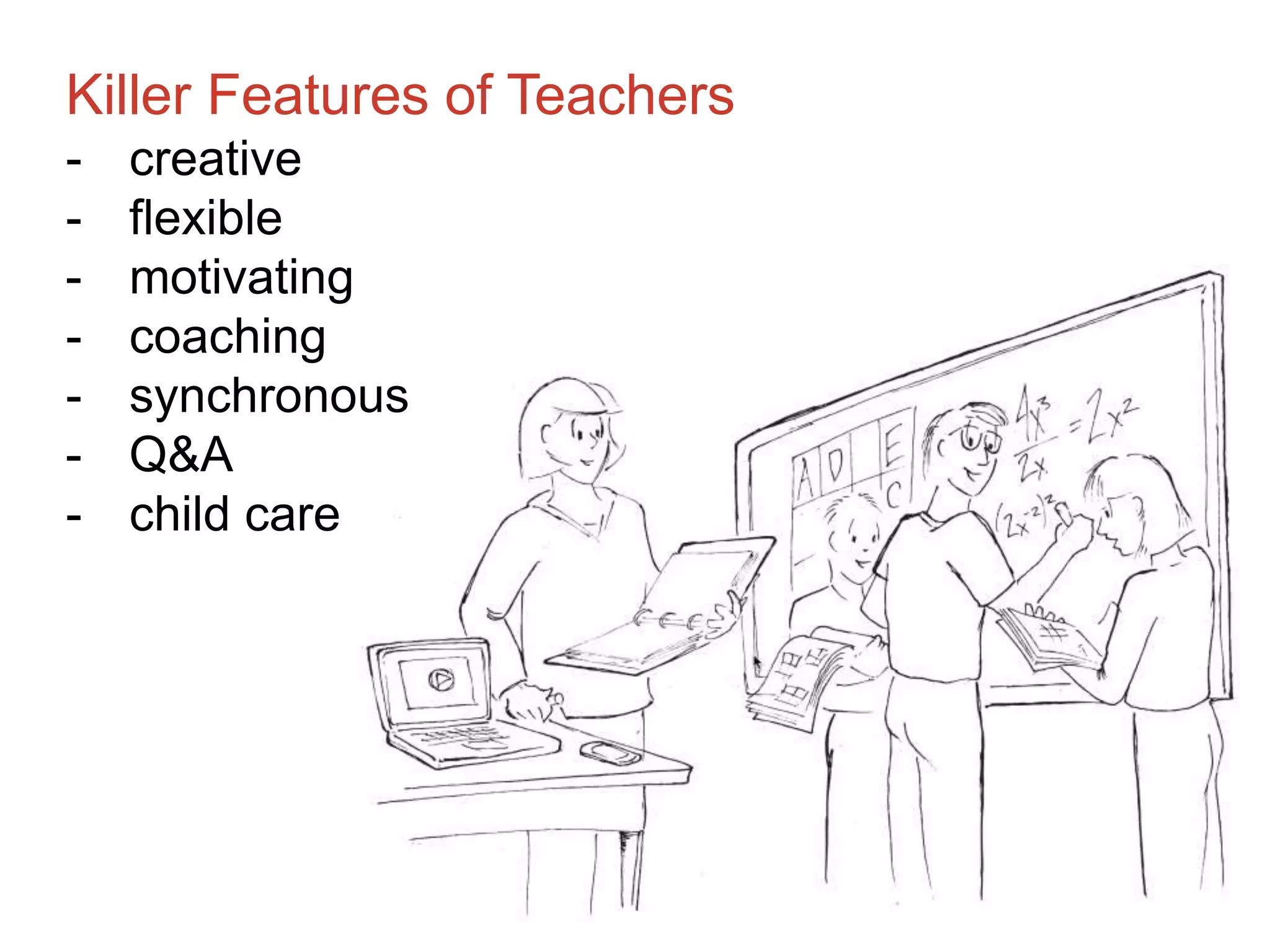
Killer Features of Teachers
- creative
- flexible
- motivating
- coaching
- synchronous
- Q&A
- child care
Many math teachers say that what
they do in the classroom cannot be
mimicked by technology. They say the
classroom is highly interactive and
engaging for all the students.
But what does the research say?
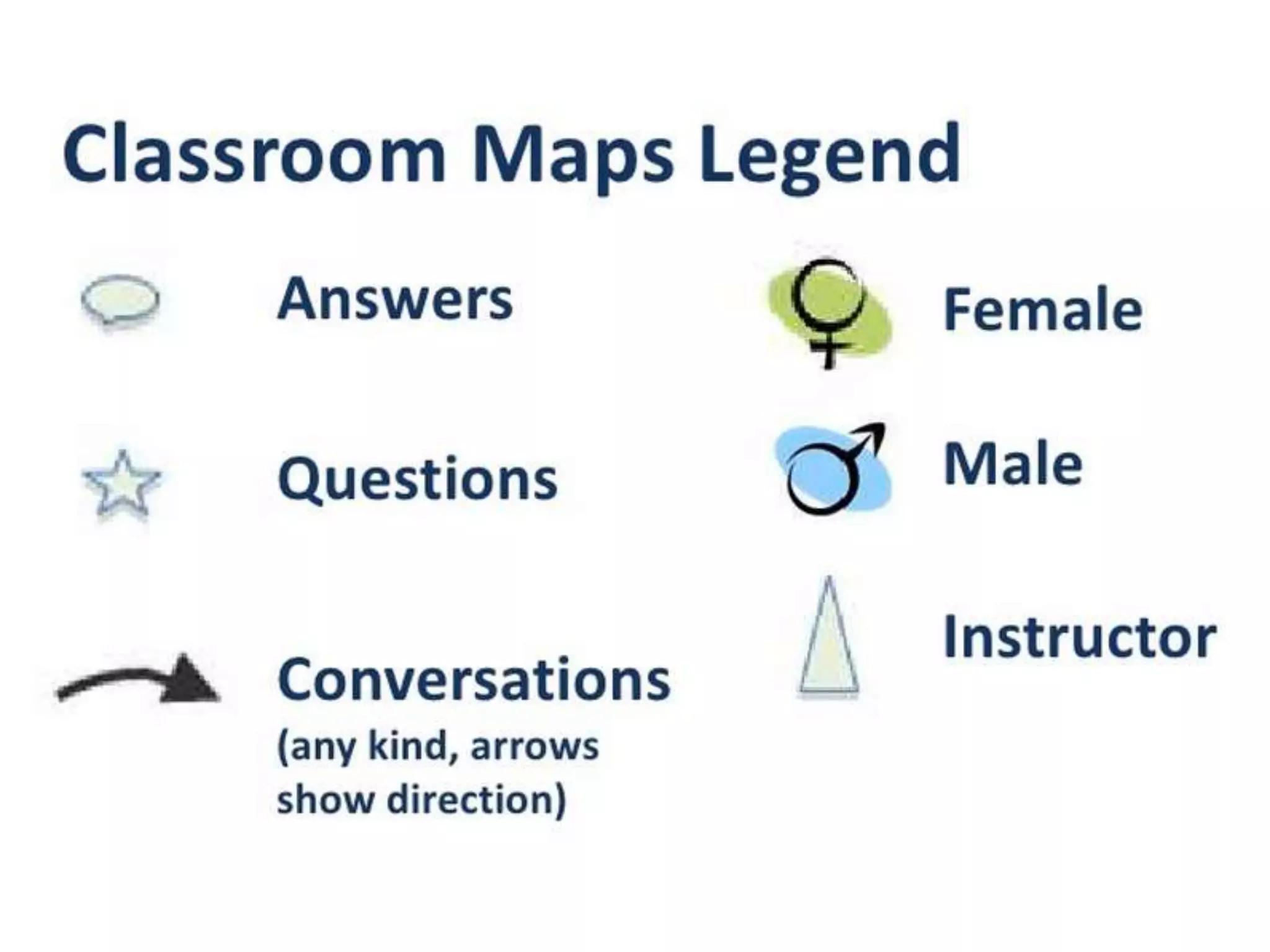
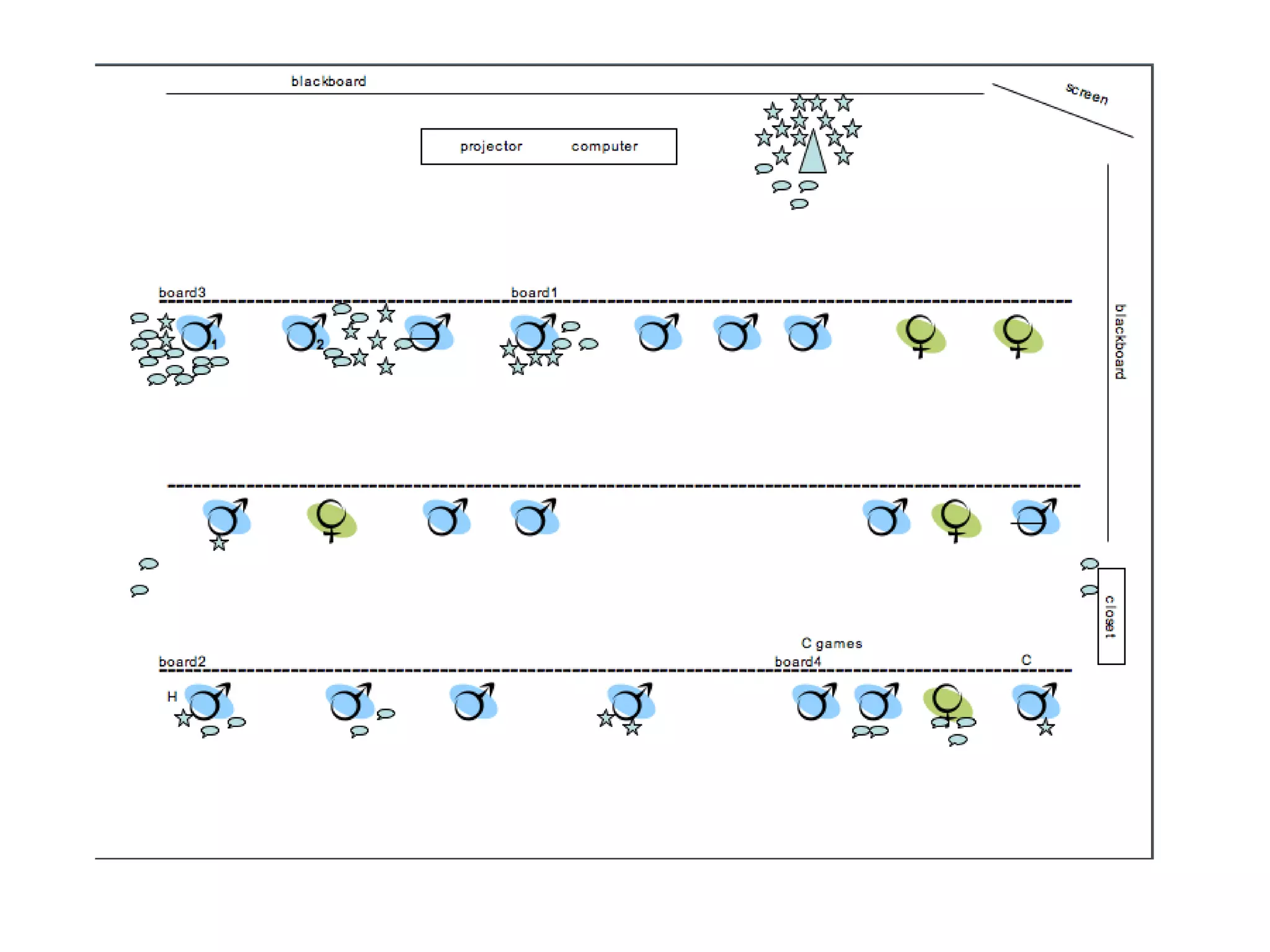
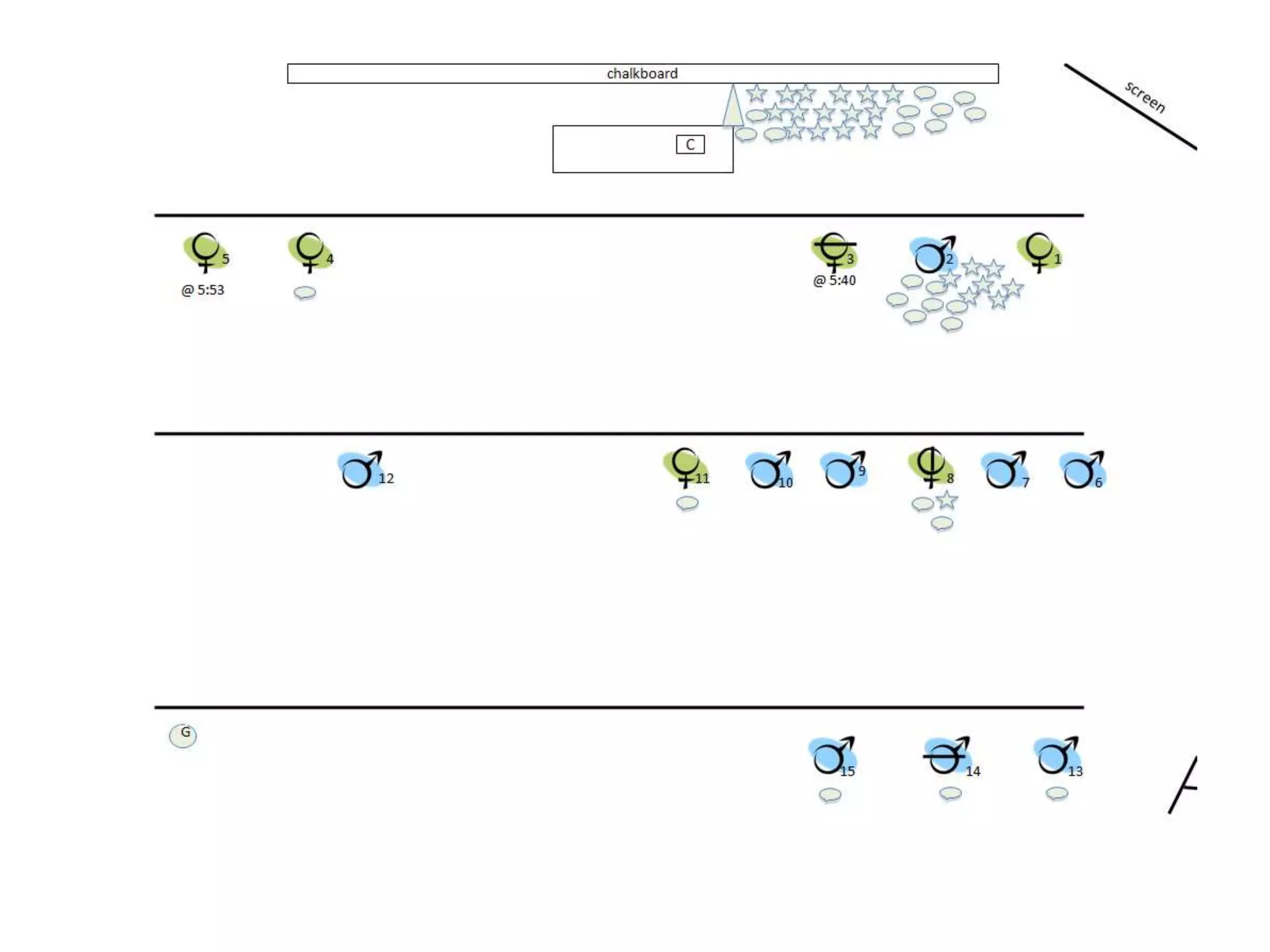
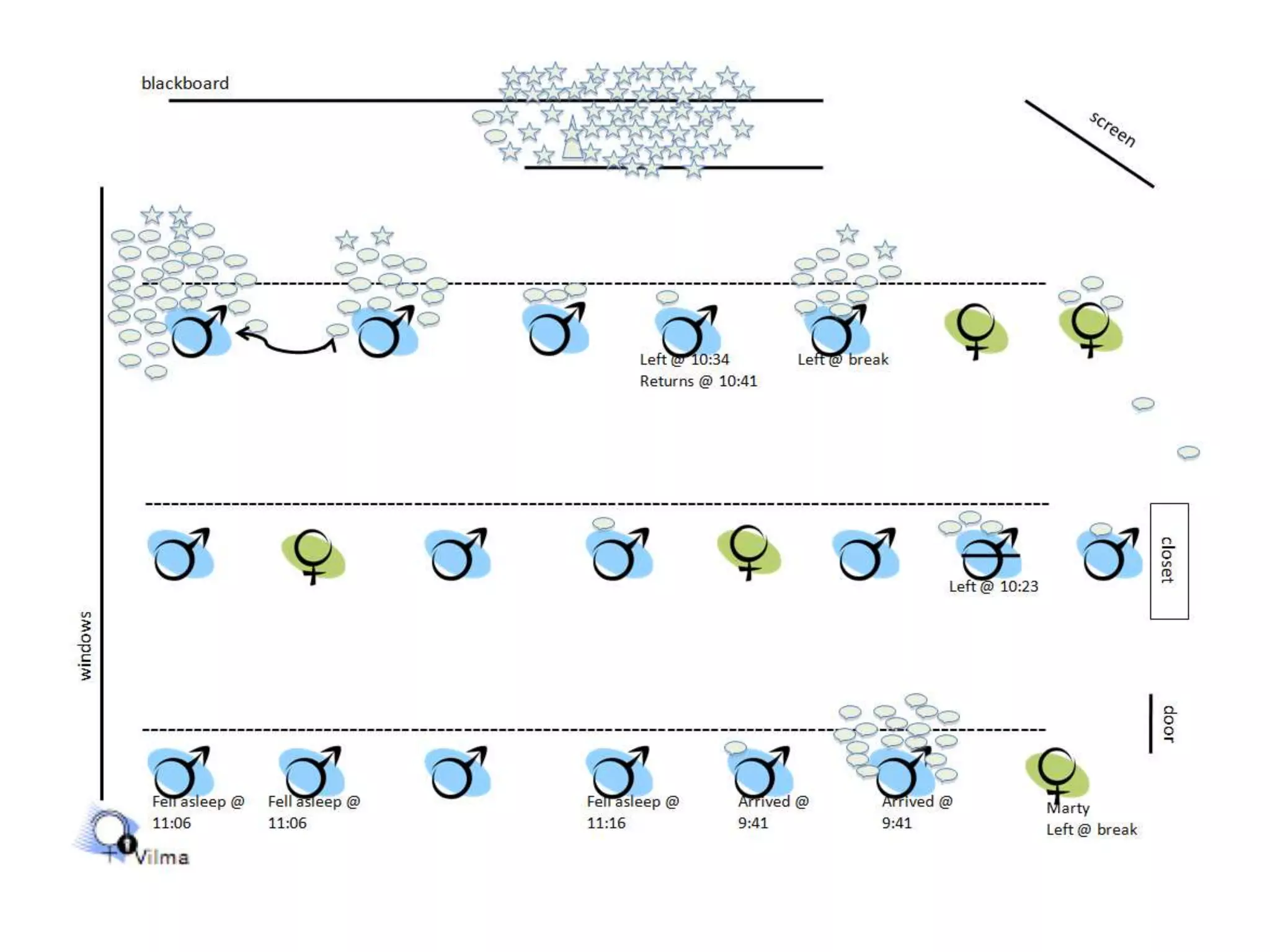
Math classroom mapping research
from Vilma Mesa,
University of Michigan
Warning: These will haunt you.
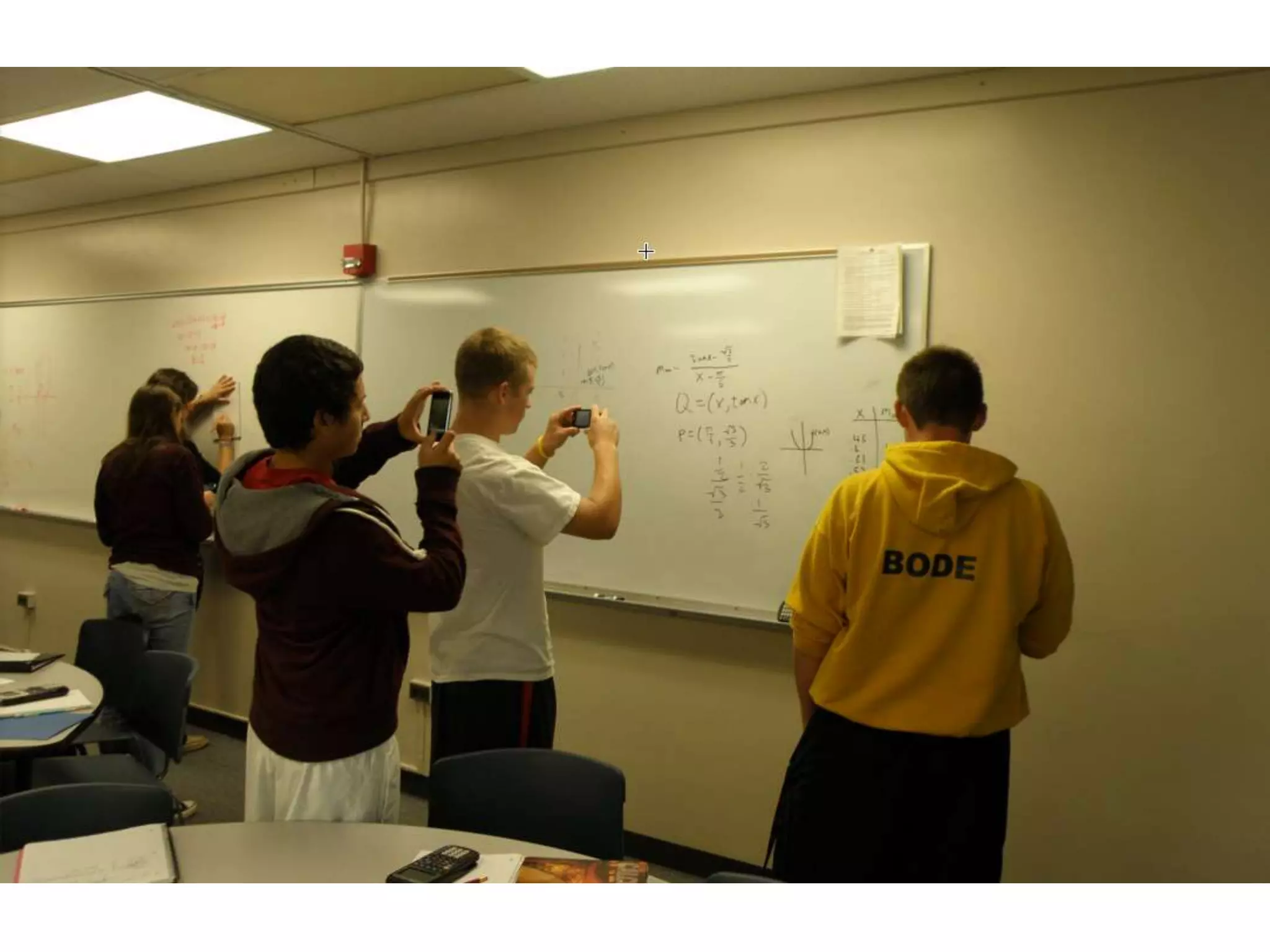
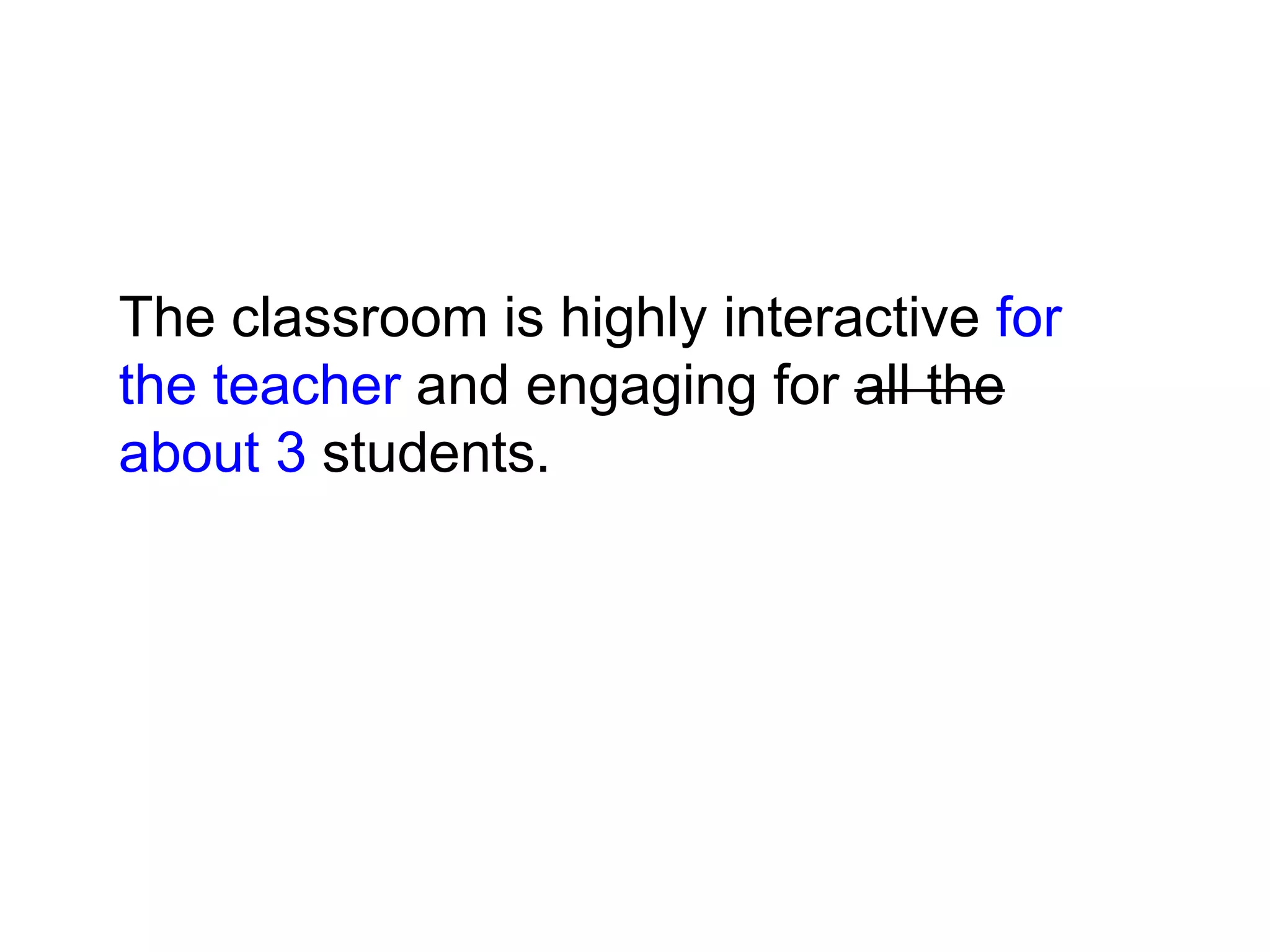
The classroom is highly interactive for
the teacher and engaging for all the
about 3 students.
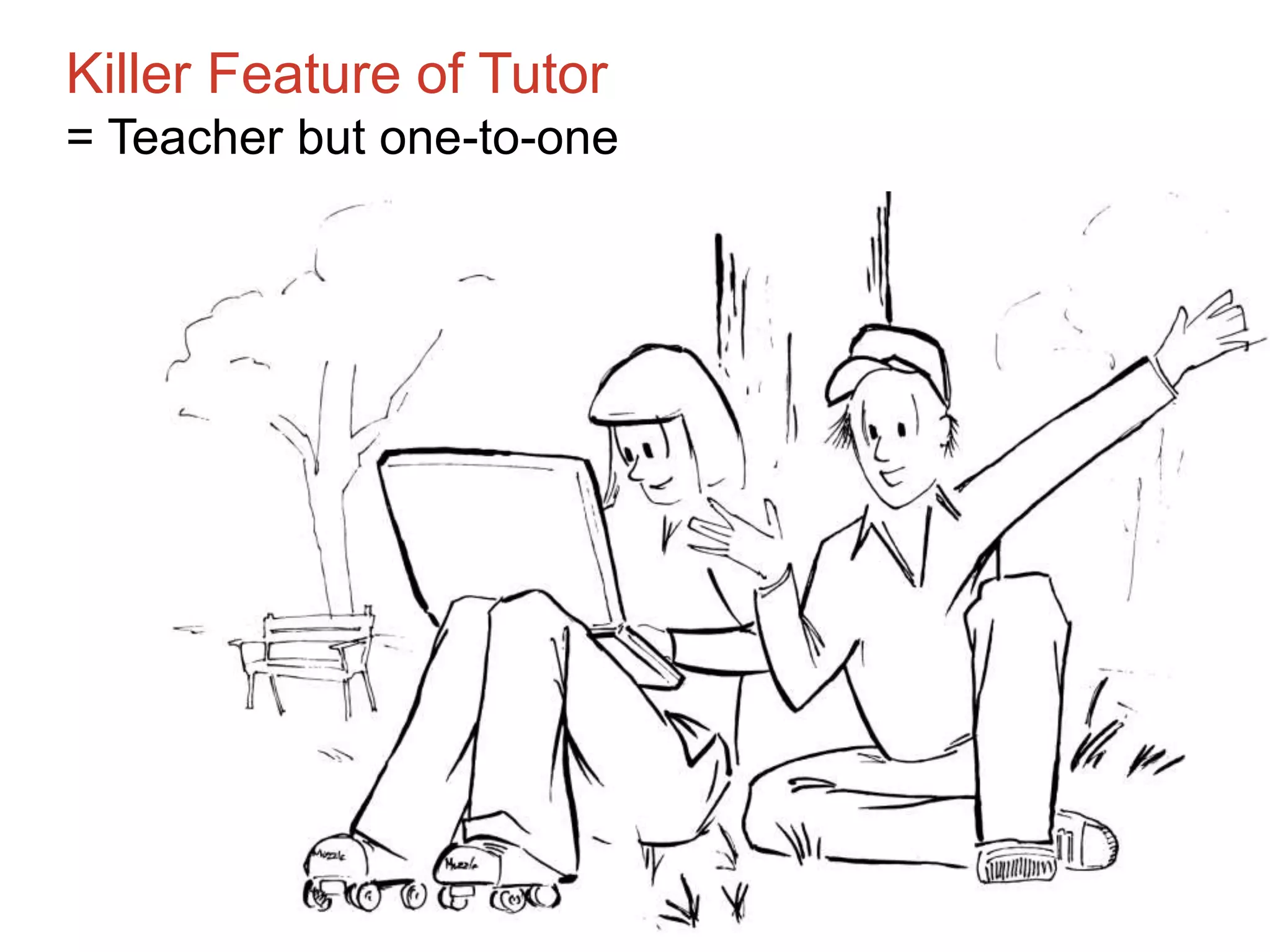
Killer Feature of Tutor
= Teacher but one-to-one
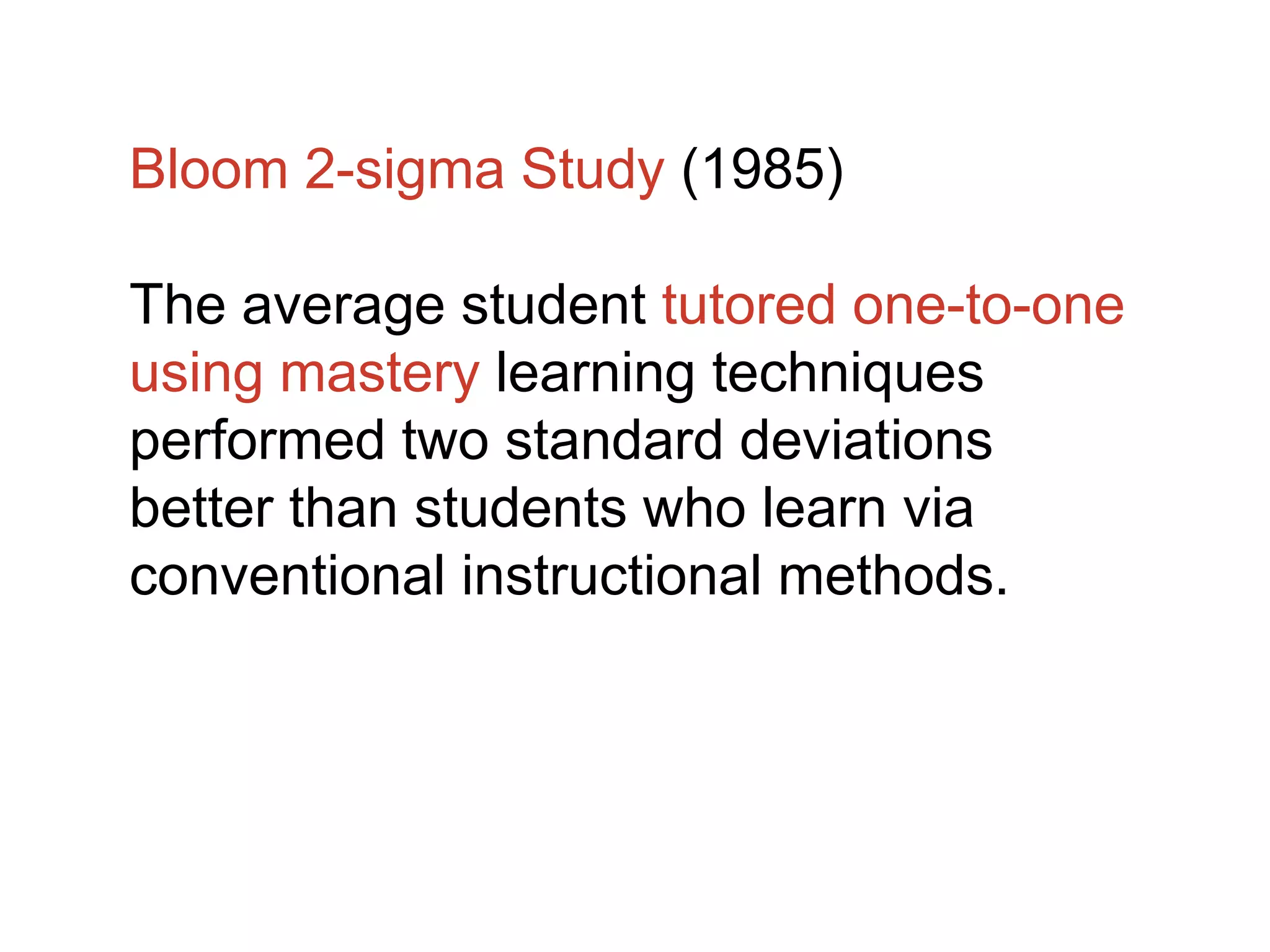
Bloom 2-sigma Study (1985)
The average student tutored one-to-one
using mastery learning techniques
performed two standard deviations
better than students who learn via
conventional instructional methods.
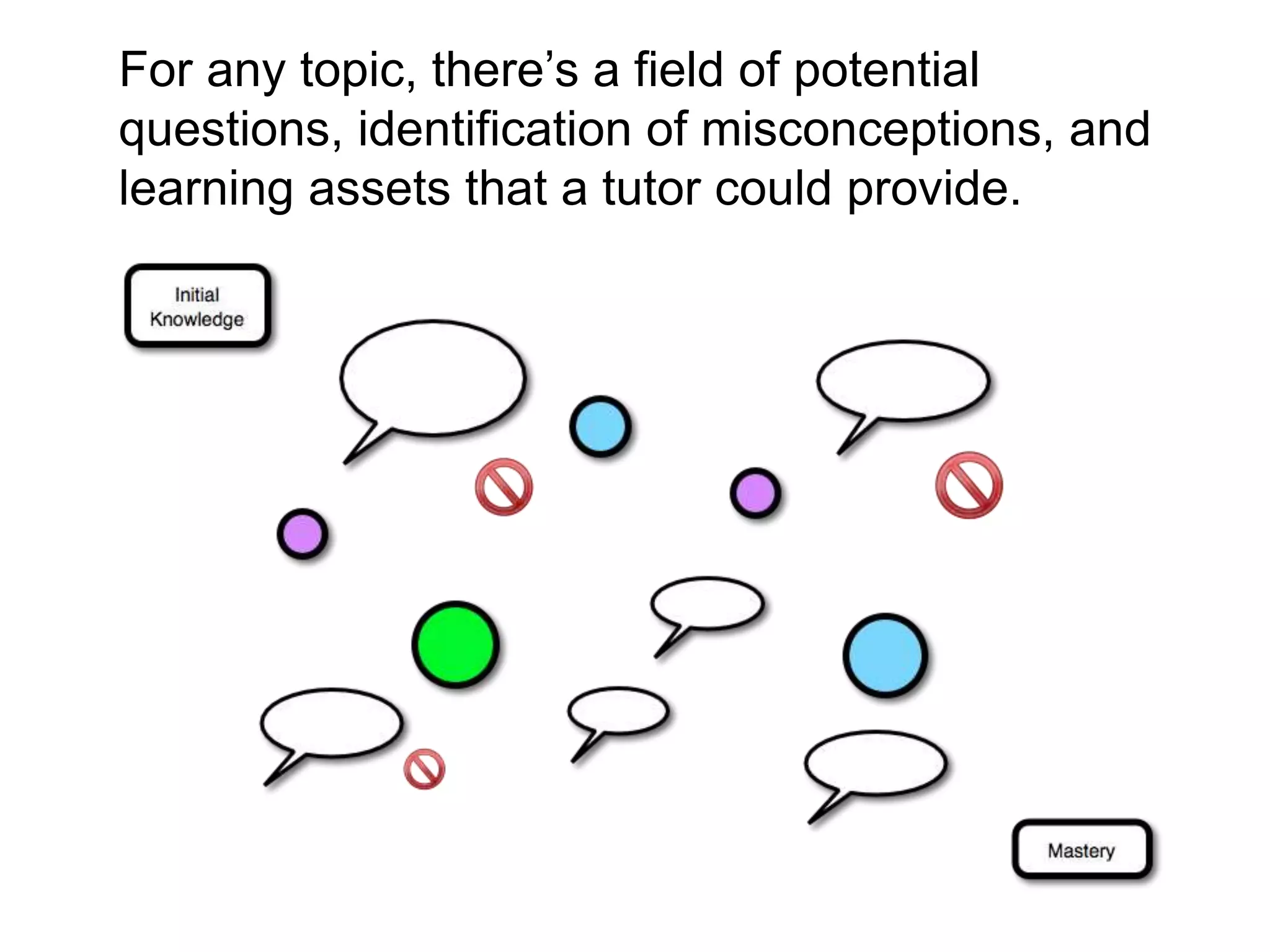
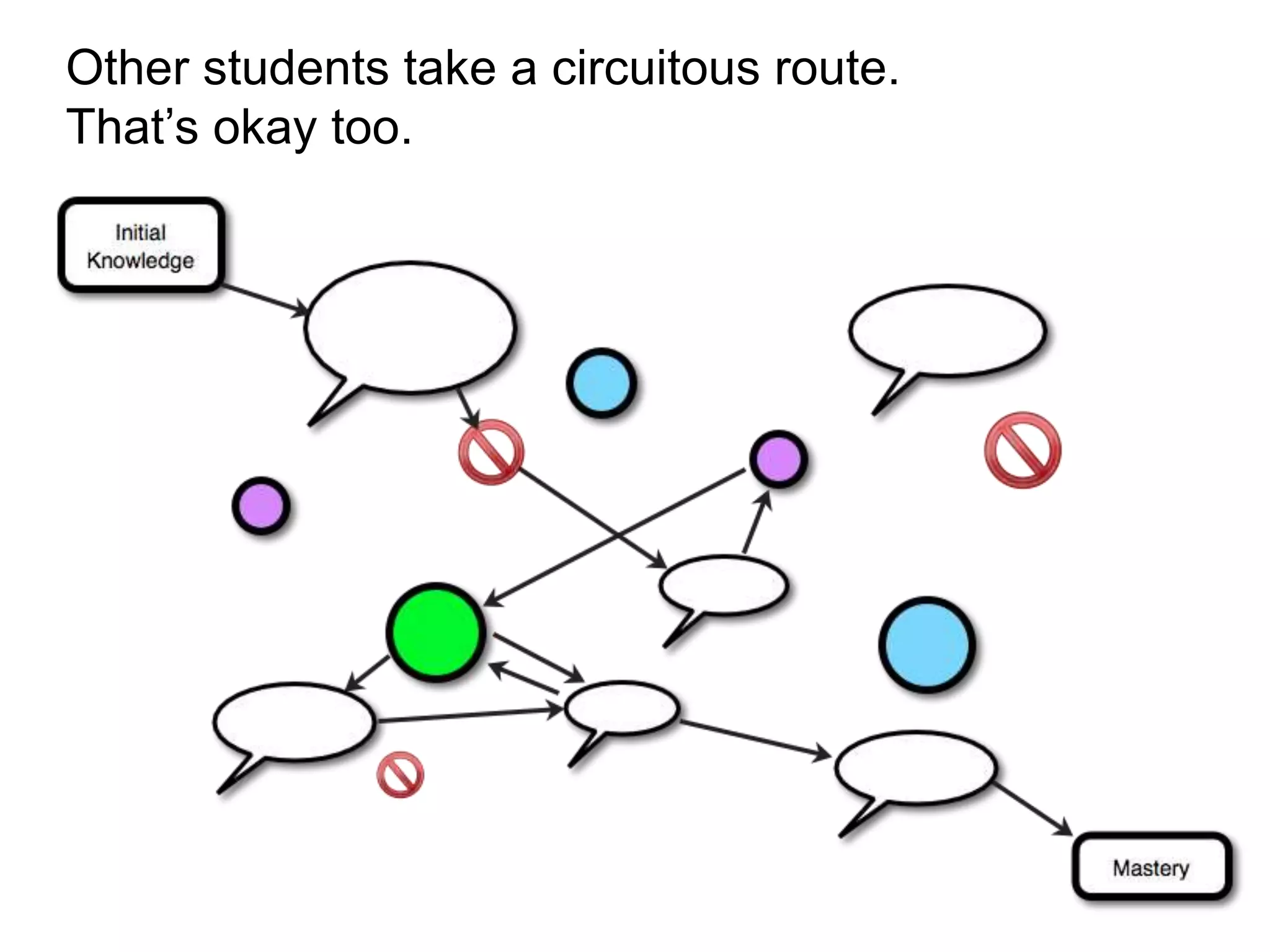
For any topic, there’s a field of potential
questions, identification of misconceptions, and
learning assets that a tutor could provide.
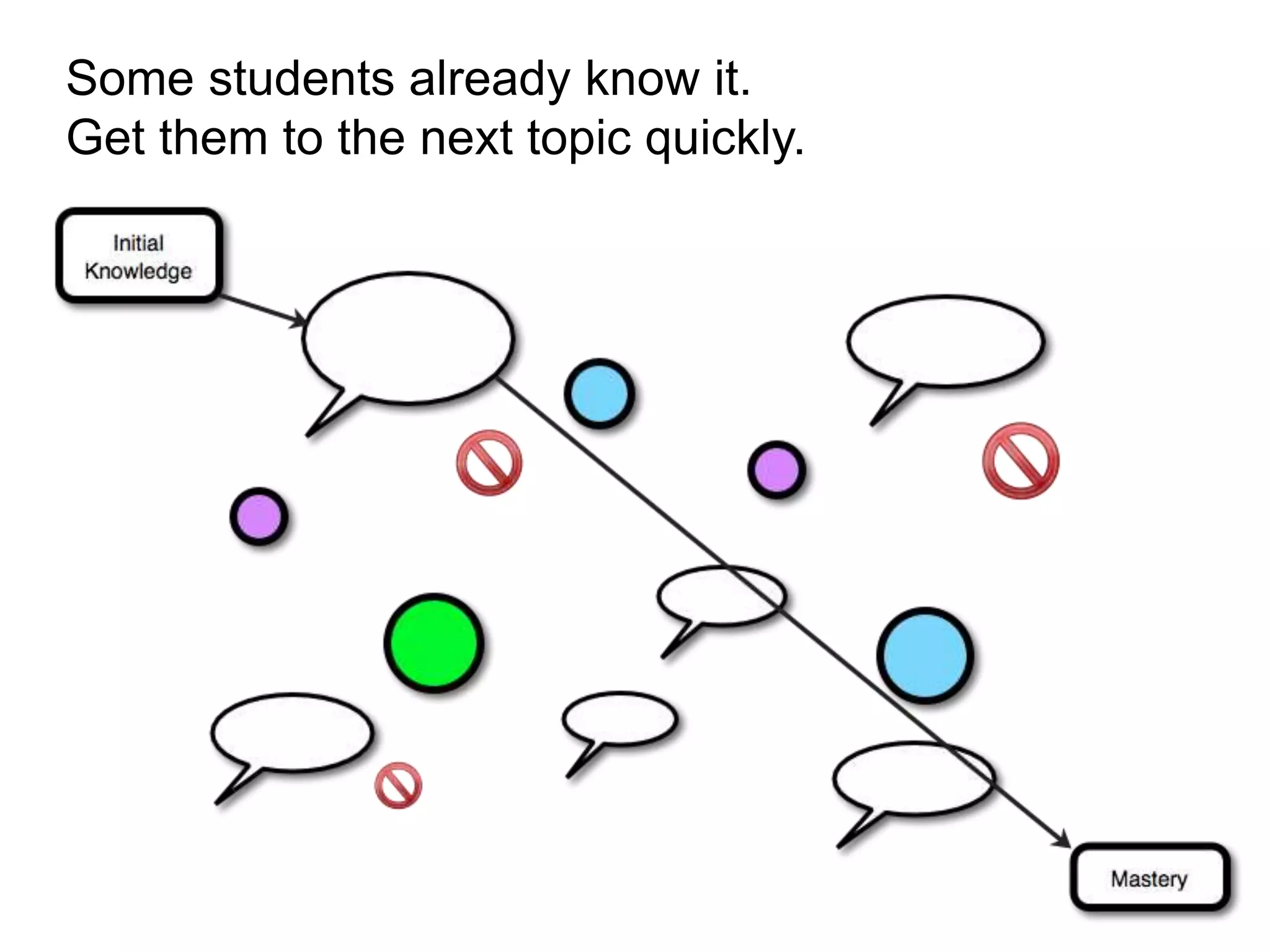
Some students already know it.
Get them to the next topic quickly.
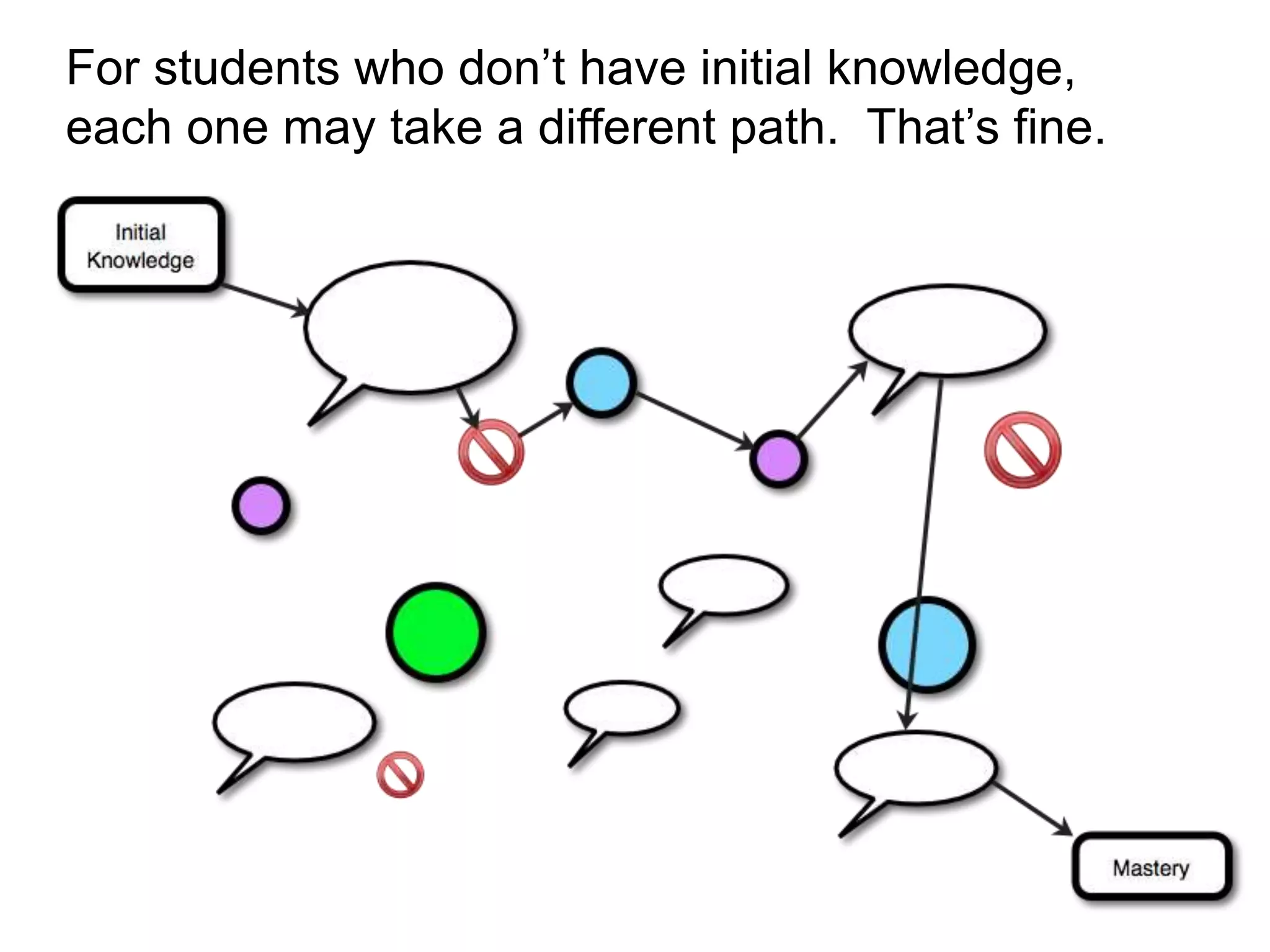
For students who don’t have initial knowledge,
each one may take a different path. That’s fine.
Other students take a circuitous route.
That’s okay too.
The only technology that will improve
learning outcomes for the majority of
students in math is that the technology
that begins to mimic a tutor-student
relationship.
So, Math Teaching in 2020 …
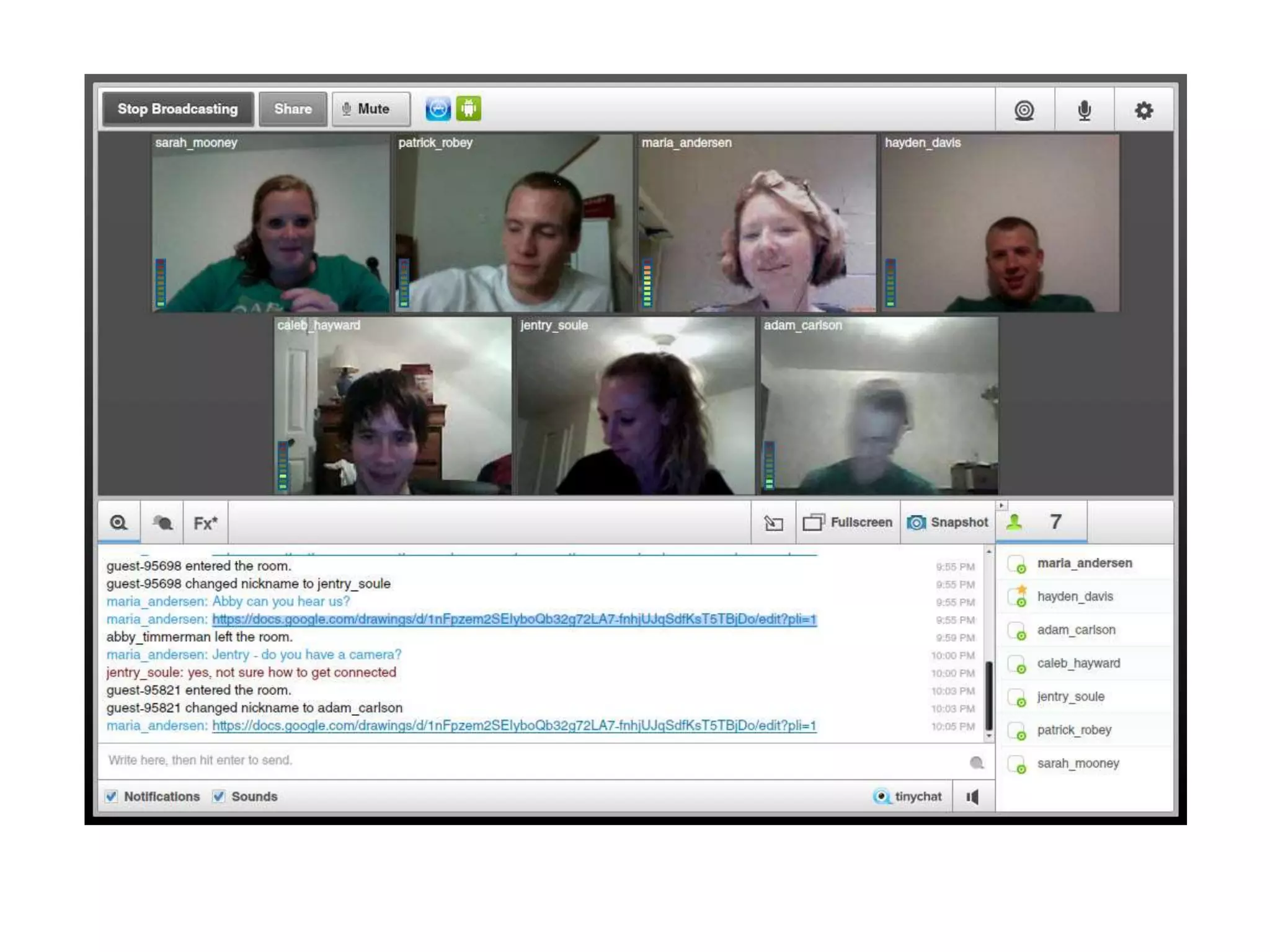
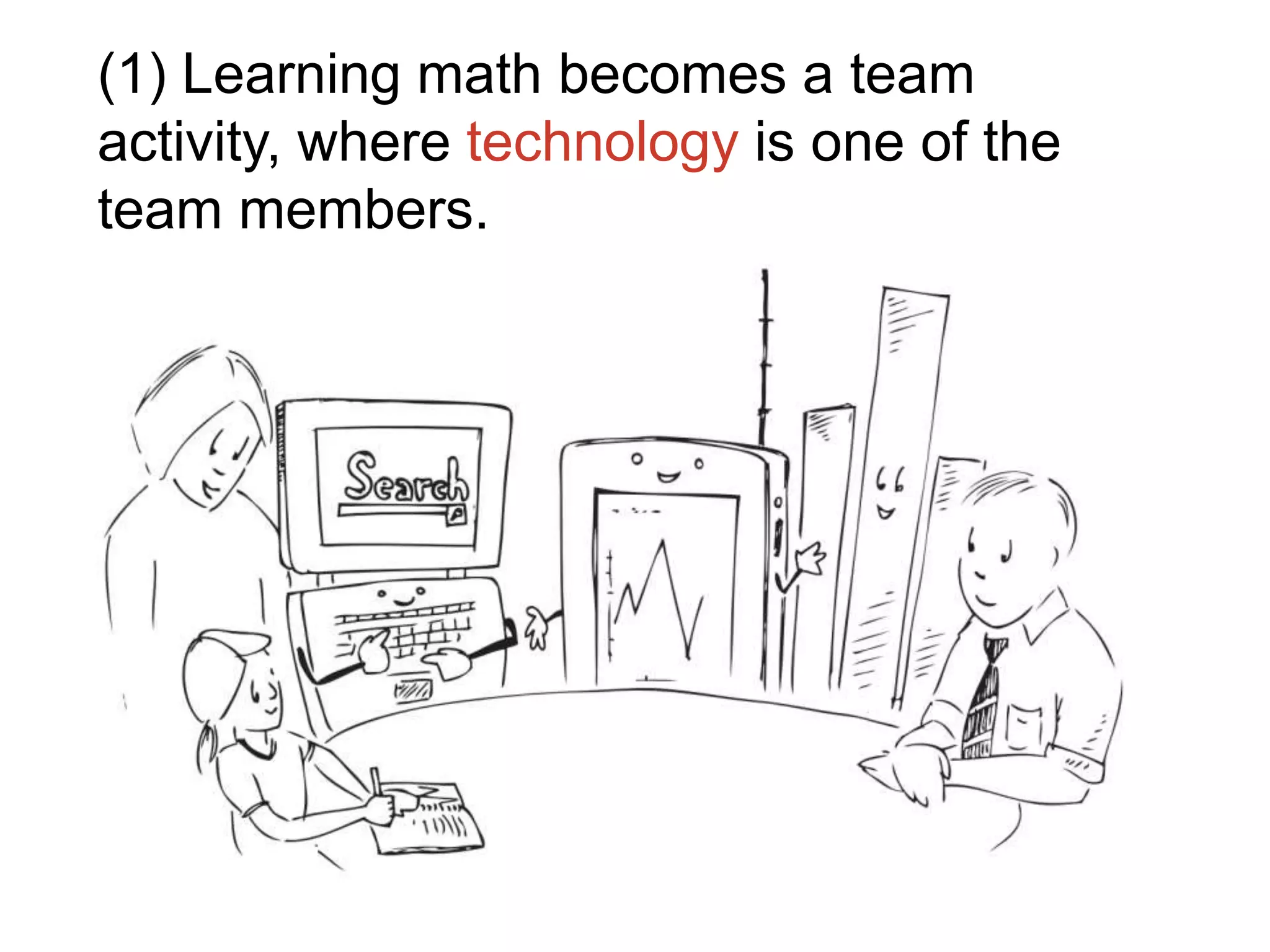
(1) Learning math becomes a team
activity, where technology is one of the
team members.
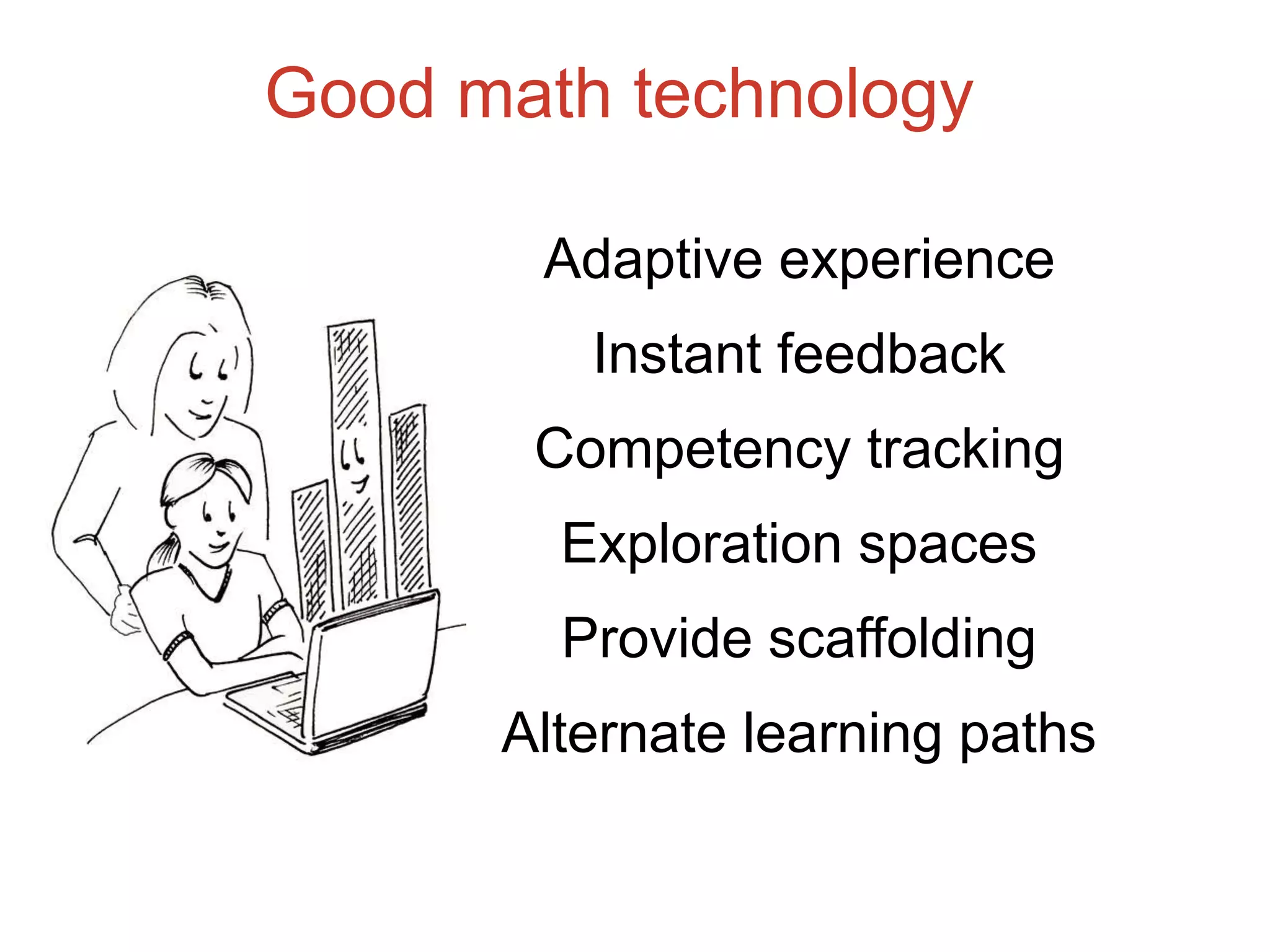
Good math technology
Adaptive experience
Instant feedback
Competency tracking
Exploration spaces
Provide scaffolding
Alternate learning paths
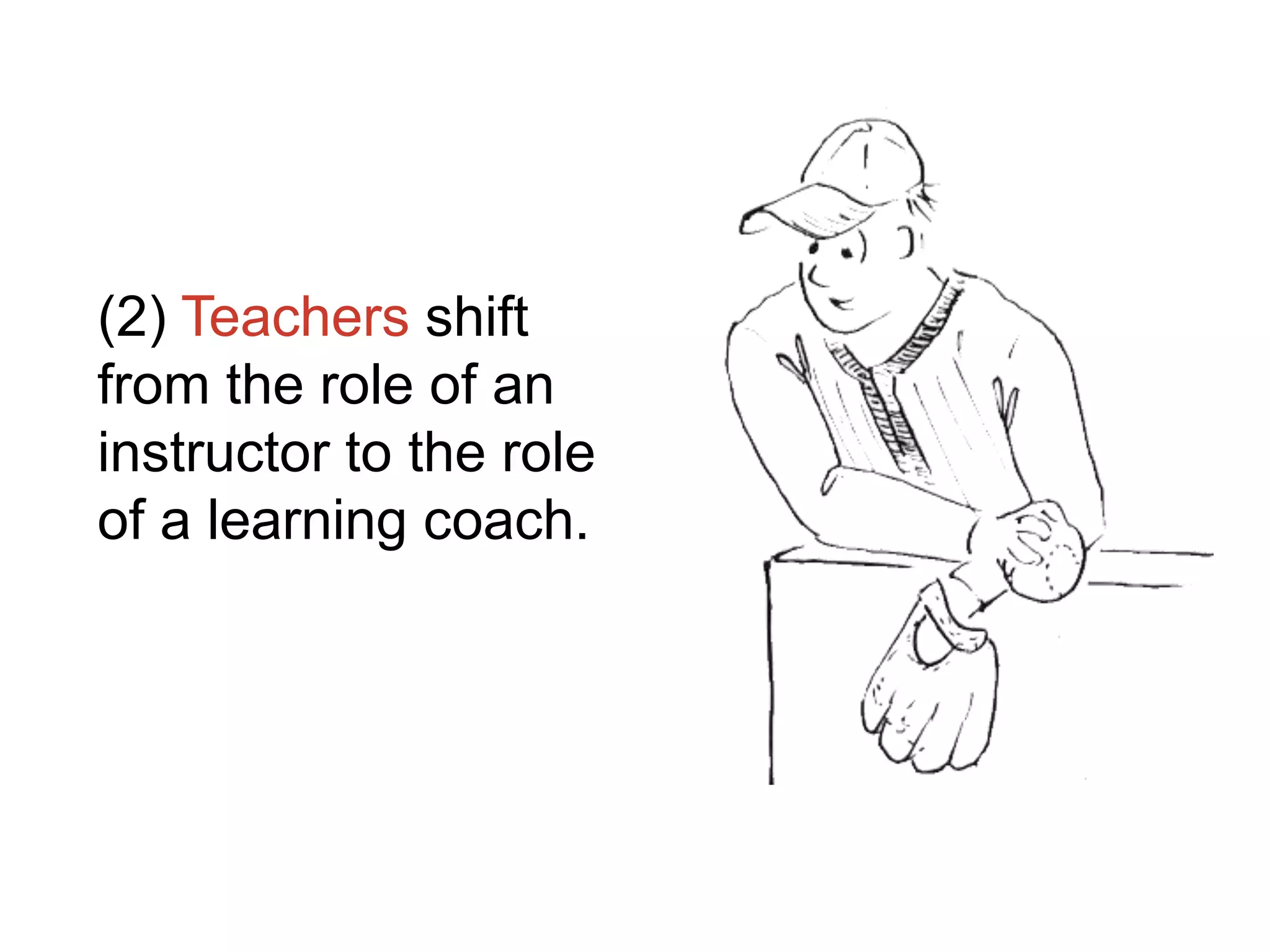
(2) Teachers shift
from the role of an
instructor to the role
of a learning coach.
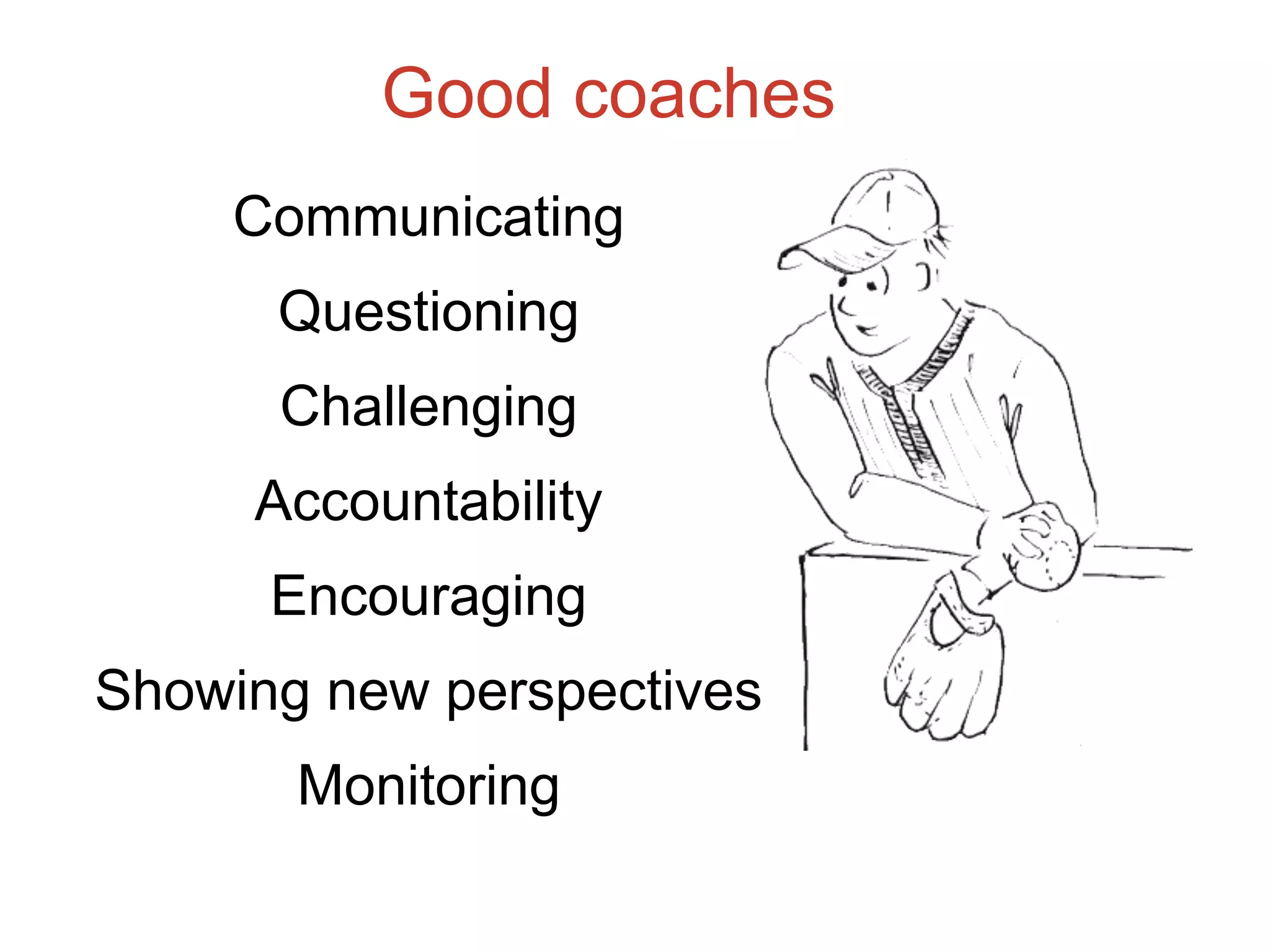
Good coaches
Communicating
Questioning
Challenging
Accountability
Encouraging
Showing new perspectives
Monitoring
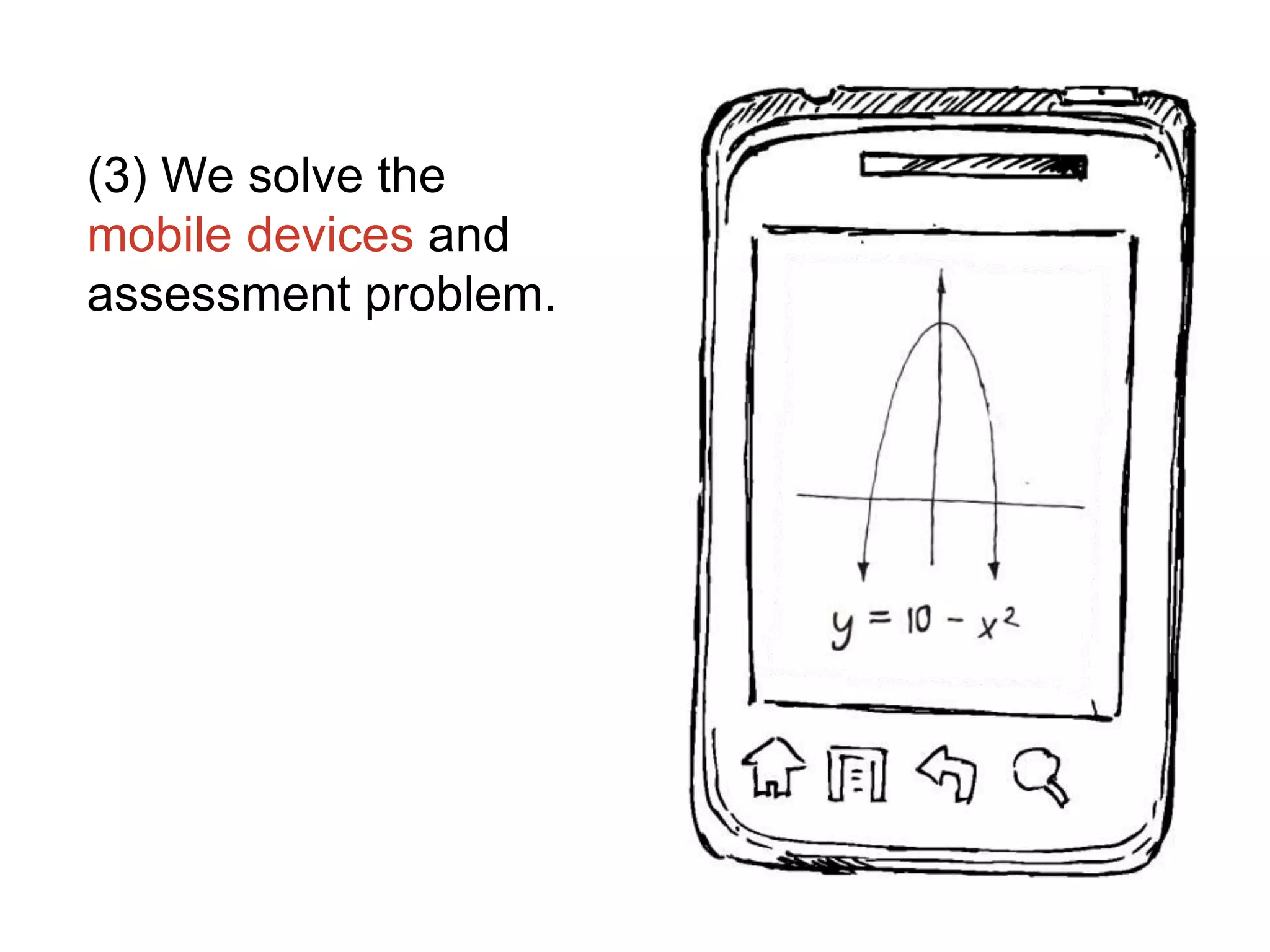
(3) We solve the
mobile devices and
assessment problem.
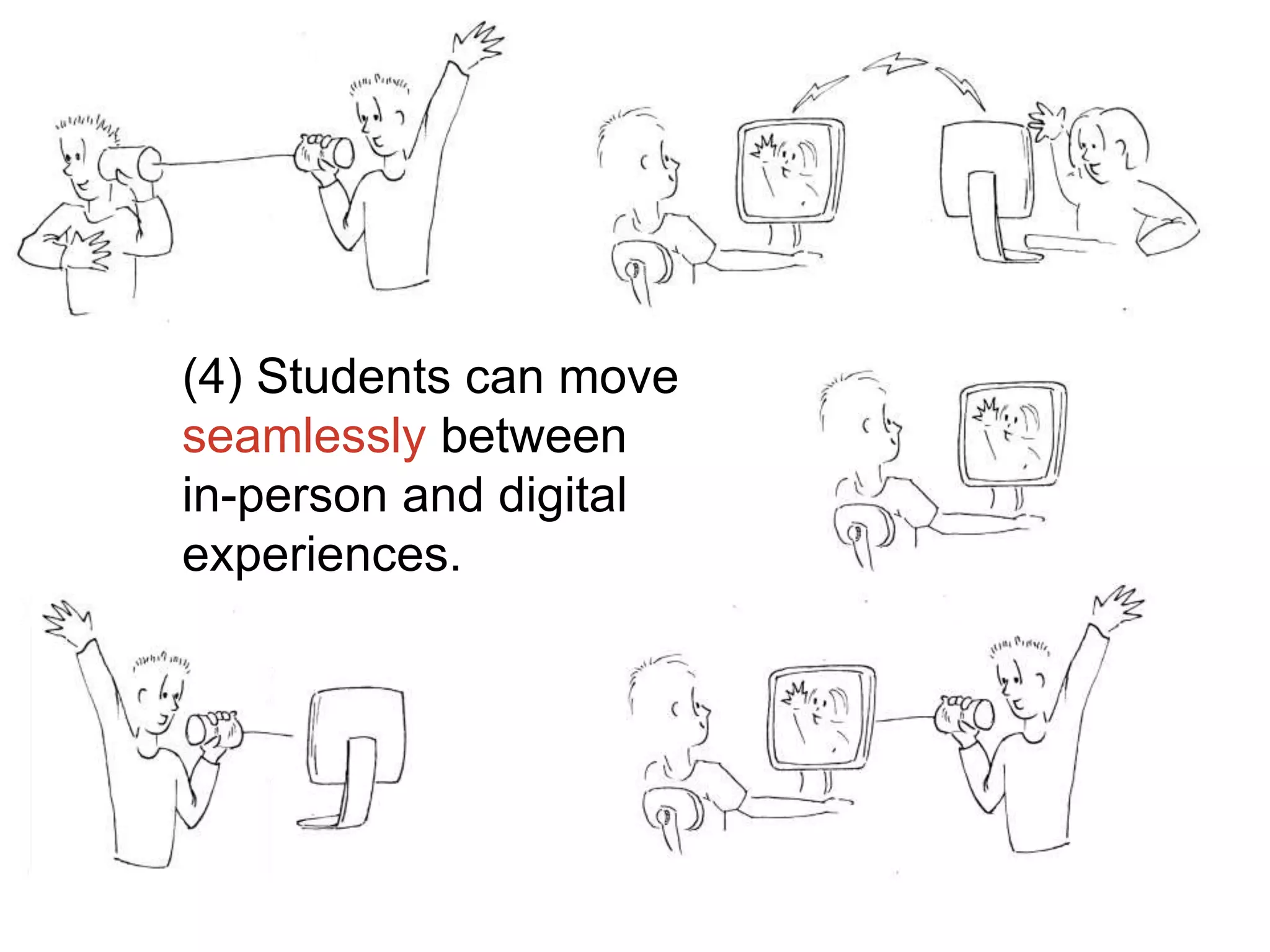
(4) Students can move
seamlessly between
in-person and digital
experiences.
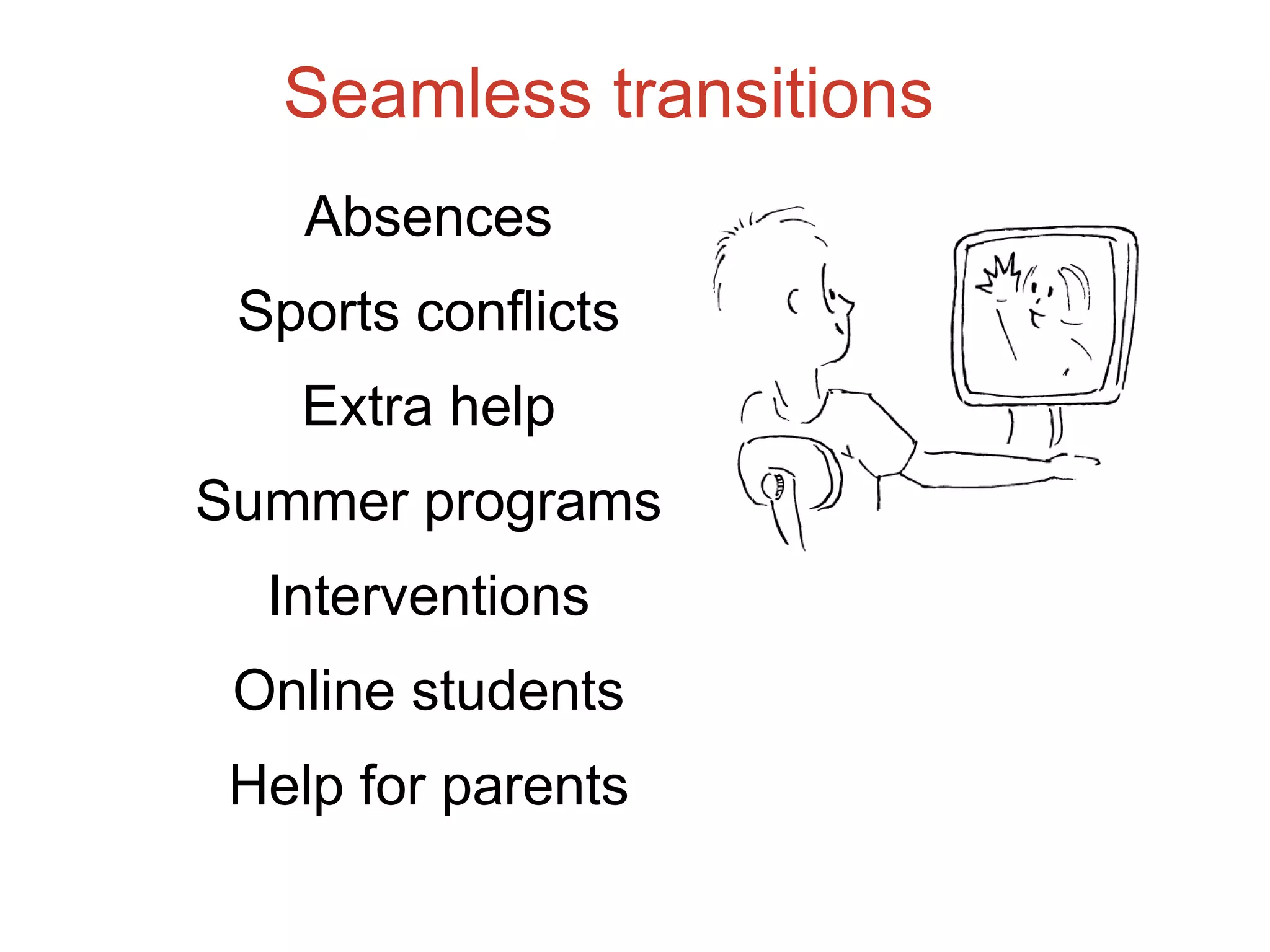
Seamless transitions
Absences
Sports conflicts
Extra help
Summer programs
Interventions
Online students
Help for parents
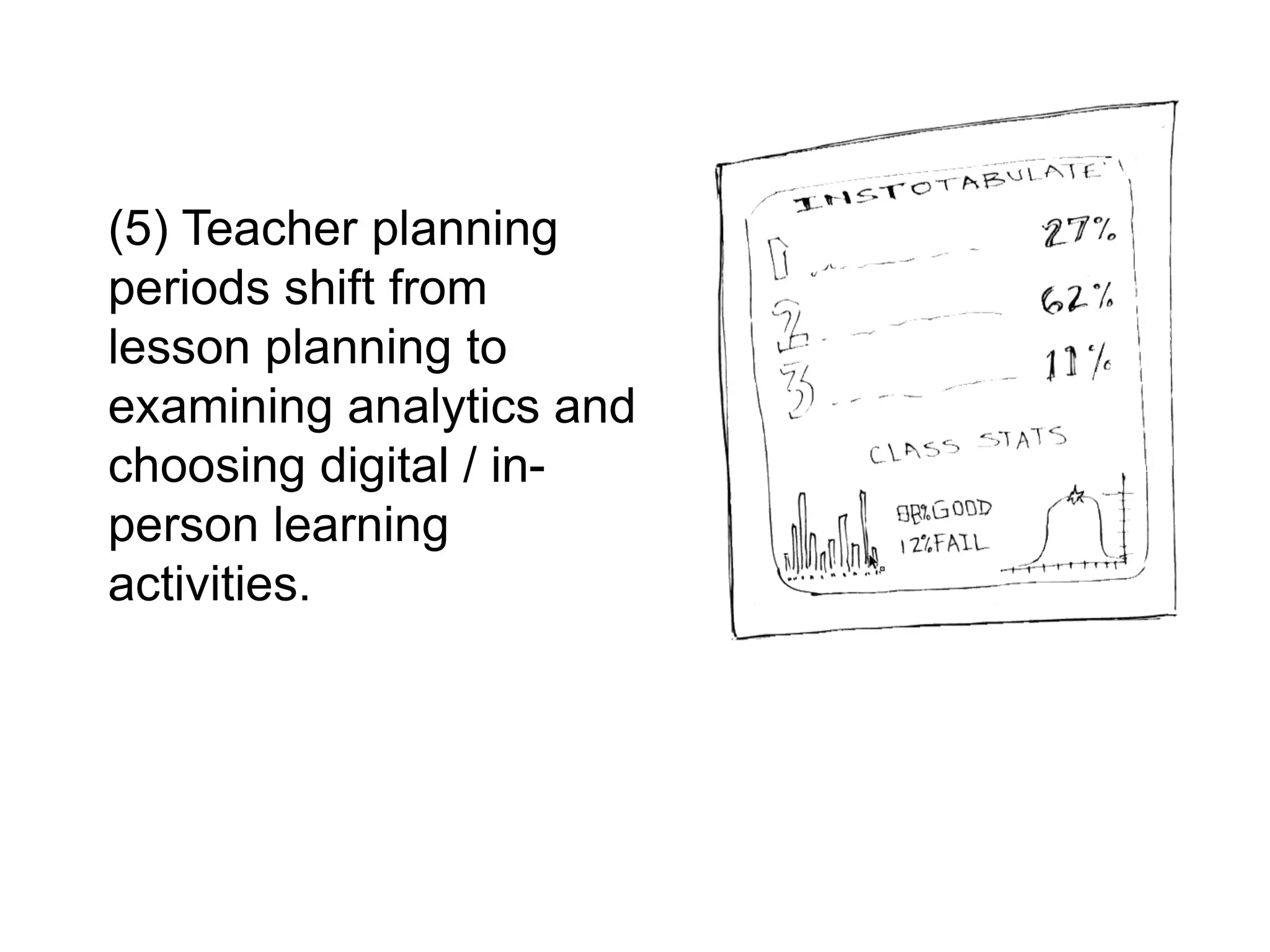
(5) Teacher planning
periods shift from
lesson planning to
examining analytics and
choosing digital / in-
person learning
activities.
“Anyone that can be replaced by a
computer should be.”
- Arthur C. Clarke
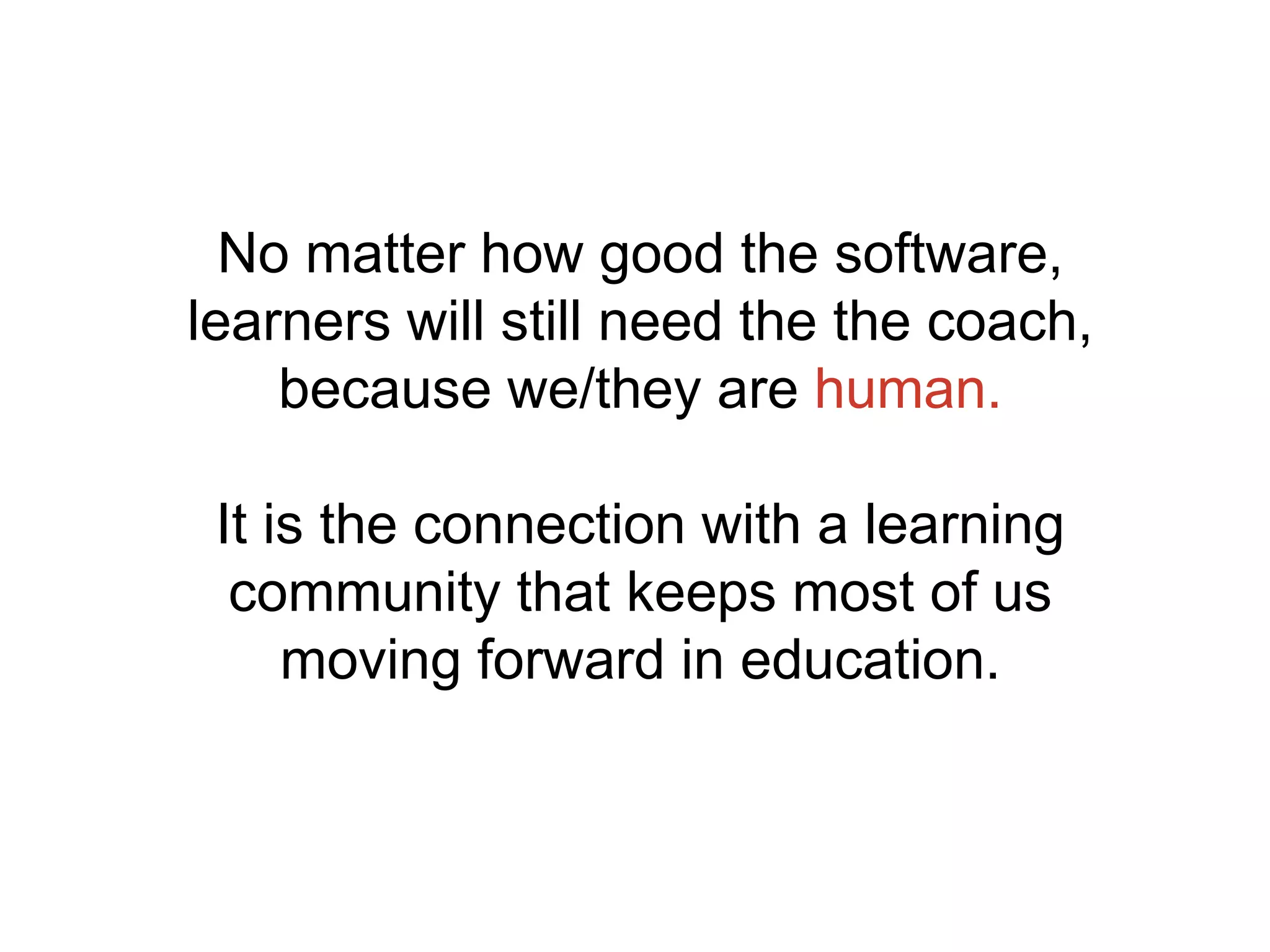
No matter how good the software,
learners will still need the the coach,
because we/they are human.
It is the connection with a learning
community that keeps most of us
moving forward in education.
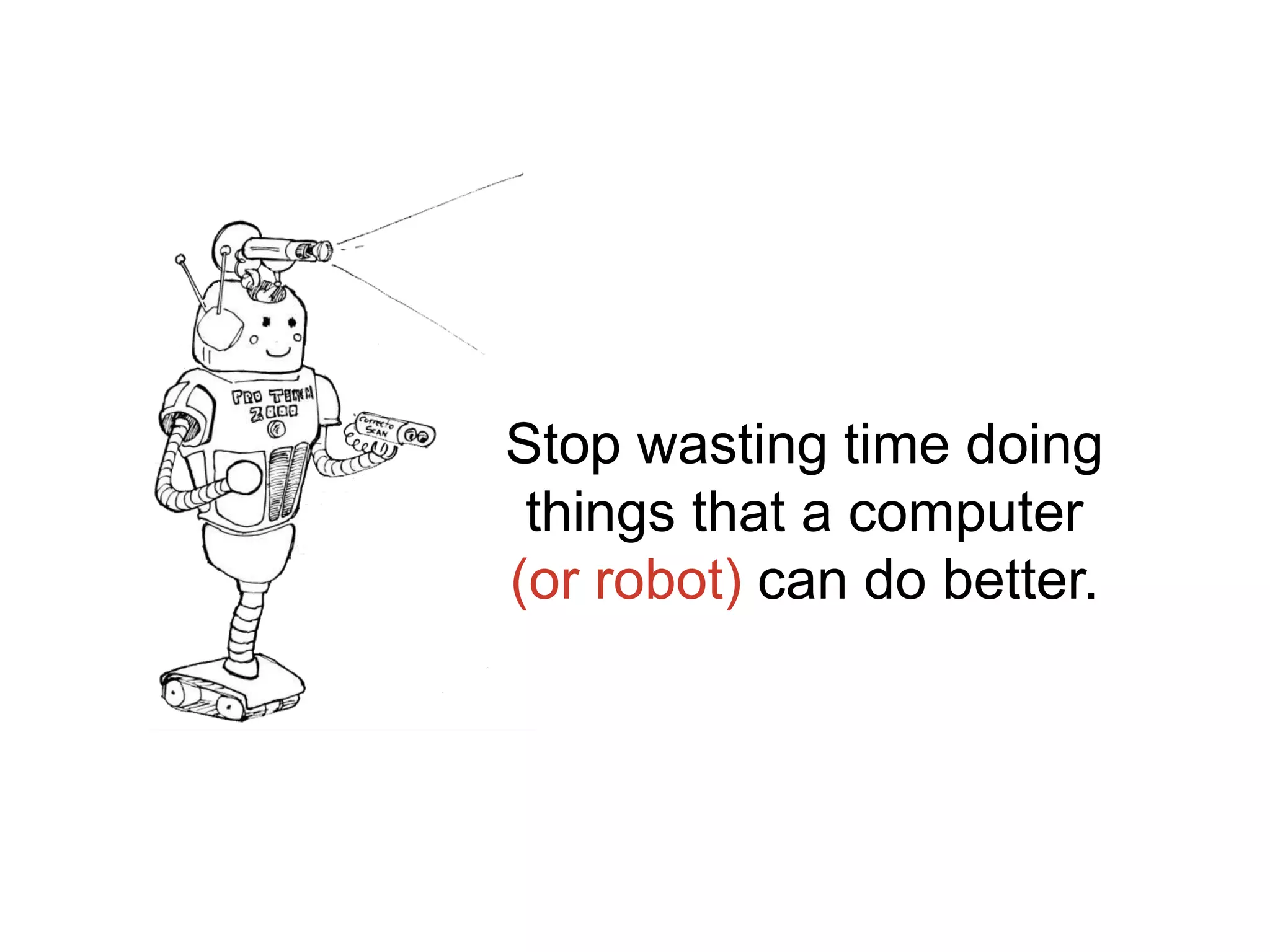
Stop wasting time doing
things that a computer
(or robot) can do better.
Now we take
some questions.
Contact info:
maria@area9.dk
busynessgirl@gmail.com
Twitter: @busynessgirl
busynessgirl.com
Illustrations by Mat Moore.

What does math teaching look like in 2020?

Editor's Notes

  • #28 Can more easily backtrack Does not require both parties to be present One-to-many sharing
  • #29 Advantage: 1-to-many transfer, synchronous Disadvantage: Individualization is difficult, backtracking is difficult, re-experience is difficult
  • #45 2-Sigma:
  • #50 2-Sigma: Bloom found that the average student tutored one-to-one using mastery learning techniques performed two standard deviations better than students who learn via conventional instructional methods.
  • #51 2-Sigma: Bloom found that the average student tutored one-to-one using mastery learning techniques performed two standard deviations better than students who learn via conventional instructional methods.