Fabrication of Composite Leaf Spring 
-By 
Pratik Shriraj Gandhi 
T.Y.B.Tech 
Production (Sandwich) 
111213021
1. Introduction 
• Suspension 
• Conservation of natural resources and economize 
energy, weight reduction 
• Load carrying capacity 
• Steel springs makes vehicles heavy 
• Key factors in selecting material- shock absorbing & 
load
• Functions - locating points of stress, 
damping vibrations and springing 
• Absorb & store energy 
• Specific strain energy - 
• Weight reduction with equal stability, high specific 
strength & high specific Modulus 
• Alternative - Glass Fiber Reinforced Plastic (GFRP) 
• Problems faced - weight increase, low performance, 
excess wear 
• Composites - lightweight, strong, high strength to 
weight ratio
2. Conventional Leaf Springs 
• Absorbs sudden load and 
fluctuations 
• Accumulates elastic energy 
• Provide suspension for 
chassis of vehicle
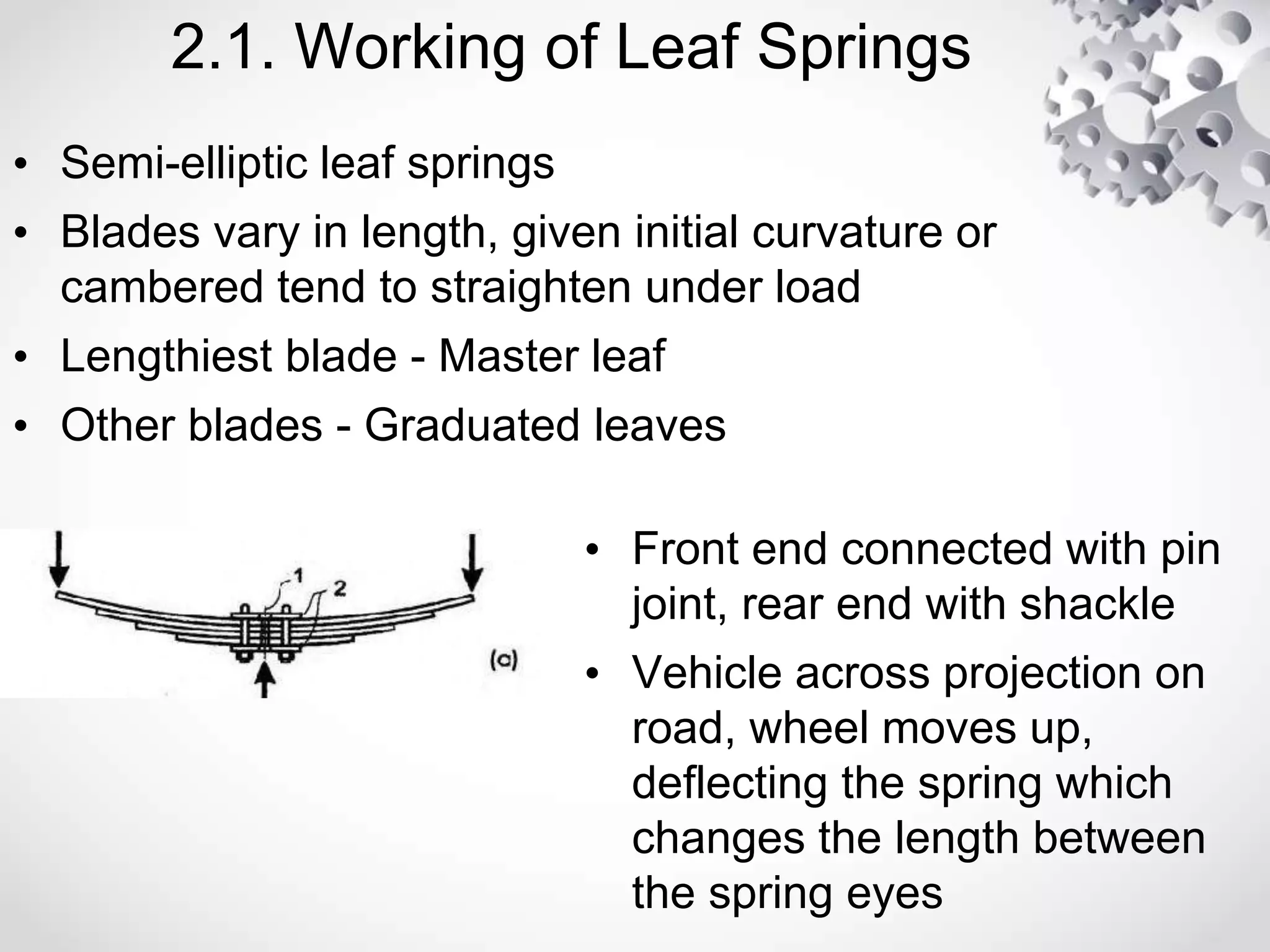
2.1. Working of Leaf Springs 
• Semi-elliptic leaf springs 
• Blades vary in length, given initial curvature or 
cambered tend to straighten under load 
• Lengthiest blade - Master leaf 
• Other blades - Graduated leaves 
• Front end connected with pin 
joint, rear end with shackle 
• Vehicle across projection on 
road, wheel moves up, 
deflecting the spring which 
changes the length between 
the spring eyes
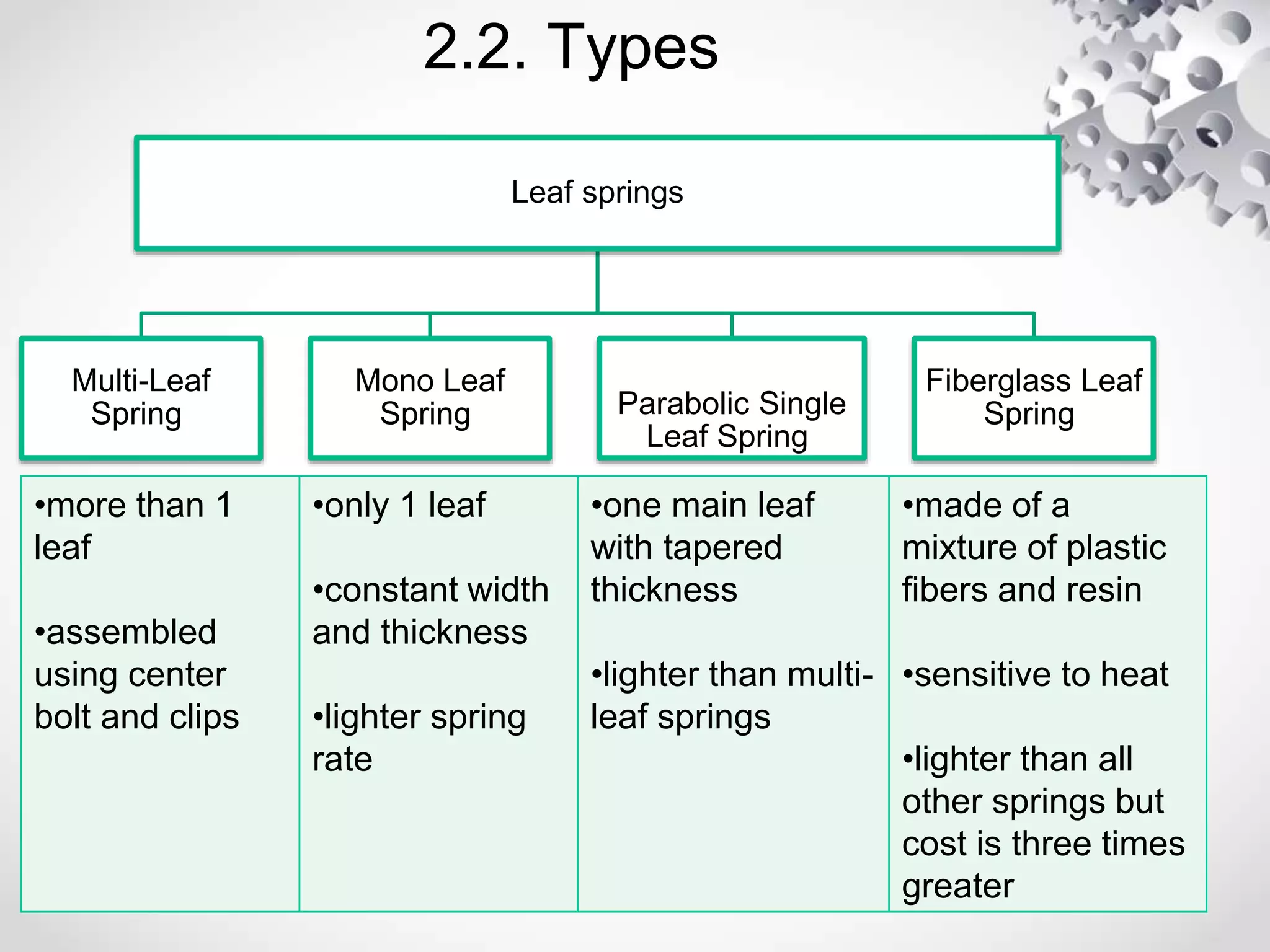
2.2. Types 
Leaf springs 
Multi-Leaf 
Spring 
Mono Leaf 
Spring Parabolic Single 
Leaf Spring 
Fiberglass Leaf 
Spring 
•more than 1 
leaf 
•assembled 
using center 
bolt and clips 
•only 1 leaf 
•constant width 
and thickness 
•lighter spring 
rate 
•one main leaf 
with tapered 
thickness 
•lighter than multi-leaf 
springs 
•made of a 
mixture of plastic 
fibers and resin 
•sensitive to heat 
•lighter than all 
other springs but 
cost is three times 
greater
3.Design Parameters 
• Material selected 
• Tensile strength 
• Yield strength 
• Young’s modulus E 
• Design stress (σb) 
• Total length 
• Spring weight 
• Arc length between 
axle seat and Front eye 
• Arc height at axle seat 
• Spring rate 
• Normal static loading 
• Available space for 
spring width
4. Problems with Conventional Leaf 
Springs 
• Research about wt. reduction with 
stable design of vehicle 
• Steel leaf springs make it heavy and 
affects performance 
• Vertical forces on spring eye causes 
early failure 
• Depletion of natural resources from 
mines 
• Development in composites give 
properties needed for suspension
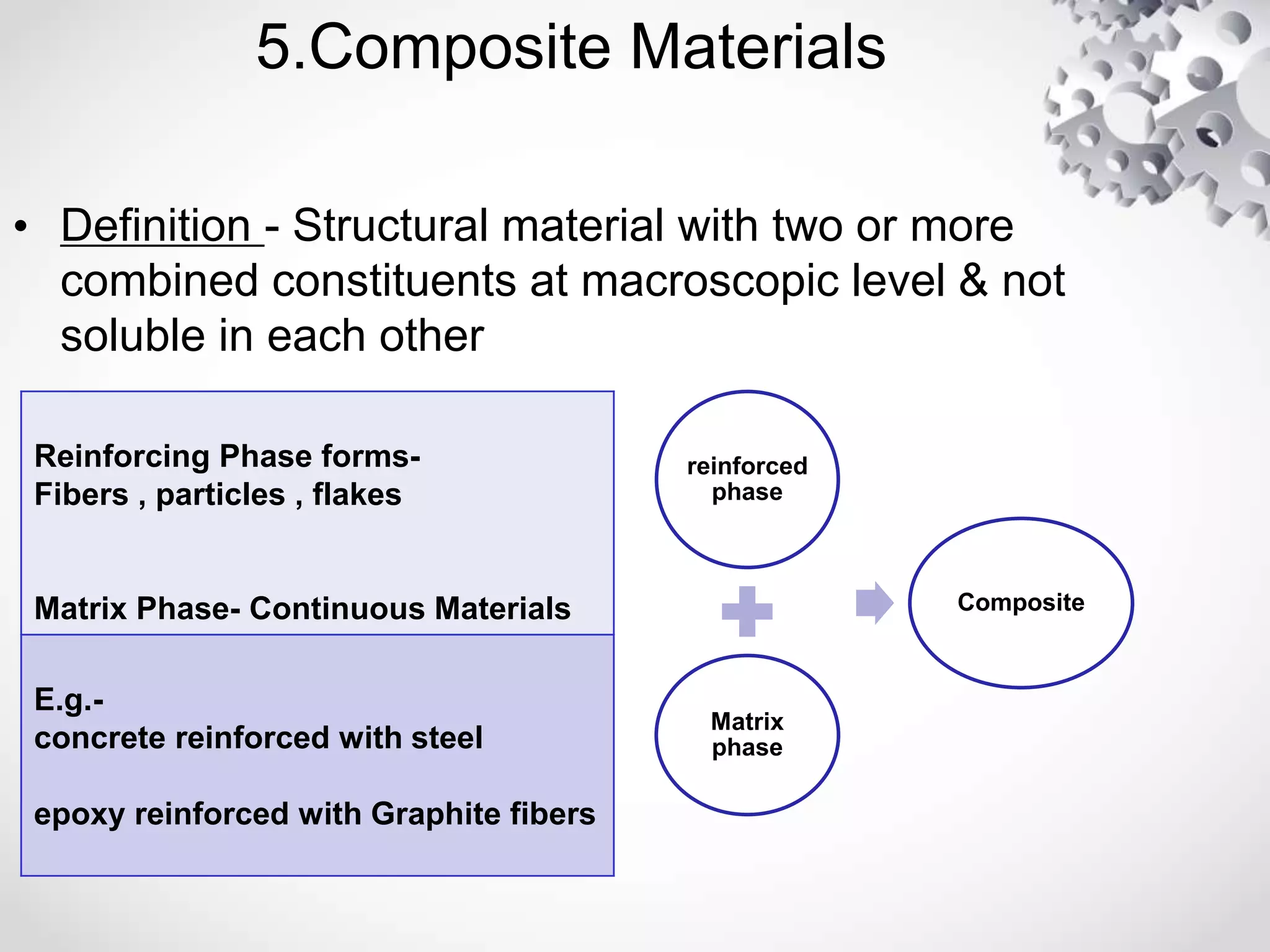
5.Composite Materials 
• Definition - Structural material with two or more 
combined constituents at macroscopic level & not 
soluble in each other 
Reinforcing Phase forms- 
Fibers , particles , flakes 
Matrix Phase- Continuous Materials 
E.g.- 
concrete reinforced with steel 
epoxy reinforced with Graphite fibers 
reinforced 
phase 
Matrix 
phase 
Composite
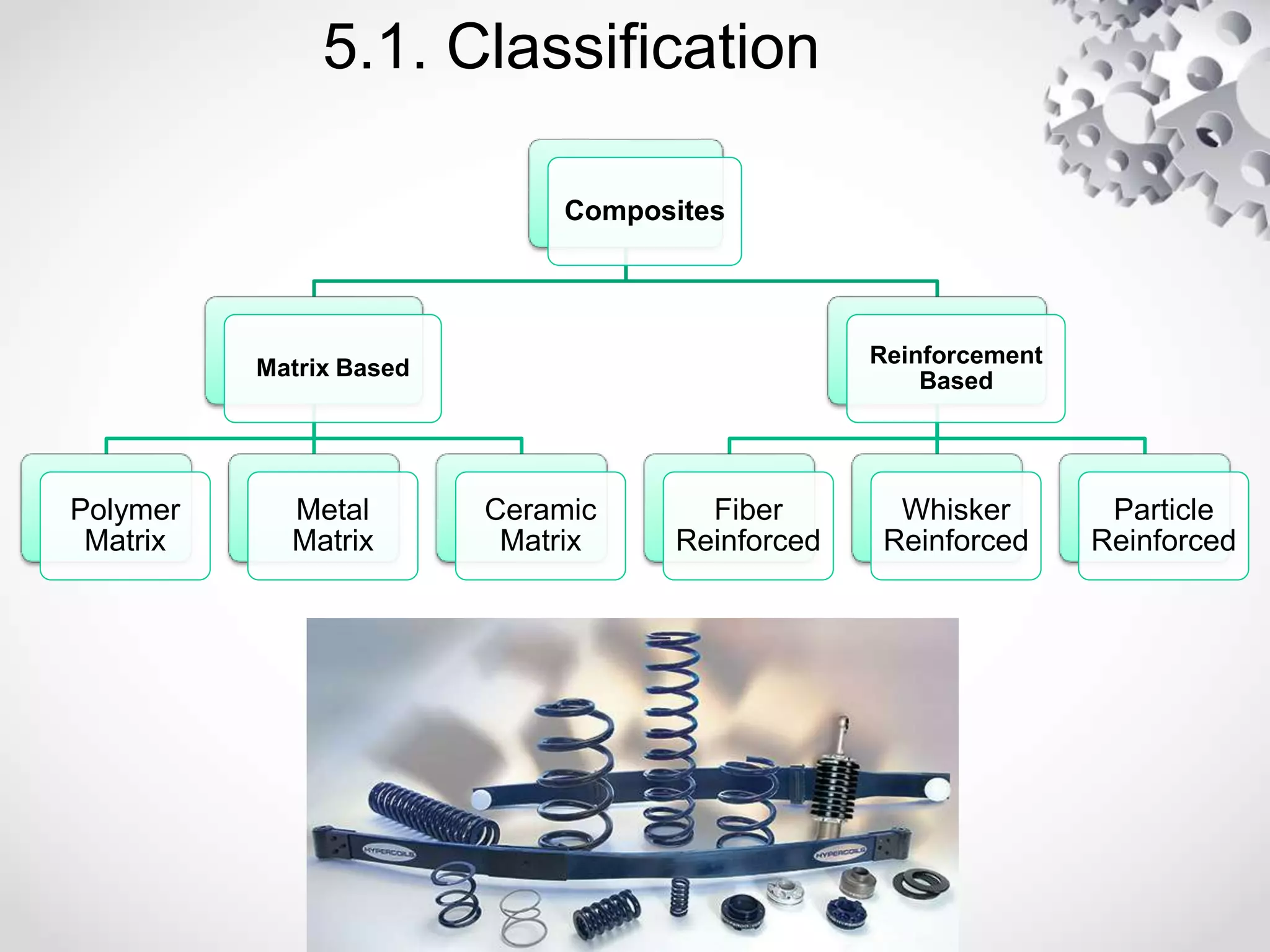
5.1. Classification 
Composites 
Matrix Based 
Polymer 
Matrix 
Metal 
Matrix 
Ceramic 
Matrix 
Reinforcement 
Based 
Fiber 
Reinforced 
Whisker 
Reinforced 
Particle 
Reinforced
6. Fabrication Techniques 
• Different loading, various materials & 
Application feasibility 
Constant thickness, constant width design 
Constant thickness, varying width design 
Varying width, varying thickness design 
• Constant cross section design, hand lay-up 
process is used to study 
• Unidirectional GFRP material
7. Hand Lay-Up Process 
• Reinforcement & painting 
with matrix resin layer by 
layer 
• Template(Mould die) 
• Releasing agent(gel/wax) for 
surface finish 
• Uniform application, roller to 
remove trapped air 
• Duration-30 mins 
• Mould allowed to cure for 4-5 
days at room temperature
7.1. Sheet Preparation 
• Template - Aluminium Frame 
• Wt of glass-fiber sheet 150 gms 
• Epoxy resin with Hardener(9:1) 
• Releasing agent - Silicon gel 
• Repeat process till desired 
thickness is obtained 
• After curing, sheet pulled out 
Cut in design dimensions 
• Sometimes Heat is used for 
proper setting of fiber layers
8. Experimental Tests 
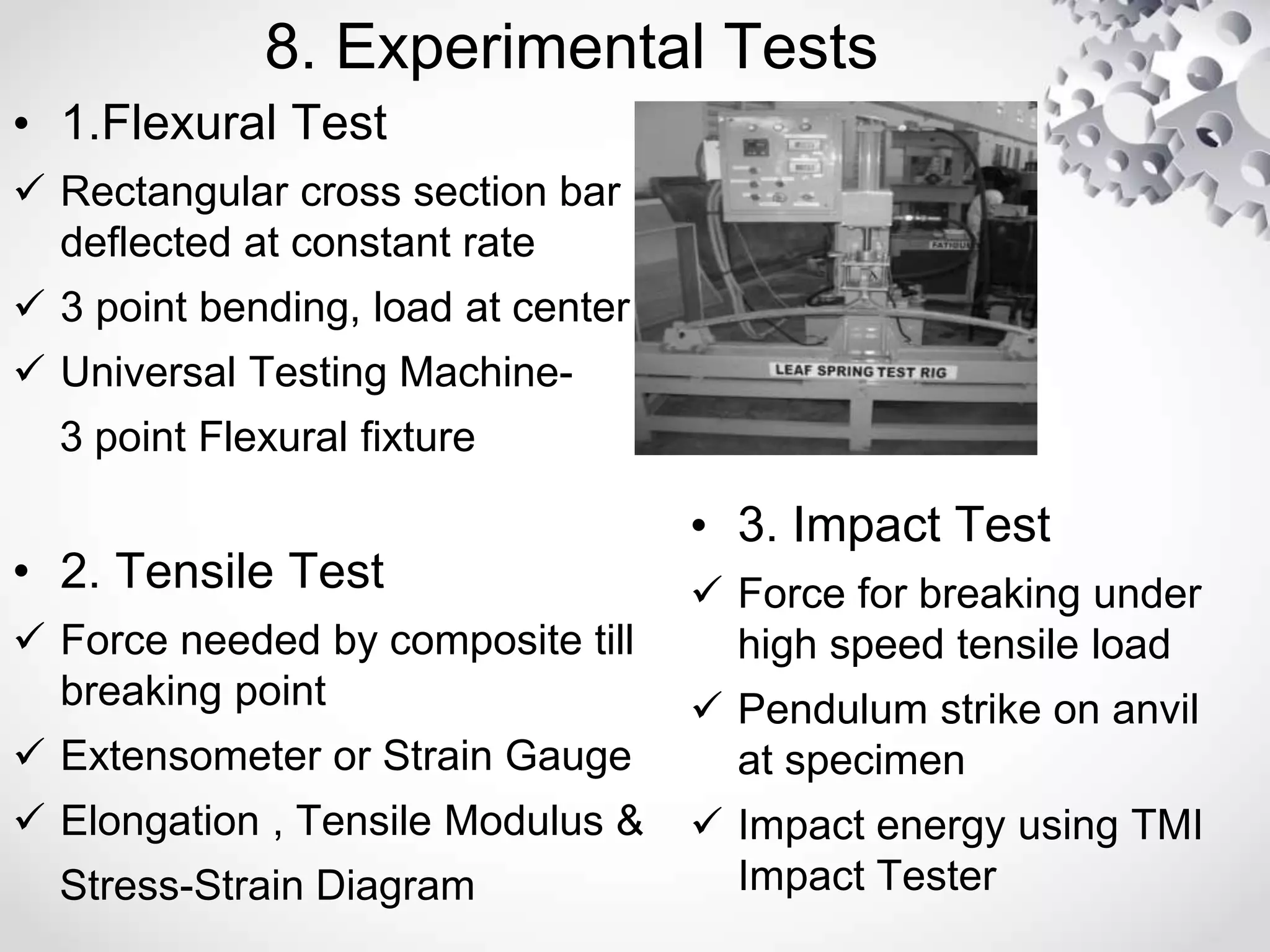
• 1.Flexural Test 
 Rectangular cross section bar 
deflected at constant rate 
 3 point bending, load at center 
 Universal Testing Machine- 
3 point Flexural fixture 
• 2. Tensile Test 
 Force needed by composite till 
breaking point 
 Extensometer or Strain Gauge 
 Elongation , Tensile Modulus & 
Stress-Strain Diagram 
• 3. Impact Test 
 Force for breaking under 
high speed tensile load 
 Pendulum strike on anvil 
at specimen 
 Impact energy using TMI 
Impact Tester
9. Advantages & Disadvantages 
Advantages 
• Lightweight, extremely 
strong 
• Weigh ¼ th for same 
strength 
• Corrosion & chemical 
Resistance 
• Excellent elastic properties 
• Regains shape after 
bending till certain limit , 
useful for spring 
applications 
Disadvantages 
• High cost of fabrication , 
complicated time 
consuming process 
• Repair procedure is 
complex 
• Unpredictable mechanical 
characterization 
• Not isotropic , need more 
parameters for evaluation 
• Compressive strength not 
dependable
10. Discussion & Conclusion 
 Stress developed found well within limits with 
good factor of safety 
 Longitudinal orientation of fibers in laminate offers strength 
 Deflection is less compared to steel for same loading 
condition 
 Bending stress lowered 
 Conventional leaf springs 3.5 times heavier than Composite 
springs 
 Material saving achieved
 Lighter and economical for use but sensitive to heat 
cycles 
 Sometimes heat treated for more stiffness 
 High strength retention at severe environments 
 Good alternative for steel in suspension applications 
 In future, experimental verification for Bending, Torsion 
and Hardness to be done 
 Cost reduction and optimum fabrication process 
development for mass production

Fabrication of composite leaf spring

  • 1.
    Fabrication of CompositeLeaf Spring -By Pratik Shriraj Gandhi T.Y.B.Tech Production (Sandwich) 111213021
  • 2.
    1. Introduction •Suspension • Conservation of natural resources and economize energy, weight reduction • Load carrying capacity • Steel springs makes vehicles heavy • Key factors in selecting material- shock absorbing & load
  • 3.
    • Functions -locating points of stress, damping vibrations and springing • Absorb & store energy • Specific strain energy - • Weight reduction with equal stability, high specific strength & high specific Modulus • Alternative - Glass Fiber Reinforced Plastic (GFRP) • Problems faced - weight increase, low performance, excess wear • Composites - lightweight, strong, high strength to weight ratio
  • 4.
    2. Conventional LeafSprings • Absorbs sudden load and fluctuations • Accumulates elastic energy • Provide suspension for chassis of vehicle
  • 5.
    2.1. Working ofLeaf Springs • Semi-elliptic leaf springs • Blades vary in length, given initial curvature or cambered tend to straighten under load • Lengthiest blade - Master leaf • Other blades - Graduated leaves • Front end connected with pin joint, rear end with shackle • Vehicle across projection on road, wheel moves up, deflecting the spring which changes the length between the spring eyes
  • 6.
    2.2. Types Leafsprings Multi-Leaf Spring Mono Leaf Spring Parabolic Single Leaf Spring Fiberglass Leaf Spring •more than 1 leaf •assembled using center bolt and clips •only 1 leaf •constant width and thickness •lighter spring rate •one main leaf with tapered thickness •lighter than multi-leaf springs •made of a mixture of plastic fibers and resin •sensitive to heat •lighter than all other springs but cost is three times greater
  • 7.
    3.Design Parameters •Material selected • Tensile strength • Yield strength • Young’s modulus E • Design stress (σb) • Total length • Spring weight • Arc length between axle seat and Front eye • Arc height at axle seat • Spring rate • Normal static loading • Available space for spring width
  • 8.
    4. Problems withConventional Leaf Springs • Research about wt. reduction with stable design of vehicle • Steel leaf springs make it heavy and affects performance • Vertical forces on spring eye causes early failure • Depletion of natural resources from mines • Development in composites give properties needed for suspension
  • 9.
    5.Composite Materials •Definition - Structural material with two or more combined constituents at macroscopic level & not soluble in each other Reinforcing Phase forms- Fibers , particles , flakes Matrix Phase- Continuous Materials E.g.- concrete reinforced with steel epoxy reinforced with Graphite fibers reinforced phase Matrix phase Composite
  • 10.
    5.1. Classification Composites Matrix Based Polymer Matrix Metal Matrix Ceramic Matrix Reinforcement Based Fiber Reinforced Whisker Reinforced Particle Reinforced
  • 11.
    6. Fabrication Techniques • Different loading, various materials & Application feasibility Constant thickness, constant width design Constant thickness, varying width design Varying width, varying thickness design • Constant cross section design, hand lay-up process is used to study • Unidirectional GFRP material
  • 12.
    7. Hand Lay-UpProcess • Reinforcement & painting with matrix resin layer by layer • Template(Mould die) • Releasing agent(gel/wax) for surface finish • Uniform application, roller to remove trapped air • Duration-30 mins • Mould allowed to cure for 4-5 days at room temperature
  • 13.
    7.1. Sheet Preparation • Template - Aluminium Frame • Wt of glass-fiber sheet 150 gms • Epoxy resin with Hardener(9:1) • Releasing agent - Silicon gel • Repeat process till desired thickness is obtained • After curing, sheet pulled out Cut in design dimensions • Sometimes Heat is used for proper setting of fiber layers
  • 14.
    8. Experimental Tests • 1.Flexural Test  Rectangular cross section bar deflected at constant rate  3 point bending, load at center  Universal Testing Machine- 3 point Flexural fixture • 2. Tensile Test  Force needed by composite till breaking point  Extensometer or Strain Gauge  Elongation , Tensile Modulus & Stress-Strain Diagram • 3. Impact Test  Force for breaking under high speed tensile load  Pendulum strike on anvil at specimen  Impact energy using TMI Impact Tester
  • 15.
    9. Advantages &Disadvantages Advantages • Lightweight, extremely strong • Weigh ¼ th for same strength • Corrosion & chemical Resistance • Excellent elastic properties • Regains shape after bending till certain limit , useful for spring applications Disadvantages • High cost of fabrication , complicated time consuming process • Repair procedure is complex • Unpredictable mechanical characterization • Not isotropic , need more parameters for evaluation • Compressive strength not dependable
  • 16.
    10. Discussion &Conclusion  Stress developed found well within limits with good factor of safety  Longitudinal orientation of fibers in laminate offers strength  Deflection is less compared to steel for same loading condition  Bending stress lowered  Conventional leaf springs 3.5 times heavier than Composite springs  Material saving achieved
  • 17.
     Lighter andeconomical for use but sensitive to heat cycles  Sometimes heat treated for more stiffness  High strength retention at severe environments  Good alternative for steel in suspension applications  In future, experimental verification for Bending, Torsion and Hardness to be done  Cost reduction and optimum fabrication process development for mass production