4-1
Introduction
Assessment of risk is an important component of good risk
management, but before a pilot can begin to assess risk, he
or she must first perceive the hazard and attendant risk(s).
In aviation, experience, training, and education help a pilot
learn how to spot hazards quickly and accurately. Once a
hazard is identified, determining the probability and severity
of an accident (level of risk associated with it) becomes the
next step. For example, the hazard of a nick in the propeller
poses a risk only if the airplane is flown. If the damaged
prop is exposed to the constant vibration of normal engine
operation, there is a high risk that it could fracture and cause
catastrophic damage to the engine and/or airframe and the
passengers.
Assessing Risk
Chapter 4
4-2
Catastrophic Critical Marginal Negligible
Improbable
Remote
Occasional
Probable
Risk Assessment Matrix
Likelihood
Severity
Serious Low
Medium
Serious
Serious
High High
High
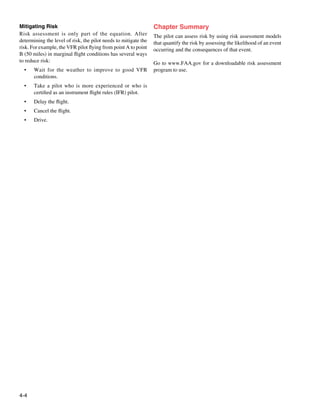
Figure 4-1. A sample risk assessment matrix a pilot can use to
differentiate between low-risk and high-risk flights.
Every flight has hazards and some level of risk associated
with it. Pilots must recognize hazards to understand the risk
they present. Knowing that risk is dynamic, one must look
at the cumulative effect of multiple hazards facing us. It is
critical that pilots are able to:
•	 Differentiate, in advance, between a low-risk flight
and a high-risk flight.
•	 Establish a review process and develop risk mitigation
strategies to address flights throughout that range.
For the pilot who is part of a flight crew, input from
various responsible individuals cancels out any personal
bias or skewed judgment during preflight planning and the
discussion of weather parameters. The single pilot does not
have the advantage of this oversight. If the single pilot does
not comprehend or perceive the risk, he or she will make
no attempt to mitigate it. The single pilot who has no other
crewmember for consultation must be aware of hazardous
conditions that can lead to an accident. Therefore, he or she
has a greater vulnerability than a pilot with a full crew.
Assessing risk is not always easy, especially when it involves
personal quality control. For example, if a pilot who has been
awake for 16 hours and logged over 8 hours of flight time
is asked to continue flying, he or she will generally agree
to continue flying. Pilots often discount the fatigue factor
because they are goal oriented and tend to deny personal
limitations when asked to accept a flight. This tendency
is exemplified by pilots of helicopter emergency medical
services (EMS) who, more than other pilot groups, may make
flight decisions based upon the patient’s welfare rather than
the pilot’s personal limitations. These pilots weigh intangible
factors such as the patient’s condition and fail to quantify
actual hazards appropriately, such as fatigue or weather, when
making flight decisions.
Examining National Transportation Safety Board (NTSB)
reports and other accident research can help a pilot learn to
assess risk more effectively. For example, the accident rate
during night visual flight rules (VFR) decreases by nearly
50 percent once a pilot obtains 100 hours, and continues to
decrease until the 1,000 hour level. The data suggest that for
the first 500 hours, pilots flying VFR at night might want to
establish higher personal limitations than are required by the
regulation and, if applicable, become better skilled at flying
under instrument conditions.
Several risk assessment models are available to assist the pilot
in determining his or her risk before departing on a flight.
The models, all taking slightly different approaches, seek the
common goal of assessing risk in an objective manner.
Quantifying Risk Using a Risk Matrix
The most basic tool is the risk matrix. [Figure 4-1] It assesses
two items: the likelihood of an event occurring and the
consequence of that event.
Likelihood of an Event
Likelihood is nothing more than taking a situation and
determining the probability of its occurrence. It is rated as
probable, occasional, remote, or improbable. For example, a
pilot is flying from point A to point B (50 miles) in marginal
visual flight rules (MVFR) conditions. The likelihood of
encountering potential instrument meteorological conditions
(IMC) is the first question the pilot needs to answer. The
experiences of other pilots coupled with the forecast might
cause the pilot to assign “occasional” to determine the
probability of encountering IMC.
The following are guidelines for making assignments.
•	 Probable—an event will occur several times.
•	 Occasional—an event will probably occur sometime.
• 	 Remote—an event is unlikely to occur, but is
possible.
•	 Improbable—an event is highly unlikely to occur.
Severity of an Event
The other item in the matrix is the severity or consequence
of a pilot’s action(s). It can relate to injury and/or damage. If
the individual in the example above is not an instrument flight
rules (IFR) pilot, what are the consequences of encountering
inadvertent IMC conditions? In this case, because the pilot is
not IFR rated, the consequences are potentially catastrophic.
The following are guidelines for this assignment.
• 	 Catastrophic—results in fatalities, total loss
• 	 Critical—severe injury, major damage
• 	 Marginal—minor injury, minor damage
• 	 Negligible—less than minor injury, less than minor
system damage
4-3
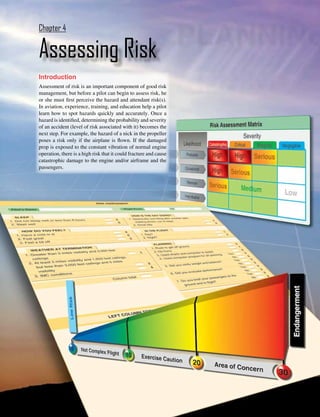
Figure 4-2. Example of a more comprehensive risk assessment program.
RISK ASSESSMENT
LEFT COLUMN TOTAL + RIGHT COLUMN TOTAL = TOTAL SCORE
Column total
Column total
SLEEP
1. Did not sleep well or less than 8 hours
2. Slept well
2
0
HOW DO YOU FEEL?
1. Have a cold or ill
2. Feel great
3. Feel a bit off
4
0
2
WEATHER AT TERMINATION
1. Greater than 5 miles visibility and 3,000 feet
ceilings
2. At least 3 miles visibility and 1,000 feet ceilings,
but less than 3,000 feet ceilings and 5 miles
visibility
3. IMC conditions
1
3
4
HOW IS THE DAY GOING?
1. Seems like one thing after another (late,
making errors, out of step)
2. Great day
3
0
IS THE FLIGHT
1. Day?
2. Night?
1
3
PLANNING
1. Rush to get off ground
2. No hurry
3. Used charts and computer to assist
4. Used computer program for all planning Yes
No
5. Did you verify weight and balance? Yes
No
6. Did you evaluate performance? Yes
No
7. Do you brief your passangers on the Yes
ground and in flight? No
3
1
0
3
0
0
3
0
3
0
2
Pilot’s Name Flight From To
0 10 20 30
Not Complex Flight Exercise Caution Area of Concern
Endangerment
Low
Risk
Simply connecting the two factors as shown in
Figure 4-1 indicates the risk is high and the pilot must not
fly, or fly only after finding ways to mitigate, eliminate, or
control the risk.
Although the matrix in Figure 4-1 provides a general
viewpoint of a generic situation, a more comprehensive
program can be made that is tailored to a pilot’s flying.
[Figure 4-2] This program includes a wide array of aviation
related activities specific to the pilot and assesses health,
fatigue, weather, capabilities, etc. The scores are added and
the overall score falls into various ranges, with the range
representative of actions that a pilot imposes upon himself
or herself.
4-4
Mitigating Risk
Risk assessment is only part of the equation. After
determining the level of risk, the pilot needs to mitigate the
risk. For example, the VFR pilot flying from point A to point
B (50 miles) in marginal flight conditions has several ways
to reduce risk:
• 	 Wait for the weather to improve to good VFR
conditions.
• 	 Take a pilot who is more experienced or who is
certified as an instrument flight rules (IFR) pilot.
• 	 Delay the flight.
• 	 Cancel the flight.
• 	 Drive.
Chapter Summary
The pilot can assess risk by using risk assessment models
that quantify the risk by assessing the likelihood of an event
occurring and the consequences of that event.
Go to www.FAA.gov for a downloadable risk assessment
program to use.

FAA Risk Management

  • 1.
    4-1 Introduction Assessment of riskis an important component of good risk management, but before a pilot can begin to assess risk, he or she must first perceive the hazard and attendant risk(s). In aviation, experience, training, and education help a pilot learn how to spot hazards quickly and accurately. Once a hazard is identified, determining the probability and severity of an accident (level of risk associated with it) becomes the next step. For example, the hazard of a nick in the propeller poses a risk only if the airplane is flown. If the damaged prop is exposed to the constant vibration of normal engine operation, there is a high risk that it could fracture and cause catastrophic damage to the engine and/or airframe and the passengers. Assessing Risk Chapter 4
  • 2.
    4-2 Catastrophic Critical MarginalNegligible Improbable Remote Occasional Probable Risk Assessment Matrix Likelihood Severity Serious Low Medium Serious Serious High High High Figure 4-1. A sample risk assessment matrix a pilot can use to differentiate between low-risk and high-risk flights. Every flight has hazards and some level of risk associated with it. Pilots must recognize hazards to understand the risk they present. Knowing that risk is dynamic, one must look at the cumulative effect of multiple hazards facing us. It is critical that pilots are able to: • Differentiate, in advance, between a low-risk flight and a high-risk flight. • Establish a review process and develop risk mitigation strategies to address flights throughout that range. For the pilot who is part of a flight crew, input from various responsible individuals cancels out any personal bias or skewed judgment during preflight planning and the discussion of weather parameters. The single pilot does not have the advantage of this oversight. If the single pilot does not comprehend or perceive the risk, he or she will make no attempt to mitigate it. The single pilot who has no other crewmember for consultation must be aware of hazardous conditions that can lead to an accident. Therefore, he or she has a greater vulnerability than a pilot with a full crew. Assessing risk is not always easy, especially when it involves personal quality control. For example, if a pilot who has been awake for 16 hours and logged over 8 hours of flight time is asked to continue flying, he or she will generally agree to continue flying. Pilots often discount the fatigue factor because they are goal oriented and tend to deny personal limitations when asked to accept a flight. This tendency is exemplified by pilots of helicopter emergency medical services (EMS) who, more than other pilot groups, may make flight decisions based upon the patient’s welfare rather than the pilot’s personal limitations. These pilots weigh intangible factors such as the patient’s condition and fail to quantify actual hazards appropriately, such as fatigue or weather, when making flight decisions. Examining National Transportation Safety Board (NTSB) reports and other accident research can help a pilot learn to assess risk more effectively. For example, the accident rate during night visual flight rules (VFR) decreases by nearly 50 percent once a pilot obtains 100 hours, and continues to decrease until the 1,000 hour level. The data suggest that for the first 500 hours, pilots flying VFR at night might want to establish higher personal limitations than are required by the regulation and, if applicable, become better skilled at flying under instrument conditions. Several risk assessment models are available to assist the pilot in determining his or her risk before departing on a flight. The models, all taking slightly different approaches, seek the common goal of assessing risk in an objective manner. Quantifying Risk Using a Risk Matrix The most basic tool is the risk matrix. [Figure 4-1] It assesses two items: the likelihood of an event occurring and the consequence of that event. Likelihood of an Event Likelihood is nothing more than taking a situation and determining the probability of its occurrence. It is rated as probable, occasional, remote, or improbable. For example, a pilot is flying from point A to point B (50 miles) in marginal visual flight rules (MVFR) conditions. The likelihood of encountering potential instrument meteorological conditions (IMC) is the first question the pilot needs to answer. The experiences of other pilots coupled with the forecast might cause the pilot to assign “occasional” to determine the probability of encountering IMC. The following are guidelines for making assignments. • Probable—an event will occur several times. • Occasional—an event will probably occur sometime. • Remote—an event is unlikely to occur, but is possible. • Improbable—an event is highly unlikely to occur. Severity of an Event The other item in the matrix is the severity or consequence of a pilot’s action(s). It can relate to injury and/or damage. If the individual in the example above is not an instrument flight rules (IFR) pilot, what are the consequences of encountering inadvertent IMC conditions? In this case, because the pilot is not IFR rated, the consequences are potentially catastrophic. The following are guidelines for this assignment. • Catastrophic—results in fatalities, total loss • Critical—severe injury, major damage • Marginal—minor injury, minor damage • Negligible—less than minor injury, less than minor system damage
  • 3.
    4-3 Figure 4-2. Exampleof a more comprehensive risk assessment program. RISK ASSESSMENT LEFT COLUMN TOTAL + RIGHT COLUMN TOTAL = TOTAL SCORE Column total Column total SLEEP 1. Did not sleep well or less than 8 hours 2. Slept well 2 0 HOW DO YOU FEEL? 1. Have a cold or ill 2. Feel great 3. Feel a bit off 4 0 2 WEATHER AT TERMINATION 1. Greater than 5 miles visibility and 3,000 feet ceilings 2. At least 3 miles visibility and 1,000 feet ceilings, but less than 3,000 feet ceilings and 5 miles visibility 3. IMC conditions 1 3 4 HOW IS THE DAY GOING? 1. Seems like one thing after another (late, making errors, out of step) 2. Great day 3 0 IS THE FLIGHT 1. Day? 2. Night? 1 3 PLANNING 1. Rush to get off ground 2. No hurry 3. Used charts and computer to assist 4. Used computer program for all planning Yes No 5. Did you verify weight and balance? Yes No 6. Did you evaluate performance? Yes No 7. Do you brief your passangers on the Yes ground and in flight? No 3 1 0 3 0 0 3 0 3 0 2 Pilot’s Name Flight From To 0 10 20 30 Not Complex Flight Exercise Caution Area of Concern Endangerment Low Risk Simply connecting the two factors as shown in Figure 4-1 indicates the risk is high and the pilot must not fly, or fly only after finding ways to mitigate, eliminate, or control the risk. Although the matrix in Figure 4-1 provides a general viewpoint of a generic situation, a more comprehensive program can be made that is tailored to a pilot’s flying. [Figure 4-2] This program includes a wide array of aviation related activities specific to the pilot and assesses health, fatigue, weather, capabilities, etc. The scores are added and the overall score falls into various ranges, with the range representative of actions that a pilot imposes upon himself or herself.
  • 4.
    4-4 Mitigating Risk Risk assessmentis only part of the equation. After determining the level of risk, the pilot needs to mitigate the risk. For example, the VFR pilot flying from point A to point B (50 miles) in marginal flight conditions has several ways to reduce risk: • Wait for the weather to improve to good VFR conditions. • Take a pilot who is more experienced or who is certified as an instrument flight rules (IFR) pilot. • Delay the flight. • Cancel the flight. • Drive. Chapter Summary The pilot can assess risk by using risk assessment models that quantify the risk by assessing the likelihood of an event occurring and the consequences of that event. Go to www.FAA.gov for a downloadable risk assessment program to use.