Long Shot 
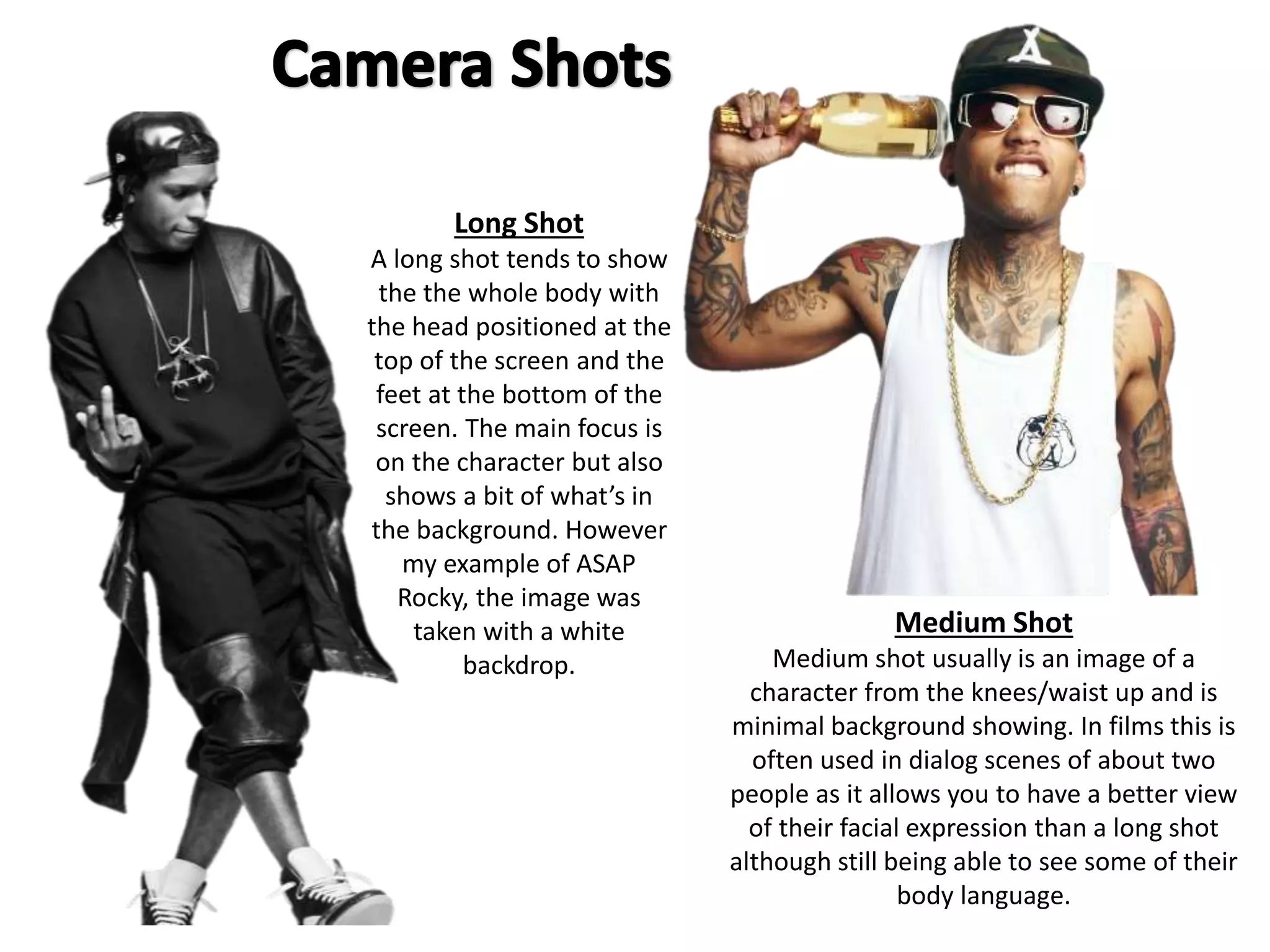
A long shot tends to show 
the the whole body with 
the head positioned at the 
top of the screen and the 
feet at the bottom of the 
screen. The main focus is 
on the character but also 
shows a bit of what’s in 
the background. However 
my example of ASAP 
Rocky, the image was 
taken with a white 
backdrop. 
Medium Shot 
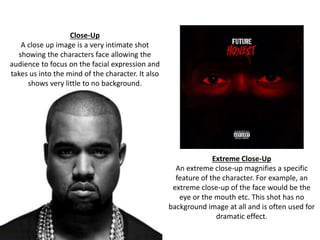
Medium shot usually is an image of a 
character from the knees/waist up and is 
minimal background showing. In films this is 
often used in dialog scenes of about two 
people as it allows you to have a better view 
of their facial expression than a long shot 
although still being able to see some of their 
body language.
Close-Up 
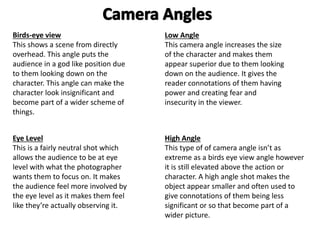
A close up image is a very intimate shot 
showing the characters face allowing the 
audience to focus on the facial expression and 
takes us into the mind of the character. It also 
shows very little to no background. 
Extreme Close-Up 
An extreme close-up magnifies a specific 
feature of the character. For example, an 
extreme close-up of the face would be the 
eye or the mouth etc. This shot has no 
background image at all and is often used for 
dramatic effect.
Birds-eye view 
This shows a scene from directly 
overhead. This angle puts the 
audience in a god like position due 
to them looking down on the 
character. This angle can make the 
character look insignificant and 
become part of a wider scheme of 
things. 
Low Angle 
This camera angle increases the size 
of the character and makes them 
appear superior due to them looking 
down on the audience. It gives the 
reader connotations of them having 
power and creating fear and 
insecurity in the viewer. 
Eye Level 
This is a fairly neutral shot which 
allows the audience to be at eye 
level with what the photographer 
wants them to focus on. It makes 
the audience feel more involved by 
the eye level as it makes them feel 
like they’re actually observing it. 
High Angle 
This type of of camera angle isn’t as 
extreme as a birds eye view angle however 
it is still elevated above the action or 
character. A high angle shot makes the 
object appear smaller and often used to 
give connotations of them being less 
significant or so that become part of a 
wider picture.
Low key lighting 
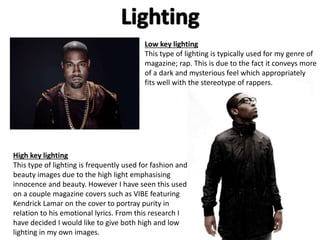
This type of lighting is typically used for my genre of 
magazine; rap. This is due to the fact it conveys more 
of a dark and mysterious feel which appropriately 
fits well with the stereotype of rappers. 
High key lighting 
This type of lighting is frequently used for fashion and 
beauty images due to the high light emphasising 
innocence and beauty. However I have seen this used 
on a couple magazine covers such as VIBE featuring 
Kendrick Lamar on the cover to portray purity in 
relation to his emotional lyrics. From this research I 
have decided I would like to give both high and low 
lighting in my own images.
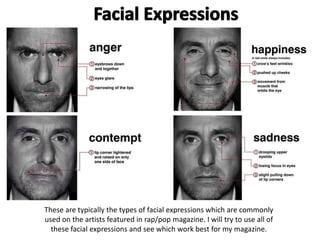
These are typically the types of facial expressions which are commonly 
used on the artists featured in rap/pop magazine. I will try to use all of 
these facial expressions and see which work best for my magazine.

Camera shots

  • 1.
    Long Shot Along shot tends to show the the whole body with the head positioned at the top of the screen and the feet at the bottom of the screen. The main focus is on the character but also shows a bit of what’s in the background. However my example of ASAP Rocky, the image was taken with a white backdrop. Medium Shot Medium shot usually is an image of a character from the knees/waist up and is minimal background showing. In films this is often used in dialog scenes of about two people as it allows you to have a better view of their facial expression than a long shot although still being able to see some of their body language.
  • 2.
    Close-Up A closeup image is a very intimate shot showing the characters face allowing the audience to focus on the facial expression and takes us into the mind of the character. It also shows very little to no background. Extreme Close-Up An extreme close-up magnifies a specific feature of the character. For example, an extreme close-up of the face would be the eye or the mouth etc. This shot has no background image at all and is often used for dramatic effect.
  • 3.
    Birds-eye view Thisshows a scene from directly overhead. This angle puts the audience in a god like position due to them looking down on the character. This angle can make the character look insignificant and become part of a wider scheme of things. Low Angle This camera angle increases the size of the character and makes them appear superior due to them looking down on the audience. It gives the reader connotations of them having power and creating fear and insecurity in the viewer. Eye Level This is a fairly neutral shot which allows the audience to be at eye level with what the photographer wants them to focus on. It makes the audience feel more involved by the eye level as it makes them feel like they’re actually observing it. High Angle This type of of camera angle isn’t as extreme as a birds eye view angle however it is still elevated above the action or character. A high angle shot makes the object appear smaller and often used to give connotations of them being less significant or so that become part of a wider picture.
  • 4.
    Low key lighting This type of lighting is typically used for my genre of magazine; rap. This is due to the fact it conveys more of a dark and mysterious feel which appropriately fits well with the stereotype of rappers. High key lighting This type of lighting is frequently used for fashion and beauty images due to the high light emphasising innocence and beauty. However I have seen this used on a couple magazine covers such as VIBE featuring Kendrick Lamar on the cover to portray purity in relation to his emotional lyrics. From this research I have decided I would like to give both high and low lighting in my own images.
  • 5.
    These are typicallythe types of facial expressions which are commonly used on the artists featured in rap/pop magazine. I will try to use all of these facial expressions and see which work best for my magazine.