Extreme learning machine:Theory and applications
G.-B. Huang, Q.-Y. Zhu, and C.-K. Siew
Neurocomputing, 2006


                            Presenter: James Chou
                                        2012/03/15
Outline
2


       Introduction
       Single-hidden layer feed-forward neural networks
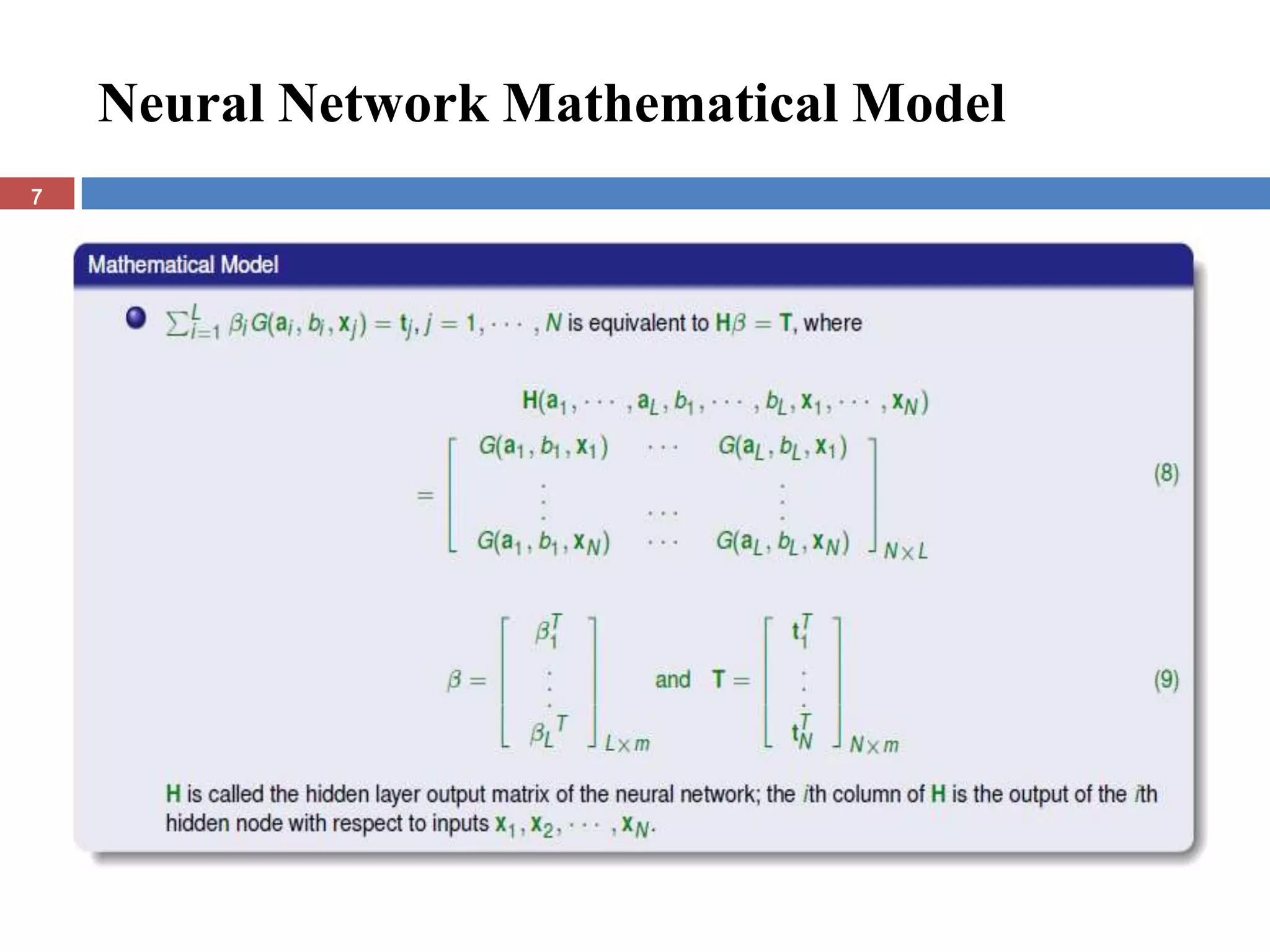
       Neural Network Mathematical Model
       Back Propagation algorithm
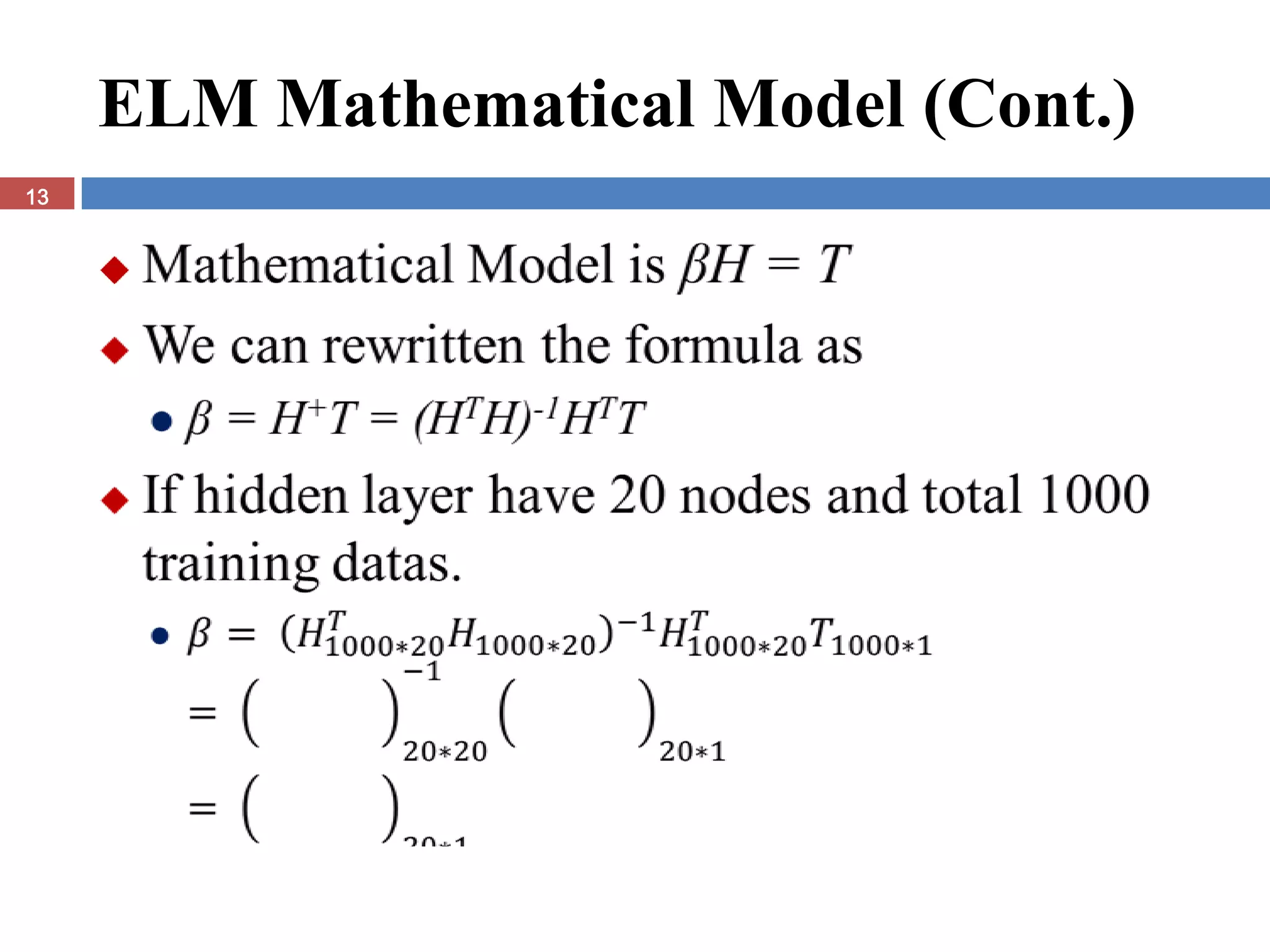
       ELM Mathematical Model
       Performance Evaluation
       Conclusion
Introduction
3


       For past decades, gradient descent based methods have mainly
        been used in many learning algorithms of feed-forward neural
        networks.
       Traditionally, all the parameters of the feed-forward neural
        networks need to tune iterative and need a very long time to
        learn.
       When the input weights and the hidden layer biases are
        randomly assigned, SLFNs (single-hidden layer feed-forward
        neural networks) can be simply considered as a linear system
        and the output weights (linking the hidden layer to the output
        layer) can be computed through simple generalized inverse
        operation.
Introduction (Cont.)
4


       Based on this idea, this paper proposes a simple learning
        algorithm for SLFNs called extreme learning.
       Different from traditional learning algorithms the extreme
        learning algorithm not only provide the smaller training
        error but also the better performance.
Single-hidden layer feed-forward
5
    neural networks

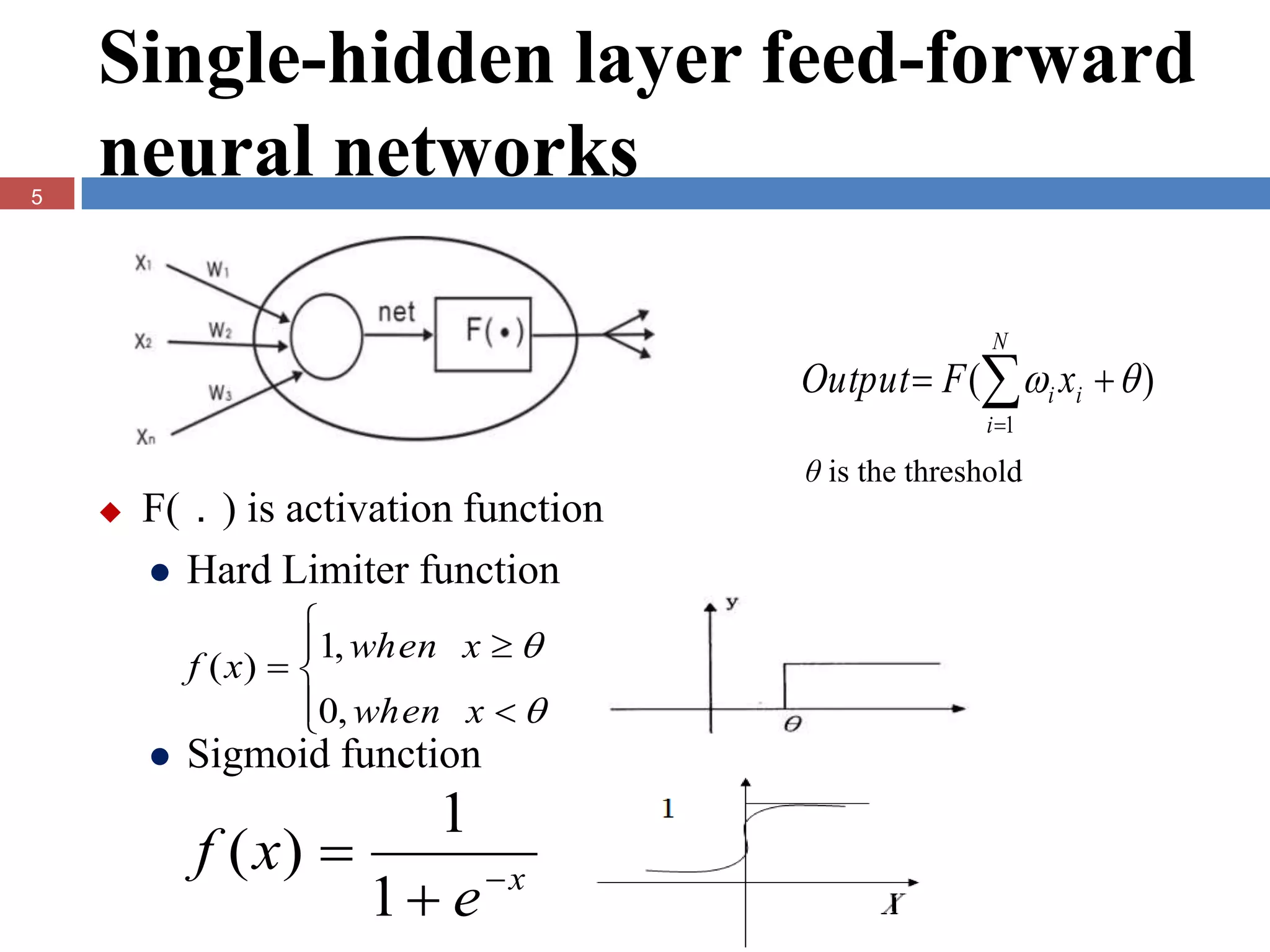
                                                     N
                                      Output  F ( i xi   )
                                                     i 1
                                      θ is the threshold
       F(.) is activation function
         Hard Limiter function
                     
                     1, when x  
            f ( x)  
                     0, when x  
                     
           Sigmoid function
                        1
            f ( x) 
                     1  e x
Single-hidden layer feed-forward
6
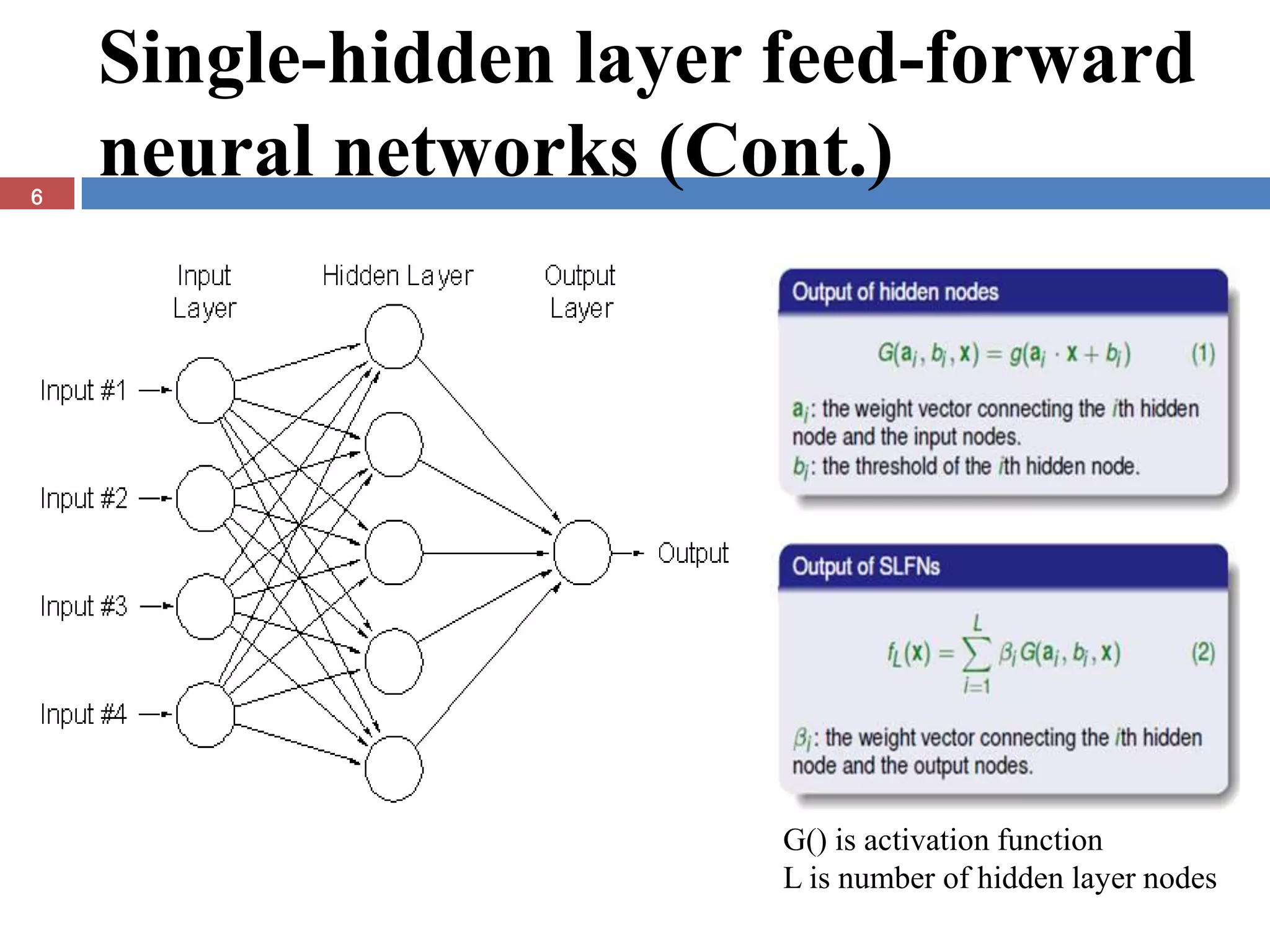
    neural networks (Cont.)


                       G() is activation function
                       L is number of hidden layer nodes
Neural Network Mathematical Model
7
Neural Network Mathematical Model (Cont.)
8


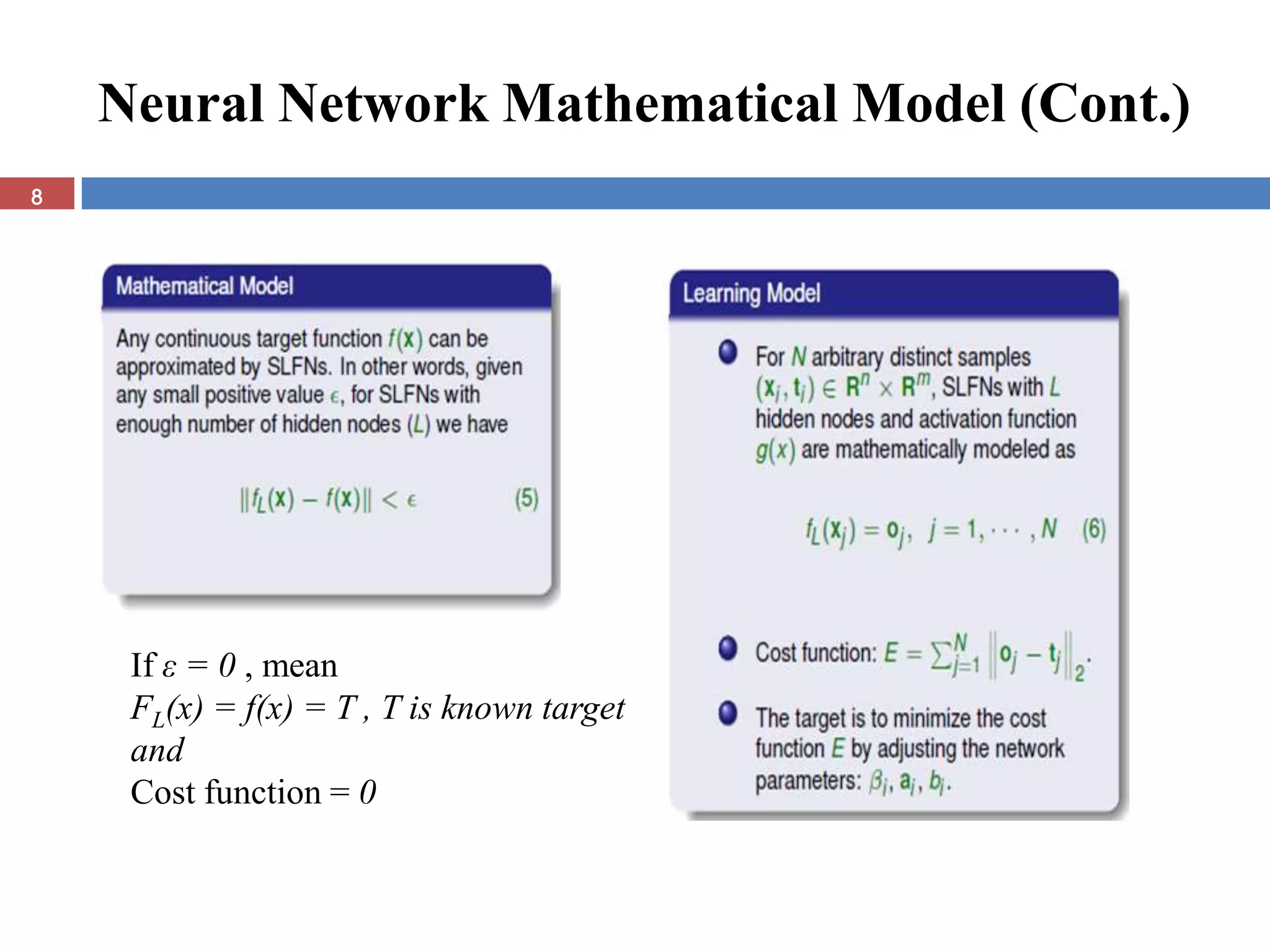
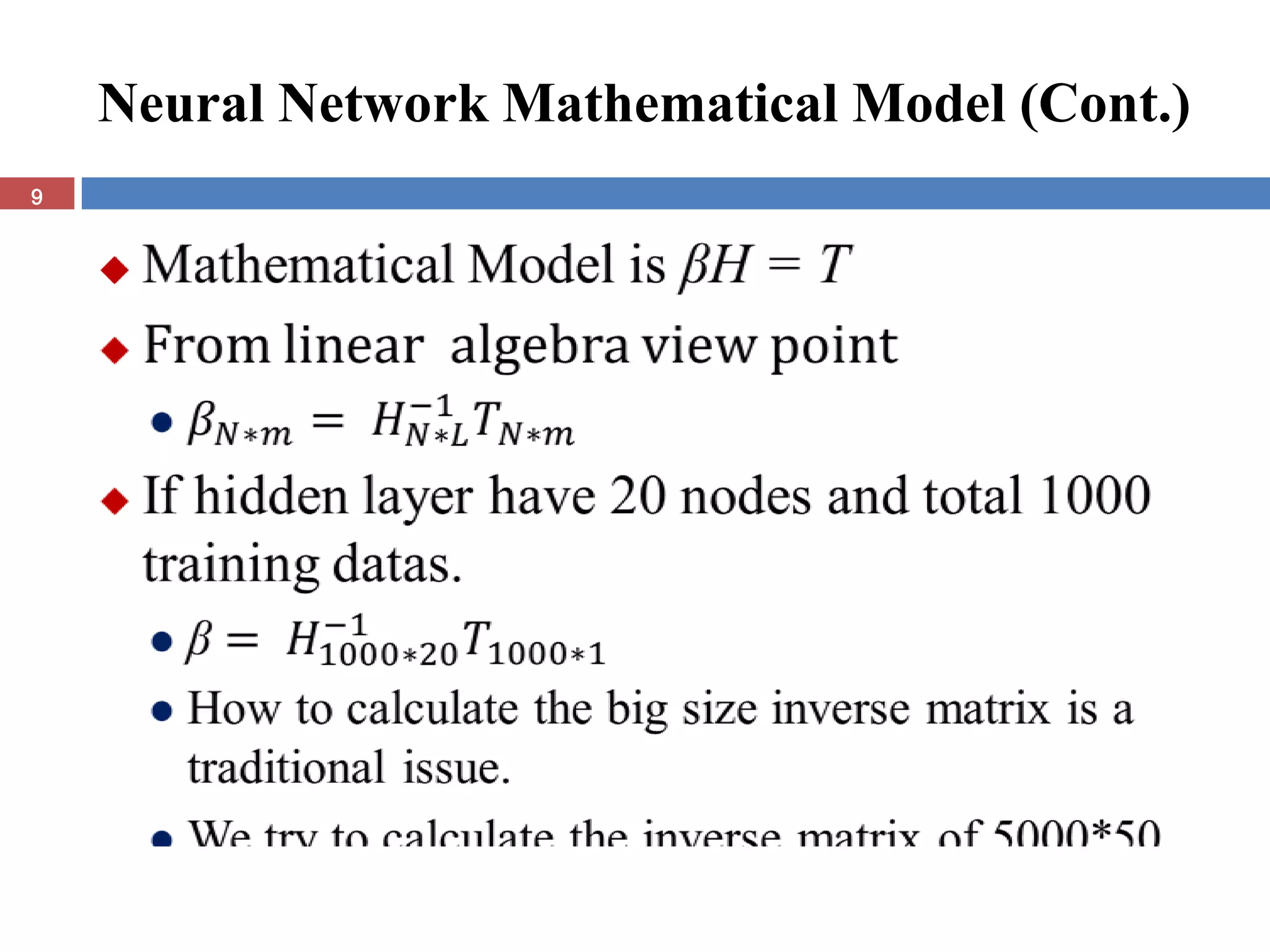
     If ε = 0 , mean
     FL(x) = f(x) = T , T is known target
     and
     Cost function = 0
Neural Network Mathematical Model (Cont.)
9


    
Back Propagation algorithm
10


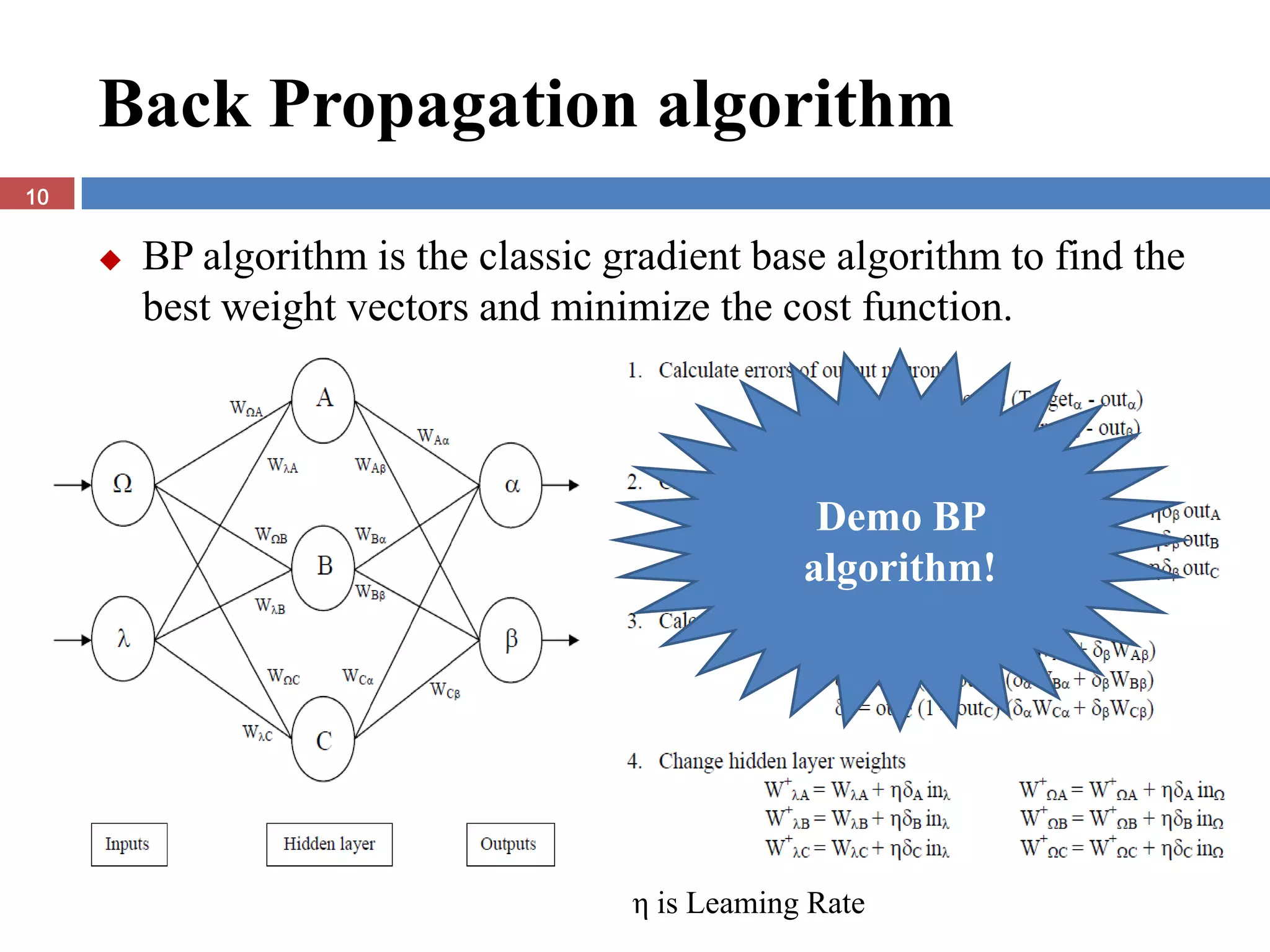
        BP algorithm is the classic gradient base algorithm to find the
         best weight vectors and minimize the cost function.


                                                   Demo BP
                                                  algorithm!


                                      η is Leaming Rate
ELM Mathematical Model
11


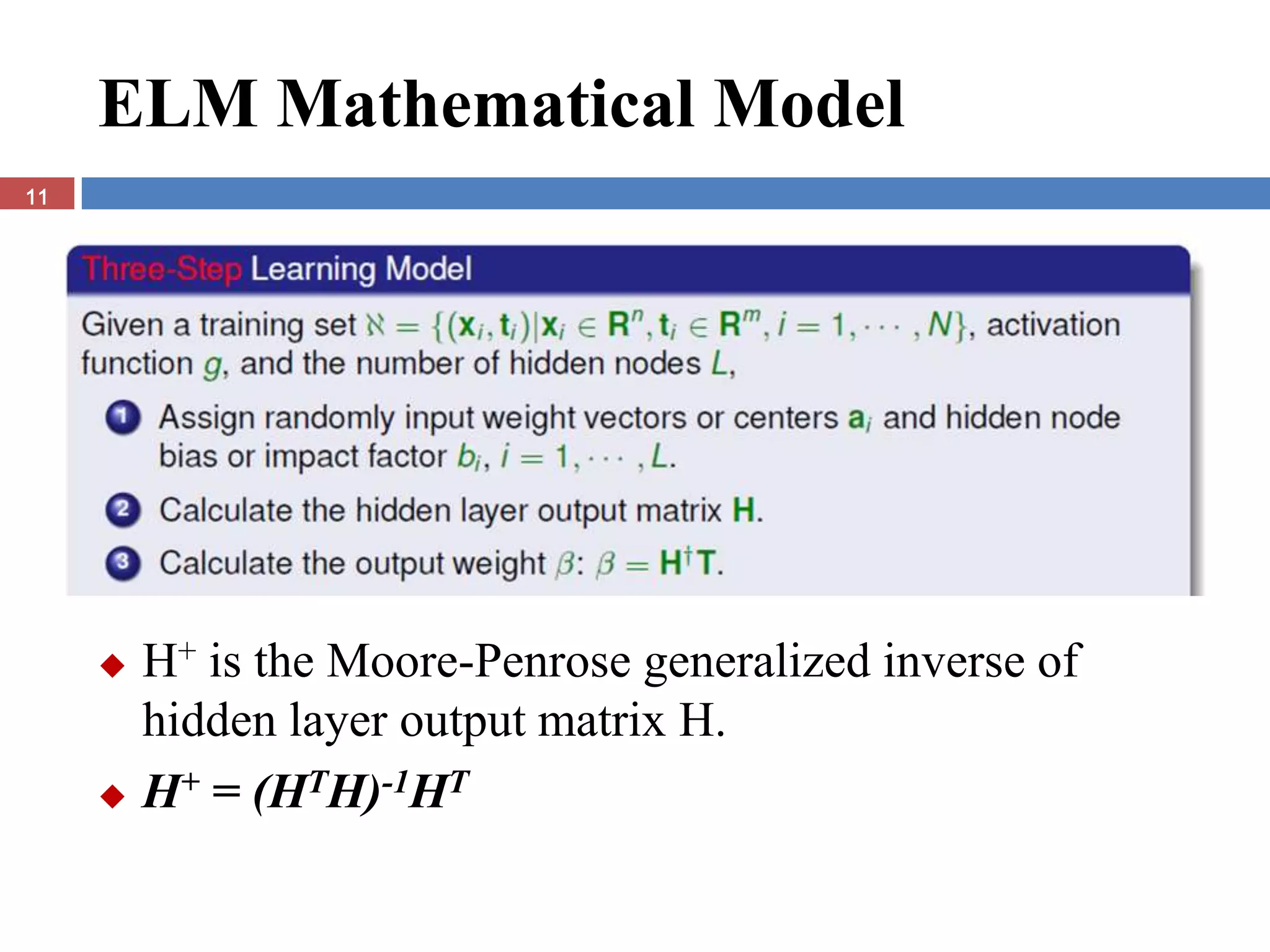
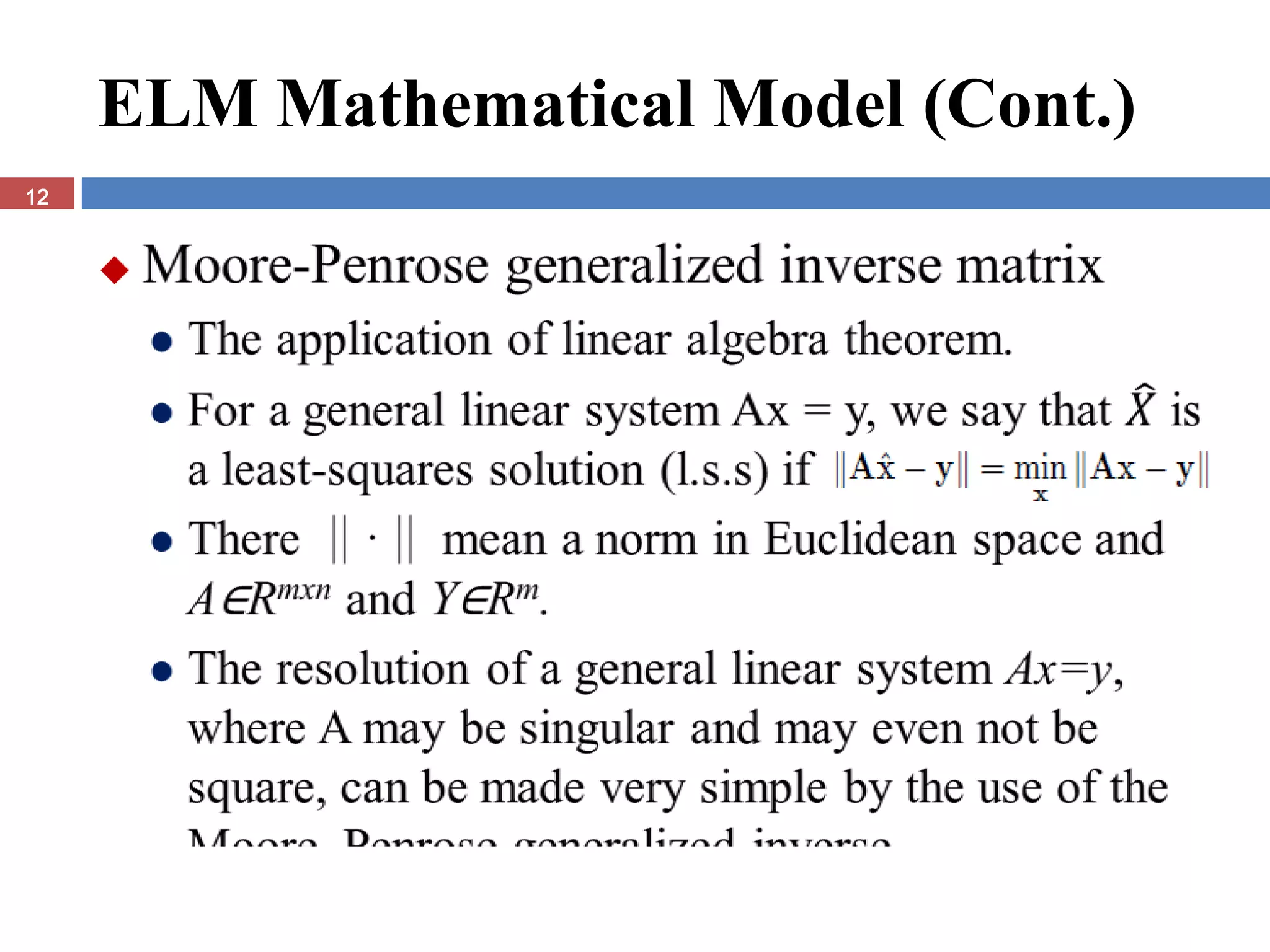
        H+ is the Moore-Penrose generalized inverse of
         hidden layer output matrix H.
        H+ = (HTH)-1HT
ELM Mathematical Model (Cont.)
12


     
ELM Mathematical Model (Cont.)
13


     
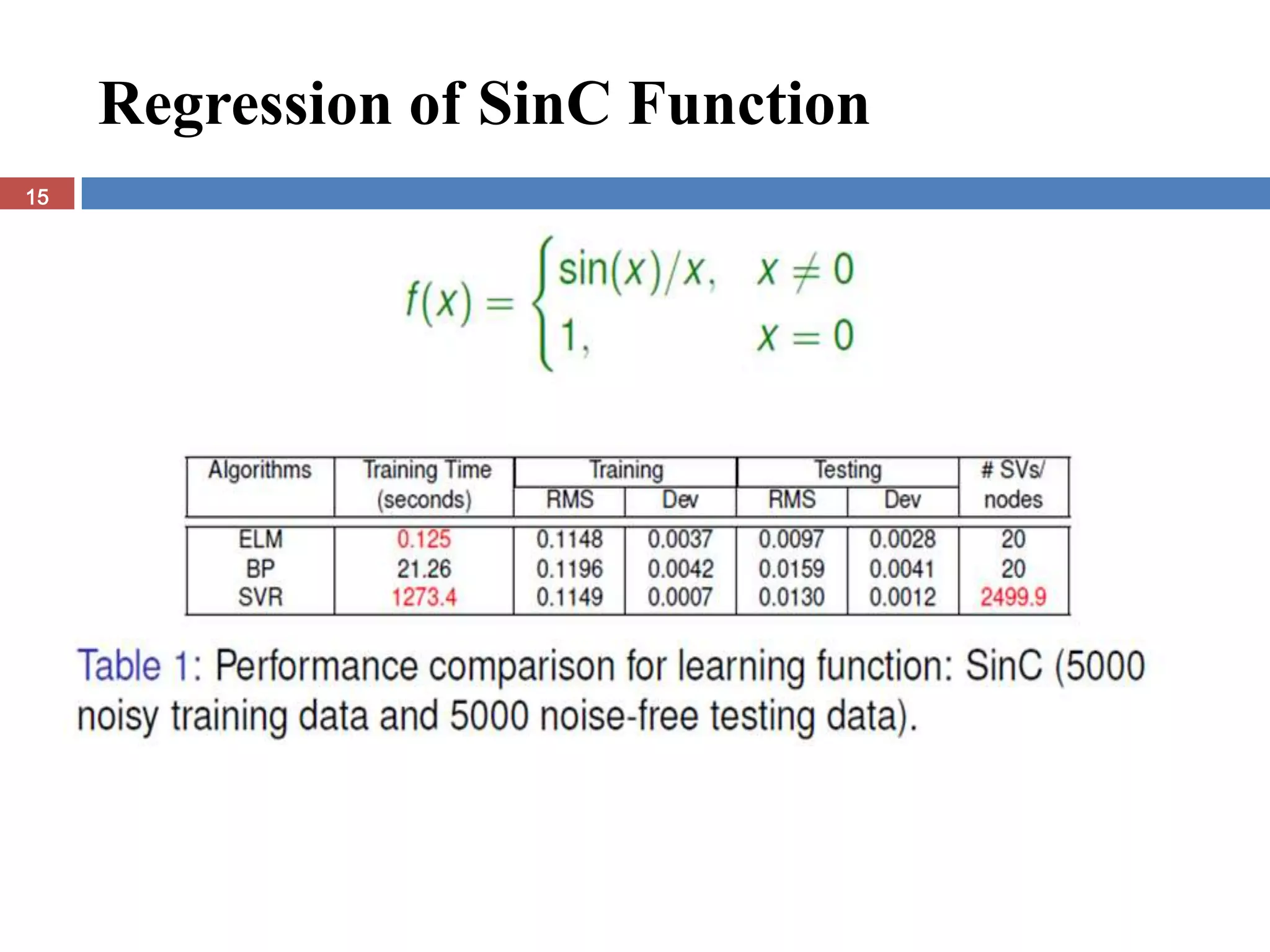
Regression of SinC Function
15
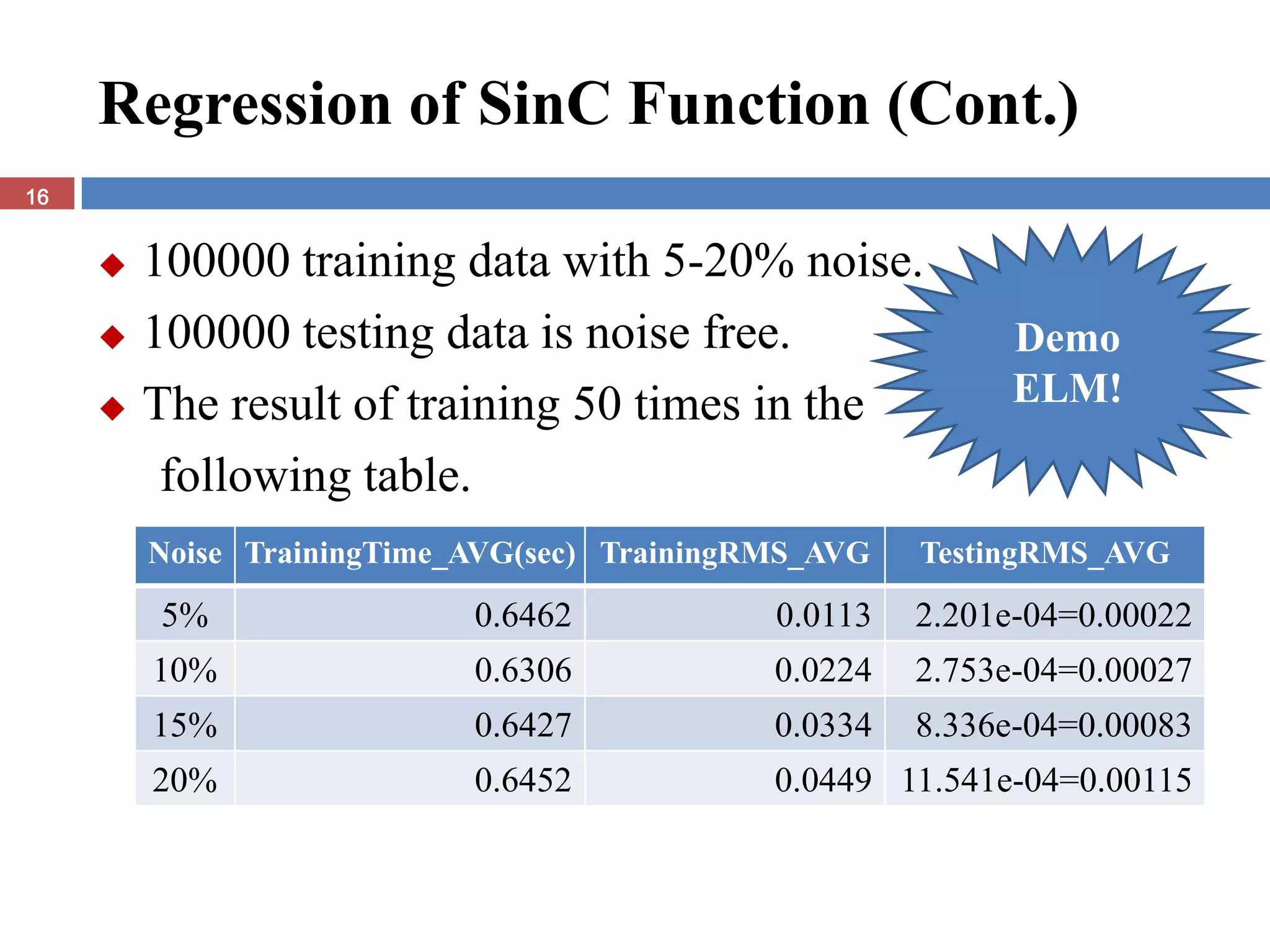
Regression of SinC Function (Cont.)
16


        100000 training data with 5-20% noise.
        100000 testing data is noise free.                 Demo
        The result of training 50 times in the             ELM!

          following table.
         Noise TrainingTime_AVG(sec) TrainingRMS_AVG   TestingRMS_AVG
         5%                 0.6462            0.0113   2.201e-04=0.00022
         10%                0.6306            0.0224   2.753e-04=0.00027
         15%                0.6427            0.0334   8.336e-04=0.00083
         20%                0.6452            0.0449 11.541e-04=0.00115
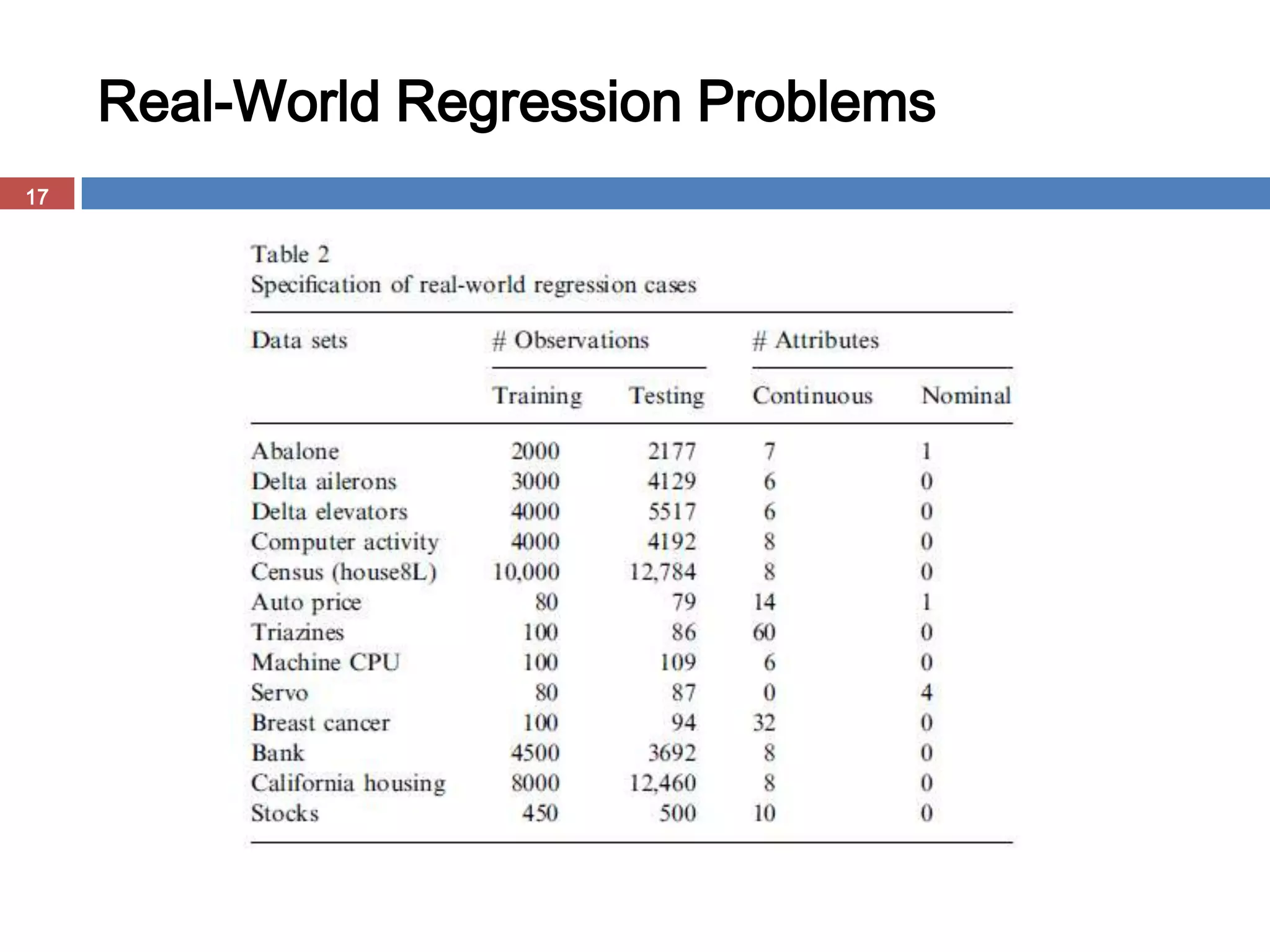
Real-World Regression Problems
17
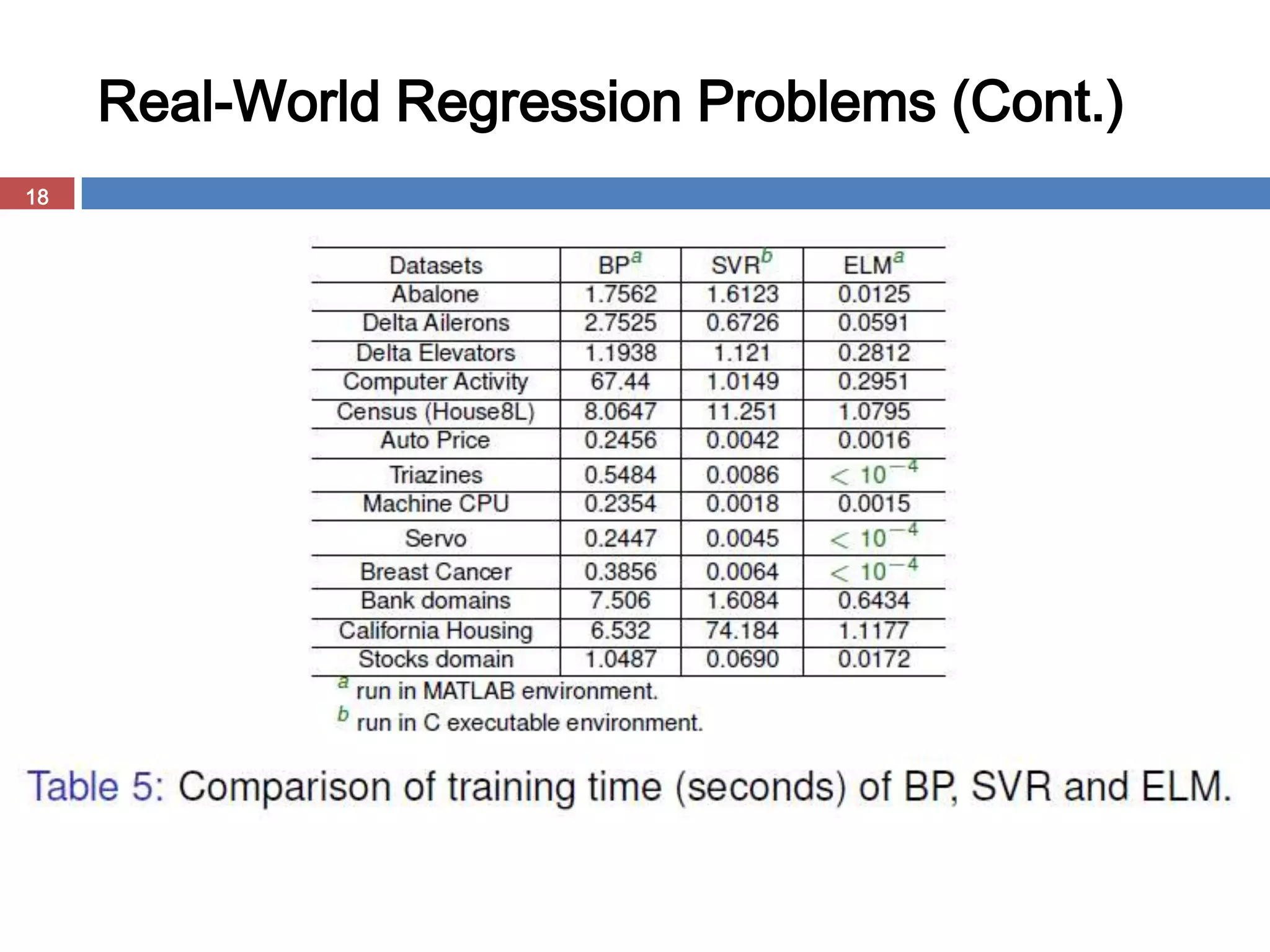
Real-World Regression Problems (Cont.)
18
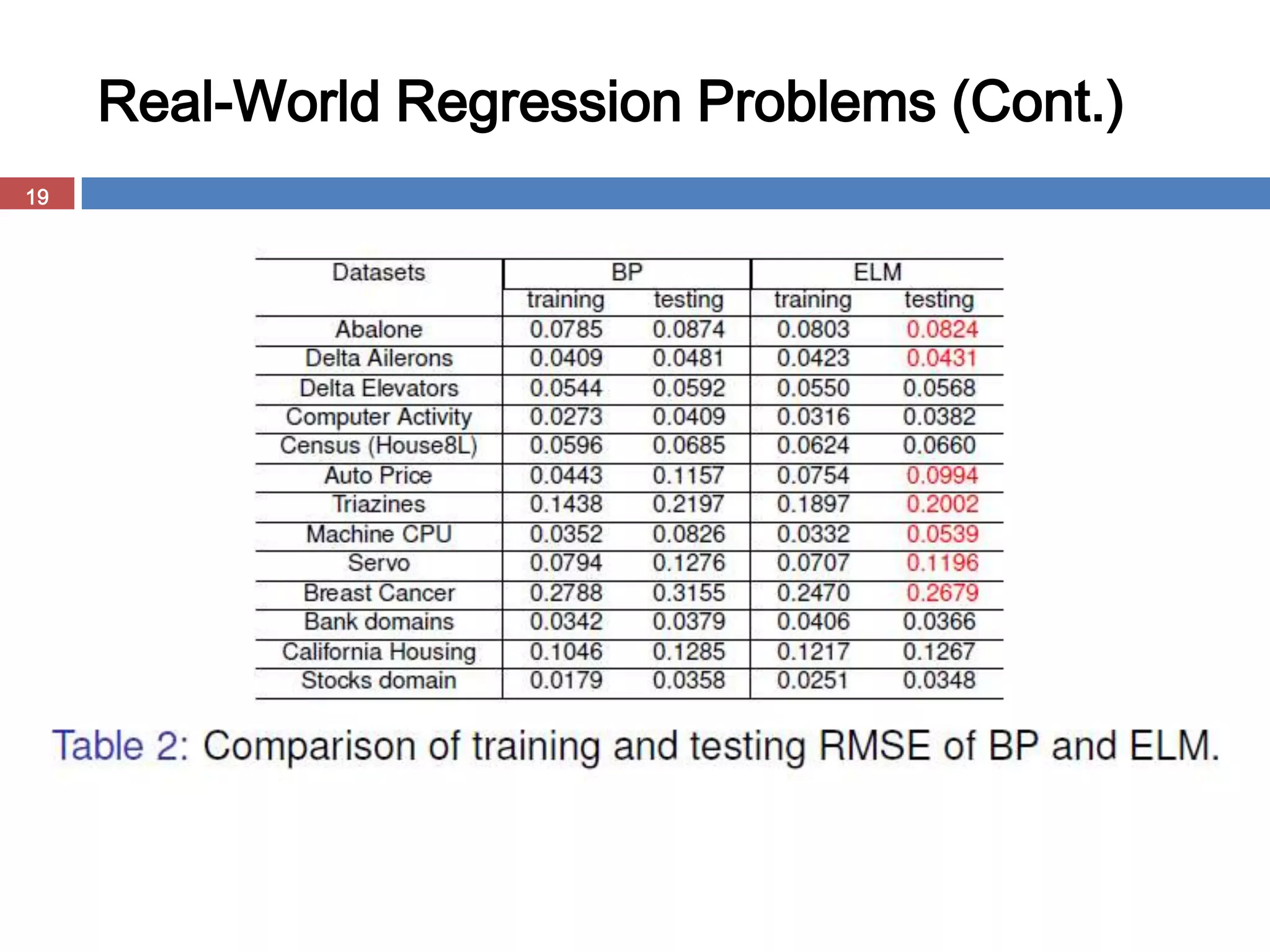
Real-World Regression Problems (Cont.)
19
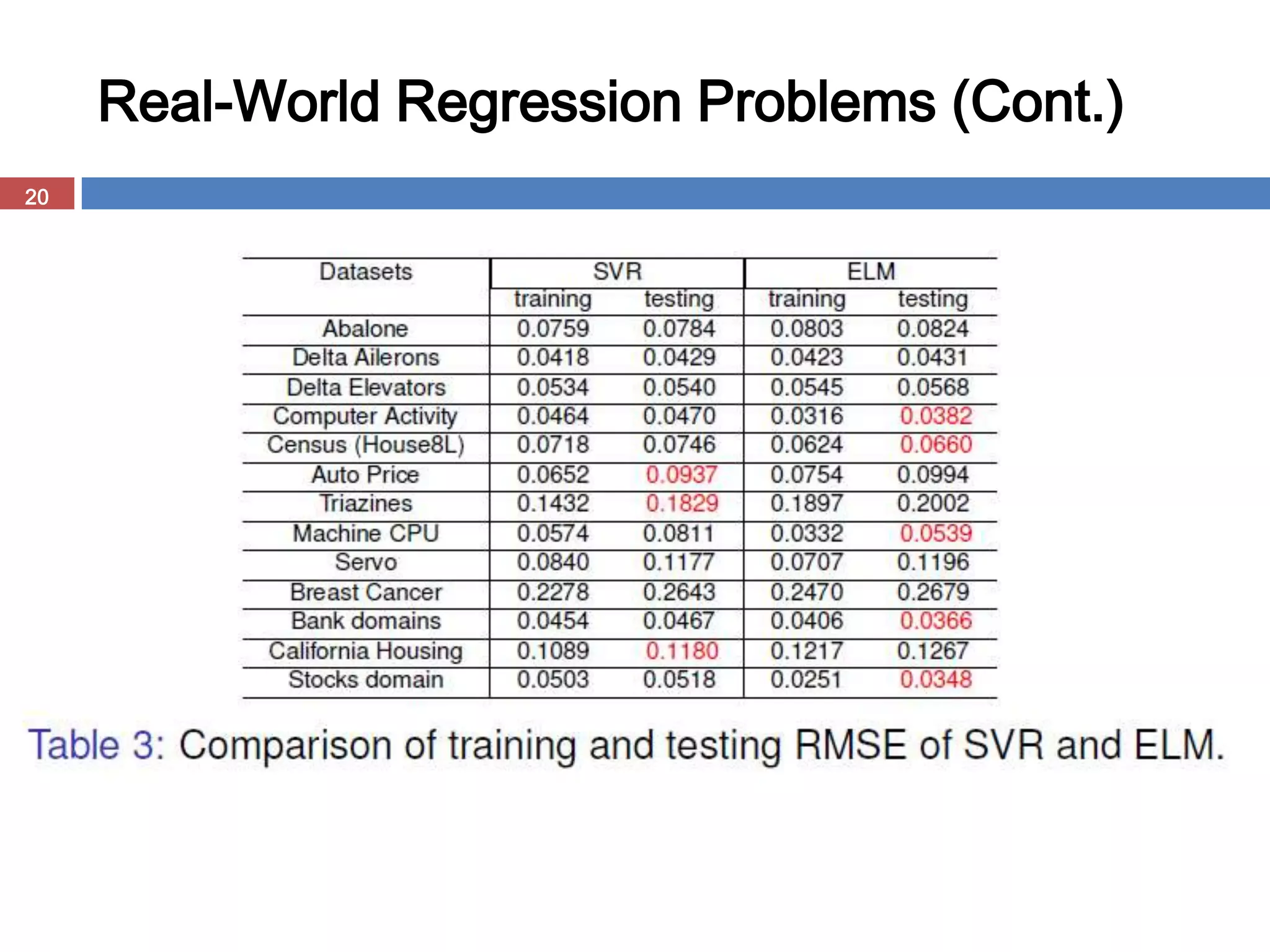
Real-World Regression Problems (Cont.)
20
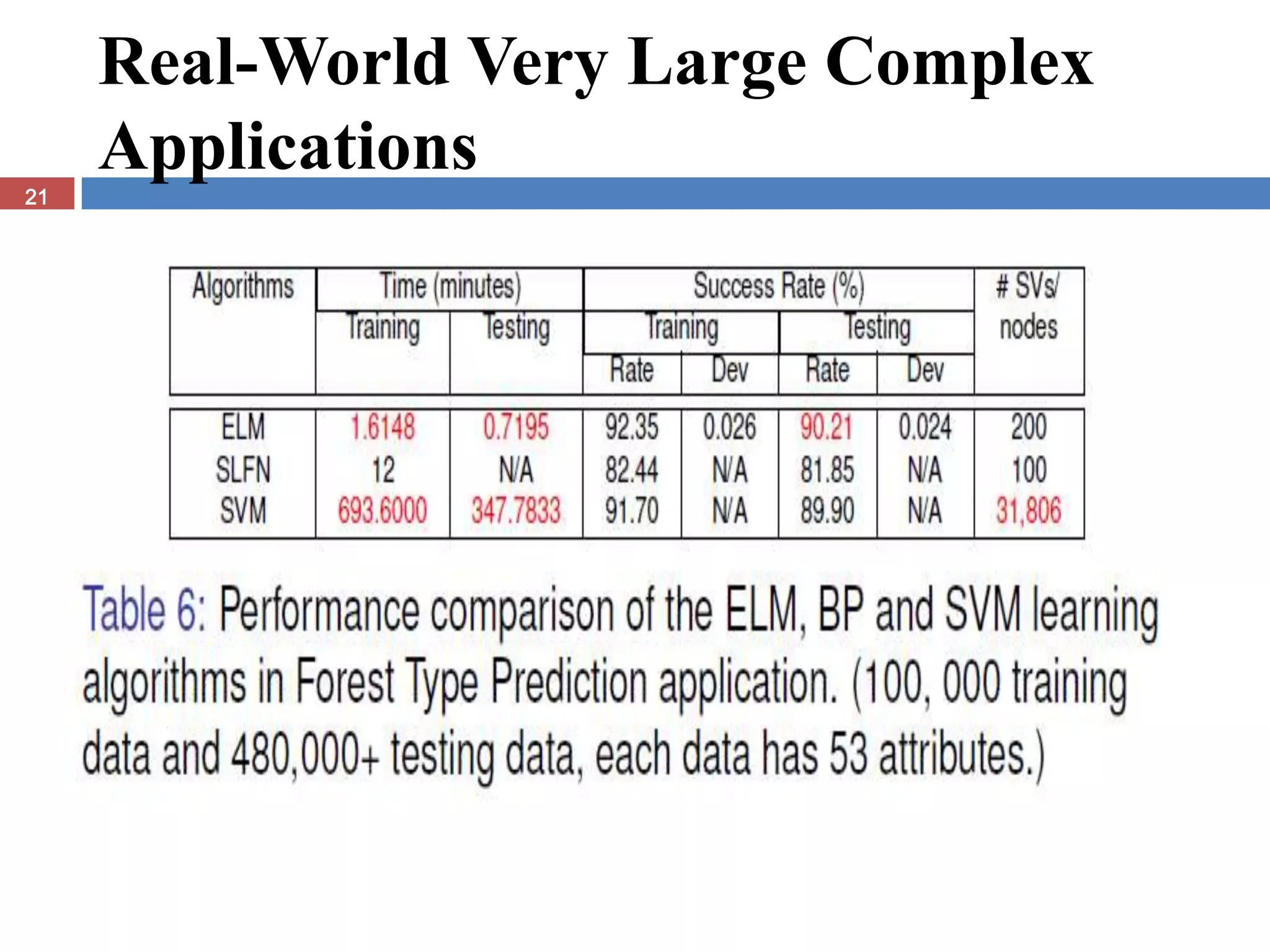
Real-World Very Large Complex
     Applications
21
Real Medical Diagnosis Application:
     Diabetes
22
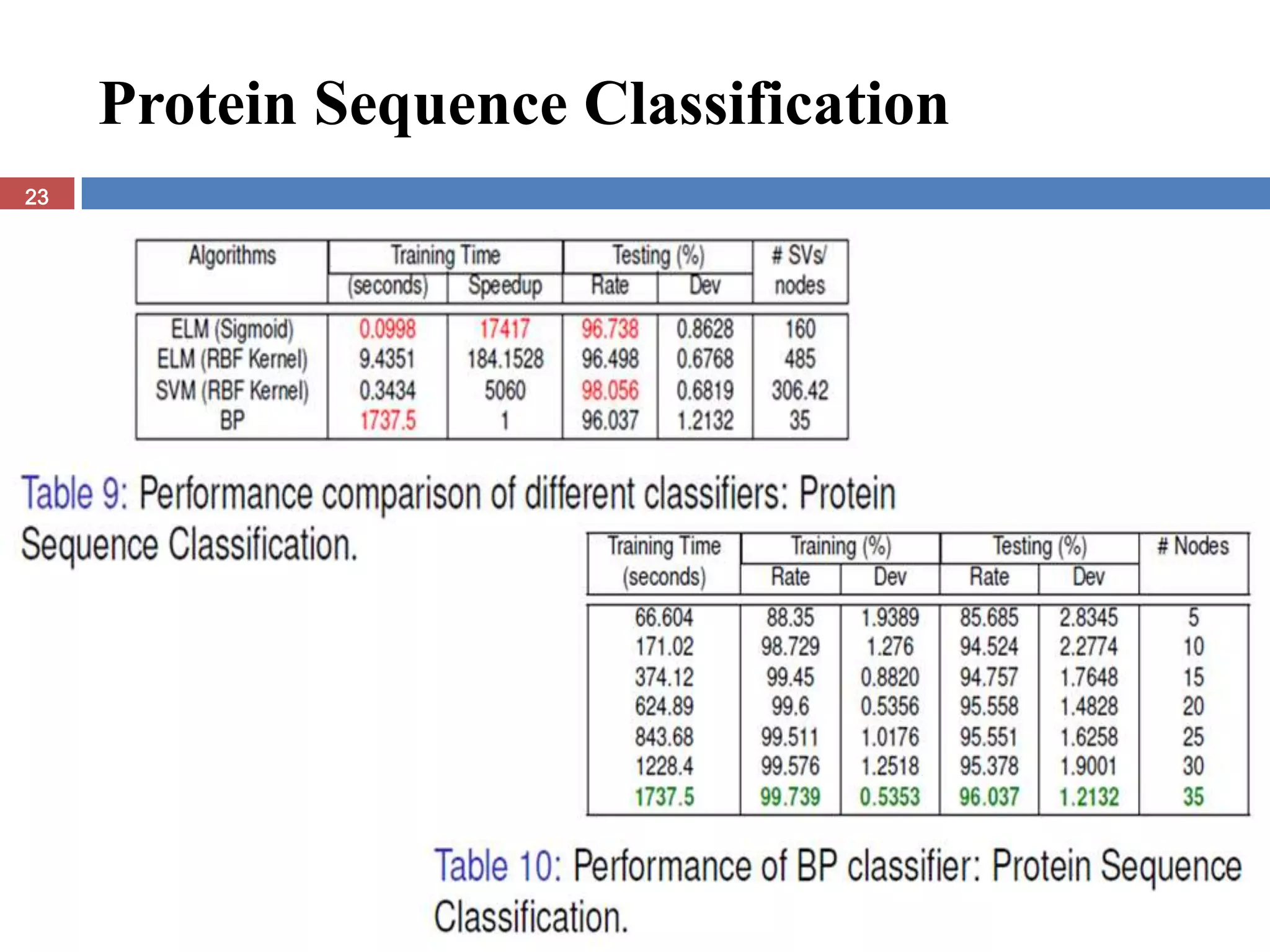
Protein Sequence Classification
23
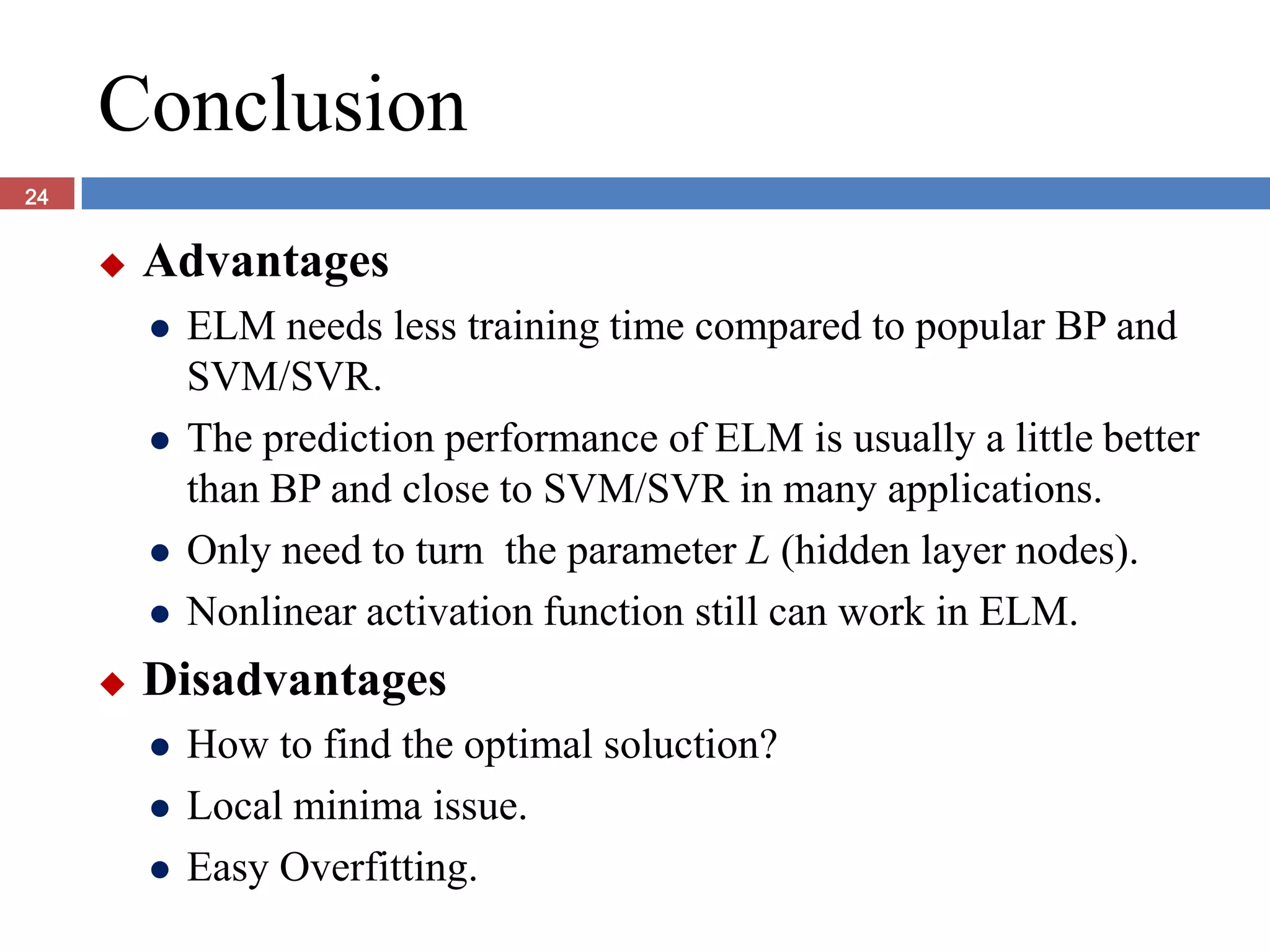
Conclusion
24


        Advantages
            ELM needs less training time compared to popular BP and
             SVM/SVR.
            The prediction performance of ELM is usually a little better
             than BP and close to SVM/SVR in many applications.
            Only need to turn the parameter L (hidden layer nodes).
            Nonlinear activation function still can work in ELM.
        Disadvantages
            How to find the optimal soluction?
            Local minima issue.
            Easy Overfitting.

Extreme learning machine:Theory and applications

  • 1.
    Extreme learning machine:Theoryand applications G.-B. Huang, Q.-Y. Zhu, and C.-K. Siew Neurocomputing, 2006 Presenter: James Chou 2012/03/15
  • 2.
    Outline 2  Introduction  Single-hidden layer feed-forward neural networks  Neural Network Mathematical Model  Back Propagation algorithm  ELM Mathematical Model  Performance Evaluation  Conclusion
  • 3.
    Introduction 3  For past decades, gradient descent based methods have mainly been used in many learning algorithms of feed-forward neural networks.  Traditionally, all the parameters of the feed-forward neural networks need to tune iterative and need a very long time to learn.  When the input weights and the hidden layer biases are randomly assigned, SLFNs (single-hidden layer feed-forward neural networks) can be simply considered as a linear system and the output weights (linking the hidden layer to the output layer) can be computed through simple generalized inverse operation.
  • 4.
    Introduction (Cont.) 4  Based on this idea, this paper proposes a simple learning algorithm for SLFNs called extreme learning.  Different from traditional learning algorithms the extreme learning algorithm not only provide the smaller training error but also the better performance.
  • 5.
    Single-hidden layer feed-forward 5 neural networks N Output  F ( i xi   ) i 1 θ is the threshold  F(.) is activation function  Hard Limiter function  1, when x   f ( x)   0, when x     Sigmoid function 1 f ( x)  1  e x
  • 6.
    Single-hidden layer feed-forward 6 neural networks (Cont.) G() is activation function L is number of hidden layer nodes
  • 7.
  • 8.
    Neural Network MathematicalModel (Cont.) 8 If ε = 0 , mean FL(x) = f(x) = T , T is known target and Cost function = 0
  • 9.
    Neural Network MathematicalModel (Cont.) 9 
  • 10.
    Back Propagation algorithm 10  BP algorithm is the classic gradient base algorithm to find the best weight vectors and minimize the cost function. Demo BP algorithm! η is Leaming Rate
  • 11.
    ELM Mathematical Model 11  H+ is the Moore-Penrose generalized inverse of hidden layer output matrix H.  H+ = (HTH)-1HT
  • 12.
    ELM Mathematical Model(Cont.) 12 
  • 13.
    ELM Mathematical Model(Cont.) 13 
  • 15.
    Regression of SinCFunction 15
  • 16.
    Regression of SinCFunction (Cont.) 16  100000 training data with 5-20% noise.  100000 testing data is noise free. Demo  The result of training 50 times in the ELM! following table. Noise TrainingTime_AVG(sec) TrainingRMS_AVG TestingRMS_AVG 5% 0.6462 0.0113 2.201e-04=0.00022 10% 0.6306 0.0224 2.753e-04=0.00027 15% 0.6427 0.0334 8.336e-04=0.00083 20% 0.6452 0.0449 11.541e-04=0.00115
  • 17.
  • 18.
  • 19.
  • 20.
  • 21.
    Real-World Very LargeComplex Applications 21
  • 22.
    Real Medical DiagnosisApplication: Diabetes 22
  • 23.
  • 24.
    Conclusion 24  Advantages  ELM needs less training time compared to popular BP and SVM/SVR.  The prediction performance of ELM is usually a little better than BP and close to SVM/SVR in many applications.  Only need to turn the parameter L (hidden layer nodes).  Nonlinear activation function still can work in ELM.  Disadvantages  How to find the optimal soluction?  Local minima issue.  Easy Overfitting.