Guided By
Sumit sir

Submitted
By
Mehul
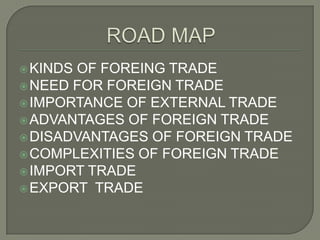
 KINDS

OF FOREING TRADE
 NEED FOR FOREIGN TRADE
 IMPORTANCE OF EXTERNAL TRADE
 ADVANTAGES OF FOREIGN TRADE
 DISADVANTAGES OF FOREIGN TRADE
 COMPLEXITIES OF FOREIGN TRADE
 IMPORT TRADE
 EXPORT TRADE
 Due

to difference in geographical
condition, a nation cannot produce all
commodities itself. It has to depend on
other nation for the commodities either
cannot be produced or the supply of which
less than the demand every nation faces
shortage of some commodities or other.
 Uneven

Distribution of Natural Resources

 Division

of Labour and Specialisation

 Varying

Rate of Economic Growth

 Theory

of Comparative Cost
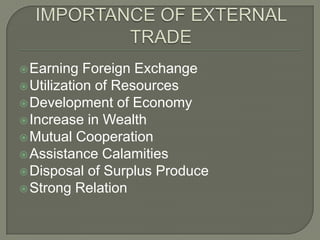
 Earning

Foreign Exchange
 Utilization of Resources
 Development of Economy
 Increase in Wealth
 Mutual Cooperation
 Assistance Calamities
 Disposal of Surplus Produce
 Strong Relation
 Availability

of Different Commodities
 Maximum Utilisation of Natural
Resources
 Advantage of Geographical Facilities
 Higher Standard of Living
 Advantage to agricultural and industrial
countries
 Development of Service Sector
 Promotion of World-peace
 Mobility

of Factors of Production
 Equalisation of prices
 Generation of Employment
 Distance

 Dependence
 Absence

of Personal Contact
 Downfall of Home Industries
 Political Slavery
 Import of Luxurious and Harmful Goods
 Risky Affair
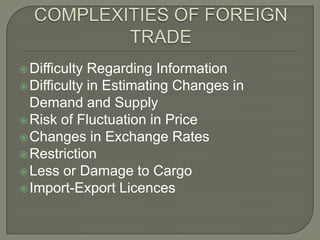
 Difficulty

Regarding Information
 Difficulty in Estimating Changes in
Demand and Supply
 Risk of Fluctuation in Price
 Changes in Exchange Rates
 Restriction
 Less or Damage to Cargo
 Import-Export Licences
FOREIGN
TRADE
IMPORT
TRADE

EXPORT
TRADE

RE-EXPORT
TRADE
 Buying

of Goods and Services from
country is known as import. For
example, purchasing necessary goods
from U.S.A. , Japan ,Russia , Canada and
other countries is called Import for India
To

Meet the Need of Goods
To Develop the Economy
Geographical Reasons
Export Promotion
 Import

Agent
 Clearing Agent
 Railway Company
 Transport Companies
 Banks
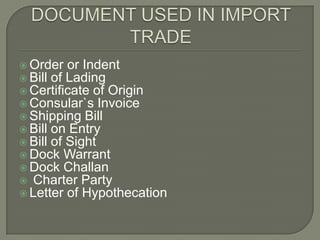
 Order or Indent
 Bill of Lading
 Certificate of Origin
 Consular`s Invoice
 Shipping Bill
 Bill on Entry
 Bill of Sight
 Dock Warrant
 Dock Challan
 Charter Party
 Letter of Hypothecation
 When

nation sells goods and service to
another nation. For example, M/s Rustogi
brothers of Mumbai sell gold ornaments to
a firm of England, it is called export trade.
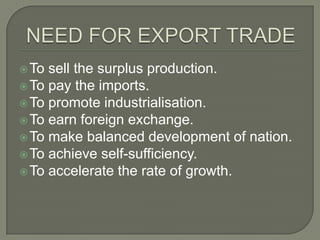
 To

sell the surplus production.
 To pay the imports.
 To promote industrialisation.
 To earn foreign exchange.
 To make balanced development of nation.
 To achieve self-sufficiency.
 To accelerate the rate of growth.
 Export

Agent
 Forwarding Agent
 Shipping Companies
 Banks
 Insurance Companies
 Order

 Indent
 Bill

of Lading
 Certificate of Origin
 Consular`s Invoice
 Charter Party
 Mate`s Receipt
 Shipping Order
 Shipping Bill
 Dock

Receipt
 Dock Challan
 Insurance Policy
 Letter of Hypothecation
 Bill of Exchange
 Invoice
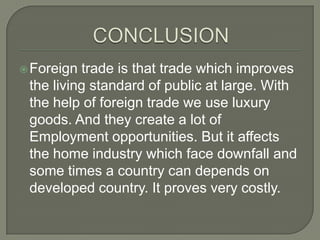
 Foreign

trade is that trade which improves
the living standard of public at large. With
the help of foreign trade we use luxury
goods. And they create a lot of
Employment opportunities. But it affects
the home industry which face downfall and
some times a country can depends on
developed country. It proves very costly.
THANK YOU

External (foreign) trade

  • 1.
  • 2.
     KINDS OF FOREINGTRADE  NEED FOR FOREIGN TRADE  IMPORTANCE OF EXTERNAL TRADE  ADVANTAGES OF FOREIGN TRADE  DISADVANTAGES OF FOREIGN TRADE  COMPLEXITIES OF FOREIGN TRADE  IMPORT TRADE  EXPORT TRADE
  • 3.
     Due to differencein geographical condition, a nation cannot produce all commodities itself. It has to depend on other nation for the commodities either cannot be produced or the supply of which less than the demand every nation faces shortage of some commodities or other.
  • 4.
     Uneven Distribution ofNatural Resources  Division of Labour and Specialisation  Varying Rate of Economic Growth  Theory of Comparative Cost
  • 5.
     Earning Foreign Exchange Utilization of Resources  Development of Economy  Increase in Wealth  Mutual Cooperation  Assistance Calamities  Disposal of Surplus Produce  Strong Relation
  • 6.
     Availability of DifferentCommodities  Maximum Utilisation of Natural Resources  Advantage of Geographical Facilities  Higher Standard of Living  Advantage to agricultural and industrial countries  Development of Service Sector  Promotion of World-peace
  • 7.
     Mobility of Factorsof Production  Equalisation of prices  Generation of Employment
  • 8.
     Distance  Dependence Absence of Personal Contact  Downfall of Home Industries  Political Slavery  Import of Luxurious and Harmful Goods  Risky Affair
  • 9.
     Difficulty Regarding Information Difficulty in Estimating Changes in Demand and Supply  Risk of Fluctuation in Price  Changes in Exchange Rates  Restriction  Less or Damage to Cargo  Import-Export Licences
  • 10.
  • 11.
     Buying of Goodsand Services from country is known as import. For example, purchasing necessary goods from U.S.A. , Japan ,Russia , Canada and other countries is called Import for India
  • 12.
    To Meet the Needof Goods To Develop the Economy Geographical Reasons Export Promotion
  • 13.
     Import Agent  ClearingAgent  Railway Company  Transport Companies  Banks
  • 14.
     Order orIndent  Bill of Lading  Certificate of Origin  Consular`s Invoice  Shipping Bill  Bill on Entry  Bill of Sight  Dock Warrant  Dock Challan  Charter Party  Letter of Hypothecation
  • 15.
     When nation sellsgoods and service to another nation. For example, M/s Rustogi brothers of Mumbai sell gold ornaments to a firm of England, it is called export trade.
  • 16.
     To sell thesurplus production.  To pay the imports.  To promote industrialisation.  To earn foreign exchange.  To make balanced development of nation.  To achieve self-sufficiency.  To accelerate the rate of growth.
  • 17.
     Export Agent  ForwardingAgent  Shipping Companies  Banks  Insurance Companies
  • 18.
     Order  Indent Bill of Lading  Certificate of Origin  Consular`s Invoice  Charter Party  Mate`s Receipt  Shipping Order  Shipping Bill
  • 19.
     Dock Receipt  DockChallan  Insurance Policy  Letter of Hypothecation  Bill of Exchange  Invoice
  • 20.
     Foreign trade isthat trade which improves the living standard of public at large. With the help of foreign trade we use luxury goods. And they create a lot of Employment opportunities. But it affects the home industry which face downfall and some times a country can depends on developed country. It proves very costly.
  • 21.