INTERNATIONAL
TRADE
Mr: ilyass ainanass
Ainanass.ilyass@gmail.com
International trade
■ Introduction
■ Classifications of International Trade
■ Types of International Trade
■ Characteristics of International Trade
■ Role or Importance of International Trade
■ Benefits of International Trade
■ Barriers to International Trade
■ Reasons for International Trade
■ Problems & Challenges of International Trade
■ Advantages of International Trade
■ Disadvantages of International Trade
■ Conclusion
■ Reference
introduction
■ Trade between two or more countries is called foreign trade or international trade.
This involves the exchange of goods and services between the citizens of two
countries. When citizens of one country exchange goods and services with the
citizens of another country, it is called foreign trade.
■ “The aim of international trade is to increase production and to raise the standard of
living of the people. International trade helps citizens of one nation to consume and
enjoy the possession of goods produced in some other nation.”
Classifications
International trade must be classified into three ways:
■ Import Trade:The inflow of goods in a country is called import trade.
■ Export Trade: The outflow of goods from a country is called export trade.
■ Entrepot Trade: Many times goods are imported for the purpose of re-export after
some processing operations. This is called entrepot trade.
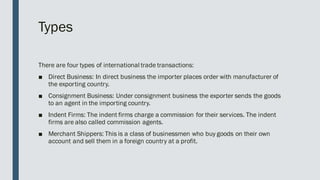
Types
There are four types of international trade transactions:
■ Direct Business: In direct business the importer places order with manufacturer of
the exporting country.
■ Consignment Business: Under consignment business the exporter sends the goods
to an agent in the importing country.
■ Indent Firms: The indent firms charge a commission for their services. The indent
firms are also called commission agents.
■ Merchant Shippers: This is a class of businessmen who buy goods on their own
account and sell them in a foreign country at a profit.
Characteristics
Several documents International trade is characterized by the following features:
■ Territorial specialization
■ International competition
■ Separation of sellers from buyers
■ Long chain of middlemen
■ International rules and regulations
■ Mutually acceptable currency
■ Government control
■ Several soduments
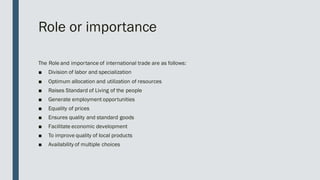
Role or importance
The Role and importance of international trade are as follows:
■ Division of labor and specialization
■ Optimum allocation and utilization of resources
■ Raises Standard of Living of the people
■ Generate employment opportunities
■ Equality of prices
■ Ensures quality and standard goods
■ Facilitate economic development
■ To improve quality of local products
■ Availability of multiple choices
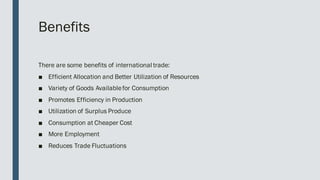
Benefits
There are some benefits of international trade:
■ Efficient Allocation and Better Utilization of Resources
■ Variety of Goods Availablefor Consumption
■ Promotes Efficiency in Production
■ Utilization of Surplus Produce
■ Consumption at Cheaper Cost
■ More Employment
■ Reduces Trade Fluctuations
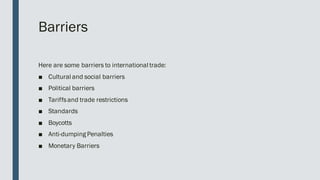
Barriers
Here are some barriers to international trade:
■ Cultural and social barriers
■ Political barriers
■ Tariffsand trade restrictions
■ Standards
■ Boycotts
■ Anti-dumping Penalties
■ Monetary Barriers
Reasons
Here are seven reasons for growing globally:
■ Reduced dependence on your local market
■ Increased chances of success
■ Increased efficiency
■ Increased productivity
■ Economic advantage
■ Innovation
■ Growth
Problems & Challenges
The following are the special problems of international trade:
■ Distance
■ Different languages
■ Risk in transit
■ Intense competition
■ Difficulties in Payments
■ Import and Export Restrictions
■ Transport and Communications
■ Lack of information about International Traders
Advantages
The main advantages of international trade are as follows:
■ Optimal use of natural resources
■ Availability of all types of goods
■ Advantages of large-scale production
■ Stability in prices
■ Increase in efficiency
■ Promotes Competition
■ Fall of Prices
■ Speedy Industrialization
Disdvantages
The main disadvantages of international trade are as follows:
■ Exhaustion of Resources
■ Effect on Domestic Industries
■ Effect on Consumption Habits
■ Times of Emergency
■ Economic Dependence
■ Political Dependence
■ Import of Harmful Goods
■ Mis-utilisation of Natural Resources
Conclusion
■ international trade leads to economic growth provided the policy measures &
economic infrastructure are accommodative enough to cope with the changes in
social and financial scenario that result from it.
■ In order to face the cross border competition challenges, a well functioning, national
competition regime is insufficient.
■ International trade opens up the opportunity for develop countries whereby it
increases their capacity to produce and acquire goods. It should however be
controlled so as to avoid the closure of some local companies.
References
■ www.study.com
■ www.investopedia.com
■ www.economicskey.com
■ www.letslearnfinance.com
■ www.preservearticles.com
■ www.yourarticlelibrary.com
■ www.economicsconcept.com
■ www.economicsdiscussion.com
■ www.managementstudyhq.com
■ www.managementstudyguide.com

International Trade

  • 1.
  • 2.
    International trade ■ Introduction ■Classifications of International Trade ■ Types of International Trade ■ Characteristics of International Trade ■ Role or Importance of International Trade ■ Benefits of International Trade ■ Barriers to International Trade ■ Reasons for International Trade ■ Problems & Challenges of International Trade ■ Advantages of International Trade ■ Disadvantages of International Trade ■ Conclusion ■ Reference
  • 3.
    introduction ■ Trade betweentwo or more countries is called foreign trade or international trade. This involves the exchange of goods and services between the citizens of two countries. When citizens of one country exchange goods and services with the citizens of another country, it is called foreign trade. ■ “The aim of international trade is to increase production and to raise the standard of living of the people. International trade helps citizens of one nation to consume and enjoy the possession of goods produced in some other nation.”
  • 4.
    Classifications International trade mustbe classified into three ways: ■ Import Trade:The inflow of goods in a country is called import trade. ■ Export Trade: The outflow of goods from a country is called export trade. ■ Entrepot Trade: Many times goods are imported for the purpose of re-export after some processing operations. This is called entrepot trade.
  • 5.
    Types There are fourtypes of international trade transactions: ■ Direct Business: In direct business the importer places order with manufacturer of the exporting country. ■ Consignment Business: Under consignment business the exporter sends the goods to an agent in the importing country. ■ Indent Firms: The indent firms charge a commission for their services. The indent firms are also called commission agents. ■ Merchant Shippers: This is a class of businessmen who buy goods on their own account and sell them in a foreign country at a profit.
  • 6.
    Characteristics Several documents Internationaltrade is characterized by the following features: ■ Territorial specialization ■ International competition ■ Separation of sellers from buyers ■ Long chain of middlemen ■ International rules and regulations ■ Mutually acceptable currency ■ Government control ■ Several soduments
  • 7.
    Role or importance TheRole and importance of international trade are as follows: ■ Division of labor and specialization ■ Optimum allocation and utilization of resources ■ Raises Standard of Living of the people ■ Generate employment opportunities ■ Equality of prices ■ Ensures quality and standard goods ■ Facilitate economic development ■ To improve quality of local products ■ Availability of multiple choices
  • 8.
    Benefits There are somebenefits of international trade: ■ Efficient Allocation and Better Utilization of Resources ■ Variety of Goods Availablefor Consumption ■ Promotes Efficiency in Production ■ Utilization of Surplus Produce ■ Consumption at Cheaper Cost ■ More Employment ■ Reduces Trade Fluctuations
  • 9.
    Barriers Here are somebarriers to international trade: ■ Cultural and social barriers ■ Political barriers ■ Tariffsand trade restrictions ■ Standards ■ Boycotts ■ Anti-dumping Penalties ■ Monetary Barriers
  • 10.
    Reasons Here are sevenreasons for growing globally: ■ Reduced dependence on your local market ■ Increased chances of success ■ Increased efficiency ■ Increased productivity ■ Economic advantage ■ Innovation ■ Growth
  • 11.
    Problems & Challenges Thefollowing are the special problems of international trade: ■ Distance ■ Different languages ■ Risk in transit ■ Intense competition ■ Difficulties in Payments ■ Import and Export Restrictions ■ Transport and Communications ■ Lack of information about International Traders
  • 12.
    Advantages The main advantagesof international trade are as follows: ■ Optimal use of natural resources ■ Availability of all types of goods ■ Advantages of large-scale production ■ Stability in prices ■ Increase in efficiency ■ Promotes Competition ■ Fall of Prices ■ Speedy Industrialization
  • 13.
    Disdvantages The main disadvantagesof international trade are as follows: ■ Exhaustion of Resources ■ Effect on Domestic Industries ■ Effect on Consumption Habits ■ Times of Emergency ■ Economic Dependence ■ Political Dependence ■ Import of Harmful Goods ■ Mis-utilisation of Natural Resources
  • 14.
    Conclusion ■ international tradeleads to economic growth provided the policy measures & economic infrastructure are accommodative enough to cope with the changes in social and financial scenario that result from it. ■ In order to face the cross border competition challenges, a well functioning, national competition regime is insufficient. ■ International trade opens up the opportunity for develop countries whereby it increases their capacity to produce and acquire goods. It should however be controlled so as to avoid the closure of some local companies.
  • 15.
    References ■ www.study.com ■ www.investopedia.com ■www.economicskey.com ■ www.letslearnfinance.com ■ www.preservearticles.com ■ www.yourarticlelibrary.com ■ www.economicsconcept.com ■ www.economicsdiscussion.com ■ www.managementstudyhq.com ■ www.managementstudyguide.com