




Exotic Animals
Teaching the Flipped Classroom
29 September 2015
GROUP
MEMBERS :
ABD HALIM BIN MUSTAFFA
NORHADA BINTI HAMIDON
NAZATUL SHIMA BINTI MASDAR
THEVASAINA A/P VELLAKANNU
NURUL FATIHAH BINTI MOHD ZID
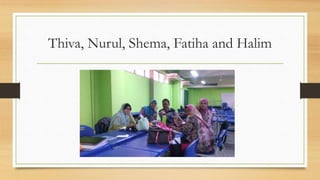
Thiva, Nurul, Shema, Fatiha and Halim
INTRODUCTION
• Hello Travellers!
Imagine…..you are now on a caravan and camping holiday in Australia, home of a huge
variety of exotic animals.
Let’s go on a journey and discover the endless possibilities to these unique creatures….from
deadly spiders to poisonous snakes or the beautiful birds and the freshwater fish species.
Let’s find out about the animals!
Help us save the animals by learning about them because………..
THIS IS THEIR PLANET TOO….!!
TASK
• Come on! Sit in your group.
• Let’s create a creative power point slide together.
• Find out about an exotic animal and create a presentation using POWER POINT
including:
 brief description
 photos
 videos
 creative elements
PROCESS
• Form a group
• Gathering information and preparing slide – 30 minutes
• Presentation – 5 to 7 minutes
EVALUATION
• This is how your work will be evaluated
Criteria 1
25%
2
50%
3
75%
4
100%
Content Brief descriptions Description with visual support
(photos, etc)
Description with visual and audio
support (photos, mp3 sound, etc)
Description with visual, audio
and video support (photos,
sounds and video format, etc)
Powerpoint Presentation Simple layout (Background and
font)
Interesting layout with limited
animation.
Interesting layout with various
animation and creativity.
Outstanding layout.
Presentation Reading from the slide. Reading from the slide with little
explanation.
Detail explanation with little
reference from the text/slide.
Detail explanation with creativity
(spontaneous, interesting, etc)
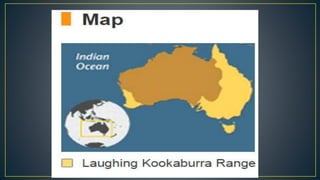
IN AUSTRALIA
• live in woodlands and open forests
• not particularly selective feeders
– main diets: various insects and other invertebrates
– another diets: snakes, lizards, rodents and the odd
small bird
• form permanent pairs and take so long to rear their young to independence
that more than one clutch a season is unlikely
• most young stay to help parents defend the boundaries and rear/protect
further offspring.
• nesting season starts in September and finishes in January
• Incubation and feeding of young is carried out by all members of the group
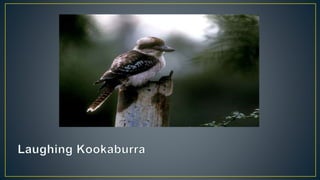
KOOKABURRA
Platypus
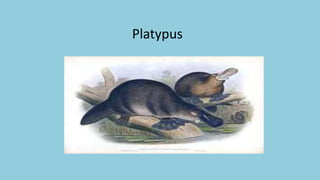
Description
 The body and the broad, flat tail of the platypus are covered with dense, brown fur that
traps a layer of insulating air to keep the animal warm.
 The fur is waterproof, and the texture is akin to that of a mole. The platypus uses its tail for
storage of fat reserves (an adaptation also found in animals such as the Tasmanian devil and
fat-tailed sheep).
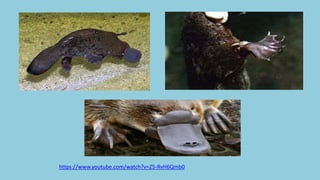
 It has webbed feet and a large, rubbery snout; these features appear closer to those of a
duck than to those of any known mammal. The webbing is more significant on the front feet
and is folded back when walking on land.
 Unlike a bird's beak (in which the upper and lower parts separate to reveal the mouth), the
snout of the platypus is a sensory organ with the mouth on the underside.
 The nostrils are located on the dorsal surface of the snout, while the eyes and ears are
located in a groove set just back from it; this groove is closed when swimming.
 Platypuses have been heard to emit a low growl when disturbed and a range of other
vocalizations have been reported in captive specimens.
https://www.youtube.com/watch?v=Z5-RvH6Qmb0
EXOTIC ANIMAL
THE
RED CRAB
Video
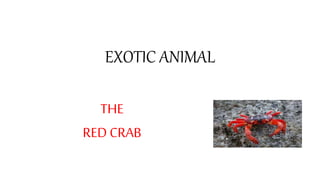
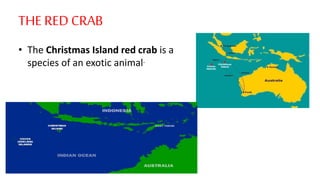
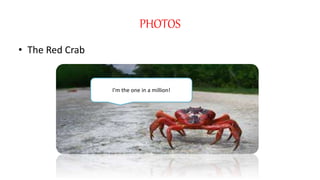
• The Christmas Island red crab is a
species of an exotic animal.
THE RED CRAB
Description
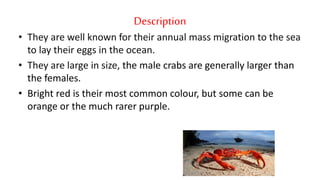
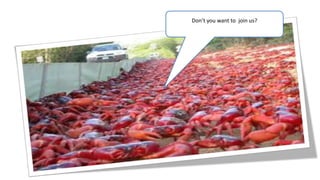
• They are well known for their annual mass migration to the sea
to lay their eggs in the ocean.
• They are large in size, the male crabs are generally larger than
the females.
• Bright red is their most common colour, but some can be
orange or the much rarer purple.
Behavior
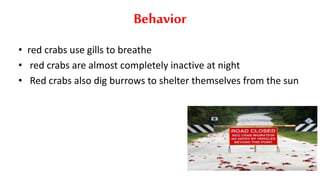
• red crabs use gills to breathe
• red crabs are almost completely inactive at night
• Red crabs also dig burrows to shelter themselves from the sun
Migrationand breeding
• Around October to November they will migrate to the coast for
breeding.
• Male will migrate first and wait for the female at the coast.
• After mating, female will stay in the burrows for two weeks for
incubation purpose.
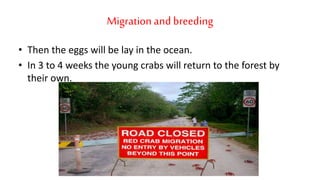
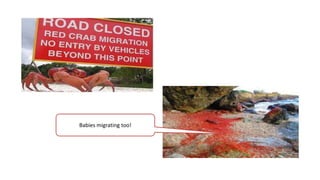
• Then the eggs will be lay in the ocean.
• In 3 to 4 weeks the young crabs will return to the forest by
their own.
Migrationand breeding
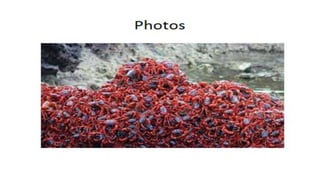
PHOTOS
• The Red Crab
I’m the one in a million!
Don’t you want to join us?
Babies migrating too!
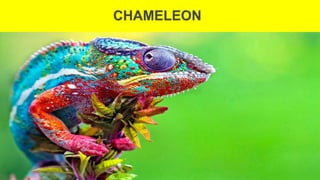
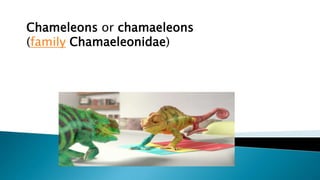
Chameleons or chamaeleons
(family Chamaeleonidae)
 These species come in a range of colours, and many species
have the ability to change colours.
 https://www.youtube.com/watch?v=-sklhlkNFcY
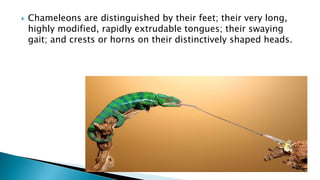
 Chameleons are distinguished by their feet; their very long,
highly modified, rapidly extrudable tongues; their swaying
gait; and crests or horns on their distinctively shaped heads.
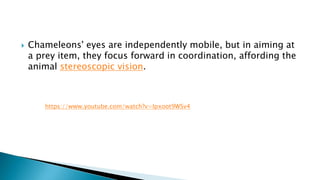
 Chameleons' eyes are independently mobile, but in aiming at
a prey item, they focus forward in coordination, affording the
animal stereoscopic vision.
https://www.youtube.com/watch?v=Ipxoot9WSv4
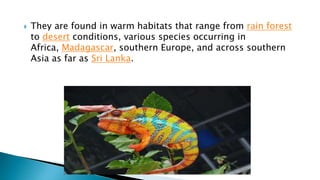
 They are found in warm habitats that range from rain forest
to desert conditions, various species occurring in
Africa, Madagascar, southern Europe, and across southern
Asia as far as Sri Lanka.
CONCLUSION
• Once you are done with your presentation, please complete your evaluation
form.
• THANK YOU!

Exotic Animals

  • 1.
    Exotic Animals Teaching theFlipped Classroom 29 September 2015
  • 2.
    GROUP MEMBERS : ABD HALIMBIN MUSTAFFA NORHADA BINTI HAMIDON NAZATUL SHIMA BINTI MASDAR THEVASAINA A/P VELLAKANNU NURUL FATIHAH BINTI MOHD ZID
  • 3.
    Thiva, Nurul, Shema,Fatiha and Halim
  • 4.
    INTRODUCTION • Hello Travellers! Imagine…..youare now on a caravan and camping holiday in Australia, home of a huge variety of exotic animals. Let’s go on a journey and discover the endless possibilities to these unique creatures….from deadly spiders to poisonous snakes or the beautiful birds and the freshwater fish species. Let’s find out about the animals! Help us save the animals by learning about them because……….. THIS IS THEIR PLANET TOO….!!
  • 5.
    TASK • Come on!Sit in your group. • Let’s create a creative power point slide together. • Find out about an exotic animal and create a presentation using POWER POINT including:  brief description  photos  videos  creative elements
  • 6.
    PROCESS • Form agroup • Gathering information and preparing slide – 30 minutes • Presentation – 5 to 7 minutes
  • 7.
    EVALUATION • This ishow your work will be evaluated Criteria 1 25% 2 50% 3 75% 4 100% Content Brief descriptions Description with visual support (photos, etc) Description with visual and audio support (photos, mp3 sound, etc) Description with visual, audio and video support (photos, sounds and video format, etc) Powerpoint Presentation Simple layout (Background and font) Interesting layout with limited animation. Interesting layout with various animation and creativity. Outstanding layout. Presentation Reading from the slide. Reading from the slide with little explanation. Detail explanation with little reference from the text/slide. Detail explanation with creativity (spontaneous, interesting, etc)
  • 8.
  • 10.
    • live inwoodlands and open forests • not particularly selective feeders – main diets: various insects and other invertebrates – another diets: snakes, lizards, rodents and the odd small bird • form permanent pairs and take so long to rear their young to independence that more than one clutch a season is unlikely • most young stay to help parents defend the boundaries and rear/protect further offspring. • nesting season starts in September and finishes in January • Incubation and feeding of young is carried out by all members of the group
  • 12.
  • 13.
  • 14.
    Description  The bodyand the broad, flat tail of the platypus are covered with dense, brown fur that traps a layer of insulating air to keep the animal warm.  The fur is waterproof, and the texture is akin to that of a mole. The platypus uses its tail for storage of fat reserves (an adaptation also found in animals such as the Tasmanian devil and fat-tailed sheep).  It has webbed feet and a large, rubbery snout; these features appear closer to those of a duck than to those of any known mammal. The webbing is more significant on the front feet and is folded back when walking on land.  Unlike a bird's beak (in which the upper and lower parts separate to reveal the mouth), the snout of the platypus is a sensory organ with the mouth on the underside.  The nostrils are located on the dorsal surface of the snout, while the eyes and ears are located in a groove set just back from it; this groove is closed when swimming.  Platypuses have been heard to emit a low growl when disturbed and a range of other vocalizations have been reported in captive specimens.
  • 15.
  • 16.
  • 17.
  • 18.
    • The ChristmasIsland red crab is a species of an exotic animal. THE RED CRAB
  • 19.
    Description • They arewell known for their annual mass migration to the sea to lay their eggs in the ocean. • They are large in size, the male crabs are generally larger than the females. • Bright red is their most common colour, but some can be orange or the much rarer purple.
  • 20.
    Behavior • red crabsuse gills to breathe • red crabs are almost completely inactive at night • Red crabs also dig burrows to shelter themselves from the sun
  • 21.
    Migrationand breeding • AroundOctober to November they will migrate to the coast for breeding. • Male will migrate first and wait for the female at the coast. • After mating, female will stay in the burrows for two weeks for incubation purpose.
  • 22.
    • Then theeggs will be lay in the ocean. • In 3 to 4 weeks the young crabs will return to the forest by their own. Migrationand breeding
  • 23.
    PHOTOS • The RedCrab I’m the one in a million!
  • 24.
    Don’t you wantto join us?
  • 25.
  • 28.
  • 29.
     These speciescome in a range of colours, and many species have the ability to change colours.  https://www.youtube.com/watch?v=-sklhlkNFcY
  • 30.
     Chameleons aredistinguished by their feet; their very long, highly modified, rapidly extrudable tongues; their swaying gait; and crests or horns on their distinctively shaped heads.
  • 31.
     Chameleons' eyesare independently mobile, but in aiming at a prey item, they focus forward in coordination, affording the animal stereoscopic vision. https://www.youtube.com/watch?v=Ipxoot9WSv4
  • 32.
     They arefound in warm habitats that range from rain forest to desert conditions, various species occurring in Africa, Madagascar, southern Europe, and across southern Asia as far as Sri Lanka.
  • 33.
    CONCLUSION • Once youare done with your presentation, please complete your evaluation form. • THANK YOU!