
Welcome!
Exercise programs for people
with dementia: What's the
evidence?
You will be placed on hold until the webinar begins.
The webinar will begin shortly, please remain on the line.
Poll Questions: Consent
• Participation in the webinar poll questions is voluntary
• Names are not recorded and persons will not be identified in any way
• Participation in the anonymous polling questions is accepted as an
indication of your consent to participate
Benefits:
• Results inform improvement of the current and future webinars
• Enable engagement; stimulate discussion. This session is intended for
professional development. Some data may be used for program evaluation
and research purposes (e.g., exploring opinion change)
• Results may also be used to inform the production of systematic reviews
and overviews
Risks: None beyond day-to-day living
After Today
• The PowerPoint presentation and audio
recording will be made available
• These resources are available at:
– PowerPoint:
http://www.slideshare.net/HealthEvidence
– Audio Recording:
https://www.youtube.com/user/healthevidence
/videos
3
What’s the evidence?
Forbes, D., Forbes, S. C., Blake, C. M.,
Thiessen, E. J., & Forbes, S. (2015).
Exercise programs for people with
dementia. Cochrane Database of
Systematic Reviews, 2015(4),
CD006489.
http://www.healthevidence.org/view-
article.aspx?a=23982
Poll Question #1
What sector are you from?
1. Public Health Practitioner
2. Health Practitioner (Other)
3. Education
4. Research
5. Provincial/Territorial/Government/Ministry
Municipality
6. Policy Analyst (NGO, etc.)
7. Other
5
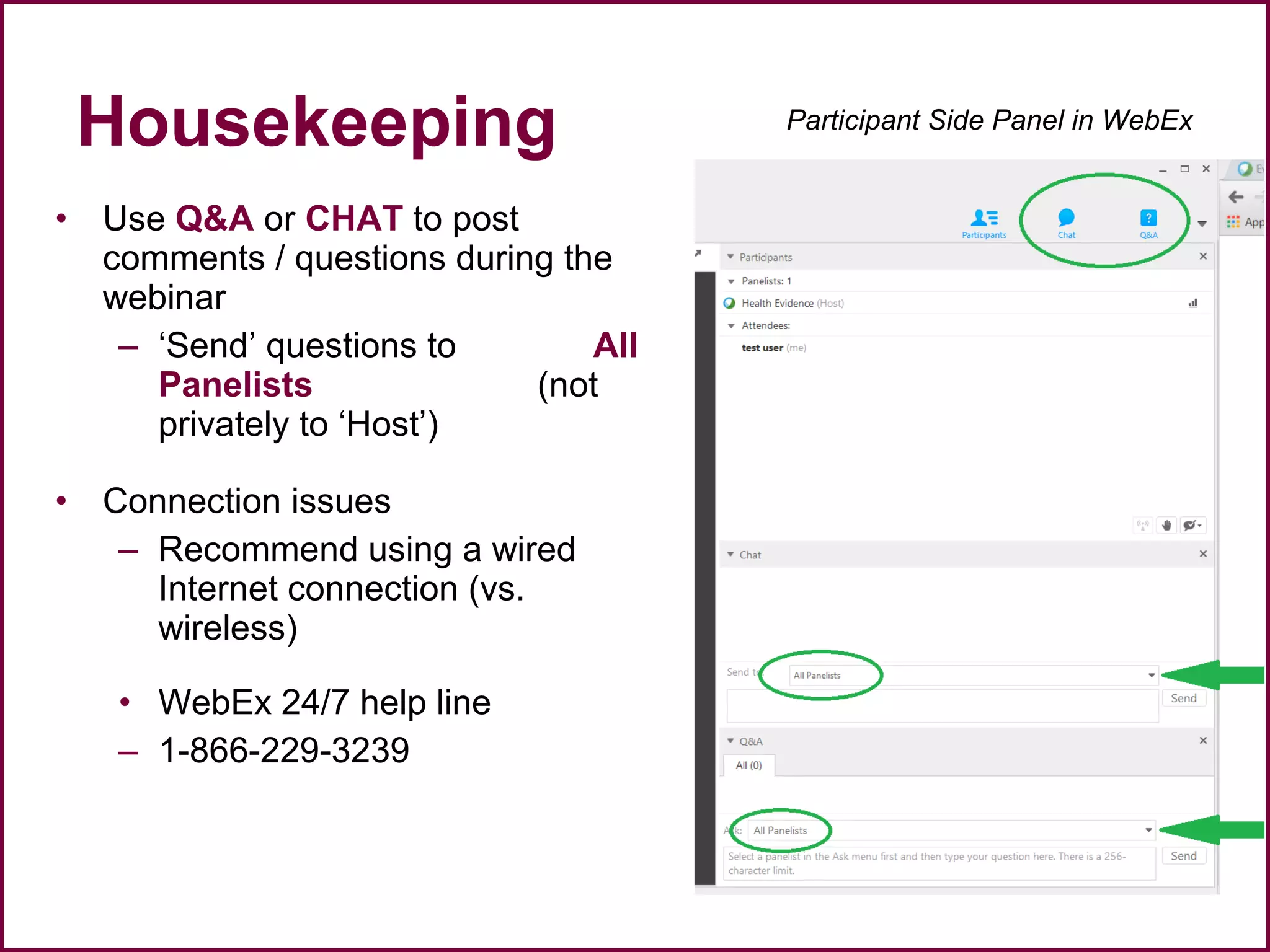
• Use Q&A or CHAT to post
comments / questions during the
webinar
– ‘Send’ questions to All
Panelists (not
privately to ‘Host’)
• Connection issues
– Recommend using a wired
Internet connection (vs.
wireless)
• WebEx 24/7 help line
– 1-866-229-3239
Participant Side Panel in WebEx
Housekeeping
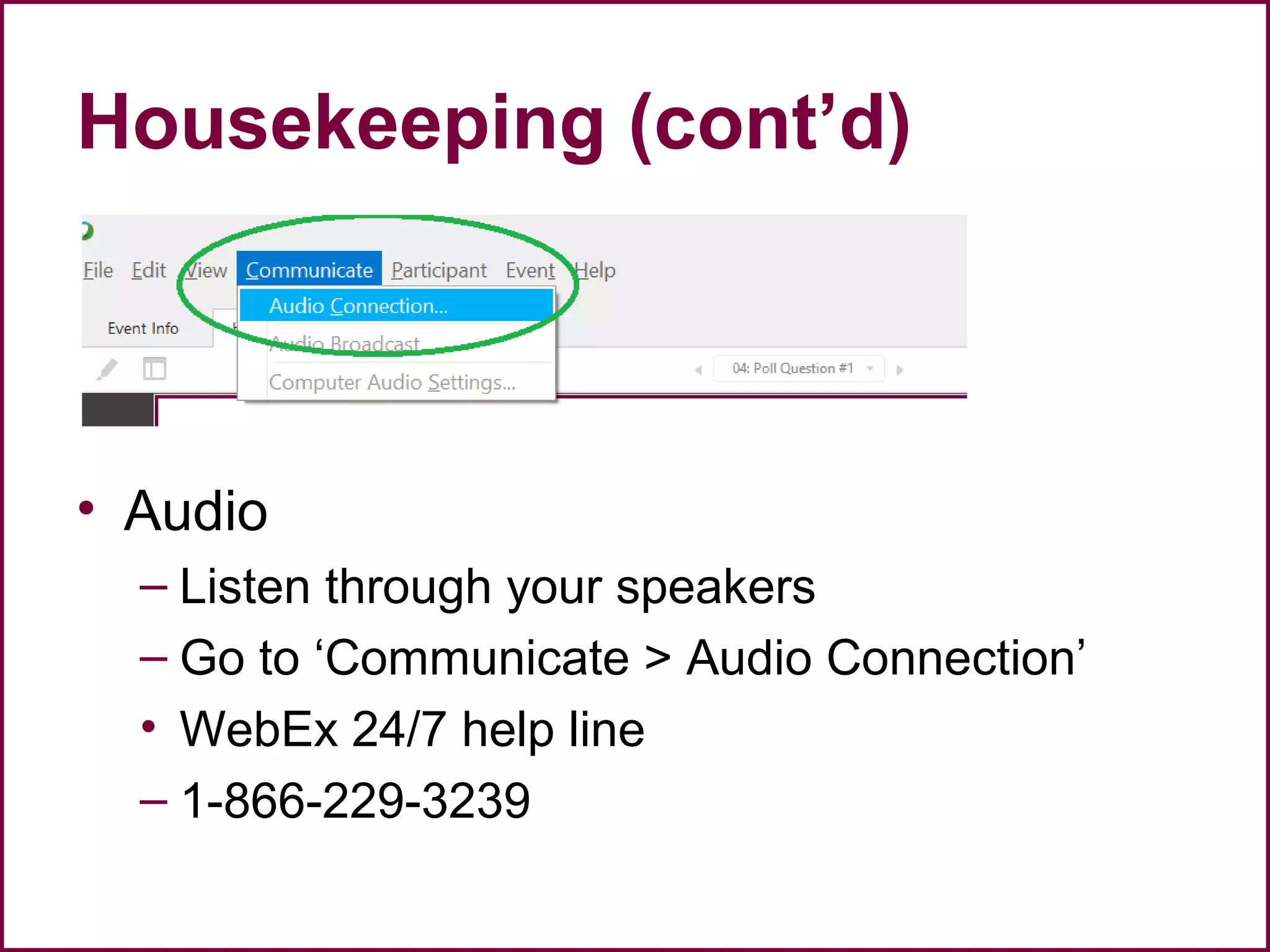
Housekeeping (cont’d)
• Audio
– Listen through your speakers
– Go to ‘Communicate > Audio Connection’
• WebEx 24/7 help line
– 1-866-229-3239
Poll Question #2
How many people are watching today’s
session with you?
1.Just me
2.2-3
3.4-5
4.Over 5
The Health Evidence Team
Maureen Dobbins
Scientific Director
Heather Husson
Manager
Susannah Watson
Project Coordinator
Robyn Traynor
Publications Consultant
Students:
Emily Belita
(PhD candidate)
Jennifer Yost
Assistant Professor
Olivia Marquez
Research Coordinator
Kristin Read
Research Coordinator
Yaso Gowrinathan
Information Liaison
Emily Sully
Research Assistant
Justin Raudys
Research Assistant
Liz Kamler
Research Assistant
Zhi (Vivian) Chen
Research Assistant
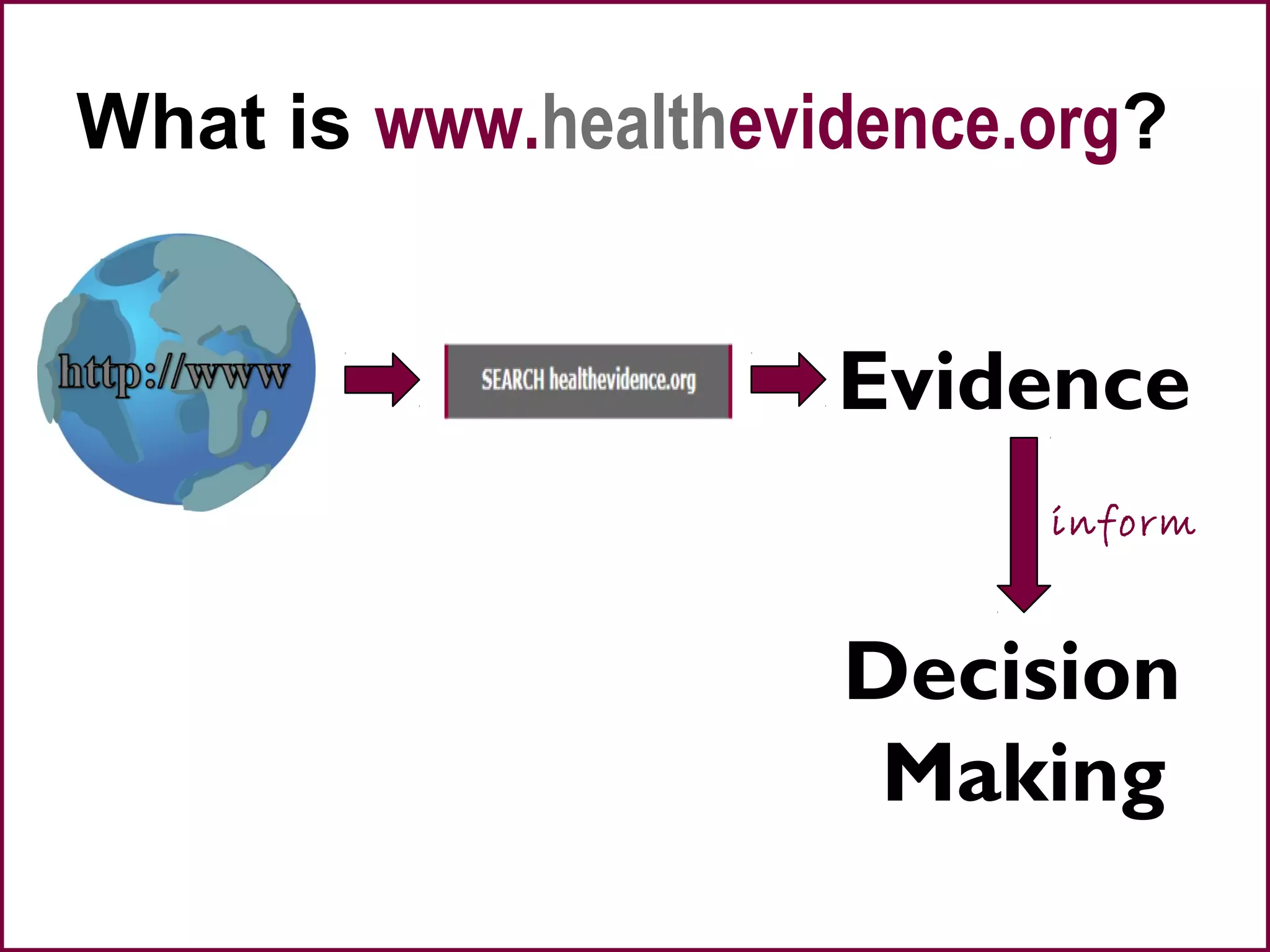
What is www.healthevidence.org?
Evidence
Decision
Making
inform
Why use www.healthevidence.org?
1. Saves you time
2. Relevant & current evidence
3. Transparent process
4. Supports for EIDM available
5. Easy to use
A Model for Evidence-
Informed Decision Making
National Collaborating Centre for Methods and Tools. (revised 2012). A
Model for Evidence-Informed Decision-Making in Public Health (Fact
Sheet). [http://www.nccmt.ca/pubs/FactSheet_EIDM_EN_WEB.pdf]
Stages in the process of Evidence-
Informed Public Health
National Collaborating Centre for Methods and Tools. Evidence-Informed
Public Health. [http://www.nccmt.ca/eiph/index-eng.html]
Poll Question #3
Have you heard of PICO(S) before?
1.Yes
2.No
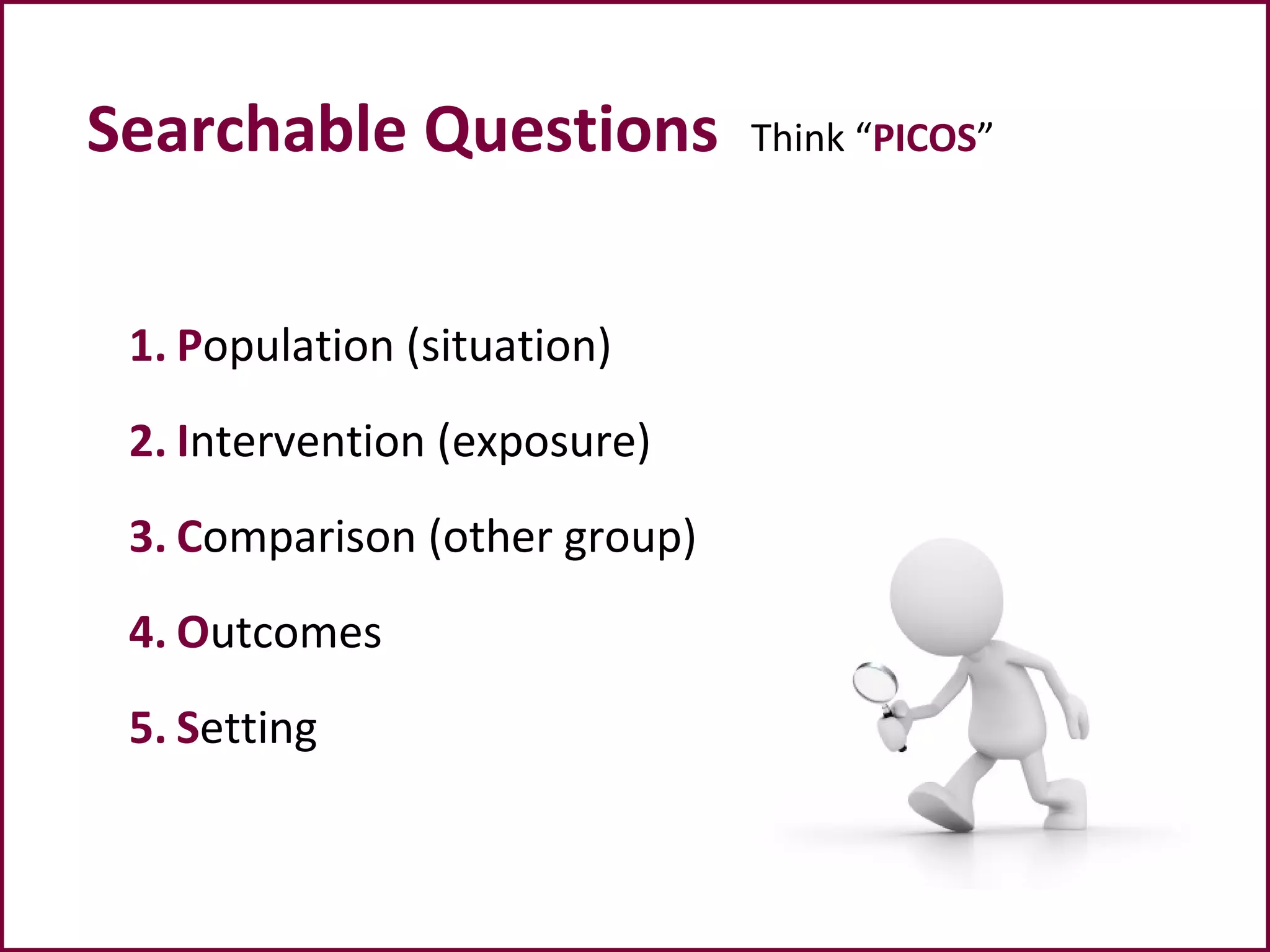
Searchable Questions Think “PICOS”
1. Population (situation)
2. Intervention (exposure)
3. Comparison (other group)
4. Outcomes
5. Setting
How often do you use Systematic Reviews
to inform a program/services?
A.Always
B.Often
C.Sometimes
D.Never
E.I don’t know what a systematic review is
Poll Question #4
Dorothy Forbes,
PhD, RN
Professor, Faculty of Nursing,
University of Alberta
Exercise programs improve health outcomes
for people with dementia
A.Strongly agree
B.Agree
C.Neutral
D.Disagree
E.Strongly disagree
18
Poll Question #5
Review
Forbes, D., Forbes, S. C., Blake, C. M., Thiessen,
E. J., & Forbes, S. (2015). Exercise programs for
people with dementia. Cochrane Database of
Systematic Reviews, 2015(4), CD006489.
Review Team
• Dorothy Forbes, University of Alberta
• Scott C. Forbes, Okanagan College
• Catherine M. Blake, University of Western
Ontario
• Emily J. Thiessen, University of Alberta
• Sean Forbes, University of Florida
Background
• In 2012, WHO declared dementia a public health priority.
• In the coming decades, with the aging of the population, the
number of individuals living with dementia in our communities
will rise dramatically, affecting their quality of life.
• In addition, the burden on family caregivers, community care,
and residential care services will increase.
• Exercise is among the potential protective lifestyle factors
identified as a strategy for treating the symptoms of dementia
or delaying its progression.
Review Questions
• Do exercise programs for older persons with
dementia:
– improve cognition, activities of daily living (ADLs),
neuropsychiatric symptoms, depression, and
mortality?
– have an indirect impact on family caregivers’
burden, quality of life, and mortality?
– reduce the use of health care services (e.g. visits to
the emergency department) by persons with
dementias and their family caregivers?
Approach
• Selection of studies:
– Studies were identified from searching the ALOIS,
the Cochrane Dementia & Cognitive Improvement
Group’s specialized register.
– All relevant RCTs in which older adults with
dementia were allocated to either exercise
programs or control groups (usual care or social
contact/activities) were included.
– At least two reviewers independently assessed
retrieved articles for inclusion, assessed
methodological quality, and extracted data.
Analyses
• We calculated mean differences or standardized
mean differences for continuous data.
• Data for each outcome were synthesized using a
fixed effects model, unless there was substantial
heterogeneity between studies, then a random
effects model was applied.
• We also evaluated adverse events.
Analyses
• Subgroup analysis and investigation of
heterogeneity:
– Severity and type of dementia
– Type, frequency, and duration of exercise program
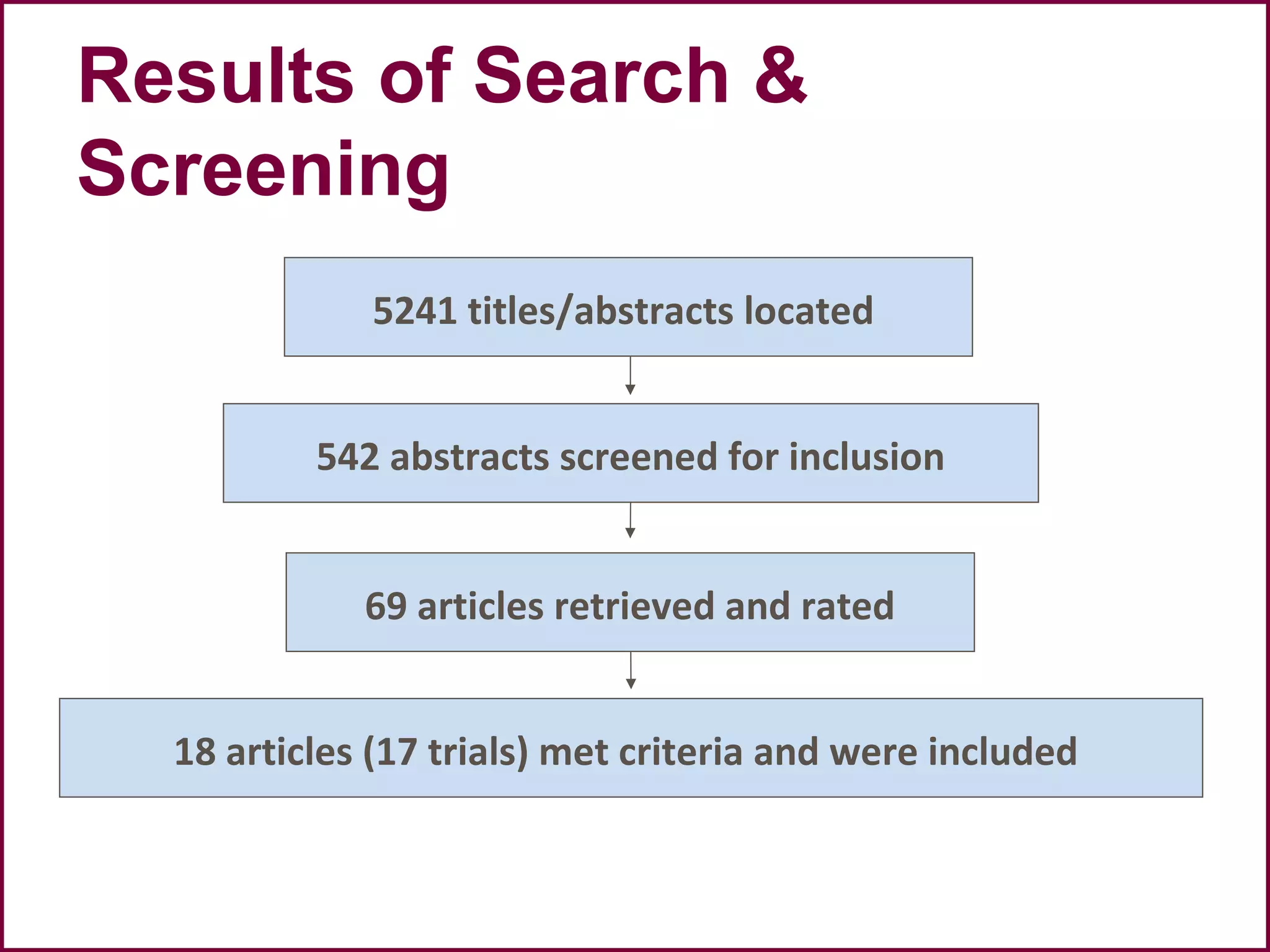
Results of Search &
Screening
5241 titles/abstracts located
542 abstracts screened for inclusion
18 articles (17 trials) met criteria and were included
69 articles retrieved and rated
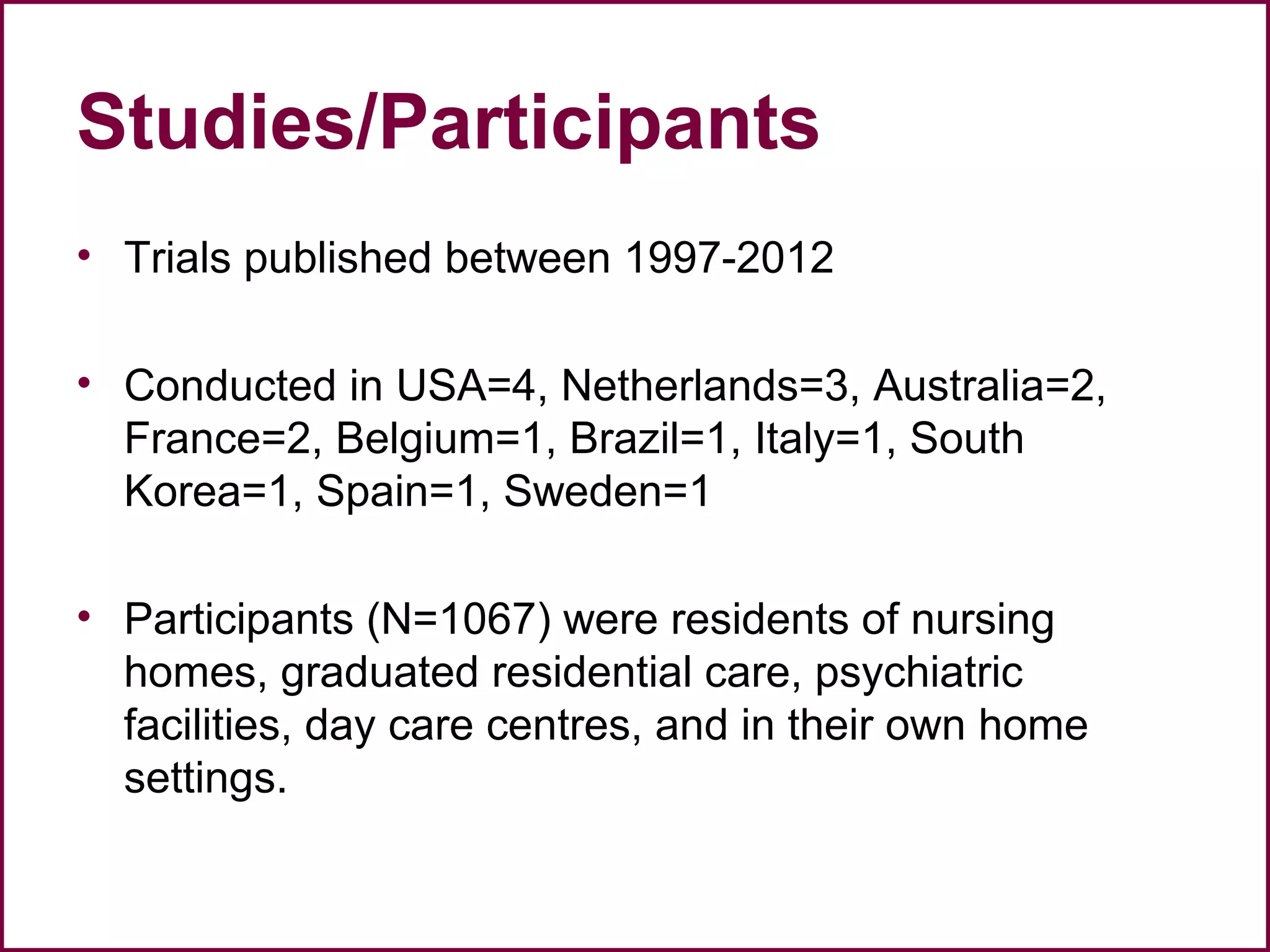
Studies/Participants
• Trials published between 1997-2012
• Conducted in USA=4, Netherlands=3, Australia=2,
France=2, Belgium=1, Brazil=1, Italy=1, South
Korea=1, Spain=1, Sweden=1
• Participants (N=1067) were residents of nursing
homes, graduated residential care, psychiatric
facilities, day care centres, and in their own home
settings.
Exercise Programs
• Program length varied from two weeks to 18 months
• Programs ranged from twice/week to daily and from 20
to 75 minutes per session
• Exercises were combinations of aerobic, strength, and
balance
• Control groups were usual care or social contact
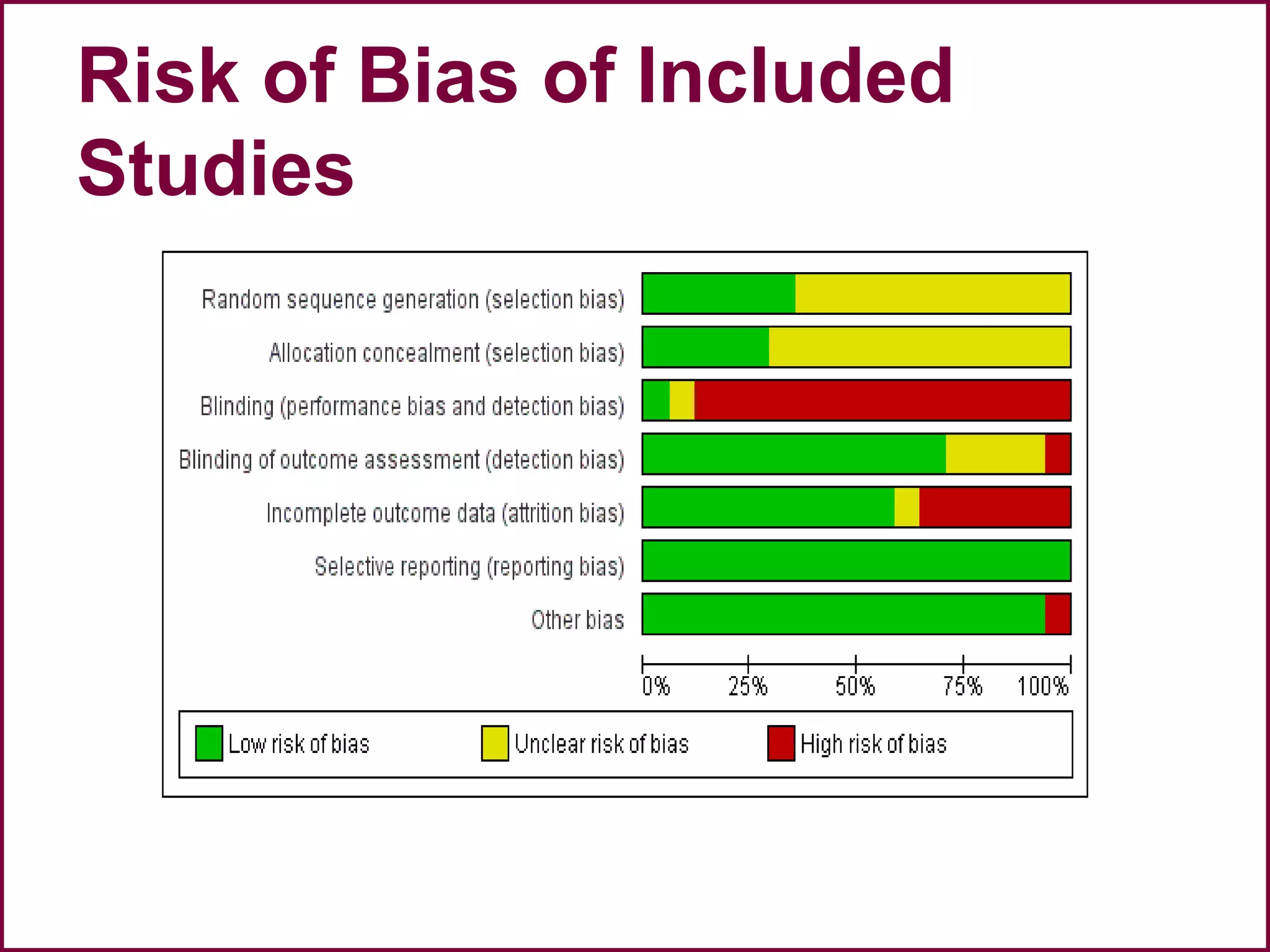
Risk of Bias of Included
Studies
Results
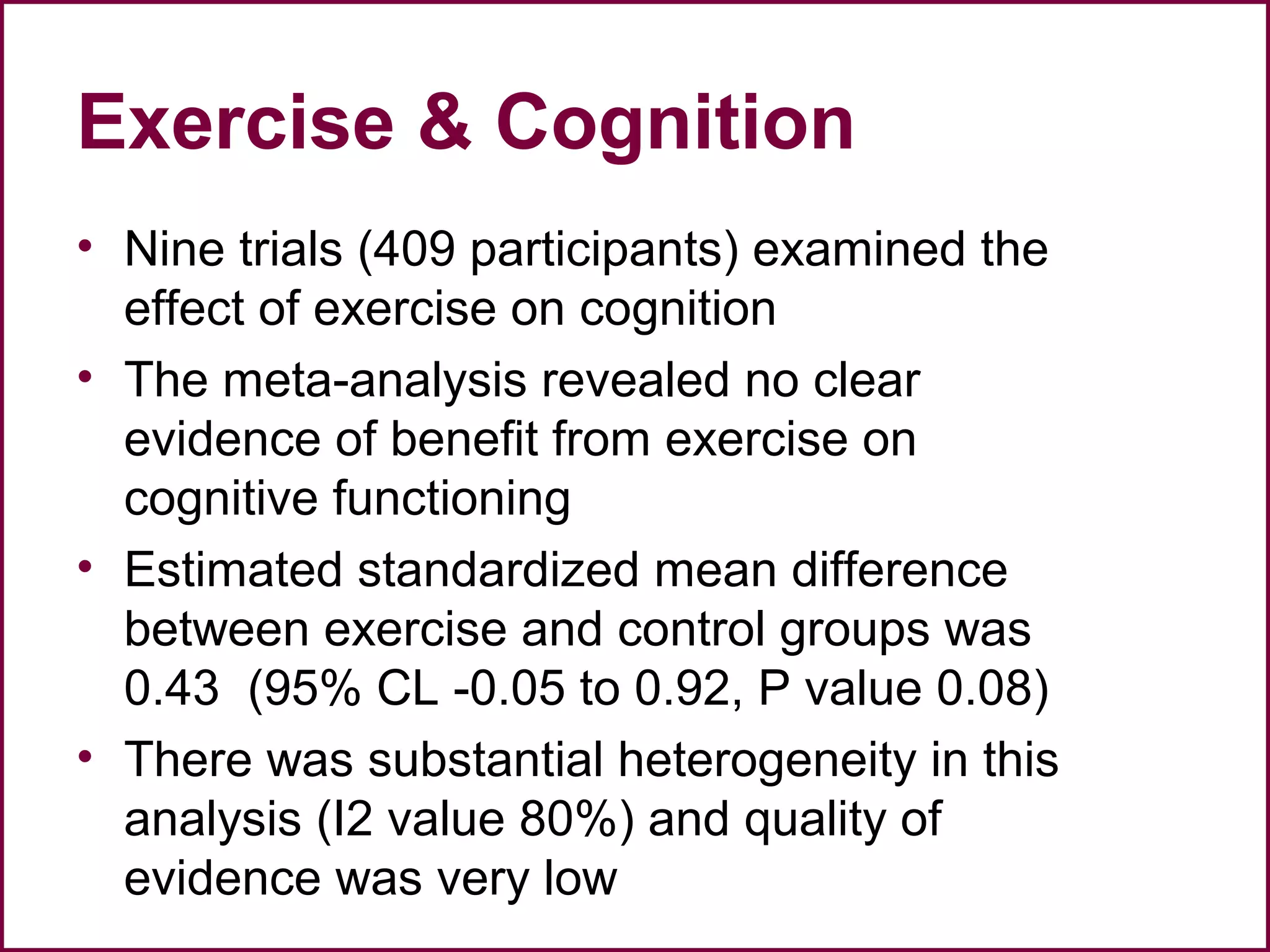
Exercise & Cognition
• Nine trials (409 participants) examined the
effect of exercise on cognition
• The meta-analysis revealed no clear
evidence of benefit from exercise on
cognitive functioning
• Estimated standardized mean difference
between exercise and control groups was
0.43 (95% CL -0.05 to 0.92, P value 0.08)
• There was substantial heterogeneity in this
analysis (I2 value 80%) and quality of
evidence was very low
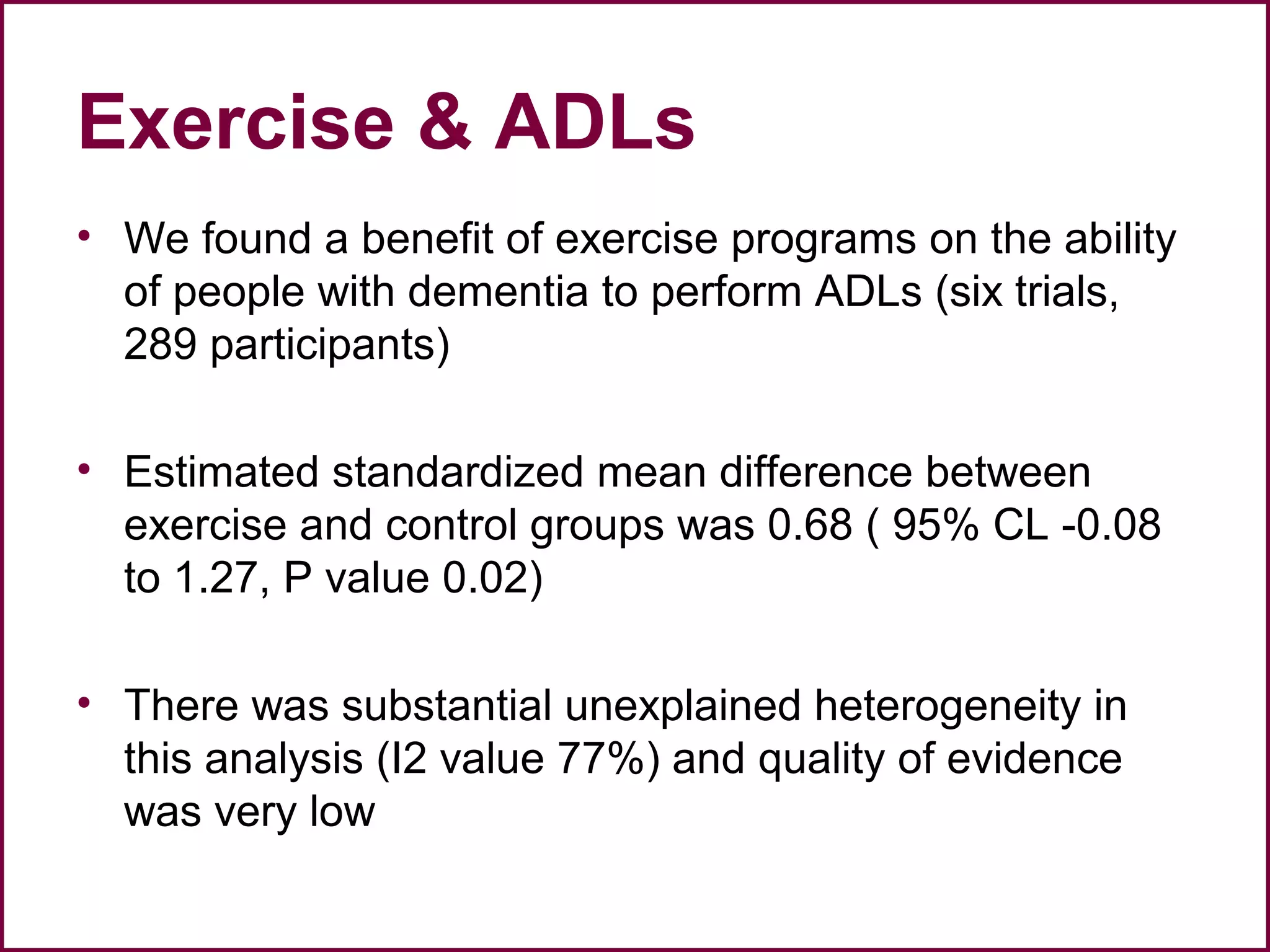
Exercise & ADLs
• We found a benefit of exercise programs on the ability
of people with dementia to perform ADLs (six trials,
289 participants)
• Estimated standardized mean difference between
exercise and control groups was 0.68 ( 95% CL -0.08
to 1.27, P value 0.02)
• There was substantial unexplained heterogeneity in
this analysis (I2 value 77%) and quality of evidence
was very low
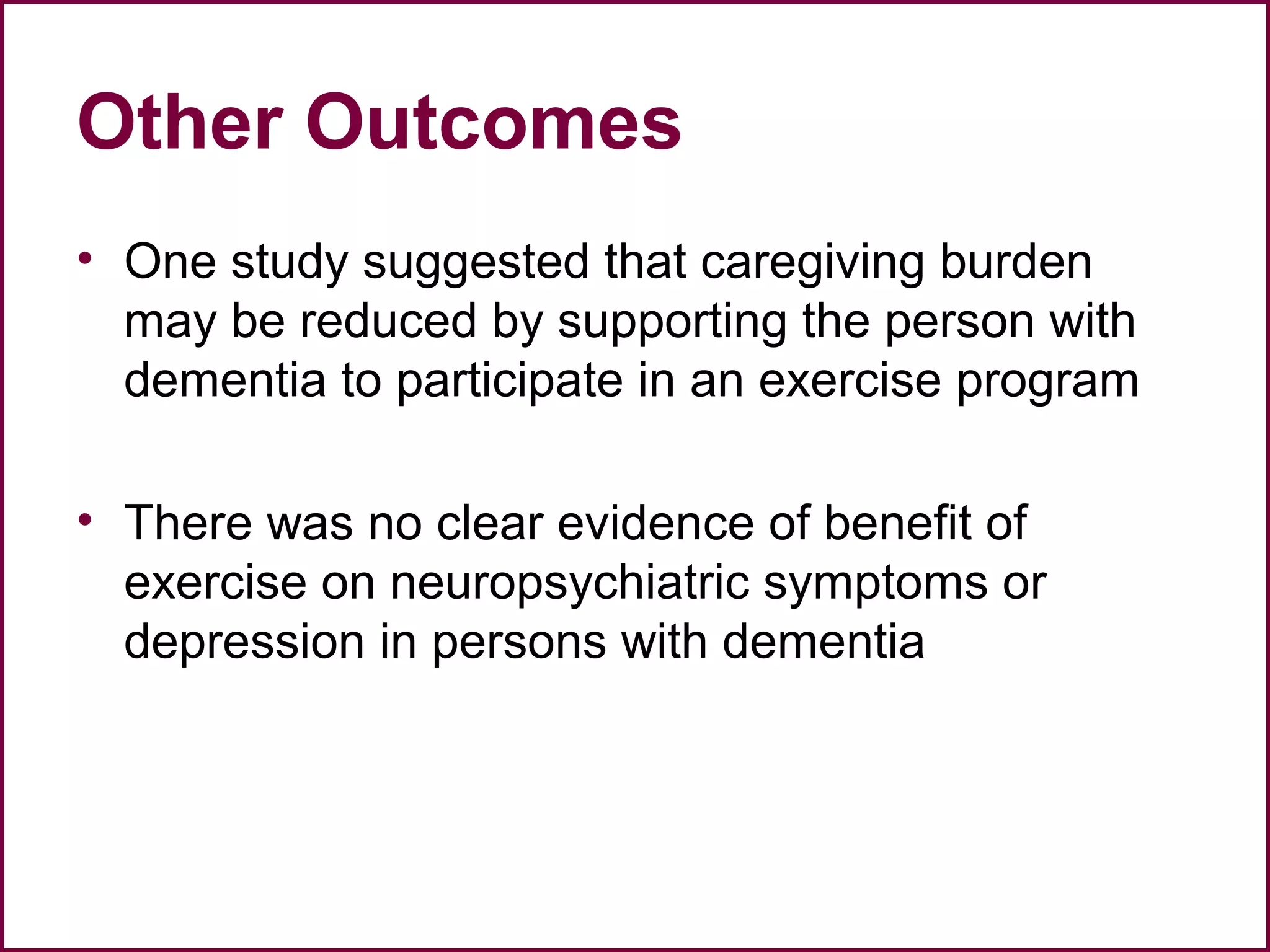
Other Outcomes
• One study suggested that caregiving burden
may be reduced by supporting the person with
dementia to participate in an exercise program
• There was no clear evidence of benefit of
exercise on neuropsychiatric symptoms or
depression in persons with dementia
Other Outcomes (cont’d)
• The remaining outcomes could not be examined
because appropriate data were not reported:
– Quality of Life
– Mortality
– Health Care Costs
Summary
• This review included 17 trials with 1067 participants
• The exercise programs varied greatly
• The review suggests that exercise may improve the
ability to perform ADLs
• There was no clear evidence of benefit from exercise
on cognitive functioning, neuropsychiatric symptoms,
or depression
Recommendations to Improve
Methodological Quality
• In several cases useable data for inclusion in the
meta-analysis were not provided by the authors
• Authors should include:
– Means and SDs for end point measures
– Change from baseline to final measurement scores in
published reports, or
– Be willing to provide these data on request
Quality of the Evidence
• Many authors did not adequately report the
random sequence generation and allocation
concealment processes
• Several authors did not report the outcome data
for each main outcome
• Some authors failed to report on the blinding of
outcome assessors
Implications for Practice
• No trials reported adverse events related to the exercise
programs
• Health care providers should feel confident in promoting
physical activity to persons with dementia
• Decreasing the progression of dependence in ADLs will
have clear benefits for the persons with dementia and their
caregivers and possibly delay the need for placement in
long term care settings
• Encouraging caregivers to participate in exercise may have
a beneficial impact on their quality of life
Implications for Research
• Setting of intervention (home or institution) should be
considered in future
• There were insufficient trials to conduct subgroup
analyses to determine which type of exercise (aerobic,
strength training, or a combination), at what frequency
and duration, is most beneficial for specific types and
severity of dementia
• Further research is needed to develop best practice
guidelines for health care providers to advise persons
with dementia living in institutional and community
settings
Reference
Protocol first published in 2007, regular
updates since then
Forbes D, Forbes SC, Blake CM, Thiessen
EJ, & Forbes S. Exercise programs for
people with dementia. (Review). Cochrane
Database of Systematic Reviews 2015;4.
For further information contact
dorothy.forbes@ualberta.ca
Exercise programs improve health
outcomes for people with dementia
A.Strongly agree
B.Agree
C.Neutral
D.Disagree
E.Strongly disagree
41
Poll Question #6
Poll Question #7
Do you agree with the findings of this
review?
A.Strongly agree
B.Agree
C.Neutral
D.Disagree
E.Strongly disagree
Questions?
A Model for Evidence-
Informed Decision Making
National Collaborating Centre for Methods and Tools. (revised 2012). A
Model for Evidence-Informed Decision-Making in Public Health (Fact
Sheet). [http://www.nccmt.ca/pubs/FactSheet_EIDM_EN_WEB.pdf]
Supporting awareness and uptake of
cancer prevention knowledge in practice
Funded by the Canadian Institutes of Health Research
Announcing: Implementation of a research project to build capacity among Canadian public health professionals
to use research evidence in program planning decisions.
Timeline: 18 months (Fall’15 to Spring’17)
Intervention: Receive concise actionable messages based on high-quality systematic review evidence via:
Twitter, webinars, and/or tailored email messages. Participants will be surveyed at baseline and follow-up.
Now recruiting: Individual public health professionals across Canada working in the areas of:
- Tobacco/Alcohol use - Sun safety
- Healthy eating - Physical activity
More info: Click here http://kt.healthevidence.org to access the Participant Information Form (Consent). If
you decide to participate, you will have the option to continue to a 20 min online survey to begin your
participation.
Complete the survey for a chance to win an iPad Air 2 64GB!
For more information, contact Research Coordinator, Olivia Marquez at marqueos@mcmaster.ca or 905-525-9140 ext. 20464
What can I do now?
Visit the website; a repository of over 4,400 quality-rated systematic
reviews related to the effectiveness of public health interventions. Health
Evidence™ is FREE to use.
Register to receive monthly tailored registry updates AND monthly newsletter to
keep you up to date on upcoming events and public health news.
Tell your colleagues about Health Evidence™: helping you use best evidence to
inform public health practice, program planning, and policy decisions!
Follow us @Health Evidence on Twitter and receive daily public health review-
related Tweets, receive information about our monthly webinars, as well as
announcements and events relevant to public health.
Encourage your organization to use Health Evidence™ to search for and apply
quality-rated review level evidence to inform program planning and policy decisions.
Contact us to suggest topics or provide feedback.
info@healthevidence.org
Thank you!
Contact us:
info@healthevidence.org
For a copy of the presentation please visit:
http://www.healthevidence.org/webinars.aspx
Login with your Health Evidence username and
password, or register if you aren’t a member yet.

Exercise programs for people with dementia: What's the evidence?

  • 1.
    Welcome! Exercise programs forpeople with dementia: What's the evidence? You will be placed on hold until the webinar begins. The webinar will begin shortly, please remain on the line.
  • 2.
    Poll Questions: Consent •Participation in the webinar poll questions is voluntary • Names are not recorded and persons will not be identified in any way • Participation in the anonymous polling questions is accepted as an indication of your consent to participate Benefits: • Results inform improvement of the current and future webinars • Enable engagement; stimulate discussion. This session is intended for professional development. Some data may be used for program evaluation and research purposes (e.g., exploring opinion change) • Results may also be used to inform the production of systematic reviews and overviews Risks: None beyond day-to-day living
  • 3.
    After Today • ThePowerPoint presentation and audio recording will be made available • These resources are available at: – PowerPoint: http://www.slideshare.net/HealthEvidence – Audio Recording: https://www.youtube.com/user/healthevidence /videos 3
  • 4.
    What’s the evidence? Forbes,D., Forbes, S. C., Blake, C. M., Thiessen, E. J., & Forbes, S. (2015). Exercise programs for people with dementia. Cochrane Database of Systematic Reviews, 2015(4), CD006489. http://www.healthevidence.org/view- article.aspx?a=23982
  • 5.
    Poll Question #1 Whatsector are you from? 1. Public Health Practitioner 2. Health Practitioner (Other) 3. Education 4. Research 5. Provincial/Territorial/Government/Ministry Municipality 6. Policy Analyst (NGO, etc.) 7. Other 5
  • 6.
    • Use Q&Aor CHAT to post comments / questions during the webinar – ‘Send’ questions to All Panelists (not privately to ‘Host’) • Connection issues – Recommend using a wired Internet connection (vs. wireless) • WebEx 24/7 help line – 1-866-229-3239 Participant Side Panel in WebEx Housekeeping
  • 7.
    Housekeeping (cont’d) • Audio –Listen through your speakers – Go to ‘Communicate > Audio Connection’ • WebEx 24/7 help line – 1-866-229-3239
  • 8.
    Poll Question #2 Howmany people are watching today’s session with you? 1.Just me 2.2-3 3.4-5 4.Over 5
  • 9.
    The Health EvidenceTeam Maureen Dobbins Scientific Director Heather Husson Manager Susannah Watson Project Coordinator Robyn Traynor Publications Consultant Students: Emily Belita (PhD candidate) Jennifer Yost Assistant Professor Olivia Marquez Research Coordinator Kristin Read Research Coordinator Yaso Gowrinathan Information Liaison Emily Sully Research Assistant Justin Raudys Research Assistant Liz Kamler Research Assistant Zhi (Vivian) Chen Research Assistant
  • 10.
  • 11.
    Why use www.healthevidence.org? 1.Saves you time 2. Relevant & current evidence 3. Transparent process 4. Supports for EIDM available 5. Easy to use
  • 12.
    A Model forEvidence- Informed Decision Making National Collaborating Centre for Methods and Tools. (revised 2012). A Model for Evidence-Informed Decision-Making in Public Health (Fact Sheet). [http://www.nccmt.ca/pubs/FactSheet_EIDM_EN_WEB.pdf]
  • 13.
    Stages in theprocess of Evidence- Informed Public Health National Collaborating Centre for Methods and Tools. Evidence-Informed Public Health. [http://www.nccmt.ca/eiph/index-eng.html]
  • 14.
    Poll Question #3 Haveyou heard of PICO(S) before? 1.Yes 2.No
  • 15.
    Searchable Questions Think“PICOS” 1. Population (situation) 2. Intervention (exposure) 3. Comparison (other group) 4. Outcomes 5. Setting
  • 16.
    How often doyou use Systematic Reviews to inform a program/services? A.Always B.Often C.Sometimes D.Never E.I don’t know what a systematic review is Poll Question #4
  • 17.
    Dorothy Forbes, PhD, RN Professor,Faculty of Nursing, University of Alberta
  • 18.
    Exercise programs improvehealth outcomes for people with dementia A.Strongly agree B.Agree C.Neutral D.Disagree E.Strongly disagree 18 Poll Question #5
  • 19.
    Review Forbes, D., Forbes,S. C., Blake, C. M., Thiessen, E. J., & Forbes, S. (2015). Exercise programs for people with dementia. Cochrane Database of Systematic Reviews, 2015(4), CD006489.
  • 20.
    Review Team • DorothyForbes, University of Alberta • Scott C. Forbes, Okanagan College • Catherine M. Blake, University of Western Ontario • Emily J. Thiessen, University of Alberta • Sean Forbes, University of Florida
  • 21.
    Background • In 2012,WHO declared dementia a public health priority. • In the coming decades, with the aging of the population, the number of individuals living with dementia in our communities will rise dramatically, affecting their quality of life. • In addition, the burden on family caregivers, community care, and residential care services will increase. • Exercise is among the potential protective lifestyle factors identified as a strategy for treating the symptoms of dementia or delaying its progression.
  • 22.
    Review Questions • Doexercise programs for older persons with dementia: – improve cognition, activities of daily living (ADLs), neuropsychiatric symptoms, depression, and mortality? – have an indirect impact on family caregivers’ burden, quality of life, and mortality? – reduce the use of health care services (e.g. visits to the emergency department) by persons with dementias and their family caregivers?
  • 23.
    Approach • Selection ofstudies: – Studies were identified from searching the ALOIS, the Cochrane Dementia & Cognitive Improvement Group’s specialized register. – All relevant RCTs in which older adults with dementia were allocated to either exercise programs or control groups (usual care or social contact/activities) were included. – At least two reviewers independently assessed retrieved articles for inclusion, assessed methodological quality, and extracted data.
  • 24.
    Analyses • We calculatedmean differences or standardized mean differences for continuous data. • Data for each outcome were synthesized using a fixed effects model, unless there was substantial heterogeneity between studies, then a random effects model was applied. • We also evaluated adverse events.
  • 25.
    Analyses • Subgroup analysisand investigation of heterogeneity: – Severity and type of dementia – Type, frequency, and duration of exercise program
  • 26.
    Results of Search& Screening 5241 titles/abstracts located 542 abstracts screened for inclusion 18 articles (17 trials) met criteria and were included 69 articles retrieved and rated
  • 27.
    Studies/Participants • Trials publishedbetween 1997-2012 • Conducted in USA=4, Netherlands=3, Australia=2, France=2, Belgium=1, Brazil=1, Italy=1, South Korea=1, Spain=1, Sweden=1 • Participants (N=1067) were residents of nursing homes, graduated residential care, psychiatric facilities, day care centres, and in their own home settings.
  • 28.
    Exercise Programs • Programlength varied from two weeks to 18 months • Programs ranged from twice/week to daily and from 20 to 75 minutes per session • Exercises were combinations of aerobic, strength, and balance • Control groups were usual care or social contact
  • 29.
    Risk of Biasof Included Studies
  • 30.
  • 31.
    Exercise & Cognition •Nine trials (409 participants) examined the effect of exercise on cognition • The meta-analysis revealed no clear evidence of benefit from exercise on cognitive functioning • Estimated standardized mean difference between exercise and control groups was 0.43 (95% CL -0.05 to 0.92, P value 0.08) • There was substantial heterogeneity in this analysis (I2 value 80%) and quality of evidence was very low
  • 32.
    Exercise & ADLs •We found a benefit of exercise programs on the ability of people with dementia to perform ADLs (six trials, 289 participants) • Estimated standardized mean difference between exercise and control groups was 0.68 ( 95% CL -0.08 to 1.27, P value 0.02) • There was substantial unexplained heterogeneity in this analysis (I2 value 77%) and quality of evidence was very low
  • 33.
    Other Outcomes • Onestudy suggested that caregiving burden may be reduced by supporting the person with dementia to participate in an exercise program • There was no clear evidence of benefit of exercise on neuropsychiatric symptoms or depression in persons with dementia
  • 34.
    Other Outcomes (cont’d) •The remaining outcomes could not be examined because appropriate data were not reported: – Quality of Life – Mortality – Health Care Costs
  • 35.
    Summary • This reviewincluded 17 trials with 1067 participants • The exercise programs varied greatly • The review suggests that exercise may improve the ability to perform ADLs • There was no clear evidence of benefit from exercise on cognitive functioning, neuropsychiatric symptoms, or depression
  • 36.
    Recommendations to Improve MethodologicalQuality • In several cases useable data for inclusion in the meta-analysis were not provided by the authors • Authors should include: – Means and SDs for end point measures – Change from baseline to final measurement scores in published reports, or – Be willing to provide these data on request
  • 37.
    Quality of theEvidence • Many authors did not adequately report the random sequence generation and allocation concealment processes • Several authors did not report the outcome data for each main outcome • Some authors failed to report on the blinding of outcome assessors
  • 38.
    Implications for Practice •No trials reported adverse events related to the exercise programs • Health care providers should feel confident in promoting physical activity to persons with dementia • Decreasing the progression of dependence in ADLs will have clear benefits for the persons with dementia and their caregivers and possibly delay the need for placement in long term care settings • Encouraging caregivers to participate in exercise may have a beneficial impact on their quality of life
  • 39.
    Implications for Research •Setting of intervention (home or institution) should be considered in future • There were insufficient trials to conduct subgroup analyses to determine which type of exercise (aerobic, strength training, or a combination), at what frequency and duration, is most beneficial for specific types and severity of dementia • Further research is needed to develop best practice guidelines for health care providers to advise persons with dementia living in institutional and community settings
  • 40.
    Reference Protocol first publishedin 2007, regular updates since then Forbes D, Forbes SC, Blake CM, Thiessen EJ, & Forbes S. Exercise programs for people with dementia. (Review). Cochrane Database of Systematic Reviews 2015;4. For further information contact dorothy.forbes@ualberta.ca
  • 41.
    Exercise programs improvehealth outcomes for people with dementia A.Strongly agree B.Agree C.Neutral D.Disagree E.Strongly disagree 41 Poll Question #6
  • 42.
    Poll Question #7 Doyou agree with the findings of this review? A.Strongly agree B.Agree C.Neutral D.Disagree E.Strongly disagree
  • 43.
  • 44.
    A Model forEvidence- Informed Decision Making National Collaborating Centre for Methods and Tools. (revised 2012). A Model for Evidence-Informed Decision-Making in Public Health (Fact Sheet). [http://www.nccmt.ca/pubs/FactSheet_EIDM_EN_WEB.pdf]
  • 45.
    Supporting awareness anduptake of cancer prevention knowledge in practice Funded by the Canadian Institutes of Health Research Announcing: Implementation of a research project to build capacity among Canadian public health professionals to use research evidence in program planning decisions. Timeline: 18 months (Fall’15 to Spring’17) Intervention: Receive concise actionable messages based on high-quality systematic review evidence via: Twitter, webinars, and/or tailored email messages. Participants will be surveyed at baseline and follow-up. Now recruiting: Individual public health professionals across Canada working in the areas of: - Tobacco/Alcohol use - Sun safety - Healthy eating - Physical activity More info: Click here http://kt.healthevidence.org to access the Participant Information Form (Consent). If you decide to participate, you will have the option to continue to a 20 min online survey to begin your participation. Complete the survey for a chance to win an iPad Air 2 64GB! For more information, contact Research Coordinator, Olivia Marquez at marqueos@mcmaster.ca or 905-525-9140 ext. 20464
  • 46.
    What can Ido now? Visit the website; a repository of over 4,400 quality-rated systematic reviews related to the effectiveness of public health interventions. Health Evidence™ is FREE to use. Register to receive monthly tailored registry updates AND monthly newsletter to keep you up to date on upcoming events and public health news. Tell your colleagues about Health Evidence™: helping you use best evidence to inform public health practice, program planning, and policy decisions! Follow us @Health Evidence on Twitter and receive daily public health review- related Tweets, receive information about our monthly webinars, as well as announcements and events relevant to public health. Encourage your organization to use Health Evidence™ to search for and apply quality-rated review level evidence to inform program planning and policy decisions. Contact us to suggest topics or provide feedback. info@healthevidence.org
  • 47.
    Thank you! Contact us: info@healthevidence.org Fora copy of the presentation please visit: http://www.healthevidence.org/webinars.aspx Login with your Health Evidence username and password, or register if you aren’t a member yet.

Editor's Notes

  • #2 Post link to OAP blog on this review: http://www.mcmasteroptimalaging.org/citizens/blogs/detail/blog/2016/01/14/exercise-and-dementia-what-does-the-latest-research-tell-us
  • #9 Poll question #4
  • #10 here’s a look at the team many involved in the work to keep HE current and maintained
  • #11 Health Evidence launched in 2005 comprehensive registry of reviews evaluating the effectiveness of public health and health promotion interventions provide over 90,000 visitors per year access to over 4,400 quality-rated systematic reviews links to full text, plain language summaries, and podcasts (where available) One of main goals of Health Evidence, in addition to making evidence re: effectiveness of PH interventions more accessible, is to make it easier for professionals to use evidence in decision making
  • #12 To highlight what Health Evidence has to offer…
  • #13 Model for Evidence-Informed decision making in PH consists of 5 components visible in this diagram Traditionally public health practitioners and decision makers do consider evidence about community health issues and local context, existing resources, and community and political climate in making decisions about programs and policies however, it has become apparent that a considering evidence about research may be more challenging to PH professionals As such the Health Evidence webinar series is designed to identify research evidence relevant to public health decisions
  • #14 The EIPH wheel illustrates the steps involved in evidence-informed practice The wheel is a guide for practitioners and decision makers to determine how to address a particular issue by systematically incorporating research evidence in the decision making process There are 7 steps in the EIPH process that starts with: Clearly defining the problem; Searching the research literature; Appraising the evidence you find; Synthesizing or summarizing the research on your issue; Adapting and interpreting the findings to your local context; Implementing the evidence or appropriate intervention; and Evaluating your implementation efforts. We will hear today about how (presenter) has worked through the first 4 steps, in order to help with the decision makers with the remainder of the 7 steps
  • #15 Poll question #4
  • #16 PICO(S) format is a way to structure your quantitative questions in a defined set of EIDM. It involves defining the …
  • #38 I am curious whether there were any longitudinal studies where they looked at disease progression and those who were physically active/regular exercise? I wonder about the doses of exercise and whether they were sub-optimal (ie either intensity or duration) tanya
  • #45 Static version