Welcome!
Reducing sitting time at work:
What's the evidence?
You will be placed on hold until the webinar begins.
The webinar will begin shortly, please remain on the line.
Poll Questions: Consent
• Participation in the webinar poll questions is voluntary
• Names are not recorded and persons will not be identified in any way
• Participation in the anonymous polling questions is accepted as an
indication of your consent to participate
Benefits:
• Results inform improvement of the current and future webinars
• Enable engagement; stimulate discussion. This session is intended for
professional development. Some data may be used for program evaluation
and research purposes (e.g., exploring opinion change)
• Results may also be used to inform the production of systematic reviews
and overviews
Risks: None beyond day-to-day living
After Today
• The PowerPoint presentation and audio
recording will be made available
• These resources are available at:
– PowerPoint:
https://www.slideshare.net/HealthEvidence/presentations
– Audio Recording:
https://www.youtube.com/user/healthevidence/videos
What’s the evidence?
Shrestha N, Kukkonen-harjula KT, Verbeek
JH, Ijaz S, Hermans V, & Bhaumik S. (2016).
Workplace interventions for reducing sitting
at work. Cochrane Database of Systematic
Reviews, 2016(3), Art. No.: CD010912.
http://healthevidence.org/view-
article.aspx?a=workplace-interventions-reducing-sitting-
work-28404
• Use CHAT to post comments /
questions during the webinar
– ‘Send’ questions to All (not
privately to ‘Host’)
• Connection issues
– Recommend using a wired
Internet connection (vs.
wireless)
• WebEx 24/7 help line
– 1-866-229-3239
Participant Side Panel in WebEx
Housekeeping
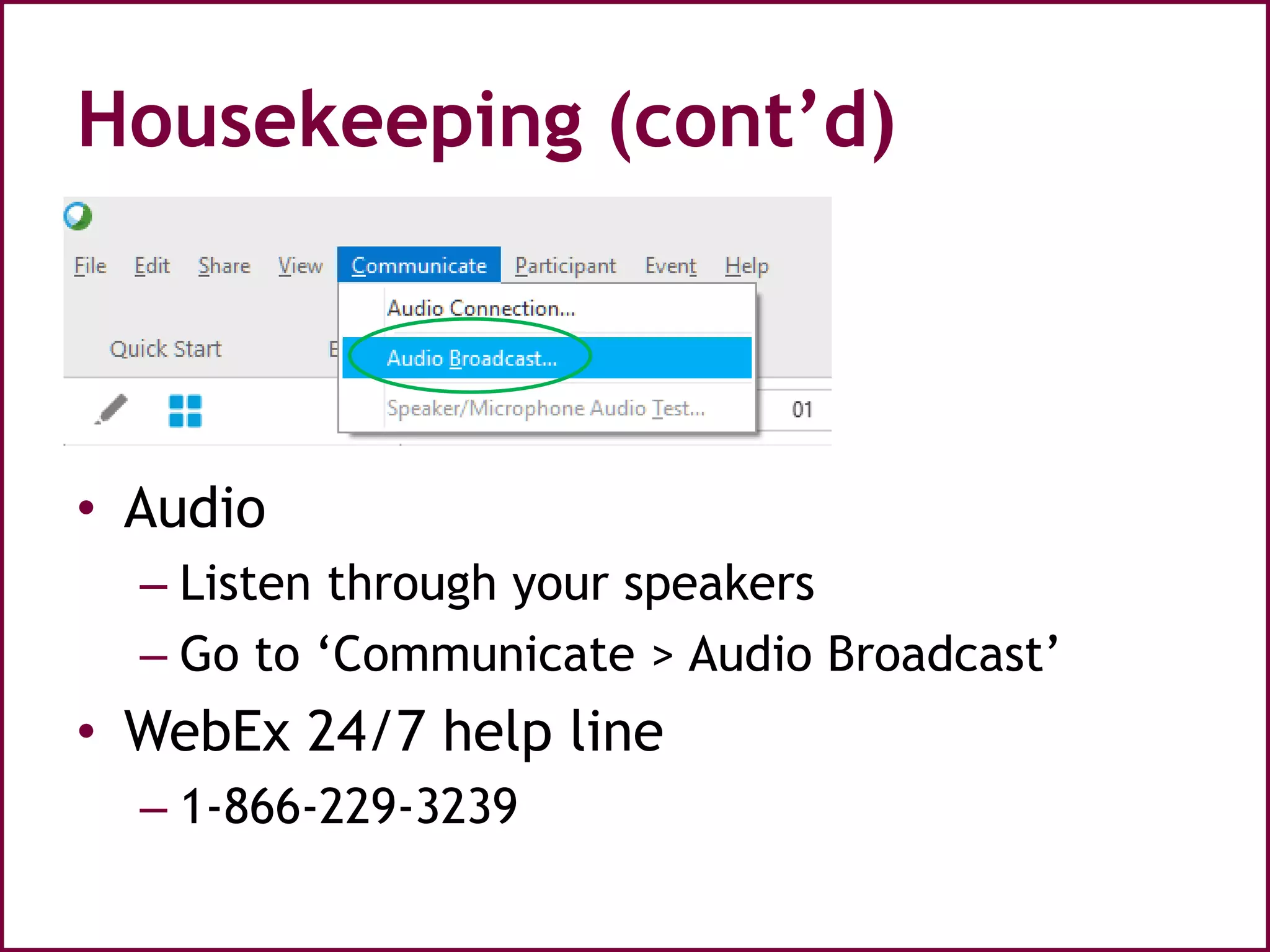
Housekeeping (cont’d)
• Audio
– Listen through your speakers
– Go to ‘Communicate > Audio Broadcast’
• WebEx 24/7 help line
– 1-866-229-3239
Poll Question #1
How many people are watching
today’s session with you?
A. Just me
B. 2-3
C. 4-5
D. 6-10
E. >10
The Health Evidence™ Team
Maureen Dobbins
Scientific Director
Heather Husson
Manager
Susannah Watson
Project Coordinator
Students:
Emily Belita
(PhD candidate)
Jennifer Yost
Assistant Professor
Olivia Marquez
Research Coordinator
Emily Sully
Research Assistant
Liz Kamler
Research Assistant
Zhi (Vivian) Chen
Research Assistant
Research Assistants:
Lina Sherazy
Claire Howarth
Rawan Farran
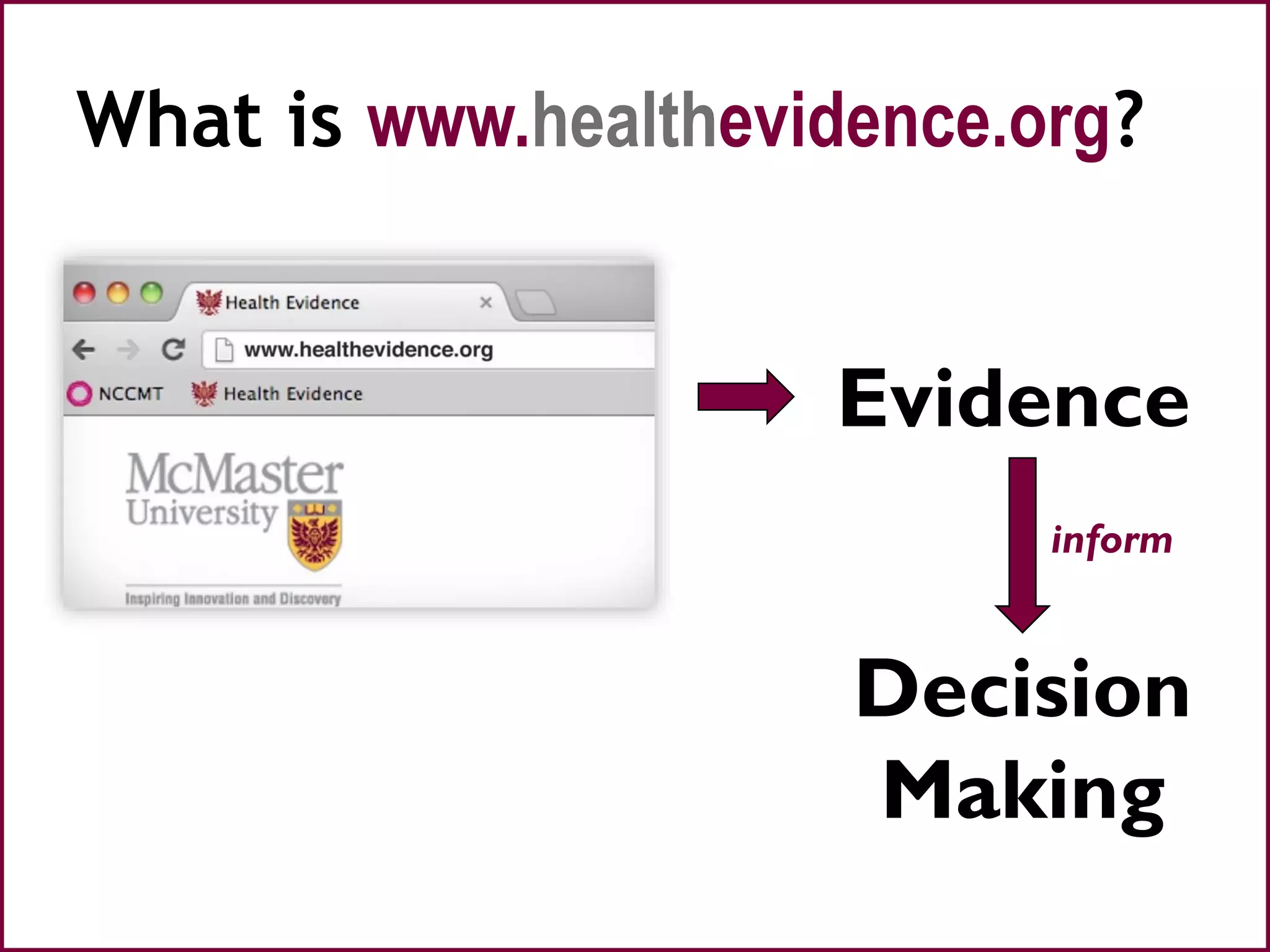
What is www.healthevidence.org?
Evidence
Decision
Making
inform
Why use www.healthevidence.org?
1. Saves you time
2. Relevant & current evidence
3. Transparent process
4. Supports for EIDM available
5. Easy to use
A Model for Evidence-
Informed Decision Making
National Collaborating Centre for Methods and Tools. (revised 2012). A
Model for Evidence-Informed Decision-Making in Public Health (Fact
Sheet). [http://www.nccmt.ca/pubs/FactSheet_EIDM_EN_WEB.pdf]
Stages in the process of
Evidence-Informed Public Health
National Collaborating Centre for Methods and Tools. Evidence-Informed
Public Health. [http://www.nccmt.ca/eiph/index-eng.html]
Poll Question #2
Have you heard of PICO(S) before?
A. Yes
B. No
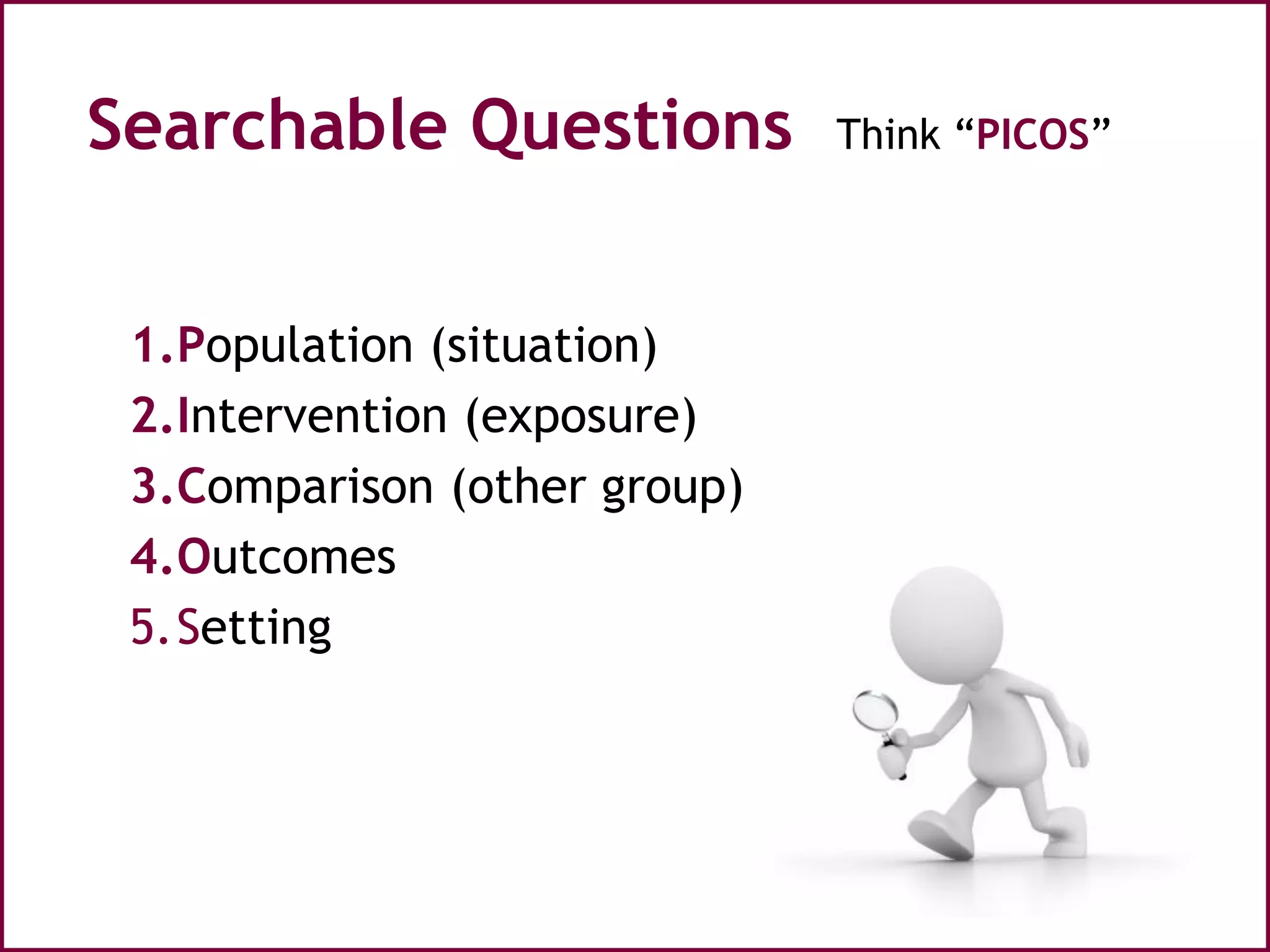
Searchable Questions Think “PICOS”
1.Population (situation)
2.Intervention (exposure)
3.Comparison (other group)
4.Outcomes
5.Setting
How often do you use Systematic Reviews
to inform a program/services?
A. Always
B. Often
C. Sometimes
D. Never
E. I don’t know what a systematic review is
Poll Question #3
Nipun Shrestha,
Active Living & Public Health
Group, Institute of Sport,
Exercise and Active Living
(ISEAL), Victoria University
Workplace Sitting Review Team
• Katriina T Kukkonen-Harjula, UKK Institute for Health
Promotion Research, Tampere, Finland
• Jos Verbeek, Cochrane Work Review Group, Finnish
Institute of Occupational Health, Kuopio, Finland
• Sharea Ijaz, Cochrane Work Review Group, Finnish Institute
of Occupational Health, Kuopio, Finland
• Veerle Hermans, Faculty of Psychology & Educational
Sciences, Faculty of Medicine & Pharmacy, Vrije Universiteit
Brussel, Brussels
• Soumyadeep Bhaumik, Kolkata, India
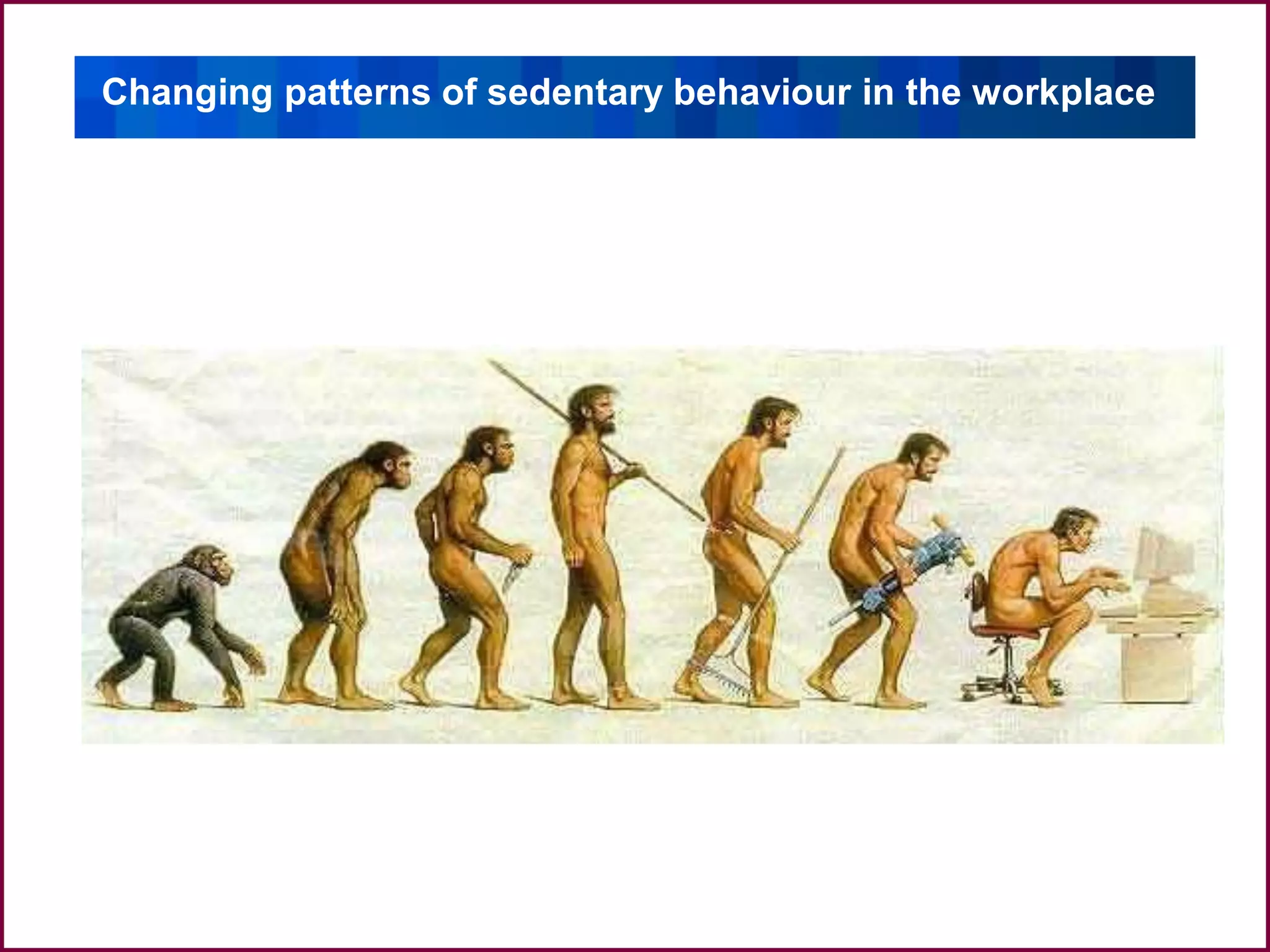
Changing patterns of sedentary behaviour in the workplace
• Data from a representative sample of US adults show that
over 50% of waking hours are spent sedentary (Healy et
al. 2011)
Changing patterns of sedentary behaviour
• 21% of Australian adults spend > 8 hours a day being
sedentary (Bennie et al. 2016)
• Data from 28 European Union countries show that 18.5%
of adults spend >7.5 hours a day being sedentary at work
and during leisure (Loyen et al. 2016)
Changing patterns of sedentary behaviour
0
5
10
15
20
25
30
35
40
45
2000 2005 2010 2015 2020
Averagehoursperweekbeingsedentary
Year
US
India
Increased risk of various chronic conditions
• All cause mortality ↑↑
• Cardiovascular disease mortality ↑↑
• Cardiovascular disease incidence ↑
• Cancer mortality ↑↑
• Cancer incidence ↑
The Chairman’s curse
Metabolic
Diabetes
Cardiovascular
Hypertension
Many chronic disease and conditions
Mechanical
Arthritis
Back pain
Malignancy
Breast
Mental
Depression
‘Creativity’
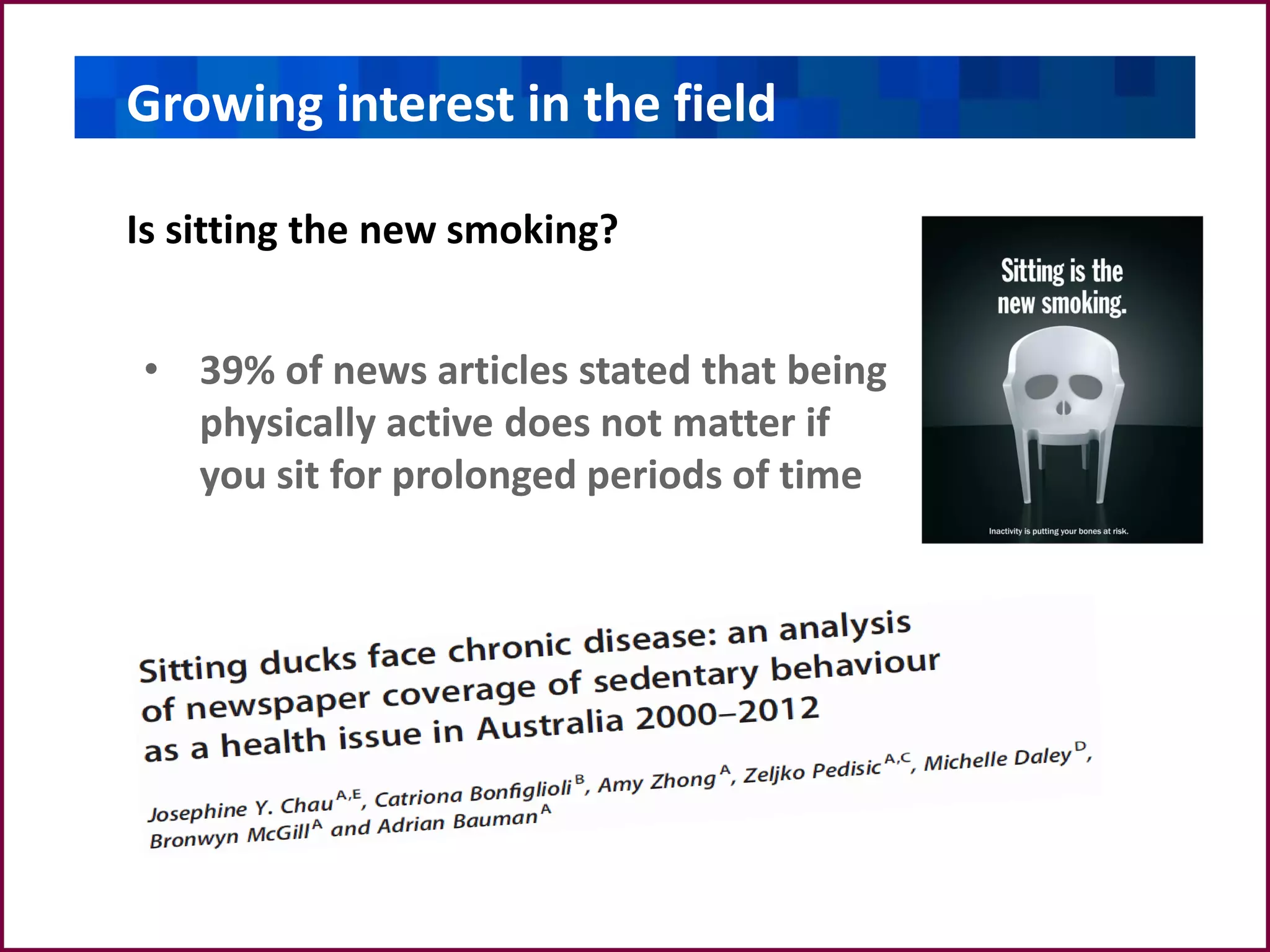
Growing interest in the field
Is sitting a new smoking?Is sitting a new smoking?Is sitting a new smoking?
Is sitting the new smoking?
• 39% of news articles stated that being
physically active does not matter if
you sit for prolonged periods of time
• From inception to February 2014:
8 studies identified
• From March 2014 to June 2015 :
12 new studies identified
• Almetric score: 983
with 90 news stories from 83 outlets
including Time magazine & The Guardian
Growing interest in the field
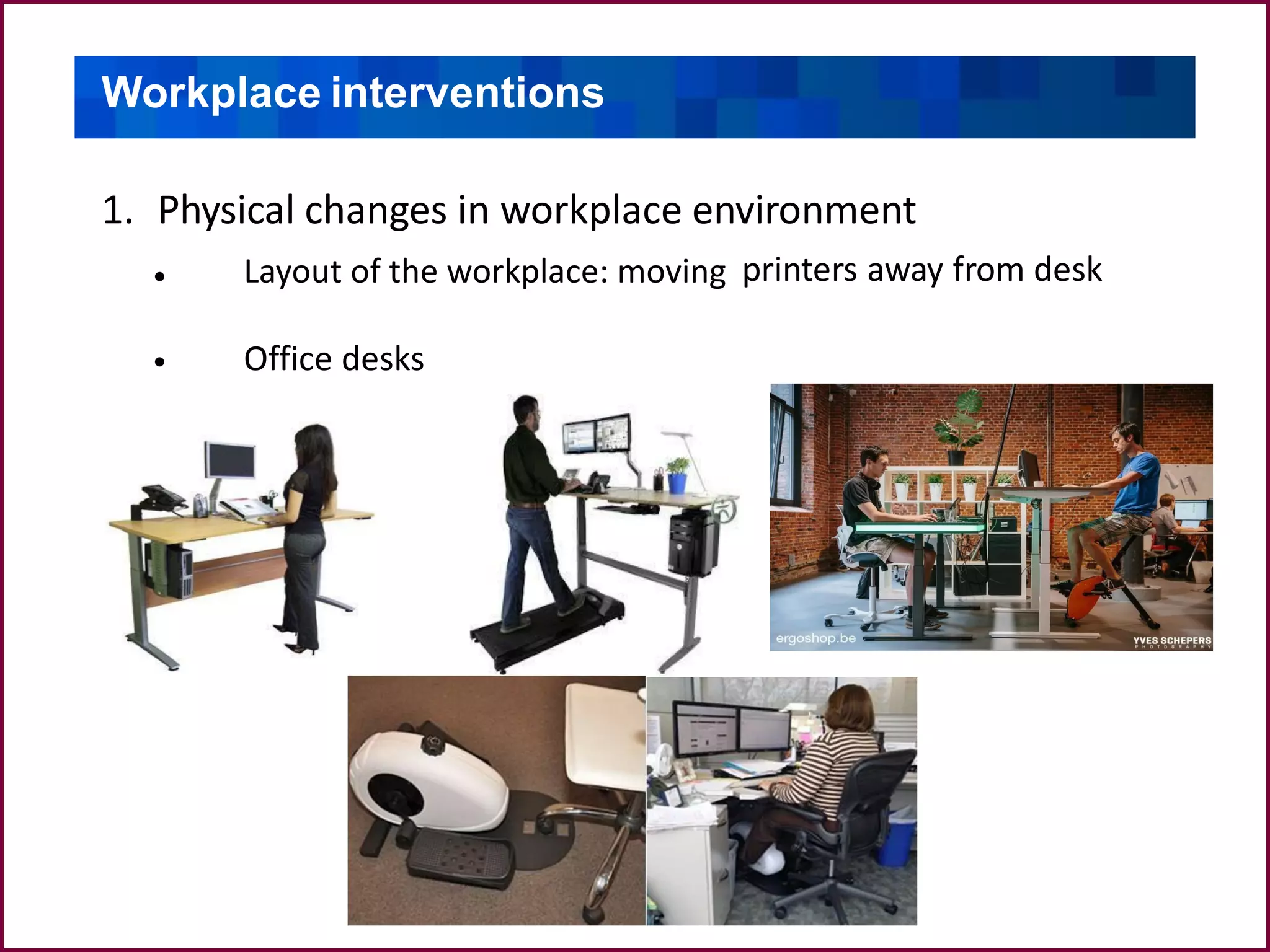
Workplace interventions
1. Physical changes in workplace environment
Layout of the workplace: moving
Office desks
printers away from desk•
•
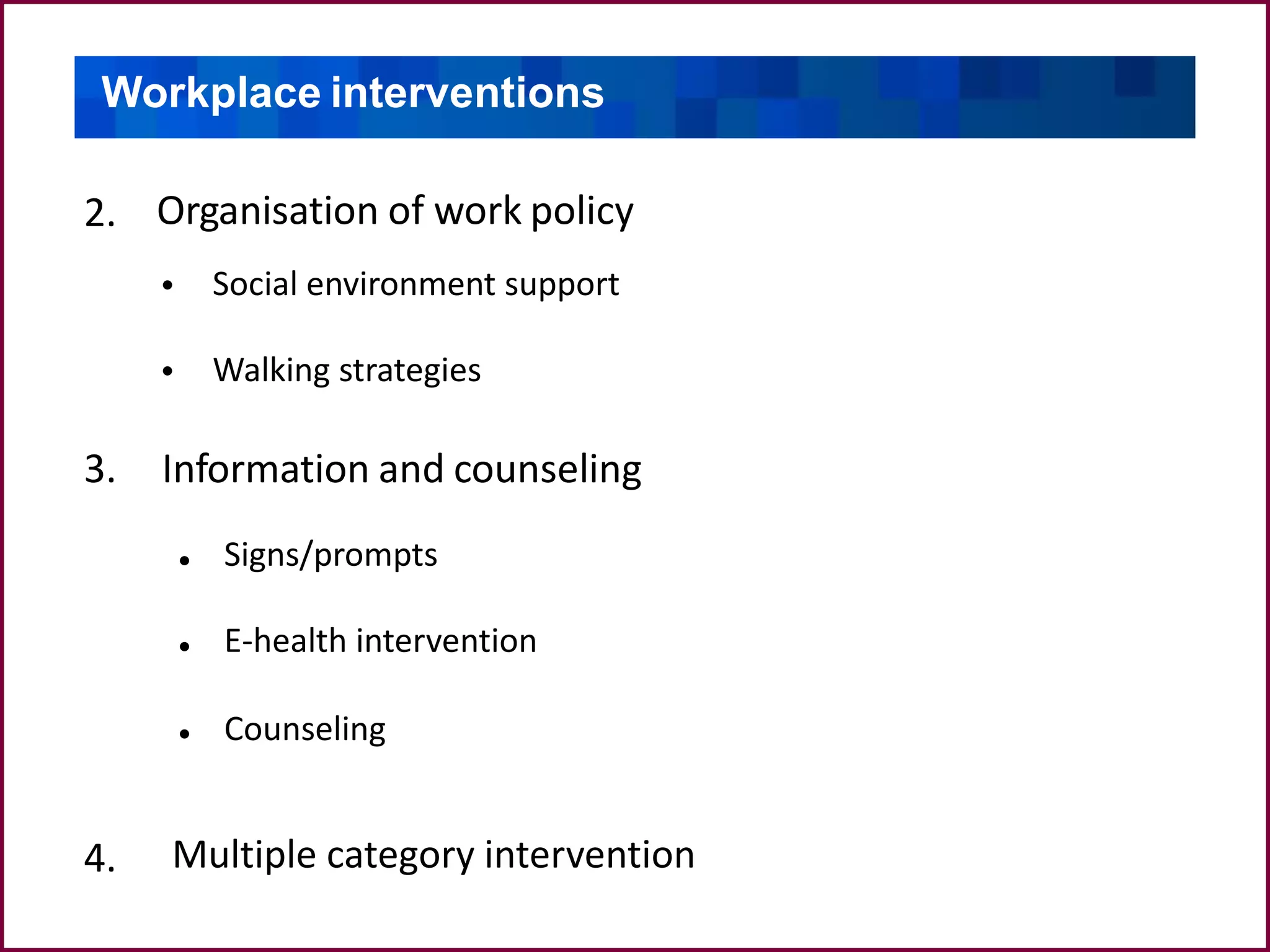
Organisation of work policy2.
Social environment support
Walking strategies
•
•
Information and counseling3.
Signs/prompts
E-health intervention
Counseling
4.
Workplace interventions
•
•
•
Multiple category intervention
Research question
Are there good studies that show that these interventions work ?
•RCTs , Cluster RCTs, Controlled before-after
studies (CBAs)Study design
•Employees working behind the deskParticipants
•Physical changes in the workplace
environment
•A policy to change the organisation of
work
•Information and counselling
Intervention
•Self-reported or objectively measured
time spent seated at work
•Adverse events
Outcome
Inclusion criteria
Comparison
• No intervention / other active
intervention
• Cochrane Central Register of Controlled
Trials (CENTRAL),
• MEDLINE,
• EMBASE,
• CINAHL,
• OSH UPDATE,
• PsycINFO,
• Clinical trials.gov and
• World Health Organization (WHO)
International Clinical Trials Registry
Platform (ICTRP) search portal
SearchSearch
• 20 studies
• 2174 participants
• very low to low quality evidence (GRADE)
• Risk of bias high: non randomised,
unblinded, unconcealed allocation
• Small sample size
Results
Results
Physical changes in workplace environment: 9 studies (5 RCTs, 4 CBAs)
•Sit-stand desk: 6 studies (3 CBAs, 3 RCTs)
•Sit-stand desk + counselling: 2 studies (2 CBAs)
•Treadmill desk: 1 RCT
•Cycling workstation : 1 RCT
1.
Organisation of work policy
• Walking strategies: 2 RCTs
2.
Information and counseling: 7 RCTs
• Counselling: 2 RCTs
• E-newsletter: 1 RCT
• Computer prompts: 2 RCTs
• Computer prompts to stand vs. computer prompts
to step: 1 RCT
• Mindfulness training: 1 RCT
Multiple category intervention: 2 RCTs4.
3.
Results
Results: Change in sitting time at work
Physical changes in workplace environment :
• Sit-stand desk: between half to two hours at short term
(up to 3 months') follow-up
• Sit-stand desk + counselling: reduction in same range
at 3 months' follow up
• Treadmill desk: half hour reduction at 12 weeks'
follow-up
• Cycling workstation: no effect
Results
Results
Results
Policy changes:
• Walking groups: no effect
Information and counselling:
• Counselling: half hour reduction at medium term follow-up
(3 months to 12 months)
• E-newsletter: no effect
• Computer prompting: inconsistent effect
• Mindfulness training: no effect
Multiple category intervention
inconsistent effect
Secondary outcomes
• Musculoskeletal symptoms: no effect seen with sit-stand desk
• Work productivity: no effect seen with sit-stand desk
• Sick leave: no effect seen with sit-stand desk
• Varicose veins : no studies were found that assessed if
standing at work increases the risk of varicose veins
Sitting review conclusion
• Sit-stand desk may decrease workplace sitting between half an
hour to two hours per day without having adverse effects
• Very low quality evidence likely to change in the future
Sitting review conclusion
It remains unclear if standing can repair the harms of sitting because
there is hardly any extra energy expenditure
•
Be careful with buying a sit-stand desk or treadmill desk since it is
not proven yet that by using this we can avoid health problems or
that it causes sufficient movement/energy expenditure
•
No studies from low-middle income
countries
•
Expert Statement
Key unanswered questions in sedentary behaviour research
Can we change sitting behaviour over the long-
term in real-world?
•
If so, how much change is realistically possible?•
What intervention approaches would be most effective
at inducing long-term sitting behaviour reduction?
•
Does changing sitting behaviour have a positive
effect on long-term health outcomes? i.e. body
weight, cholesterol, blood pressure, blood glucose
•
A Model for Evidence-
Informed Decision Making
National Collaborating Centre for Methods and Tools. (revised 2012). A
Model for Evidence-Informed Decision-Making in Public Health (Fact
Sheet). [http://www.nccmt.ca/pubs/FactSheet_EIDM_EN_WEB.pdf]
Poll Question #4
The information presented today was
helpful
A. Strongly agree
B. Agree
C. Neutral
D. Disagree
E. Strongly disagree
What can I do now?
Visit the website; a repository of 5,000+ quality-rated systematic reviews
related to the effectiveness of public health interventions. Health Evidence™ is
FREE to use.
Register to receive monthly tailored registry updates AND monthly newsletter
to keep you up to date on upcoming events and public health news.
Tell your colleagues about Health Evidence™: helping you use best evidence to
inform public health practice, program planning, and policy decisions!
Follow us @HealthEvidence on Twitter and receive daily public health review-
related Tweets, receive information about our monthly webinars, as well as
announcements and events relevant to public health.
Encourage your organization to use Health Evidence™ to search for and apply
quality-rated review level evidence to inform program planning and policy
decisions.
Contact us to suggest topics or provide feedback.
info@healthevidence.org
Poll Question #5
What are your next steps? [Check all
that apply]
A. Access the full text systematic review
B. Access the quality assessment for the
review on www.healthevidence.org
C. Consider using the evidence
D. Tell a colleague about the evidence
Thank you!
Contact us:
info@healthevidence.org
For a copy of the presentation please visit:
http://www.healthevidence.org/webinars.aspx

Reducing sitting time at work: What's the evidence?

  • 1.
    Welcome! Reducing sitting timeat work: What's the evidence? You will be placed on hold until the webinar begins. The webinar will begin shortly, please remain on the line.
  • 2.
    Poll Questions: Consent •Participation in the webinar poll questions is voluntary • Names are not recorded and persons will not be identified in any way • Participation in the anonymous polling questions is accepted as an indication of your consent to participate Benefits: • Results inform improvement of the current and future webinars • Enable engagement; stimulate discussion. This session is intended for professional development. Some data may be used for program evaluation and research purposes (e.g., exploring opinion change) • Results may also be used to inform the production of systematic reviews and overviews Risks: None beyond day-to-day living
  • 3.
    After Today • ThePowerPoint presentation and audio recording will be made available • These resources are available at: – PowerPoint: https://www.slideshare.net/HealthEvidence/presentations – Audio Recording: https://www.youtube.com/user/healthevidence/videos
  • 4.
    What’s the evidence? ShresthaN, Kukkonen-harjula KT, Verbeek JH, Ijaz S, Hermans V, & Bhaumik S. (2016). Workplace interventions for reducing sitting at work. Cochrane Database of Systematic Reviews, 2016(3), Art. No.: CD010912. http://healthevidence.org/view- article.aspx?a=workplace-interventions-reducing-sitting- work-28404
  • 5.
    • Use CHATto post comments / questions during the webinar – ‘Send’ questions to All (not privately to ‘Host’) • Connection issues – Recommend using a wired Internet connection (vs. wireless) • WebEx 24/7 help line – 1-866-229-3239 Participant Side Panel in WebEx Housekeeping
  • 6.
    Housekeeping (cont’d) • Audio –Listen through your speakers – Go to ‘Communicate > Audio Broadcast’ • WebEx 24/7 help line – 1-866-229-3239
  • 7.
    Poll Question #1 Howmany people are watching today’s session with you? A. Just me B. 2-3 C. 4-5 D. 6-10 E. >10
  • 8.
    The Health Evidence™Team Maureen Dobbins Scientific Director Heather Husson Manager Susannah Watson Project Coordinator Students: Emily Belita (PhD candidate) Jennifer Yost Assistant Professor Olivia Marquez Research Coordinator Emily Sully Research Assistant Liz Kamler Research Assistant Zhi (Vivian) Chen Research Assistant Research Assistants: Lina Sherazy Claire Howarth Rawan Farran
  • 9.
  • 10.
    Why use www.healthevidence.org? 1.Saves you time 2. Relevant & current evidence 3. Transparent process 4. Supports for EIDM available 5. Easy to use
  • 11.
    A Model forEvidence- Informed Decision Making National Collaborating Centre for Methods and Tools. (revised 2012). A Model for Evidence-Informed Decision-Making in Public Health (Fact Sheet). [http://www.nccmt.ca/pubs/FactSheet_EIDM_EN_WEB.pdf]
  • 12.
    Stages in theprocess of Evidence-Informed Public Health National Collaborating Centre for Methods and Tools. Evidence-Informed Public Health. [http://www.nccmt.ca/eiph/index-eng.html]
  • 13.
    Poll Question #2 Haveyou heard of PICO(S) before? A. Yes B. No
  • 14.
    Searchable Questions Think“PICOS” 1.Population (situation) 2.Intervention (exposure) 3.Comparison (other group) 4.Outcomes 5.Setting
  • 15.
    How often doyou use Systematic Reviews to inform a program/services? A. Always B. Often C. Sometimes D. Never E. I don’t know what a systematic review is Poll Question #3
  • 16.
    Nipun Shrestha, Active Living& Public Health Group, Institute of Sport, Exercise and Active Living (ISEAL), Victoria University
  • 17.
    Workplace Sitting ReviewTeam • Katriina T Kukkonen-Harjula, UKK Institute for Health Promotion Research, Tampere, Finland • Jos Verbeek, Cochrane Work Review Group, Finnish Institute of Occupational Health, Kuopio, Finland • Sharea Ijaz, Cochrane Work Review Group, Finnish Institute of Occupational Health, Kuopio, Finland • Veerle Hermans, Faculty of Psychology & Educational Sciences, Faculty of Medicine & Pharmacy, Vrije Universiteit Brussel, Brussels • Soumyadeep Bhaumik, Kolkata, India
  • 18.
    Changing patterns ofsedentary behaviour in the workplace
  • 19.
    • Data froma representative sample of US adults show that over 50% of waking hours are spent sedentary (Healy et al. 2011) Changing patterns of sedentary behaviour • 21% of Australian adults spend > 8 hours a day being sedentary (Bennie et al. 2016) • Data from 28 European Union countries show that 18.5% of adults spend >7.5 hours a day being sedentary at work and during leisure (Loyen et al. 2016)
  • 20.
    Changing patterns ofsedentary behaviour 0 5 10 15 20 25 30 35 40 45 2000 2005 2010 2015 2020 Averagehoursperweekbeingsedentary Year US India
  • 21.
    Increased risk ofvarious chronic conditions • All cause mortality ↑↑ • Cardiovascular disease mortality ↑↑ • Cardiovascular disease incidence ↑ • Cancer mortality ↑↑ • Cancer incidence ↑ The Chairman’s curse Metabolic Diabetes Cardiovascular Hypertension Many chronic disease and conditions Mechanical Arthritis Back pain Malignancy Breast Mental Depression ‘Creativity’
  • 22.
    Growing interest inthe field Is sitting a new smoking?Is sitting a new smoking?Is sitting a new smoking? Is sitting the new smoking? • 39% of news articles stated that being physically active does not matter if you sit for prolonged periods of time
  • 23.
    • From inceptionto February 2014: 8 studies identified • From March 2014 to June 2015 : 12 new studies identified • Almetric score: 983 with 90 news stories from 83 outlets including Time magazine & The Guardian Growing interest in the field
  • 24.
    Workplace interventions 1. Physicalchanges in workplace environment Layout of the workplace: moving Office desks printers away from desk• •
  • 25.
    Organisation of workpolicy2. Social environment support Walking strategies • • Information and counseling3. Signs/prompts E-health intervention Counseling 4. Workplace interventions • • • Multiple category intervention
  • 26.
    Research question Are theregood studies that show that these interventions work ?
  • 27.
    •RCTs , ClusterRCTs, Controlled before-after studies (CBAs)Study design •Employees working behind the deskParticipants •Physical changes in the workplace environment •A policy to change the organisation of work •Information and counselling Intervention •Self-reported or objectively measured time spent seated at work •Adverse events Outcome Inclusion criteria Comparison • No intervention / other active intervention
  • 28.
    • Cochrane CentralRegister of Controlled Trials (CENTRAL), • MEDLINE, • EMBASE, • CINAHL, • OSH UPDATE, • PsycINFO, • Clinical trials.gov and • World Health Organization (WHO) International Clinical Trials Registry Platform (ICTRP) search portal SearchSearch
  • 29.
    • 20 studies •2174 participants • very low to low quality evidence (GRADE) • Risk of bias high: non randomised, unblinded, unconcealed allocation • Small sample size Results
  • 30.
    Results Physical changes inworkplace environment: 9 studies (5 RCTs, 4 CBAs) •Sit-stand desk: 6 studies (3 CBAs, 3 RCTs) •Sit-stand desk + counselling: 2 studies (2 CBAs) •Treadmill desk: 1 RCT •Cycling workstation : 1 RCT 1. Organisation of work policy • Walking strategies: 2 RCTs 2.
  • 31.
    Information and counseling:7 RCTs • Counselling: 2 RCTs • E-newsletter: 1 RCT • Computer prompts: 2 RCTs • Computer prompts to stand vs. computer prompts to step: 1 RCT • Mindfulness training: 1 RCT Multiple category intervention: 2 RCTs4. 3. Results
  • 32.
    Results: Change insitting time at work Physical changes in workplace environment : • Sit-stand desk: between half to two hours at short term (up to 3 months') follow-up • Sit-stand desk + counselling: reduction in same range at 3 months' follow up • Treadmill desk: half hour reduction at 12 weeks' follow-up • Cycling workstation: no effect
  • 33.
  • 34.
  • 35.
    Results Policy changes: • Walkinggroups: no effect Information and counselling: • Counselling: half hour reduction at medium term follow-up (3 months to 12 months) • E-newsletter: no effect • Computer prompting: inconsistent effect • Mindfulness training: no effect Multiple category intervention inconsistent effect
  • 36.
    Secondary outcomes • Musculoskeletalsymptoms: no effect seen with sit-stand desk • Work productivity: no effect seen with sit-stand desk • Sick leave: no effect seen with sit-stand desk • Varicose veins : no studies were found that assessed if standing at work increases the risk of varicose veins
  • 37.
    Sitting review conclusion •Sit-stand desk may decrease workplace sitting between half an hour to two hours per day without having adverse effects • Very low quality evidence likely to change in the future
  • 38.
    Sitting review conclusion Itremains unclear if standing can repair the harms of sitting because there is hardly any extra energy expenditure • Be careful with buying a sit-stand desk or treadmill desk since it is not proven yet that by using this we can avoid health problems or that it causes sufficient movement/energy expenditure • No studies from low-middle income countries •
  • 39.
  • 40.
    Key unanswered questionsin sedentary behaviour research Can we change sitting behaviour over the long- term in real-world? • If so, how much change is realistically possible?• What intervention approaches would be most effective at inducing long-term sitting behaviour reduction? • Does changing sitting behaviour have a positive effect on long-term health outcomes? i.e. body weight, cholesterol, blood pressure, blood glucose •
  • 41.
    A Model forEvidence- Informed Decision Making National Collaborating Centre for Methods and Tools. (revised 2012). A Model for Evidence-Informed Decision-Making in Public Health (Fact Sheet). [http://www.nccmt.ca/pubs/FactSheet_EIDM_EN_WEB.pdf]
  • 42.
    Poll Question #4 Theinformation presented today was helpful A. Strongly agree B. Agree C. Neutral D. Disagree E. Strongly disagree
  • 43.
    What can Ido now? Visit the website; a repository of 5,000+ quality-rated systematic reviews related to the effectiveness of public health interventions. Health Evidence™ is FREE to use. Register to receive monthly tailored registry updates AND monthly newsletter to keep you up to date on upcoming events and public health news. Tell your colleagues about Health Evidence™: helping you use best evidence to inform public health practice, program planning, and policy decisions! Follow us @HealthEvidence on Twitter and receive daily public health review- related Tweets, receive information about our monthly webinars, as well as announcements and events relevant to public health. Encourage your organization to use Health Evidence™ to search for and apply quality-rated review level evidence to inform program planning and policy decisions. Contact us to suggest topics or provide feedback. info@healthevidence.org
  • 44.
    Poll Question #5 Whatare your next steps? [Check all that apply] A. Access the full text systematic review B. Access the quality assessment for the review on www.healthevidence.org C. Consider using the evidence D. Tell a colleague about the evidence
  • 45.
    Thank you! Contact us: info@healthevidence.org Fora copy of the presentation please visit: http://www.healthevidence.org/webinars.aspx