


Welcome!
Interventions with potential to
reduce sedentary time in
adults: What's the evidence?
You will be placed on hold until the webinar begins.
The webinar will begin shortly, please remain on the line.
Poll Questions: Consent
• Participation in the webinar poll questions is voluntary
• Names are not recorded and persons will not be identified in any way
• Participation in the anonymous polling questions is accepted as an
indication of your consent to participate
Benefits:
• Results inform improvement of the current and future webinars
• Enable engagement; stimulate discussion. This session is intended for
professional development. Some data may be used for program evaluation
and research purposes (e.g., exploring opinion change)
• Results may also be used to inform the production of systematic reviews
and overviews
Risks: None beyond day-to-day living
After Today
• The PowerPoint presentation and audio
recording will be made available
• These resources are available at:
– PowerPoint:
http://www.slideshare.net/HealthEvidence
– Audio Recording:
https://www.youtube.com/user/healthevidence
/videos
3
What’s the evidence?
Martin A., Fitzsimons C., Jepson R., Saunders D.,
van der Ploeg H.P., Teixeira P.J., et al. (2015).
Interventions with potential to reduce sedentary
time in adults: Systematic review and meta-
analysis. British Journal of Sports Medicine, 0, 1-
10.
http://www.healthevidence.org/view-article.aspx?a=28660
Poll Question #1
What sector are you from?
1. Public Health Practitioner
2. Health Practitioner (Other)
3. Education
4. Research
5. Provincial/Territorial/Government/Ministry/
Municipality
6. Policy Analyst (NGO, etc.)
7. Other
5
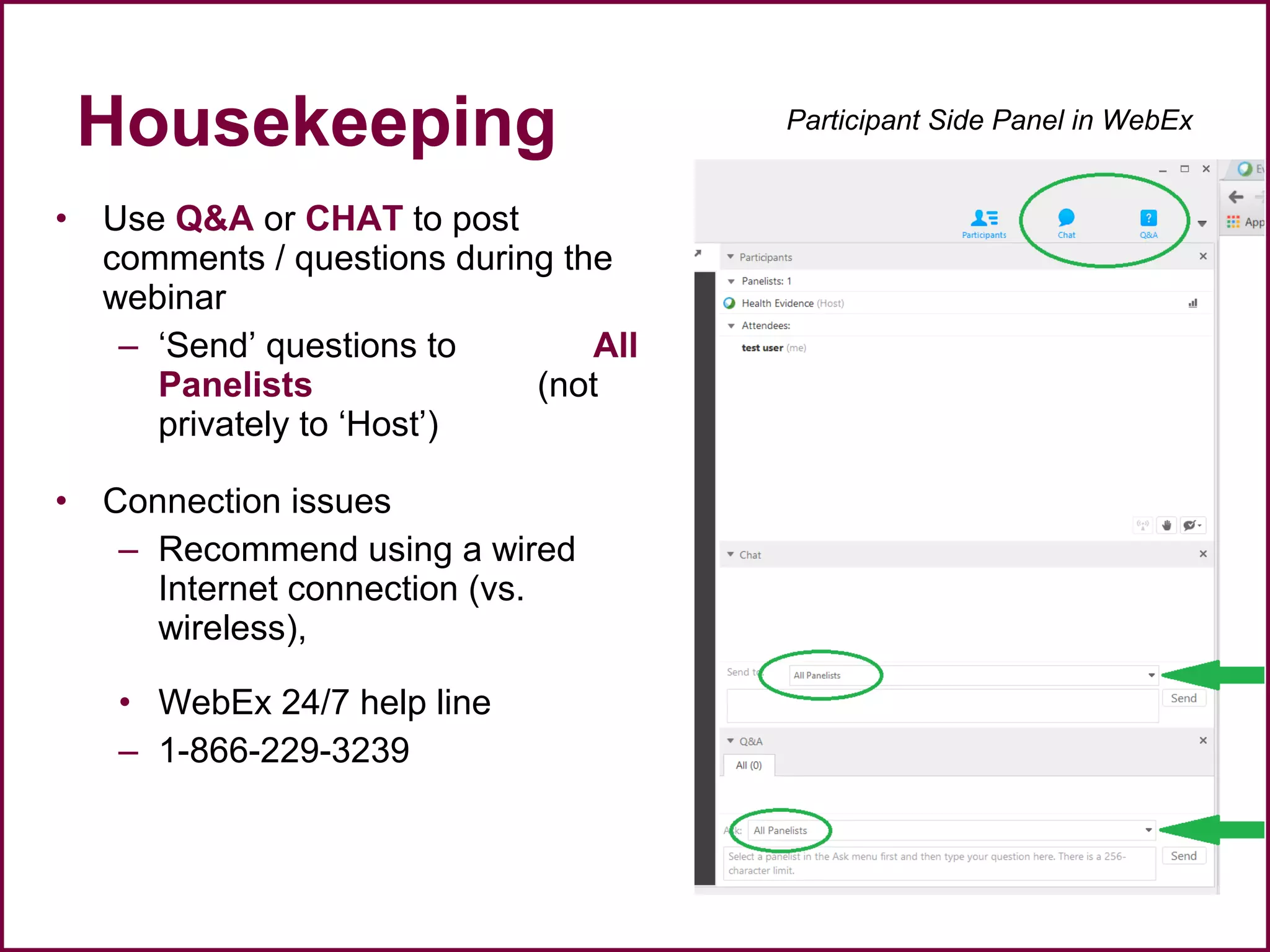
• Use Q&A or CHAT to post
comments / questions during the
webinar
– ‘Send’ questions to All
Panelists (not
privately to ‘Host’)
• Connection issues
– Recommend using a wired
Internet connection (vs.
wireless),
• WebEx 24/7 help line
– 1-866-229-3239
Participant Side Panel in WebEx
Housekeeping
Housekeeping (cont’d)
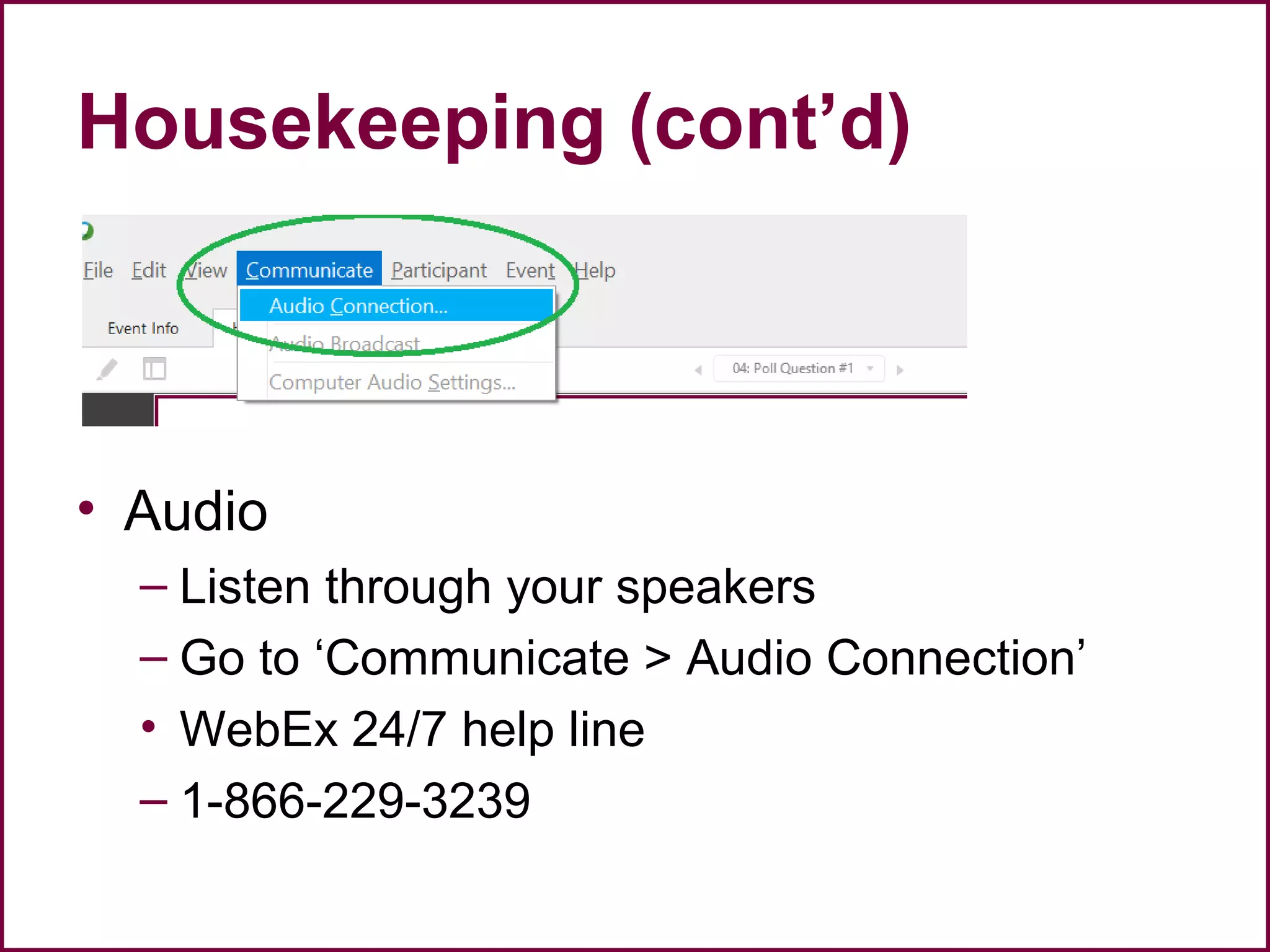
• Audio
– Listen through your speakers
– Go to ‘Communicate > Audio Connection’
• WebEx 24/7 help line
– 1-866-229-3239
Poll Question #2
How many people are watching today’s session
with you?
1.Just me
2.2-3
3.4-5
4.6-10
5.Over 10
The Health Evidence Team
Maureen Dobbins
Scientific Director
Heather Husson
Manager
Susannah Watson
Project Coordinator
Robyn Traynor
Publications Consultant
Students:
Emily Belita
(PhD candidate)
Jennifer Yost
Assistant Professor
Olivia Marquez
Research Coordinator
Kristin Read
Research Coordinator
Yaso Gowrinathan
Information Liaison
Emily Sully
Research Assistant
Liz Kamler
Research Assistant
Zhi (Vivian) Chen
Research Assistant
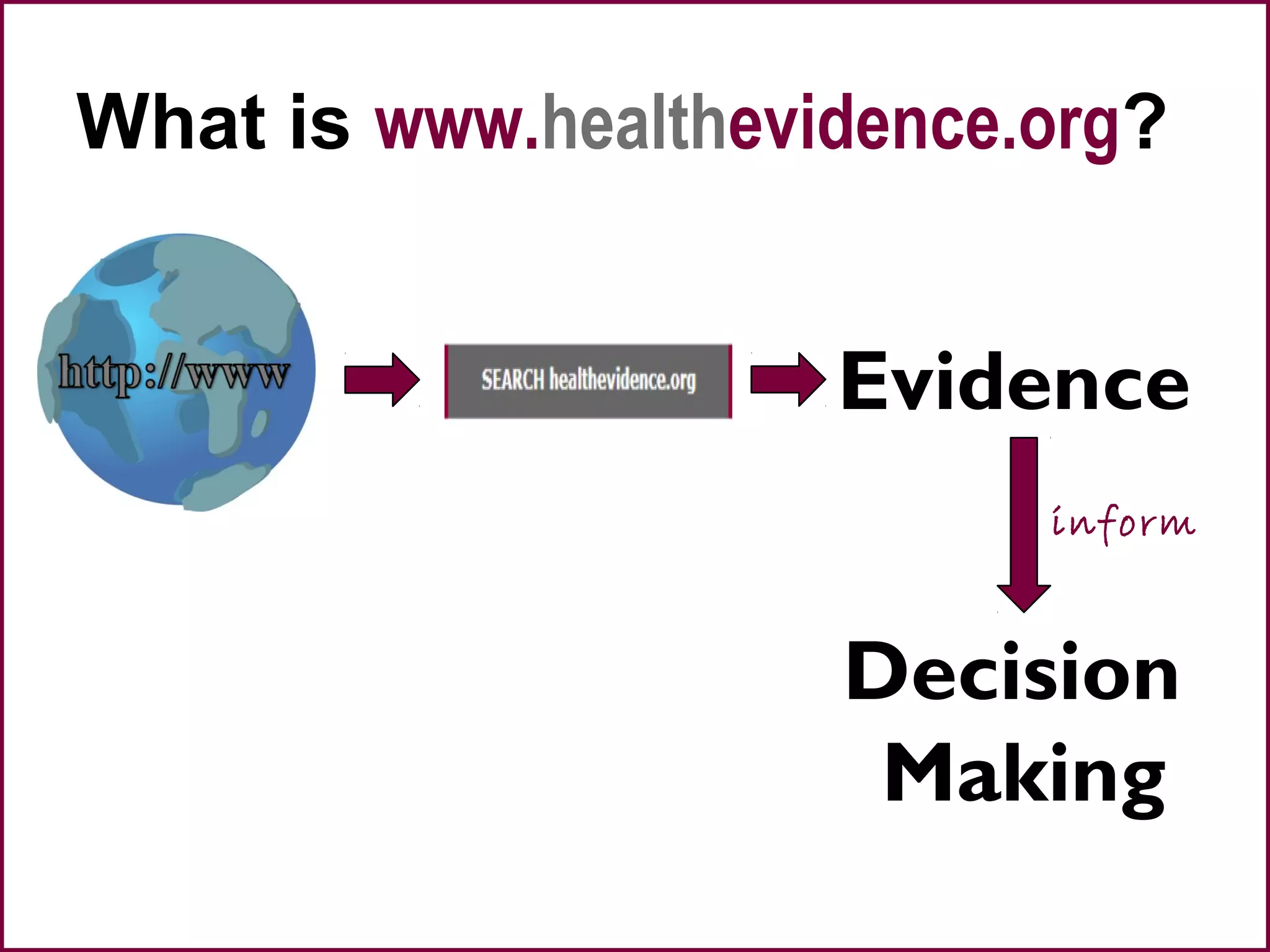
What is www.healthevidence.org?
Evidence
Decision
Making
inform
Why use www.healthevidence.org?
1. Saves you time
2. Relevant & current evidence
3. Transparent process
4. Supports for EIDM available
5. Easy to use
A Model for Evidence-
Informed Decision Making
National Collaborating Centre for Methods and Tools. (revised 2012). A
Model for Evidence-Informed Decision-Making in Public Health (Fact
Sheet). [http://www.nccmt.ca/pubs/FactSheet_EIDM_EN_WEB.pdf]
Stages in the process of Evidence-
Informed Public Health
National Collaborating Centre for Methods and Tools. Evidence-Informed
Public Health. [http://www.nccmt.ca/eiph/index-eng.html]
Poll Question #3
Have you heard of PICO(S) before?
1.Yes
2.No
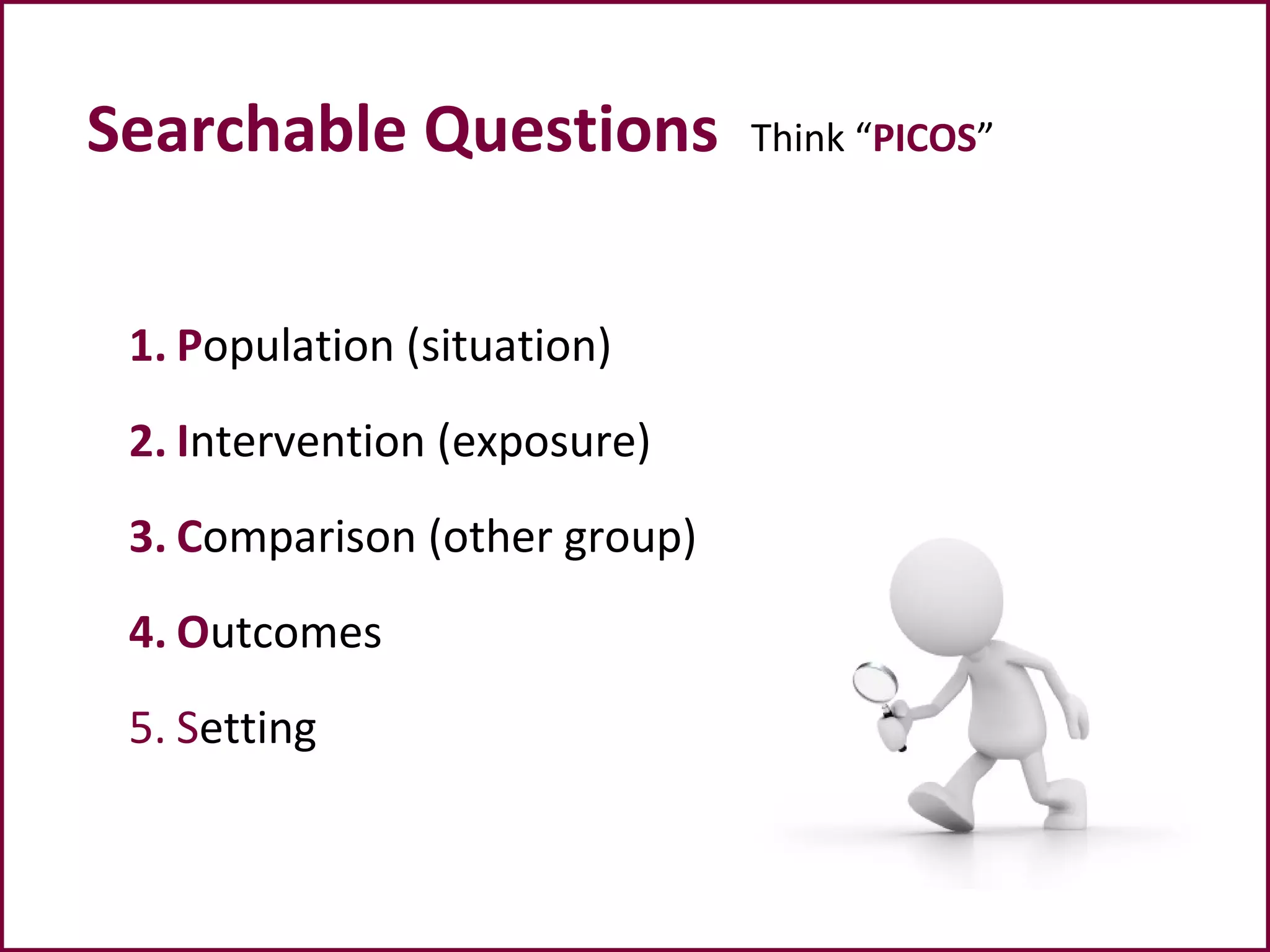
Searchable Questions Think “PICOS”
1. Population (situation)
2. Intervention (exposure)
3. Comparison (other group)
4. Outcomes
5. Setting
How often do you use Systematic Reviews
to inform a program/services?
A.Always
B.Often
C.Sometimes
D.Never
E.I don’t know what a systematic review is
Poll Question #4
Interventions can reduce sedentary time in
adults
A.Strongly agree
B.Agree
C.Neutral
D.Disagree
E.Strongly disagree
18
Poll Question #5
Review
Martin A., Fitzsimons C., Jepson R., Saunders D.,
van der Ploeg H.P., Teixeira P.J., et al. (2015).
Interventions with potential to reduce
sedentary time in adults: Systematic review
and meta-analysis. British Journal of Sports
Medicine, 0, 1-10.
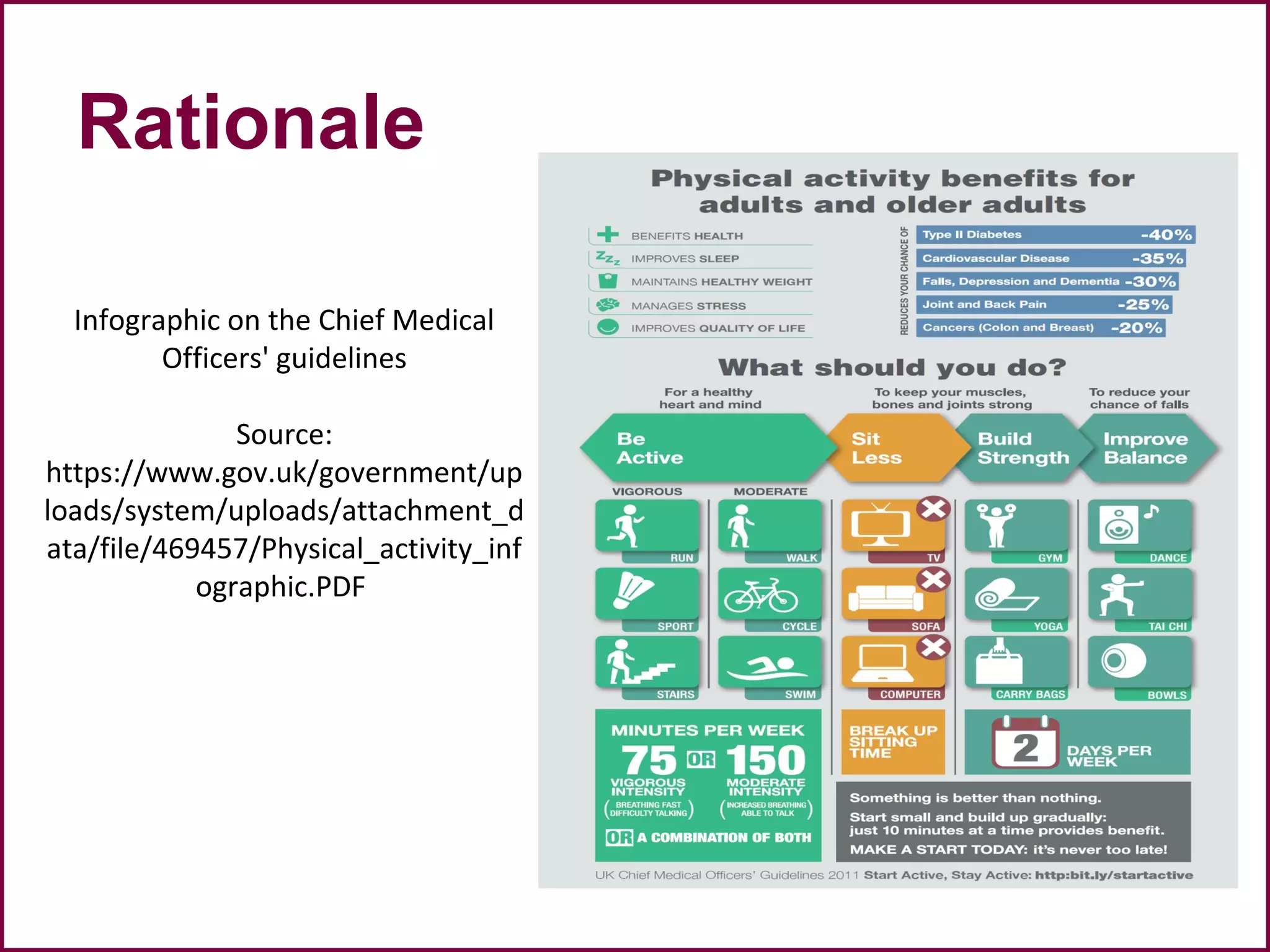
Rationale
Infographic on the Chief Medical
Officers' guidelines
Source:
https://www.gov.uk/government/up
loads/system/uploads/attachment_d
ata/file/469457/Physical_activity_inf
ographic.PDF
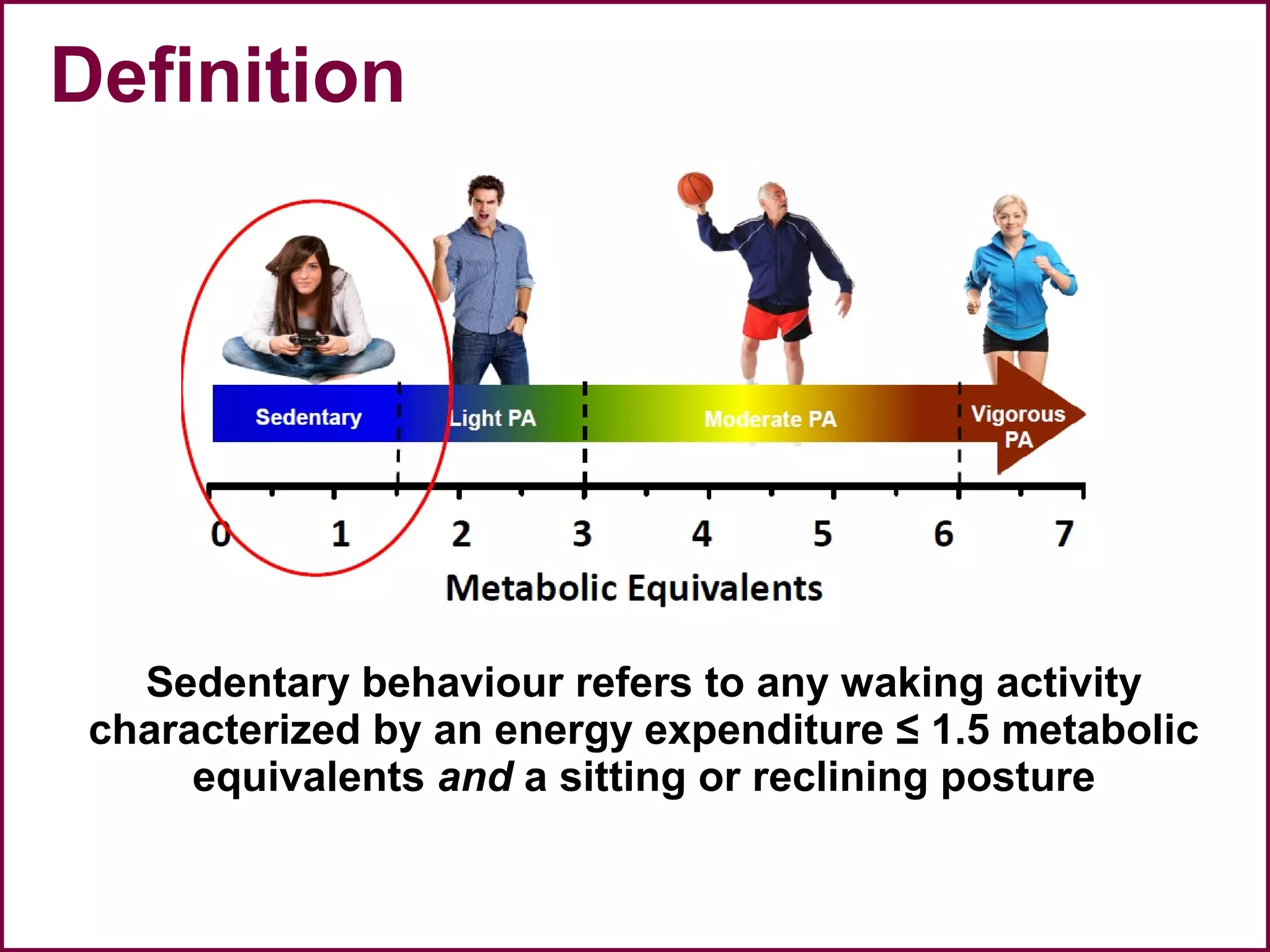
Sedentary behaviour refers to any waking activity
characterized by an energy expenditure ≤ 1.5 metabolic
equivalents and a sitting or reclining posture
Definition
What is sedentary behaviour?
– Any waking behaviour where sitting or lying is the
dominant mode of posture
– Energy expenditure is very low
– Screen-time (TV viewing, computer use), motorised
transport, sitting at work, sitting to read, talk, or listen
to music
Sedentary behaviour and
Health
• Significant hazard ratio (HR) associations were found with
– all-cause mortality (HR, 1.220 [95% CI, 1.090 to 1.410])
– cardiovascular disease mortality (HR, 1.150 [CI, 1.107 to
1.195])
– cardiovascular disease incidence (HR, 1.143 [CI, 1.002 to
1.729])
– cancer mortality (HR, 1.130 [CI, 1.053 to 1.213])
– cancer incidence (HR, 1.130 [CI, 1.053 to 1.213])
– type 2 diabetes incidence (HR, 1.910 [CI, 1.642 to 2.222]
• Largely independent of PA but HR bigger with lower PA
Biswas et al. Ann Intern Med. 2015;162:123-132.
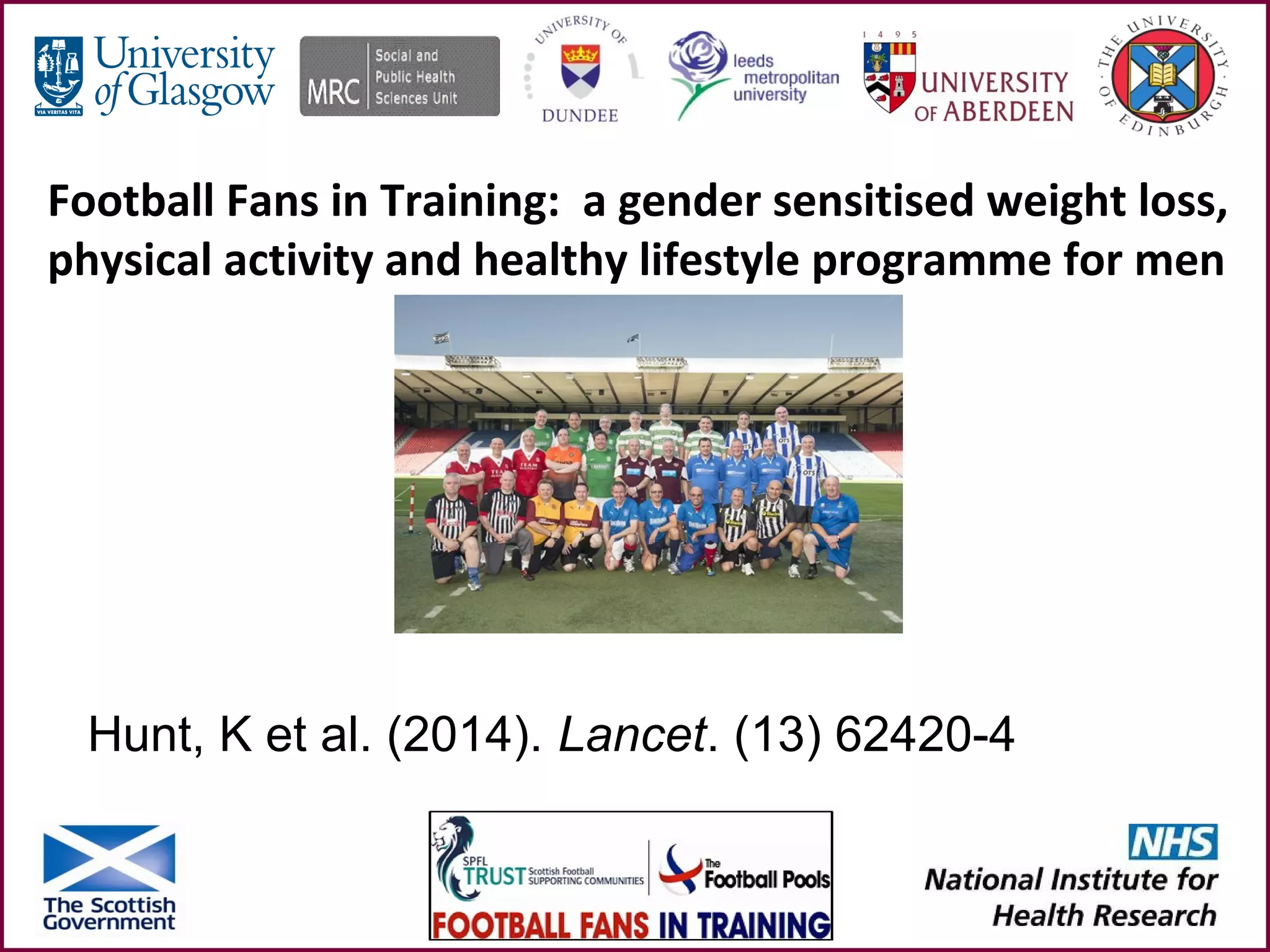
Football Fans in Training: a gender sensitised weight loss,
physical activity and healthy lifestyle programme for men
y
Hunt, K et al. (2014). Lancet. (13) 62420-4
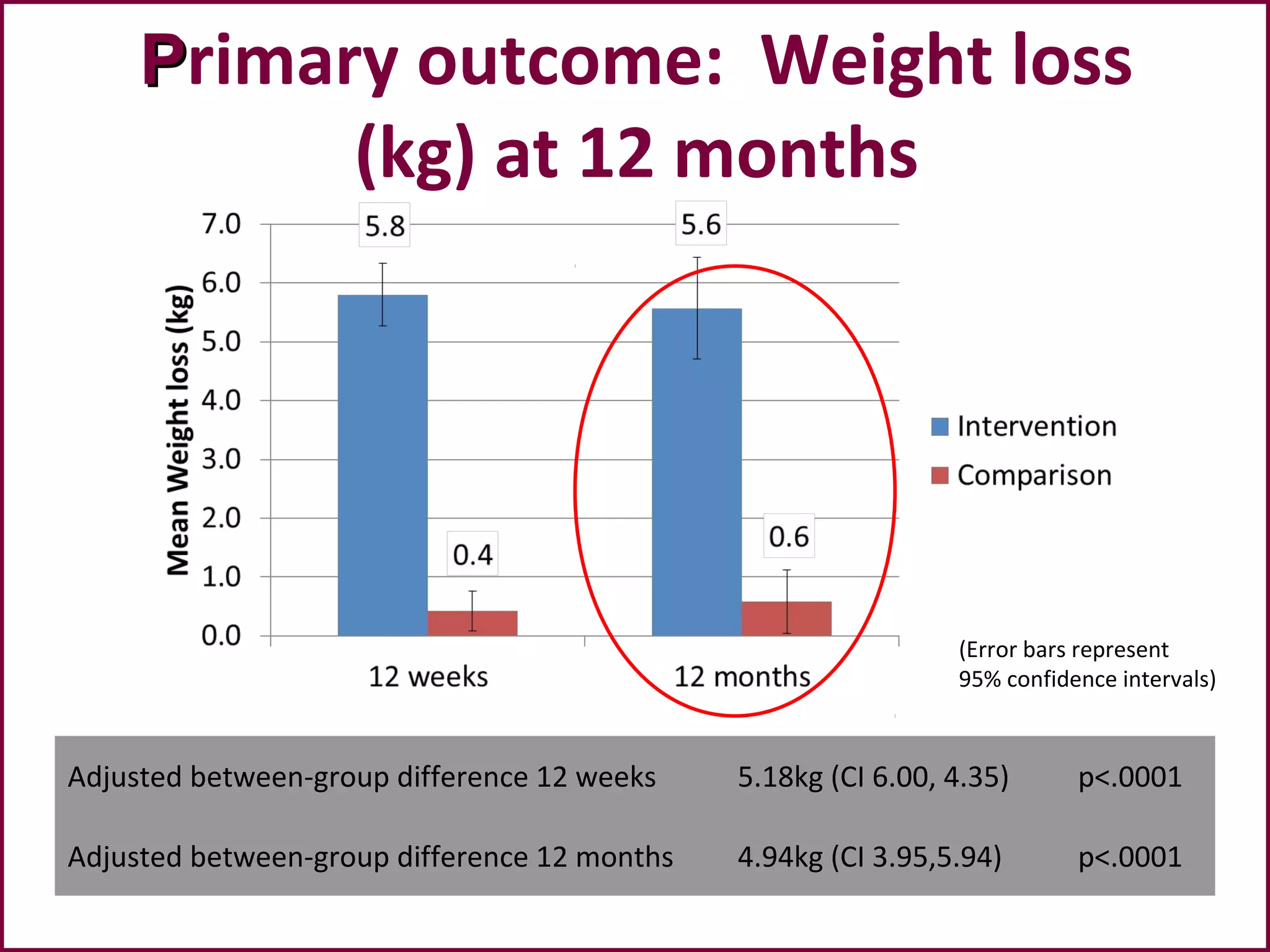
(Error bars represent
95% confidence intervals)
Adjusted between-group difference 12 weeks 5.18kg (CI 6.00, 4.35) p<.0001
Adjusted between-group difference 12 months 4.94kg (CI 3.95,5.94) p<.0001
PPrimary outcome: Weight loss
(kg) at 12 months
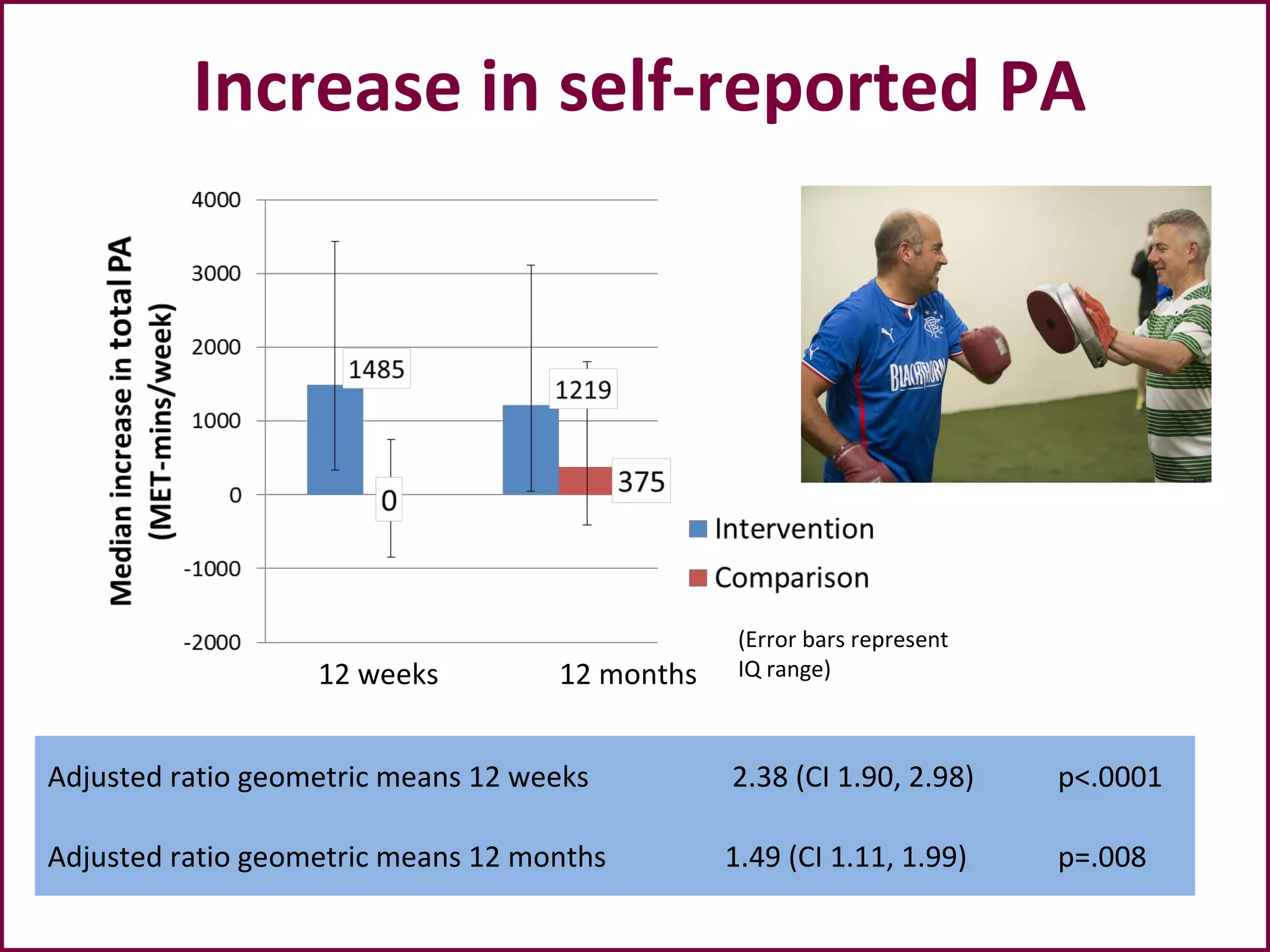
Increase in self-reported PA
Adjusted ratio geometric means 12 weeks 2.38 (CI 1.90, 2.98) p<.0001
Adjusted ratio geometric means 12 months 1.49 (CI 1.11, 1.99) p=.008
(Error bars represent
IQ range)12 months12 weeks
o
FFIT to EuroFIT
http://www.ffit.org.uk/page2/index.html
FP7-HEALTH.2013.3.3-1-
Principal Investigator: Sally Wyke,
University of Glasgow
http://eurofitfp7.eu/http://eurofitfp7.eu/
http://www.eurofit.pthttp://www.eurofit.pt
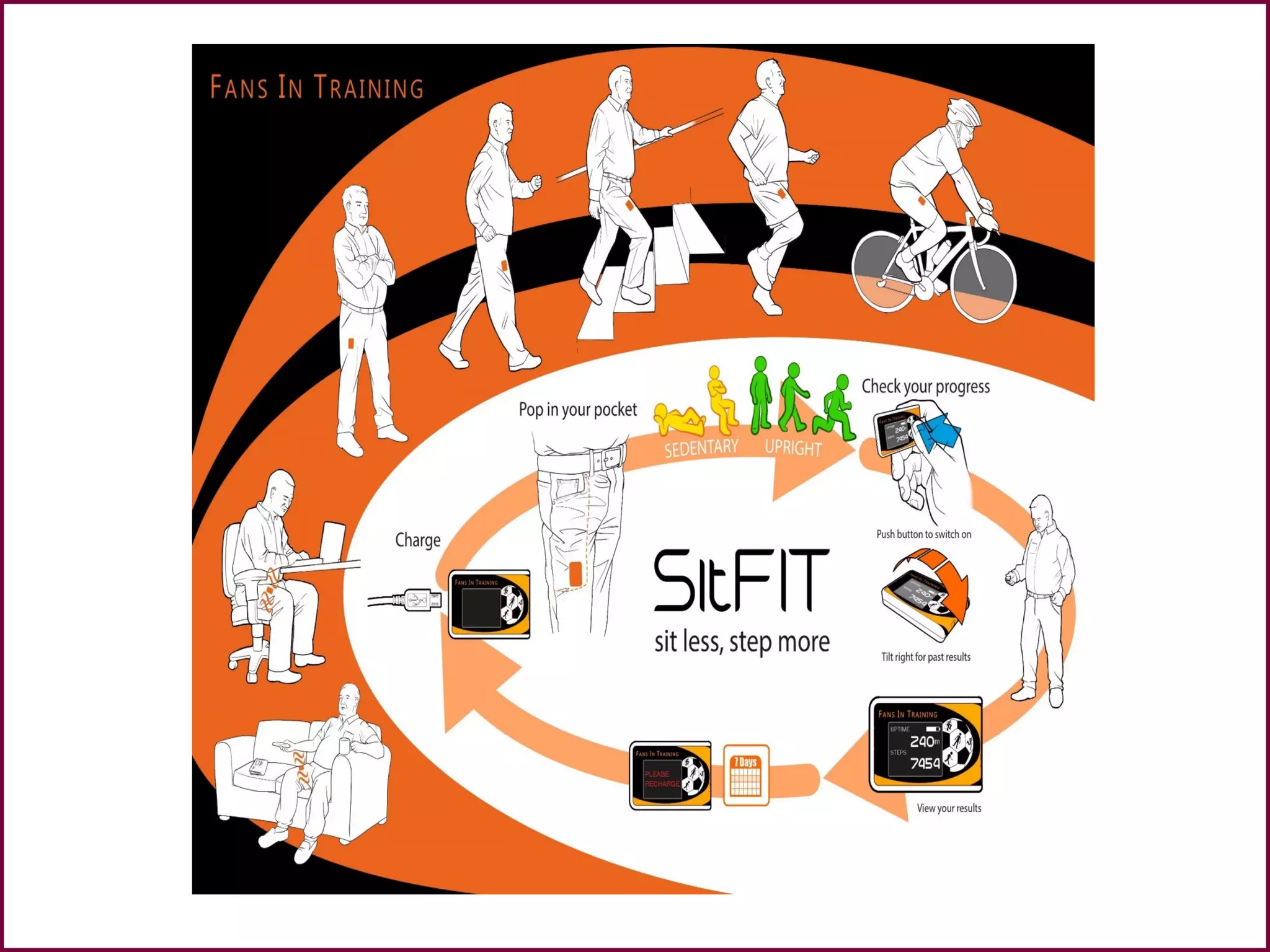
WP1 - Nanette Mutrie and Anne Martin
1) Interventions to reduce sedentary time in
adults: Systematic review and meta-analysis
2) BCTs used in sitting interventions
3) Design of SitFIT device
Review Focus
• P - Adults (≥ 18 years)
• I - Any intervention which included an sedentary
behaviour outcome measure in free-living adults
• C- no intervention, waiting list, attention control, usual
care, alternative treatment conditions
• O - Objectively measured sedentary time obtained from
accelerometers/ inclinometers
▸ Objectively or self-reported patterns of accumulation of
sedentary behaviour
▸ Self-reported total sitting time
▸ Self-reported proxy measures of sitting time
Outline
1. Overview of reviews
2. Methods
3. Risk of Bias
4. Review findings
5. Implication for practice
6. Implication for research
7. Overall summary
Overview of Reviews
Prince et al Obes Rev 2014;15:905–19
•Modest reduction in sedentary behaviour in interventions with a
specific goal of increasing PA levels and those which combined an
increase in PA levels with a decrease in sedentary time
•Greatest reduction in interventions focusing on SB only
Shrestha N et al. Cochrane Database of Systematic Reviews 2016,
Issue 3. Art. No.: CD010912
•There is very low to low quality evidence that sit-stand desks may
decrease workplace sitting between 30-120min/day
•There were no considerable or inconsistent effects of other
interventions such as changing work organisation or information and
counselling.
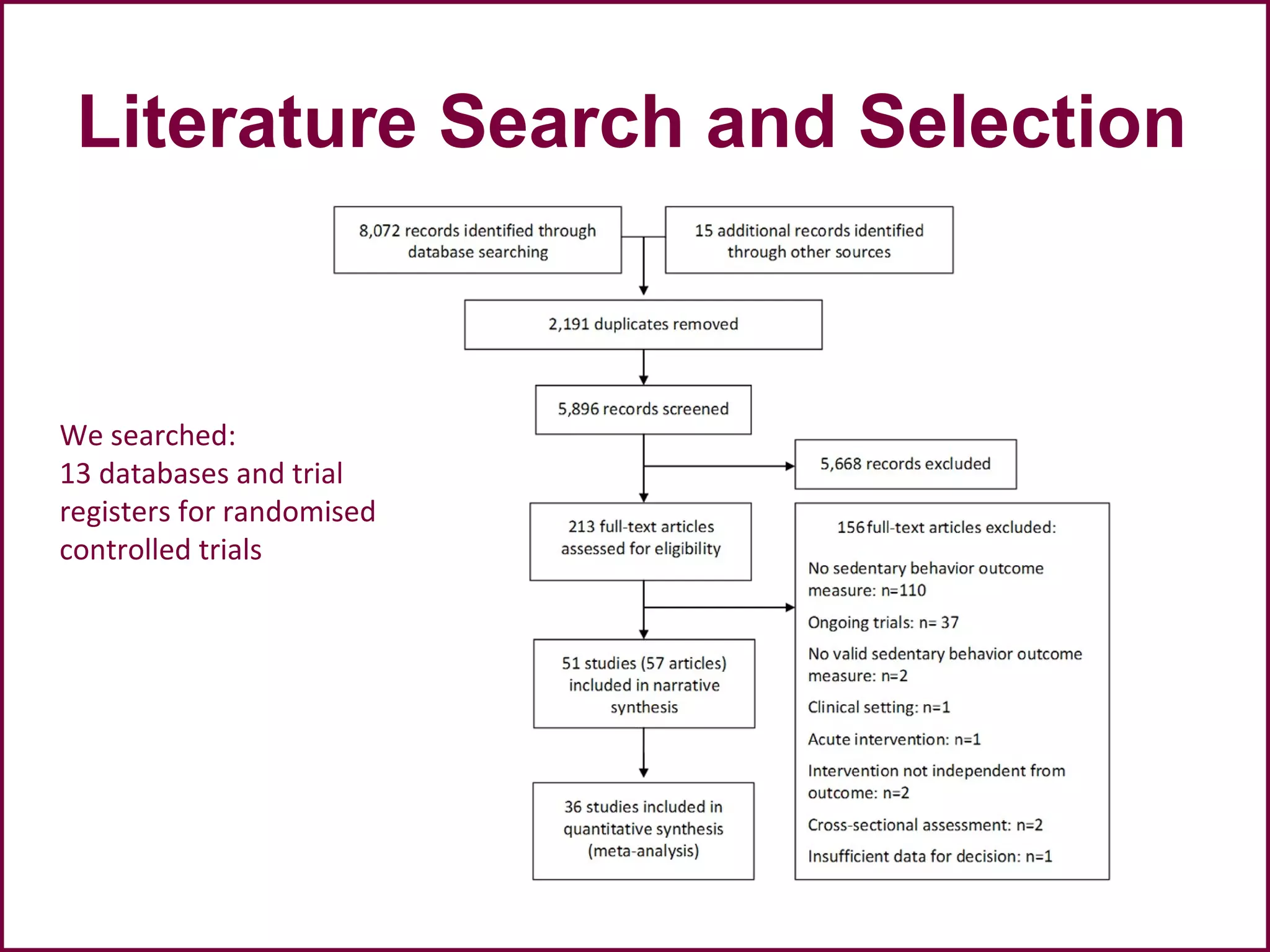
Literature Search and Selection
We searched:
13 databases and trial
registers for randomised
controlled trials
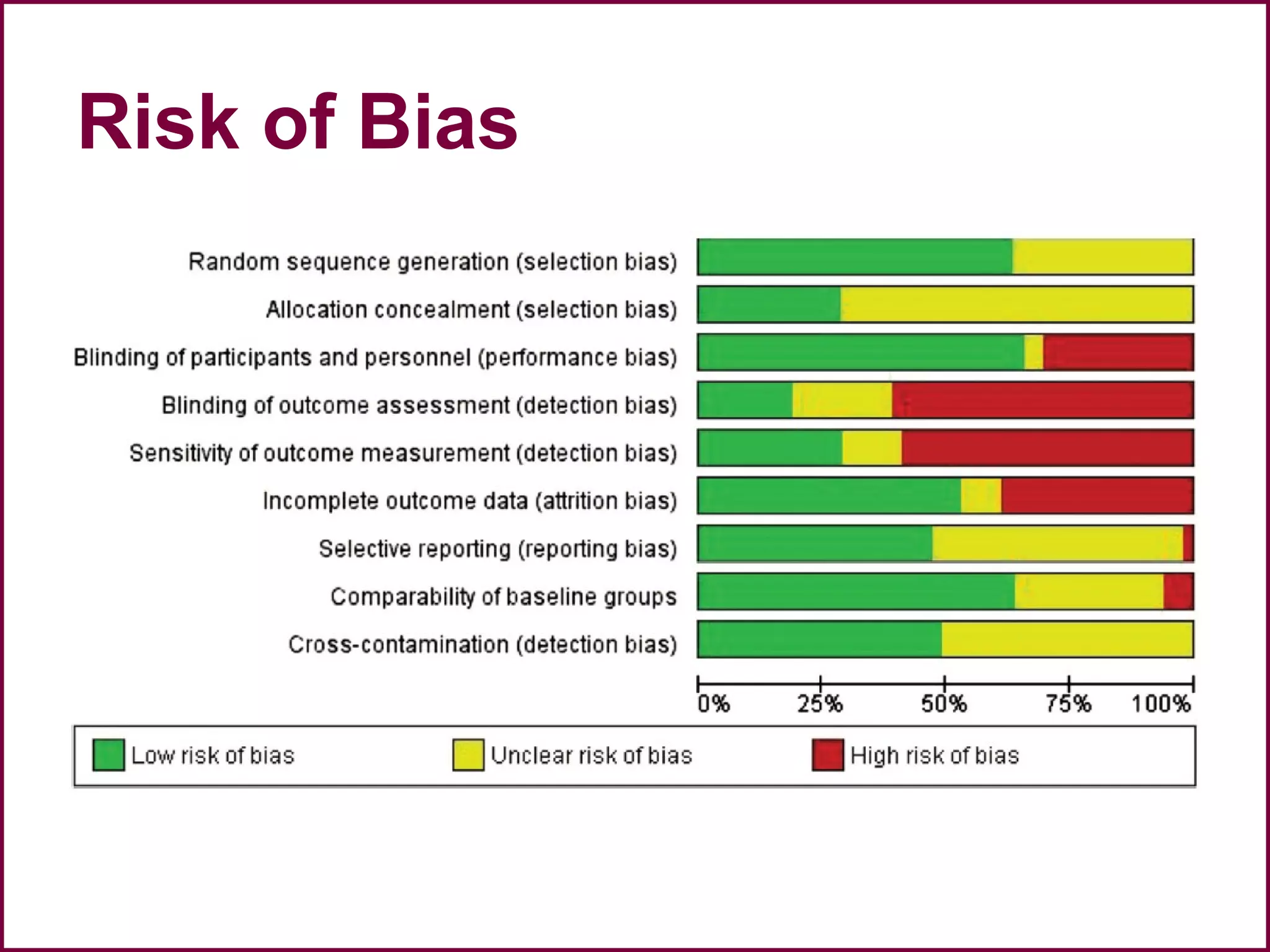
Risk of Bias
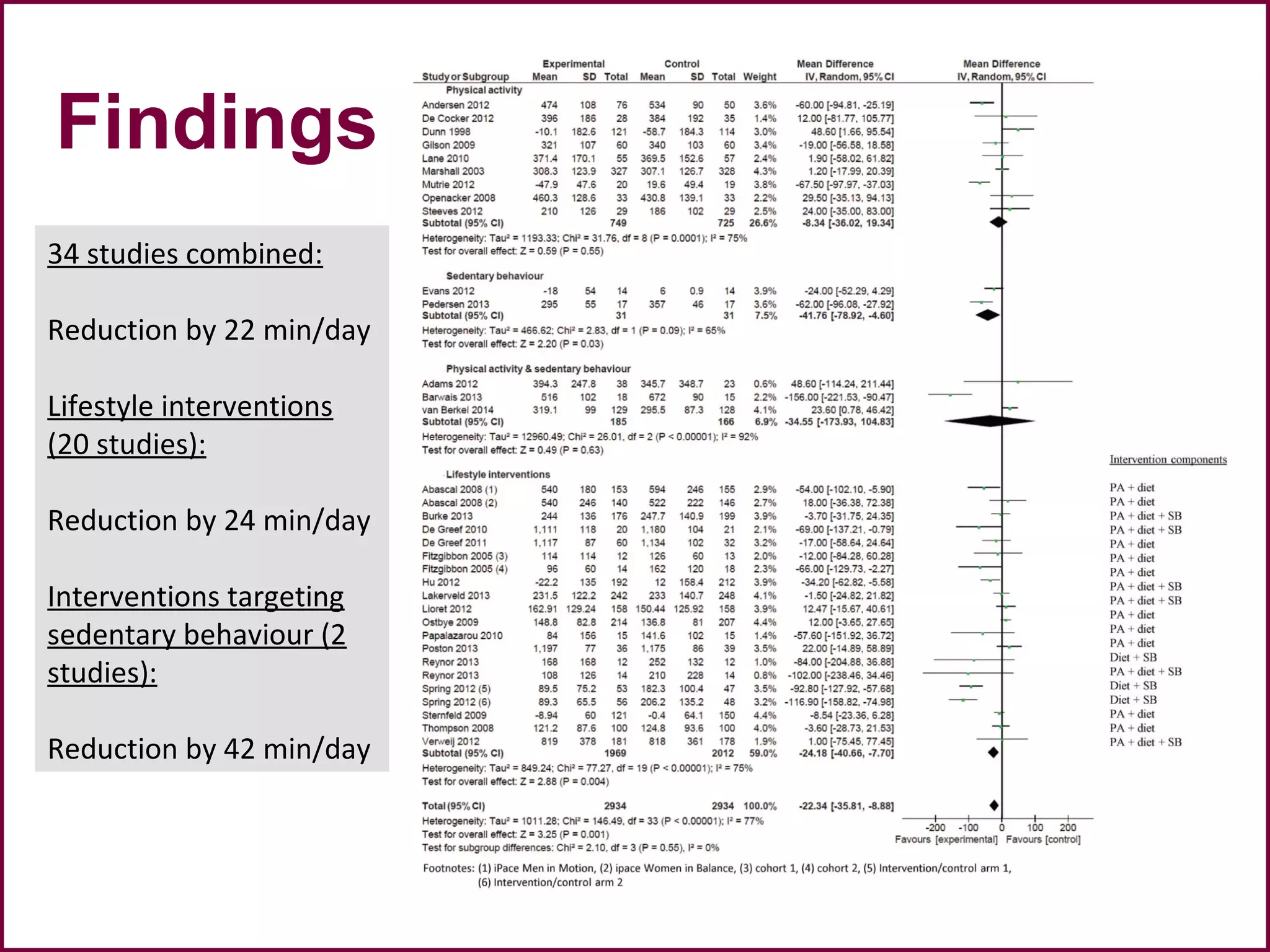
34 studies combined:
Reduction by 22 min/day
Lifestyle interventions
(20 studies):
Reduction by 24 min/day
Interventions targeting
sedentary behaviour (2
studies):
Reduction by 42 min/day
Findings
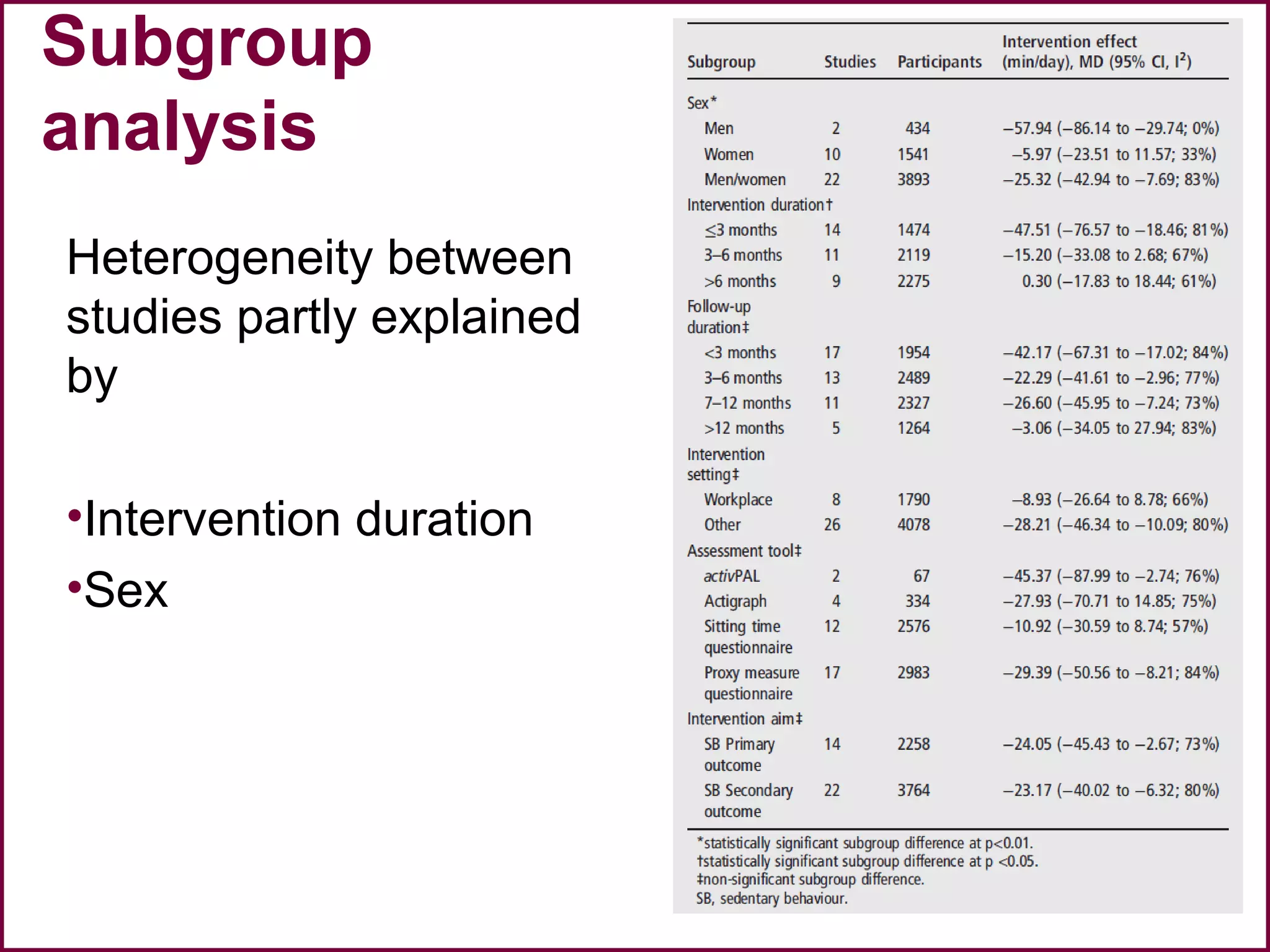
Subgroup
analysis
Heterogeneity between
studies partly explained
by
•Intervention duration
•Sex
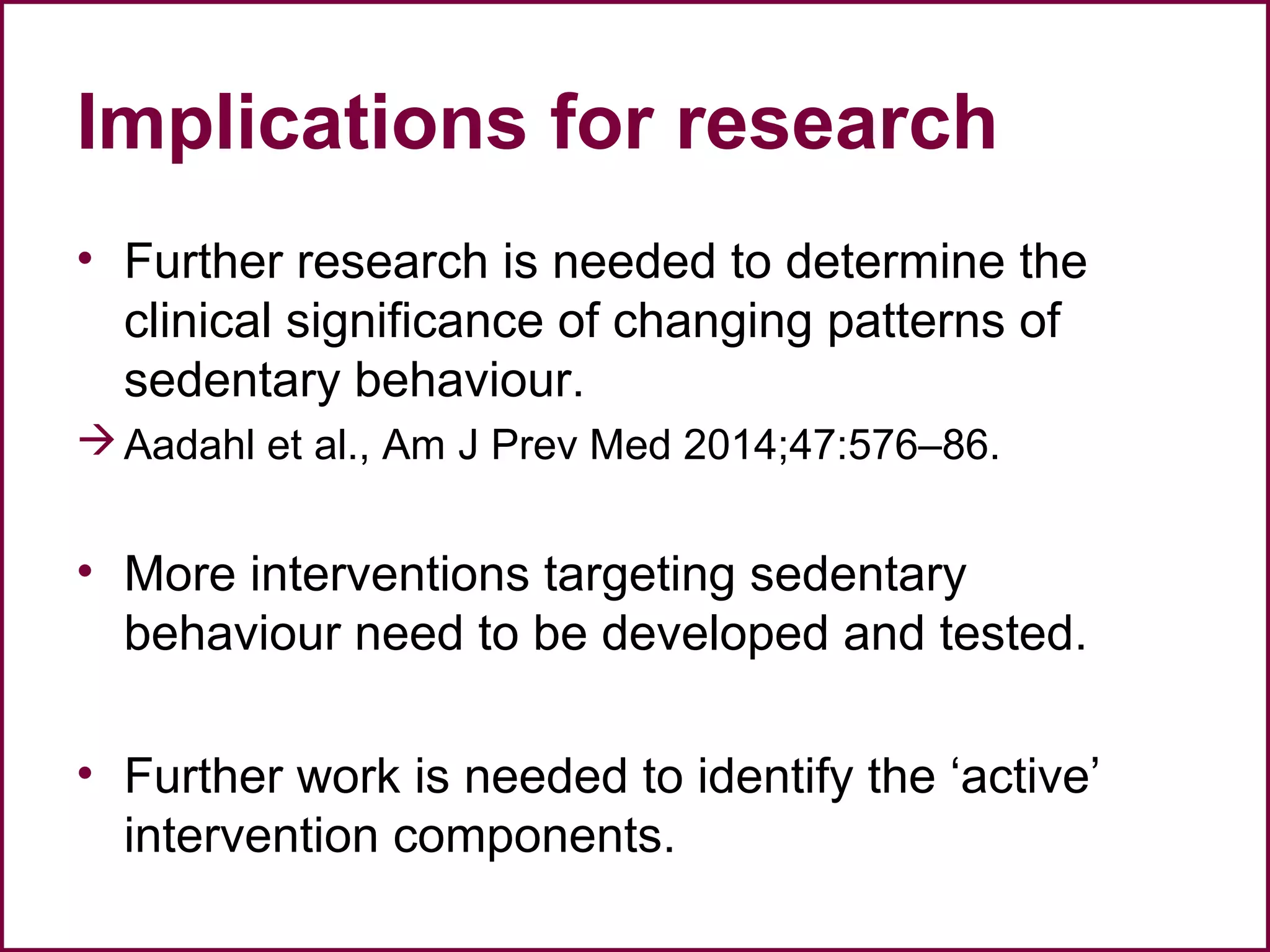
Quality of evidence
Assessed using the GRADE scoring system
•Lifestyle intervention  high-moderate quality
•Targeted sedentary behaviour interventions 
low quality
•Physical activity/sedentary behaviour
interventions  moderate quality
•Targeted physical activity interventions 
moderate quality
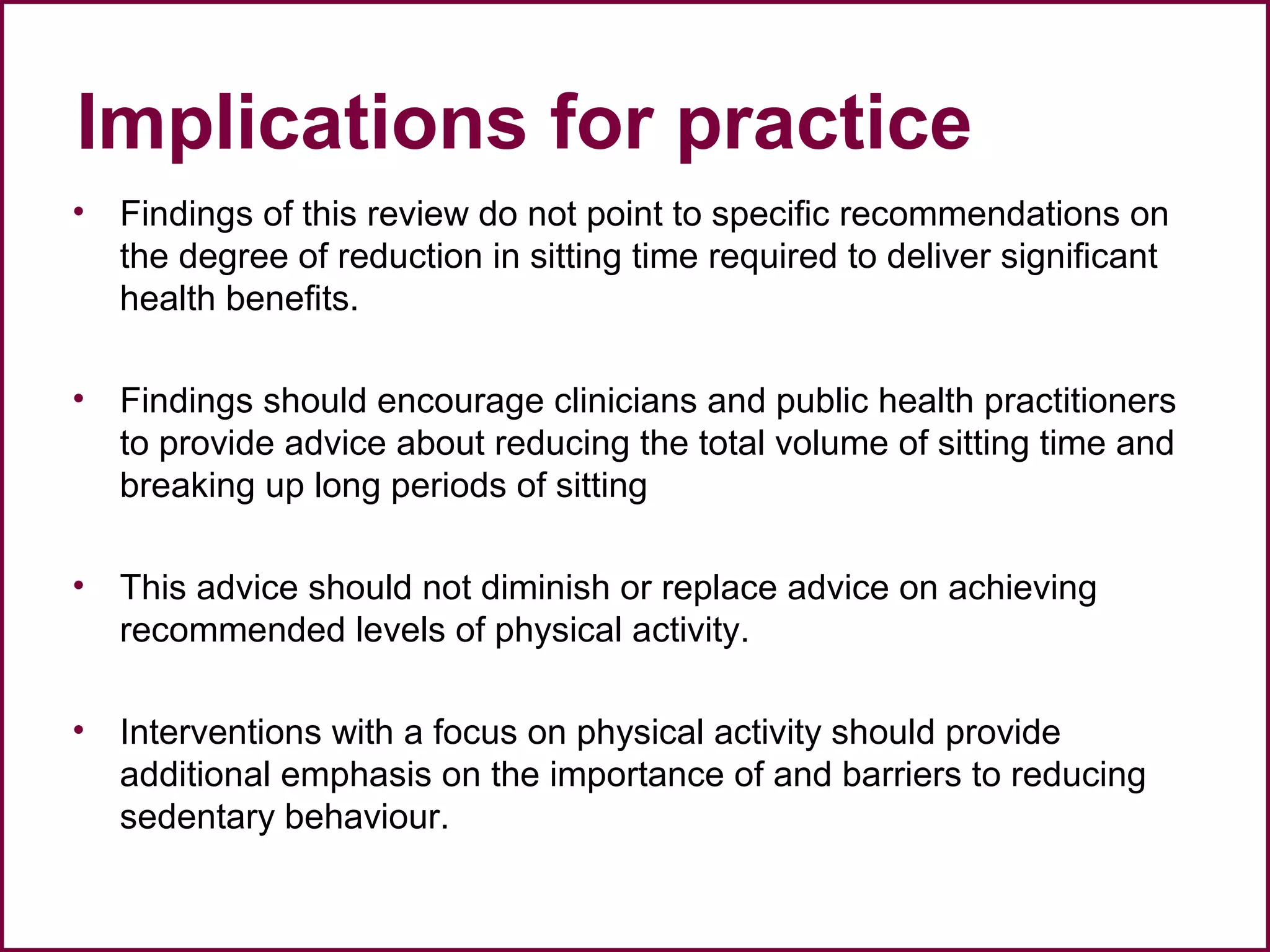
Implications for research
• Further research is needed to determine the
clinical significance of changing patterns of
sedentary behaviour.
Aadahl et al., Am J Prev Med 2014;47:576–86.
• More interventions targeting sedentary
behaviour need to be developed and tested.
• Further work is needed to identify the ‘active’
intervention components.
Update search findings
Interventions/
studies
Participants Effect size (min/day)
[95% Confidence
interval]
All studies combined 72 20276 -21.54 [-28.20, -14.87]
Physical activity 28 11861 -13.72 [-23.49, -3.95]
Sedentary behaviour 4 264 -45.35 [-75.11, -15.60]
Physical activity & sedentary
behaviour
14 1033 -46.60 [-76.14, -17.05]
Lifestyle interventions 26 7118 -16.74 [-28.16, -5.32]
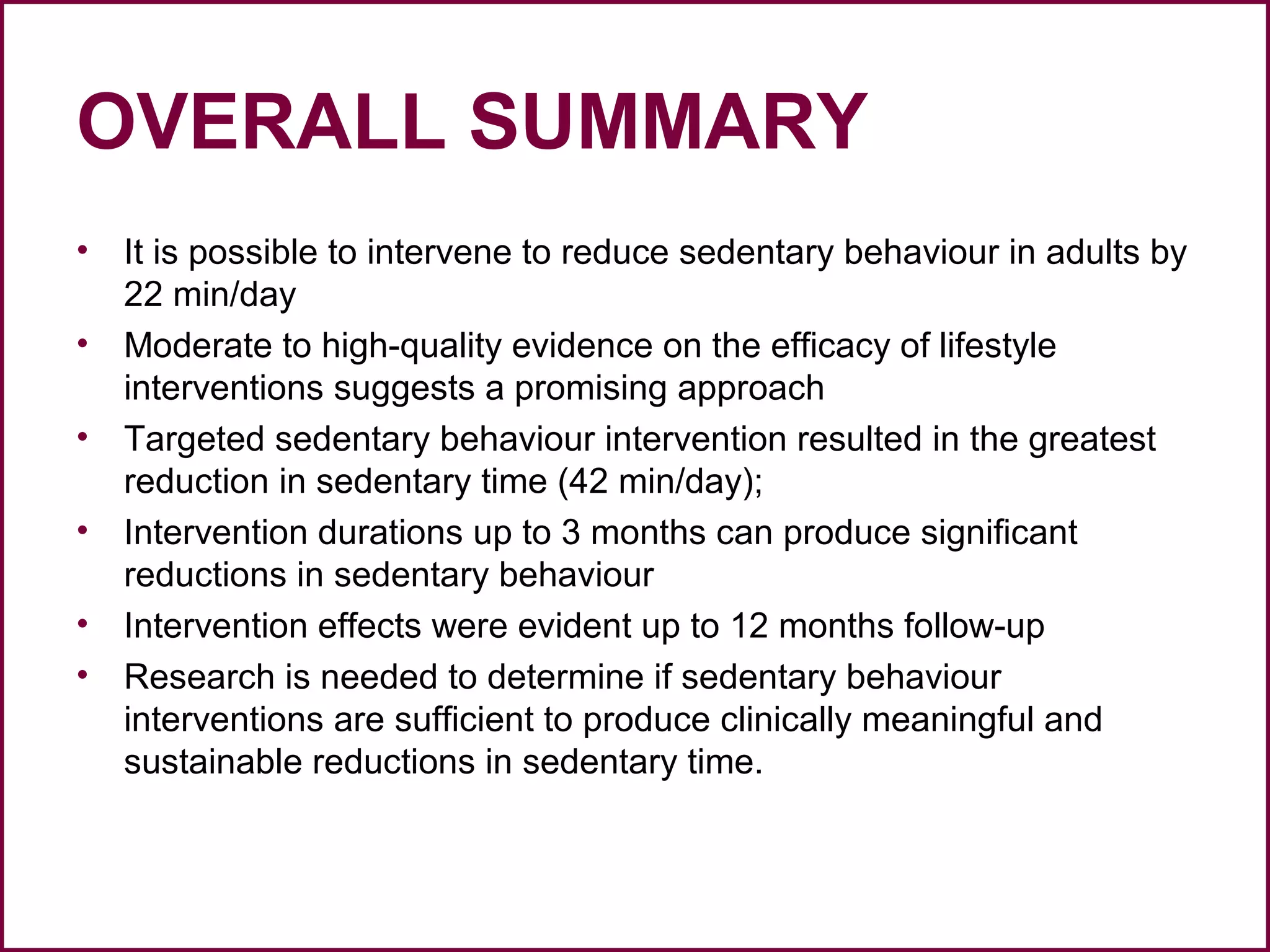
Implications for practice
• Findings of this review do not point to specific recommendations on
the degree of reduction in sitting time required to deliver significant
health benefits.
• Findings should encourage clinicians and public health practitioners
to provide advice about reducing the total volume of sitting time and
breaking up long periods of sitting
• This advice should not diminish or replace advice on achieving
recommended levels of physical activity.
• Interventions with a focus on physical activity should provide
additional emphasis on the importance of and barriers to reducing
sedentary behaviour.
OVERALL SUMMARY
• It is possible to intervene to reduce sedentary behaviour in adults by
22 min/day
• Moderate to high-quality evidence on the efficacy of lifestyle
interventions suggests a promising approach
• Targeted sedentary behaviour intervention resulted in the greatest
reduction in sedentary time (42 min/day);
• Intervention durations up to 3 months can produce significant
reductions in sedentary behaviour
• Intervention effects were evident up to 12 months follow-up
• Research is needed to determine if sedentary behaviour
interventions are sufficient to produce clinically meaningful and
sustainable reductions in sedentary time.
Interventions can reduce sedentary
time in adults
A.Strongly agree
B.Agree
C.Neutral
D.Disagree
E.Strongly disagree
43
Poll Question #6
Poll Question #7
Do you agree with the findings of this
review?
A.Strongly agree
B.Agree
C.Neutral
D.Disagree
E.Strongly disagree
Questions?
A Model for Evidence-
Informed Decision Making
National Collaborating Centre for Methods and Tools. (revised 2012). A
Model for Evidence-Informed Decision-Making in Public Health (Fact
Sheet). [http://www.nccmt.ca/pubs/FactSheet_EIDM_EN_WEB.pdf]
What can I do now?
Visit the website; a repository of over 4,400 quality-rated systematic
reviews related to the effectiveness of public health interventions. Health
Evidence™ is FREE to use.
Register to receive monthly tailored registry updates AND monthly newsletter to
keep you up to date on upcoming events and public health news.
Tell your colleagues about Health Evidence™: helping you use best evidence to
inform public health practice, program planning, and policy decisions!
Follow us @Health Evidence on Twitter and receive daily public health review-
related Tweets, receive information about our monthly webinars, as well as
announcements and events relevant to public health.
Encourage your organization to use Health Evidence™ to search for and apply
quality-rated review level evidence to inform program planning and policy decisions.
Contact us to suggest topics or provide feedback.
info@healthevidence.org
Thank you!
Contact us:
info@healthevidence.org
For a copy of the presentation please visit:
http://www.healthevidence.org/webinars.aspx
Login with your Health Evidence username and
password, or register if you aren’t a member yet.

Interventions with potential to reduce sedentary time in adults: What's the evidence?

  • 1.
    Welcome! Interventions with potentialto reduce sedentary time in adults: What's the evidence? You will be placed on hold until the webinar begins. The webinar will begin shortly, please remain on the line.
  • 2.
    Poll Questions: Consent •Participation in the webinar poll questions is voluntary • Names are not recorded and persons will not be identified in any way • Participation in the anonymous polling questions is accepted as an indication of your consent to participate Benefits: • Results inform improvement of the current and future webinars • Enable engagement; stimulate discussion. This session is intended for professional development. Some data may be used for program evaluation and research purposes (e.g., exploring opinion change) • Results may also be used to inform the production of systematic reviews and overviews Risks: None beyond day-to-day living
  • 3.
    After Today • ThePowerPoint presentation and audio recording will be made available • These resources are available at: – PowerPoint: http://www.slideshare.net/HealthEvidence – Audio Recording: https://www.youtube.com/user/healthevidence /videos 3
  • 4.
    What’s the evidence? MartinA., Fitzsimons C., Jepson R., Saunders D., van der Ploeg H.P., Teixeira P.J., et al. (2015). Interventions with potential to reduce sedentary time in adults: Systematic review and meta- analysis. British Journal of Sports Medicine, 0, 1- 10. http://www.healthevidence.org/view-article.aspx?a=28660
  • 5.
    Poll Question #1 Whatsector are you from? 1. Public Health Practitioner 2. Health Practitioner (Other) 3. Education 4. Research 5. Provincial/Territorial/Government/Ministry/ Municipality 6. Policy Analyst (NGO, etc.) 7. Other 5
  • 6.
    • Use Q&Aor CHAT to post comments / questions during the webinar – ‘Send’ questions to All Panelists (not privately to ‘Host’) • Connection issues – Recommend using a wired Internet connection (vs. wireless), • WebEx 24/7 help line – 1-866-229-3239 Participant Side Panel in WebEx Housekeeping
  • 7.
    Housekeeping (cont’d) • Audio –Listen through your speakers – Go to ‘Communicate > Audio Connection’ • WebEx 24/7 help line – 1-866-229-3239
  • 8.
    Poll Question #2 Howmany people are watching today’s session with you? 1.Just me 2.2-3 3.4-5 4.6-10 5.Over 10
  • 9.
    The Health EvidenceTeam Maureen Dobbins Scientific Director Heather Husson Manager Susannah Watson Project Coordinator Robyn Traynor Publications Consultant Students: Emily Belita (PhD candidate) Jennifer Yost Assistant Professor Olivia Marquez Research Coordinator Kristin Read Research Coordinator Yaso Gowrinathan Information Liaison Emily Sully Research Assistant Liz Kamler Research Assistant Zhi (Vivian) Chen Research Assistant
  • 10.
  • 11.
    Why use www.healthevidence.org? 1.Saves you time 2. Relevant & current evidence 3. Transparent process 4. Supports for EIDM available 5. Easy to use
  • 12.
    A Model forEvidence- Informed Decision Making National Collaborating Centre for Methods and Tools. (revised 2012). A Model for Evidence-Informed Decision-Making in Public Health (Fact Sheet). [http://www.nccmt.ca/pubs/FactSheet_EIDM_EN_WEB.pdf]
  • 13.
    Stages in theprocess of Evidence- Informed Public Health National Collaborating Centre for Methods and Tools. Evidence-Informed Public Health. [http://www.nccmt.ca/eiph/index-eng.html]
  • 14.
    Poll Question #3 Haveyou heard of PICO(S) before? 1.Yes 2.No
  • 15.
    Searchable Questions Think“PICOS” 1. Population (situation) 2. Intervention (exposure) 3. Comparison (other group) 4. Outcomes 5. Setting
  • 16.
    How often doyou use Systematic Reviews to inform a program/services? A.Always B.Often C.Sometimes D.Never E.I don’t know what a systematic review is Poll Question #4
  • 18.
    Interventions can reducesedentary time in adults A.Strongly agree B.Agree C.Neutral D.Disagree E.Strongly disagree 18 Poll Question #5
  • 19.
    Review Martin A., FitzsimonsC., Jepson R., Saunders D., van der Ploeg H.P., Teixeira P.J., et al. (2015). Interventions with potential to reduce sedentary time in adults: Systematic review and meta-analysis. British Journal of Sports Medicine, 0, 1-10.
  • 20.
    Rationale Infographic on theChief Medical Officers' guidelines Source: https://www.gov.uk/government/up loads/system/uploads/attachment_d ata/file/469457/Physical_activity_inf ographic.PDF
  • 21.
    Sedentary behaviour refersto any waking activity characterized by an energy expenditure ≤ 1.5 metabolic equivalents and a sitting or reclining posture Definition
  • 22.
    What is sedentarybehaviour? – Any waking behaviour where sitting or lying is the dominant mode of posture – Energy expenditure is very low – Screen-time (TV viewing, computer use), motorised transport, sitting at work, sitting to read, talk, or listen to music
  • 23.
    Sedentary behaviour and Health •Significant hazard ratio (HR) associations were found with – all-cause mortality (HR, 1.220 [95% CI, 1.090 to 1.410]) – cardiovascular disease mortality (HR, 1.150 [CI, 1.107 to 1.195]) – cardiovascular disease incidence (HR, 1.143 [CI, 1.002 to 1.729]) – cancer mortality (HR, 1.130 [CI, 1.053 to 1.213]) – cancer incidence (HR, 1.130 [CI, 1.053 to 1.213]) – type 2 diabetes incidence (HR, 1.910 [CI, 1.642 to 2.222] • Largely independent of PA but HR bigger with lower PA Biswas et al. Ann Intern Med. 2015;162:123-132.
  • 24.
    Football Fans inTraining: a gender sensitised weight loss, physical activity and healthy lifestyle programme for men y Hunt, K et al. (2014). Lancet. (13) 62420-4
  • 25.
    (Error bars represent 95%confidence intervals) Adjusted between-group difference 12 weeks 5.18kg (CI 6.00, 4.35) p<.0001 Adjusted between-group difference 12 months 4.94kg (CI 3.95,5.94) p<.0001 PPrimary outcome: Weight loss (kg) at 12 months
  • 26.
    Increase in self-reportedPA Adjusted ratio geometric means 12 weeks 2.38 (CI 1.90, 2.98) p<.0001 Adjusted ratio geometric means 12 months 1.49 (CI 1.11, 1.99) p=.008 (Error bars represent IQ range)12 months12 weeks
  • 27.
  • 28.
    FP7-HEALTH.2013.3.3-1- Principal Investigator: SallyWyke, University of Glasgow http://eurofitfp7.eu/http://eurofitfp7.eu/ http://www.eurofit.pthttp://www.eurofit.pt
  • 29.
    WP1 - NanetteMutrie and Anne Martin 1) Interventions to reduce sedentary time in adults: Systematic review and meta-analysis 2) BCTs used in sitting interventions 3) Design of SitFIT device
  • 31.
    Review Focus • P- Adults (≥ 18 years) • I - Any intervention which included an sedentary behaviour outcome measure in free-living adults • C- no intervention, waiting list, attention control, usual care, alternative treatment conditions • O - Objectively measured sedentary time obtained from accelerometers/ inclinometers ▸ Objectively or self-reported patterns of accumulation of sedentary behaviour ▸ Self-reported total sitting time ▸ Self-reported proxy measures of sitting time
  • 32.
    Outline 1. Overview ofreviews 2. Methods 3. Risk of Bias 4. Review findings 5. Implication for practice 6. Implication for research 7. Overall summary
  • 33.
    Overview of Reviews Princeet al Obes Rev 2014;15:905–19 •Modest reduction in sedentary behaviour in interventions with a specific goal of increasing PA levels and those which combined an increase in PA levels with a decrease in sedentary time •Greatest reduction in interventions focusing on SB only Shrestha N et al. Cochrane Database of Systematic Reviews 2016, Issue 3. Art. No.: CD010912 •There is very low to low quality evidence that sit-stand desks may decrease workplace sitting between 30-120min/day •There were no considerable or inconsistent effects of other interventions such as changing work organisation or information and counselling.
  • 34.
    Literature Search andSelection We searched: 13 databases and trial registers for randomised controlled trials
  • 35.
  • 36.
    34 studies combined: Reductionby 22 min/day Lifestyle interventions (20 studies): Reduction by 24 min/day Interventions targeting sedentary behaviour (2 studies): Reduction by 42 min/day Findings
  • 37.
    Subgroup analysis Heterogeneity between studies partlyexplained by •Intervention duration •Sex
  • 38.
    Quality of evidence Assessedusing the GRADE scoring system •Lifestyle intervention  high-moderate quality •Targeted sedentary behaviour interventions  low quality •Physical activity/sedentary behaviour interventions  moderate quality •Targeted physical activity interventions  moderate quality
  • 39.
    Implications for research •Further research is needed to determine the clinical significance of changing patterns of sedentary behaviour. Aadahl et al., Am J Prev Med 2014;47:576–86. • More interventions targeting sedentary behaviour need to be developed and tested. • Further work is needed to identify the ‘active’ intervention components.
  • 40.
    Update search findings Interventions/ studies ParticipantsEffect size (min/day) [95% Confidence interval] All studies combined 72 20276 -21.54 [-28.20, -14.87] Physical activity 28 11861 -13.72 [-23.49, -3.95] Sedentary behaviour 4 264 -45.35 [-75.11, -15.60] Physical activity & sedentary behaviour 14 1033 -46.60 [-76.14, -17.05] Lifestyle interventions 26 7118 -16.74 [-28.16, -5.32]
  • 41.
    Implications for practice •Findings of this review do not point to specific recommendations on the degree of reduction in sitting time required to deliver significant health benefits. • Findings should encourage clinicians and public health practitioners to provide advice about reducing the total volume of sitting time and breaking up long periods of sitting • This advice should not diminish or replace advice on achieving recommended levels of physical activity. • Interventions with a focus on physical activity should provide additional emphasis on the importance of and barriers to reducing sedentary behaviour.
  • 42.
    OVERALL SUMMARY • Itis possible to intervene to reduce sedentary behaviour in adults by 22 min/day • Moderate to high-quality evidence on the efficacy of lifestyle interventions suggests a promising approach • Targeted sedentary behaviour intervention resulted in the greatest reduction in sedentary time (42 min/day); • Intervention durations up to 3 months can produce significant reductions in sedentary behaviour • Intervention effects were evident up to 12 months follow-up • Research is needed to determine if sedentary behaviour interventions are sufficient to produce clinically meaningful and sustainable reductions in sedentary time.
  • 43.
    Interventions can reducesedentary time in adults A.Strongly agree B.Agree C.Neutral D.Disagree E.Strongly disagree 43 Poll Question #6
  • 44.
    Poll Question #7 Doyou agree with the findings of this review? A.Strongly agree B.Agree C.Neutral D.Disagree E.Strongly disagree
  • 45.
  • 46.
    A Model forEvidence- Informed Decision Making National Collaborating Centre for Methods and Tools. (revised 2012). A Model for Evidence-Informed Decision-Making in Public Health (Fact Sheet). [http://www.nccmt.ca/pubs/FactSheet_EIDM_EN_WEB.pdf]
  • 47.
    What can Ido now? Visit the website; a repository of over 4,400 quality-rated systematic reviews related to the effectiveness of public health interventions. Health Evidence™ is FREE to use. Register to receive monthly tailored registry updates AND monthly newsletter to keep you up to date on upcoming events and public health news. Tell your colleagues about Health Evidence™: helping you use best evidence to inform public health practice, program planning, and policy decisions! Follow us @Health Evidence on Twitter and receive daily public health review- related Tweets, receive information about our monthly webinars, as well as announcements and events relevant to public health. Encourage your organization to use Health Evidence™ to search for and apply quality-rated review level evidence to inform program planning and policy decisions. Contact us to suggest topics or provide feedback. info@healthevidence.org
  • 48.
    Thank you! Contact us: info@healthevidence.org Fora copy of the presentation please visit: http://www.healthevidence.org/webinars.aspx Login with your Health Evidence username and password, or register if you aren’t a member yet.

Editor's Notes

  • #9 Poll question #4
  • #10 here’s a look at the team many involved in the work to keep HE current and maintained
  • #11 Health Evidence launched in 2005 comprehensive registry of reviews evaluating the effectiveness of public health and health promotion interventions provide over 90,000 visitors per year access to over 4,300 quality-rated systematic reviews links to full text, plain language summaries, and podcasts (where available) One of main goals of Health Evidence, in addition to making evidence re: effectiveness of PH interventions more accessible, is to make it easier for professionals to use evidence in decision making
  • #13 Model for Evidence-Informed decision making in PH consists of 5 components visible in this diagram Traditionally public health practitioners and decision makers do consider evidence about community health issues and local context, existing resources, and community and political climate in making decisions about programs and policies however, it has become apparent that a considering evidence about research may be more challenging As such the Health Evidence webinar series is designed to identify research evidence relevant to public health decisions
  • #14 The EIPH wheel illustrates the steps involved in evidence-informed practice The wheel is a guide for practitioners and decision makers to determine how to address a particular issue by systematically incorporating research evidence in the decision making process There are 7 steps in the EIPH process that starts with: Clearly defining the problem; Searching the research literature; Appraising the evidence you find; Synthesizing or summarizing the research on your issue; Adapting and interpreting the findings to your local context; Implementing the evidence or appropriate intervention; and Evaluating your implementation efforts. We will hear today about how (presenter) has worked through the first 4 steps, in order to help with the decision makers with the remainder of the 7 steps
  • #15 Poll question #4
  • #47 Static version