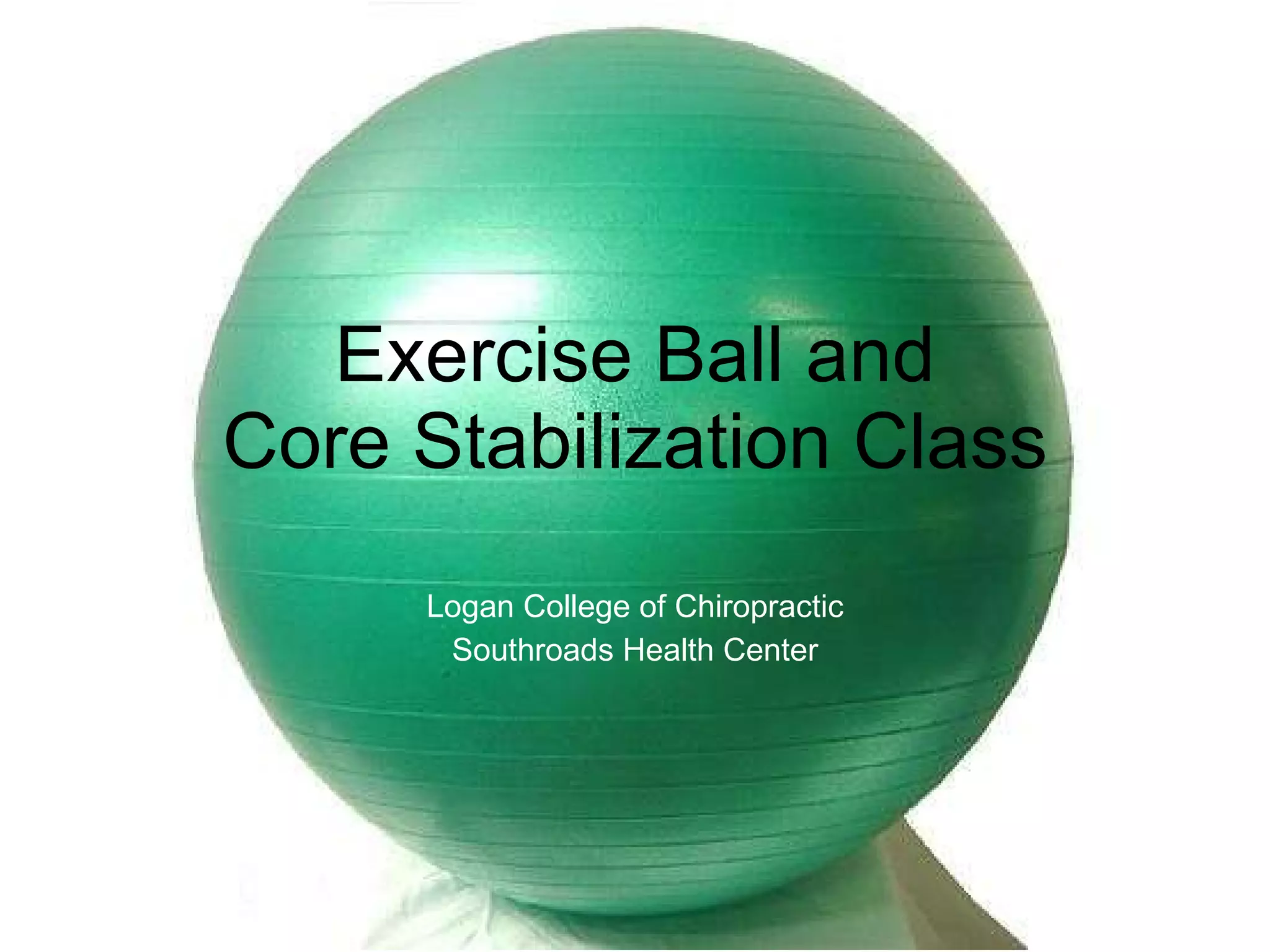
Exercise Ball and Core Stabilization Class Logan College of Chiropractic Southroads Health Center
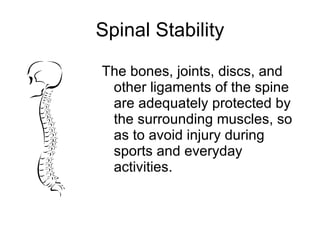
Spinal Stability The bones, joints, discs, and other ligaments of the spine are adequately protected by the surrounding muscles, so as to avoid injury during sports and everyday activities.
Three Layers Deep Layer – spinal column with the bones, joints, and associated ligaments Purpose: structure and nerve input Middle Layer – Multifidus, Trans. Abdominis, Quadratus Lumborum Musc. Purpose: Static and dynamic stability support for individual spinal joints Outer Layer – Large Muscle groups of the back and Abdomen Purpose: Motion and energy transfer
Class Rules Ask Questions Work within Limits - Safety First. Quality before Quantity No Judgment, No Inhibition
Basic Principles Base of Support The wider the base, the more stable. Decreasing width requires better  balance and stability Points of Stable and Unstable Contact Progression from stable to unstable Eyes open to eyes closed
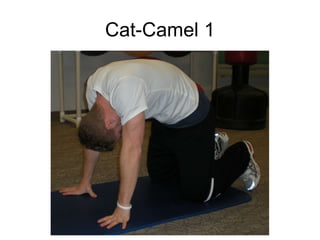
Cat-Camel 1
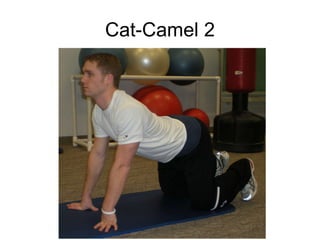
Cat-Camel 2
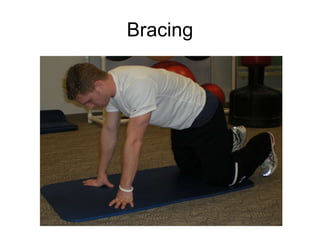
Bracing
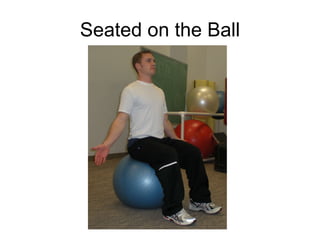
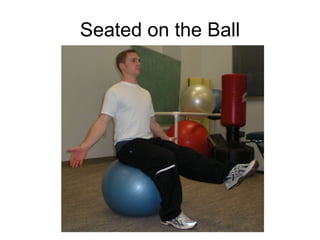
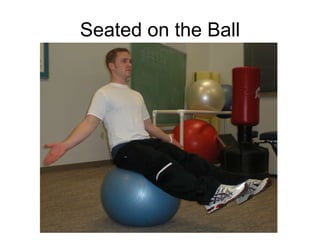
Seated on the Ball
Seated on the Ball
Seated on the Ball
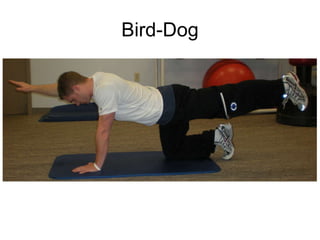
Bird-Dog
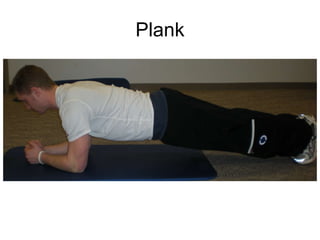
Plank
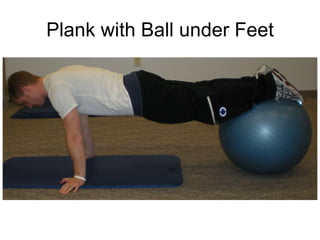
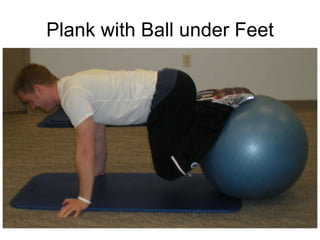
Plank with Ball under Feet
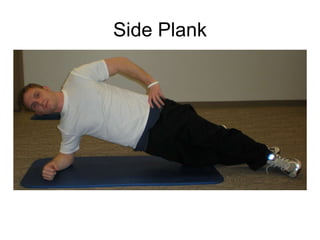
Side Plank
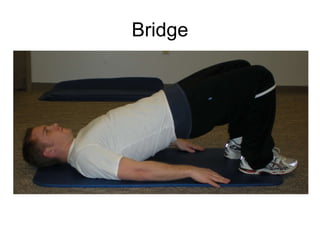
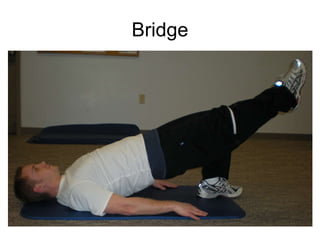
Bridge
Bridge
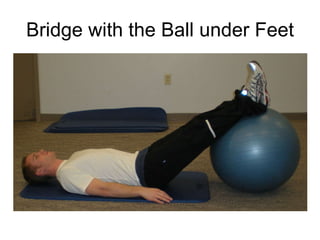
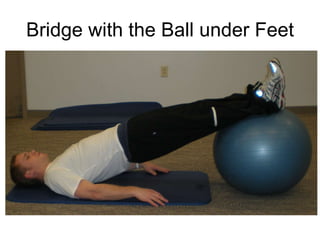
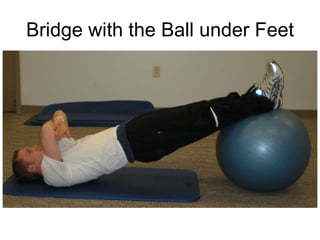
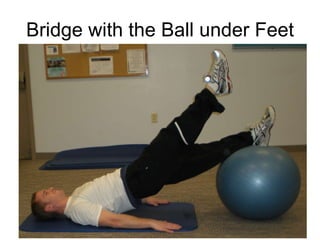
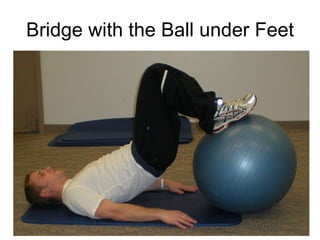
Bridge with the Ball under Feet
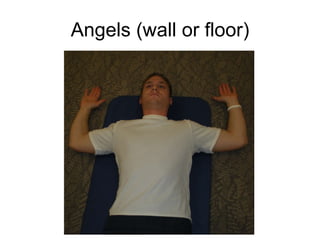
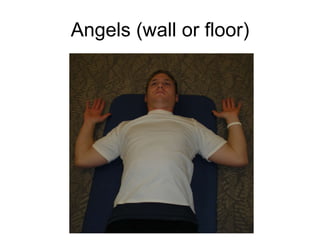
Angels (wall or floor)
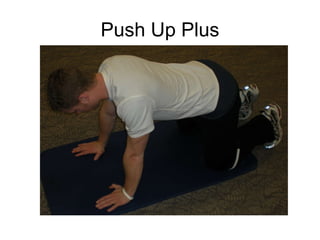
Push Up Plus
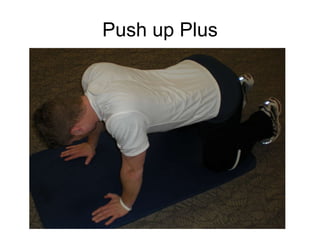
Push up Plus
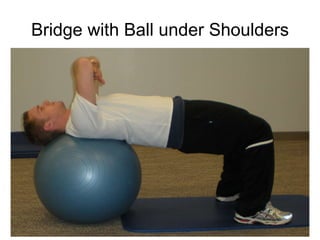
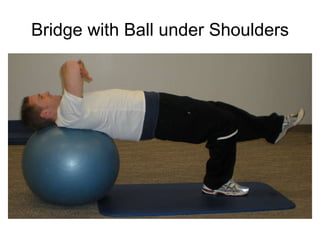
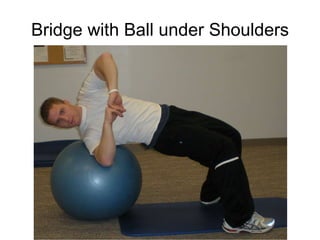
Bridge with Ball under Shoulders
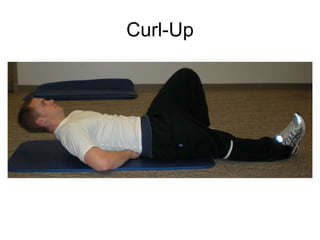
Curl-Up
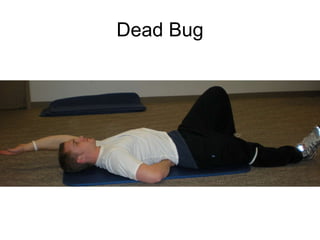
Dead Bug
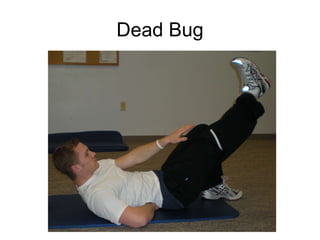
Dead Bug
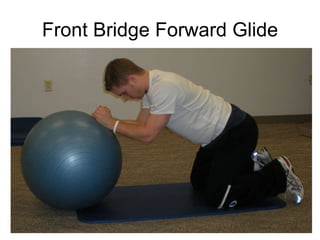
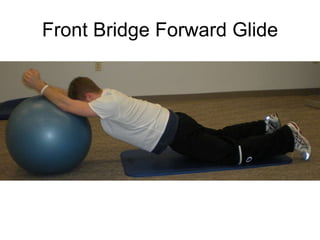
Front Bridge Forward Glide
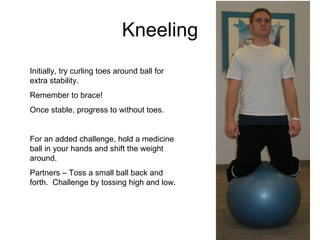
Kneeling Initially, try curling toes around ball for extra stability. Remember to brace! Once stable, progress to without toes. For an added challenge, hold a medicine ball in your hands and shift the weight around. Partners – Toss a small ball back and forth.  Challenge by tossing high and low.
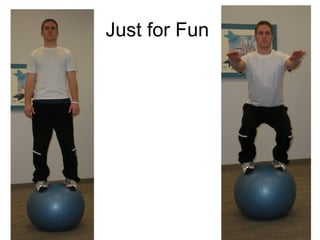
Just for Fun
Thanks! Please feel free to contact me with any questions you have concerning these or any other exercises.

Exercise Ball And Core Stabilization