
RUSTAMJI INSTITUTE OF TECHNOLOGY 
BORDER SECURITY FORCE TEKANPUR GWALIOR (M.P) 
SEMINAR 
ON 
ELECTRONIC WASTE 
SUBMITED TO SUBMITED BY 
ANJANA GOEN PRATEEK KUMAR 
(HOD OF ELECTRONICS AND COMMUNICATION DEPARTMENT) 0902EC13MT 09 
COMMUNICATION SYSTEM 
MTECH 2ND YEAR
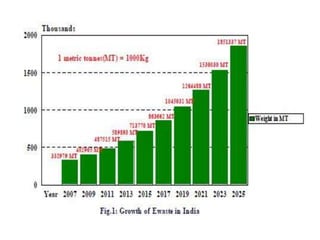
INDIA’S FASTEST GROWING WASTE
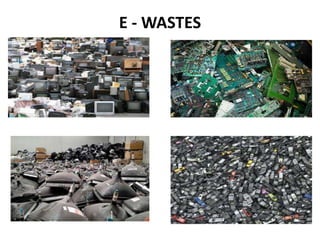
E - WASTES
THE BASEL ACTION NETWORK (BAN) STATEMENT 
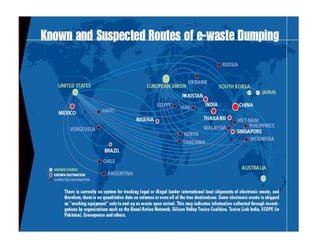
80 per cent of e-waste collected by the US is exported to 
India, China, Pakistan, Taiwan and a number of African 
countries. This is done because 
Cheaper labor is available for recycling in these countries. 
In the US, export of e-waste is legal. 
 There is no banned on import of E-WASTE in India 
In India, recycling of e-waste is almost left to the informal 
sector, which does not have adequate means to handle 
either the increasing quantities or certain processes, 
leading to intolerable risk for human health and the 
environment.
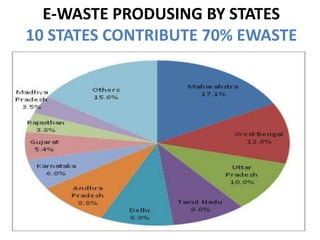
E-WASTE PRODUSING BY STATES 
10 STATES CONTRIBUTE 70% EWASTE
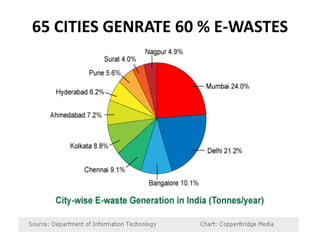
65 CITIES GENRATE 60 % E-WASTES
E-WASTE EFFECTS ENVIRONMENT 
• It may cause soil air and water pollution too 
• Acid and sludge obtained from melting 
computer chips , if disposed on ground and 
water causes acidification of soil and water . 
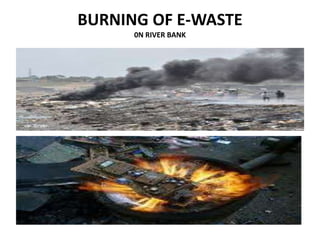
• The most dangerous form of burning E-Waste 
is the open air burning of plastics in order to 
recover copper , silver , gold , platinum or 
other metals .
BURNING OF E-WASTE 
0N RIVER BANK
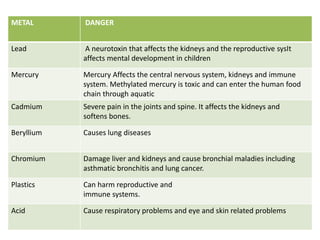
METAL DANGER 
Lead A neurotoxin that affects the kidneys and the reproductive sysIt 
affects mental development in children 
Mercury Mercury Affects the central nervous system, kidneys and immune 
system. Methylated mercury is toxic and can enter the human food 
chain through aquatic 
Cadmium Severe pain in the joints and spine. It affects the kidneys and 
softens bones. 
Beryllium Causes lung diseases 
Chromium Damage liver and kidneys and cause bronchial maladies including 
asthmatic bronchitis and lung cancer. 
Plastics Can harm reproductive and 
immune systems. 
Acid Cause respiratory problems and eye and skin related problems
CHALLENGES 
1. Accurate figures not available for rapidly 
increasing e-waste volumes -generated 
domestically and by imports . 
2. Low level of awareness among manufacturers and 
consumers of the hazards of incorrect e-waste 
disposal 
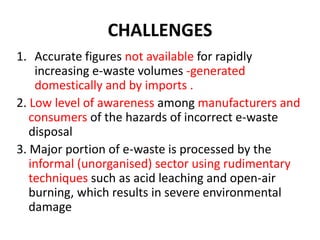
3. Major portion of e-waste is processed by the 
informal (unorganised) sector using rudimentary 
techniques such as acid leaching and open-air 
burning, which results in severe environmental 
damage
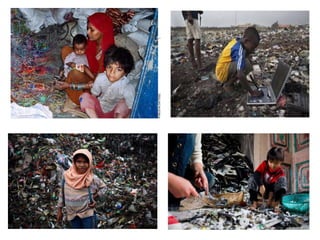
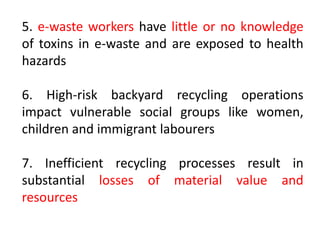
5. e-waste workers have little or no knowledge 
of toxins in e-waste and are exposed to health 
hazards 
6. High-risk backyard recycling operations 
impact vulnerable social groups like women, 
children and immigrant labourers 
7. Inefficient recycling processes result in 
substantial losses of material value and 
resources
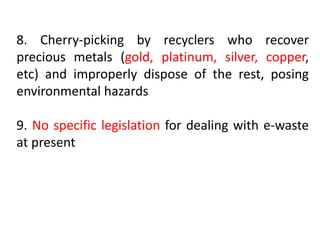
8. Cherry-picking by recyclers who recover 
precious metals (gold, platinum, silver, copper, 
etc) and improperly dispose of the rest, posing 
environmental hazards 
9. No specific legislation for dealing with e-waste 
at present
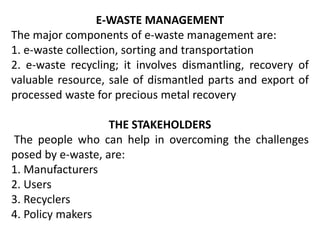
E-WASTE MANAGEMENT 
The major components of e-waste management are: 
1. e-waste collection, sorting and transportation 
2. e-waste recycling; it involves dismantling, recovery of 
valuable resource, sale of dismantled parts and export of 
processed waste for precious metal recovery 
THE STAKEHOLDERS 
The people who can help in overcoming the challenges 
posed by e-waste, are: 
1. Manufacturers 
2. Users 
3. Recyclers 
4. Policy makers
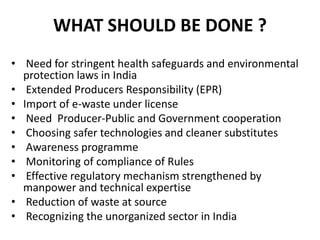
WHAT SHOULD BE DONE ? 
• Need for stringent health safeguards and environmental 
protection laws in India 
• Extended Producers Responsibility (EPR) 
• Import of e-waste under license 
• Need Producer-Public and Government cooperation 
• Choosing safer technologies and cleaner substitutes 
• Awareness programme 
• Monitoring of compliance of Rules 
• Effective regulatory mechanism strengthened by 
manpower and technical expertise 
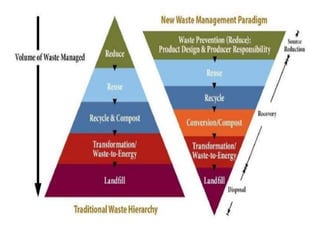
• Reduction of waste at source 
• Recognizing the unorganized sector in India
ADVANTAGES OF RECYCLING 
• Reduction of need forlandfills 
• Material recovery 
• Resale and Reuse is possible 
• Creation of jobs .
CONCLUSION 
Rules shall apply to every 
 Producer(s) 
 Distributer(s) 
 Collection centre(s) 
 Refurbisher(s) 
 Dismantler(s) 
 Recycler(s) 
 Consumer(s) or bulk consumer(s) 
involved in the manufacture, sale, purchase and 
processing of electrical and electronic equipment or 
components .
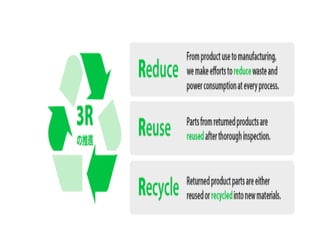
Without effective reduce reuse and recycle , E-Waste 
is dangerous for environment and human 
beings 
Manufacturing companies should not use non 
toxic chemicals in their products . 
Environmental law should be made and enforced 
seriously 
E-Waste management new techniques should be 
used to improve awareness stakeholder 
engagement and estimates of e-waste
 E-WASTE  PRESENTED BY Prateek kumar rjit gwalior mp(8269262630)
 E-WASTE  PRESENTED BY Prateek kumar rjit gwalior mp(8269262630)

E-WASTE PRESENTED BY Prateek kumar rjit gwalior mp(8269262630)

  • 1.
    RUSTAMJI INSTITUTE OFTECHNOLOGY BORDER SECURITY FORCE TEKANPUR GWALIOR (M.P) SEMINAR ON ELECTRONIC WASTE SUBMITED TO SUBMITED BY ANJANA GOEN PRATEEK KUMAR (HOD OF ELECTRONICS AND COMMUNICATION DEPARTMENT) 0902EC13MT 09 COMMUNICATION SYSTEM MTECH 2ND YEAR
  • 2.
  • 4.
  • 7.
    THE BASEL ACTIONNETWORK (BAN) STATEMENT 80 per cent of e-waste collected by the US is exported to India, China, Pakistan, Taiwan and a number of African countries. This is done because Cheaper labor is available for recycling in these countries. In the US, export of e-waste is legal.  There is no banned on import of E-WASTE in India In India, recycling of e-waste is almost left to the informal sector, which does not have adequate means to handle either the increasing quantities or certain processes, leading to intolerable risk for human health and the environment.
  • 9.
    E-WASTE PRODUSING BYSTATES 10 STATES CONTRIBUTE 70% EWASTE
  • 10.
    65 CITIES GENRATE60 % E-WASTES
  • 11.
    E-WASTE EFFECTS ENVIRONMENT • It may cause soil air and water pollution too • Acid and sludge obtained from melting computer chips , if disposed on ground and water causes acidification of soil and water . • The most dangerous form of burning E-Waste is the open air burning of plastics in order to recover copper , silver , gold , platinum or other metals .
  • 12.
    BURNING OF E-WASTE 0N RIVER BANK
  • 13.
    METAL DANGER LeadA neurotoxin that affects the kidneys and the reproductive sysIt affects mental development in children Mercury Mercury Affects the central nervous system, kidneys and immune system. Methylated mercury is toxic and can enter the human food chain through aquatic Cadmium Severe pain in the joints and spine. It affects the kidneys and softens bones. Beryllium Causes lung diseases Chromium Damage liver and kidneys and cause bronchial maladies including asthmatic bronchitis and lung cancer. Plastics Can harm reproductive and immune systems. Acid Cause respiratory problems and eye and skin related problems
  • 15.
    CHALLENGES 1. Accuratefigures not available for rapidly increasing e-waste volumes -generated domestically and by imports . 2. Low level of awareness among manufacturers and consumers of the hazards of incorrect e-waste disposal 3. Major portion of e-waste is processed by the informal (unorganised) sector using rudimentary techniques such as acid leaching and open-air burning, which results in severe environmental damage
  • 16.
    5. e-waste workershave little or no knowledge of toxins in e-waste and are exposed to health hazards 6. High-risk backyard recycling operations impact vulnerable social groups like women, children and immigrant labourers 7. Inefficient recycling processes result in substantial losses of material value and resources
  • 17.
    8. Cherry-picking byrecyclers who recover precious metals (gold, platinum, silver, copper, etc) and improperly dispose of the rest, posing environmental hazards 9. No specific legislation for dealing with e-waste at present
  • 18.
    E-WASTE MANAGEMENT Themajor components of e-waste management are: 1. e-waste collection, sorting and transportation 2. e-waste recycling; it involves dismantling, recovery of valuable resource, sale of dismantled parts and export of processed waste for precious metal recovery THE STAKEHOLDERS The people who can help in overcoming the challenges posed by e-waste, are: 1. Manufacturers 2. Users 3. Recyclers 4. Policy makers
  • 19.
    WHAT SHOULD BEDONE ? • Need for stringent health safeguards and environmental protection laws in India • Extended Producers Responsibility (EPR) • Import of e-waste under license • Need Producer-Public and Government cooperation • Choosing safer technologies and cleaner substitutes • Awareness programme • Monitoring of compliance of Rules • Effective regulatory mechanism strengthened by manpower and technical expertise • Reduction of waste at source • Recognizing the unorganized sector in India
  • 22.
    ADVANTAGES OF RECYCLING • Reduction of need forlandfills • Material recovery • Resale and Reuse is possible • Creation of jobs .
  • 23.
    CONCLUSION Rules shallapply to every  Producer(s)  Distributer(s)  Collection centre(s)  Refurbisher(s)  Dismantler(s)  Recycler(s)  Consumer(s) or bulk consumer(s) involved in the manufacture, sale, purchase and processing of electrical and electronic equipment or components .
  • 24.
    Without effective reducereuse and recycle , E-Waste is dangerous for environment and human beings Manufacturing companies should not use non toxic chemicals in their products . Environmental law should be made and enforced seriously E-Waste management new techniques should be used to improve awareness stakeholder engagement and estimates of e-waste