Evaluation Question 7: Looking back to your preliminary 
task, what do you feel that you have learnt in the 
progression from it to the full product? 
By Ranvir Jandoo 12W
What was the preliminary task? 
• Our preliminary task was to be focused on continuity and has to 
include the filming of: 
• A character opening a door 
• Sitting down and having a conversation with another character 
• The technical aspects that had to be used were: 
• Shot – Reverse – Shot 
• Match on action 
• 180 degree rule 
• The following slides will be explaining what I have learnt from the 
preliminary task.
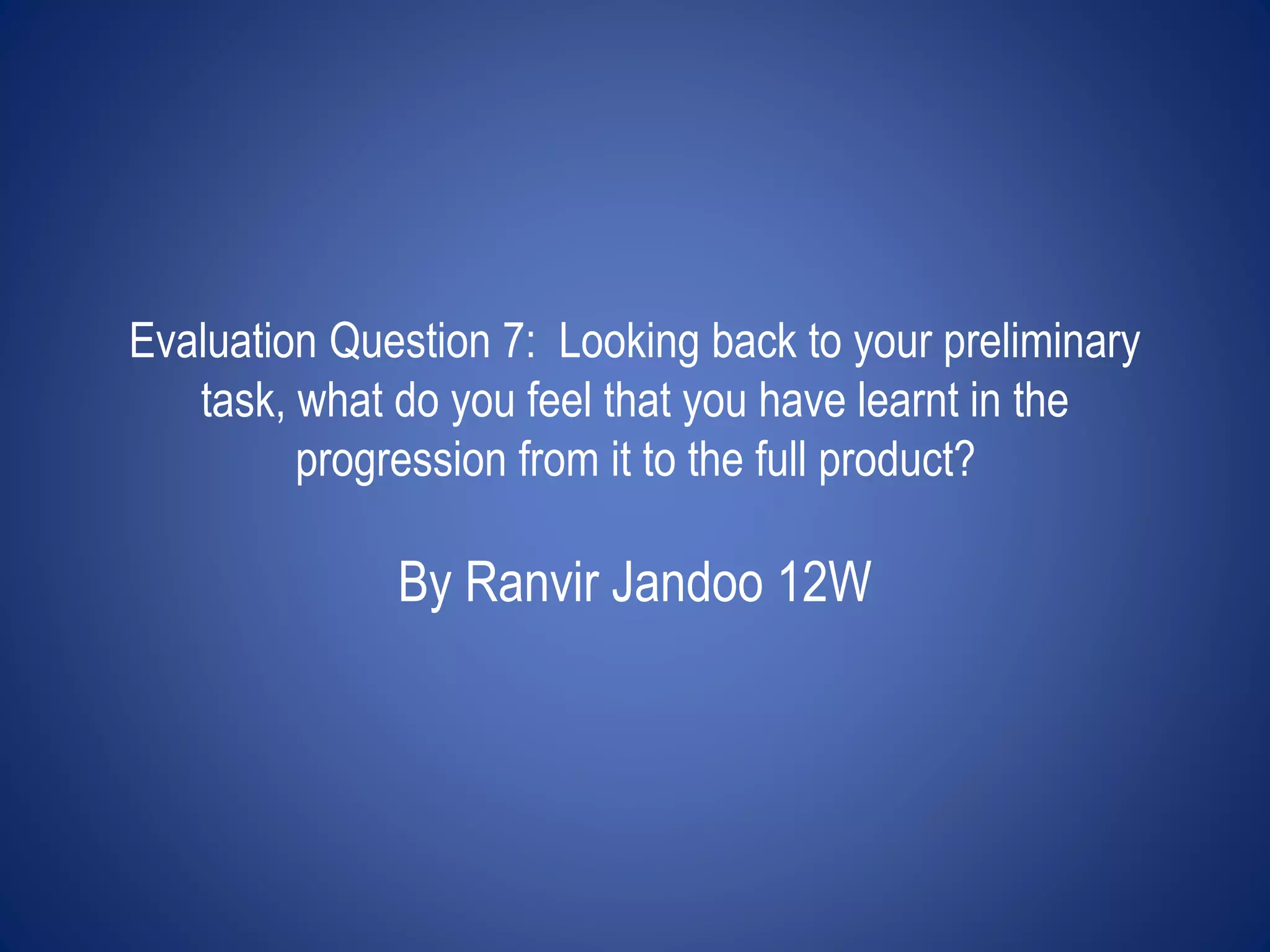
Shot – Reverse – Shot 
What is Shot – Reverse – Shot? 
• Shot – reverse – shot is usually used when two characters are 
conversing with each other. The camera would show one characters 
face, then switch to the other character then back to the initial 
character. 
• We did not use Shot – Reverse – Shot within our final production as 
there was only one character present on screen
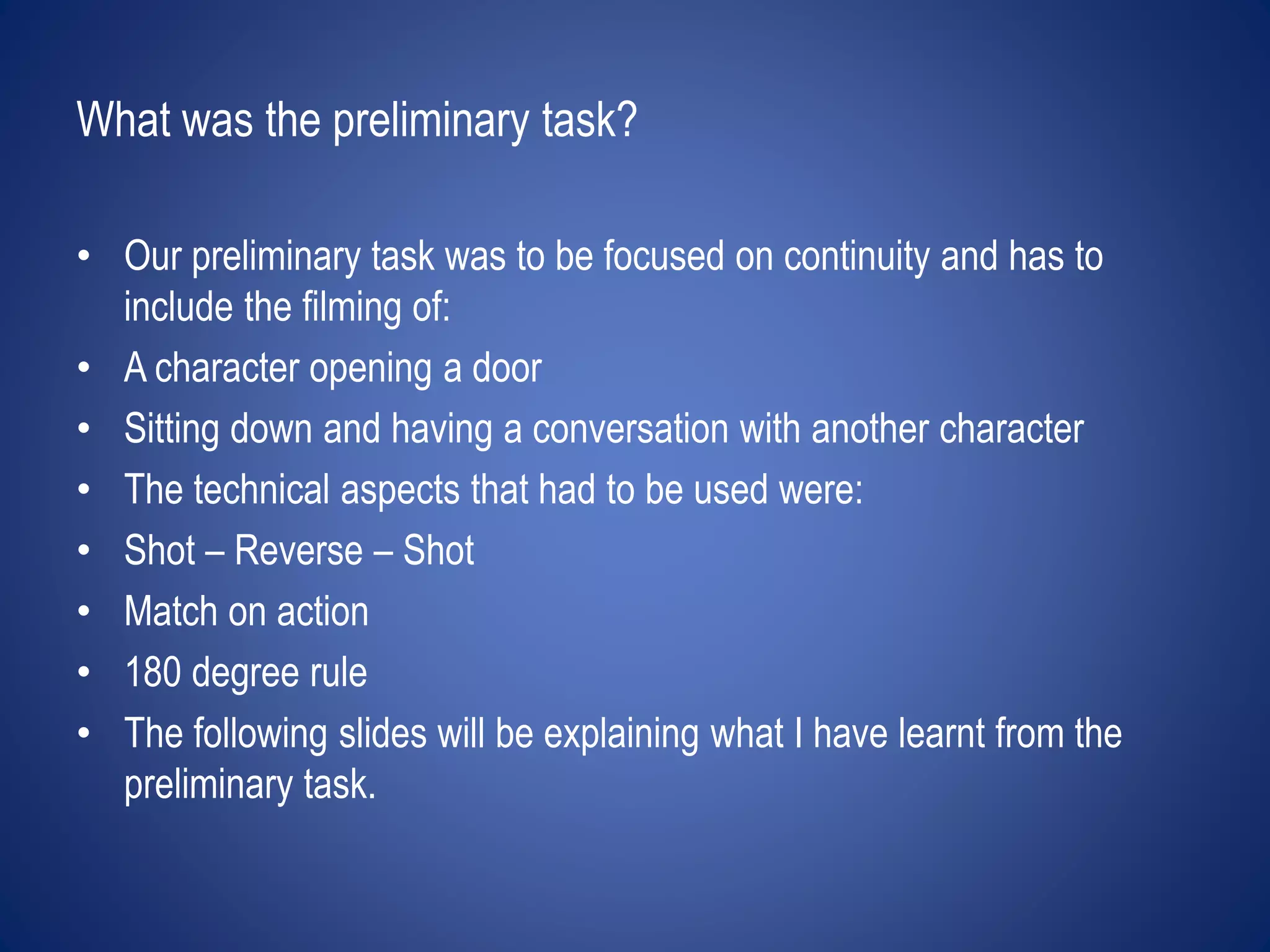
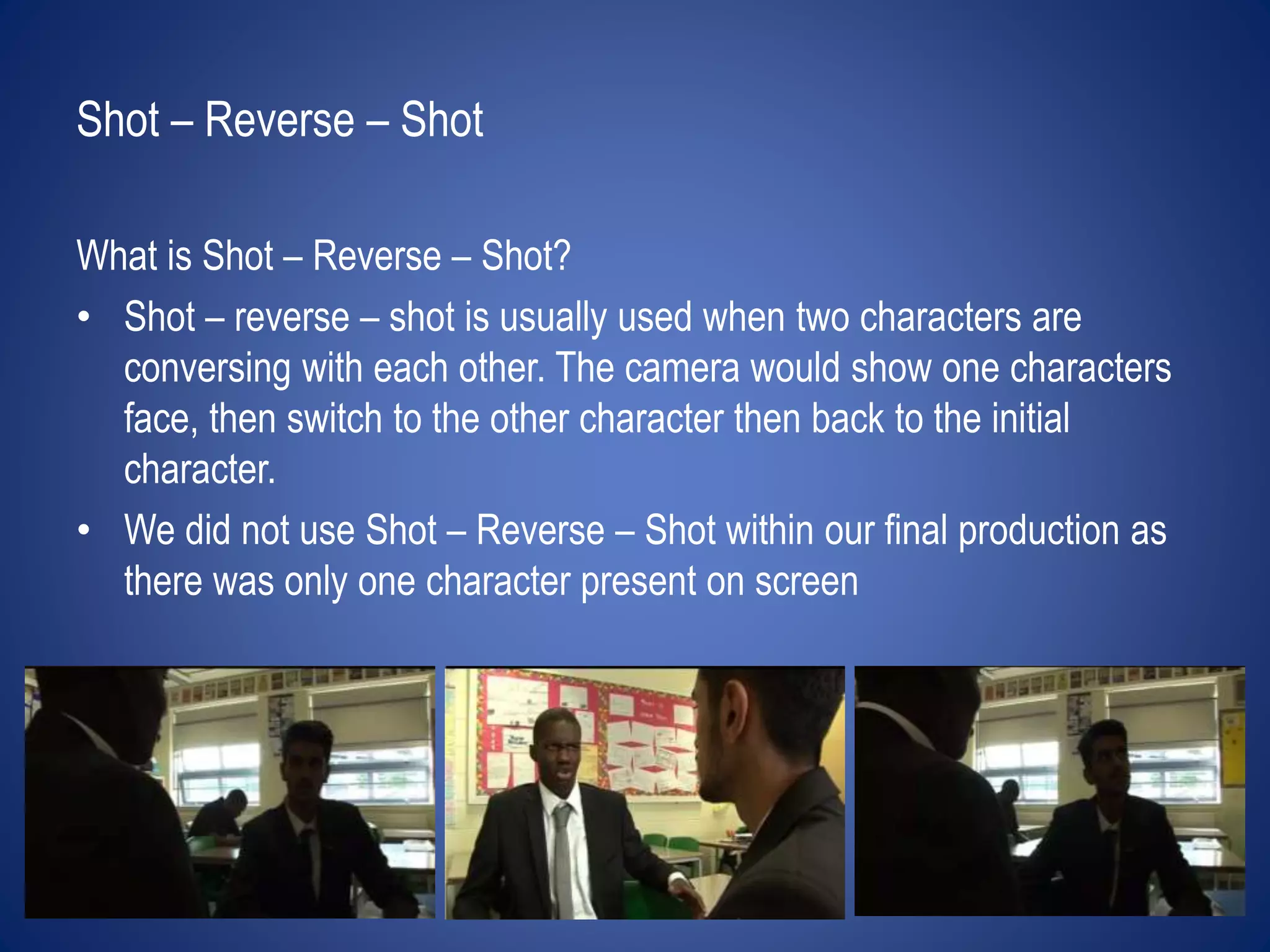
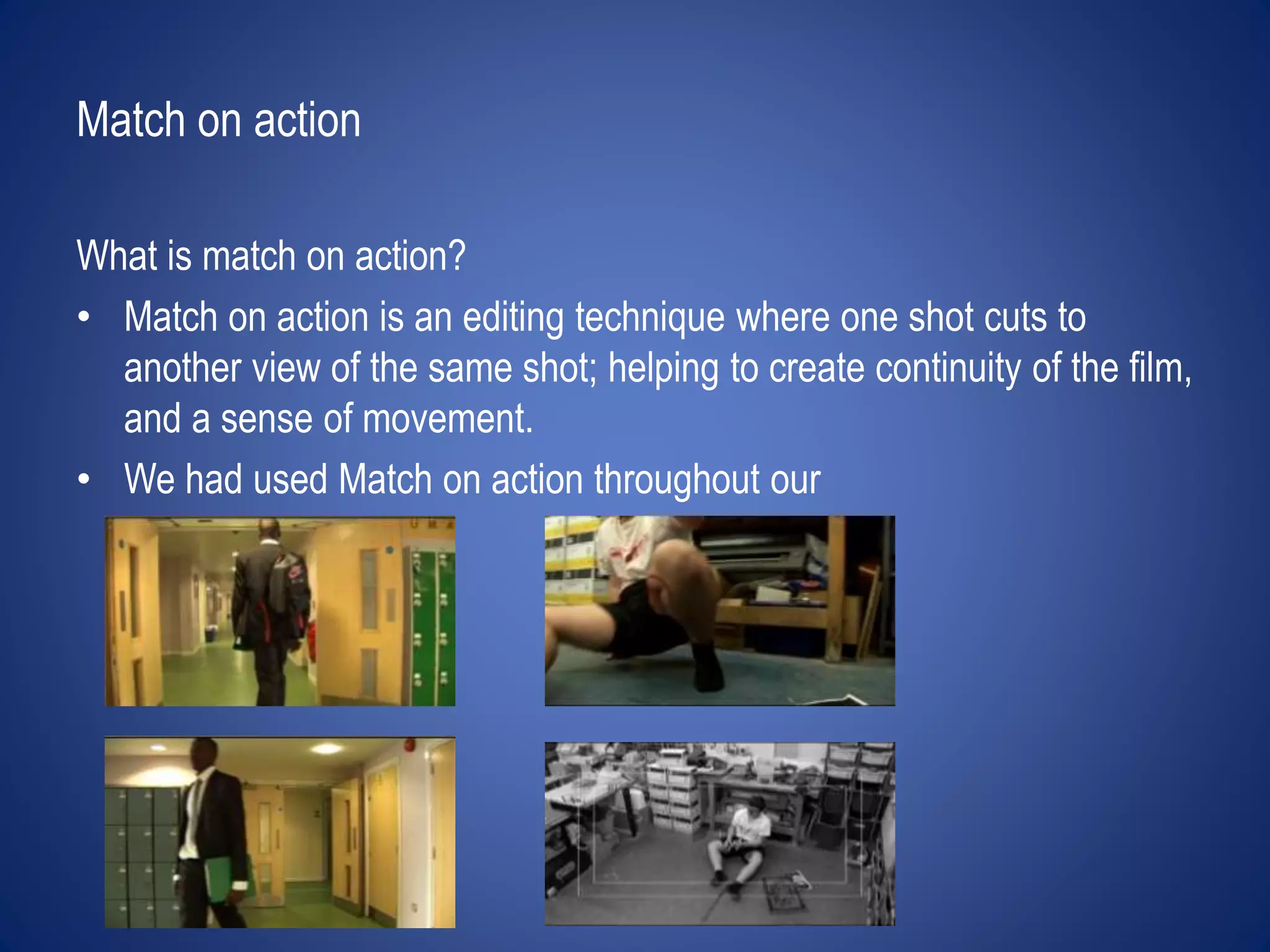
Match on action 
What is match on action? 
• Match on action is an editing technique where one shot cuts to 
another view of the same shot; helping to create continuity of the film, 
and a sense of movement. 
• We had used Match on action throughout our
180 degree rule 
What is the 180 degree rule? 
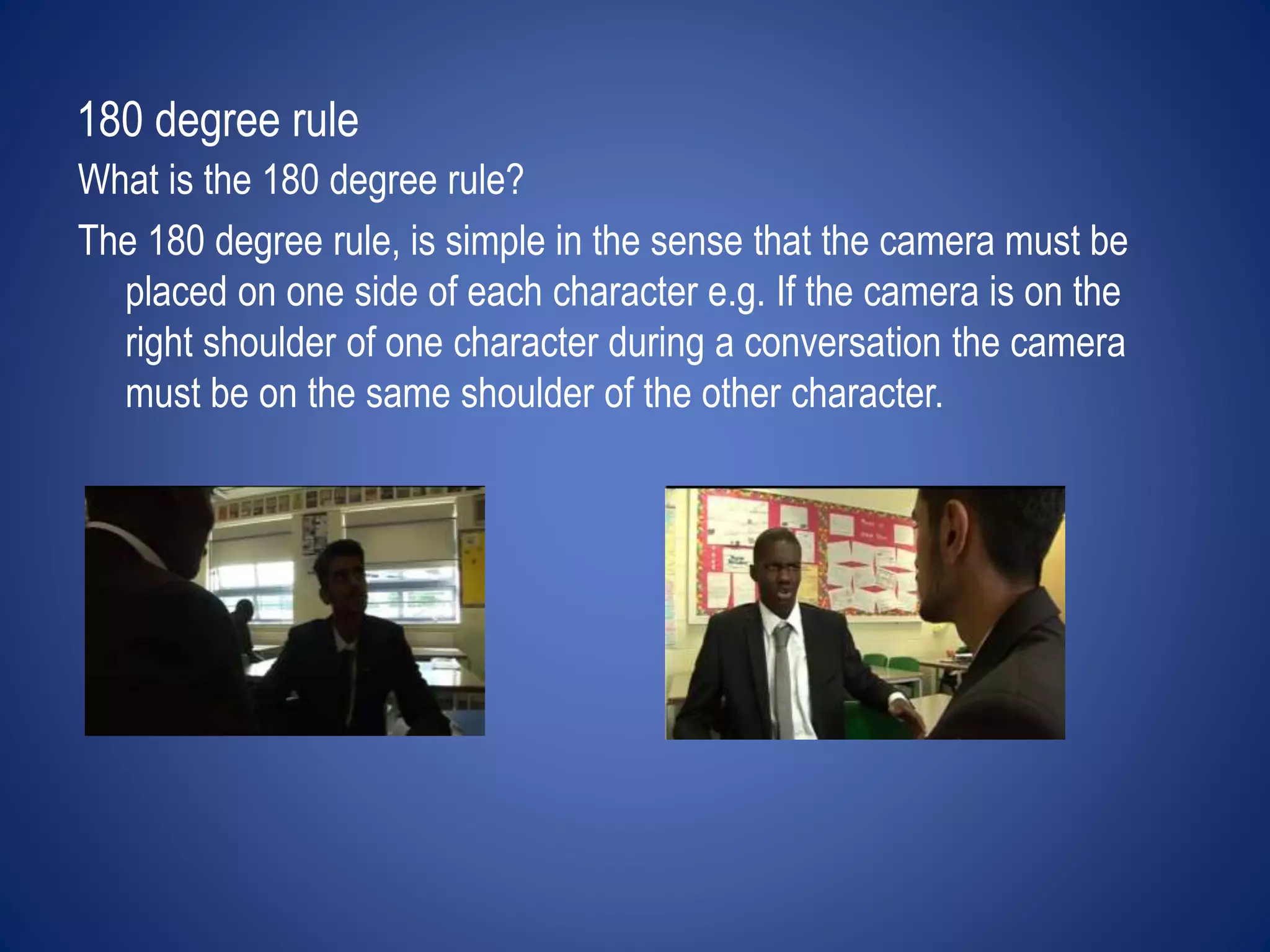
The 180 degree rule, is simple in the sense that the camera must be 
placed on one side of each character e.g. If the camera is on the 
right shoulder of one character during a conversation the camera 
must be on the same shoulder of the other character.
Camera work 
• During the filming of our preliminary task I had learnt a lot about 
camerawork although I was not the cameraman. 
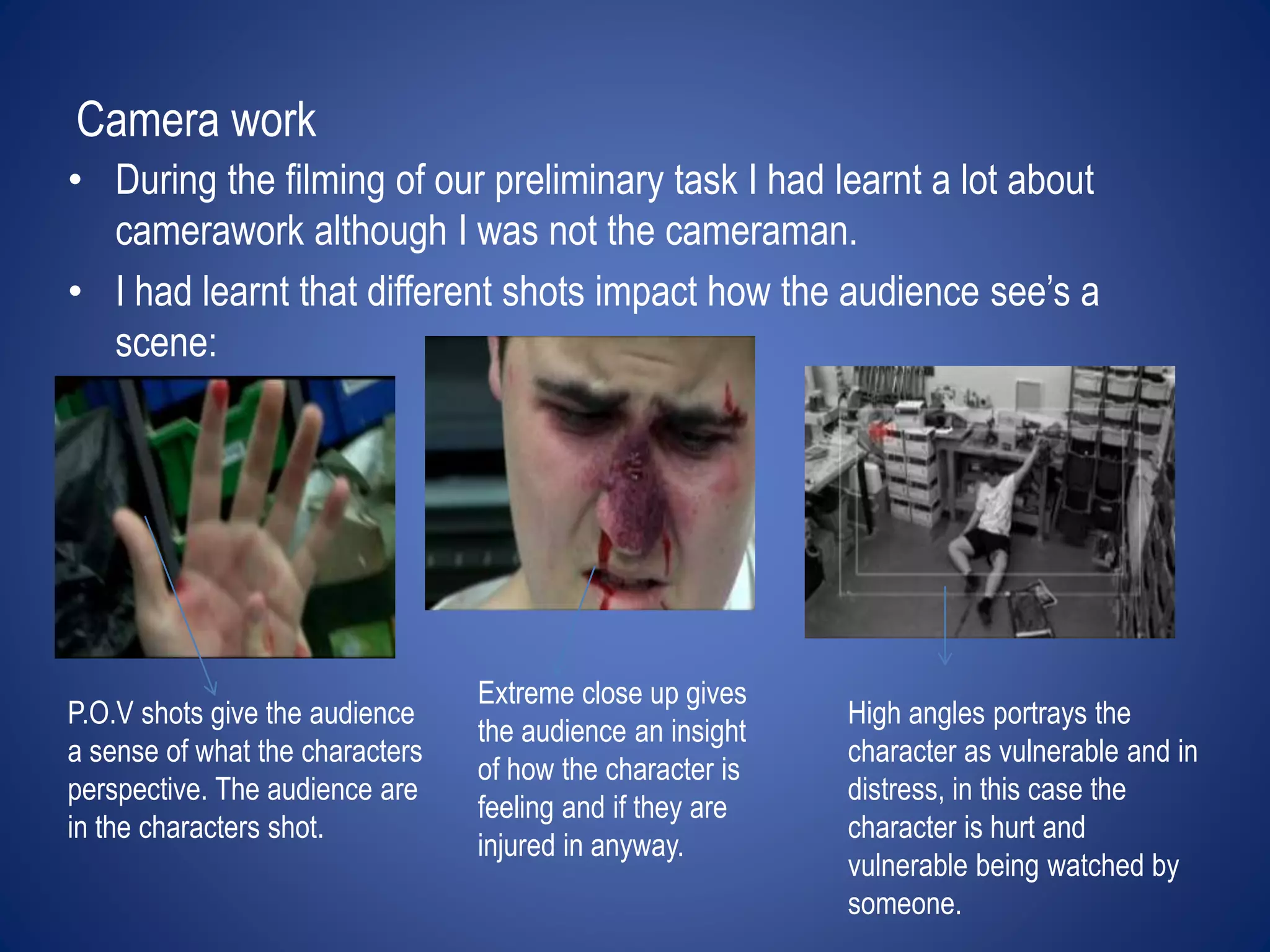
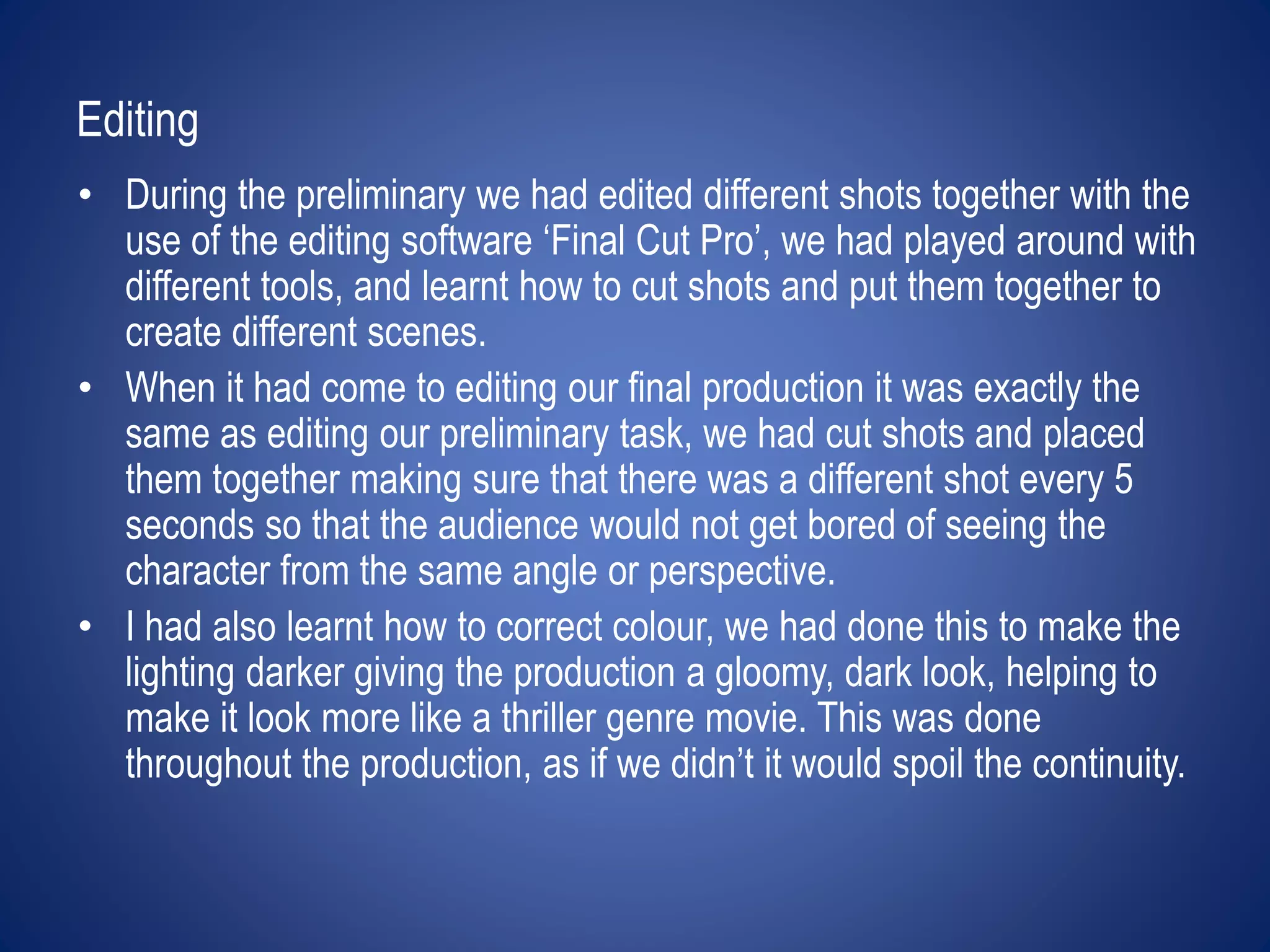
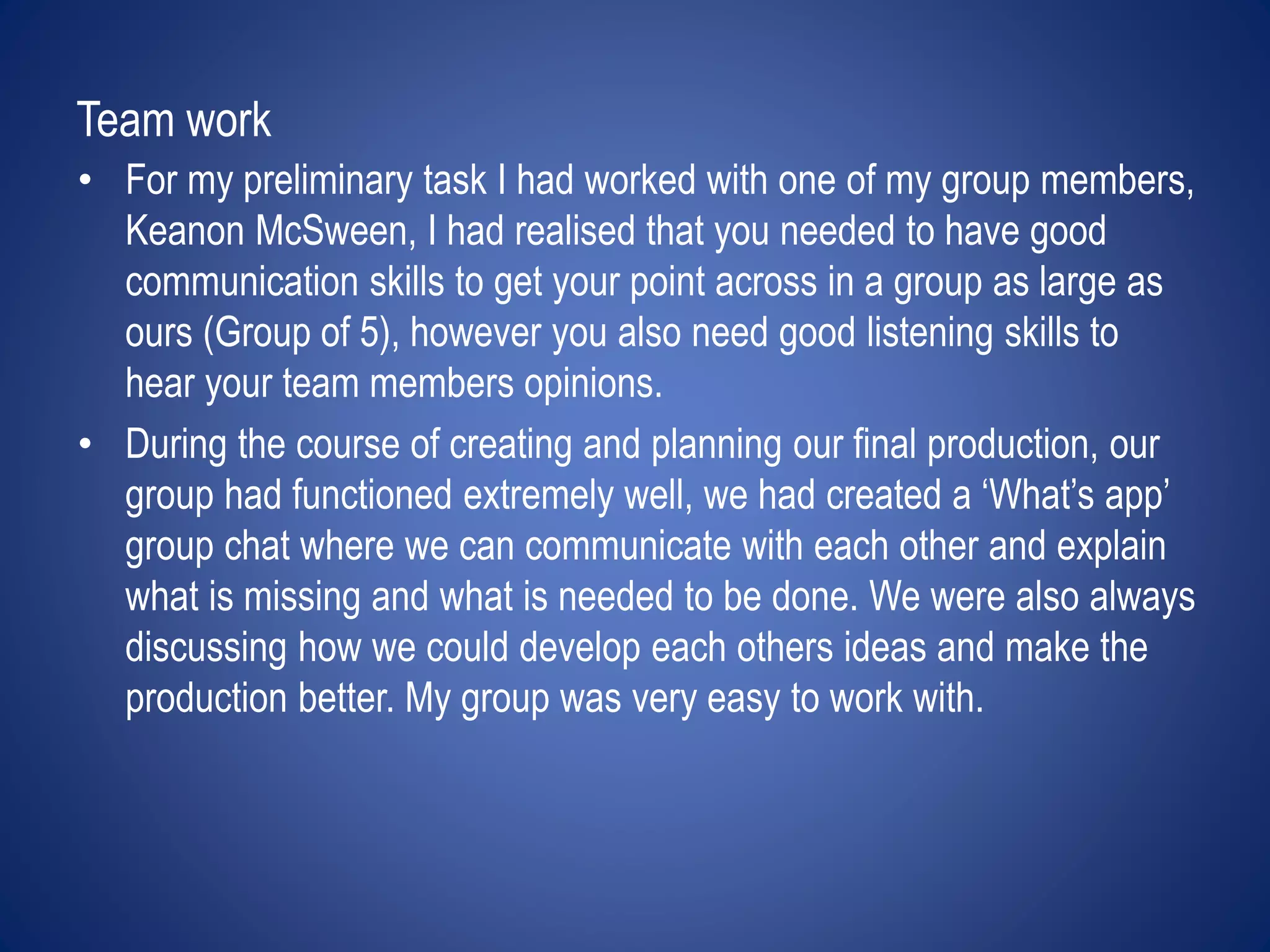
• I had learnt that different shots impact how the audience see’s a 
scene: 
P.O.V shots give the audience 
a sense of what the characters 
perspective. The audience are 
in the characters shot. 
Extreme close up gives 
the audience an insight 
of how the character is 
feeling and if they are 
injured in anyway. 
High angles portrays the 
character as vulnerable and in 
distress, in this case the 
character is hurt and 
vulnerable being watched by 
someone.
Editing 
• During the preliminary we had edited different shots together with the 
use of the editing software ‘Final Cut Pro’, we had played around with 
different tools, and learnt how to cut shots and put them together to 
create different scenes. 
• When it had come to editing our final production it was exactly the 
same as editing our preliminary task, we had cut shots and placed 
them together making sure that there was a different shot every 5 
seconds so that the audience would not get bored of seeing the 
character from the same angle or perspective. 
• I had also learnt how to correct colour, we had done this to make the 
lighting darker giving the production a gloomy, dark look, helping to 
make it look more like a thriller genre movie. This was done 
throughout the production, as if we didn’t it would spoil the continuity.
Team work 
• For my preliminary task I had worked with one of my group members, 
Keanon McSween, I had realised that you needed to have good 
communication skills to get your point across in a group as large as 
ours (Group of 5), however you also need good listening skills to 
hear your team members opinions. 
• During the course of creating and planning our final production, our 
group had functioned extremely well, we had created a ‘What’s app’ 
group chat where we can communicate with each other and explain 
what is missing and what is needed to be done. We were also always 
discussing how we could develop each others ideas and make the 
production better. My group was very easy to work with.

Evaluation Question 7

  • 1.
    Evaluation Question 7:Looking back to your preliminary task, what do you feel that you have learnt in the progression from it to the full product? By Ranvir Jandoo 12W
  • 2.
    What was thepreliminary task? • Our preliminary task was to be focused on continuity and has to include the filming of: • A character opening a door • Sitting down and having a conversation with another character • The technical aspects that had to be used were: • Shot – Reverse – Shot • Match on action • 180 degree rule • The following slides will be explaining what I have learnt from the preliminary task.
  • 3.
    Shot – Reverse– Shot What is Shot – Reverse – Shot? • Shot – reverse – shot is usually used when two characters are conversing with each other. The camera would show one characters face, then switch to the other character then back to the initial character. • We did not use Shot – Reverse – Shot within our final production as there was only one character present on screen
  • 4.
    Match on action What is match on action? • Match on action is an editing technique where one shot cuts to another view of the same shot; helping to create continuity of the film, and a sense of movement. • We had used Match on action throughout our
  • 5.
    180 degree rule What is the 180 degree rule? The 180 degree rule, is simple in the sense that the camera must be placed on one side of each character e.g. If the camera is on the right shoulder of one character during a conversation the camera must be on the same shoulder of the other character.
  • 6.
    Camera work •During the filming of our preliminary task I had learnt a lot about camerawork although I was not the cameraman. • I had learnt that different shots impact how the audience see’s a scene: P.O.V shots give the audience a sense of what the characters perspective. The audience are in the characters shot. Extreme close up gives the audience an insight of how the character is feeling and if they are injured in anyway. High angles portrays the character as vulnerable and in distress, in this case the character is hurt and vulnerable being watched by someone.
  • 7.
    Editing • Duringthe preliminary we had edited different shots together with the use of the editing software ‘Final Cut Pro’, we had played around with different tools, and learnt how to cut shots and put them together to create different scenes. • When it had come to editing our final production it was exactly the same as editing our preliminary task, we had cut shots and placed them together making sure that there was a different shot every 5 seconds so that the audience would not get bored of seeing the character from the same angle or perspective. • I had also learnt how to correct colour, we had done this to make the lighting darker giving the production a gloomy, dark look, helping to make it look more like a thriller genre movie. This was done throughout the production, as if we didn’t it would spoil the continuity.
  • 8.
    Team work •For my preliminary task I had worked with one of my group members, Keanon McSween, I had realised that you needed to have good communication skills to get your point across in a group as large as ours (Group of 5), however you also need good listening skills to hear your team members opinions. • During the course of creating and planning our final production, our group had functioned extremely well, we had created a ‘What’s app’ group chat where we can communicate with each other and explain what is missing and what is needed to be done. We were also always discussing how we could develop each others ideas and make the production better. My group was very easy to work with.