PRESENTED BY
DR.MD.SHARIF AHSAN
MD RESIDENT(PULMONOLOGY)
PHASE-B
DHAKA MEDICAL COLLEGE HOSPITAL
 One of the most common symptoms for which patients
seek medical attention
 Defensive reflex that enhance the clearance of
secretions and particles from the airway
 Protects the lower airways from the aspiration of foreign
materials
 Coughing may be initiated either voluntarily or
reflexively.
 It has both afferent and efferent pathways .
 The cough starts with a deep inspiration followed by
glottic closure, relaxation of the diaphragm, and muscle
contraction against a closed glottis.
◼ Increasing intensity that lasts for a week or more
◼ Hyperthermia >38°C for 3 days or more
◼ Dyspnea and chest pain on breathing
◼ Hemoptysis
◼ Weakness, and weight loss
◼ Excessive sweating, shivering
◼ Sudden attack of severe cough
◼ Severe cough during an hour without any interval
◼ Excessive expectoration of sputum
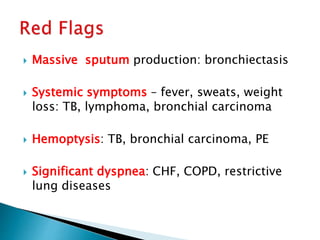
 Massive sputum production: bronchiectasis
 Systemic symptoms – fever, sweats, weight
loss: TB, lymphoma, bronchial carcinoma
 Hemoptysis: TB, bronchial carcinoma, PE
 Significant dyspnea: CHF, COPD, restrictive
lung diseases
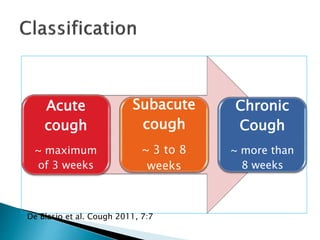
Acute
cough
~ maximum
of 3 weeks
Subacute
cough
~ 3 to 8
weeks
Chronic
Cough
~ more than
8 weeks
De Blasio et al. Cough 2011, 7:7
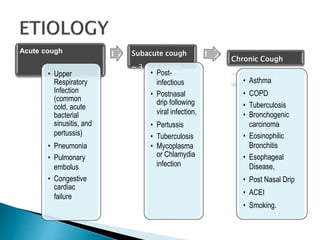
Acute cough
• Upper
Respiratory
Infection
(common
cold, acute
bacterial
sinusitis, and
pertussis)
• Pneumonia
• Pulmonary
embolus
• Congestive
cardiac
failure
Subacute cough
~ 3 to 8 weeks
• Post-
infectious
• Postnasal
drip following
viral infection,
• Pertussis
• Tuberculosis
• Mycoplasma
or Chlamydia
infection
Chronic Cough
~ more than 8
weeks
• Asthma
• COPD
• Tuberculosis
• Bronchogenic
carcinoma
• Eosinophilic
Bronchitis
• Esophageal
Disease,
• Post Nasal Drip
• ACEI
• Smoking.
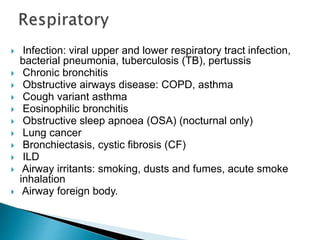
 Infection: viral upper and lower respiratory tract infection,
bacterial pneumonia, tuberculosis (TB), pertussis
 Chronic bronchitis
 Obstructive airways disease: COPD, asthma
 Cough variant asthma
 Eosinophilic bronchitis
 Obstructive sleep apnoea (OSA) (nocturnal only)
 Lung cancer
 Bronchiectasis, cystic fibrosis (CF)
 ILD
 Airway irritants: smoking, dusts and fumes, acute smoke
inhalation
 Airway foreign body.
 External compression of trachea by enlarged
lymph nodes (e.g. lymphoma, TB)
 Mediastinal tumours/cysts/masses
• LVF
• Left atrial enlargement (e.g. severe mitral stenosis).
• Upper airway cough syndrome, including:
• Acute or chronic sinusitis
• Post-nasal drip due to perennial, allergic, or
vasomotor rhinitis.
 GORD
 Oesophageal dysmotility, stricture, or pharyngeal
pouch causing repeated aspiration
 Oesophago-bronchial fistula.
 Neurological disease affecting swallowing,
causing repeated aspiration, such as
Stroke
Multiple sclerosis,
Motor neurone disease (MND),
Parkinson’s diseas
 • ACE inhibitors
 • Some inhaled preparations can cause cough—
particularly ipratropium.
 Idiopathic
 Ear wax (vagal nerve stimulation)
 Psychogenic/habitual.
CLINICAL ASSESMENT
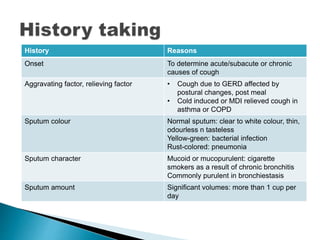
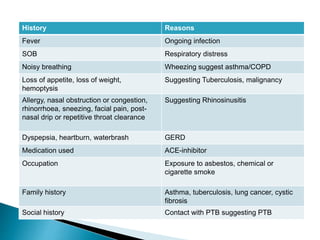
History Reasons
Onset To determine acute/subacute or chronic
causes of cough
Aggravating factor, relieving factor • Cough due to GERD affected by
postural changes, post meal
• Cold induced or MDI relieved cough in
asthma or COPD
Sputum colour Normal sputum: clear to white colour, thin,
odourless n tasteless
Yellow-green: bacterial infection
Rust-colored: pneumonia
Sputum character Mucoid or mucopurulent: cigarette
smokers as a result of chronic bronchitis
Commonly purulent in bronchiestasis
Sputum amount Significant volumes: more than 1 cup per
day
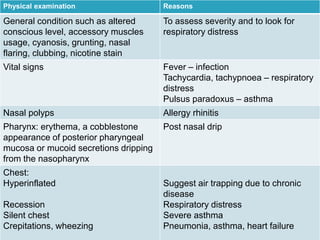
History Reasons
Fever Ongoing infection
SOB Respiratory distress
Noisy breathing Wheezing suggest asthma/COPD
Loss of appetite, loss of weight,
hemoptysis
Suggesting Tuberculosis, malignancy
Allergy, nasal obstruction or congestion,
rhinorrhoea, sneezing, facial pain, post-
nasal drip or repetitive throat clearance
Suggesting Rhinosinusitis
Dyspepsia, heartburn, waterbrash GERD
Medication used ACE-inhibitor
Occupation Exposure to asbestos, chemical or
cigarette smoke
Family history Asthma, tuberculosis, lung cancer, cystic
fibrosis
Social history Contact with PTB suggesting PTB
PHYSICAL EXAMINATION
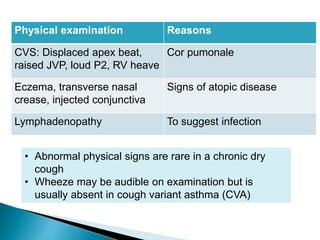
Physical examination Reasons
General condition such as altered
conscious level, accessory muscles
usage, cyanosis, grunting, nasal
flaring, clubbing, nicotine stain
To assess severity and to look for
respiratory distress
Vital signs Fever – infection
Tachycardia, tachypnoea – respiratory
distress
Pulsus paradoxus – asthma
Nasal polyps Allergy rhinitis
Pharynx: erythema, a cobblestone
appearance of posterior pharyngeal
mucosa or mucoid secretions dripping
from the nasopharynx
Post nasal drip
Chest:
Hyperinflated
Recession
Silent chest
Crepitations, wheezing
Suggest air trapping due to chronic
disease
Respiratory distress
Severe asthma
Pneumonia, asthma, heart failure
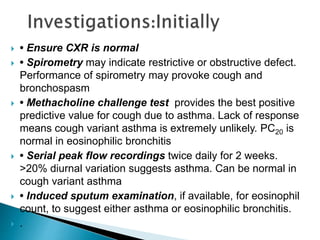
Physical examination Reasons
CVS: Displaced apex beat,
raised JVP, loud P2, RV heave
Cor pumonale
Eczema, transverse nasal
crease, injected conjunctiva
Signs of atopic disease
Lymphadenopathy To suggest infection
• Abnormal physical signs are rare in a chronic dry
cough
• Wheeze may be audible on examination but is
usually absent in cough variant asthma (CVA)
 • Ensure CXR is normal
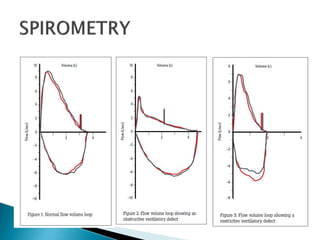
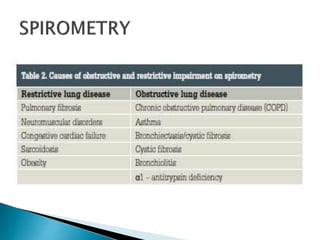
 • Spirometry may indicate restrictive or obstructive defect.
Performance of spirometry may provoke cough and
bronchospasm
 • Methacholine challenge test provides the best positive
predictive value for cough due to asthma. Lack of response
means cough variant asthma is extremely unlikely. PC20 is
normal in eosinophilic bronchitis
 • Serial peak flow recordings twice daily for 2 weeks.
>20% diurnal variation suggests asthma. Can be normal in
cough variant asthma
 • Induced sputum examination, if available, for eosinophil
count, to suggest either asthma or eosinophilic bronchitis.
 .
 • Consider chest HRCT if any features suggestive of lung
cancer or interstitial lung disease (ILD), as a small proportion
may present with a normal CXR (central tumour)
 • Consider ENT examination if predominantly upper
respiratory tract disease, resistant to treatment. Consider
sinus CT
 • Consider bronchoscopy if foreign body possible, or history
suggestive of malignancy, small carcinoid, endobronchial
disease. Perform after CT to help guide bronchoscopist
 • Consider 24h ambulatory oesophageal pH monitoring
 • Consider oesophageal manometry for oesophageal
dysmotility
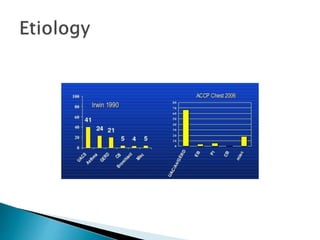
In non-smoking adults with a normal CXR who are not
taking ACE inhibitors, chronic cough is almost always
due to which of the following 4 conditions?
a) Upper Airway Cough Syndrome (UACS)
b) Asthma
c) Gastroesophageal reflux disease (GERD)
d) Chronic Bronchitis
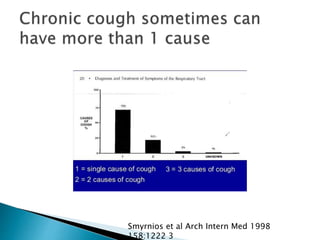
Smyrnios et al Arch Intern Med 1998
158:1222 3
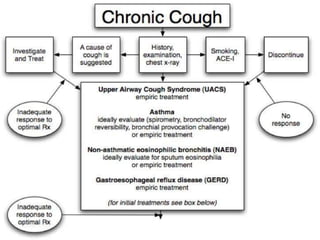
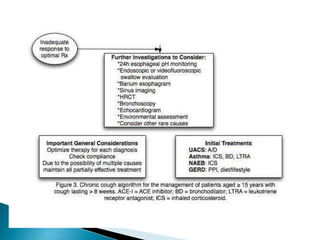
• A systematic, diagnostic approach has been validated in
immunocompetent patients-
5 steps plan:
Step 1: Review history and exam focusing on the most
common causes of chronic cough
 Step 2: Order a CXR in all patients
 Step 3: Do not order additional tests in present smokers
or patients taking ACE inhibitors until the response to
smoking cessation or drug discontinuation for at least 4
weeks can be assessed.
- Cough due to smoking or ACE inhibitors should
improve substantially or disappear during this
time- frame of abstinence.
Step 4: Order additional diagnostic tests or embark on
empiric treatment
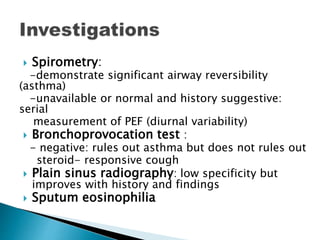
 Spirometry:
-demonstrate significant airway reversibility
(asthma)
-unavailable or normal and history suggestive:
serial
measurement of PEF (diurnal variability)
 Bronchoprovocation test :
- negative: rules out asthma but does not rules out
steroid- responsive cough
 Plain sinus radiography: low specificity but
improves with history and findings
 Sputum eosinophilia
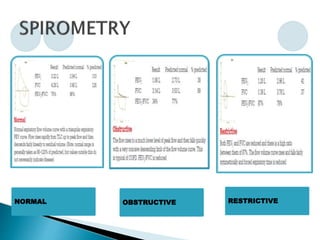
NORMAL OBSTRUCTIVE RESTRICTIVE
Step 5: Determine the cause(s) of cough by observing
which specific therapy eliminates cough
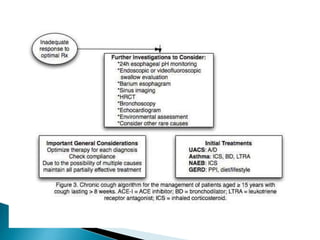
• If the evaluation suggests more than one possible cause,
initiate treatment in the same sequence that the
abnormalities were discovered
• Since cough can be simultaneously caused by more than
one condition, do NOT stop therapy that appears to be
partially successful; rather, sequentially add to it.
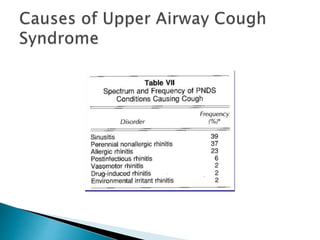
 Also called “Post-nasal drip syndrome” (PNDS)
 Common cause of chronic cough in all age groups
– Second most common cause in children
– Most common cause in adults and the elderly
 In addition to cough, UACS can also cause
- Wheeze
- Dyspnea
.
Rhinitis
 Defined as sneezing, nasal discharge, or blockage for
>1h on most days for either a limited part of the year
(seasonal) or all year (perennial).
 Rhinitis may be allergic (e.g. hay fever), non-allergic,
vasomotor or infective.
 The associated nasal inflammation may irritate cough
receptors directly or produce a post-nasal drip
 Infection of the paranasal sinuses, which may
complicate an URTI and is frequently caused
by Haemophilus (H.) influenzae or Streptococcus (S.)
pneumoniae.
 It causes frontal headache and facial pain.
 Chronic sinusitis may require further investigation with
CXR or CT, which shows mucosal thickening and air-
fluid levels.
 Surgery may be indicated
Sinusitis
 Rhinosinusitis describes inflammation and infection within
the nasal passages and paranasal sinuses, with
 chronic rhinosinusitis defined as symptoms persisting for
more than 12 weeks
 Clues to UACS
– History of
• Need to frequently clear their throat
• Friend/relative notices that the patient
frequently clears their throat
• Sensation of dripping into throat
• Nasal symptoms
– Physical Exam demonstrating
• Secretions in nose or oropharynx
• Cobblestone appearance of mucosa
 Diagnosis of UACS as a cause of cough is established
when:
a) frequent throat clearing is elicited from the history
b) cobblestoning and phlegm are present on
physical examination of the posterior pharynx
c) cough responds favourably to specific therapy
aimed at eliminating the drip
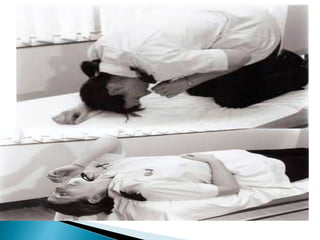
Nasal preparations should be taken by kneeling
with the top of the head on the floor (‘Mecca’
position) or
lying supine with the head tipped over the end of
the bed.
Improvements in cough should be found within 2
weeks.
TREATMENT:UACS
•
Non-allergic rhinitis :
 Initial 3 weeks of nasal decongestants with first-
generation antihistamines (which have helpful
anticholinergic properties) and pseudoephedrine.
Alternatives are nasal ipratropium bromide or
xylometazoline.
 Followed by 3 months of high-dose nasal steroids,
which are ineffective when used as first-line treatment.
 Second-generation antihistamines (i.e. non-sedating)
are of no use in non-allergic rhinitis
TREATMENT:UACS
• Allergic rhinitis: Second-generation oral
antihistamine (e.g. cetirizine, loratadine, fexofenadine)
and high-dose nasal steroids for 3 months at least
• Vasomotor rhinitis:Nasal ipratropium bromide for 3
months; nasal steroids may also have a role
TREATMENT:UACS
• Chronic rhinosinusitis:
Nasal steroids and saline lavage, which should have an
effect by 4 weeks, and, if so, treatment should continue,
although optimal duration unclear.
.
TREATMENT:UACS
• Chronic sinusitis:
Treat as for non-allergic rhinitis, but include 2 weeks of
antibiotics active against H. influenzae such as
doxycycline or co-amoxiclav
 Second most common cause of cough in adults
• Clues that chronic cough is due to asthma:
– Episodic wheezing, dyspnea , cold or exercise
induced
– Reversible airflow obstruction
– Bronchial hyperresponsiveness
• Confirmed by resolution of cough with asthma treatment
• 30-60% of patients presenting with chronic cough
that was due to asthma had cough as their ONLY
symptom
 Clues:
- nocturnal cough, exercise induced, after allergen
exposure
 Bronchoprovocation test: positive
 Negative test exclude asthma but does not rule out
steroid responsive cough
Treatment
• Inhaled corticosteroid
• ICS/LABA combination > 8 weeks
 Leukotrine receptor antagonist
-Confirmed by resolution of cough with asthma
treatment
 Eosinophilic airway inflammation WITHOUT variable airflow
obstruction or airway hyperresponsiveness
• Diagnostic tests:
- Spirometry: normal
- Methacholine challenge: normal
- Sputum or BAL eosinophilia: >3% eosinophils
• Diagnostic/Therapeutic trial: inhaled corticosteroid for ≥ 4
weeks
• Characteristically resistant to bronchodilator but reponds ICS
• Confirmed diagnosis if responded to ICS
 Suspect GERD when…
– Symptoms of heartburn or sour taste in
mouth
– Reflux demonstrated by
• 24-hour pH-impedance monitoring
• Barium x-ray
• Cough is the only symptom of GERD in 40-75% of
patients with chronic cough due to GERD
 Cough due to GERD occurs most commonly
while patients are awake, stooping posture,
meal related, and usually does not occur during
the night
• Diagnosis of GERD as cause of chronic cough
requires resolution of cough with GERD
treatment
Life-style changes
 Stop smoking
 Avoid alcohol
 Lose weight
 Elevate HOB
 Small meals
 Avoid fatty/acidic foods /low fat diet
 Avoid caffeine
 Avoid – tight clothes, eating < 4 hrs pre-bed, recumbency
3 hrs post meal
Conservative measures :
• Antacid therapy ≥ 2 months :
– Proton pump inhibitor (high dose)
– H2 blockers less effective
• Motility therapy:
– Metoclopromide
Surgery is last resort
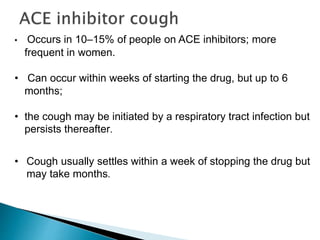
• Occurs in 10–15% of people on ACE inhibitors; more
frequent in women.
• Can occur within weeks of starting the drug, but up to 6
months;
• the cough may be initiated by a respiratory tract infection but
persists thereafter.
• Cough usually settles within a week of stopping the drug but
may take months.
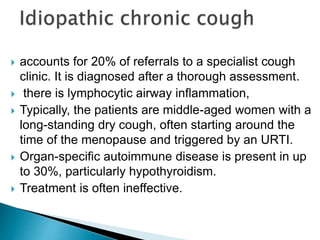
 accounts for 20% of referrals to a specialist cough
clinic. It is diagnosed after a thorough assessment.
 there is lymphocytic airway inflammation,
 Typically, the patients are middle-aged women with a
long-standing dry cough, often starting around the
time of the menopause and triggered by an URTI.
 Organ-specific autoimmune disease is present in up
to 30%, particularly hypothyroidism.
 Treatment is often ineffective.
 A diagnosis of exclusion
 Most common in adolescents with concomitant
emotional disorders
 No sputum production
 Usually does not occur at night or during enjoyable
distractions
 classically complain of a persistent tickling/irritating
feeling in the throat or chest, often leading to
coughing paroxysms.
.
• often triggered by temperature change, cigarette
smoke, strong smells, eating crumbly food, deep
breaths, laughing or talking on the phone
• Not affected by commonly used cough suppressants
• Persists for weeks to months
• Normal findings on physical examination and
investigations
Psychogenic Cough
Symptomatic treatment for
cough
 Honey and lemon
 Dextromethorphan—a non-sedating non-opiate.
 Menthol—short-lived cough suppressant
 Sedative antihistamines—suppress cough but cause
drowsiness. Good for nocturnal cough
 Codeine or pholcodine—opiate antitussives
 Opiates— Low-dose morphine sulfate 5–10mg
showed significant improvement in patients with
intractable cough
 Thalidomide—used in cough due to IPF, with RCT
showing significant improvements.
 Chronic
 Abdominal or pelvic hernias
 Fatigue fractures of lower ribs
 Costochondritis
 Urinary incontinence
55 yo school teacher
c/o cough for 3 years Non-smoker
 Cough: Often productive
 Better with abx, but comes back
 “no better” with asthma meds
 Worst in the morning
 Frequent clearing the throat, sensation of
dripping into throat
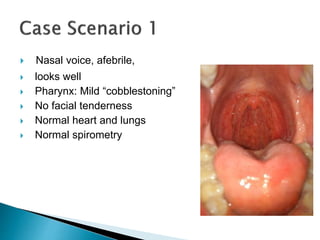
 Nasal voice, afebrile,
 looks well
 Pharynx: Mild “cobblestoning”
 No facial tenderness
 Normal heart and lungs
 Normal spirometry
 The Computer Programmer, 35 y.o woman
c/o Yearly cough lasted for > 8 weeks
– starts only after a “cold weather” at end of
the year
– severe coughing
– goes away by itself
– has happened last year
- nocturnal cough
• Tried “everything”
 Denies: wheezes, PND sx, allergies, heartburn,
aspiration
• No: pets, current meds
• Family hx: negative
• PMH: negative
• Physical exam and CXR normal
• Normal spirometry
Any other Ix?
Methacholine Challenge Testing
The Computer Programmer…
• Aggressive asthma regimen x 8 weeks
 Not feeling better
 Now what??
 Classify cough into acute, subacute, and chronic
 Focused history to shortlist potential ddx
 Rule out red flags before commencing treatment for acute
cough
 CXR is an essential test in chronic cough
 Ensure treatment adherence and completion of therapy to
prevent relapses or complications
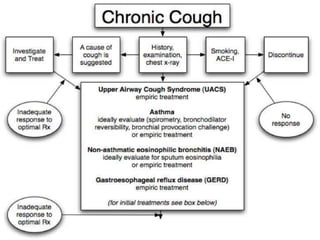
In patients with chronic cough and a normal CXR
finding who are nonsmokers and are not receiving
therapy with an ACE inhibitor,
the diagnostic approach should focus on the
detection and treatment of UACS (formerly
called PNDS), asthma, NAEB, or GERD, alone or in
combination.
This approach is most likely to result in a high rate
of success in achieving cough resolution.
ACCP Evidence-Based Clinical Practice Guidelines
Evaluation of cough
Evaluation of cough

Evaluation of cough

  • 2.
    PRESENTED BY DR.MD.SHARIF AHSAN MDRESIDENT(PULMONOLOGY) PHASE-B DHAKA MEDICAL COLLEGE HOSPITAL
  • 4.
     One ofthe most common symptoms for which patients seek medical attention  Defensive reflex that enhance the clearance of secretions and particles from the airway  Protects the lower airways from the aspiration of foreign materials
  • 5.
     Coughing maybe initiated either voluntarily or reflexively.  It has both afferent and efferent pathways .  The cough starts with a deep inspiration followed by glottic closure, relaxation of the diaphragm, and muscle contraction against a closed glottis.
  • 6.
    ◼ Increasing intensitythat lasts for a week or more ◼ Hyperthermia >38°C for 3 days or more ◼ Dyspnea and chest pain on breathing ◼ Hemoptysis ◼ Weakness, and weight loss ◼ Excessive sweating, shivering ◼ Sudden attack of severe cough ◼ Severe cough during an hour without any interval ◼ Excessive expectoration of sputum
  • 7.
     Massive sputumproduction: bronchiectasis  Systemic symptoms – fever, sweats, weight loss: TB, lymphoma, bronchial carcinoma  Hemoptysis: TB, bronchial carcinoma, PE  Significant dyspnea: CHF, COPD, restrictive lung diseases
  • 8.
    Acute cough ~ maximum of 3weeks Subacute cough ~ 3 to 8 weeks Chronic Cough ~ more than 8 weeks De Blasio et al. Cough 2011, 7:7
  • 9.
    Acute cough • Upper Respiratory Infection (common cold,acute bacterial sinusitis, and pertussis) • Pneumonia • Pulmonary embolus • Congestive cardiac failure Subacute cough ~ 3 to 8 weeks • Post- infectious • Postnasal drip following viral infection, • Pertussis • Tuberculosis • Mycoplasma or Chlamydia infection Chronic Cough ~ more than 8 weeks • Asthma • COPD • Tuberculosis • Bronchogenic carcinoma • Eosinophilic Bronchitis • Esophageal Disease, • Post Nasal Drip • ACEI • Smoking.
  • 10.
     Infection: viralupper and lower respiratory tract infection, bacterial pneumonia, tuberculosis (TB), pertussis  Chronic bronchitis  Obstructive airways disease: COPD, asthma  Cough variant asthma  Eosinophilic bronchitis  Obstructive sleep apnoea (OSA) (nocturnal only)  Lung cancer  Bronchiectasis, cystic fibrosis (CF)  ILD  Airway irritants: smoking, dusts and fumes, acute smoke inhalation  Airway foreign body.
  • 11.
     External compressionof trachea by enlarged lymph nodes (e.g. lymphoma, TB)  Mediastinal tumours/cysts/masses
  • 12.
    • LVF • Leftatrial enlargement (e.g. severe mitral stenosis).
  • 13.
    • Upper airwaycough syndrome, including: • Acute or chronic sinusitis • Post-nasal drip due to perennial, allergic, or vasomotor rhinitis.
  • 14.
     GORD  Oesophagealdysmotility, stricture, or pharyngeal pouch causing repeated aspiration  Oesophago-bronchial fistula.
  • 15.
     Neurological diseaseaffecting swallowing, causing repeated aspiration, such as Stroke Multiple sclerosis, Motor neurone disease (MND), Parkinson’s diseas
  • 16.
     • ACEinhibitors  • Some inhaled preparations can cause cough— particularly ipratropium.
  • 17.
     Idiopathic  Earwax (vagal nerve stimulation)  Psychogenic/habitual.
  • 18.
  • 19.
    History Reasons Onset Todetermine acute/subacute or chronic causes of cough Aggravating factor, relieving factor • Cough due to GERD affected by postural changes, post meal • Cold induced or MDI relieved cough in asthma or COPD Sputum colour Normal sputum: clear to white colour, thin, odourless n tasteless Yellow-green: bacterial infection Rust-colored: pneumonia Sputum character Mucoid or mucopurulent: cigarette smokers as a result of chronic bronchitis Commonly purulent in bronchiestasis Sputum amount Significant volumes: more than 1 cup per day
  • 20.
    History Reasons Fever Ongoinginfection SOB Respiratory distress Noisy breathing Wheezing suggest asthma/COPD Loss of appetite, loss of weight, hemoptysis Suggesting Tuberculosis, malignancy Allergy, nasal obstruction or congestion, rhinorrhoea, sneezing, facial pain, post- nasal drip or repetitive throat clearance Suggesting Rhinosinusitis Dyspepsia, heartburn, waterbrash GERD Medication used ACE-inhibitor Occupation Exposure to asbestos, chemical or cigarette smoke Family history Asthma, tuberculosis, lung cancer, cystic fibrosis Social history Contact with PTB suggesting PTB
  • 21.
  • 22.
    Physical examination Reasons Generalcondition such as altered conscious level, accessory muscles usage, cyanosis, grunting, nasal flaring, clubbing, nicotine stain To assess severity and to look for respiratory distress Vital signs Fever – infection Tachycardia, tachypnoea – respiratory distress Pulsus paradoxus – asthma Nasal polyps Allergy rhinitis Pharynx: erythema, a cobblestone appearance of posterior pharyngeal mucosa or mucoid secretions dripping from the nasopharynx Post nasal drip Chest: Hyperinflated Recession Silent chest Crepitations, wheezing Suggest air trapping due to chronic disease Respiratory distress Severe asthma Pneumonia, asthma, heart failure
  • 23.
    Physical examination Reasons CVS:Displaced apex beat, raised JVP, loud P2, RV heave Cor pumonale Eczema, transverse nasal crease, injected conjunctiva Signs of atopic disease Lymphadenopathy To suggest infection • Abnormal physical signs are rare in a chronic dry cough • Wheeze may be audible on examination but is usually absent in cough variant asthma (CVA)
  • 24.
     • EnsureCXR is normal  • Spirometry may indicate restrictive or obstructive defect. Performance of spirometry may provoke cough and bronchospasm  • Methacholine challenge test provides the best positive predictive value for cough due to asthma. Lack of response means cough variant asthma is extremely unlikely. PC20 is normal in eosinophilic bronchitis  • Serial peak flow recordings twice daily for 2 weeks. >20% diurnal variation suggests asthma. Can be normal in cough variant asthma  • Induced sputum examination, if available, for eosinophil count, to suggest either asthma or eosinophilic bronchitis.  .
  • 25.
     • Considerchest HRCT if any features suggestive of lung cancer or interstitial lung disease (ILD), as a small proportion may present with a normal CXR (central tumour)  • Consider ENT examination if predominantly upper respiratory tract disease, resistant to treatment. Consider sinus CT  • Consider bronchoscopy if foreign body possible, or history suggestive of malignancy, small carcinoid, endobronchial disease. Perform after CT to help guide bronchoscopist  • Consider 24h ambulatory oesophageal pH monitoring  • Consider oesophageal manometry for oesophageal dysmotility
  • 26.
    In non-smoking adultswith a normal CXR who are not taking ACE inhibitors, chronic cough is almost always due to which of the following 4 conditions? a) Upper Airway Cough Syndrome (UACS) b) Asthma c) Gastroesophageal reflux disease (GERD) d) Chronic Bronchitis
  • 28.
    Smyrnios et alArch Intern Med 1998 158:1222 3
  • 31.
    • A systematic,diagnostic approach has been validated in immunocompetent patients- 5 steps plan: Step 1: Review history and exam focusing on the most common causes of chronic cough
  • 32.
     Step 2:Order a CXR in all patients  Step 3: Do not order additional tests in present smokers or patients taking ACE inhibitors until the response to smoking cessation or drug discontinuation for at least 4 weeks can be assessed. - Cough due to smoking or ACE inhibitors should improve substantially or disappear during this time- frame of abstinence. Step 4: Order additional diagnostic tests or embark on empiric treatment
  • 33.
     Spirometry: -demonstrate significantairway reversibility (asthma) -unavailable or normal and history suggestive: serial measurement of PEF (diurnal variability)  Bronchoprovocation test : - negative: rules out asthma but does not rules out steroid- responsive cough  Plain sinus radiography: low specificity but improves with history and findings  Sputum eosinophilia
  • 34.
  • 37.
    Step 5: Determinethe cause(s) of cough by observing which specific therapy eliminates cough • If the evaluation suggests more than one possible cause, initiate treatment in the same sequence that the abnormalities were discovered • Since cough can be simultaneously caused by more than one condition, do NOT stop therapy that appears to be partially successful; rather, sequentially add to it.
  • 38.
     Also called“Post-nasal drip syndrome” (PNDS)  Common cause of chronic cough in all age groups – Second most common cause in children – Most common cause in adults and the elderly  In addition to cough, UACS can also cause - Wheeze - Dyspnea
  • 40.
    . Rhinitis  Defined assneezing, nasal discharge, or blockage for >1h on most days for either a limited part of the year (seasonal) or all year (perennial).  Rhinitis may be allergic (e.g. hay fever), non-allergic, vasomotor or infective.  The associated nasal inflammation may irritate cough receptors directly or produce a post-nasal drip
  • 41.
     Infection ofthe paranasal sinuses, which may complicate an URTI and is frequently caused by Haemophilus (H.) influenzae or Streptococcus (S.) pneumoniae.  It causes frontal headache and facial pain.  Chronic sinusitis may require further investigation with CXR or CT, which shows mucosal thickening and air- fluid levels.  Surgery may be indicated Sinusitis
  • 42.
     Rhinosinusitis describesinflammation and infection within the nasal passages and paranasal sinuses, with  chronic rhinosinusitis defined as symptoms persisting for more than 12 weeks
  • 43.
     Clues toUACS – History of • Need to frequently clear their throat • Friend/relative notices that the patient frequently clears their throat • Sensation of dripping into throat • Nasal symptoms – Physical Exam demonstrating • Secretions in nose or oropharynx • Cobblestone appearance of mucosa
  • 44.
     Diagnosis ofUACS as a cause of cough is established when: a) frequent throat clearing is elicited from the history b) cobblestoning and phlegm are present on physical examination of the posterior pharynx c) cough responds favourably to specific therapy aimed at eliminating the drip
  • 45.
    Nasal preparations shouldbe taken by kneeling with the top of the head on the floor (‘Mecca’ position) or lying supine with the head tipped over the end of the bed. Improvements in cough should be found within 2 weeks. TREATMENT:UACS
  • 47.
    • Non-allergic rhinitis : Initial 3 weeks of nasal decongestants with first- generation antihistamines (which have helpful anticholinergic properties) and pseudoephedrine. Alternatives are nasal ipratropium bromide or xylometazoline.  Followed by 3 months of high-dose nasal steroids, which are ineffective when used as first-line treatment.  Second-generation antihistamines (i.e. non-sedating) are of no use in non-allergic rhinitis TREATMENT:UACS
  • 48.
    • Allergic rhinitis:Second-generation oral antihistamine (e.g. cetirizine, loratadine, fexofenadine) and high-dose nasal steroids for 3 months at least • Vasomotor rhinitis:Nasal ipratropium bromide for 3 months; nasal steroids may also have a role TREATMENT:UACS
  • 49.
    • Chronic rhinosinusitis: Nasalsteroids and saline lavage, which should have an effect by 4 weeks, and, if so, treatment should continue, although optimal duration unclear. . TREATMENT:UACS • Chronic sinusitis: Treat as for non-allergic rhinitis, but include 2 weeks of antibiotics active against H. influenzae such as doxycycline or co-amoxiclav
  • 50.
     Second mostcommon cause of cough in adults • Clues that chronic cough is due to asthma: – Episodic wheezing, dyspnea , cold or exercise induced – Reversible airflow obstruction – Bronchial hyperresponsiveness • Confirmed by resolution of cough with asthma treatment
  • 51.
    • 30-60% ofpatients presenting with chronic cough that was due to asthma had cough as their ONLY symptom  Clues: - nocturnal cough, exercise induced, after allergen exposure  Bronchoprovocation test: positive  Negative test exclude asthma but does not rule out steroid responsive cough
  • 52.
    Treatment • Inhaled corticosteroid •ICS/LABA combination > 8 weeks  Leukotrine receptor antagonist -Confirmed by resolution of cough with asthma treatment
  • 53.
     Eosinophilic airwayinflammation WITHOUT variable airflow obstruction or airway hyperresponsiveness • Diagnostic tests: - Spirometry: normal - Methacholine challenge: normal - Sputum or BAL eosinophilia: >3% eosinophils • Diagnostic/Therapeutic trial: inhaled corticosteroid for ≥ 4 weeks • Characteristically resistant to bronchodilator but reponds ICS • Confirmed diagnosis if responded to ICS
  • 54.
     Suspect GERDwhen… – Symptoms of heartburn or sour taste in mouth – Reflux demonstrated by • 24-hour pH-impedance monitoring • Barium x-ray • Cough is the only symptom of GERD in 40-75% of patients with chronic cough due to GERD
  • 55.
     Cough dueto GERD occurs most commonly while patients are awake, stooping posture, meal related, and usually does not occur during the night • Diagnosis of GERD as cause of chronic cough requires resolution of cough with GERD treatment
  • 56.
    Life-style changes  Stopsmoking  Avoid alcohol  Lose weight  Elevate HOB  Small meals  Avoid fatty/acidic foods /low fat diet  Avoid caffeine  Avoid – tight clothes, eating < 4 hrs pre-bed, recumbency 3 hrs post meal
  • 57.
    Conservative measures : •Antacid therapy ≥ 2 months : – Proton pump inhibitor (high dose) – H2 blockers less effective • Motility therapy: – Metoclopromide Surgery is last resort
  • 60.
    • Occurs in10–15% of people on ACE inhibitors; more frequent in women. • Can occur within weeks of starting the drug, but up to 6 months; • the cough may be initiated by a respiratory tract infection but persists thereafter. • Cough usually settles within a week of stopping the drug but may take months.
  • 61.
     accounts for20% of referrals to a specialist cough clinic. It is diagnosed after a thorough assessment.  there is lymphocytic airway inflammation,  Typically, the patients are middle-aged women with a long-standing dry cough, often starting around the time of the menopause and triggered by an URTI.  Organ-specific autoimmune disease is present in up to 30%, particularly hypothyroidism.  Treatment is often ineffective.
  • 62.
     A diagnosisof exclusion  Most common in adolescents with concomitant emotional disorders  No sputum production  Usually does not occur at night or during enjoyable distractions  classically complain of a persistent tickling/irritating feeling in the throat or chest, often leading to coughing paroxysms.
  • 63.
    . • often triggeredby temperature change, cigarette smoke, strong smells, eating crumbly food, deep breaths, laughing or talking on the phone • Not affected by commonly used cough suppressants • Persists for weeks to months • Normal findings on physical examination and investigations Psychogenic Cough
  • 64.
  • 65.
     Honey andlemon  Dextromethorphan—a non-sedating non-opiate.  Menthol—short-lived cough suppressant  Sedative antihistamines—suppress cough but cause drowsiness. Good for nocturnal cough  Codeine or pholcodine—opiate antitussives  Opiates— Low-dose morphine sulfate 5–10mg showed significant improvement in patients with intractable cough  Thalidomide—used in cough due to IPF, with RCT showing significant improvements.
  • 66.
     Chronic  Abdominalor pelvic hernias  Fatigue fractures of lower ribs  Costochondritis  Urinary incontinence
  • 67.
    55 yo schoolteacher c/o cough for 3 years Non-smoker  Cough: Often productive  Better with abx, but comes back  “no better” with asthma meds  Worst in the morning  Frequent clearing the throat, sensation of dripping into throat
  • 68.
     Nasal voice,afebrile,  looks well  Pharynx: Mild “cobblestoning”  No facial tenderness  Normal heart and lungs  Normal spirometry
  • 69.
     The ComputerProgrammer, 35 y.o woman c/o Yearly cough lasted for > 8 weeks – starts only after a “cold weather” at end of the year – severe coughing – goes away by itself – has happened last year - nocturnal cough • Tried “everything”
  • 70.
     Denies: wheezes,PND sx, allergies, heartburn, aspiration • No: pets, current meds • Family hx: negative • PMH: negative • Physical exam and CXR normal • Normal spirometry Any other Ix? Methacholine Challenge Testing
  • 71.
    The Computer Programmer… •Aggressive asthma regimen x 8 weeks  Not feeling better  Now what??
  • 72.
     Classify coughinto acute, subacute, and chronic  Focused history to shortlist potential ddx  Rule out red flags before commencing treatment for acute cough  CXR is an essential test in chronic cough  Ensure treatment adherence and completion of therapy to prevent relapses or complications
  • 73.
    In patients withchronic cough and a normal CXR finding who are nonsmokers and are not receiving therapy with an ACE inhibitor, the diagnostic approach should focus on the detection and treatment of UACS (formerly called PNDS), asthma, NAEB, or GERD, alone or in combination. This approach is most likely to result in a high rate of success in achieving cough resolution. ACCP Evidence-Based Clinical Practice Guidelines

Editor's Notes

  • #9 Classification of cough based on symptom duration is somewhat arbitrary Acute cough (<3 weeks) Is most often due to upper respiratory infection (common cold, acute bacterial sinusitis, and pertussis), serious disorders, such as pneumonia, pulmonary embolus, and congestive heart failure, can also present in this fashion. Sub acute cough (between 3 and 8 weeks) Is commonly post-infectious, resulting from persistent airway inflammation and/or postnasal drip following viral infection, pertussis, or infection with Mycoplasma or Chlamydia. Chronic cough (>8 weeks) In a smoker raises the possibilities of asthma, COPD or bronchogenic carcinoma, Eosinophilic Bronchitis , Esophageal Disease, Post Nasal Drip , ACEI , Smoking.
  • #21 Reflux: usually caused by transient relaxation of low esophageal sphincter. Thus, relaxation cough may occur after meal, during meal, supine, bending or stooping position : diminish at sleep (LOS closed) but recur on adopting an upright position : talking, laughing may precipitate reflux cough (diaphragm important component of LOS) Dyspnoea, wheezing n chest tightness suggest asthma but can be absent in CVA -variability from day to day and nocturnal exacerbation suggestive Pharyngeal sm: rhinosinusitis : many of these sm also occur in reflux disease. GERD may be suggested by presence of classic sm – dyspepsia, heartburn, water brash ACE-I :< 15% patient on ACE-I develop dry cough soon after commencement : usially disappear after cessation of tx but resolution may takes several months, may persists in small minority.
  • #31 Fibreoptic bronchoscopy – biopsy High Resolution CT scan: lung parenchymal disease or bronchiectasis (not appreciated from hx and CXR)
  • #34 Cxr mandatory a early stage as is significant abnormality will alter the diagnostic algorithm and avoid unnecessary Ix. Spirometry : before and after inhaled bronchodilator Bronchoscopy: Suspected FB, CXR showing mass, pulmonary, lobar or segmental collapse, hemoptysis, recurrent pneumonia in the same area Fibreoptic bronchoscopy – biopsy High Resolution CT scan: lung parenchymal disease or bronchiectasis (not appreciated from hx and CXR)
  • #60 Fibreoptic bronchoscopy – biopsy High Resolution CT scan: lung parenchymal disease or bronchiectasis (not appreciated from hx and CXR)