Chronic cough
Self study materials for students
6th year, Internal Medicine, Pulmonologycircle
Topic 1. Management of patients with chronic cough syndrome
Definition
ProPowerPoint.Ru
Cough (Latin: tussis):
1) is a sudden and often repetitively occurring
reflex which helps to clear the large breathing
passages from secretions, irritants, foreign
particles and microbes;
2) is an expelling of air or solid matter from the
lungs abruptly and explosively through the
partially closed vocal chords.
Sponsored
Medical Lecture Notes – All Subjects
USMLE Exam (America) – Practice
Cough reflex
ProPowerPoint.Ru
• Cough reflex is the basis of cough as a
protective mechanism.
• Coughing may be initiated either voluntarily
or reflexively.
• It has both sensory (afferent) and motor
(efferent) components.
• Pulmonary irritant receptors (cough
receptors) in the epithelium of the
respiratory tract are sensitive to both
mechanical and chemical stimuli.
Physiology
ProPowerPoint.Ru
• Stimulation of the cough receptors by
foreign particles (dust, mucus, etc.)
produces a cough, which is necessary to
remove the foreign material from the
respiratory tract before it reaches the lungs.
• The anatomical structures that perform
afferent component of cough reflex are
cough center (in medulla), vagus nerve,
irritant receptors (in trachea and larynx).
Physiology
ProPowerPoint.Ru
• The efferent neural pathway brings
relevant signals back from the cerebral
cortex and medulla via the vagus and
superior laryngeal nerves to the glottis,
external intercostals, diaphragm, and other
major inspiratory and expiratory muscles.
Physiology
https://www.youtube.com
/watch?v=4Tcfp5Kf2WE
ProPowerPoint.Ru
Cough mechanism
ProPowerPoint.Ru
• Diaphragm and external intercostal
muscles contract, creating a negative
pressure around the lung.
• Air rushes into the lungs in order to
equalise the pressure.
• The glottis closes and the vocal cords
contract to shut the larynx.
Cough mechanism
ProPowerPoint.Ru
• The abdominal muscles contract to
accentuate the action of the relaxing
diaphragm (to increase the pressure of air
within the lungs).
• The vocal cords relax and the glottis opens,
releasing air at over 100 mph.
• The bronchi and non-cartilaginous portions
of the trachea collapse to form slits through
which the air is forced, which clears out any
irritants attached to the respiratory lining.
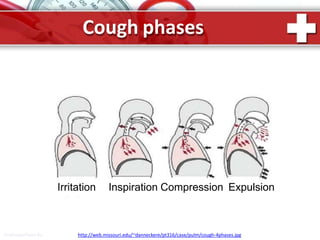
Cough phases
Irritation
ProPowerPoint.Ru http://web.missouri.edu/~danneckere/pt316/case/pulm/cough-4phases.jpg
Inspiration Compression Expulsion
Summary
ProPowerPoint.Ru
The cough starts with a deep inspiration
followed by glottic closure, relaxation of the
diaphragm, and muscle contraction against a
closed glottis.
It is the most frequent symptom of respiratory
disease.
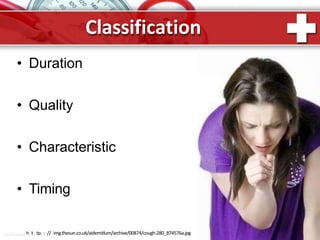
Classification
• Duration
• Quality
• Characteristic
• Timing
ProPowerPhotintpt.:R//uimg.thesun.co.uk/aidemitlum/archive/00874/cough-280_874576a.jpg
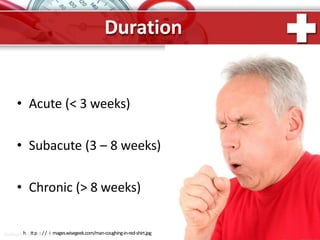
Duration
• Acute (< 3 weeks)
• Subacute (3 – 8 weeks)
• Chronic (> 8 weeks)
ProPowerhPottipn:t/./Riumages.wisegeek.com/man-coughing-in-red-shirt.jpg
Quality
• Dry
(non-productive)
• Wet
(productive)
•Laryngitis
•Dry pleurisy
•Smoking cough
•Debut of diseases
•Acute viral diseases
•Bronchitis
•Pneumonia
•Tuberculosis
•Bronchiectatic disease
ProPowerPoint.Ru
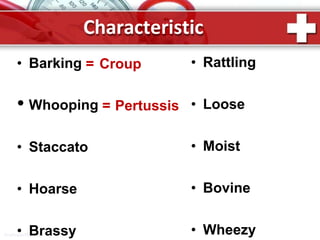
Characteristic
ProPowerPoint.Ru
• Rattling
• Loose
• Moist
• Bovine
• Wheezy
• Barking = Croup
• Whooping = Pertussis
• Staccato
• Hoarse
• Brassy
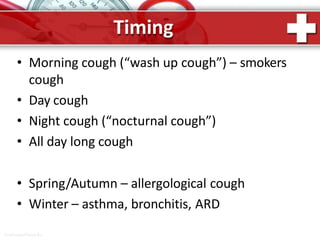
Timing
ProPowerPoint.Ru
• Morning cough (“wash up cough”) – smokers
cough
• Day cough
• Night cough (“nocturnal cough”)
• All day long cough
• Spring/Autumn – allergological cough
• Winter – asthma, bronchitis, ARD
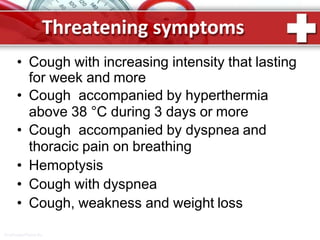
Threatening symptoms
ProPowerPoint.Ru
• Cough with increasing intensity that lasting
for week and more
• Cough accompanied by hyperthermia
above 38 °C during 3 days or more
• Cough accompanied by dyspnea and
thoracic pain on breathing
• Hemoptysis
• Cough with dyspnea
• Cough, weakness and weight loss
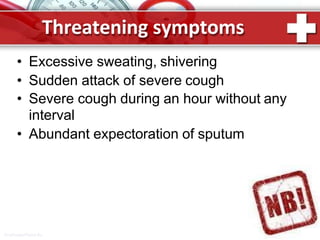
Threatening symptoms
• Excessive sweating, shivering
• Sudden attack of severe cough
• Severe cough during an hour without any
interval
• Abundant expectoration of sputum
ProPowerPoint.Ru
Chronic cough
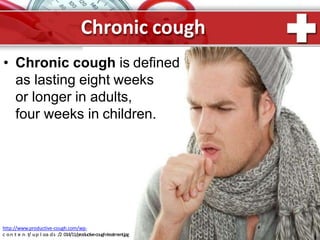
• Chronic cough is defined
as lasting eight weeks
or longer in adults,
four weeks in children.
cPornotPeonwt/eurpPlooiandts.R/2u014/11/productive-cough-treatment.jpg
http://www.productive-cough.com/wp-
Epidemiology
ProPowerPoint.Ru
• A cough is the most common reason for visiting
a primary care physician in the United States.
• Chronic cough is estimated to occur in up to
40% of the population.
• Risk factors include atopy and smoking. Cough
may be work-related and a thorough
occupation history is very important in
assessment.
Etiology
ProPowerPoint.Ru
• An exogenous source
(smoke, dust, fumes, foreign bodies,
patogens)
• An endogenous origin
(upper airway secretions, gastric contents,
patogens)
These factors result in inflammation,
constriction, infiltration, or compression
of airways and are associated with cough.
ProPowerPoint.Ru
Common causes
ProPowerPoint.Ru
• Postnasal drip (38-87%)
• Asthma (14-43%)
• GERD (10-40%)
• COPD (0-12%)
• More than one cause (24-72%)
Post-nasal drip
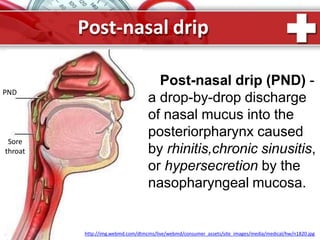
Post-nasal drip (PND) -
a drop-by-drop discharge
of nasal mucus into the
posteriorpharynx caused
by rhinitis,chronic sinusitis,
or hypersecretion by the
nasopharyngeal mucosa.
http://img.webmd.com/dtmcms/live/webmd/consumer_assets/site_images/media/medical/hw/n1820.jpgP
PND
Sore
throat
Post-nasal drip
ProPowerPoint.Ru
• Caused by allergic and infection
otolaryngologic diseases
• Often accompanied by a feeling of obstruction,
an unpleasant taste, and fetid breath
• Treatment include the application of drops
or sprays of phenylephrine or epHEDrine
sulfate to constrict blood vessels and reduce
hyperemia, sinusirrigation to improve drainage
and use of appropriate antibiotics
Post-nasal drip
• Therapy for allergies may be indicated in
some cases, and surgery maybe required
if the nasal passages are obstructed by
polyps or a deviated septum.
http://i.doctorpiter.ru/photos/2012/11/350x650_Xf78ljyq4BLt89YSeqK2.jpg
ProPowerPoint.Ru
Asthma
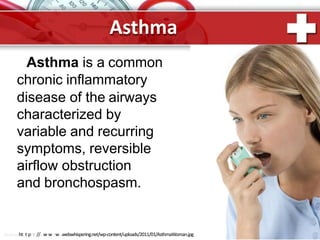
Asthma is a common
chronic inflammatory
disease of the airways
characterized by
variable and recurring
symptoms, reversible
airflow obstruction
and bronchospasm.
ProPowhtetrpP:o//inwtw.Rwu.webwhispering.net/wp-content/uploads/2011/01/AsthmaWoman.jpg
Asthma
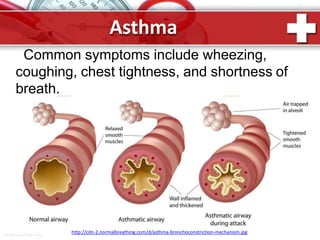
Common symptoms include wheezing,
coughing, chest tightness, and shortness of
breath.
http://cdn-2.normalbreathing.com/d/asthma-bronchoconstriction-mechanism.jpg
ProPowerPoint.Ru
GERD
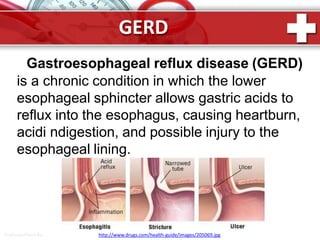
Gastroesophageal reflux disease (GERD)
is a chronic condition in which the lower
esophageal sphincter allows gastric acids to
reflux into the esophagus, causing heartburn,
acidi ndigestion, and possible injury to the
esophageal lining.
ProPowerPoint.Ru http://www.drugs.com/health-guide/images/205069.jpg
GERD
ProPowerPoint.Ru
There are two main mechanisms of cough
in GERD:
• Micro or macro-aspiration of esophageal
contents into the tracheo-bronchial tree.
• Acid in the distal esophagus stimulating
a vagally mediated esophageal-
tracheobronchial cough reflex.
COPD
• Chronic obstructive pulmonary disease
(COPD) is the set of progressive lung
diseases that characterized by irreversible
airway obstruction.
http://pngimg.com/upload/cigarette_PNG4763.pngProPowerPoint.Ru
COPD
ProPowerPoint.Ru
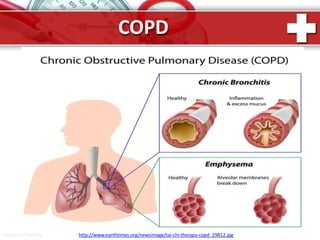
COPD includes:
• Chronic Bronchitis is characterized by
–Chronic inflammation and excess mucus
production
–Presence of chronic productive cough
• Emphysema is characterized by
–Damage to the small, sac-like units of the
lung that deliver oxygen into the lung and
remove the carbon dioxide
–Chronic cough
COPD
ProPowerPoint.Ru http://www.earthtimes.org/newsimage/tai-chi-therapy-copd_29812.jpg
COPD
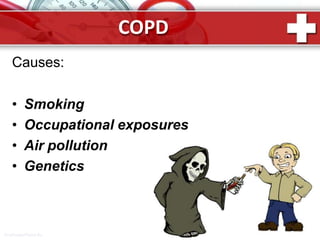
Causes:
• Smoking
• Occupational exposures
• Air pollution
• Genetics
ProPowerPoint.Ru
Less common causes
ProPowerPoint.Ru
• Bronchiectasis
• Use of ACE inhibitors
• Post-infectious
• Lung Cancer
• Occult congestive heart failure
• Interstitial Pulmonary Fibrosis
• Occult infection
• Foreign body
Less common causes
ProPowerPoint.Ru
• Problems with:
– Auditory canal
– Larynx
– Diaphragm
– Pleura
– Pericardium
– Esophagus
• Psychogenic (habitual cough)
Bronchiectasis
ProPowerPoint.Ru
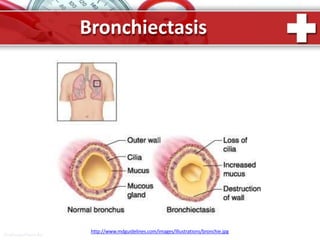
Bronchiectasis is a disease in which there
is permanent enlargement (widening,
dilatation) of parts of the airways of the lung.
Symptoms typically include a chronic cough
with sputum production.
Bronchiectasis
http://www.mdguidelines.com/images/Illustrations/bronchie.jpg
ProPowerPoint.Ru
Use of ACE inhibitors
• Angiotensin-converting-enzyme
inhibitors (ACE inhibitors) are a group
of medicaments used primarily for the
treatment of arterial hypertension
and congestive heart failure.
• Frequently prescribed ACE
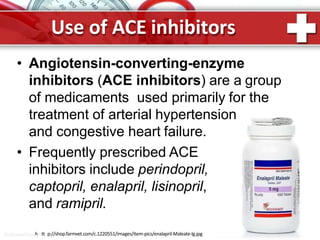
inhibitors include perindopril,
captopril, enalapril, lisinopril,
and ramipril.
ProPowerPointh.Rttup://shop.farmvet.com/c.1220551/images/item-pics/enalapril-Maleate-lg.jpg
Use of ACE inhibitors
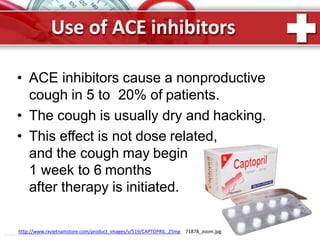
• ACE inhibitors cause a nonproductive
cough in 5 to 20% of patients.
• The cough is usually dry and hacking.
• This effect is not dose related,
and the cough may begin
1 week to 6 months
after therapy is initiated.
ProPowerPoint.Ru
http://www.rxvietnamstore.com/product_images/v/519/CAPTOPRIL_25mg 71878_zoom.jpg
Use of ACE inhibitors
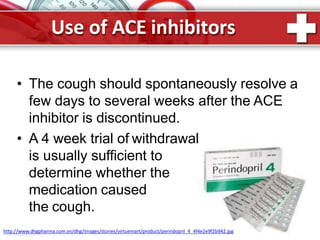
• The cough should spontaneously resolve a
few days to several weeks after the ACE
inhibitor is discontinued.
• A 4 week trial of withdrawal
is usually sufficient to
determine whether the
medication caused
the cough.
ProPowerPoint.Ru
http://www.dhgpharma.com.vn/dhg/images/stories/virtuemart/product/perindopril_4_4f4e2e9f2b942.jpg
Psychogenic cough
ProPowerPoint.Ru
• Psychogenic cough ("habit cough" or "tic
cough") is a persistent cough due to a tic
or to psychological causes.
• May be the cause in the absence of a physical
problem.
• Common in children, women, hypochondriacs.
• Characterized by a small, harsh tinny type
sound, and becomes persistent for weeks to
months.
Psychogenic cough
ProPowerPoint.Ru
• Can reach severe frequency, even a cough
every 2–3 seconds.
• These patients do not cough during sleep,
are not awakened by cough, and generally
do not cough during enjoyable distractions.
• Any other pathologic cough will not totally
stop at night.
• A habitual cough is a diagnosis of exclusion.
Psychogenic cough
Creating
hypochondriacs
since 1998!
http://i.dailymail.co.uk/i/pix/2013/10/02/article-0-
1870C3F100000578-315_634x635.jpg
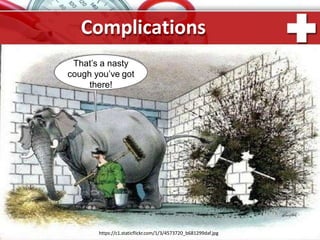
Complications
ProPowerPoint.Ru
Acute:
• Cough syncope
• Insomnia
• Womiting
• Pneumothorax, pneumomediastinum,
subcutaneous emphysema
• Subconjunctival hemorrhage (red eye)
• Coughing defecation and urination
Complications
ProPowerPoint.Ru
Chronic:
• Abdominal or pelvic hernias
• Fatigue fractures of lower ribs
• Costochondritis
Complications
That’s a nasty
cough you’ve got
there!
https://c1.staticflickr.com/1/3/4573720_b681299daf.jpg
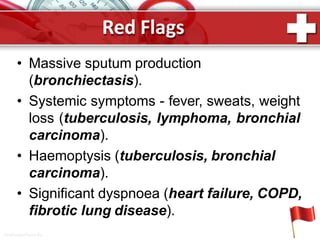
Red Flags
• Massive sputum production
(bronchiectasis).
• Systemic symptoms - fever, sweats, weight
loss (tuberculosis, lymphoma, bronchial
carcinoma).
• Haemoptysis (tuberculosis, bronchial
carcinoma).
• Significant dyspnoea (heart failure, COPD,
fibrotic lung disease).
ProPowerPoint.Ru
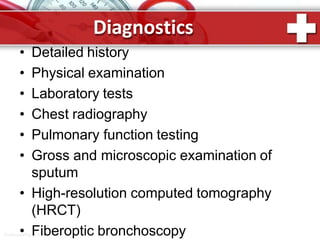
Diagnostics
ProPowerPoint.Ru
• Detailed history
• Physical examination
• Laboratory tests
• Chest radiography
• Pulmonary function testing
• Gross and microscopic examination of
sputum
• High-resolution computed tomography
(HRCT)
• Fiberoptic bronchoscopy
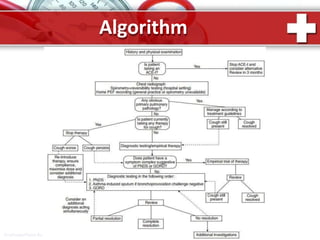
Algorithm
ProPowerPoint.Ru
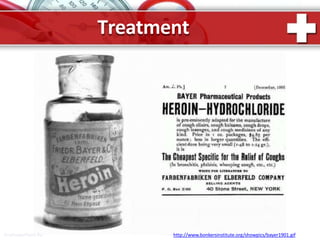
Treatment
ProPowerPoint.Ru http://www.bonkersinstitute.org/showpics/bayer1901.gif
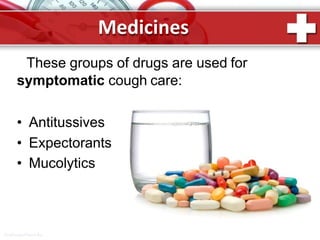
Medicines
These groups of drugs are used for
symptomatic cough care:
• Antitussives
• Expectorants
• Mucolytics
ProPowerPoint.Ru
ProPowerPoint.Ru
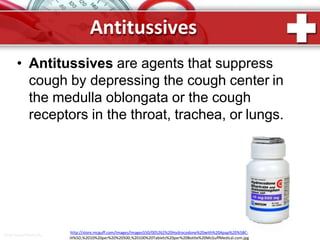
Antitussives
• Antitussives are agents that suppress
cough by depressing the cough center in
the medulla oblongata or the cough
receptors in the throat, trachea, or lungs.
http://store.mcguff.com/Images/Images550/005262%20Hydrocodone%20with%20Apap%20%5BC-
III%5D,%2010%20per%20%20500,%20100%20Tablets%20per%20Bottle%20McGuffMedical.com.jpg
Antitussives
ProPowerPoint.Ru
There are 3 groups of antitussives:
1. Centrally acting antitussives:
• narcotics (Codeine, Hydrocodone)
• non-narcotics (Dextromethorphan, Sinecod)
2.Locally acting agents (throat lozenges, cough
drops, syrups) may suppress cough by increasing
the flow of saliva and by containing demulcents or
local anesthetics to decrease irritation of
pharyngeal mucosa (Libexin, Linkus).
3. Combined (Tussin DM = Dextromethorphan +
Guaifenesin)
Antitussives
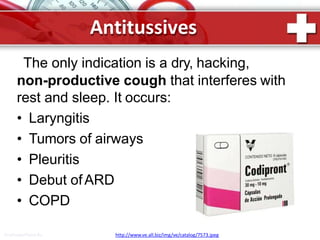
The only indication is a dry, hacking,
non-productive cough that interferes with
rest and sleep. It occurs:
• Laryngitis
• Tumors of airways
• Pleuritis
• Debut ofARD
• COPD
ProPowerPoint.Ru http://www.ve.all.biz/img/ve/catalog/7573.jpeg
Antitussives. Precautions.
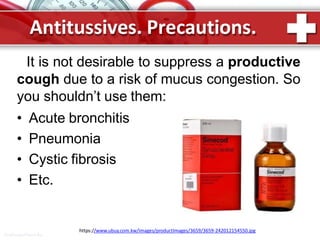
It is not desirable to suppress a productive
cough due to a risk of mucus congestion. So
you shouldn’t use them:
• Acute bronchitis
• Pneumonia
• Cystic fibrosis
• Etc.
https://www.ubuy.com.kw/images/productImages/3659/3659-242012154550.jpg
ProPowerPoint.Ru
Expectorants
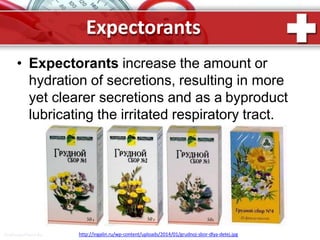
• Expectorants increase the amount or
hydration of secretions, resulting in more
yet clearer secretions and as a byproduct
lubricating the irritated respiratory tract.
http://ingalin.ru/wp-content/uploads/2014/01/grudnoj-sbor-dlya-detej.jpgProPowerPoint.Ru
Expectorants
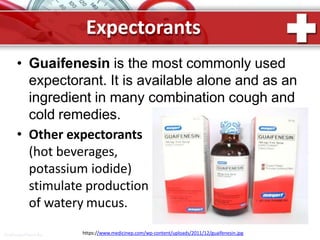
• Guaifenesin is the most commonly used
expectorant. It is available alone and as an
ingredient in many combination cough and
cold remedies.
• Other expectorants
(hot beverages,
potassium iodide)
stimulate production
of watery mucus.
https://www.medicinep.com/wp-content/uploads/2011/12/guaifenesin.jpgProPowerPoint.Ru
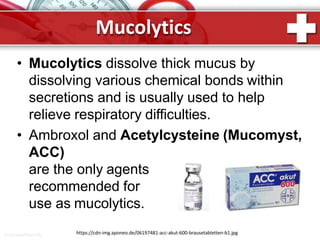
Mucolytics
• Mucolytics dissolve thick mucus by
dissolving various chemical bonds within
secretions and is usually used to help
relieve respiratory difficulties.
• Ambroxol and Acetylcysteine (Mucomyst,
ACC)
are the only agents
recommended for
use as mucolytics.
https://cdn-img.aponeo.de/06197481-acc-akut-600-brausetabletten-b1.jpgProPowerPoint.Ru
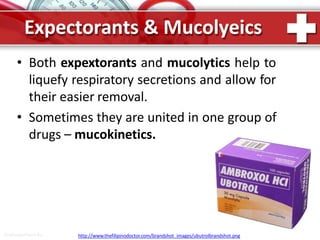
Expectorants & Mucolyeics
• Both expextorants and mucolytics help to
liquefy respiratory secretions and allow for
their easier removal.
• Sometimes they are united in one group of
drugs – mucokinetics.
ProPowerPoint.Ru http://www.thefilipinodoctor.com/brandshot_images/ubutrolbrandshot.png
Other drugs
ProPowerPoint.Ru http://cdn.someecards.com/someecards/usercards/1342056317524_5416634.png
Summary
• These drugs may relieve symptoms but do
not cure the disorder causing the
symptoms.
ProPowerPoint.Ru
Summary
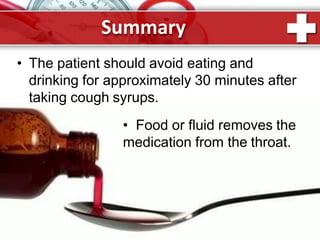
• The patient should avoid eating and
drinking for approximately 30 minutes after
taking cough syrups.
• Food or fluid removes the
medication from the throat.
ProPowerPoint.Ru
Summary
• Don’t try to cure the chronic cough.
Try to find and cure the reason of the
cough!!!
Thank you

Chronic Cough

  • 1.
    Chronic cough Self studymaterials for students 6th year, Internal Medicine, Pulmonologycircle Topic 1. Management of patients with chronic cough syndrome
  • 2.
    Definition ProPowerPoint.Ru Cough (Latin: tussis): 1)is a sudden and often repetitively occurring reflex which helps to clear the large breathing passages from secretions, irritants, foreign particles and microbes; 2) is an expelling of air or solid matter from the lungs abruptly and explosively through the partially closed vocal chords.
  • 3.
    Sponsored Medical Lecture Notes– All Subjects USMLE Exam (America) – Practice
  • 4.
    Cough reflex ProPowerPoint.Ru • Coughreflex is the basis of cough as a protective mechanism. • Coughing may be initiated either voluntarily or reflexively. • It has both sensory (afferent) and motor (efferent) components. • Pulmonary irritant receptors (cough receptors) in the epithelium of the respiratory tract are sensitive to both mechanical and chemical stimuli.
  • 5.
    Physiology ProPowerPoint.Ru • Stimulation ofthe cough receptors by foreign particles (dust, mucus, etc.) produces a cough, which is necessary to remove the foreign material from the respiratory tract before it reaches the lungs. • The anatomical structures that perform afferent component of cough reflex are cough center (in medulla), vagus nerve, irritant receptors (in trachea and larynx).
  • 6.
    Physiology ProPowerPoint.Ru • The efferentneural pathway brings relevant signals back from the cerebral cortex and medulla via the vagus and superior laryngeal nerves to the glottis, external intercostals, diaphragm, and other major inspiratory and expiratory muscles.
  • 7.
  • 8.
    Cough mechanism ProPowerPoint.Ru • Diaphragmand external intercostal muscles contract, creating a negative pressure around the lung. • Air rushes into the lungs in order to equalise the pressure. • The glottis closes and the vocal cords contract to shut the larynx.
  • 9.
    Cough mechanism ProPowerPoint.Ru • Theabdominal muscles contract to accentuate the action of the relaxing diaphragm (to increase the pressure of air within the lungs). • The vocal cords relax and the glottis opens, releasing air at over 100 mph. • The bronchi and non-cartilaginous portions of the trachea collapse to form slits through which the air is forced, which clears out any irritants attached to the respiratory lining.
  • 10.
  • 11.
    Summary ProPowerPoint.Ru The cough startswith a deep inspiration followed by glottic closure, relaxation of the diaphragm, and muscle contraction against a closed glottis. It is the most frequent symptom of respiratory disease.
  • 12.
    Classification • Duration • Quality •Characteristic • Timing ProPowerPhotintpt.:R//uimg.thesun.co.uk/aidemitlum/archive/00874/cough-280_874576a.jpg
  • 13.
    Duration • Acute (<3 weeks) • Subacute (3 – 8 weeks) • Chronic (> 8 weeks) ProPowerhPottipn:t/./Riumages.wisegeek.com/man-coughing-in-red-shirt.jpg
  • 14.
    Quality • Dry (non-productive) • Wet (productive) •Laryngitis •Drypleurisy •Smoking cough •Debut of diseases •Acute viral diseases •Bronchitis •Pneumonia •Tuberculosis •Bronchiectatic disease ProPowerPoint.Ru
  • 15.
    Characteristic ProPowerPoint.Ru • Rattling • Loose •Moist • Bovine • Wheezy • Barking = Croup • Whooping = Pertussis • Staccato • Hoarse • Brassy
  • 16.
    Timing ProPowerPoint.Ru • Morning cough(“wash up cough”) – smokers cough • Day cough • Night cough (“nocturnal cough”) • All day long cough • Spring/Autumn – allergological cough • Winter – asthma, bronchitis, ARD
  • 17.
    Threatening symptoms ProPowerPoint.Ru • Coughwith increasing intensity that lasting for week and more • Cough accompanied by hyperthermia above 38 °C during 3 days or more • Cough accompanied by dyspnea and thoracic pain on breathing • Hemoptysis • Cough with dyspnea • Cough, weakness and weight loss
  • 18.
    Threatening symptoms • Excessivesweating, shivering • Sudden attack of severe cough • Severe cough during an hour without any interval • Abundant expectoration of sputum ProPowerPoint.Ru
  • 19.
    Chronic cough • Chroniccough is defined as lasting eight weeks or longer in adults, four weeks in children. cPornotPeonwt/eurpPlooiandts.R/2u014/11/productive-cough-treatment.jpg http://www.productive-cough.com/wp-
  • 20.
    Epidemiology ProPowerPoint.Ru • A coughis the most common reason for visiting a primary care physician in the United States. • Chronic cough is estimated to occur in up to 40% of the population. • Risk factors include atopy and smoking. Cough may be work-related and a thorough occupation history is very important in assessment.
  • 21.
    Etiology ProPowerPoint.Ru • An exogenoussource (smoke, dust, fumes, foreign bodies, patogens) • An endogenous origin (upper airway secretions, gastric contents, patogens)
  • 22.
    These factors resultin inflammation, constriction, infiltration, or compression of airways and are associated with cough. ProPowerPoint.Ru
  • 23.
    Common causes ProPowerPoint.Ru • Postnasaldrip (38-87%) • Asthma (14-43%) • GERD (10-40%) • COPD (0-12%) • More than one cause (24-72%)
  • 24.
    Post-nasal drip Post-nasal drip(PND) - a drop-by-drop discharge of nasal mucus into the posteriorpharynx caused by rhinitis,chronic sinusitis, or hypersecretion by the nasopharyngeal mucosa. http://img.webmd.com/dtmcms/live/webmd/consumer_assets/site_images/media/medical/hw/n1820.jpgP PND Sore throat
  • 25.
    Post-nasal drip ProPowerPoint.Ru • Causedby allergic and infection otolaryngologic diseases • Often accompanied by a feeling of obstruction, an unpleasant taste, and fetid breath • Treatment include the application of drops or sprays of phenylephrine or epHEDrine sulfate to constrict blood vessels and reduce hyperemia, sinusirrigation to improve drainage and use of appropriate antibiotics
  • 26.
    Post-nasal drip • Therapyfor allergies may be indicated in some cases, and surgery maybe required if the nasal passages are obstructed by polyps or a deviated septum. http://i.doctorpiter.ru/photos/2012/11/350x650_Xf78ljyq4BLt89YSeqK2.jpg ProPowerPoint.Ru
  • 27.
    Asthma Asthma is acommon chronic inflammatory disease of the airways characterized by variable and recurring symptoms, reversible airflow obstruction and bronchospasm. ProPowhtetrpP:o//inwtw.Rwu.webwhispering.net/wp-content/uploads/2011/01/AsthmaWoman.jpg
  • 28.
    Asthma Common symptoms includewheezing, coughing, chest tightness, and shortness of breath. http://cdn-2.normalbreathing.com/d/asthma-bronchoconstriction-mechanism.jpg ProPowerPoint.Ru
  • 29.
    GERD Gastroesophageal reflux disease(GERD) is a chronic condition in which the lower esophageal sphincter allows gastric acids to reflux into the esophagus, causing heartburn, acidi ndigestion, and possible injury to the esophageal lining. ProPowerPoint.Ru http://www.drugs.com/health-guide/images/205069.jpg
  • 30.
    GERD ProPowerPoint.Ru There are twomain mechanisms of cough in GERD: • Micro or macro-aspiration of esophageal contents into the tracheo-bronchial tree. • Acid in the distal esophagus stimulating a vagally mediated esophageal- tracheobronchial cough reflex.
  • 31.
    COPD • Chronic obstructivepulmonary disease (COPD) is the set of progressive lung diseases that characterized by irreversible airway obstruction. http://pngimg.com/upload/cigarette_PNG4763.pngProPowerPoint.Ru
  • 32.
    COPD ProPowerPoint.Ru COPD includes: • ChronicBronchitis is characterized by –Chronic inflammation and excess mucus production –Presence of chronic productive cough • Emphysema is characterized by –Damage to the small, sac-like units of the lung that deliver oxygen into the lung and remove the carbon dioxide –Chronic cough
  • 33.
  • 34.
    COPD Causes: • Smoking • Occupationalexposures • Air pollution • Genetics ProPowerPoint.Ru
  • 35.
    Less common causes ProPowerPoint.Ru •Bronchiectasis • Use of ACE inhibitors • Post-infectious • Lung Cancer • Occult congestive heart failure • Interstitial Pulmonary Fibrosis • Occult infection • Foreign body
  • 36.
    Less common causes ProPowerPoint.Ru •Problems with: – Auditory canal – Larynx – Diaphragm – Pleura – Pericardium – Esophagus • Psychogenic (habitual cough)
  • 37.
    Bronchiectasis ProPowerPoint.Ru Bronchiectasis is adisease in which there is permanent enlargement (widening, dilatation) of parts of the airways of the lung. Symptoms typically include a chronic cough with sputum production.
  • 38.
  • 39.
    Use of ACEinhibitors • Angiotensin-converting-enzyme inhibitors (ACE inhibitors) are a group of medicaments used primarily for the treatment of arterial hypertension and congestive heart failure. • Frequently prescribed ACE inhibitors include perindopril, captopril, enalapril, lisinopril, and ramipril. ProPowerPointh.Rttup://shop.farmvet.com/c.1220551/images/item-pics/enalapril-Maleate-lg.jpg
  • 40.
    Use of ACEinhibitors • ACE inhibitors cause a nonproductive cough in 5 to 20% of patients. • The cough is usually dry and hacking. • This effect is not dose related, and the cough may begin 1 week to 6 months after therapy is initiated. ProPowerPoint.Ru http://www.rxvietnamstore.com/product_images/v/519/CAPTOPRIL_25mg 71878_zoom.jpg
  • 41.
    Use of ACEinhibitors • The cough should spontaneously resolve a few days to several weeks after the ACE inhibitor is discontinued. • A 4 week trial of withdrawal is usually sufficient to determine whether the medication caused the cough. ProPowerPoint.Ru http://www.dhgpharma.com.vn/dhg/images/stories/virtuemart/product/perindopril_4_4f4e2e9f2b942.jpg
  • 42.
    Psychogenic cough ProPowerPoint.Ru • Psychogeniccough ("habit cough" or "tic cough") is a persistent cough due to a tic or to psychological causes. • May be the cause in the absence of a physical problem. • Common in children, women, hypochondriacs. • Characterized by a small, harsh tinny type sound, and becomes persistent for weeks to months.
  • 43.
    Psychogenic cough ProPowerPoint.Ru • Canreach severe frequency, even a cough every 2–3 seconds. • These patients do not cough during sleep, are not awakened by cough, and generally do not cough during enjoyable distractions. • Any other pathologic cough will not totally stop at night. • A habitual cough is a diagnosis of exclusion.
  • 44.
  • 45.
    Complications ProPowerPoint.Ru Acute: • Cough syncope •Insomnia • Womiting • Pneumothorax, pneumomediastinum, subcutaneous emphysema • Subconjunctival hemorrhage (red eye) • Coughing defecation and urination
  • 46.
    Complications ProPowerPoint.Ru Chronic: • Abdominal orpelvic hernias • Fatigue fractures of lower ribs • Costochondritis
  • 47.
    Complications That’s a nasty coughyou’ve got there! https://c1.staticflickr.com/1/3/4573720_b681299daf.jpg
  • 48.
    Red Flags • Massivesputum production (bronchiectasis). • Systemic symptoms - fever, sweats, weight loss (tuberculosis, lymphoma, bronchial carcinoma). • Haemoptysis (tuberculosis, bronchial carcinoma). • Significant dyspnoea (heart failure, COPD, fibrotic lung disease). ProPowerPoint.Ru
  • 49.
    Diagnostics ProPowerPoint.Ru • Detailed history •Physical examination • Laboratory tests • Chest radiography • Pulmonary function testing • Gross and microscopic examination of sputum • High-resolution computed tomography (HRCT) • Fiberoptic bronchoscopy
  • 50.
  • 51.
  • 52.
    Medicines These groups ofdrugs are used for symptomatic cough care: • Antitussives • Expectorants • Mucolytics ProPowerPoint.Ru
  • 53.
    ProPowerPoint.Ru Antitussives • Antitussives areagents that suppress cough by depressing the cough center in the medulla oblongata or the cough receptors in the throat, trachea, or lungs. http://store.mcguff.com/Images/Images550/005262%20Hydrocodone%20with%20Apap%20%5BC- III%5D,%2010%20per%20%20500,%20100%20Tablets%20per%20Bottle%20McGuffMedical.com.jpg
  • 54.
    Antitussives ProPowerPoint.Ru There are 3groups of antitussives: 1. Centrally acting antitussives: • narcotics (Codeine, Hydrocodone) • non-narcotics (Dextromethorphan, Sinecod) 2.Locally acting agents (throat lozenges, cough drops, syrups) may suppress cough by increasing the flow of saliva and by containing demulcents or local anesthetics to decrease irritation of pharyngeal mucosa (Libexin, Linkus). 3. Combined (Tussin DM = Dextromethorphan + Guaifenesin)
  • 55.
    Antitussives The only indicationis a dry, hacking, non-productive cough that interferes with rest and sleep. It occurs: • Laryngitis • Tumors of airways • Pleuritis • Debut ofARD • COPD ProPowerPoint.Ru http://www.ve.all.biz/img/ve/catalog/7573.jpeg
  • 56.
    Antitussives. Precautions. It isnot desirable to suppress a productive cough due to a risk of mucus congestion. So you shouldn’t use them: • Acute bronchitis • Pneumonia • Cystic fibrosis • Etc. https://www.ubuy.com.kw/images/productImages/3659/3659-242012154550.jpg ProPowerPoint.Ru
  • 57.
    Expectorants • Expectorants increasethe amount or hydration of secretions, resulting in more yet clearer secretions and as a byproduct lubricating the irritated respiratory tract. http://ingalin.ru/wp-content/uploads/2014/01/grudnoj-sbor-dlya-detej.jpgProPowerPoint.Ru
  • 58.
    Expectorants • Guaifenesin isthe most commonly used expectorant. It is available alone and as an ingredient in many combination cough and cold remedies. • Other expectorants (hot beverages, potassium iodide) stimulate production of watery mucus. https://www.medicinep.com/wp-content/uploads/2011/12/guaifenesin.jpgProPowerPoint.Ru
  • 59.
    Mucolytics • Mucolytics dissolvethick mucus by dissolving various chemical bonds within secretions and is usually used to help relieve respiratory difficulties. • Ambroxol and Acetylcysteine (Mucomyst, ACC) are the only agents recommended for use as mucolytics. https://cdn-img.aponeo.de/06197481-acc-akut-600-brausetabletten-b1.jpgProPowerPoint.Ru
  • 60.
    Expectorants & Mucolyeics •Both expextorants and mucolytics help to liquefy respiratory secretions and allow for their easier removal. • Sometimes they are united in one group of drugs – mucokinetics. ProPowerPoint.Ru http://www.thefilipinodoctor.com/brandshot_images/ubutrolbrandshot.png
  • 61.
  • 62.
    Summary • These drugsmay relieve symptoms but do not cure the disorder causing the symptoms. ProPowerPoint.Ru
  • 63.
    Summary • The patientshould avoid eating and drinking for approximately 30 minutes after taking cough syrups. • Food or fluid removes the medication from the throat.
  • 64.
    ProPowerPoint.Ru Summary • Don’t tryto cure the chronic cough. Try to find and cure the reason of the cough!!!
  • 65.