Citizen science at the NHM


Dr John Tweddle & Lucy Robinson

Angela Marmont Centre for UK Biodiversity
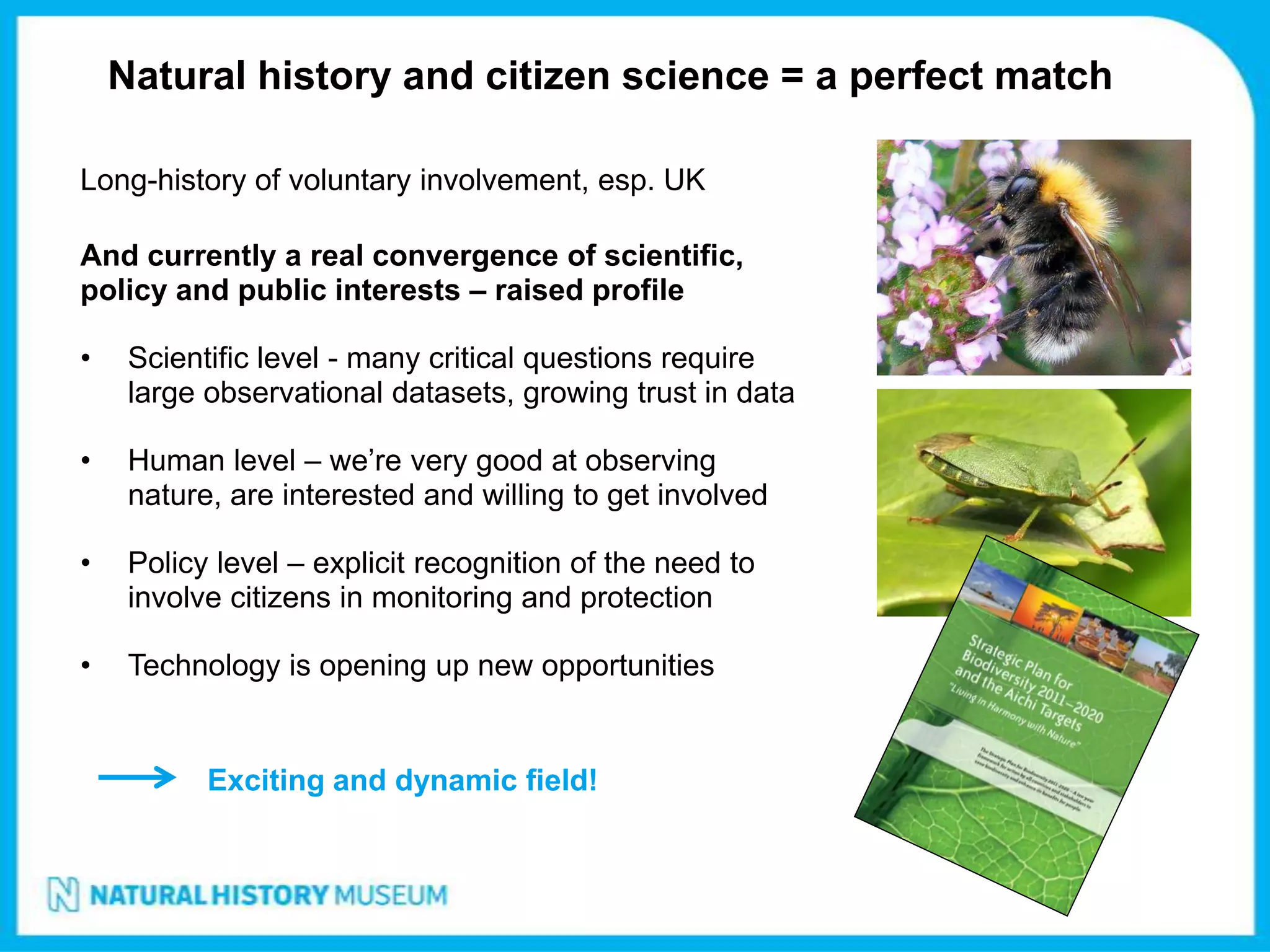
Natural history and citizen science = a perfect match

Long-history of voluntary involvement, esp. UK

And currently a real convergence of scientific,
policy and public interests – raised profile

•    Scientific level - many critical questions require
     large observational datasets, growing trust in data

•    Human level – we’re very good at observing
     nature, are interested and willing to get involved

•    Policy level – explicit recognition of the need to
     involve citizens in monitoring and protection

•    Technology is opening up new opportunities


           Exciting and dynamic field!
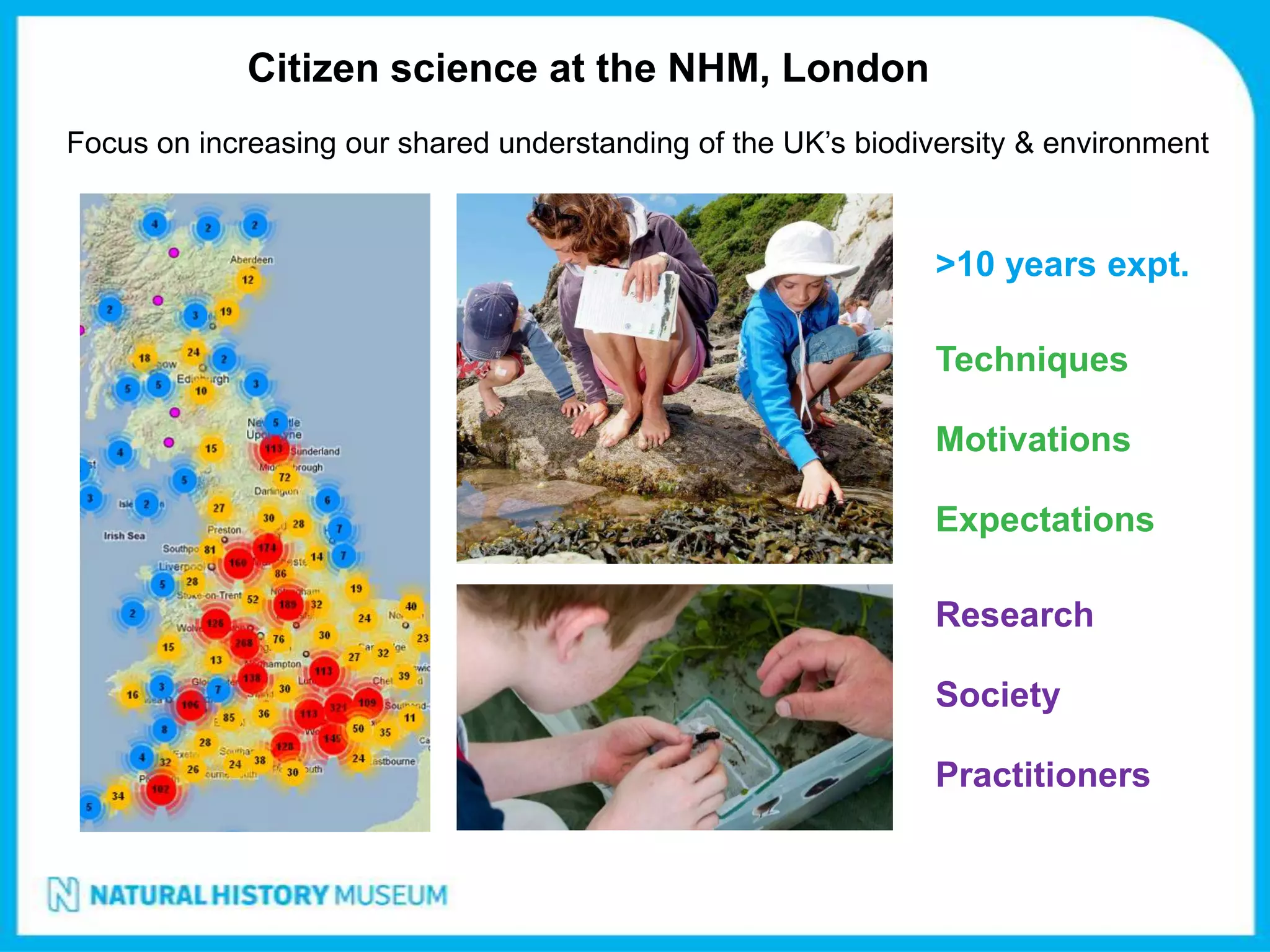
Citizen science at the NHM, London
Focus on increasing our shared understanding of the UK’s biodiversity & environment


                                                               >10 years expt.

                                                               Techniques

                                                               Motivations

                                                               Expectations

                                                               Research

                                                               Society

                                                               Practitioners
Contributory, adults: Bluebells


• Are flowering times responding to climate change?

• Is native bluebell under threat from non-native taxa?

• What is the nature of the threat?

• How do we manage the situation?

                             [Dr Fred Rumsey, Dr Mark Spencer]
Contributory, schools: Tree School


• Partnership with Cothill Education Trust

• Introduction to science & scientists

• Immersive experience, molecular research


                                  [Dr Della Hopkins, Dr James Tosh, Dr Fred Rumsey]
Co-created: the Riverflies Project

            • 2 million fishermen in UK

            • 80,000 fly fishermen – who care about ‘their’ rivers

            • Learning new skills in a familiar setting

            • On-going monitoring by this volunteer network

            • Providing data on river ecology and water quality


               [Dr Steve Brooks, Bridget Peacock, Dr Gill Stevens]
Co-created: the UK Species Inventory

• Partnership with voluntary recording sector – taxonomic expertise, practitioners
• Two-way knowledge sharing and UK biodiversity research...citizen science?


                                [Chris Raper, Dr John Tweddle, Charles Hussey]
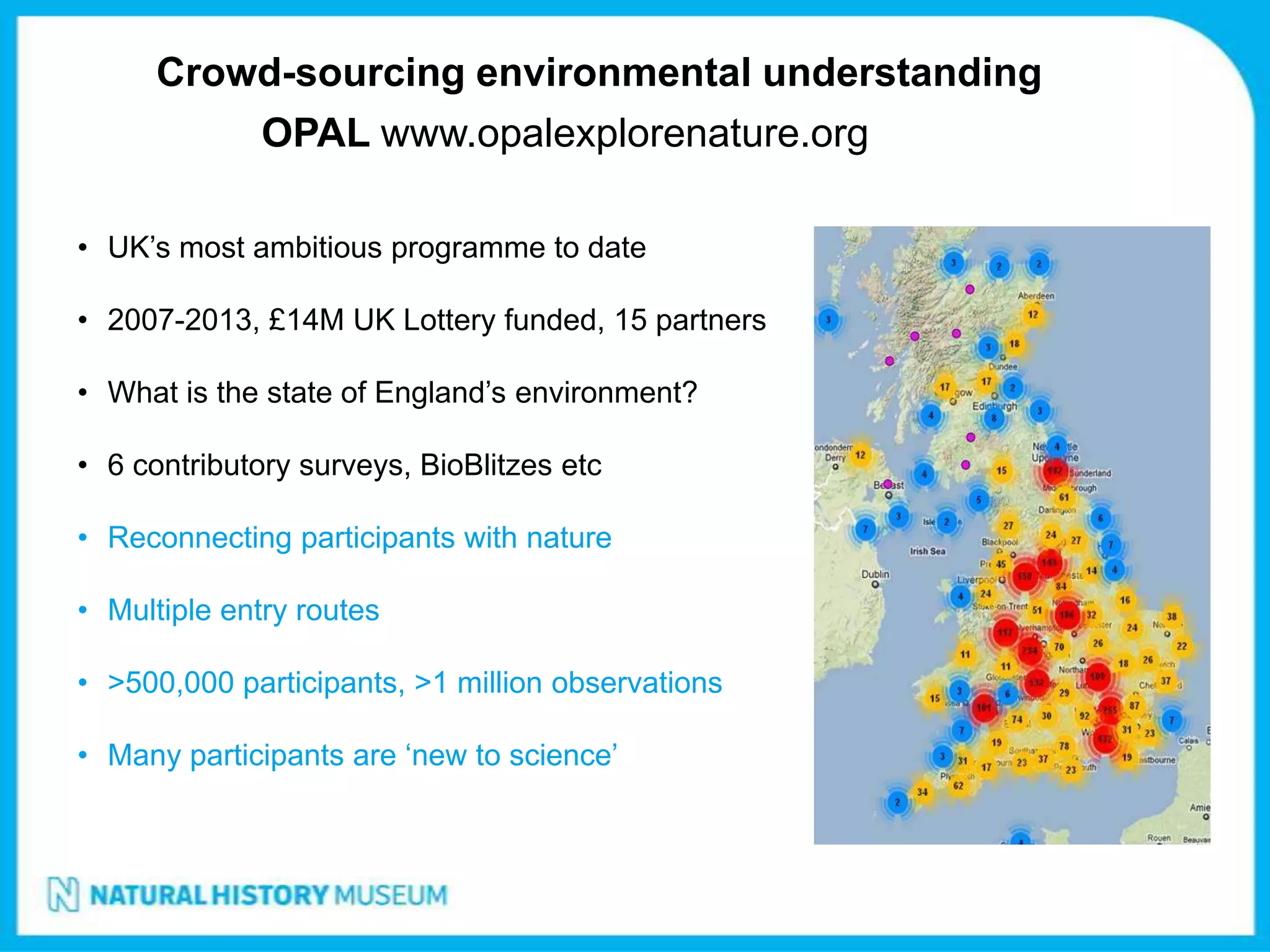
Crowd-sourcing environmental understanding
              OPAL www.opalexplorenature.org

• UK’s most ambitious programme to date

• 2007-2013, £14M UK Lottery funded, 15 partners

• What is the state of England’s environment?

• 6 contributory surveys, BioBlitzes etc

• Reconnecting participants with nature

• Multiple entry routes

• >500,000 participants, >1 million observations

• Many participants are ‘new to science’
Investigating data quality

• Experience level, age, group size effects, variation between taxa...
• Validation and verification methods
• Impacts of different data capture methods


         Method                 Correct ID              Incorrect ID

         Web upload             77 %                    23 %

         Direct from App        43 %                    57 %


                                 [Dr Poppy Lakeman-Fraser, Lucy Robinson]
Understanding citizen science & environmental monitoring

NERC-CEH, NHM for UK-
EOF partnership
- Academic report
- Practitioners guide


 Systematic review
 Detailed case studies
 Interviews with end users
 Motivations of volunteers
 Available technologies
 Experience-based guide


                             [Dr Helen Roy, Dr Michael Pocock, Dr John Tweddle, Lucy
                             Robinson and many others – thank you to all that contributed!]
Contributory projects                        Co-created projects:


• Capture imagination of a broad audience   • Benefit from establishment of a
  or appeal to an existing membership         community/volunteer-led approach

• Have a clear goal & methodology           • All parties have a stake/adapt

• Require large, dispersed datasets         • Require deep, on-going
                                              commitment
• Regular phenomena or watching brief
                                            • Are targeted at a specific, locally
• Require large analyses suited to humans     relevant problem or question


   One size does not fit all! There are clear roles for different
   approaches, participants want to interact in different ways and
   require different forms of support and reward...data & audience
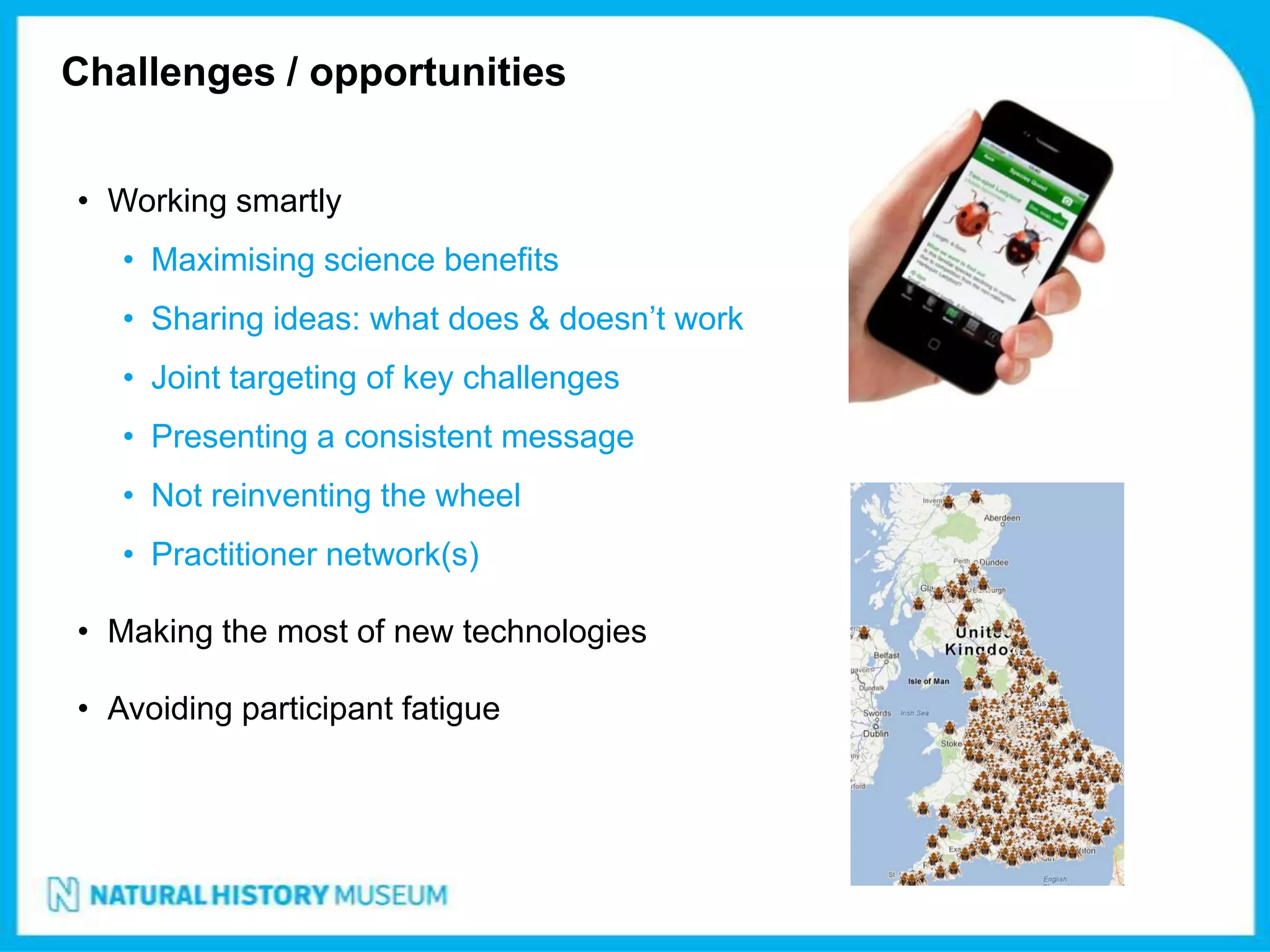
Challenges / opportunities


• Working smartly
   • Maximising science benefits
   • Sharing ideas: what does & doesn’t work
   • Joint targeting of key challenges
   • Presenting a consistent message
   • Not reinventing the wheel
   • Practitioner network(s)

• Making the most of new technologies

• Avoiding participant fatigue
Thank you
j.tweddle@nhm.ac.uk
l.robinson@nhm.ac.uk


    UK-EOF report:
 Understanding citizen
science & environmental
      monitoring
 www.ukeof.org.uk

Tweddle & robinson vibrant jan 13 web

  • 1.
    Citizen science atthe NHM Dr John Tweddle & Lucy Robinson Angela Marmont Centre for UK Biodiversity
  • 2.
    Natural history andcitizen science = a perfect match Long-history of voluntary involvement, esp. UK And currently a real convergence of scientific, policy and public interests – raised profile • Scientific level - many critical questions require large observational datasets, growing trust in data • Human level – we’re very good at observing nature, are interested and willing to get involved • Policy level – explicit recognition of the need to involve citizens in monitoring and protection • Technology is opening up new opportunities Exciting and dynamic field!
  • 3.
    Citizen science atthe NHM, London Focus on increasing our shared understanding of the UK’s biodiversity & environment >10 years expt. Techniques Motivations Expectations Research Society Practitioners
  • 4.
    Contributory, adults: Bluebells •Are flowering times responding to climate change? • Is native bluebell under threat from non-native taxa? • What is the nature of the threat? • How do we manage the situation? [Dr Fred Rumsey, Dr Mark Spencer]
  • 5.
    Contributory, schools: TreeSchool • Partnership with Cothill Education Trust • Introduction to science & scientists • Immersive experience, molecular research [Dr Della Hopkins, Dr James Tosh, Dr Fred Rumsey]
  • 6.
    Co-created: the RiverfliesProject • 2 million fishermen in UK • 80,000 fly fishermen – who care about ‘their’ rivers • Learning new skills in a familiar setting • On-going monitoring by this volunteer network • Providing data on river ecology and water quality [Dr Steve Brooks, Bridget Peacock, Dr Gill Stevens]
  • 7.
    Co-created: the UKSpecies Inventory • Partnership with voluntary recording sector – taxonomic expertise, practitioners • Two-way knowledge sharing and UK biodiversity research...citizen science? [Chris Raper, Dr John Tweddle, Charles Hussey]
  • 8.
    Crowd-sourcing environmental understanding OPAL www.opalexplorenature.org • UK’s most ambitious programme to date • 2007-2013, £14M UK Lottery funded, 15 partners • What is the state of England’s environment? • 6 contributory surveys, BioBlitzes etc • Reconnecting participants with nature • Multiple entry routes • >500,000 participants, >1 million observations • Many participants are ‘new to science’
  • 9.
    Investigating data quality •Experience level, age, group size effects, variation between taxa... • Validation and verification methods • Impacts of different data capture methods Method Correct ID Incorrect ID Web upload 77 % 23 % Direct from App 43 % 57 % [Dr Poppy Lakeman-Fraser, Lucy Robinson]
  • 10.
    Understanding citizen science& environmental monitoring NERC-CEH, NHM for UK- EOF partnership - Academic report - Practitioners guide Systematic review Detailed case studies Interviews with end users Motivations of volunteers Available technologies Experience-based guide [Dr Helen Roy, Dr Michael Pocock, Dr John Tweddle, Lucy Robinson and many others – thank you to all that contributed!]
  • 11.
    Contributory projects Co-created projects: • Capture imagination of a broad audience • Benefit from establishment of a or appeal to an existing membership community/volunteer-led approach • Have a clear goal & methodology • All parties have a stake/adapt • Require large, dispersed datasets • Require deep, on-going commitment • Regular phenomena or watching brief • Are targeted at a specific, locally • Require large analyses suited to humans relevant problem or question One size does not fit all! There are clear roles for different approaches, participants want to interact in different ways and require different forms of support and reward...data & audience
  • 12.
    Challenges / opportunities •Working smartly • Maximising science benefits • Sharing ideas: what does & doesn’t work • Joint targeting of key challenges • Presenting a consistent message • Not reinventing the wheel • Practitioner network(s) • Making the most of new technologies • Avoiding participant fatigue
  • 13.
    Thank you j.tweddle@nhm.ac.uk l.robinson@nhm.ac.uk UK-EOF report: Understanding citizen science & environmental monitoring www.ukeof.org.uk

Editor's Notes

  • #3 A lot of the questions we ask as natural historians fit well with a citsci approach
  • #5 Picture and text slide
  • #6 Picture and text slide
  • #7 Picture and text slide
  • #8 Picture and text slide
  • #9 Mix of scientist and public-led
  • #11 So that’s an introduction to some of the areas of citizen science that we’re working on here at the NHM. We’d like to spend the remaining few minutes overviewing a recent collaborative research project that we’ve been involved in.It pulls together lessons learnt by us and wide range of other citsci practitioners
  • #12 So if you’re looking to develop a new project it’s worth spending time evaluating options and approaches – and well worth not reinventing the wheel for innovations sake
  • #13 There’s a lot more in both documents and please get in touch with us or co-authors at CEH if you’ve any questions or comments.I’d like to leave you with what we see as some key challenges for us as practitioners