Download to read offline
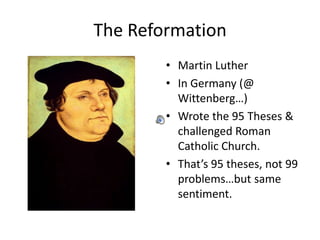



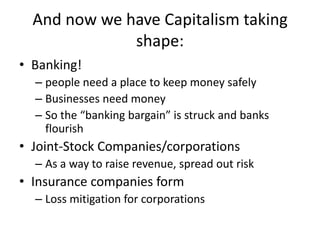


The Reformation began in Germany with Martin Luther challenging the authority and practices of the Roman Catholic Church by writing the 95 Theses. This led to the establishment of Protestant denominations like Lutheranism and Calvinism and dissolved the religious unity of Europe. The Catholic Church responded with reforms through councils like Trent but new ideologies like science and deism emerged, shifting authority from the Church to reason and natural laws. Concurrently, economic changes like banking, joint-stock companies, and insurance facilitated the rise of capitalism as governments established conditions supporting private property and commerce.


