EUKARYOTES
Kritika Chandel
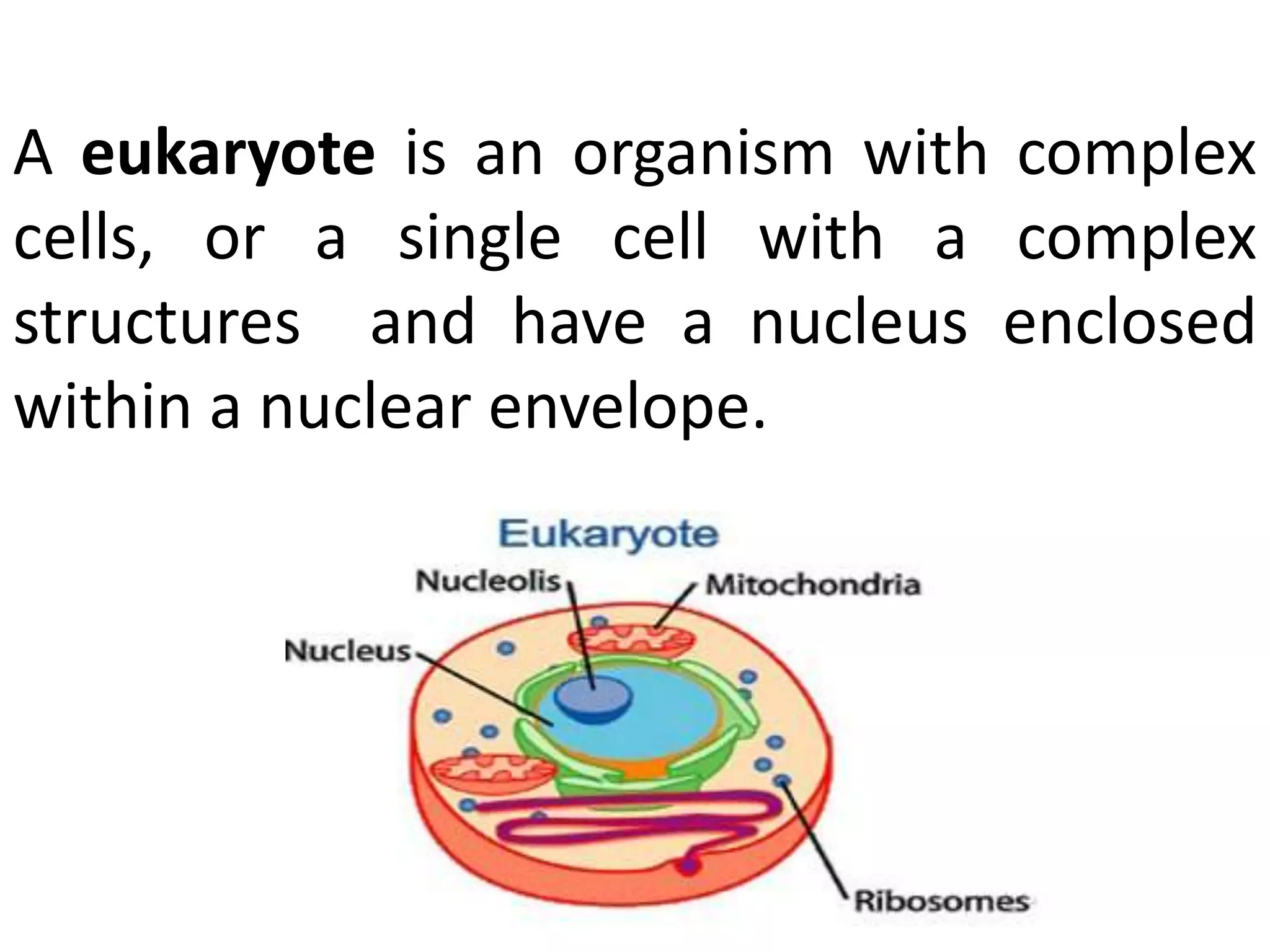
A eukaryote is an organism with complex
cells, or a single cell with a complex
structures and have a nucleus enclosed
within a nuclear envelope.
STRUCTURE
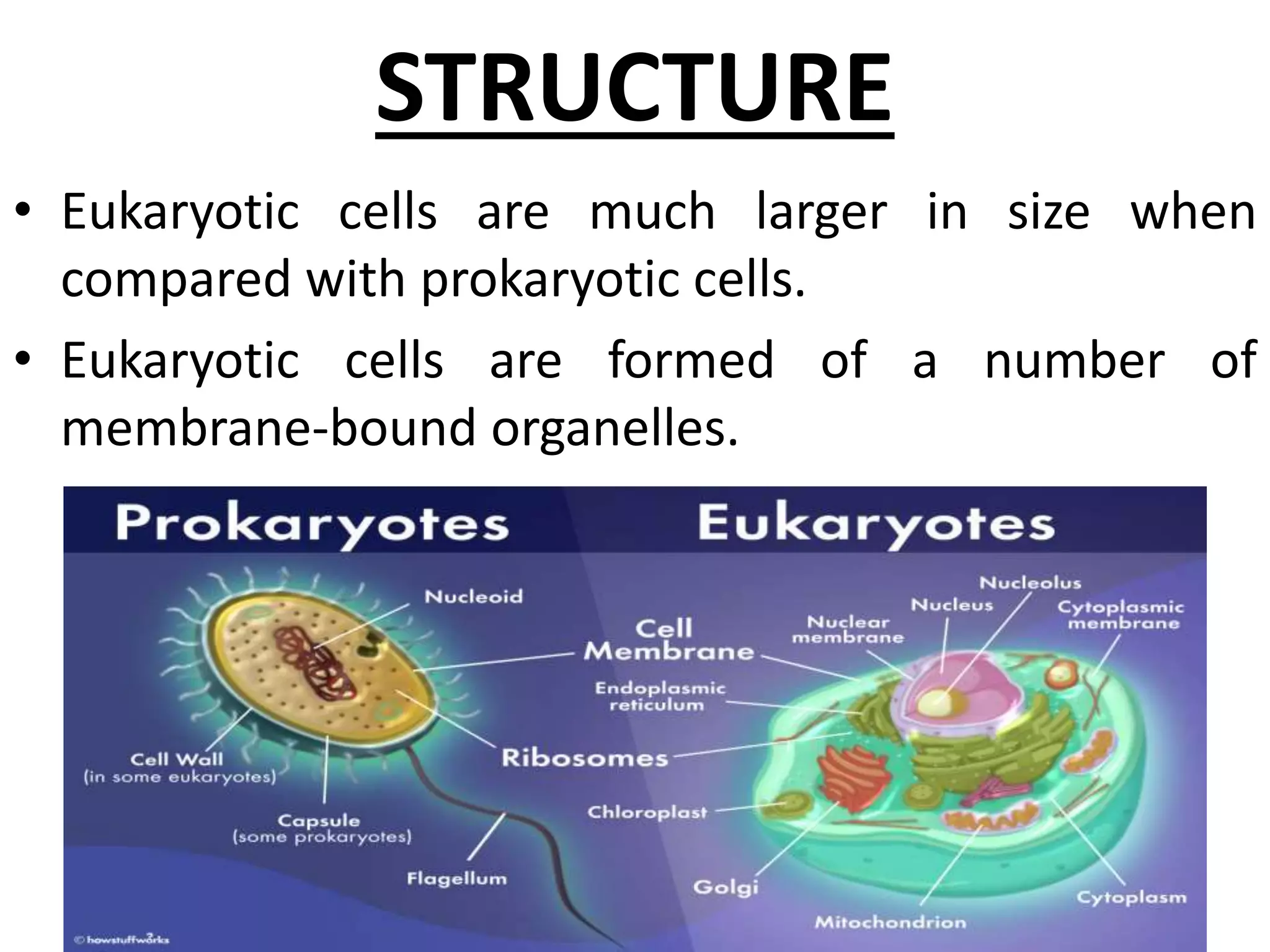
• Eukaryotic cells are much larger in size when
compared with prokaryotic cells.
• Eukaryotic cells are formed of a number of
membrane-bound organelles.
CELL WALL
• Cell walls provide support and help cells resist
mechanical pressures.
• Cell walls are not selective devices, as plasma
membranes are.
• The cell wall is
present in some
protists, fungal
and plant cells.
CELL MEMBRANE
• The cell membrane in eukaryotic cells is present
inside the cell wall.
• The plasma membrane is made up of phospholipid
bilayer with integral proteins embedded between
the two layers.
CYTOPLASM
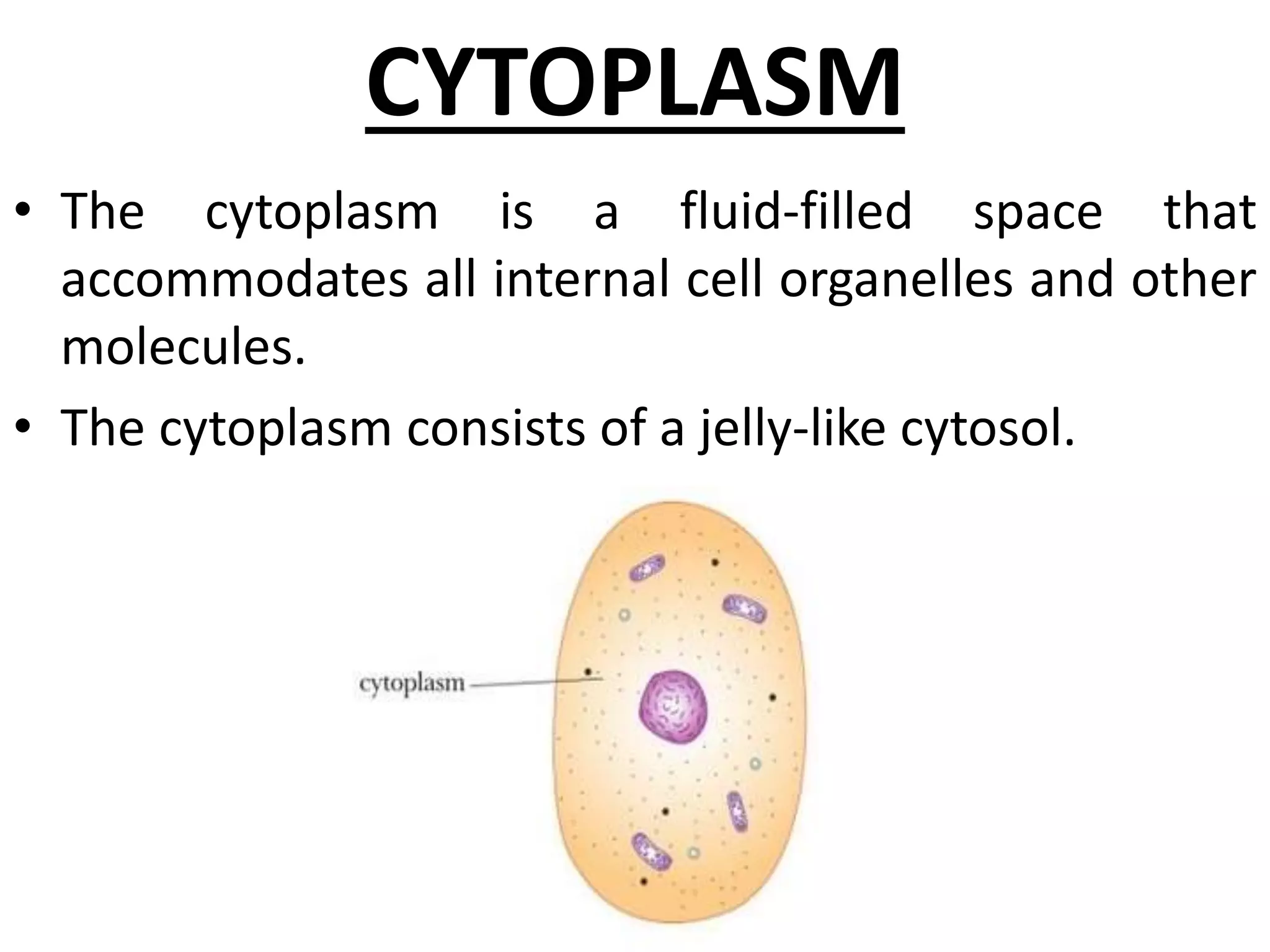
• The cytoplasm is a fluid-filled space that
accommodates all internal cell organelles and other
molecules.
• The cytoplasm consists of a jelly-like cytosol.
NUCLEUS
• The nucleus is surrounded by a nuclear membrane.
• Inside the nucleus, the DNA molecules are arranged
in chromosomes which are linear and more
organized.
ENDOPLASMIC RETICULUM
• Some ER is studded with ribosomes. This type of ER
is called rough ER and is the site of protein
synthesis.
• Another, where are no ribosomes are called smooth
ER and is responsible for producing lipids.
MITOCHONDRIA &PLASTIDS
• Mitochondria has a double membrane and consists
of cristae and matrix.
• Plastid is a double membrane structure that
contains chlorophyll and provide color to the cell.
• Both have an extrachromosomal DNA that regulates
the functions of the organelles.
FLAGELLA & CILIA
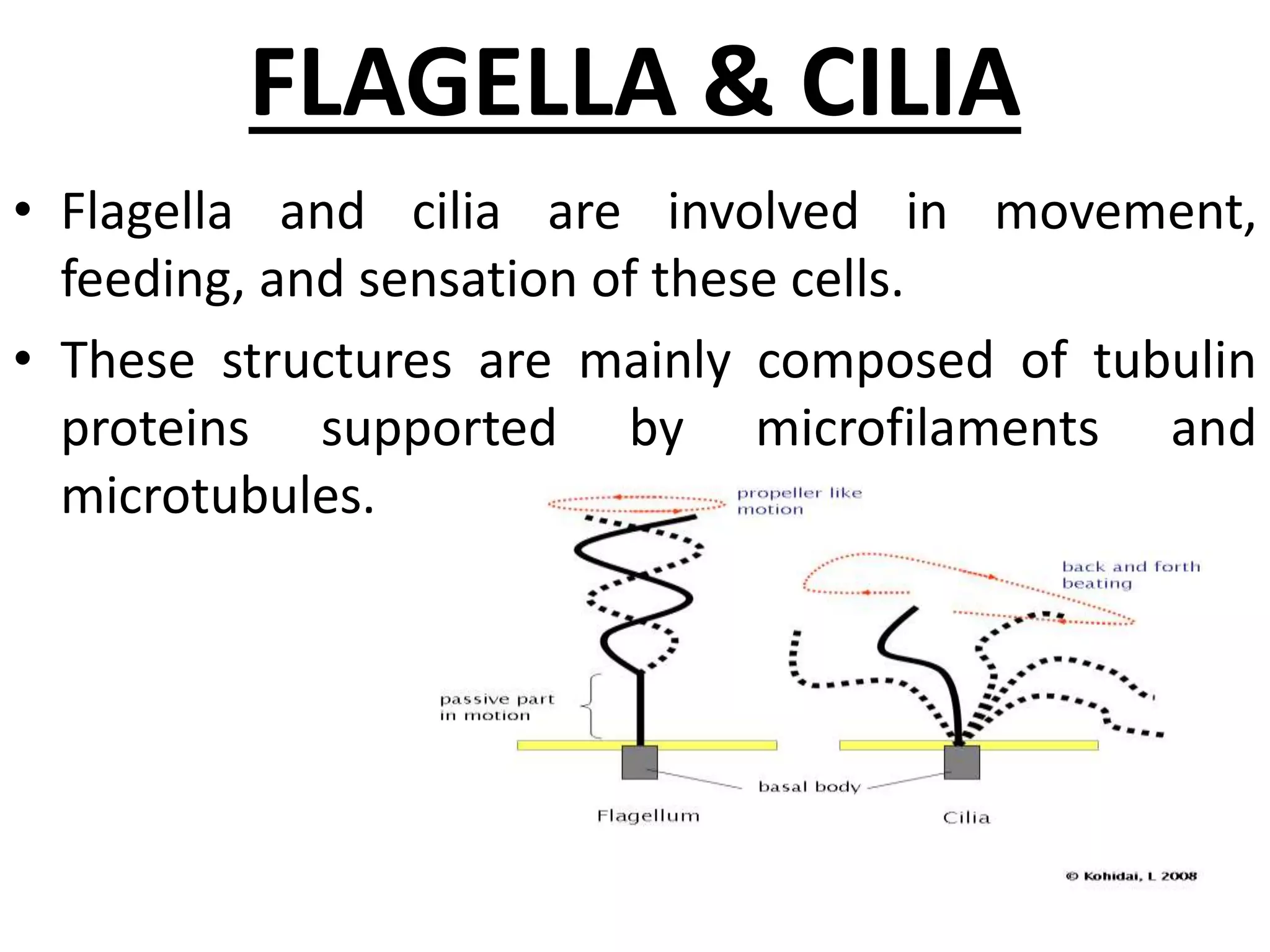
• Flagella and cilia are involved in movement,
feeding, and sensation of these cells.
• These structures are mainly composed of tubulin
proteins supported by microfilaments and
microtubules.
REPRODUCTION
Some eukaryotic cells can divide only by asexual
means while other eukaryotic cells divide both
sexually as well as asexually.
• ASEXUAL REPRODUCTION:-
Sexual reproduction
• In this method, the cell divided meiotically to form
four daughter cells, each with half the number of
chromosomes to their parent cell.
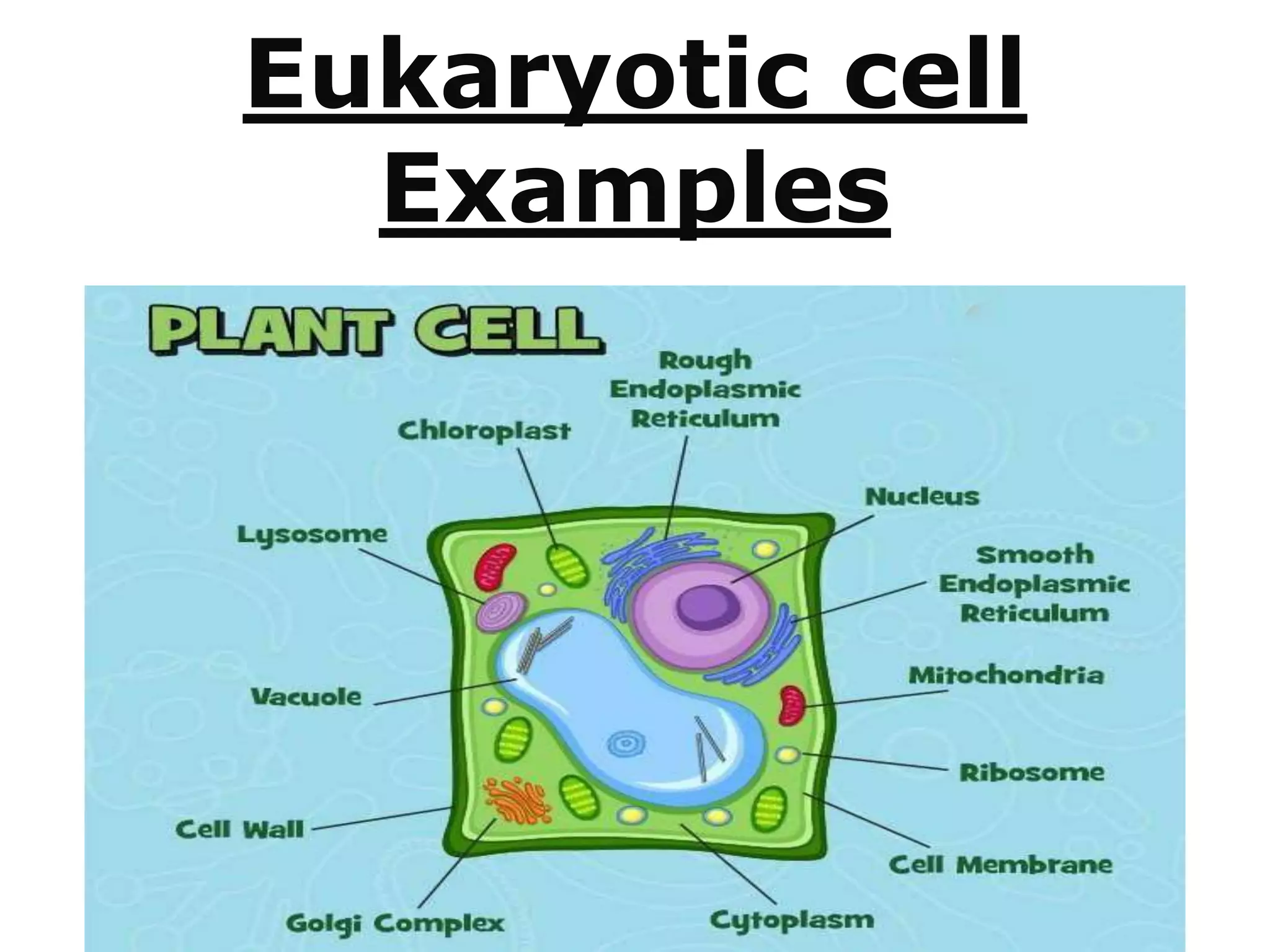
Eukaryotic cell
Examples
THANK YOU

Eukaryotes

  • 1.
  • 2.
    A eukaryote isan organism with complex cells, or a single cell with a complex structures and have a nucleus enclosed within a nuclear envelope.
  • 3.
    STRUCTURE • Eukaryotic cellsare much larger in size when compared with prokaryotic cells. • Eukaryotic cells are formed of a number of membrane-bound organelles.
  • 4.
    CELL WALL • Cellwalls provide support and help cells resist mechanical pressures. • Cell walls are not selective devices, as plasma membranes are. • The cell wall is present in some protists, fungal and plant cells.
  • 5.
    CELL MEMBRANE • Thecell membrane in eukaryotic cells is present inside the cell wall. • The plasma membrane is made up of phospholipid bilayer with integral proteins embedded between the two layers.
  • 6.
    CYTOPLASM • The cytoplasmis a fluid-filled space that accommodates all internal cell organelles and other molecules. • The cytoplasm consists of a jelly-like cytosol.
  • 7.
    NUCLEUS • The nucleusis surrounded by a nuclear membrane. • Inside the nucleus, the DNA molecules are arranged in chromosomes which are linear and more organized.
  • 8.
    ENDOPLASMIC RETICULUM • SomeER is studded with ribosomes. This type of ER is called rough ER and is the site of protein synthesis. • Another, where are no ribosomes are called smooth ER and is responsible for producing lipids.
  • 9.
    MITOCHONDRIA &PLASTIDS • Mitochondriahas a double membrane and consists of cristae and matrix. • Plastid is a double membrane structure that contains chlorophyll and provide color to the cell. • Both have an extrachromosomal DNA that regulates the functions of the organelles.
  • 10.
    FLAGELLA & CILIA •Flagella and cilia are involved in movement, feeding, and sensation of these cells. • These structures are mainly composed of tubulin proteins supported by microfilaments and microtubules.
  • 11.
    REPRODUCTION Some eukaryotic cellscan divide only by asexual means while other eukaryotic cells divide both sexually as well as asexually. • ASEXUAL REPRODUCTION:-
  • 12.
    Sexual reproduction • Inthis method, the cell divided meiotically to form four daughter cells, each with half the number of chromosomes to their parent cell.
  • 13.
  • 16.