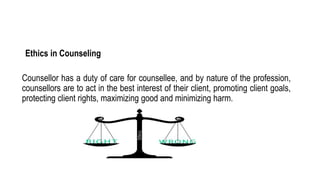
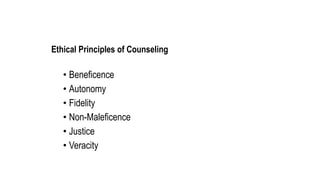
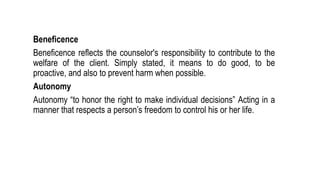
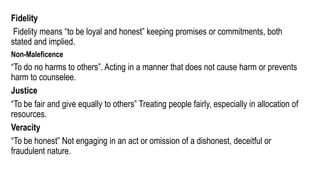
Ethics are important in counseling to protect clients and set standards for counselors' behavior. There are five main ethical principles in counseling: beneficence, which means acting in the client's best interest; autonomy, which means respecting a client's right to make their own decisions; fidelity, which involves keeping commitments and being loyal and honest; justice, which is about treating all people fairly; and veracity, which means being honest. Counselors have a duty of care for clients and must act ethically to promote client welfare, rights, and goals.