COMPUTER ETHICS
DR. SHASHI KIRAN MISRA
ASSISTANT PROFESSOR
UIP, CSJM UNIVERSITY
KANPUR
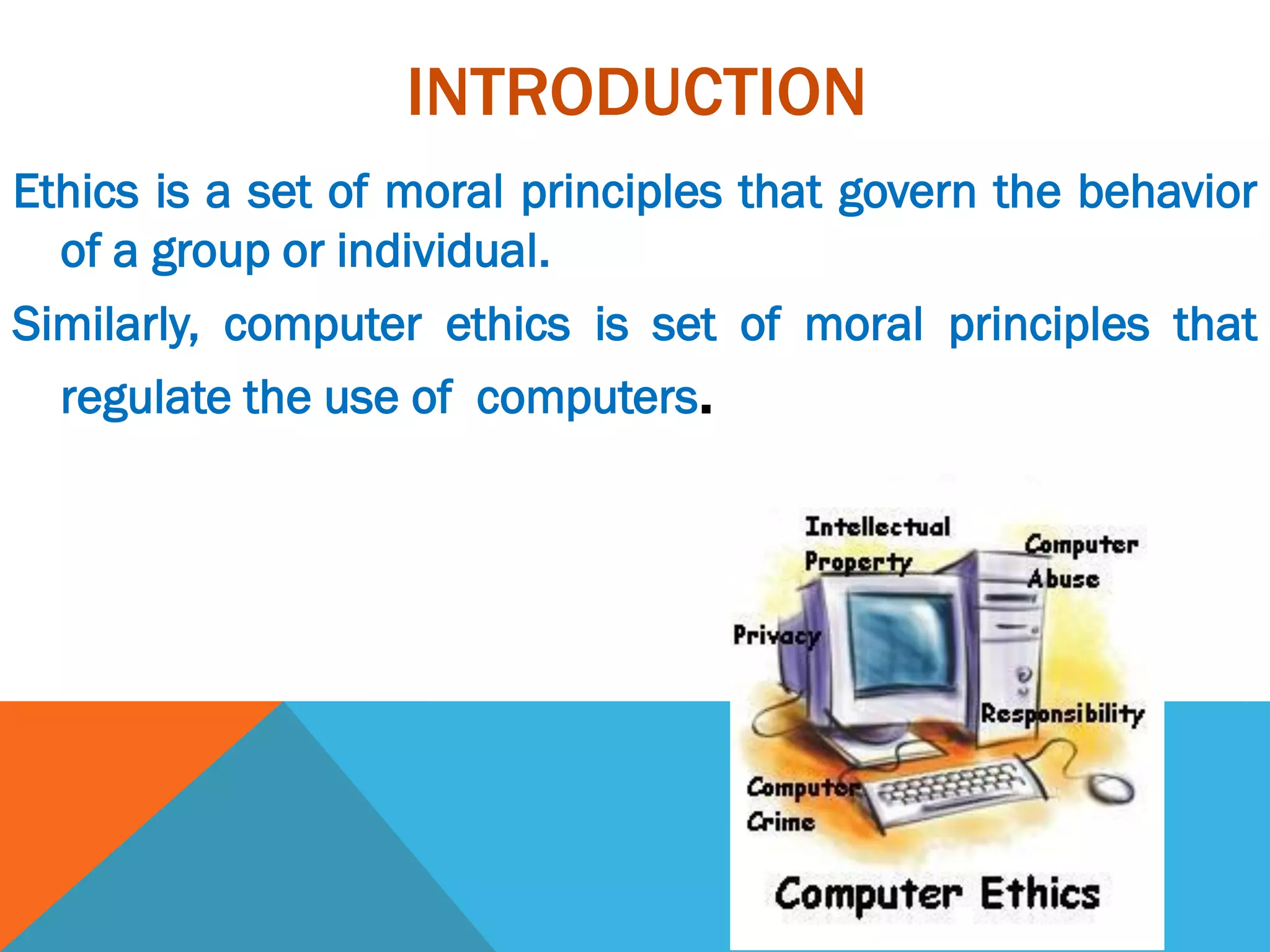
INTRODUCTION
Ethics is a set of moral principles that govern the behavior
of a group or individual.
Similarly, computer ethics is set of moral principles that
regulate the use of computers.
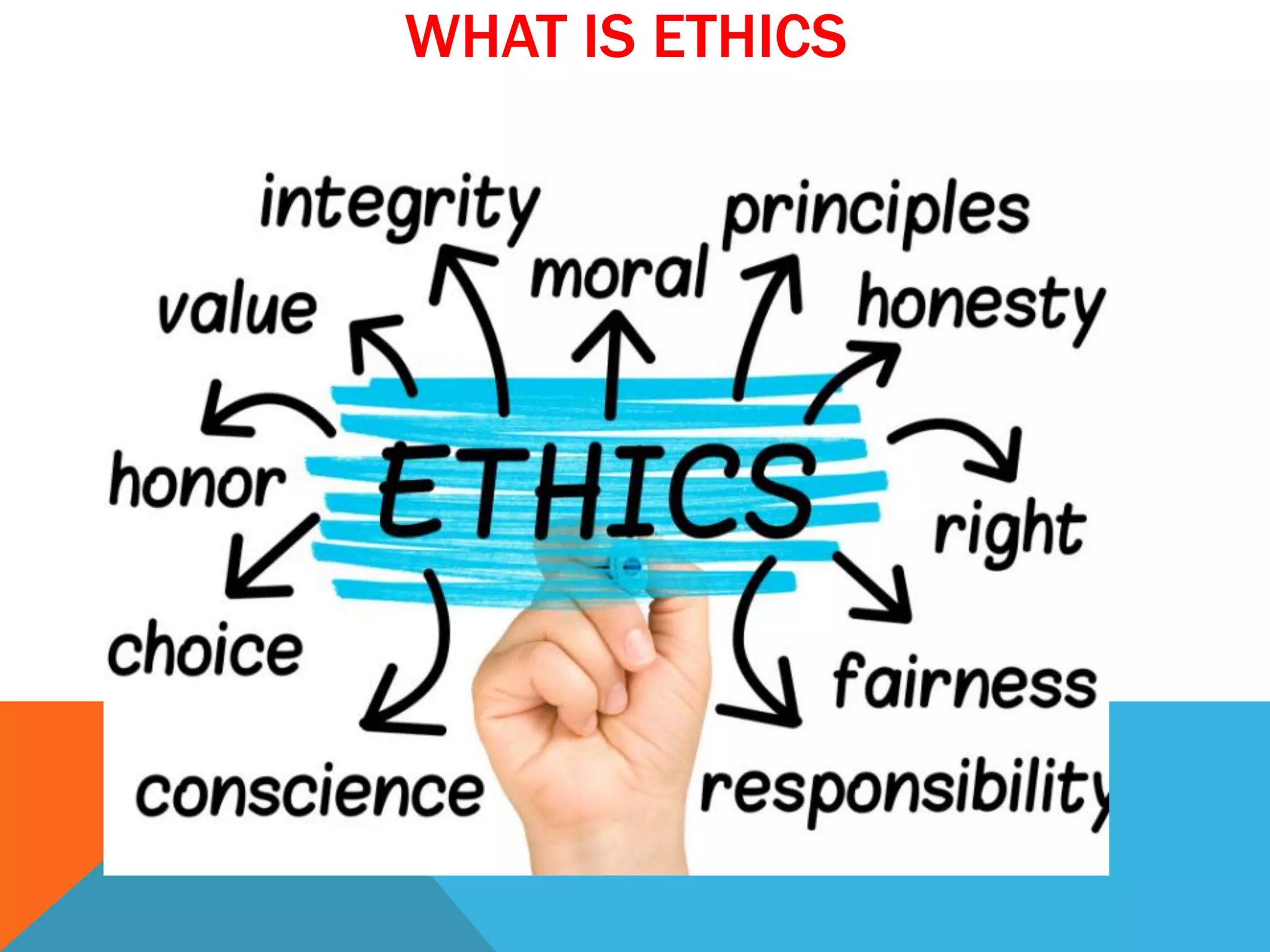
WHAT IS ETHICS
CHALLENGING ISSUES
• Computer Crime/Computer Security
• Software Theft/Property Rights
• Hacking/Creation of viruses
• Computer unreliability/Software Quality
• Data Storage/Invasion of Privacy
• Social Implications of AI
• Workplace Computerization
COMMON ISSUES OF COMPUTER ETHICS
• Intellectual property rights such as
copyrighted
• electronic content, privacy concerns, and
how computers affect society.
COPY RIGHT ON INTERNET
What of works made available to the public on the Internet, are they
at all protected by copyright?
yes!
For works made available over a communications network (such as
the Internet), the copyright protects original authorship.
But,
According to the Copyright Law, it does not protect ideas, procedures,
systems, or methods of operation. This means that once such an
online work has been made public, nothing in the copyright laws
prevents others from developing another work based on similar
principles, or ideas.
NETIQUTTES
• Netiquette are various risks related to
using the Internet.
• It is about proper ways in which to use
a network and to determine whether
information is reliable and authentic.
IDEOLOGY OF NETIQUTTES
1. REAL PEPOLE EXIST BEHIND THE
COMPUTERS
2. PROTECT YOUR PRIVACY
3.
4. HELP MAKING NETWORK BETTER
• Encourage tomorrow’s professionals to behave in a more
ethical manner for the IT industry.
• Make students aware of the social problems caused by
computers
• Sensitize students to the moral dilemmas they will face
using computers.
Preventive measures
1. SOFTWARE PIRACY
Software piracy is morally bad when someone reproduces a
copy of the software and sells it for profit, produces exactly the
same or similar version without giving proper credit to the
original author, or simply produces it and distributes it to others.
It is not immoral to copy the software if someone who has a
licensed copy of the software and simply makes a backup copy
of the original. One back-up copy of the commercial software
can be made, but the back-up copy cannot be used except when
the original package fails or is destroyed.
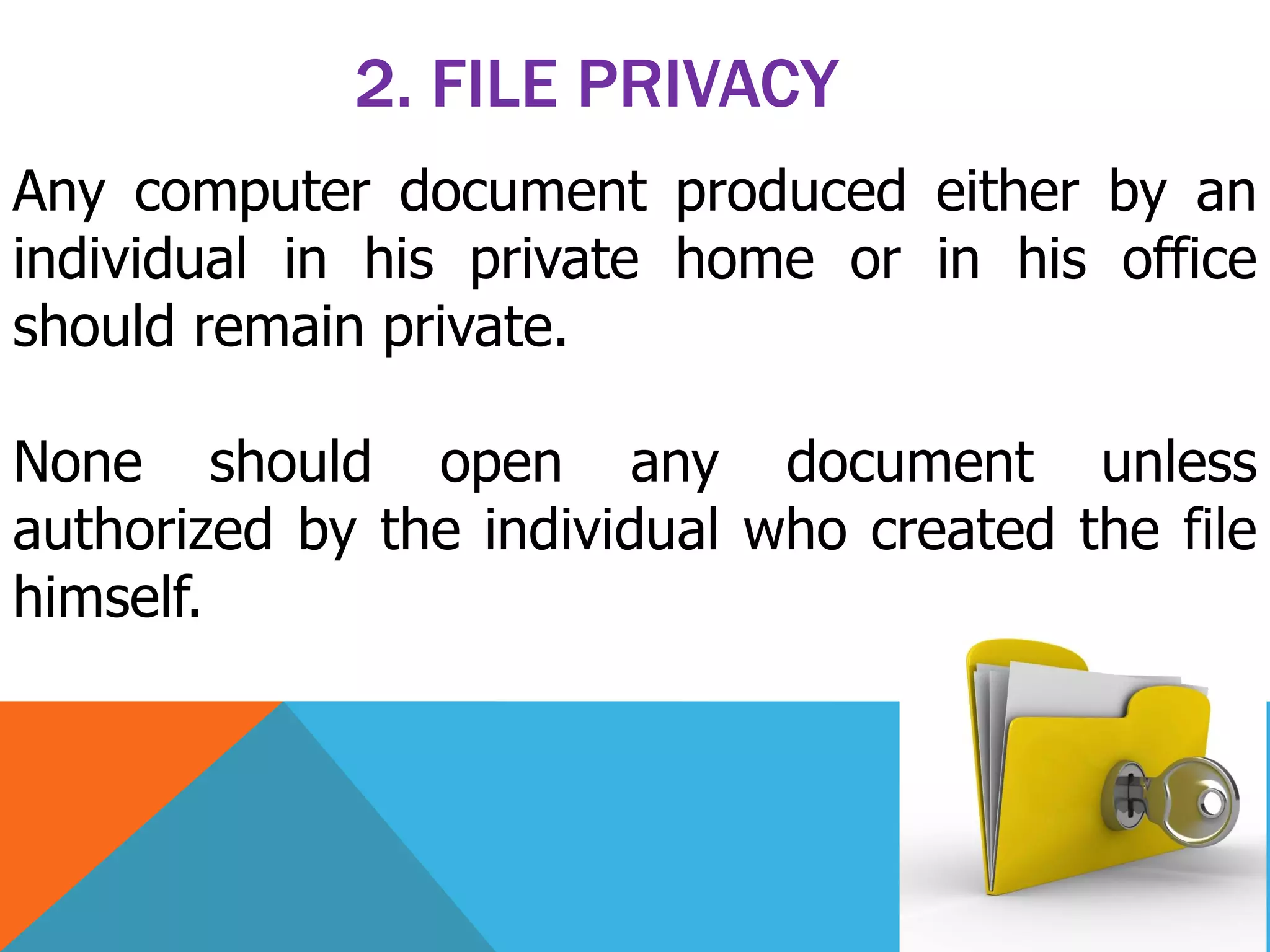
2. FILE PRIVACY
Any computer document produced either by an
individual in his private home or in his office
should remain private.
None should open any document unless
authorized by the individual who created the file
himself.
3. HACKING
Unauthorized hacking (i.e., gaining access to computer systems
without prior authorization from the owner) is a crime in most
countries, but penetration testing done by request of the owner of
the victim system or network is not.
A Certified Ethical Hacker has obtained a certification in how to
look for the weaknesses and vulnerabilities in target systems and
uses the same knowledge and tools as a hacker.
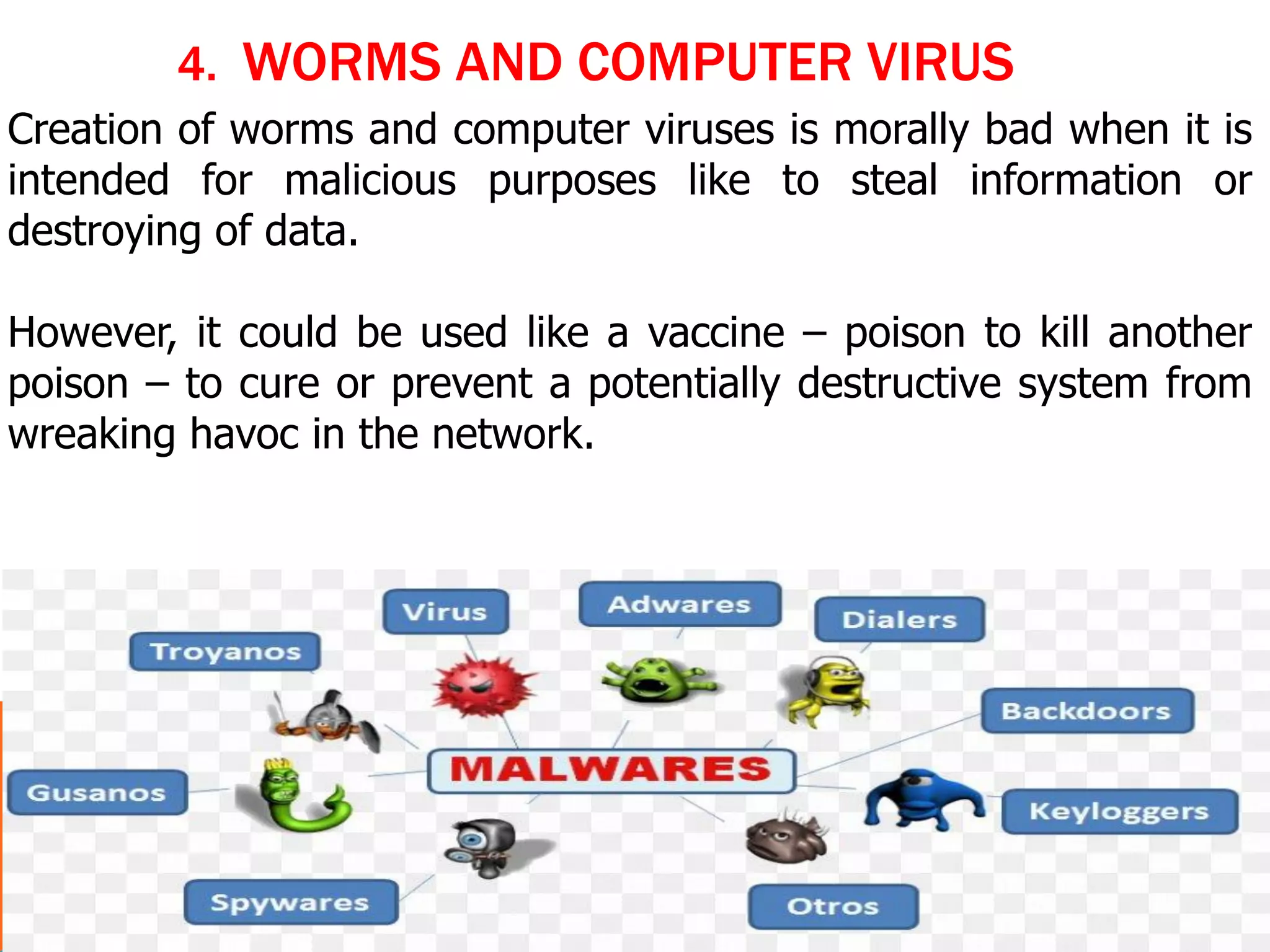
4. WORMS AND COMPUTER VIRUS
Creation of worms and computer viruses is morally bad when it is
intended for malicious purposes like to steal information or
destroying of data.
However, it could be used like a vaccine – poison to kill another
poison – to cure or prevent a potentially destructive system from
wreaking havoc in the network.
5. PLAGIARISM
Plagiarism is copying someone else's work and then passing it off
as one's own. It is morally bad because it is an act of stealing.
Copying programs written by other programmers and claiming it
as your own could be an act of plagiarism.
It involves lying, cheating, theft, and dishonesty.
The End

Computer ethics

  • 1.
    COMPUTER ETHICS DR. SHASHIKIRAN MISRA ASSISTANT PROFESSOR UIP, CSJM UNIVERSITY KANPUR
  • 2.
    INTRODUCTION Ethics is aset of moral principles that govern the behavior of a group or individual. Similarly, computer ethics is set of moral principles that regulate the use of computers.
  • 3.
  • 4.
    CHALLENGING ISSUES • ComputerCrime/Computer Security • Software Theft/Property Rights • Hacking/Creation of viruses • Computer unreliability/Software Quality • Data Storage/Invasion of Privacy • Social Implications of AI • Workplace Computerization
  • 5.
    COMMON ISSUES OFCOMPUTER ETHICS • Intellectual property rights such as copyrighted • electronic content, privacy concerns, and how computers affect society.
  • 6.
    COPY RIGHT ONINTERNET What of works made available to the public on the Internet, are they at all protected by copyright? yes! For works made available over a communications network (such as the Internet), the copyright protects original authorship. But, According to the Copyright Law, it does not protect ideas, procedures, systems, or methods of operation. This means that once such an online work has been made public, nothing in the copyright laws prevents others from developing another work based on similar principles, or ideas.
  • 7.
    NETIQUTTES • Netiquette arevarious risks related to using the Internet. • It is about proper ways in which to use a network and to determine whether information is reliable and authentic.
  • 8.
    IDEOLOGY OF NETIQUTTES 1.REAL PEPOLE EXIST BEHIND THE COMPUTERS 2. PROTECT YOUR PRIVACY 3. 4. HELP MAKING NETWORK BETTER
  • 9.
    • Encourage tomorrow’sprofessionals to behave in a more ethical manner for the IT industry. • Make students aware of the social problems caused by computers • Sensitize students to the moral dilemmas they will face using computers. Preventive measures
  • 10.
    1. SOFTWARE PIRACY Softwarepiracy is morally bad when someone reproduces a copy of the software and sells it for profit, produces exactly the same or similar version without giving proper credit to the original author, or simply produces it and distributes it to others. It is not immoral to copy the software if someone who has a licensed copy of the software and simply makes a backup copy of the original. One back-up copy of the commercial software can be made, but the back-up copy cannot be used except when the original package fails or is destroyed.
  • 11.
    2. FILE PRIVACY Anycomputer document produced either by an individual in his private home or in his office should remain private. None should open any document unless authorized by the individual who created the file himself.
  • 12.
    3. HACKING Unauthorized hacking(i.e., gaining access to computer systems without prior authorization from the owner) is a crime in most countries, but penetration testing done by request of the owner of the victim system or network is not. A Certified Ethical Hacker has obtained a certification in how to look for the weaknesses and vulnerabilities in target systems and uses the same knowledge and tools as a hacker.
  • 13.
    4. WORMS ANDCOMPUTER VIRUS Creation of worms and computer viruses is morally bad when it is intended for malicious purposes like to steal information or destroying of data. However, it could be used like a vaccine – poison to kill another poison – to cure or prevent a potentially destructive system from wreaking havoc in the network.
  • 14.
    5. PLAGIARISM Plagiarism iscopying someone else's work and then passing it off as one's own. It is morally bad because it is an act of stealing. Copying programs written by other programmers and claiming it as your own could be an act of plagiarism. It involves lying, cheating, theft, and dishonesty.
  • 15.