STANDARDS
WHAT ARE
 a level of quality
of attainment.
an idea or thing
used as a measure,
norm or model in
comparative
evaluation
WHY WE NEED TO DISTINGUISH
MORAL STANDARDS
FROM
NON-MORAL ONES?
Some values do have
moral implications
while other’s don’t
HOW WE ADDRESS THIS
CULTURAL CONUNDRUM
People have to understand the
difference between moral
standards and non-moral ones,
to identify fundamental ethical
values that may guide our
actions.
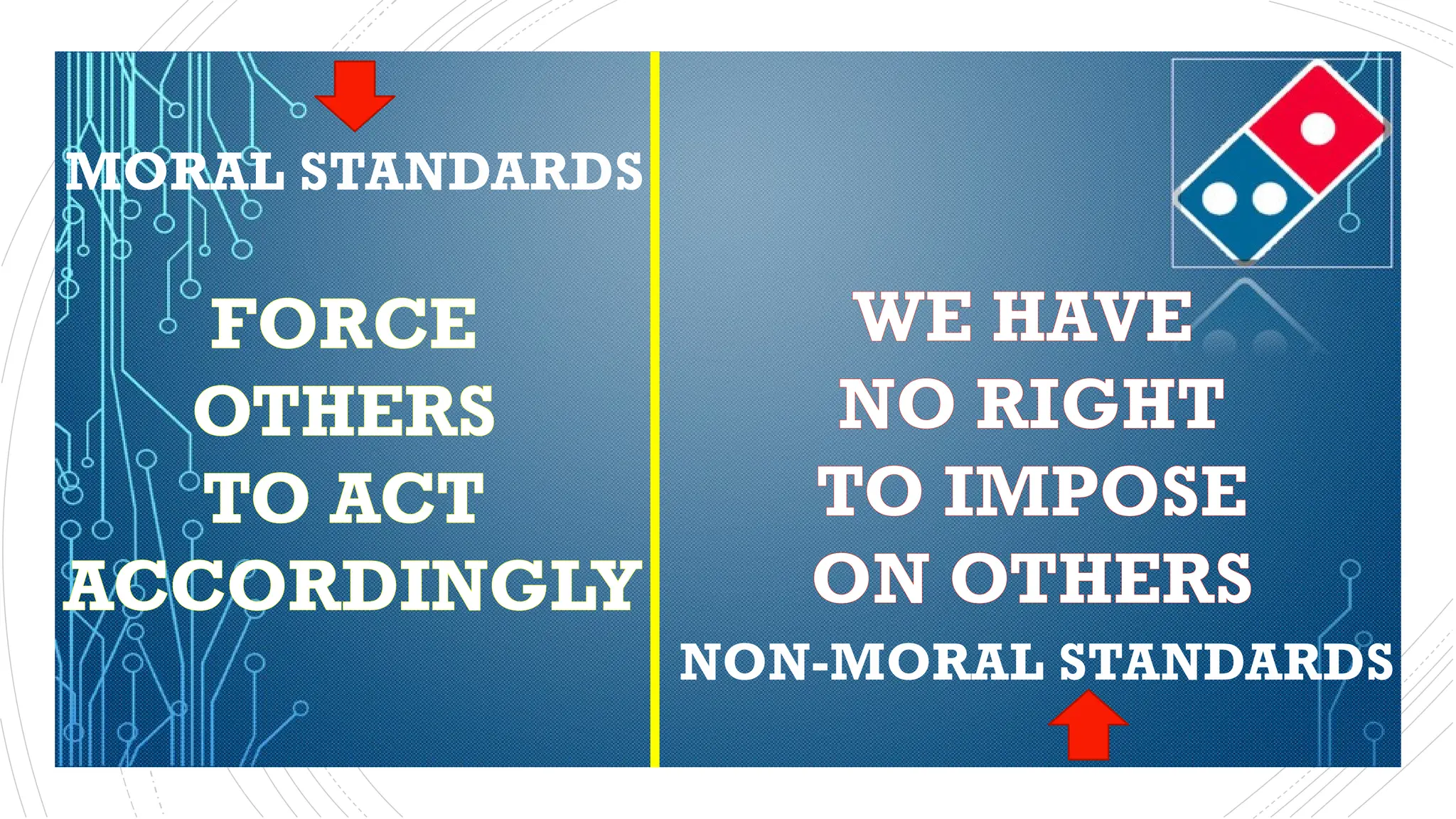
MORAL STANDARDS
NON-MORAL STANDARDS
FORCE
OTHERS
TO ACT
ACCORDINGLY
WE HAVE
NO RIGHT
TO IMPOSE
ON OTHERS
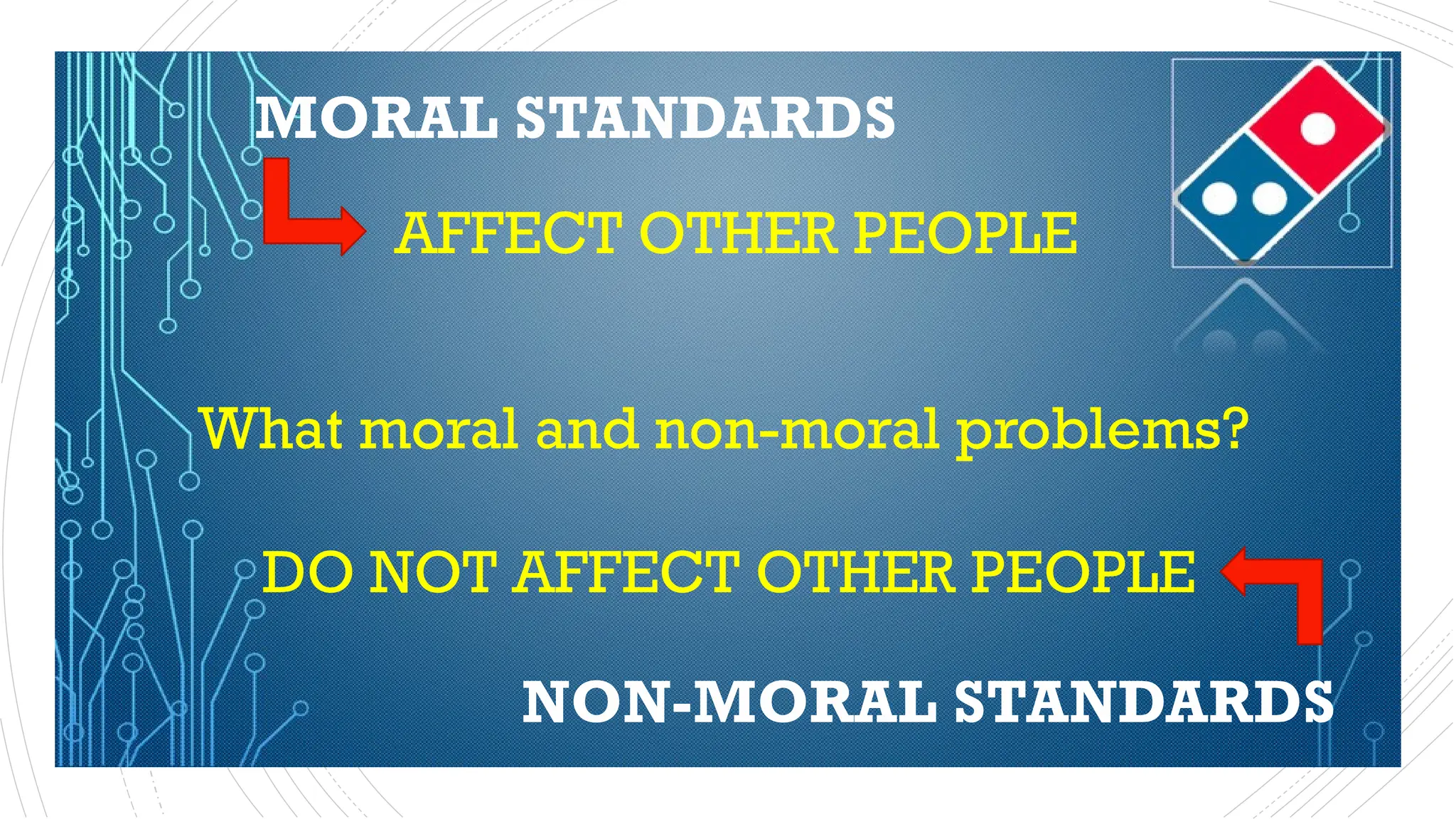
MORAL STANDARDS
NON-MORAL STANDARDS
What moral and non-moral problems?
AFFECT OTHER PEOPLE
DO NOT AFFECT OTHER PEOPLE
 involve the rules people have
about the kinds of actions
they believe are morally right
and wrong, as well as the
values they place on the kinds
of objects they believe are
morally good and morally
bad. Some ethicists equate
moral standards with moral
values and moral principles.
MORAL
STANDARDS
 are norms that
individuals or groups
have about the kinds of
actions believed to be
morally right or wrong,
as well as the values
places on what we
believed to be morally
good or morally bad.
MORAL
STANDARDS
normally promote
“the good” that is,
the welfare and well-
being of humans as
well as animals and
the environment
MORAL
STANDARDS
Consistency
it may differ from
society to society
and culture to
culture
MORAL
STANDARDS
NORMS VALUES
+
= MORAL STANDARDS
general rules
about actions or
behaviors
Enduring beliefs
about what is
good and
desirable, or not
CHARACTERISTICS
OF
MORAL STANDARDS
 Deal with matters we think can seriously injure or
benefit humans, animals and the environment;
 Not established or changed by the decisions of
authoritative individuals or bodies;
 Overriding, that is, they take precedence over other
standards and considerations, especially of self-interest;
 Based on impartial considerations;
 Associate with special emotions and vocabulary.
Different CULTURES
have different moral standards
What is matter of moral indifference
that is, a matter of taste in one culture
may be a matter of
moral significance in another
 refer to standards by which we
judge what is good or bad and
right or wrong in a non-moral way.
 are matters of taste or preference
NON-MORAL
STANDARDS
 refers to rules that affect the
choice of a person but are not
linked to moral or ethical
considerations, similar
with ethics people use value
judgment in dealing with
these aspects.
NON-MORAL
STANDARDS
 Manage individual life,
aspirations and desires and
may decide a person’s
place in his group. Some
non-moral standards of any
society could be the table
manners, general etiquette,
clothing etc.
NON-MORAL
STANDARDS
 Govern individual life,
aspirations and desires and
may decide a person’s
place in his group. Some
non-moral standards of any
society could be grammar
and language expectation,
clothing, etc.
NON-MORAL
STANDARDS
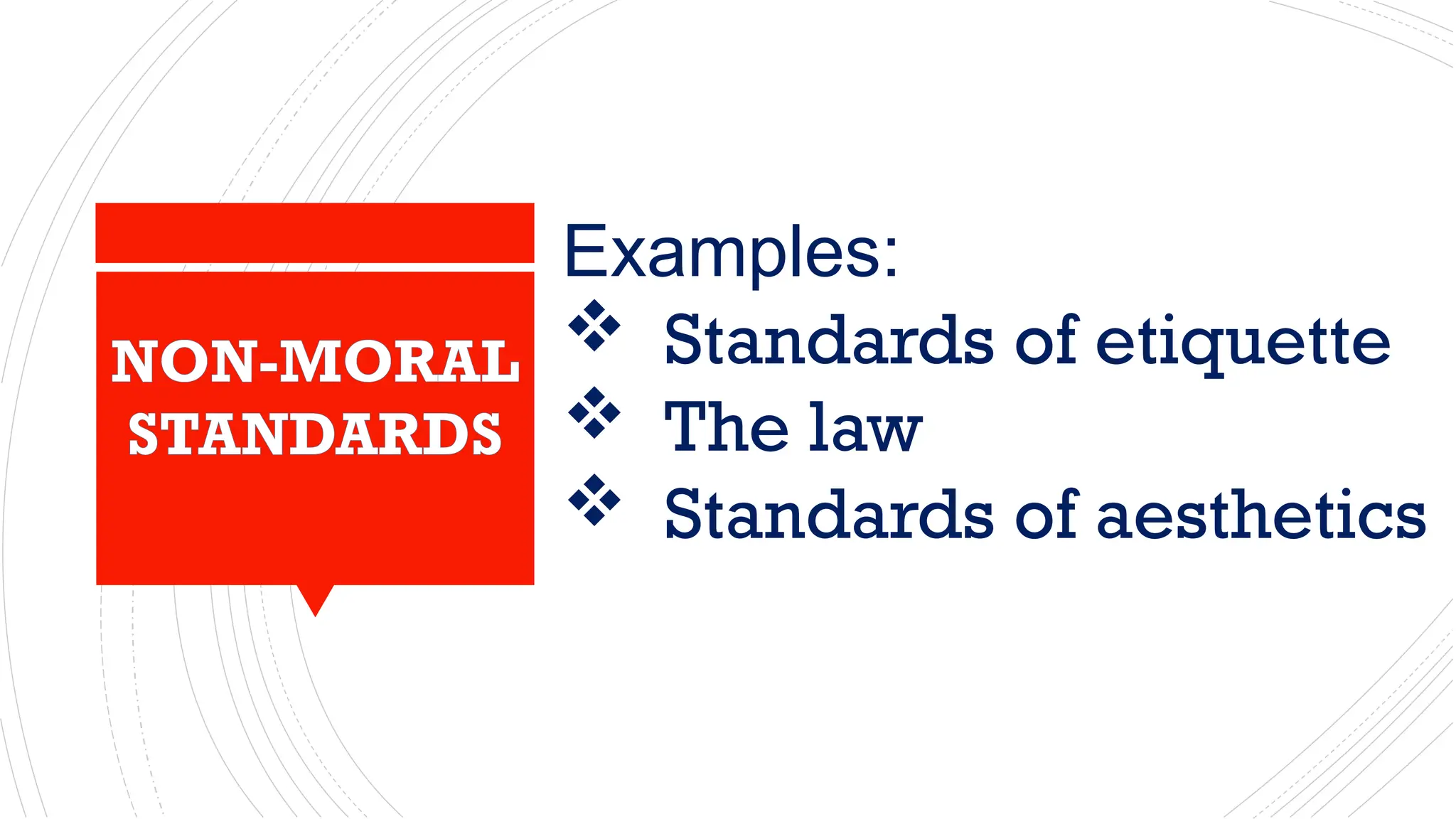
Examples:
 Standards of etiquette
 The law
 Standards of aesthetics
NON-MORAL
STANDARDS
 is a set of rules on how an
individual should
responsibly behave in the
society. Table manners
such as the proper use of
utensils and the proper
manner of eating are
examples of etiquette.
ETIQUETTE
 What fall outside the scope
 Any violations that does
not pose a serious threat to
human well-being
Example: wearing shorts to a
formal party
NON-MORAL
STANDARDS
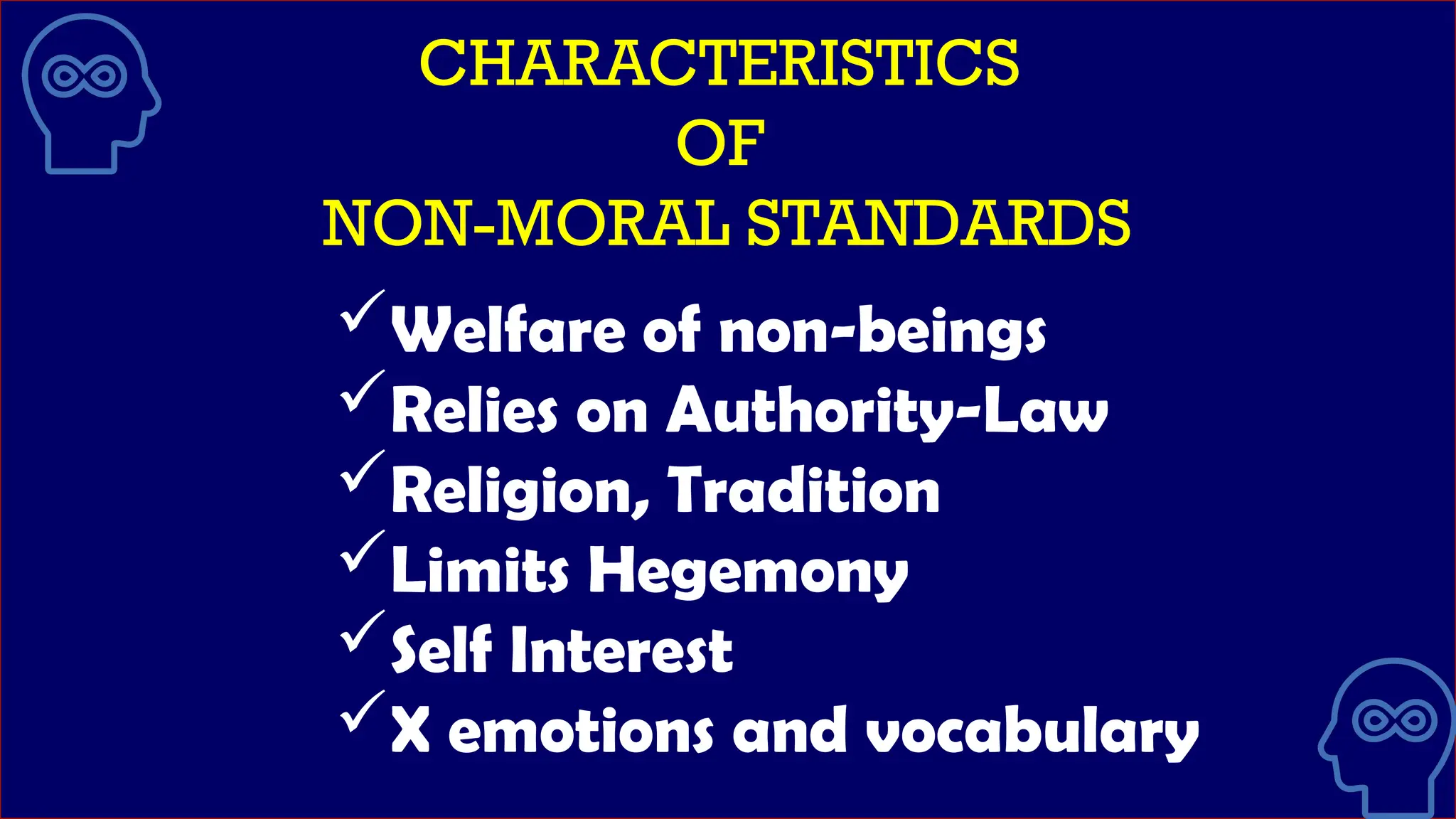
Welfare of non-beings
Relies on Authority-Law
Religion, Tradition
Limits Hegemony
Self Interest
X emotions and vocabulary
CHARACTERISTICS
OF
NON-MORAL STANDARDS
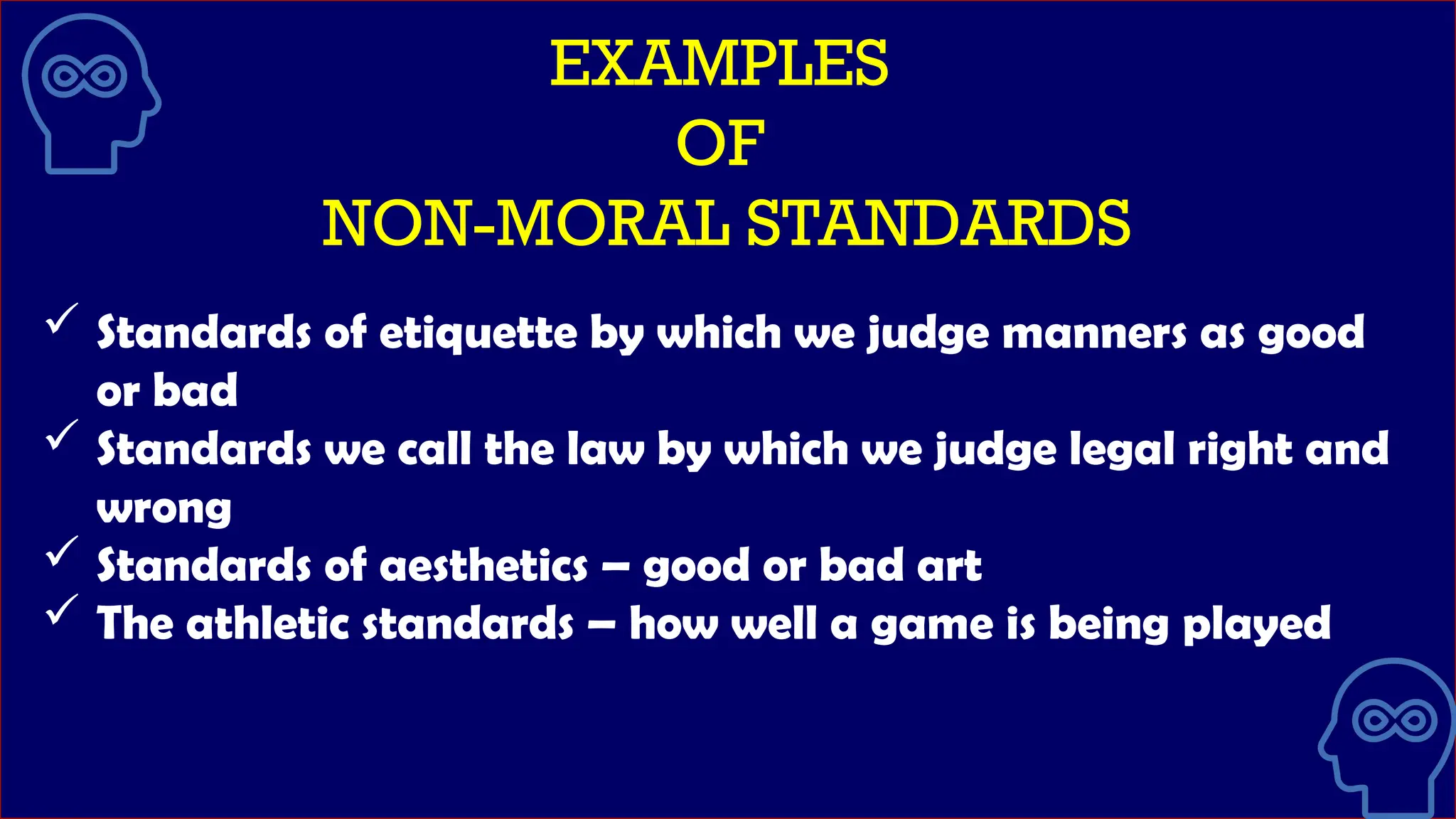
EXAMPLES
OF
NON-MORAL STANDARDS
 Standards of etiquette by which we judge manners as good
or bad
 Standards we call the law by which we judge legal right and
wrong
 Standards of aesthetics – good or bad art
 The athletic standards – how well a game is being played
ACTIVITY 1
Answer the following questions.
1.What is the difference between
moral standards and non-moral
standards?
2. How do you characterize moral
standards? Non-moral standards?
3.When do you say it is a moral
experience?

Ethics 2 - Moral and Non-moral standards .pptx

  • 2.
    STANDARDS WHAT ARE  alevel of quality of attainment. an idea or thing used as a measure, norm or model in comparative evaluation
  • 3.
    WHY WE NEEDTO DISTINGUISH MORAL STANDARDS FROM NON-MORAL ONES? Some values do have moral implications while other’s don’t
  • 4.
    HOW WE ADDRESSTHIS CULTURAL CONUNDRUM People have to understand the difference between moral standards and non-moral ones, to identify fundamental ethical values that may guide our actions.
  • 5.
    MORAL STANDARDS NON-MORAL STANDARDS FORCE OTHERS TOACT ACCORDINGLY WE HAVE NO RIGHT TO IMPOSE ON OTHERS
  • 6.
    MORAL STANDARDS NON-MORAL STANDARDS Whatmoral and non-moral problems? AFFECT OTHER PEOPLE DO NOT AFFECT OTHER PEOPLE
  • 7.
     involve therules people have about the kinds of actions they believe are morally right and wrong, as well as the values they place on the kinds of objects they believe are morally good and morally bad. Some ethicists equate moral standards with moral values and moral principles. MORAL STANDARDS
  • 8.
     are normsthat individuals or groups have about the kinds of actions believed to be morally right or wrong, as well as the values places on what we believed to be morally good or morally bad. MORAL STANDARDS
  • 9.
    normally promote “the good”that is, the welfare and well- being of humans as well as animals and the environment MORAL STANDARDS
  • 10.
    Consistency it may differfrom society to society and culture to culture MORAL STANDARDS
  • 11.
    NORMS VALUES + = MORALSTANDARDS general rules about actions or behaviors Enduring beliefs about what is good and desirable, or not
  • 12.
    CHARACTERISTICS OF MORAL STANDARDS  Dealwith matters we think can seriously injure or benefit humans, animals and the environment;  Not established or changed by the decisions of authoritative individuals or bodies;  Overriding, that is, they take precedence over other standards and considerations, especially of self-interest;  Based on impartial considerations;  Associate with special emotions and vocabulary.
  • 13.
    Different CULTURES have differentmoral standards What is matter of moral indifference that is, a matter of taste in one culture may be a matter of moral significance in another
  • 14.
     refer tostandards by which we judge what is good or bad and right or wrong in a non-moral way.  are matters of taste or preference NON-MORAL STANDARDS
  • 15.
     refers torules that affect the choice of a person but are not linked to moral or ethical considerations, similar with ethics people use value judgment in dealing with these aspects. NON-MORAL STANDARDS
  • 16.
     Manage individuallife, aspirations and desires and may decide a person’s place in his group. Some non-moral standards of any society could be the table manners, general etiquette, clothing etc. NON-MORAL STANDARDS
  • 17.
     Govern individuallife, aspirations and desires and may decide a person’s place in his group. Some non-moral standards of any society could be grammar and language expectation, clothing, etc. NON-MORAL STANDARDS
  • 18.
    Examples:  Standards ofetiquette  The law  Standards of aesthetics NON-MORAL STANDARDS
  • 19.
     is aset of rules on how an individual should responsibly behave in the society. Table manners such as the proper use of utensils and the proper manner of eating are examples of etiquette. ETIQUETTE
  • 20.
     What falloutside the scope  Any violations that does not pose a serious threat to human well-being Example: wearing shorts to a formal party NON-MORAL STANDARDS
  • 21.
    Welfare of non-beings Relieson Authority-Law Religion, Tradition Limits Hegemony Self Interest X emotions and vocabulary CHARACTERISTICS OF NON-MORAL STANDARDS
  • 22.
    EXAMPLES OF NON-MORAL STANDARDS  Standardsof etiquette by which we judge manners as good or bad  Standards we call the law by which we judge legal right and wrong  Standards of aesthetics – good or bad art  The athletic standards – how well a game is being played
  • 23.
    ACTIVITY 1 Answer thefollowing questions. 1.What is the difference between moral standards and non-moral standards? 2. How do you characterize moral standards? Non-moral standards? 3.When do you say it is a moral experience?