Moral vs. Non-moral
Standards
Presenters;
Artuz, Emerald Dale E. (Moral Standards)
Autor, Berlene Jane A. (Non-Moral Standards)
Introduction
• Used or accepted as normal or average.
• An idea or thing used to measure, norm or model in
comparative evaluation.
What is a standard?
ARTUZ
Why do we need to distinguish moral standards
from non-moral one?
• Some values do have moral implications while others
don’t.
How do we address cultural conundrum?
• People have to understand the difference between
moral standards and non-moral ones, to identify
fundamental ethical values that may guide our
actions. ARTUZ
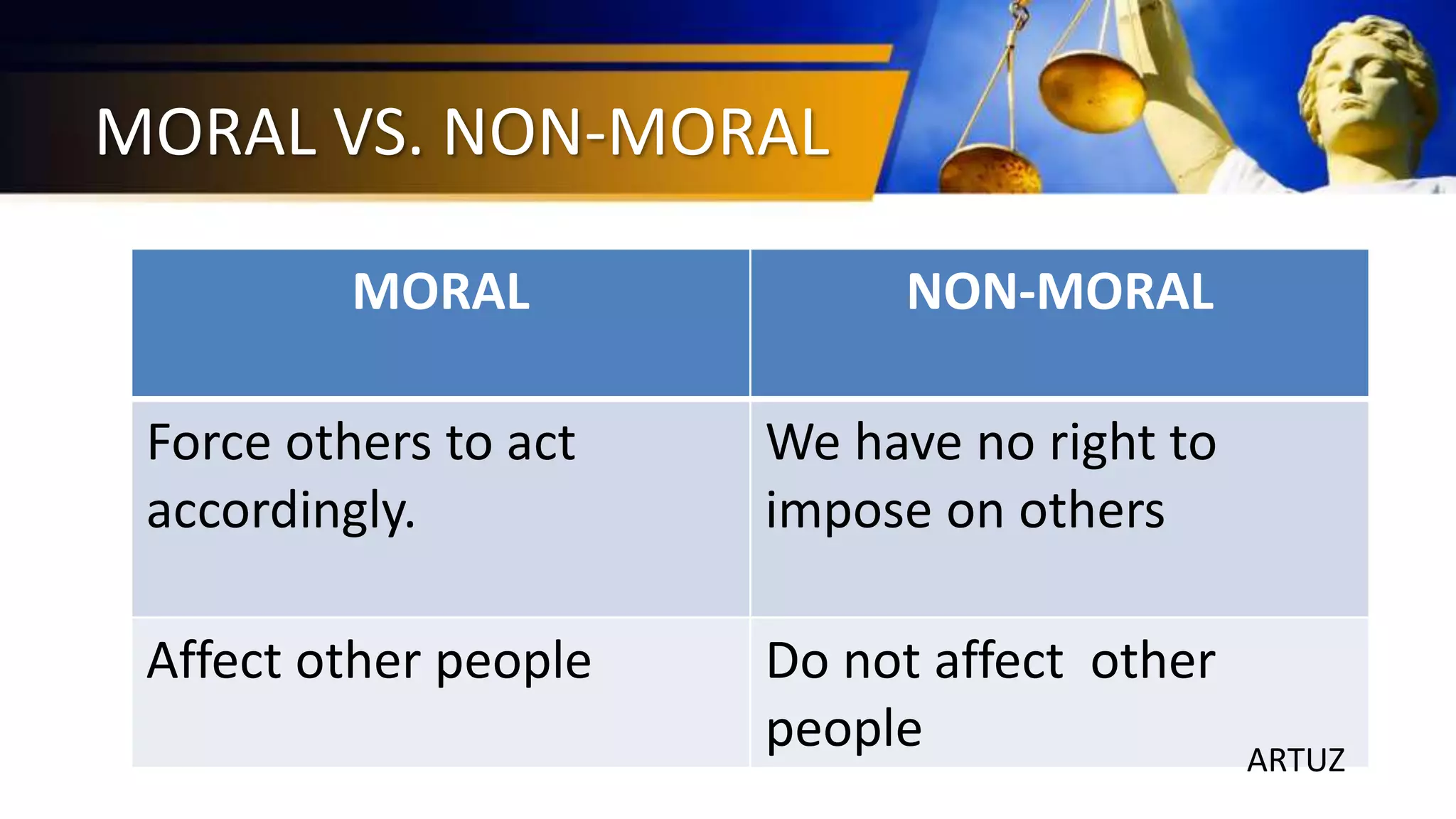
MORAL VS. NON-MORAL
MORAL NON-MORAL
Force others to act
accordingly.
We have no right to
impose on others
Affect other people Do not affect other
people ARTUZ
Moral Standard
• Based on natural Law, the consequence of
one's action and sense of duty.
• Normally promote “the good”.
Consistency of Moral Standards
• May differ from society to society and culture
to culture.
ARTUZ
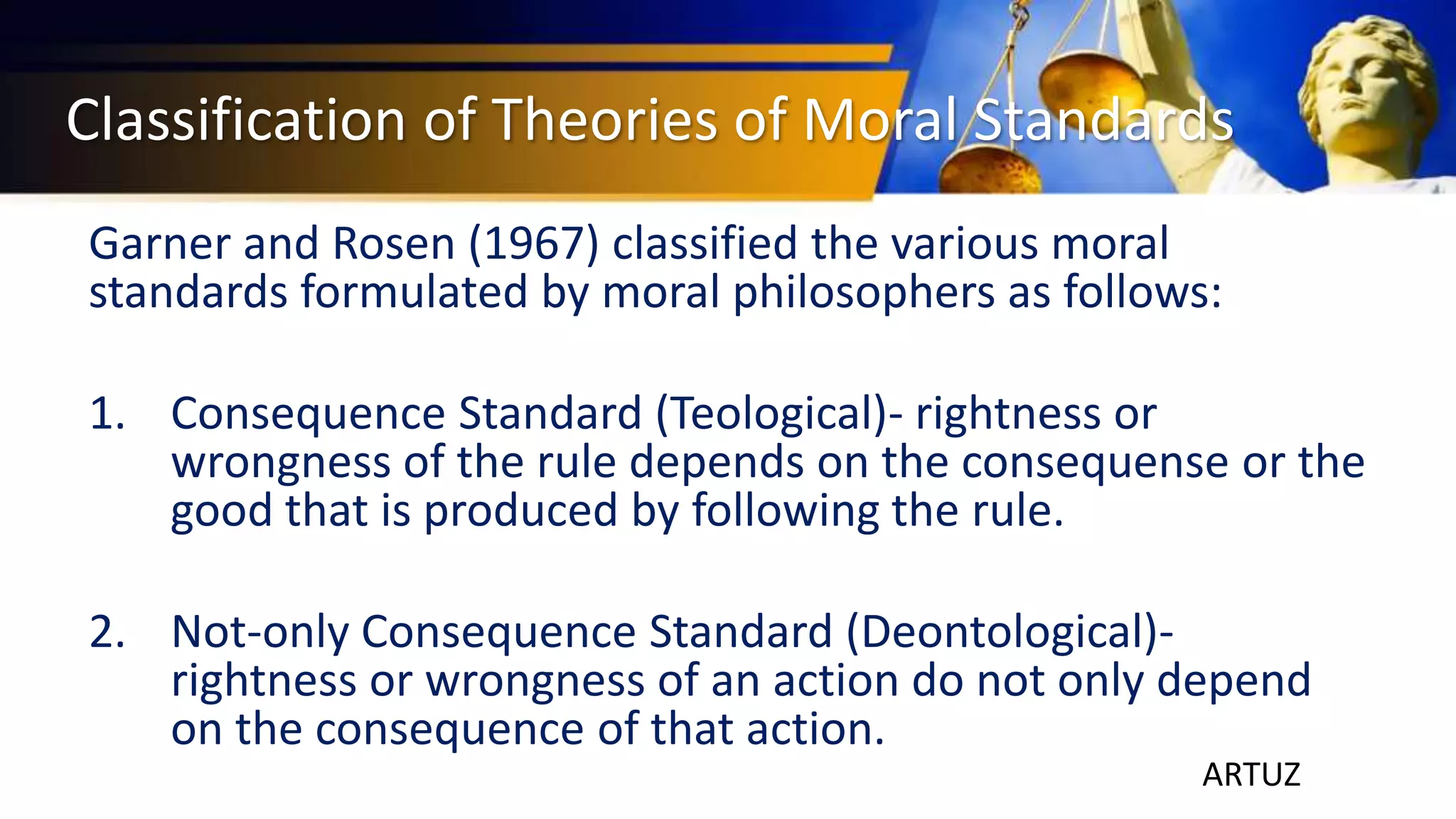
Classification of Theories of Moral Standards
Garner and Rosen (1967) classified the various moral
standards formulated by moral philosophers as follows:
1. Consequence Standard (Teological)- rightness or
wrongness of the rule depends on the consequense or the
good that is produced by following the rule.
2. Not-only Consequence Standard (Deontological)-
rightness or wrongness of an action do not only depend
on the consequence of that action.
ARTUZ
What makes standards Moral?
• For Theist- God is the ultimate source of what is
moral revealed to human person.
• For Non-theist- God is not the source of Morality.
- moral standards are
based on the wisdom of philosopheres like Confucius
or Immanuel Kant.
ARTUZ
Characteristics of Moral Standards
• Welfare of beings
• Relies on sound reasoning
• Overriding hegemony
• Impartial, fair and just
• Emotions and vocabulary
ARTUZ
Origin of Moral Standards
• Theist: the theistic line of thought
states moral standards are of divine
origin.
• Non-theist: (20th century Thinkers)
claim that they simply evolve..
Non-Moral Standards
• Originates from social rules, demands
of etiquette, and good mmanners.
• They are guide actions which should be
followed as expectedby the society.
AUTOR
Non-Moral Standards
• Refer to standards by which we judge
what is good or bad in a non-moral way.
• Are matters of taste or preference.
• Not linked to moral considerations.
• Manage and govern individual life,
aspirations and desires that may decide a
person’s place in a group.
AUTOR
Non-Moral Standards
• Set of rules on how an individual should
behave in society.
• Any violations that does not pose a
serious threat to human well-being.
• Include independence, prestige, fame,
popularity and wealth.
AUTOR
Example of Non-moral Standards
• Standards of etiquette
• The law
• Standards of aesthetic
AUTOR
Non-moral Characteristic
• Welfare of non-beings
• Relies on authority or law
• Religion, tradition
• Limits Hegemony
• Self Interest
• X emotions and vocabulary
AUTOR
Examples of Non-moral Standards
• Standards of etiquette by which we judge manners as
good or bad.
• Standards we call the law by which we judge legal
right and wrong.
• Standards of aesthetics--- good and bad art.
• The athletic standards--- how well a game is being
played.
AUTOR
THANK YOU FOR LISTENING <3
END OF PRESENTATION
MORAL-VS.-NON-MORAL (1).pptx

MORAL-VS.-NON-MORAL (1).pptx

  • 1.
    Moral vs. Non-moral Standards Presenters; Artuz,Emerald Dale E. (Moral Standards) Autor, Berlene Jane A. (Non-Moral Standards)
  • 2.
    Introduction • Used oraccepted as normal or average. • An idea or thing used to measure, norm or model in comparative evaluation. What is a standard? ARTUZ
  • 3.
    Why do weneed to distinguish moral standards from non-moral one? • Some values do have moral implications while others don’t. How do we address cultural conundrum? • People have to understand the difference between moral standards and non-moral ones, to identify fundamental ethical values that may guide our actions. ARTUZ
  • 4.
    MORAL VS. NON-MORAL MORALNON-MORAL Force others to act accordingly. We have no right to impose on others Affect other people Do not affect other people ARTUZ
  • 5.
    Moral Standard • Basedon natural Law, the consequence of one's action and sense of duty. • Normally promote “the good”. Consistency of Moral Standards • May differ from society to society and culture to culture. ARTUZ
  • 6.
    Classification of Theoriesof Moral Standards Garner and Rosen (1967) classified the various moral standards formulated by moral philosophers as follows: 1. Consequence Standard (Teological)- rightness or wrongness of the rule depends on the consequense or the good that is produced by following the rule. 2. Not-only Consequence Standard (Deontological)- rightness or wrongness of an action do not only depend on the consequence of that action. ARTUZ
  • 7.
    What makes standardsMoral? • For Theist- God is the ultimate source of what is moral revealed to human person. • For Non-theist- God is not the source of Morality. - moral standards are based on the wisdom of philosopheres like Confucius or Immanuel Kant. ARTUZ
  • 8.
    Characteristics of MoralStandards • Welfare of beings • Relies on sound reasoning • Overriding hegemony • Impartial, fair and just • Emotions and vocabulary ARTUZ
  • 9.
    Origin of MoralStandards • Theist: the theistic line of thought states moral standards are of divine origin. • Non-theist: (20th century Thinkers) claim that they simply evolve..
  • 10.
    Non-Moral Standards • Originatesfrom social rules, demands of etiquette, and good mmanners. • They are guide actions which should be followed as expectedby the society. AUTOR
  • 11.
    Non-Moral Standards • Referto standards by which we judge what is good or bad in a non-moral way. • Are matters of taste or preference. • Not linked to moral considerations. • Manage and govern individual life, aspirations and desires that may decide a person’s place in a group. AUTOR
  • 12.
    Non-Moral Standards • Setof rules on how an individual should behave in society. • Any violations that does not pose a serious threat to human well-being. • Include independence, prestige, fame, popularity and wealth. AUTOR
  • 13.
    Example of Non-moralStandards • Standards of etiquette • The law • Standards of aesthetic AUTOR
  • 14.
    Non-moral Characteristic • Welfareof non-beings • Relies on authority or law • Religion, tradition • Limits Hegemony • Self Interest • X emotions and vocabulary AUTOR
  • 15.
    Examples of Non-moralStandards • Standards of etiquette by which we judge manners as good or bad. • Standards we call the law by which we judge legal right and wrong. • Standards of aesthetics--- good and bad art. • The athletic standards--- how well a game is being played. AUTOR
  • 16.
    THANK YOU FORLISTENING <3 END OF PRESENTATION