Ethical Issues in
Leadership
Contents of our presentation
Here’s what you’ll find in our presentation:
1. Definition what is Ethics and Ethical Leadership
2. Why do Ethics matter?
3. Most Common Ethical Challenges for Leaders
4. Leadership Approaches (Scope of Unethical behavior)
5. Outcomes of Ethical Leadership
6. Levels of management and ethical leadership
7. Factors that Enhance Leadership
● Ethical role modeling
● Ethical context
● Individual characteristics
Ethics
• is derived from the Greek word
“ethos” meaning custom or character
• Right from wrong
• Standards of moral values and
conducts that govern decision made
and actions carried out in the work
environment
• A leader should be ethical for the
better working of the organization
What is Ethical
Leadership?
Is directed by respect for ethical beliefs and
values and for the dignity and rights of
others.
Ethical Leadership
Why do
Ethics
Matter?
Why do Ethics Matter?
Good leaders are
credible
Good Leaders
don’t want to
harm others
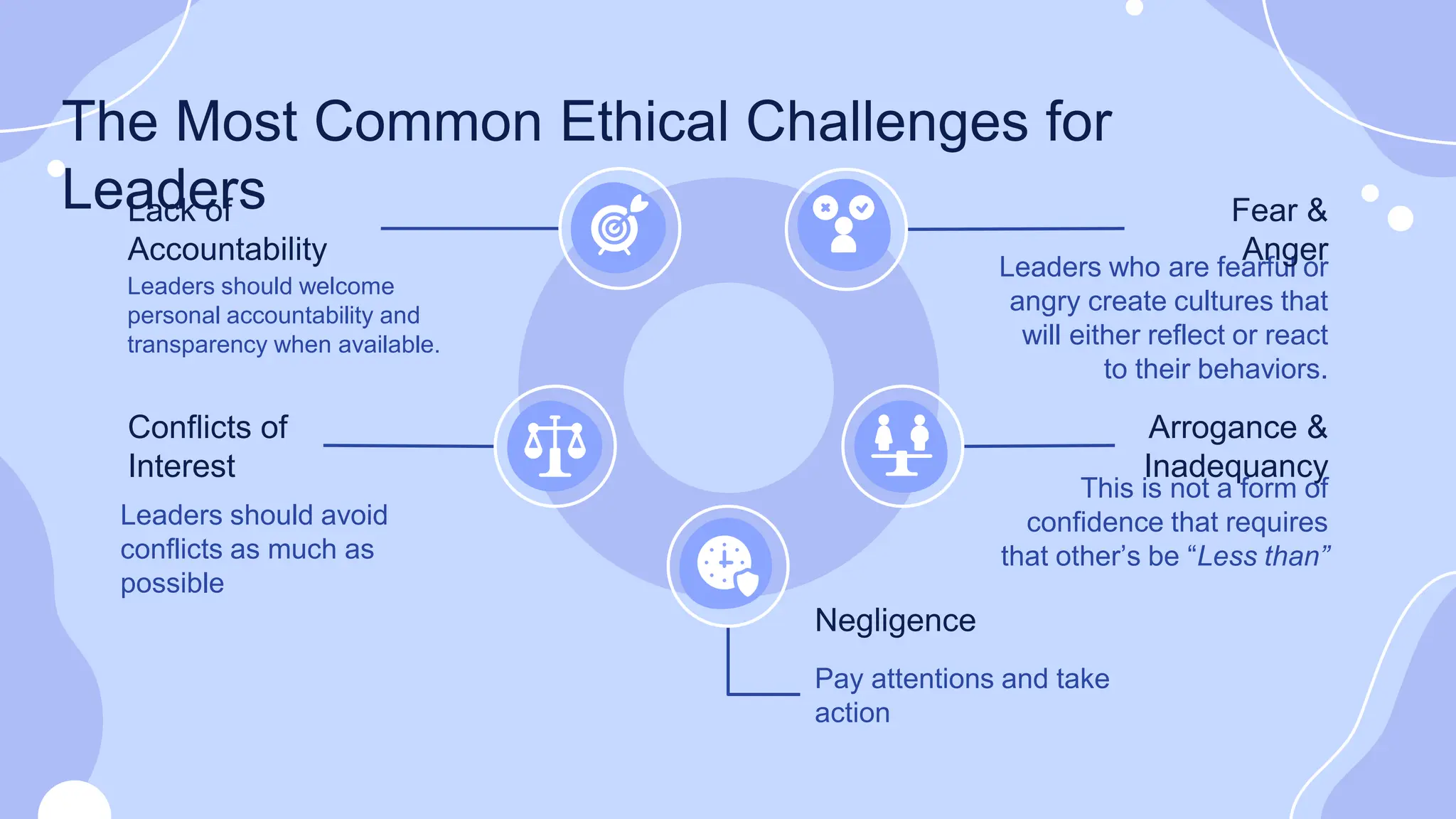
The Most Common Ethical Challenges for
Leaders
Lack of
Accountability
Leaders should welcome
personal accountability and
transparency when available.
Conflicts of
Interest
Leaders should avoid
conflicts as much as
possible
Leaders who are fearful or
angry create cultures that
will either reflect or react
to their behaviors.
Fear &
Anger
Arrogance &
Inadequancy
This is not a form of
confidence that requires
that other’s be “Less than”
Negligence
Pay attentions and take
action
Leadership Approaches (Scope of Unethical
behavior)
Leadership
Approaches
Definition
Laissez Fair
Approach
●It is the type in which leaders are hands-off and allow group
members to make decisions, with minimum amount of
supervision
Autocratic
Approach
●Managers possess total authority and more often than not,
impose their will upon employees without any consideration
for their ideas
Participative
Approach
●It values input of team members and peers.
Transformational
Approach
●In this approach, Leaders motivate employees and enhance
productivity and efficiency through communication and high
visibility
Transactional Approach
This approach involves
manages and team members
setting pre determined goals
and employees agreeing to
follow the direction of the
manager
05
Prosocial
behavior of
employee
Counter
productive
behavior of
employees
Ethical Decisions
of followers
Outcomes of Ethical Leadership
Positive follower
attitude
Factors that
Enhance Ethical
Leadership
Ethical Role
Modeling
Leaders also learn from a
role model
Ethical
Context
Ethical climate or the
culture in an organization
that supports ethics-related
attitudes and behaviours
Individual
Characteristics
• Agreeableness
• Conscientiousness
Factors that Enchance
Leadership
Levels of
Management and
Ethical Leadership
Content of the Leader’s Job
● Executive and managerial work are
different, with roles and challenges that
are unique to each level. Certain
aspects of ethical leadership are likely
to vary depending on the level of
management.
Distance between leaders and
followers
● This expressed; physical distance,
social distance or frequency of task
interaction has an important impact on
how leaders are perceived as well the
outcomes with which they are
associated.
Thank you!
Angeles, Cathleen
Damian, Jap
Delos Santos, Justine
Donato, Mariecar

Ethical Issues in Leadership Powerpoint.

  • 1.
  • 2.
    Contents of ourpresentation Here’s what you’ll find in our presentation: 1. Definition what is Ethics and Ethical Leadership 2. Why do Ethics matter? 3. Most Common Ethical Challenges for Leaders 4. Leadership Approaches (Scope of Unethical behavior) 5. Outcomes of Ethical Leadership 6. Levels of management and ethical leadership 7. Factors that Enhance Leadership ● Ethical role modeling ● Ethical context ● Individual characteristics
  • 3.
    Ethics • is derivedfrom the Greek word “ethos” meaning custom or character • Right from wrong • Standards of moral values and conducts that govern decision made and actions carried out in the work environment • A leader should be ethical for the better working of the organization
  • 4.
  • 5.
    Is directed byrespect for ethical beliefs and values and for the dignity and rights of others. Ethical Leadership
  • 6.
  • 7.
    Why do EthicsMatter? Good leaders are credible Good Leaders don’t want to harm others
  • 8.
    The Most CommonEthical Challenges for Leaders Lack of Accountability Leaders should welcome personal accountability and transparency when available. Conflicts of Interest Leaders should avoid conflicts as much as possible Leaders who are fearful or angry create cultures that will either reflect or react to their behaviors. Fear & Anger Arrogance & Inadequancy This is not a form of confidence that requires that other’s be “Less than” Negligence Pay attentions and take action
  • 9.
    Leadership Approaches (Scopeof Unethical behavior) Leadership Approaches Definition Laissez Fair Approach ●It is the type in which leaders are hands-off and allow group members to make decisions, with minimum amount of supervision Autocratic Approach ●Managers possess total authority and more often than not, impose their will upon employees without any consideration for their ideas Participative Approach ●It values input of team members and peers. Transformational Approach ●In this approach, Leaders motivate employees and enhance productivity and efficiency through communication and high visibility
  • 10.
    Transactional Approach This approachinvolves manages and team members setting pre determined goals and employees agreeing to follow the direction of the manager 05
  • 11.
    Prosocial behavior of employee Counter productive behavior of employees EthicalDecisions of followers Outcomes of Ethical Leadership Positive follower attitude
  • 12.
  • 13.
    Ethical Role Modeling Leaders alsolearn from a role model Ethical Context Ethical climate or the culture in an organization that supports ethics-related attitudes and behaviours Individual Characteristics • Agreeableness • Conscientiousness Factors that Enchance Leadership
  • 14.
    Levels of Management and EthicalLeadership Content of the Leader’s Job ● Executive and managerial work are different, with roles and challenges that are unique to each level. Certain aspects of ethical leadership are likely to vary depending on the level of management. Distance between leaders and followers ● This expressed; physical distance, social distance or frequency of task interaction has an important impact on how leaders are perceived as well the outcomes with which they are associated.
  • 15.
    Thank you! Angeles, Cathleen Damian,Jap Delos Santos, Justine Donato, Mariecar