

ESTHETICS IN
ORTHODONTICS
Miliya Parveen
CONTENTS
 Introduction
 History
 Records for studying esthetics
 Smile design wheel
 Macro-aesthetics
 Mini-aesthetics
 Deep Overbite correction
 Treatment of gummy smiles
 Micro-aesthetics
 Elements of a balanced smile
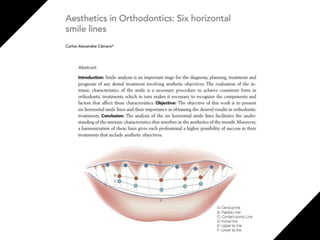
 Six horizontal lines
 Canine to lateral incisor
 Premolar to canine
 Influence of extractions on smile esthetics
 Conclusion
INTRODUCTION
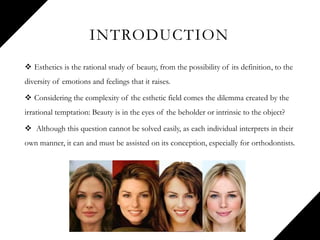
 Esthetics is the rational study of beauty, from the possibility of its definition, to the
diversity of emotions and feelings that it raises.
 Considering the complexity of the esthetic field comes the dilemma created by the
irrational temptation: Beauty is in the eyes of the beholder or intrinsic to the object?
 Although this question cannot be solved easily, as each individual interprets in their
own manner, it can and must be assisted on its conception, especially for orthodontists.
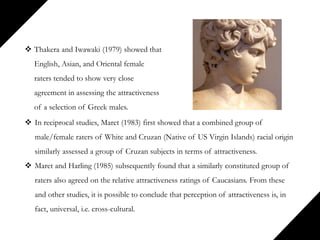
 Thakera and Iwawaki (1979) showed that
English, Asian, and Oriental female
raters tended to show very close
agreement in assessing the attractiveness
of a selection of Greek males.
 In reciprocal studies, Maret (1983) first showed that a combined group of
male/female raters of White and Cruzan (Native of US Virgin Islands) racial origin
similarly assessed a group of Cruzan subjects in terms of attractiveness.
 Maret and Harling (1985) subsequently found that a similarly constituted group of
raters also agreed on the relative attractiveness ratings of Caucasians. From these
and other studies, it is possible to conclude that perception of attractiveness is, in
fact, universal, i.e. cross-cultural.
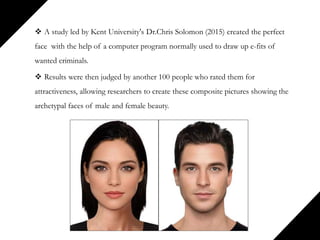
 A study led by Kent University's Dr.Chris Solomon (2015) created the perfect
face with the help of a computer program normally used to draw up e-fits of
wanted criminals.
 Results were then judged by another 100 people who rated them for
attractiveness, allowing researchers to create these composite pictures showing the
archetypal faces of male and female beauty.
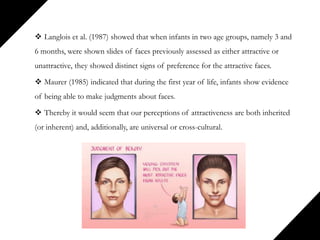
 Langlois et al. (1987) showed that when infants in two age groups, namely 3 and
6 months, were shown slides of faces previously assessed as either attractive or
unattractive, they showed distinct signs of preference for the attractive faces.
 Maurer (1985) indicated that during the first year of life, infants show evidence
of being able to make judgments about faces.
 Thereby it would seem that our perceptions of attractiveness are both inherited
(or inherent) and, additionally, are universal or cross-cultural.
HISTORY
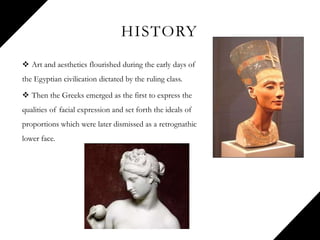
 Art and aesthetics flourished during the early days of
the Egyptian civilication dictated by the ruling class.
 Then the Greeks emerged as the first to express the
qualities of facial expression and set forth the ideals of
proportions which were later dismissed as a retrognathic
lower face.
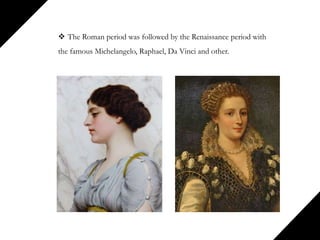
 The Roman period was followed by the Renaissance period with
the famous Michelangelo, Raphael, Da Vinci and other.
GOLDEN PROPORTION
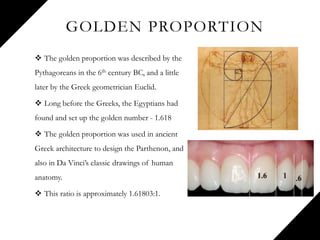
 The golden proportion was described by the
Pythagoreans in the 6th century BC, and a little
later by the Greek geometrician Euclid.
 Long before the Greeks, the Egyptians had
found and set up the golden number - 1.618
 The golden proportion was used in ancient
Greek architecture to design the Parthenon, and
also in Da Vinci’s classic drawings of human
anatomy.
 This ratio is approximately 1.61803:1.
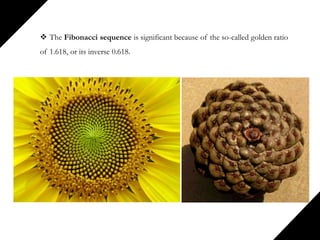
 The Fibonacci sequence is significant because of the so-called golden ratio
of 1.618, or its inverse 0.618.
RECORDS FOR STUDYING
ESTHETICS
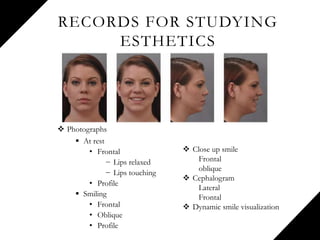
 Photographs
 At rest
• Frontal
− Lips relaxed
− Lips touching
• Profile
 Smiling
• Frontal
• Oblique
• Profile
 Close up smile
Frontal
oblique
 Cephalogram
Lateral
Frontal
 Dynamic smile visualization
SMILE DESIGN WHEEL
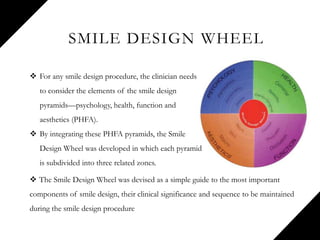
 The Smile Design Wheel was devised as a simple guide to the most important
components of smile design, their clinical significance and sequence to be maintained
during the smile design procedure
 For any smile design procedure, the clinician needs
to consider the elements of the smile design
pyramids—psychology, health, function and
aesthetics (PHFA).
 By integrating these PHFA pyramids, the Smile
Design Wheel was developed in which each pyramid
is subdivided into three related zones.
Step I: understand—
the pyramid of psychology
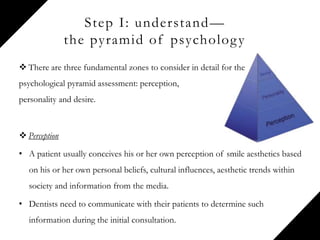
 There are three fundamental zones to consider in detail for the
psychological pyramid assessment: perception,
personality and desire.
 Perception
• A patient usually conceives his or her own perception of smile aesthetics based
on his or her own personal beliefs, cultural influences, aesthetic trends within
society and information from the media.
• Dentists need to communicate with their patients to determine such
information during the initial consultation.
 Personality
• According to Roger P. Levin, there are four personality types:
A. Driven: This type of person focuses on results, makes decisions quickly and
dislikes small talk. They are highly organised, like details in condensed form, are
businesslike and assertive.
B. Expressive: This type of person wants to feel good, is highly emotional, makes
decisions quickly, dislikes details or paperwork, and likes to have a good time.
C. Amiable: People with this personality type are attracted by people with similar
interests, fear consequences, are slow in decision-making, react poorly to pressure,
are emotional and slow to change.
D. Analytical: This type of person requires endless details and information, has an
inquiring mind, is highly exacting and emotional. This type is the most difficult to
convince and takes the longest to reach a decision
 Desire
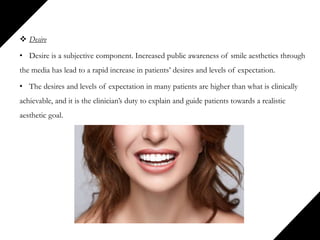
• Desire is a subjective component. Increased public awareness of smile aesthetics through
the media has lead to a rapid increase in patients’ desires and levels of expectation.
• The desires and levels of expectation in many patients are higher than what is clinically
achievable, and it is the clinician’s duty to explain and guide patients towards a realistic
aesthetic goal.
Step II: establish—
the pyramid of health
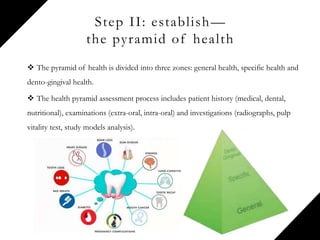
 The pyramid of health is divided into three zones: general health, specific health and
dento-gingival health.
 The health pyramid assessment process includes patient history (medical, dental,
nutritional), examinations (extra-oral, intra-oral) and investigations (radiographs, pulp
vitality test, study models analysis).
Step III: restore—
the pyramid of function
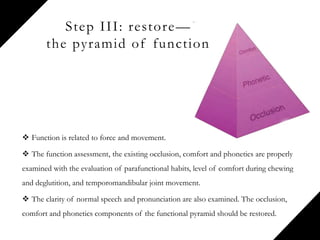
 Function is related to force and movement.
 The function assessment, the existing occlusion, comfort and phonetics are properly
examined with the evaluation of parafunctional habits, level of comfort during chewing
and deglutition, and temporomandibular joint movement.
 The clarity of normal speech and pronunciation are also examined. The occlusion,
comfort and phonetics components of the functional pyramid should be restored.
Step IV: enhance—
the pyramid of aesthetics
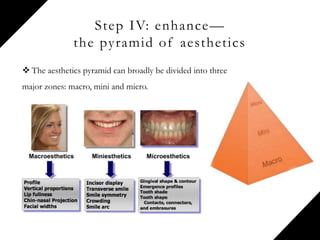
 The aesthetics pyramid can broadly be divided into three
major zones: macro, mini and micro.
MACRO-AESTHETICS
• Deals with the overall structure of the face and its relation to the smile.
• To appreciate the macro-aesthetic components of any smile, the visual
macro-aesthetics distance should be more than 5 feet.
• Assessment is done using various facial photographs, using reference points
and their interrelation.
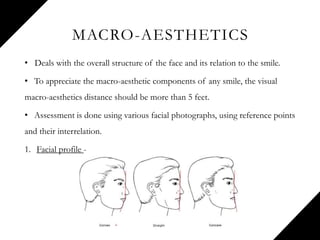
1. Facial profile -
2. Facial proportion –
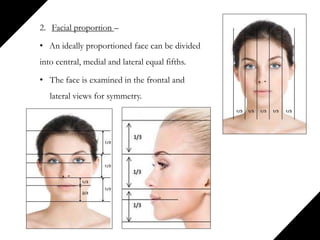
• An ideally proportioned face can be divided
into central, medial and lateral equal fifths.
• The face is examined in the frontal and
lateral views for symmetry.
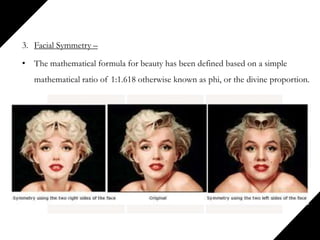
3. Facial Symmetry –
• The mathematical formula for beauty has been defined based on a simple
mathematical ratio of 1:1.618 otherwise known as phi, or the divine proportion.
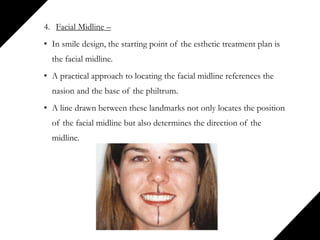
4. Facial Midline –
• In smile design, the starting point of the esthetic treatment plan is
the facial midline.
• A practical approach to locating the facial midline references the
nasion and the base of the philtrum.
• A line drawn between these landmarks not only locates the position
of the facial midline but also determines the direction of the
midline.
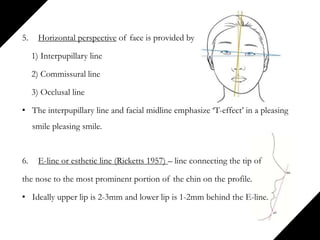
5. Horizontal perspective of face is provided by
1) Interpupillary line
2) Commissural line
3) Occlusal line
• The interpupillary line and facial midline emphasize ‘T-effect’ in a pleasing
smile pleasing smile.
6. E-line or esthetic line (Ricketts 1957) – line connecting the tip of
the nose to the most prominent portion of the chin on the profile.
• Ideally upper lip is 2-3mm and lower lip is 1-2mm behind the E-line.
MINI-AESTHETICS
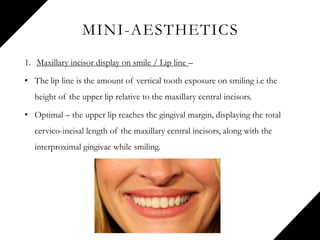
1. Maxillary incisor display on smile / Lip line –
• The lip line is the amount of vertical tooth exposure on smiling i.e the
height of the upper lip relative to the maxillary central incisors.
• Optimal – the upper lip reaches the gingival margin, displaying the total
cervico-incisal length of the maxillary central incisors, along with the
interproximal gingivae while smiling.
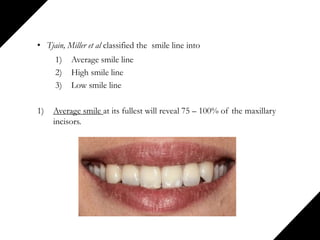
• Tjain, Miller et al classified the smile line into
1) Average smile line
2) High smile line
3) Low smile line
1) Average smile at its fullest will reveal 75 – 100% of the maxillary
incisors.
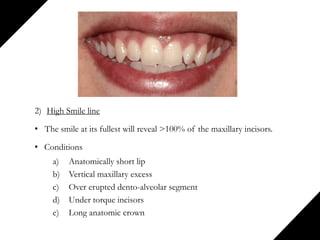
2) High Smile line
• The smile at its fullest will reveal >100% of the maxillary incisors.
• Conditions
a) Anatomically short lip
b) Vertical maxillary excess
c) Over erupted dento-alveolar segment
d) Under torque incisors
e) Long anatomic crown
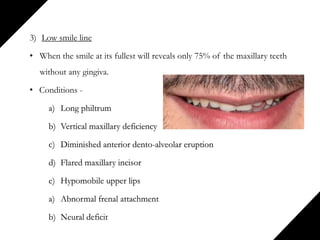
3) Low smile line
• When the smile at its fullest will reveals only 75% of the maxillary teeth
without any gingiva.
• Conditions -
a) Long philtrum
b) Vertical maxillary deficiency
c) Diminished anterior dento-alveolar eruption
d) Flared maxillary incisor
e) Hypomobile upper lips
a) Abnormal frenal attachment
b) Neural deficit
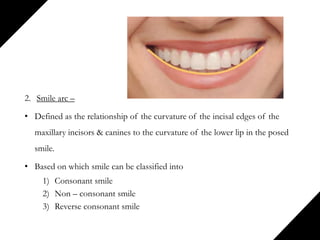
2. Smile arc –
• Defined as the relationship of the curvature of the incisal edges of the
maxillary incisors & canines to the curvature of the lower lip in the posed
smile.
• Based on which smile can be classified into
1) Consonant smile
2) Non – consonant smile
3) Reverse consonant smile
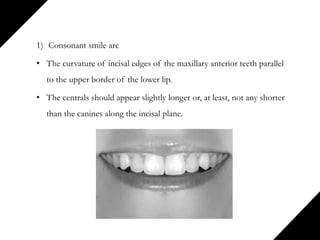
1) Consonant smile arc
• The curvature of incisal edges of the maxillary anterior teeth parallel
to the upper border of the lower lip.
• The centrals should appear slightly longer or, at least, not any shorter
than the canines along the incisal plane.
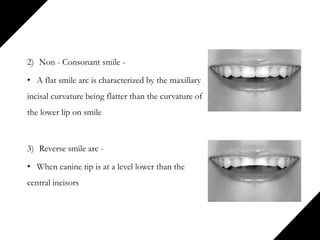
2) Non - Consonant smile -
• A flat smile arc is characterized by the maxillary
incisal curvature being flatter than the curvature of
the lower lip on smile
3) Reverse smile arc -
• When canine tip is at a level lower than the
central incisors
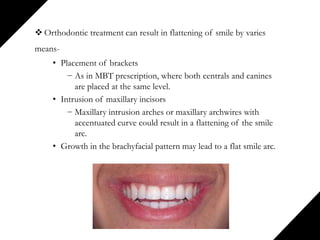
 Orthodontic treatment can result in flattening of smile by varies
means-
• Placement of brackets
− As in MBT prescription, where both centrals and canines
are placed at the same level.
• Intrusion of maxillary incisors
− Maxillary intrusion arches or maxillary archwires with
accentuated curve could result in a flattening of the smile
arc.
• Growth in the brachyfacial pattern may lead to a flat smile arc.
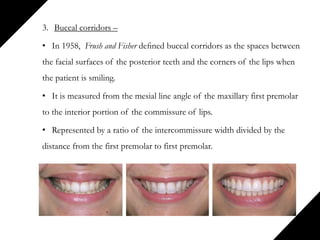
3. Buccal corridors –
• In 1958, Frush and Fisher defined buccal corridors as the spaces between
the facial surfaces of the posterior teeth and the corners of the lips when
the patient is smiling.
• It is measured from the mesial line angle of the maxillary first premolar
to the interior portion of the commissure of lips.
• Represented by a ratio of the intercommissure width divided by the
distance from the first premolar to first premolar.
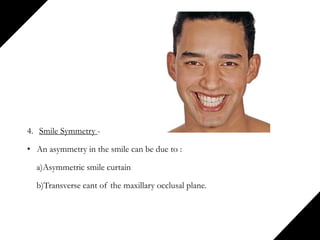
4. Smile Symmetry -
• An asymmetry in the smile can be due to :
a)Asymmetric smile curtain
b)Transverse cant of the maxillary occlusal plane.
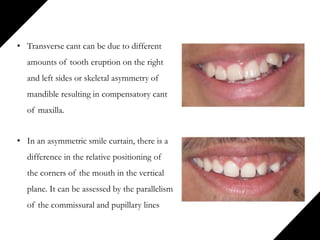
• Transverse cant can be due to different
amounts of tooth eruption on the right
and left sides or skeletal asymmetry of
mandible resulting in compensatory cant
of maxilla.
• In an asymmetric smile curtain, there is a
difference in the relative positioning of
the corners of the mouth in the vertical
plane. It can be assessed by the parallelism
of the commissural and pupillary lines
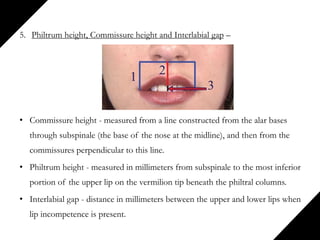
5. Philtrum height, Commissure height and Interlabial gap –
• Commissure height - measured from a line constructed from the alar bases
through subspinale (the base of the nose at the midline), and then from the
commissures perpendicular to this line.
• Philtrum height - measured in millimeters from subspinale to the most inferior
portion of the upper lip on the vermilion tip beneath the philtral columns.
• Interlabial gap - distance in millimeters between the upper and lower lips when
lip incompetence is present.
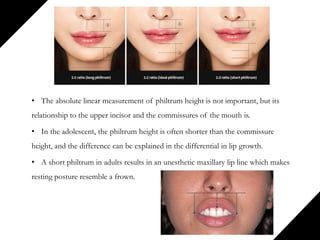
• The absolute linear measurement of philtrum height is not important, but its
relationship to the upper incisor and the commissures of the mouth is.
• In the adolescent, the philtrum height is often shorter than the commissure
height, and the difference can be explained in the differential in lip growth.
• A short philtrum in adults results in an unesthetic maxillary lip line which makes
resting posture resemble a frown.
DEEP OVERBITE CORRECTION
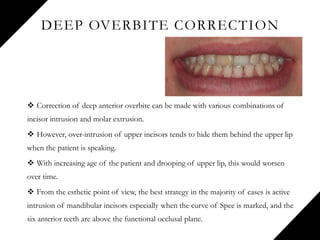
 Correction of deep anterior overbite can be made with various combinations of
incisor intrusion and molar extrusion.
 However, over-intrusion of upper incisors tends to hide them behind the upper lip
when the patient is speaking.
 With increasing age of the patient and drooping of upper lip, this would worsen
over time.
 From the esthetic point of view, the best strategy in the majority of cases is active
intrusion of mandibular incisors especially when the curve of Spee is marked, and the
six anterior teeth are above the functional occlusal plane.
TREATMENT OF GUMMY SMILES
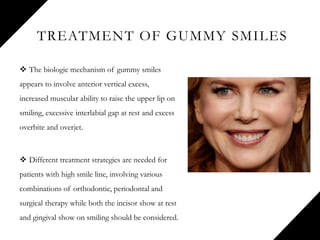
 The biologic mechanism of gummy smiles
appears to involve anterior vertical excess,
increased muscular ability to raise the upper lip on
smiling, excessive interlabial gap at rest and excess
overbite and overjet.
 Different treatment strategies are needed for
patients with high smile line, involving various
combinations of orthodontic, periodontal and
surgical therapy while both the incisor show at rest
and gingival show on smiling should be considered.
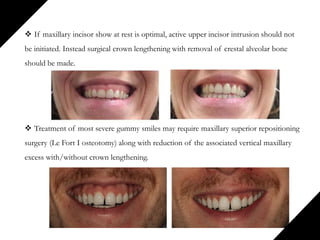
 If maxillary incisor show at rest is optimal, active upper incisor intrusion should not
be initiated. Instead surgical crown lengthening with removal of crestal alveolar bone
should be made.
 Treatment of most severe gummy smiles may require maxillary superior repositioning
surgery (Le Fort I osteotomy) along with reduction of the associated vertical maxillary
excess with/without crown lengthening.
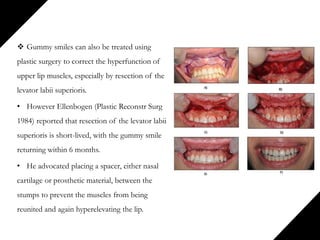
 Gummy smiles can also be treated using
plastic surgery to correct the hyperfunction of
upper lip muscles, especially by resection of the
levator labii superioris.
• However Ellenbogen (Plastic Reconstr Surg
1984) reported that resection of the levator labii
superioris is short-lived, with the gummy smile
returning within 6 months.
• He advocated placing a spacer, either nasal
cartilage or prosthetic material, between the
stumps to prevent the muscles from being
reunited and again hyperelevating the lip.
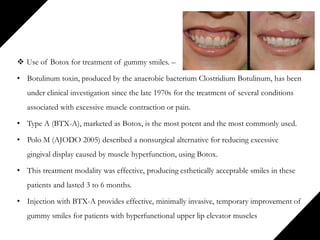
 Use of Botox for treatment of gummy smiles. –
• Botulinum toxin, produced by the anaerobic bacterium Clostridium Botulinum, has been
under clinical investigation since the late 1970s for the treatment of several conditions
associated with excessive muscle contraction or pain.
• Type A (BTX-A), marketed as Botox, is the most potent and the most commonly used.
• Polo M (AJODO 2005) described a nonsurgical alternative for reducing excessive
gingival display caused by muscle hyperfunction, using Botox.
• This treatment modality was effective, producing esthetically acceptable smiles in these
patients and lasted 3 to 6 months.
• Injection with BTX-A provides effective, minimally invasive, temporary improvement of
gummy smiles for patients with hyperfunctional upper lip elevator muscles
MICRO-AESTHETICS
1. Height, Shape And Contour Of The Gingiva –
• Establishing the correct gingival levels for each individual tooth is the key
in the creation of pleasing and harmonious smile.
• The gingival margins of the central incisors should be at the same level or
slightly incisal to that of the canines.
• The gingival margins of the lateral incisors should be towards incisal
when compared to central incisors and canines.
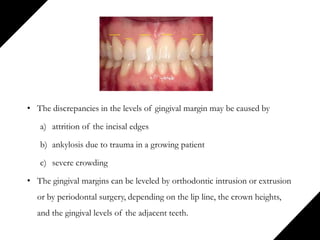
• The discrepancies in the levels of gingival margin may be caused by
a) attrition of the incisal edges
b) ankylosis due to trauma in a growing patient
c) severe crowding
• The gingival margins can be leveled by orthodontic intrusion or extrusion
or by periodontal surgery, depending on the lip line, the crown heights,
and the gingival levels of the adjacent teeth.
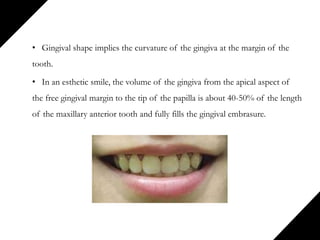
• Gingival shape implies the curvature of the gingiva at the margin of the
tooth.
• In an esthetic smile, the volume of the gingiva from the apical aspect of
the free gingival margin to the tip of the papilla is about 40-50% of the length
of the maxillary anterior tooth and fully fills the gingival embrasure.
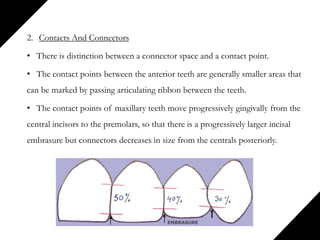
2. Contacts And Connectors
• There is distinction between a connector space and a contact point.
• The contact points between the anterior teeth are generally smaller areas that
can be marked by passing articulating ribbon between the teeth.
• The contact points of maxillary teeth move progressively gingivally from the
central incisors to the premolars, so that there is a progressively larger incisal
embrasure but connectors decreases in size from the centrals posteriorly.
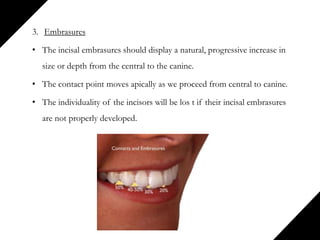
3. Embrasures
• The incisal embrasures should display a natural, progressive increase in
size or depth from the central to the canine.
• The contact point moves apically as we proceed from central to canine.
• The individuality of the incisors will be los t if their incisal embrasures
are not properly developed.
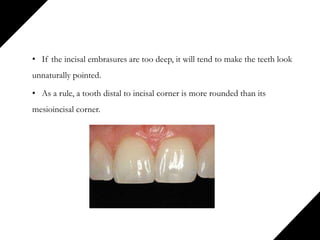
• If the incisal embrasures are too deep, it will tend to make the teeth look
unnaturally pointed.
• As a rule, a tooth distal to incisal corner is more rounded than its
mesioincisal corner.
4. Crown Height And Width -
• Crown height combined with percentage of incisor display is the deciding
factor in the amount of tooth movement required to improve the smile index.
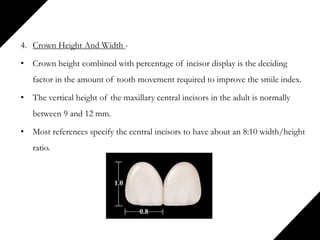
• The vertical height of the maxillary central incisors in the adult is normally
between 9 and 12 mm.
• Most references specify the central incisors to have about an 8:10 width/height
ratio.
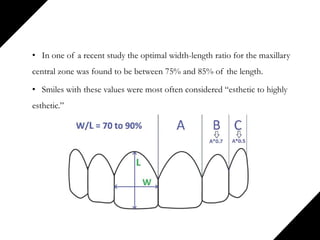
• In one of a recent study the optimal width-length ratio for the maxillary
central zone was found to be between 75% and 85% of the length.
• Smiles with these values were most often considered “esthetic to highly
esthetic.”
5. Mesio-distal Width
• The centrals must be the dominant teeth in the smile and they must
display pleasing proportions.
• The shape and location of the centrals influences or determines the
appearance and placement of the laterals and canine.
• The apparent width of the lateral incisor should be 62% of the
width of the central incisor.
• The apparent width of the canine should be 62% of that of the
lateral incisor.
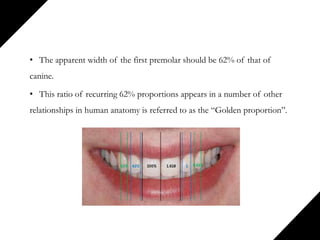
• The apparent width of the first premolar should be 62% of that of
canine.
• This ratio of recurring 62% proportions appears in a number of other
relationships in human anatomy is referred to as the “Golden proportion”.
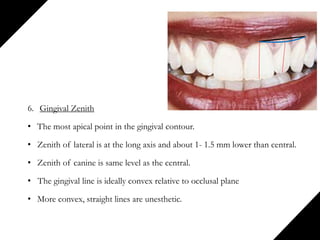
6. Gingival Zenith
• The most apical point in the gingival contour.
• Zenith of lateral is at the long axis and about 1- 1.5 mm lower than central.
• Zenith of canine is same level as the central.
• The gingival line is ideally convex relative to occlusal plane
• More convex, straight lines are unesthetic.
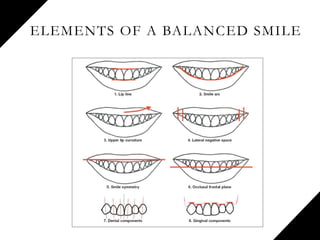
ELEMENTS OF A BALANCED SMILE
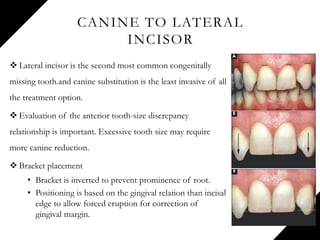
CANINE TO LATERAL
INCISOR
 Lateral incisor is the second most common congenitally
missing tooth.and canine substitution is the least invasive of all
the treatment option.
 Evaluation of the anterior tooth-size discrepancy
relationship is important. Excessive tooth size may require
more canine reduction.
 Bracket placement
• Bracket is inverted to prevent prominence of root.
• Positioning is based on the gingival relation than incisal
edge to allow forced eruption for correction of
gingival margin.
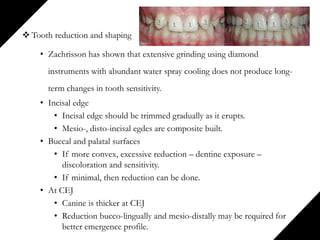
 Tooth reduction and shaping
• Zachrisson has shown that extensive grinding using diamond
instruments with abundant water spray cooling does not produce long-
term changes in tooth sensitivity.
• Incisal edge
• Incisal edge should be trimmed gradually as it erupts.
• Mesio-, disto-incisal egdes are composite built.
• Buccal and palatal surfaces
• If more convex, excessive reduction – dentine exposure –
discoloration and sensitivity.
• If minimal, then reduction can be done.
• At CEJ
• Canine is thicker at CEJ
• Reduction bucco-lingually and mesio-distally may be required for
better emergence profile.
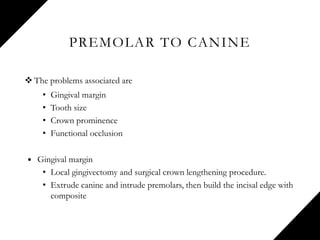
PREMOLAR TO CANINE
 The problems associated are
• Gingival margin
• Tooth size
• Crown prominence
• Functional occlusion
 Gingival margin
• Local gingivectomy and surgical crown lengthening procedure.
• Extrude canine and intrude premolars, then build the incisal edge with
composite
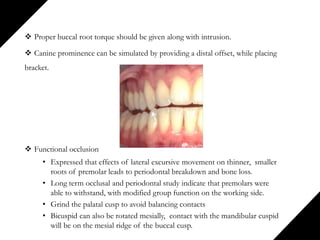
 Proper buccal root torque should be given along with intrusion.
 Canine prominence can be simulated by providing a distal offset, while placing
bracket.
 Functional occlusion
• Expressed that effects of lateral excursive movement on thinner, smaller
roots of premolar leads to periodontal breakdown and bone loss.
• Long term occlusal and periodontal study indicate that premolars were
able to withstand, with modified group function on the working side.
• Grind the palatal cusp to avoid balancing contacts
• Bicuspid can also be rotated mesially, contact with the mandibular cuspid
will be on the mesial ridge of the buccal cusp.
INFLUENCE OF EXTRACTIONS
ON SMILE ESTHETICS
 The criticism concerning the detrimental effects of premolar extraction
therapy on smile esthetics has added another dimension to the 100year-old
extraction vs nonextraction debate.
 Presumably, extraction treatment results in narrower dental arches which are
associated with a less esthetic smile because the dentition is less full during a
smile.
 In addition, this arch width reduction creates unaesthetic black triangles at the
corners of the mouth and negative spaces lateral to the buccal segments.
 Kim and Gianelly (Angle Orthod 2003) studied the dental casts of 30 patients
treated with extraction and 30 patients without extraction of four first premolars, (all
randomly selected to) determine changes in arch width as a result of treatment.
• Standardized frontal photographs of the face taken during smiling of 12 extraction-
and 12 nonextraction treated subjects were evaluated by fifty laypersons who judged the
esthetics of the smiles.
• Intercanine width increased less than one mm in both groups, and there was no
difference between the two groups.
• The results of this study indicate that constricted arch widths are not a usual
outcome of extraction treatment and that neither extraction nor nonextraction
treatment has a preferential effect on smile esthetics.
 Isiksal, Hazar and Akyalcin (AJODO 2006) compared smile esthetics among
extraction and nonextraction patients and a control group, as judged by
orthodontists, plastic surgeons, artists, general dentists, dental professionals, and
parents.
 The mean esthetic scores for the extraction, nonextraction, and control groups
were 3.15, 3.12, and 3.26, on a scale of 5, respectively. (no significant difference ).
 Visible dentition width relative to the smile width ratio and intercanine distance
relative to smile width ratio were significantly different among the groups, with
extraction patients showing a slightly wider dental arch relative to the soft tissue.
CONCLUSION
 The cumulative visual impact of the smile cannot be associated exclusively with the beauty
of individual teeth. Harmony amongst all smile components is more important than merely
focusing on a single ideal smile constituent.
 Smile design is a relatively new discipline in the area of cosmetic dentistry, and it involves
several areas of evaluation and treatment planning.
 It should not be forgotten that each patient is unique, representing a special blend of age
characteristics and expectations, as well as sex and personality specificity.
 Esthetic concepts provide only guidelines and reference points for beginning esthetic
evaluation, treatment planning and subsequent treatment.
 The artistic component of dentistry can be applied and perfected by dentists who
understand the rules, tools and strategies of smile design.
THANK
YOU

Esthetics in orthodontics

  • 1.
  • 2.
    CONTENTS  Introduction  History Records for studying esthetics  Smile design wheel  Macro-aesthetics  Mini-aesthetics  Deep Overbite correction  Treatment of gummy smiles  Micro-aesthetics  Elements of a balanced smile  Six horizontal lines  Canine to lateral incisor  Premolar to canine  Influence of extractions on smile esthetics  Conclusion
  • 3.
    INTRODUCTION  Esthetics isthe rational study of beauty, from the possibility of its definition, to the diversity of emotions and feelings that it raises.  Considering the complexity of the esthetic field comes the dilemma created by the irrational temptation: Beauty is in the eyes of the beholder or intrinsic to the object?  Although this question cannot be solved easily, as each individual interprets in their own manner, it can and must be assisted on its conception, especially for orthodontists.
  • 4.
     Thakera andIwawaki (1979) showed that English, Asian, and Oriental female raters tended to show very close agreement in assessing the attractiveness of a selection of Greek males.  In reciprocal studies, Maret (1983) first showed that a combined group of male/female raters of White and Cruzan (Native of US Virgin Islands) racial origin similarly assessed a group of Cruzan subjects in terms of attractiveness.  Maret and Harling (1985) subsequently found that a similarly constituted group of raters also agreed on the relative attractiveness ratings of Caucasians. From these and other studies, it is possible to conclude that perception of attractiveness is, in fact, universal, i.e. cross-cultural.
  • 5.
     A studyled by Kent University's Dr.Chris Solomon (2015) created the perfect face with the help of a computer program normally used to draw up e-fits of wanted criminals.  Results were then judged by another 100 people who rated them for attractiveness, allowing researchers to create these composite pictures showing the archetypal faces of male and female beauty.
  • 6.
     Langlois etal. (1987) showed that when infants in two age groups, namely 3 and 6 months, were shown slides of faces previously assessed as either attractive or unattractive, they showed distinct signs of preference for the attractive faces.  Maurer (1985) indicated that during the first year of life, infants show evidence of being able to make judgments about faces.  Thereby it would seem that our perceptions of attractiveness are both inherited (or inherent) and, additionally, are universal or cross-cultural.
  • 7.
    HISTORY  Art andaesthetics flourished during the early days of the Egyptian civilication dictated by the ruling class.  Then the Greeks emerged as the first to express the qualities of facial expression and set forth the ideals of proportions which were later dismissed as a retrognathic lower face.
  • 8.
     The Romanperiod was followed by the Renaissance period with the famous Michelangelo, Raphael, Da Vinci and other.
  • 9.
    GOLDEN PROPORTION  Thegolden proportion was described by the Pythagoreans in the 6th century BC, and a little later by the Greek geometrician Euclid.  Long before the Greeks, the Egyptians had found and set up the golden number - 1.618  The golden proportion was used in ancient Greek architecture to design the Parthenon, and also in Da Vinci’s classic drawings of human anatomy.  This ratio is approximately 1.61803:1.
  • 10.
     The Fibonaccisequence is significant because of the so-called golden ratio of 1.618, or its inverse 0.618.
  • 11.
    RECORDS FOR STUDYING ESTHETICS Photographs  At rest • Frontal − Lips relaxed − Lips touching • Profile  Smiling • Frontal • Oblique • Profile  Close up smile Frontal oblique  Cephalogram Lateral Frontal  Dynamic smile visualization
  • 13.
    SMILE DESIGN WHEEL The Smile Design Wheel was devised as a simple guide to the most important components of smile design, their clinical significance and sequence to be maintained during the smile design procedure  For any smile design procedure, the clinician needs to consider the elements of the smile design pyramids—psychology, health, function and aesthetics (PHFA).  By integrating these PHFA pyramids, the Smile Design Wheel was developed in which each pyramid is subdivided into three related zones.
  • 14.
    Step I: understand— thepyramid of psychology  There are three fundamental zones to consider in detail for the psychological pyramid assessment: perception, personality and desire.  Perception • A patient usually conceives his or her own perception of smile aesthetics based on his or her own personal beliefs, cultural influences, aesthetic trends within society and information from the media. • Dentists need to communicate with their patients to determine such information during the initial consultation.
  • 15.
     Personality • Accordingto Roger P. Levin, there are four personality types: A. Driven: This type of person focuses on results, makes decisions quickly and dislikes small talk. They are highly organised, like details in condensed form, are businesslike and assertive. B. Expressive: This type of person wants to feel good, is highly emotional, makes decisions quickly, dislikes details or paperwork, and likes to have a good time. C. Amiable: People with this personality type are attracted by people with similar interests, fear consequences, are slow in decision-making, react poorly to pressure, are emotional and slow to change. D. Analytical: This type of person requires endless details and information, has an inquiring mind, is highly exacting and emotional. This type is the most difficult to convince and takes the longest to reach a decision
  • 16.
     Desire • Desireis a subjective component. Increased public awareness of smile aesthetics through the media has lead to a rapid increase in patients’ desires and levels of expectation. • The desires and levels of expectation in many patients are higher than what is clinically achievable, and it is the clinician’s duty to explain and guide patients towards a realistic aesthetic goal.
  • 17.
    Step II: establish— thepyramid of health  The pyramid of health is divided into three zones: general health, specific health and dento-gingival health.  The health pyramid assessment process includes patient history (medical, dental, nutritional), examinations (extra-oral, intra-oral) and investigations (radiographs, pulp vitality test, study models analysis).
  • 18.
    Step III: restore— thepyramid of function  Function is related to force and movement.  The function assessment, the existing occlusion, comfort and phonetics are properly examined with the evaluation of parafunctional habits, level of comfort during chewing and deglutition, and temporomandibular joint movement.  The clarity of normal speech and pronunciation are also examined. The occlusion, comfort and phonetics components of the functional pyramid should be restored.
  • 19.
    Step IV: enhance— thepyramid of aesthetics  The aesthetics pyramid can broadly be divided into three major zones: macro, mini and micro.
  • 20.
    MACRO-AESTHETICS • Deals withthe overall structure of the face and its relation to the smile. • To appreciate the macro-aesthetic components of any smile, the visual macro-aesthetics distance should be more than 5 feet. • Assessment is done using various facial photographs, using reference points and their interrelation. 1. Facial profile -
  • 21.
    2. Facial proportion– • An ideally proportioned face can be divided into central, medial and lateral equal fifths. • The face is examined in the frontal and lateral views for symmetry.
  • 22.
    3. Facial Symmetry– • The mathematical formula for beauty has been defined based on a simple mathematical ratio of 1:1.618 otherwise known as phi, or the divine proportion.
  • 23.
    4. Facial Midline– • In smile design, the starting point of the esthetic treatment plan is the facial midline. • A practical approach to locating the facial midline references the nasion and the base of the philtrum. • A line drawn between these landmarks not only locates the position of the facial midline but also determines the direction of the midline.
  • 24.
    5. Horizontal perspectiveof face is provided by 1) Interpupillary line 2) Commissural line 3) Occlusal line • The interpupillary line and facial midline emphasize ‘T-effect’ in a pleasing smile pleasing smile. 6. E-line or esthetic line (Ricketts 1957) – line connecting the tip of the nose to the most prominent portion of the chin on the profile. • Ideally upper lip is 2-3mm and lower lip is 1-2mm behind the E-line.
  • 26.
    MINI-AESTHETICS 1. Maxillary incisordisplay on smile / Lip line – • The lip line is the amount of vertical tooth exposure on smiling i.e the height of the upper lip relative to the maxillary central incisors. • Optimal – the upper lip reaches the gingival margin, displaying the total cervico-incisal length of the maxillary central incisors, along with the interproximal gingivae while smiling.
  • 27.
    • Tjain, Milleret al classified the smile line into 1) Average smile line 2) High smile line 3) Low smile line 1) Average smile at its fullest will reveal 75 – 100% of the maxillary incisors.
  • 28.
    2) High Smileline • The smile at its fullest will reveal >100% of the maxillary incisors. • Conditions a) Anatomically short lip b) Vertical maxillary excess c) Over erupted dento-alveolar segment d) Under torque incisors e) Long anatomic crown
  • 29.
    3) Low smileline • When the smile at its fullest will reveals only 75% of the maxillary teeth without any gingiva. • Conditions - a) Long philtrum b) Vertical maxillary deficiency c) Diminished anterior dento-alveolar eruption d) Flared maxillary incisor e) Hypomobile upper lips a) Abnormal frenal attachment b) Neural deficit
  • 30.
    2. Smile arc– • Defined as the relationship of the curvature of the incisal edges of the maxillary incisors & canines to the curvature of the lower lip in the posed smile. • Based on which smile can be classified into 1) Consonant smile 2) Non – consonant smile 3) Reverse consonant smile
  • 31.
    1) Consonant smilearc • The curvature of incisal edges of the maxillary anterior teeth parallel to the upper border of the lower lip. • The centrals should appear slightly longer or, at least, not any shorter than the canines along the incisal plane.
  • 32.
    2) Non -Consonant smile - • A flat smile arc is characterized by the maxillary incisal curvature being flatter than the curvature of the lower lip on smile 3) Reverse smile arc - • When canine tip is at a level lower than the central incisors
  • 33.
     Orthodontic treatmentcan result in flattening of smile by varies means- • Placement of brackets − As in MBT prescription, where both centrals and canines are placed at the same level. • Intrusion of maxillary incisors − Maxillary intrusion arches or maxillary archwires with accentuated curve could result in a flattening of the smile arc. • Growth in the brachyfacial pattern may lead to a flat smile arc.
  • 34.
    3. Buccal corridors– • In 1958, Frush and Fisher defined buccal corridors as the spaces between the facial surfaces of the posterior teeth and the corners of the lips when the patient is smiling. • It is measured from the mesial line angle of the maxillary first premolar to the interior portion of the commissure of lips. • Represented by a ratio of the intercommissure width divided by the distance from the first premolar to first premolar.
  • 36.
    4. Smile Symmetry- • An asymmetry in the smile can be due to : a)Asymmetric smile curtain b)Transverse cant of the maxillary occlusal plane.
  • 37.
    • Transverse cantcan be due to different amounts of tooth eruption on the right and left sides or skeletal asymmetry of mandible resulting in compensatory cant of maxilla. • In an asymmetric smile curtain, there is a difference in the relative positioning of the corners of the mouth in the vertical plane. It can be assessed by the parallelism of the commissural and pupillary lines
  • 38.
    5. Philtrum height,Commissure height and Interlabial gap – • Commissure height - measured from a line constructed from the alar bases through subspinale (the base of the nose at the midline), and then from the commissures perpendicular to this line. • Philtrum height - measured in millimeters from subspinale to the most inferior portion of the upper lip on the vermilion tip beneath the philtral columns. • Interlabial gap - distance in millimeters between the upper and lower lips when lip incompetence is present.
  • 39.
    • The absolutelinear measurement of philtrum height is not important, but its relationship to the upper incisor and the commissures of the mouth is. • In the adolescent, the philtrum height is often shorter than the commissure height, and the difference can be explained in the differential in lip growth. • A short philtrum in adults results in an unesthetic maxillary lip line which makes resting posture resemble a frown.
  • 40.
    DEEP OVERBITE CORRECTION Correction of deep anterior overbite can be made with various combinations of incisor intrusion and molar extrusion.  However, over-intrusion of upper incisors tends to hide them behind the upper lip when the patient is speaking.  With increasing age of the patient and drooping of upper lip, this would worsen over time.  From the esthetic point of view, the best strategy in the majority of cases is active intrusion of mandibular incisors especially when the curve of Spee is marked, and the six anterior teeth are above the functional occlusal plane.
  • 41.
    TREATMENT OF GUMMYSMILES  The biologic mechanism of gummy smiles appears to involve anterior vertical excess, increased muscular ability to raise the upper lip on smiling, excessive interlabial gap at rest and excess overbite and overjet.  Different treatment strategies are needed for patients with high smile line, involving various combinations of orthodontic, periodontal and surgical therapy while both the incisor show at rest and gingival show on smiling should be considered.
  • 42.
     If maxillaryincisor show at rest is optimal, active upper incisor intrusion should not be initiated. Instead surgical crown lengthening with removal of crestal alveolar bone should be made.  Treatment of most severe gummy smiles may require maxillary superior repositioning surgery (Le Fort I osteotomy) along with reduction of the associated vertical maxillary excess with/without crown lengthening.
  • 43.
     Gummy smilescan also be treated using plastic surgery to correct the hyperfunction of upper lip muscles, especially by resection of the levator labii superioris. • However Ellenbogen (Plastic Reconstr Surg 1984) reported that resection of the levator labii superioris is short-lived, with the gummy smile returning within 6 months. • He advocated placing a spacer, either nasal cartilage or prosthetic material, between the stumps to prevent the muscles from being reunited and again hyperelevating the lip.
  • 44.
     Use ofBotox for treatment of gummy smiles. – • Botulinum toxin, produced by the anaerobic bacterium Clostridium Botulinum, has been under clinical investigation since the late 1970s for the treatment of several conditions associated with excessive muscle contraction or pain. • Type A (BTX-A), marketed as Botox, is the most potent and the most commonly used. • Polo M (AJODO 2005) described a nonsurgical alternative for reducing excessive gingival display caused by muscle hyperfunction, using Botox. • This treatment modality was effective, producing esthetically acceptable smiles in these patients and lasted 3 to 6 months. • Injection with BTX-A provides effective, minimally invasive, temporary improvement of gummy smiles for patients with hyperfunctional upper lip elevator muscles
  • 45.
    MICRO-AESTHETICS 1. Height, ShapeAnd Contour Of The Gingiva – • Establishing the correct gingival levels for each individual tooth is the key in the creation of pleasing and harmonious smile. • The gingival margins of the central incisors should be at the same level or slightly incisal to that of the canines. • The gingival margins of the lateral incisors should be towards incisal when compared to central incisors and canines.
  • 46.
    • The discrepanciesin the levels of gingival margin may be caused by a) attrition of the incisal edges b) ankylosis due to trauma in a growing patient c) severe crowding • The gingival margins can be leveled by orthodontic intrusion or extrusion or by periodontal surgery, depending on the lip line, the crown heights, and the gingival levels of the adjacent teeth.
  • 47.
    • Gingival shapeimplies the curvature of the gingiva at the margin of the tooth. • In an esthetic smile, the volume of the gingiva from the apical aspect of the free gingival margin to the tip of the papilla is about 40-50% of the length of the maxillary anterior tooth and fully fills the gingival embrasure.
  • 48.
    2. Contacts AndConnectors • There is distinction between a connector space and a contact point. • The contact points between the anterior teeth are generally smaller areas that can be marked by passing articulating ribbon between the teeth. • The contact points of maxillary teeth move progressively gingivally from the central incisors to the premolars, so that there is a progressively larger incisal embrasure but connectors decreases in size from the centrals posteriorly.
  • 49.
    3. Embrasures • Theincisal embrasures should display a natural, progressive increase in size or depth from the central to the canine. • The contact point moves apically as we proceed from central to canine. • The individuality of the incisors will be los t if their incisal embrasures are not properly developed.
  • 50.
    • If theincisal embrasures are too deep, it will tend to make the teeth look unnaturally pointed. • As a rule, a tooth distal to incisal corner is more rounded than its mesioincisal corner.
  • 51.
    4. Crown HeightAnd Width - • Crown height combined with percentage of incisor display is the deciding factor in the amount of tooth movement required to improve the smile index. • The vertical height of the maxillary central incisors in the adult is normally between 9 and 12 mm. • Most references specify the central incisors to have about an 8:10 width/height ratio.
  • 52.
    • In oneof a recent study the optimal width-length ratio for the maxillary central zone was found to be between 75% and 85% of the length. • Smiles with these values were most often considered “esthetic to highly esthetic.”
  • 53.
    5. Mesio-distal Width •The centrals must be the dominant teeth in the smile and they must display pleasing proportions. • The shape and location of the centrals influences or determines the appearance and placement of the laterals and canine. • The apparent width of the lateral incisor should be 62% of the width of the central incisor. • The apparent width of the canine should be 62% of that of the lateral incisor.
  • 54.
    • The apparentwidth of the first premolar should be 62% of that of canine. • This ratio of recurring 62% proportions appears in a number of other relationships in human anatomy is referred to as the “Golden proportion”.
  • 55.
    6. Gingival Zenith •The most apical point in the gingival contour. • Zenith of lateral is at the long axis and about 1- 1.5 mm lower than central. • Zenith of canine is same level as the central. • The gingival line is ideally convex relative to occlusal plane • More convex, straight lines are unesthetic.
  • 56.
    ELEMENTS OF ABALANCED SMILE
  • 58.
    CANINE TO LATERAL INCISOR Lateral incisor is the second most common congenitally missing tooth.and canine substitution is the least invasive of all the treatment option.  Evaluation of the anterior tooth-size discrepancy relationship is important. Excessive tooth size may require more canine reduction.  Bracket placement • Bracket is inverted to prevent prominence of root. • Positioning is based on the gingival relation than incisal edge to allow forced eruption for correction of gingival margin.
  • 59.
     Tooth reductionand shaping • Zachrisson has shown that extensive grinding using diamond instruments with abundant water spray cooling does not produce long- term changes in tooth sensitivity. • Incisal edge • Incisal edge should be trimmed gradually as it erupts. • Mesio-, disto-incisal egdes are composite built. • Buccal and palatal surfaces • If more convex, excessive reduction – dentine exposure – discoloration and sensitivity. • If minimal, then reduction can be done. • At CEJ • Canine is thicker at CEJ • Reduction bucco-lingually and mesio-distally may be required for better emergence profile.
  • 60.
    PREMOLAR TO CANINE The problems associated are • Gingival margin • Tooth size • Crown prominence • Functional occlusion  Gingival margin • Local gingivectomy and surgical crown lengthening procedure. • Extrude canine and intrude premolars, then build the incisal edge with composite
  • 61.
     Proper buccalroot torque should be given along with intrusion.  Canine prominence can be simulated by providing a distal offset, while placing bracket.  Functional occlusion • Expressed that effects of lateral excursive movement on thinner, smaller roots of premolar leads to periodontal breakdown and bone loss. • Long term occlusal and periodontal study indicate that premolars were able to withstand, with modified group function on the working side. • Grind the palatal cusp to avoid balancing contacts • Bicuspid can also be rotated mesially, contact with the mandibular cuspid will be on the mesial ridge of the buccal cusp.
  • 62.
    INFLUENCE OF EXTRACTIONS ONSMILE ESTHETICS  The criticism concerning the detrimental effects of premolar extraction therapy on smile esthetics has added another dimension to the 100year-old extraction vs nonextraction debate.  Presumably, extraction treatment results in narrower dental arches which are associated with a less esthetic smile because the dentition is less full during a smile.  In addition, this arch width reduction creates unaesthetic black triangles at the corners of the mouth and negative spaces lateral to the buccal segments.
  • 63.
     Kim andGianelly (Angle Orthod 2003) studied the dental casts of 30 patients treated with extraction and 30 patients without extraction of four first premolars, (all randomly selected to) determine changes in arch width as a result of treatment. • Standardized frontal photographs of the face taken during smiling of 12 extraction- and 12 nonextraction treated subjects were evaluated by fifty laypersons who judged the esthetics of the smiles. • Intercanine width increased less than one mm in both groups, and there was no difference between the two groups. • The results of this study indicate that constricted arch widths are not a usual outcome of extraction treatment and that neither extraction nor nonextraction treatment has a preferential effect on smile esthetics.
  • 64.
     Isiksal, Hazarand Akyalcin (AJODO 2006) compared smile esthetics among extraction and nonextraction patients and a control group, as judged by orthodontists, plastic surgeons, artists, general dentists, dental professionals, and parents.  The mean esthetic scores for the extraction, nonextraction, and control groups were 3.15, 3.12, and 3.26, on a scale of 5, respectively. (no significant difference ).  Visible dentition width relative to the smile width ratio and intercanine distance relative to smile width ratio were significantly different among the groups, with extraction patients showing a slightly wider dental arch relative to the soft tissue.
  • 67.
    CONCLUSION  The cumulativevisual impact of the smile cannot be associated exclusively with the beauty of individual teeth. Harmony amongst all smile components is more important than merely focusing on a single ideal smile constituent.  Smile design is a relatively new discipline in the area of cosmetic dentistry, and it involves several areas of evaluation and treatment planning.  It should not be forgotten that each patient is unique, representing a special blend of age characteristics and expectations, as well as sex and personality specificity.  Esthetic concepts provide only guidelines and reference points for beginning esthetic evaluation, treatment planning and subsequent treatment.  The artistic component of dentistry can be applied and perfected by dentists who understand the rules, tools and strategies of smile design.
  • 69.