THE THREE ORDER BENDS in
STANDARD EDGEWISE TECHNIQUE (TWEED MERRIFIELD
EDGEWISE APPLIANCE)
ACHIEVED BY: Dr.Maen Dawodi
INSTRUMENTS/ARMAMENTARIUM
TWEED ARCH FORMING PLIER
TURRET AND ARCHWIRE
INSTRUMENTS/ARMAMENTARIUM
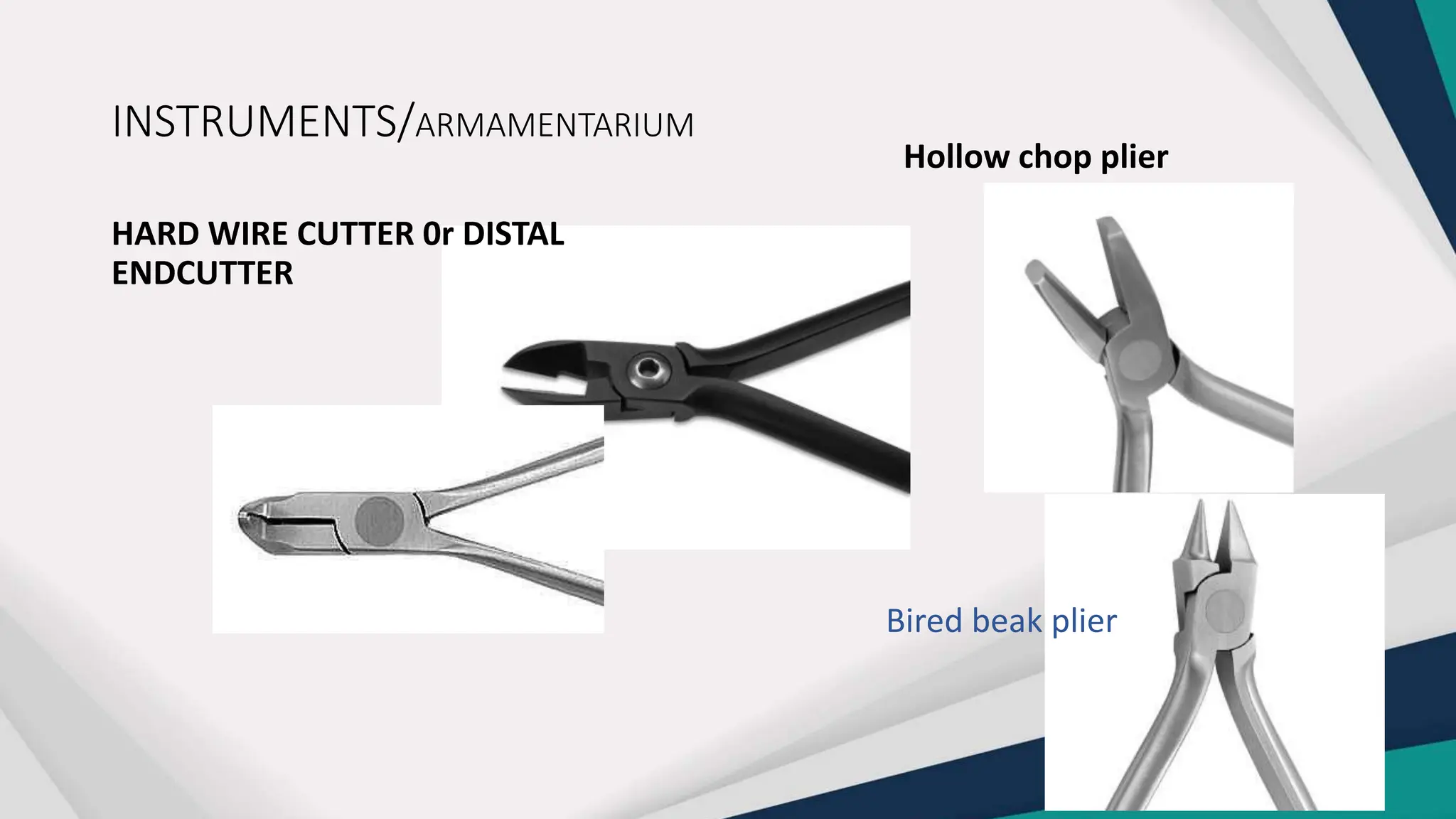
HARD WIRE CUTTER 0r DISTAL
ENDCUTTER
Hollow chop plier
Bired beak plier
THREE ORDER OF BENDS
1.THE FIRST ORDER BENDS
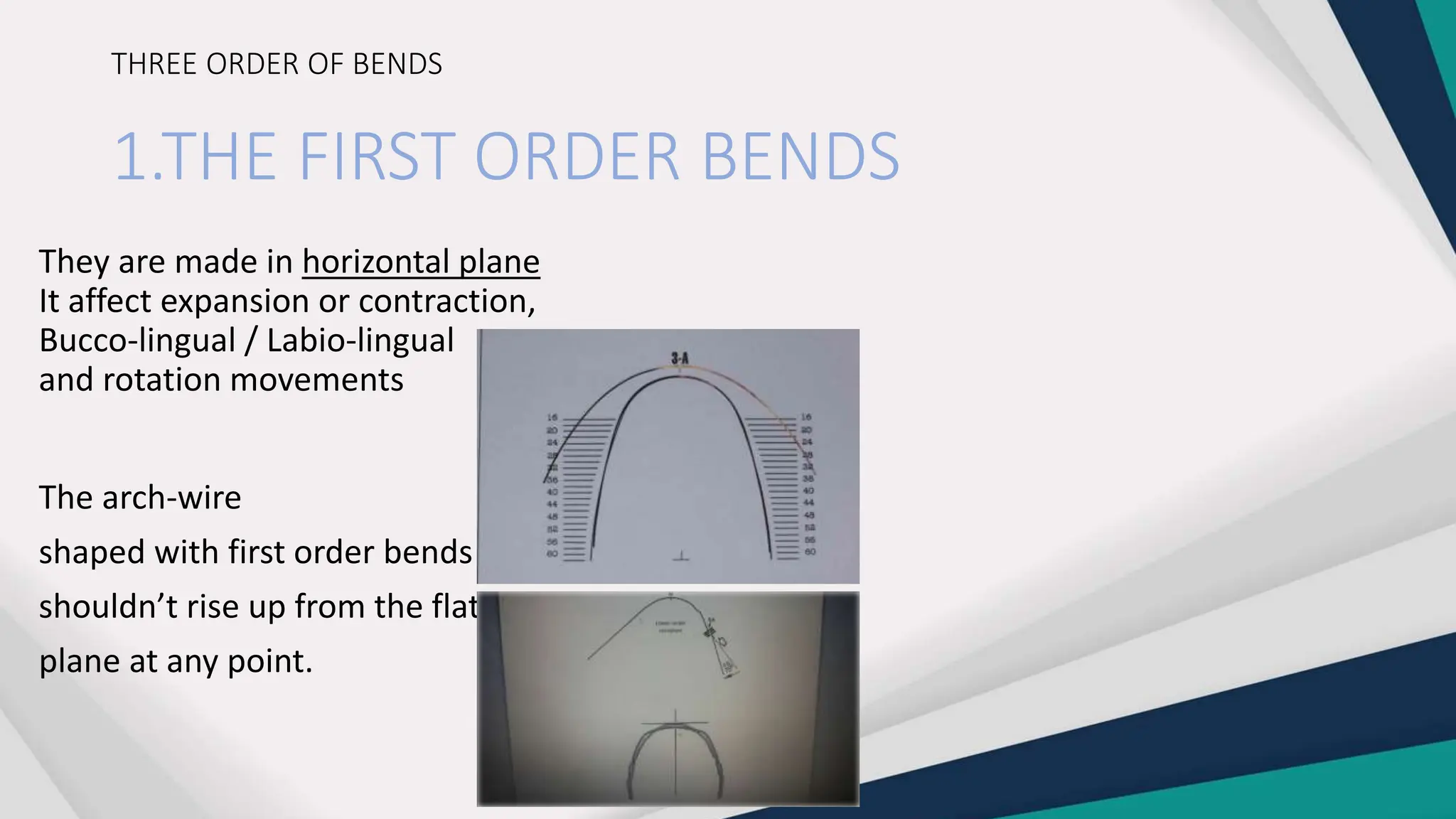
They are made in horizontal plane
It affect expansion or contraction,
Bucco-lingual / Labio-lingual
and rotation movements
The arch-wire
shaped with first order bends
shouldn’t rise up from the flat
plane at any point.
FINISHING OF IDEAL ARCH
1.Between upper central and
lateral (the arch-wire must have a
slight in-set)
2.Between canine and bicuspids
(both upper and lower the arch-wire
must have slight off-set )
3. Mesial to molars both upper and
lower, the arch-wire must have a
little more accentuated off-set
(bayonet)
(bayonet)
2)SECOND ORDER BENDS
Tip bends , Mesio-distal movements.
These bends are made on the vertical
plane .
first order bends the arch-wire must be
level.
while in second order bends the arch-
wire rises from the plane.
• It consists from :
A . Loops
• B . Anchorage bends
• C . Artistic bends
• D . Curve of SPEE
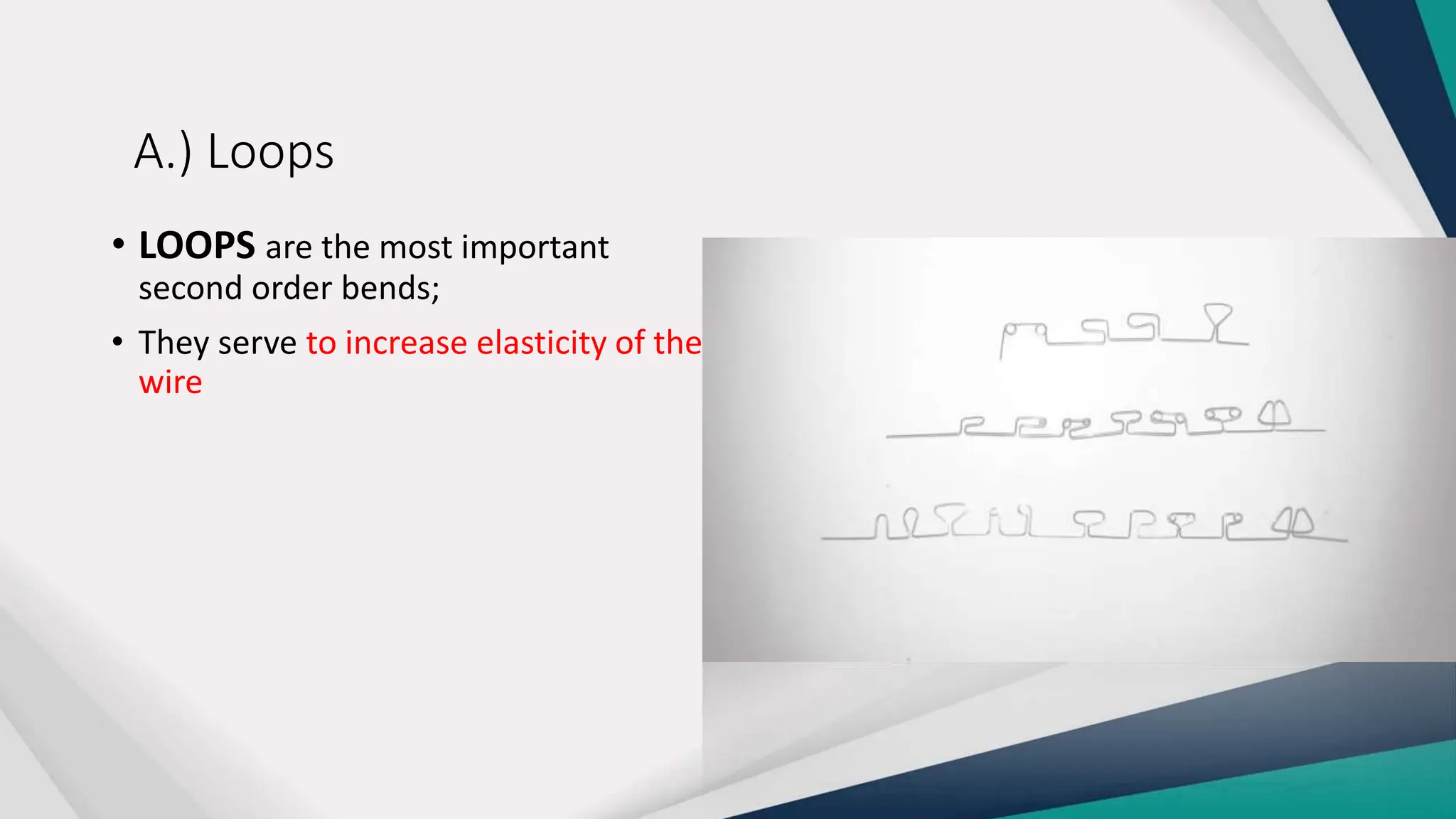
A.) Loops
• LOOPS are the most important
second order bends;
• They serve to increase elasticity of the
wire
B.) Anchorage Bends (Tip
back)
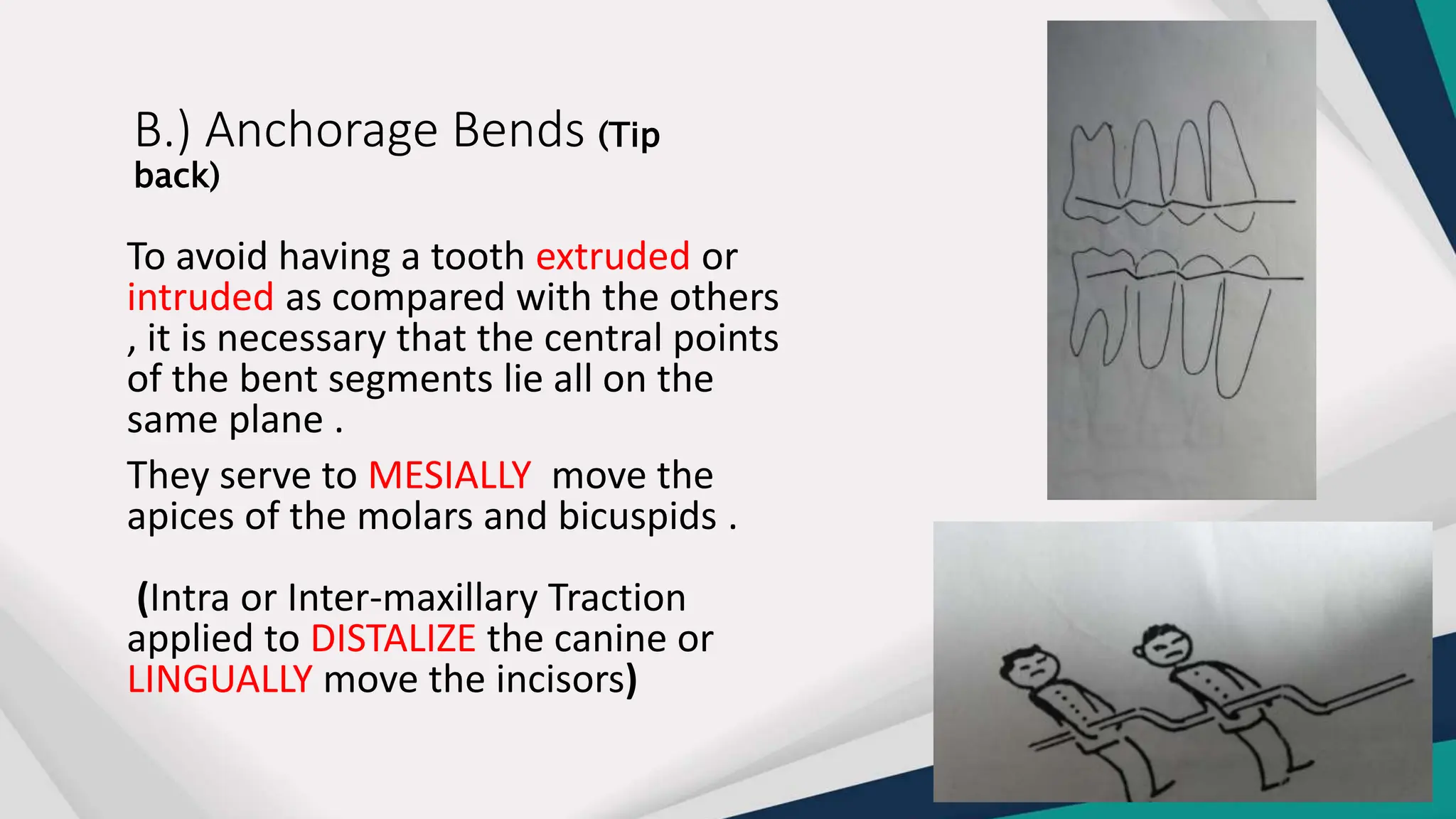
To avoid having a tooth extruded or
intruded as compared with the others
, it is necessary that the central points
of the bent segments lie all on the
same plane .
They serve to MESIALLY move the
apices of the molars and bicuspids .
(Intra or Inter-maxillary Traction
applied to DISTALIZE the canine or
LINGUALLY move the incisors)
C.) Artistic bends
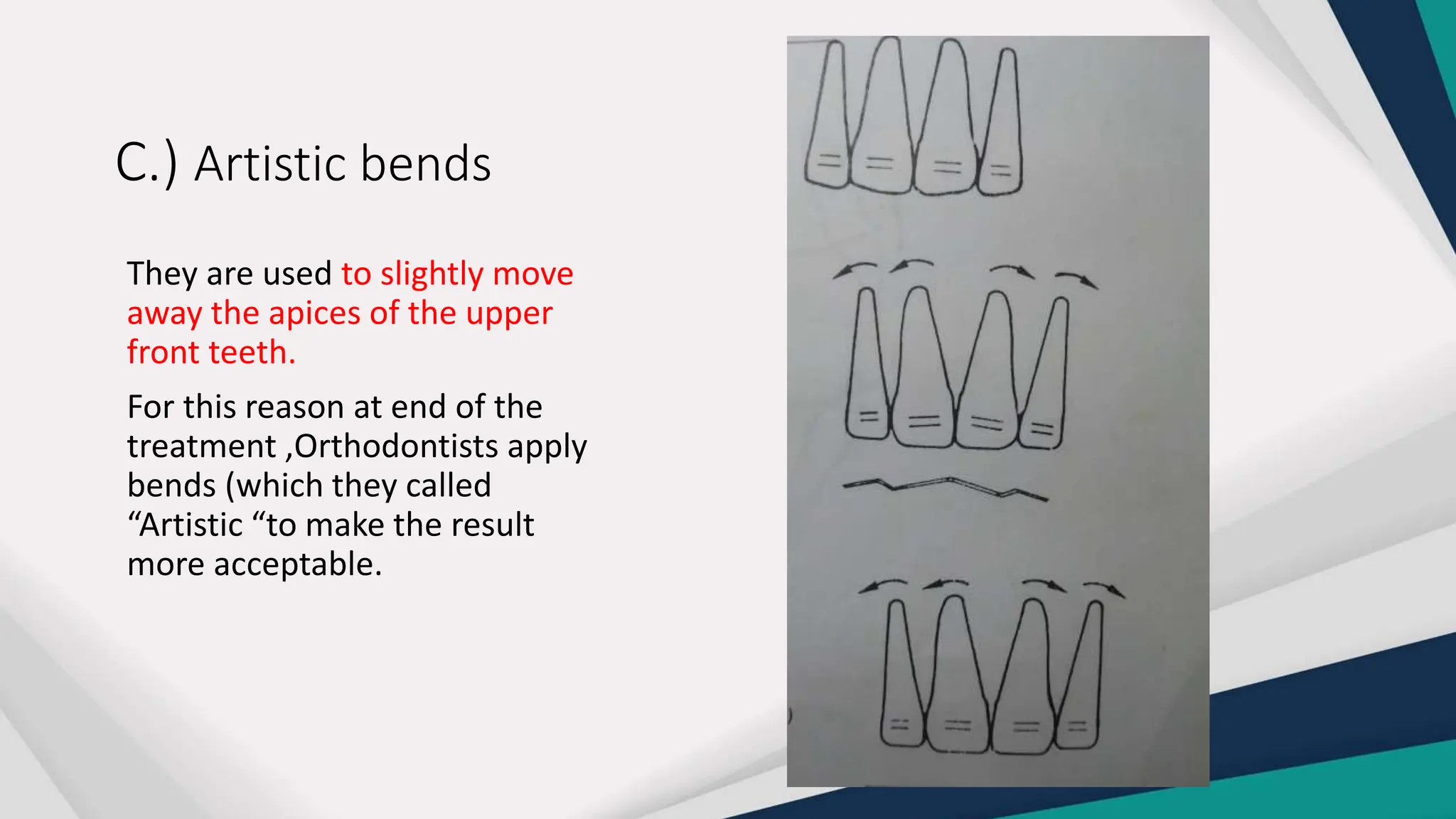
They are used to slightly move
away the apices of the upper
front teeth.
For this reason at end of the
treatment ,Orthodontists apply
bends (which they called
“Artistic “to make the result
more acceptable.
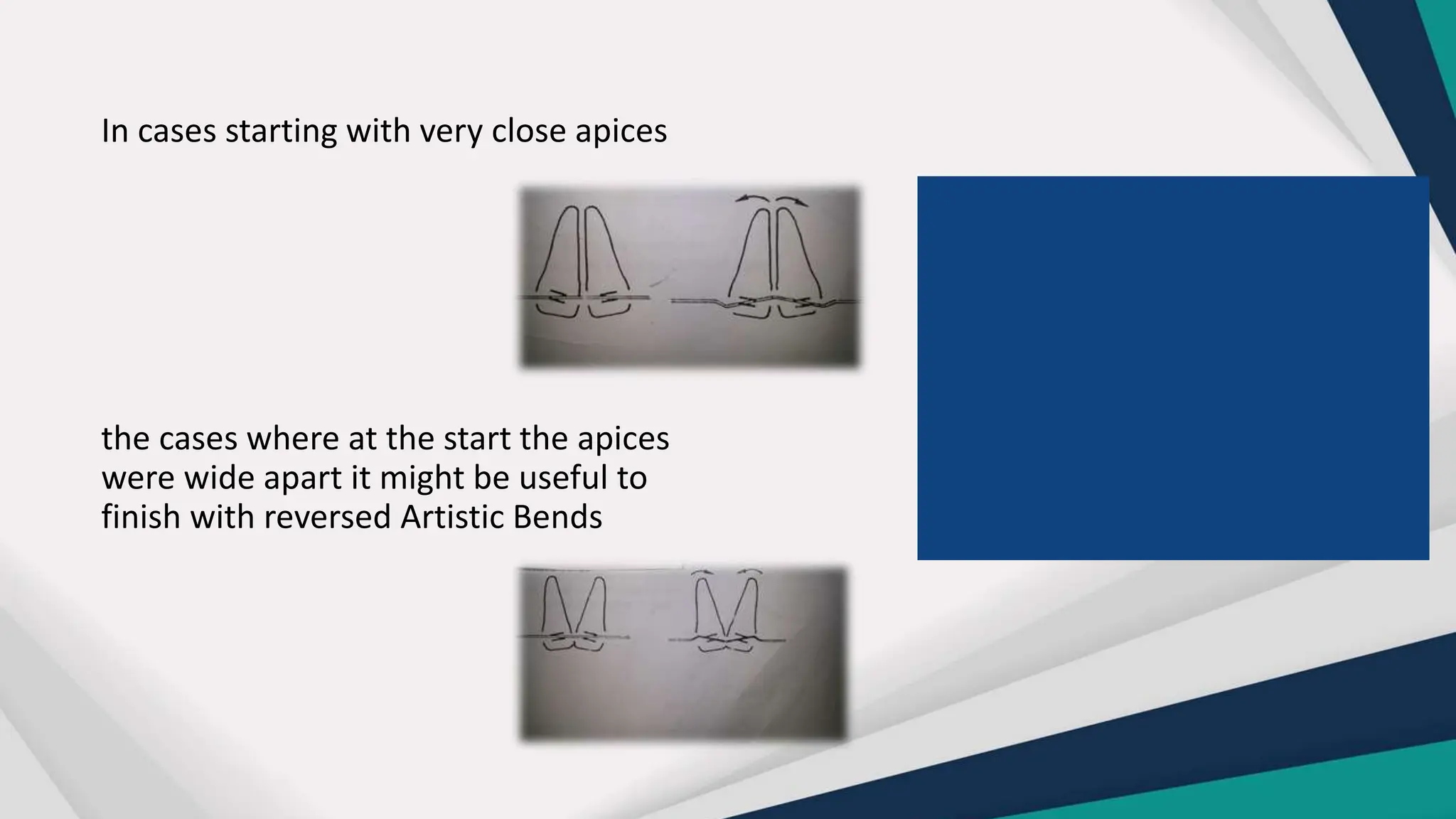
In cases starting with very close apices
the cases where at the start the apices
were wide apart it might be useful to
finish with reversed Artistic Bends
D.)Curve of SPEE and Counter
SPEE
These are used for Intruding or extruding the front teeth
to reduce the deepbite caused from anterior teeth
CURVE OF SPEE (ACCENTUATED)
intrudes the upper incisors ,
extrudes the lower ones.
REVERSE CURVE OF SPEE extrudes upper
incisors ,intrudes lower ones
DEEP BITE =Upper Arch: Curve of SPEE
Lower Arch: Reverse Curve SPEE
OPEN BITE= Upper Arch: Reverse Curve SPEE
Lower Arch: Curve SPEE
3.)THIRD ORDER BENDS
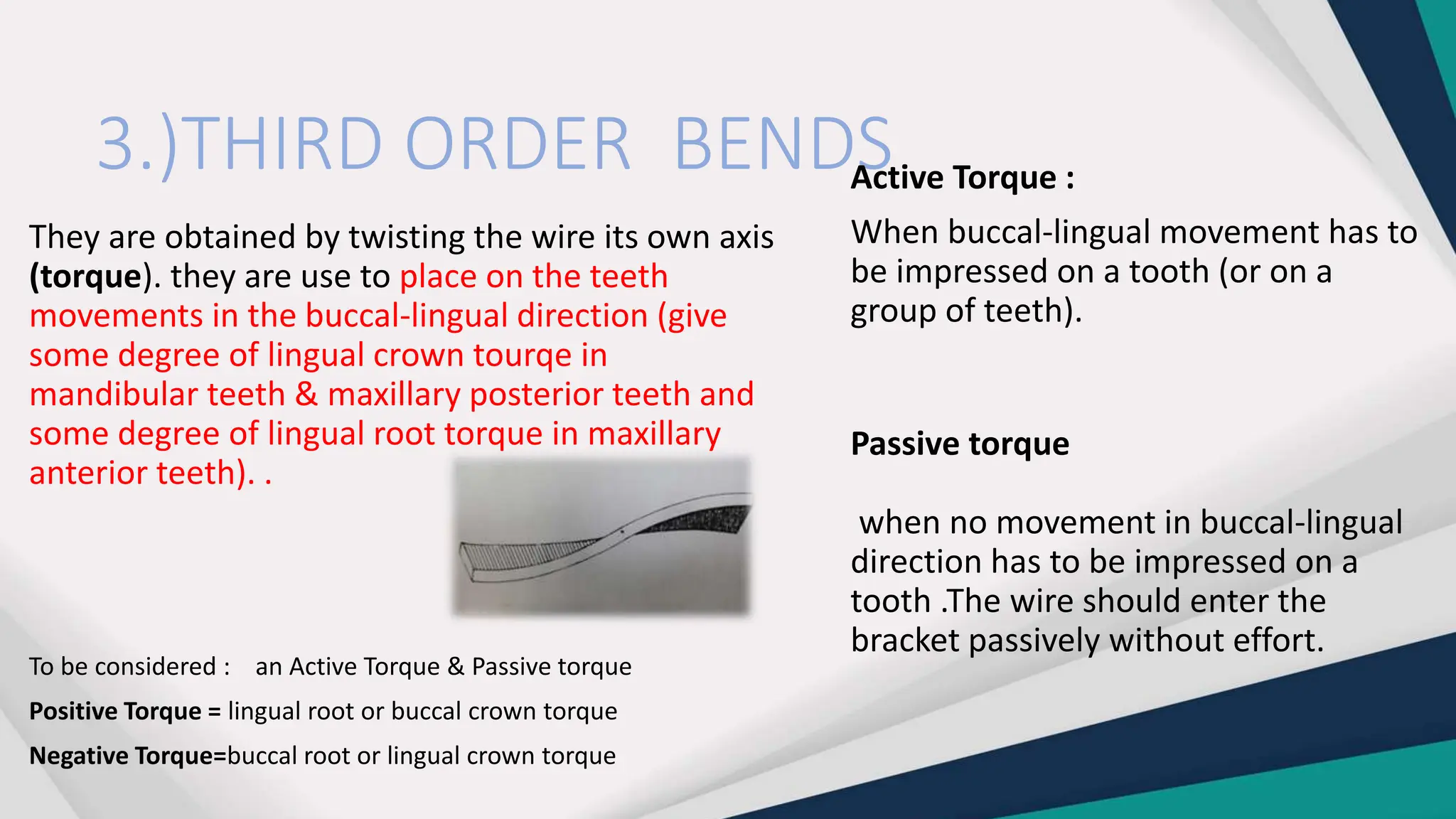
They are obtained by twisting the wire its own axis
(torque). they are use to place on the teeth
movements in the buccal-lingual direction (give
some degree of lingual crown tourqe in
mandibular teeth & maxillary posterior teeth and
some degree of lingual root torque in maxillary
anterior teeth). .
To be considered : an Active Torque & Passive torque
Positive Torque = lingual root or buccal crown torque
Negative Torque=buccal root or lingual crown torque
Active Torque :
When buccal-lingual movement has to
be impressed on a tooth (or on a
group of teeth).
Passive torque
when no movement in buccal-lingual
direction has to be impressed on a
tooth .The wire should enter the
bracket passively without effort.
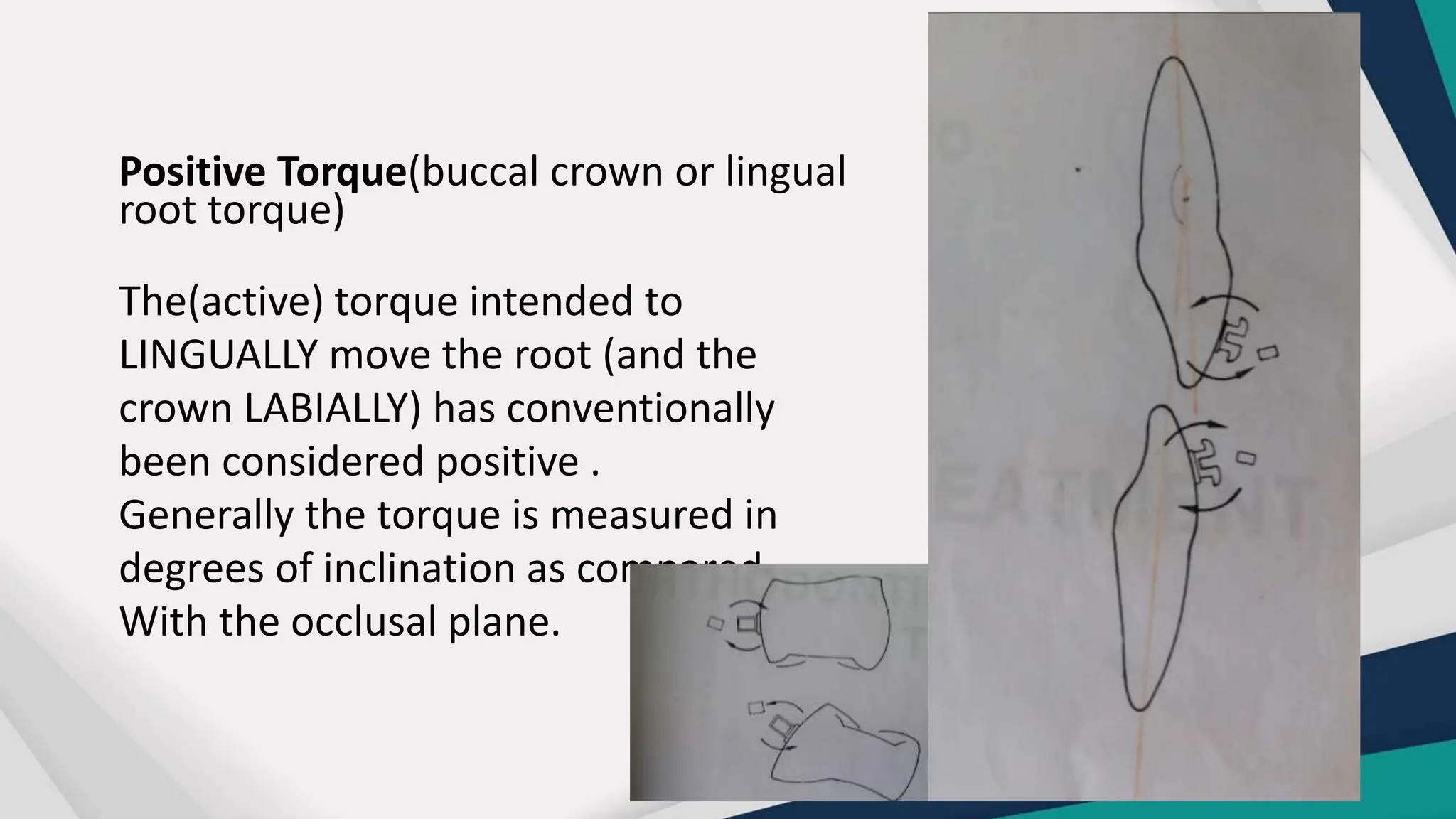
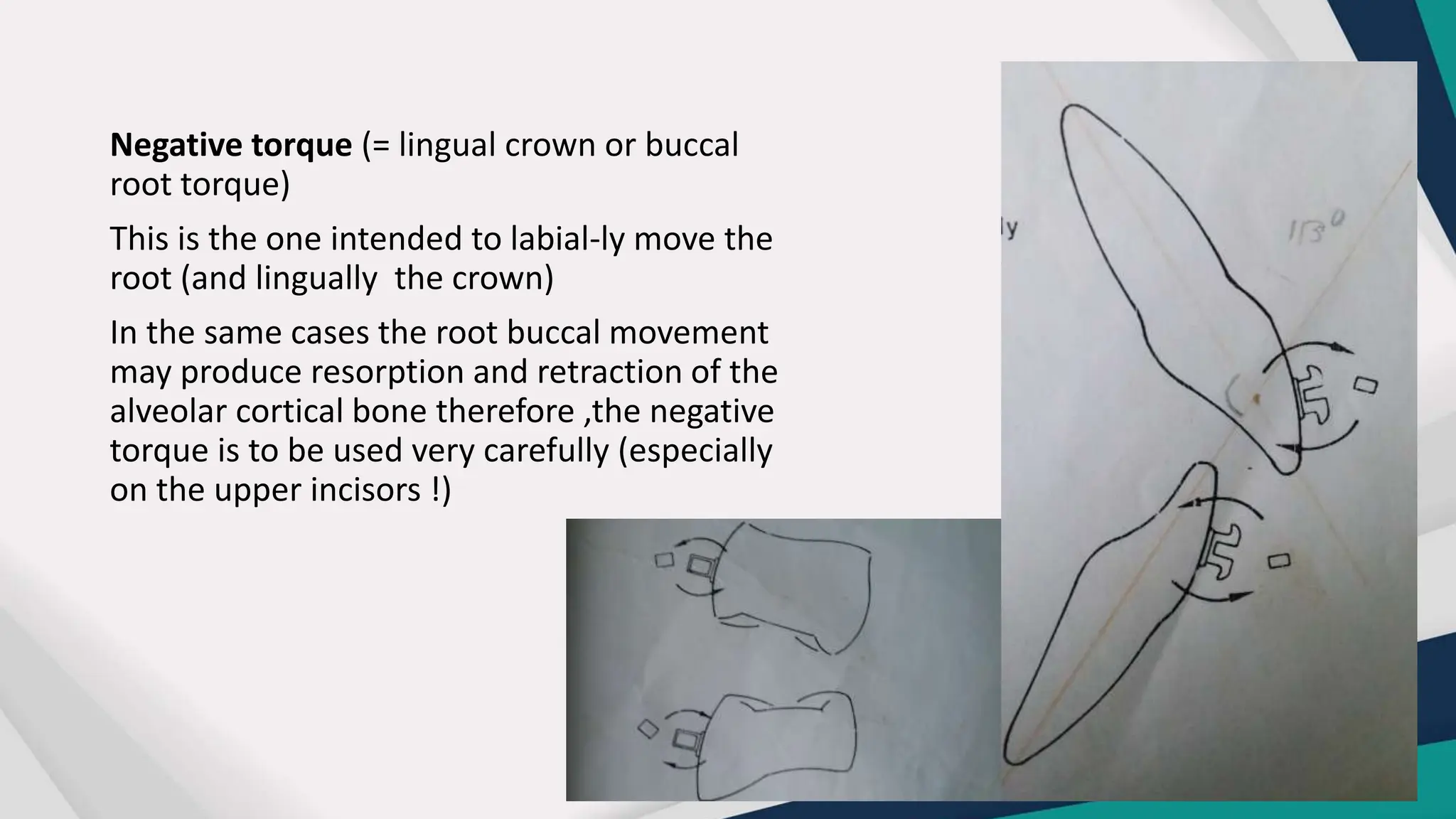
Positive Torque(buccal crown or lingual
root torque)
The(active) torque intended to
LINGUALLY move the root (and the
crown LABIALLY) has conventionally
been considered positive .
Generally the torque is measured in
degrees of inclination as compared
With the occlusal plane.
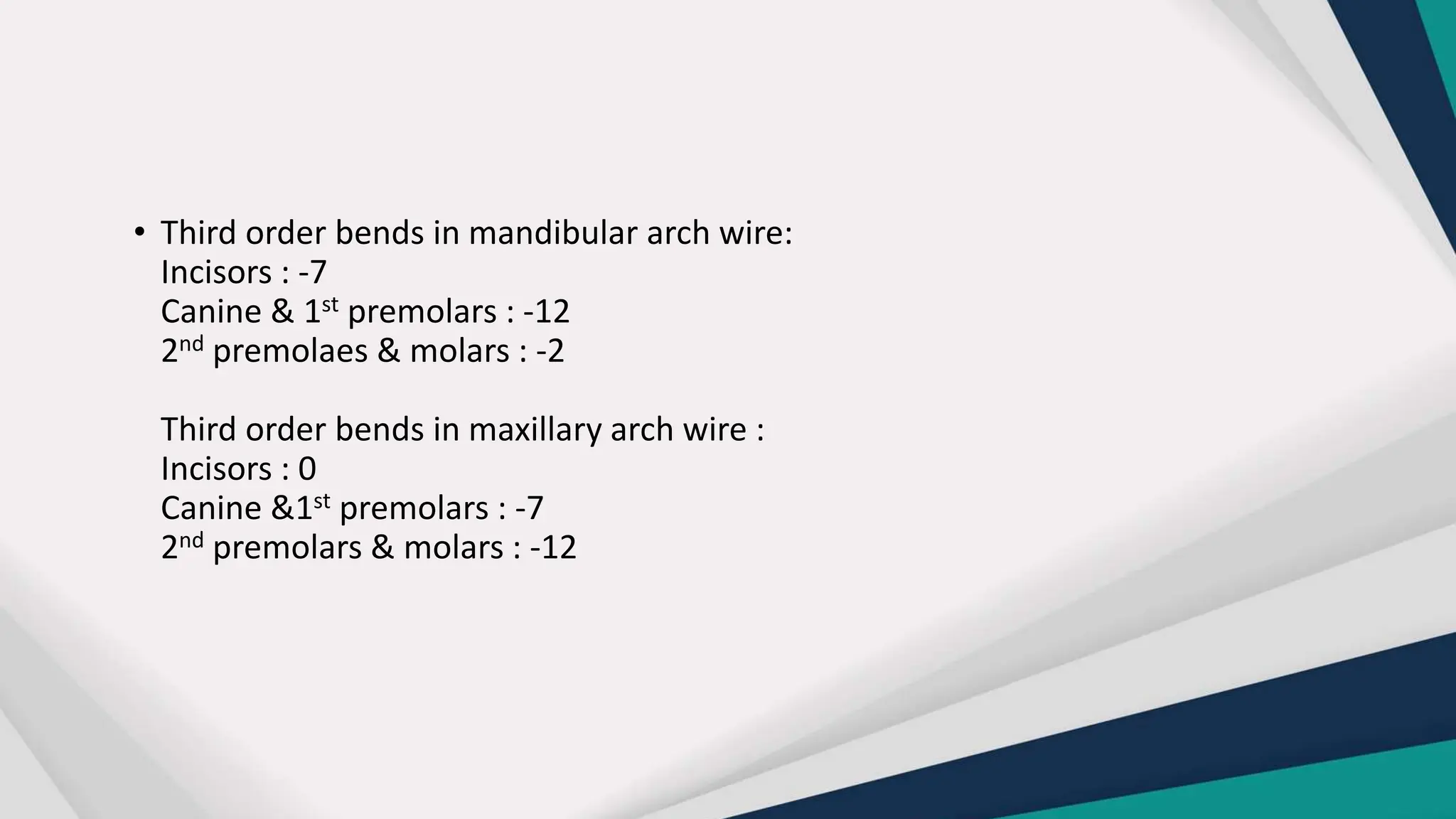
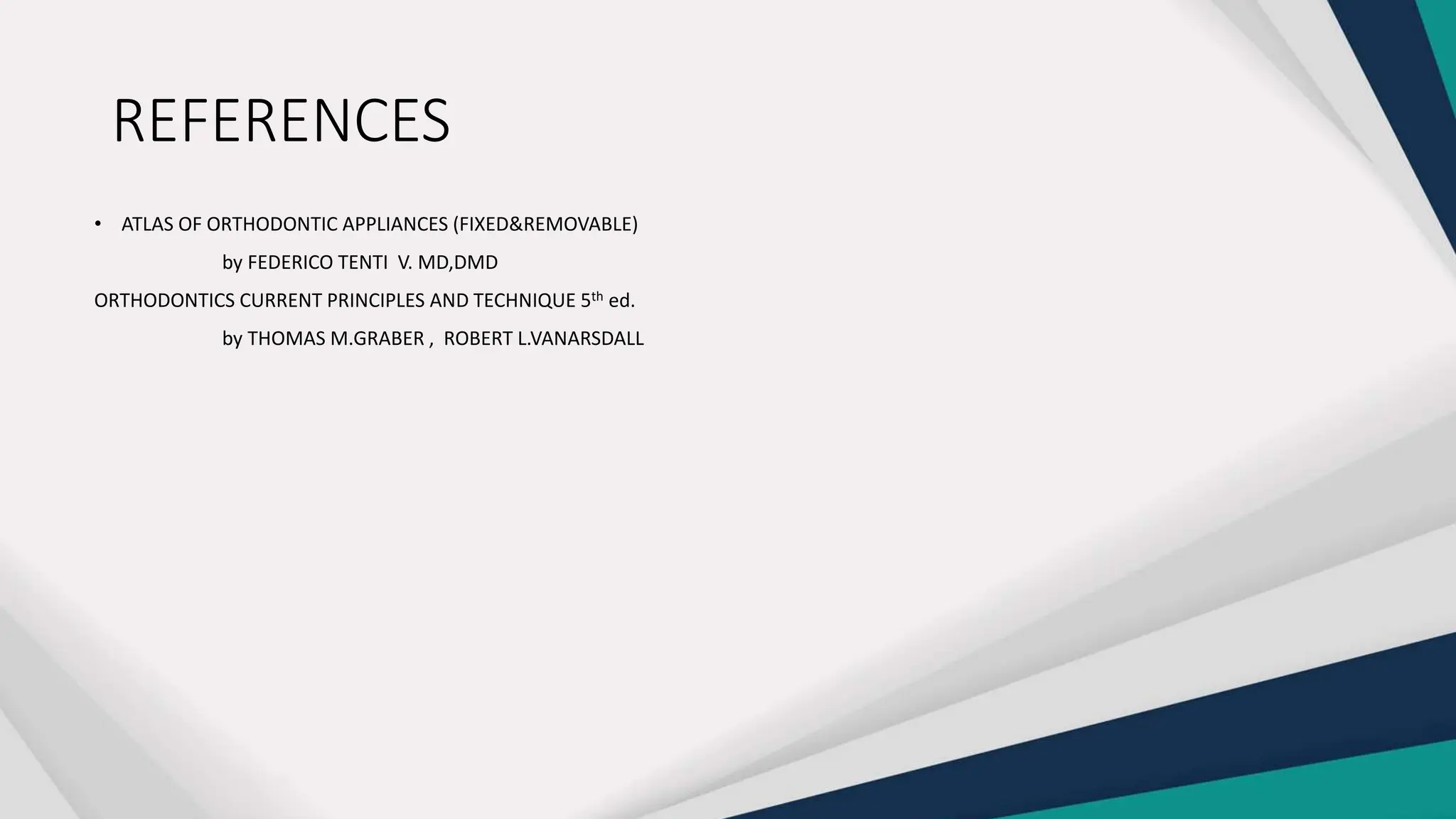
Negative torque (= lingual crown or buccal
root torque)
This is the one intended to labial-ly move the
root (and lingually the crown)
In the same cases the root buccal movement
may produce resorption and retraction of the
alveolar cortical bone therefore ,the negative
torque is to be used very carefully (especially
on the upper incisors !)
• Third order bends in mandibular arch wire:
Incisors : -7
Canine & 1st premolars : -12
2nd premolaes & molars : -2
Third order bends in maxillary arch wire :
Incisors : 0
Canine &1st premolars : -7
2nd premolars & molars : -12
REFERENCES
• ATLAS OF ORTHODONTIC APPLIANCES (FIXED&REMOVABLE)
by FEDERICO TENTI V. MD,DMD
ORTHODONTICS CURRENT PRINCIPLES AND TECHNIQUE 5th ed.
by THOMAS M.GRABER , ROBERT L.VANARSDALL

THE THREE ORDER BENDS in STANDARD EDGEWISE TECHNIQUE.pptx

  • 1.
    THE THREE ORDERBENDS in STANDARD EDGEWISE TECHNIQUE (TWEED MERRIFIELD EDGEWISE APPLIANCE) ACHIEVED BY: Dr.Maen Dawodi
  • 2.
  • 3.
    INSTRUMENTS/ARMAMENTARIUM HARD WIRE CUTTER0r DISTAL ENDCUTTER Hollow chop plier Bired beak plier
  • 4.
    THREE ORDER OFBENDS 1.THE FIRST ORDER BENDS They are made in horizontal plane It affect expansion or contraction, Bucco-lingual / Labio-lingual and rotation movements The arch-wire shaped with first order bends shouldn’t rise up from the flat plane at any point.
  • 5.
    FINISHING OF IDEALARCH 1.Between upper central and lateral (the arch-wire must have a slight in-set) 2.Between canine and bicuspids (both upper and lower the arch-wire must have slight off-set ) 3. Mesial to molars both upper and lower, the arch-wire must have a little more accentuated off-set (bayonet) (bayonet)
  • 6.
    2)SECOND ORDER BENDS Tipbends , Mesio-distal movements. These bends are made on the vertical plane . first order bends the arch-wire must be level. while in second order bends the arch- wire rises from the plane.
  • 7.
    • It consistsfrom : A . Loops • B . Anchorage bends • C . Artistic bends • D . Curve of SPEE
  • 8.
    A.) Loops • LOOPSare the most important second order bends; • They serve to increase elasticity of the wire
  • 9.
    B.) Anchorage Bends(Tip back) To avoid having a tooth extruded or intruded as compared with the others , it is necessary that the central points of the bent segments lie all on the same plane . They serve to MESIALLY move the apices of the molars and bicuspids . (Intra or Inter-maxillary Traction applied to DISTALIZE the canine or LINGUALLY move the incisors)
  • 10.
    C.) Artistic bends Theyare used to slightly move away the apices of the upper front teeth. For this reason at end of the treatment ,Orthodontists apply bends (which they called “Artistic “to make the result more acceptable.
  • 11.
    In cases startingwith very close apices the cases where at the start the apices were wide apart it might be useful to finish with reversed Artistic Bends
  • 12.
    D.)Curve of SPEEand Counter SPEE These are used for Intruding or extruding the front teeth to reduce the deepbite caused from anterior teeth CURVE OF SPEE (ACCENTUATED) intrudes the upper incisors , extrudes the lower ones. REVERSE CURVE OF SPEE extrudes upper incisors ,intrudes lower ones
  • 13.
    DEEP BITE =UpperArch: Curve of SPEE Lower Arch: Reverse Curve SPEE OPEN BITE= Upper Arch: Reverse Curve SPEE Lower Arch: Curve SPEE
  • 14.
    3.)THIRD ORDER BENDS Theyare obtained by twisting the wire its own axis (torque). they are use to place on the teeth movements in the buccal-lingual direction (give some degree of lingual crown tourqe in mandibular teeth & maxillary posterior teeth and some degree of lingual root torque in maxillary anterior teeth). . To be considered : an Active Torque & Passive torque Positive Torque = lingual root or buccal crown torque Negative Torque=buccal root or lingual crown torque Active Torque : When buccal-lingual movement has to be impressed on a tooth (or on a group of teeth). Passive torque when no movement in buccal-lingual direction has to be impressed on a tooth .The wire should enter the bracket passively without effort.
  • 15.
    Positive Torque(buccal crownor lingual root torque) The(active) torque intended to LINGUALLY move the root (and the crown LABIALLY) has conventionally been considered positive . Generally the torque is measured in degrees of inclination as compared With the occlusal plane.
  • 16.
    Negative torque (=lingual crown or buccal root torque) This is the one intended to labial-ly move the root (and lingually the crown) In the same cases the root buccal movement may produce resorption and retraction of the alveolar cortical bone therefore ,the negative torque is to be used very carefully (especially on the upper incisors !)
  • 17.
    • Third orderbends in mandibular arch wire: Incisors : -7 Canine & 1st premolars : -12 2nd premolaes & molars : -2 Third order bends in maxillary arch wire : Incisors : 0 Canine &1st premolars : -7 2nd premolars & molars : -12
  • 18.
    REFERENCES • ATLAS OFORTHODONTIC APPLIANCES (FIXED&REMOVABLE) by FEDERICO TENTI V. MD,DMD ORTHODONTICS CURRENT PRINCIPLES AND TECHNIQUE 5th ed. by THOMAS M.GRABER , ROBERT L.VANARSDALL