MINI-ESTHETICS AND MICRO-
ESTHETICS
AMNA
028
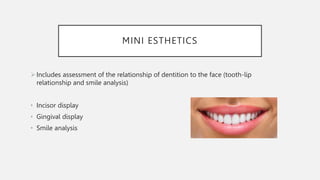
MINI ESTHETICS
Includes assessment of the relationship of dentition to the face (tooth-lip
relationship and smile analysis)
• Incisor display
• Gingival display
• Smile analysis
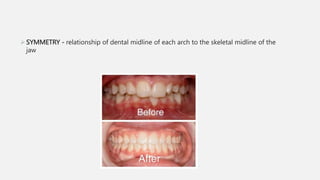
SYMMETRY - relationship of dental midline of each arch to the skeletal midline of the
jaw
VERTICAL RELATIONSHIP:
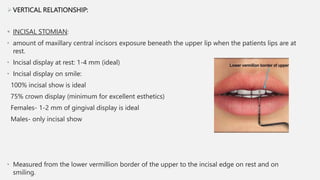
 INCISAL STOMIAN:
• amount of maxillary central incisors exposure beneath the upper lip when the patients lips are at
rest.
• Incisal display at rest: 1-4 mm (ideal)
• Incisal display on smile:
100% incisal show is ideal
75% crown display (minimum for excellent esthetics)
Females- 1-2 mm of gingival display is ideal
Males- only incisal show
• Measured from the lower vermillion border of the upper to the incisal edge on rest and on
smiling.
SMILE ASSESSMENT
• Smile line
• Smile arc
• Buccal corridors
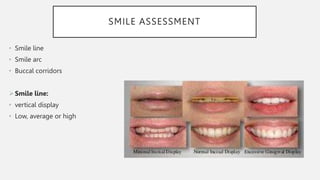
Smile line:
• vertical display
• Low, average or high
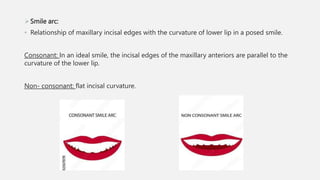
Smile arc:
• Relationship of maxillary incisal edges with the curvature of lower lip in a posed smile.
Consonant: In an ideal smile, the incisal edges of the maxillary anteriors are parallel to the
curvature of the lower lip.
Non- consonant: flat incisal curvature.
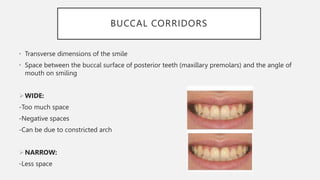
BUCCAL CORRIDORS
• Transverse dimensions of the smile
• Space between the buccal surface of posterior teeth (maxillary premolars) and the angle of
mouth on smiling
WIDE:
-Too much space
-Negative spaces
-Can be due to constricted arch
NARROW:
-Less space
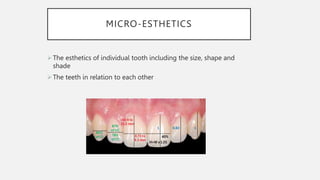
MICRO-ESTHETICS
The esthetics of individual tooth including the size, shape and
shade
The teeth in relation to each other
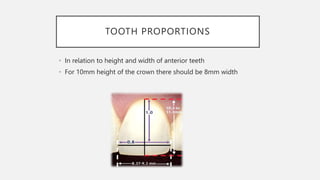
TOOTH PROPORTIONS
• In relation to height and width of anterior teeth
• For 10mm height of the crown there should be 8mm width
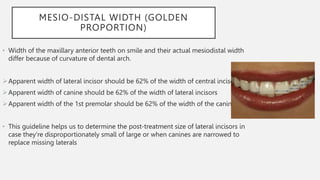
MESIO-DISTAL WIDTH (GOLDEN
PROPORTION)
• Width of the maxillary anterior teeth on smile and their actual mesiodistal width
differ because of curvature of dental arch.
Apparent width of lateral incisor should be 62% of the width of central incisor
Apparent width of canine should be 62% of the width of lateral incisors
Apparent width of the 1st premolar should be 62% of the width of the canine
• This guideline helps us to determine the post-treatment size of lateral incisors in
case they’re disproportionately small of large or when canines are narrowed to
replace missing laterals
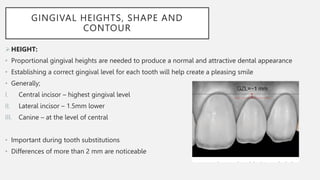
GINGIVAL HEIGHTS, SHAPE AND
CONTOUR
HEIGHT:
• Proportional gingival heights are needed to produce a normal and attractive dental appearance
• Establishing a correct gingival level for each tooth will help create a pleasing smile
• Generally;
I. Central incisor – highest gingival level
II. Lateral incisor – 1.5mm lower
III. Canine – at the level of central
• Important during tooth substitutions
• Differences of more than 2 mm are noticeable
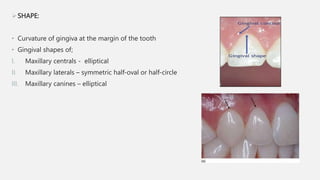
SHAPE:
• Curvature of gingiva at the margin of the tooth
• Gingival shapes of;
I. Maxillary centrals - elliptical
II. Maxillary laterals – symmetric half-oval or half-circle
III. Maxillary canines – elliptical
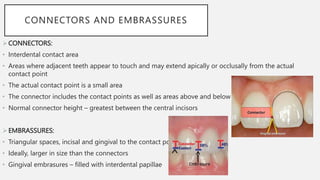
CONNECTORS AND EMBRASSURES
CONNECTORS:
• Interdental contact area
• Areas where adjacent teeth appear to touch and may extend apically or occlusally from the actual
contact point
• The actual contact point is a small area
• The connector includes the contact points as well as areas above and below
• Normal connector height – greatest between the central incisors
EMBRASSURES:
• Triangular spaces, incisal and gingival to the contact points
• Ideally, larger in size than the connectors
• Gingival embrasures – filled with interdental papillae
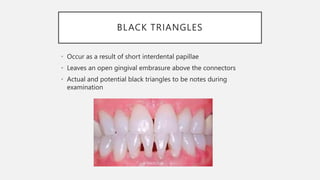
BLACK TRIANGLES
• Occur as a result of short interdental papillae
• Leaves an open gingival embrasure above the connectors
• Actual and potential black triangles to be notes during
examination
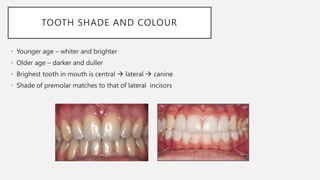
TOOTH SHADE AND COLOUR
• Younger age – whiter and brighter
• Older age – darker and duller
• Brighest tooth in mouth is central  lateral  canine
• Shade of premolar matches to that of lateral incisors
MINI-ESTHETICS AND MICRO-ESTHETICS.pptx

MINI-ESTHETICS AND MICRO-ESTHETICS.pptx

  • 1.
  • 2.
    MINI ESTHETICS Includes assessmentof the relationship of dentition to the face (tooth-lip relationship and smile analysis) • Incisor display • Gingival display • Smile analysis
  • 3.
    SYMMETRY - relationshipof dental midline of each arch to the skeletal midline of the jaw
  • 4.
    VERTICAL RELATIONSHIP:  INCISALSTOMIAN: • amount of maxillary central incisors exposure beneath the upper lip when the patients lips are at rest. • Incisal display at rest: 1-4 mm (ideal) • Incisal display on smile: 100% incisal show is ideal 75% crown display (minimum for excellent esthetics) Females- 1-2 mm of gingival display is ideal Males- only incisal show • Measured from the lower vermillion border of the upper to the incisal edge on rest and on smiling.
  • 5.
    SMILE ASSESSMENT • Smileline • Smile arc • Buccal corridors Smile line: • vertical display • Low, average or high
  • 6.
    Smile arc: • Relationshipof maxillary incisal edges with the curvature of lower lip in a posed smile. Consonant: In an ideal smile, the incisal edges of the maxillary anteriors are parallel to the curvature of the lower lip. Non- consonant: flat incisal curvature.
  • 7.
    BUCCAL CORRIDORS • Transversedimensions of the smile • Space between the buccal surface of posterior teeth (maxillary premolars) and the angle of mouth on smiling WIDE: -Too much space -Negative spaces -Can be due to constricted arch NARROW: -Less space
  • 8.
    MICRO-ESTHETICS The esthetics ofindividual tooth including the size, shape and shade The teeth in relation to each other
  • 9.
    TOOTH PROPORTIONS • Inrelation to height and width of anterior teeth • For 10mm height of the crown there should be 8mm width
  • 10.
    MESIO-DISTAL WIDTH (GOLDEN PROPORTION) •Width of the maxillary anterior teeth on smile and their actual mesiodistal width differ because of curvature of dental arch. Apparent width of lateral incisor should be 62% of the width of central incisor Apparent width of canine should be 62% of the width of lateral incisors Apparent width of the 1st premolar should be 62% of the width of the canine • This guideline helps us to determine the post-treatment size of lateral incisors in case they’re disproportionately small of large or when canines are narrowed to replace missing laterals
  • 11.
    GINGIVAL HEIGHTS, SHAPEAND CONTOUR HEIGHT: • Proportional gingival heights are needed to produce a normal and attractive dental appearance • Establishing a correct gingival level for each tooth will help create a pleasing smile • Generally; I. Central incisor – highest gingival level II. Lateral incisor – 1.5mm lower III. Canine – at the level of central • Important during tooth substitutions • Differences of more than 2 mm are noticeable
  • 12.
    SHAPE: • Curvature ofgingiva at the margin of the tooth • Gingival shapes of; I. Maxillary centrals - elliptical II. Maxillary laterals – symmetric half-oval or half-circle III. Maxillary canines – elliptical
  • 13.
    CONNECTORS AND EMBRASSURES CONNECTORS: •Interdental contact area • Areas where adjacent teeth appear to touch and may extend apically or occlusally from the actual contact point • The actual contact point is a small area • The connector includes the contact points as well as areas above and below • Normal connector height – greatest between the central incisors EMBRASSURES: • Triangular spaces, incisal and gingival to the contact points • Ideally, larger in size than the connectors • Gingival embrasures – filled with interdental papillae
  • 14.
    BLACK TRIANGLES • Occuras a result of short interdental papillae • Leaves an open gingival embrasure above the connectors • Actual and potential black triangles to be notes during examination
  • 15.
    TOOTH SHADE ANDCOLOUR • Younger age – whiter and brighter • Older age – darker and duller • Brighest tooth in mouth is central  lateral  canine • Shade of premolar matches to that of lateral incisors