GIS ANALYSIS OF
ENVIRONMENTAL, SOCIO-
DEMOGRAPHICAL &
BEHAVIOURAL RISK
2015 ESRI User Conference
Session: Disease Surveillance
Thursday, July 23, 2015
Presented by: Suzanne McGuire
Health Informatics Institute – Algoma University
INTRODUCTION
• The idea that geography has an impact on health
has been largely overlooked in the past
• One of the earliest records of the connection
between geography and health was made by Dr.
John Snow during the 1854 outbreak of Cholera in
London, England
INTRO CON’T
• Data that can be mapped through GIS and
collected in different databases can be layered to
explore connections between different geographic
attributes and population characteristics.
• This provides the opportunity to analyze health
issues in a different way – how geographic
attributes contribute to the impact of an
individualized chronic disease care plan.
PURPOSE
 Understand how chronic disease
risk factors in different areas of the
Algoma Region may affect nurse
practitioner patients based on their
location of residence.
RESEARCH QUESTION
• How can patient health information,
layered with behavioral,
environmental & sociodemographic
information, facilitate individualized
health promotion & disease prevention
care plans for patients suffering from,
or at risk of, developing chronic
disease?
PARTICIPANT
RECRUITMENT
• Comprehensive health & wellness survey mailed to 1250
patients who had had an appointment at the Clinic
between 2012-2014 or recruited in the Clinic waiting room
• Patients who didn’t consent after the first mailing were
mailed another invitation.
• Patients who had not yet participated were followed-up
with a phone call.
• 1100 follow-up phone calls made & a second mailing was
completed
• This increased the response rate by 100%
DATA COLLECTION
DEC. 2013-FEB. 2014
• Geographic data extracted from Environment Canada,
Statistics Canada & Manifold Data Mining Inc.
• Patient data extracted from surveys & Clinic patient
records in Nightingale
• Patients asked to identify all past & present places of
residence – This provided a demographic history of
potential areas of risk
• Longitude & latitude of patients’ home addresses
obtained from Google Maps & entered into GIS
HEALTH & WELLNESS
SURVEY
Addressed the following variables:
• Demographics
• Overall health condition
• Socioeconomic characteristics
• Health status
• Health insurance coverage
• Beliefs about health conditions
• Social support
• Attitudes towards medications
HEALTH & WELLNESS
SURVEY
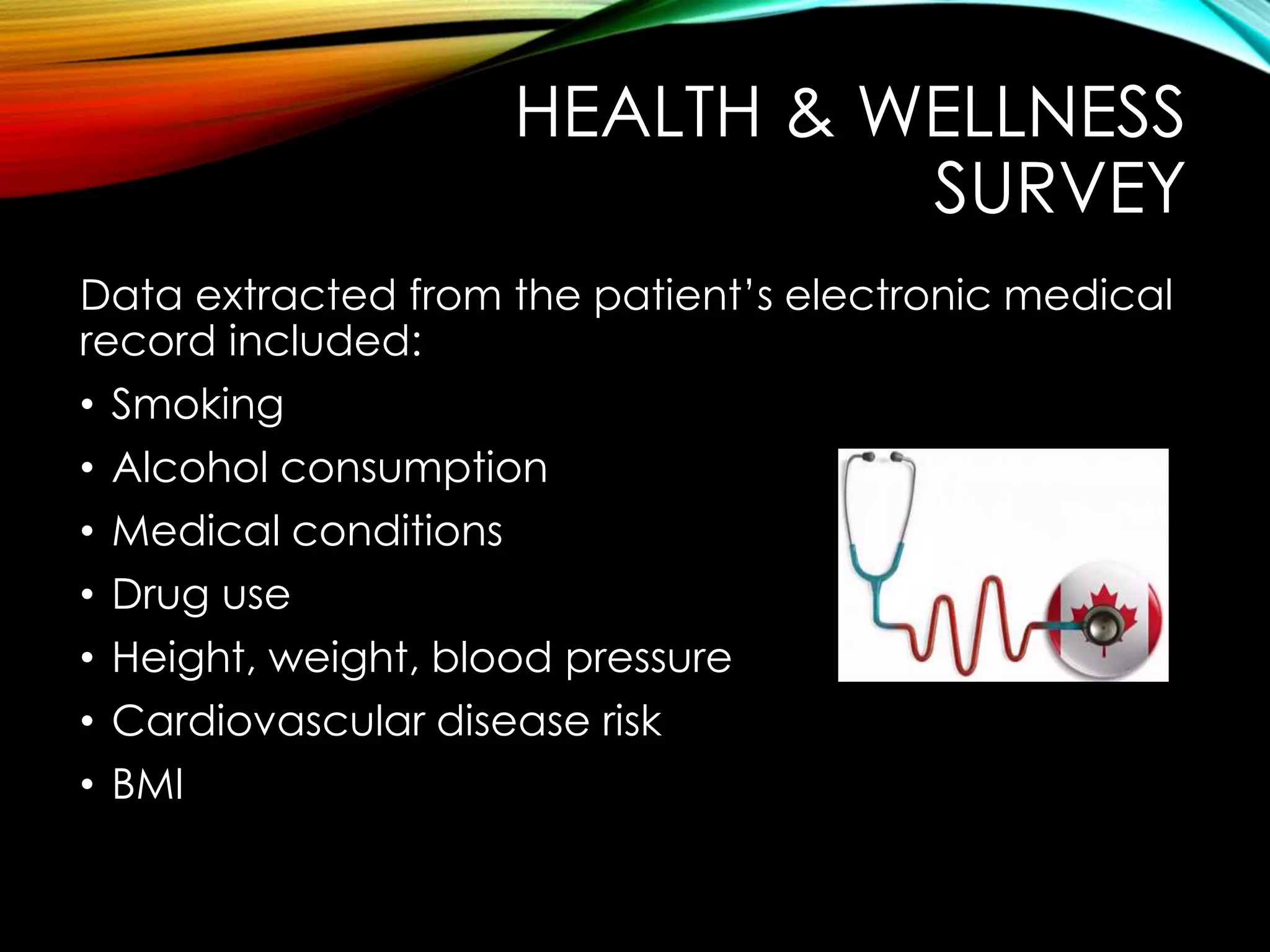
Data extracted from the patient’s electronic medical
record included:
• Smoking
• Alcohol consumption
• Medical conditions
• Drug use
• Height, weight, blood pressure
• Cardiovascular disease risk
• BMI
ANALYSIS
• GIS analysis was applied to the following health risk
factors:
A) Behavioural (tobacco &alcohol use, fruit/vegetable
consumption, inactivity, obesity)
B) Socio-demographical (income, education level,
employment status)
C) Environmental (air & water quality)
RESULTS
• n=220 adult and n=15 child surveys were
completed and returned with signed
consent
• Participants provided a significant response
to surveys & allowed access to their
personal information
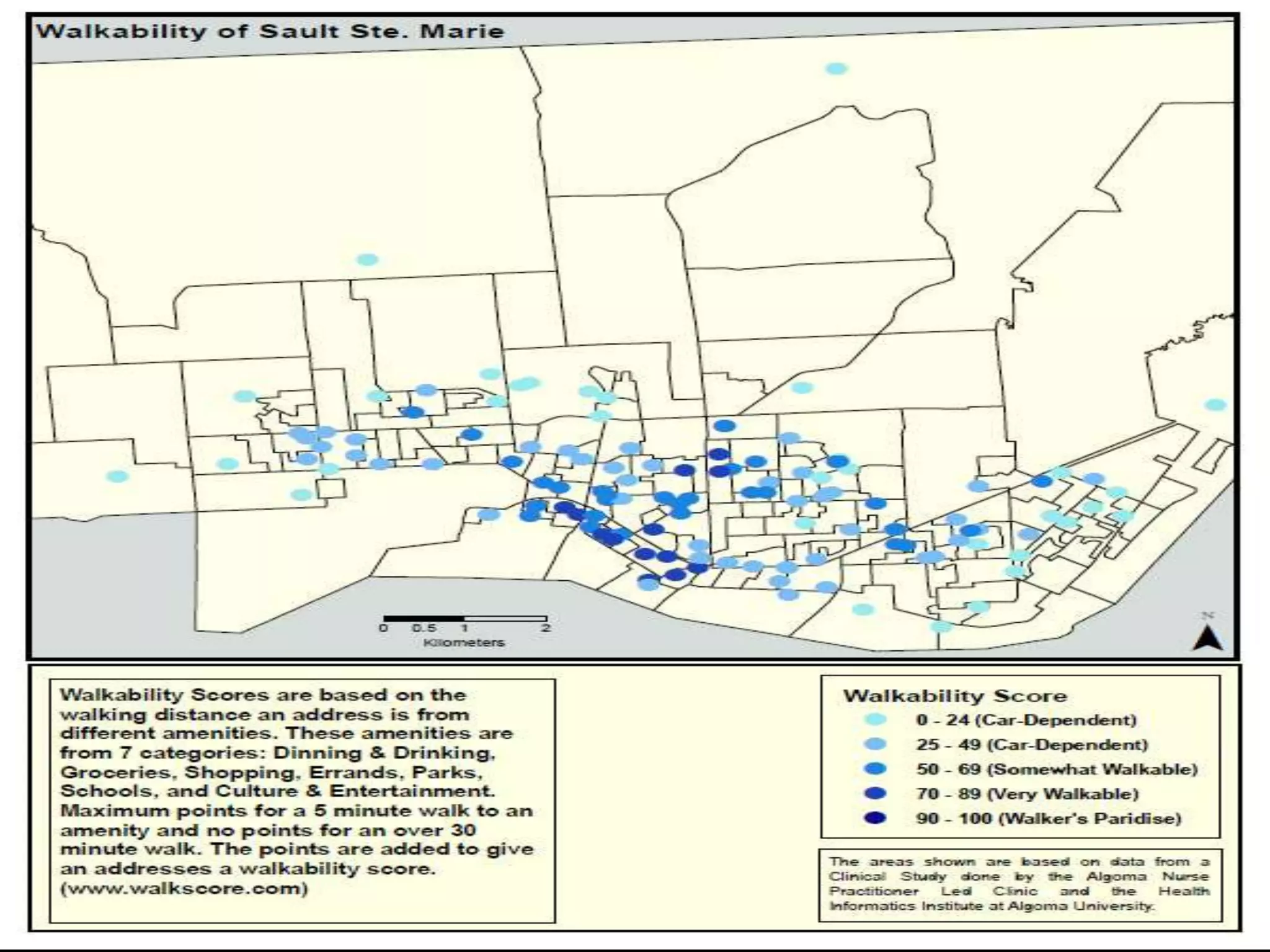
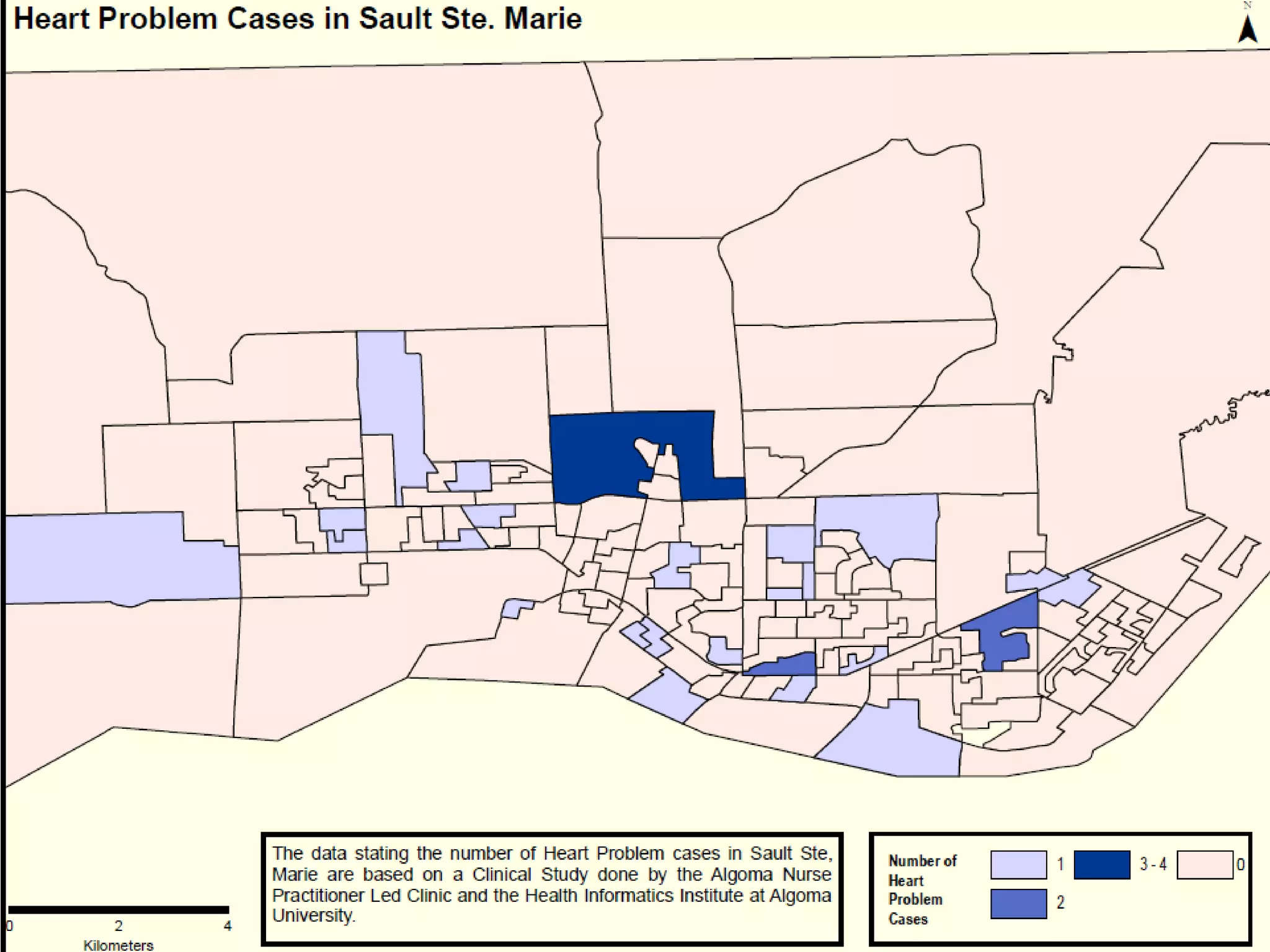
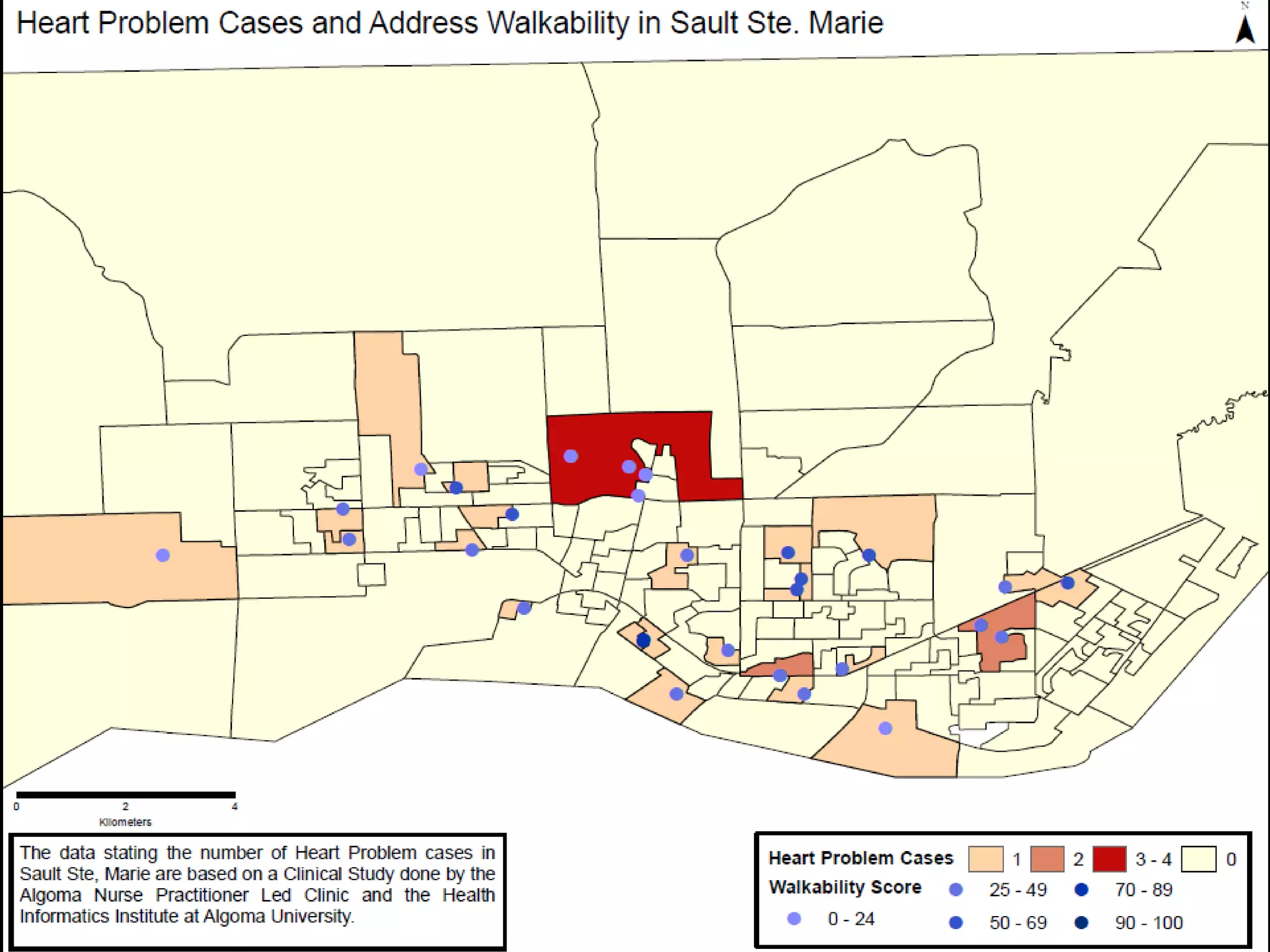
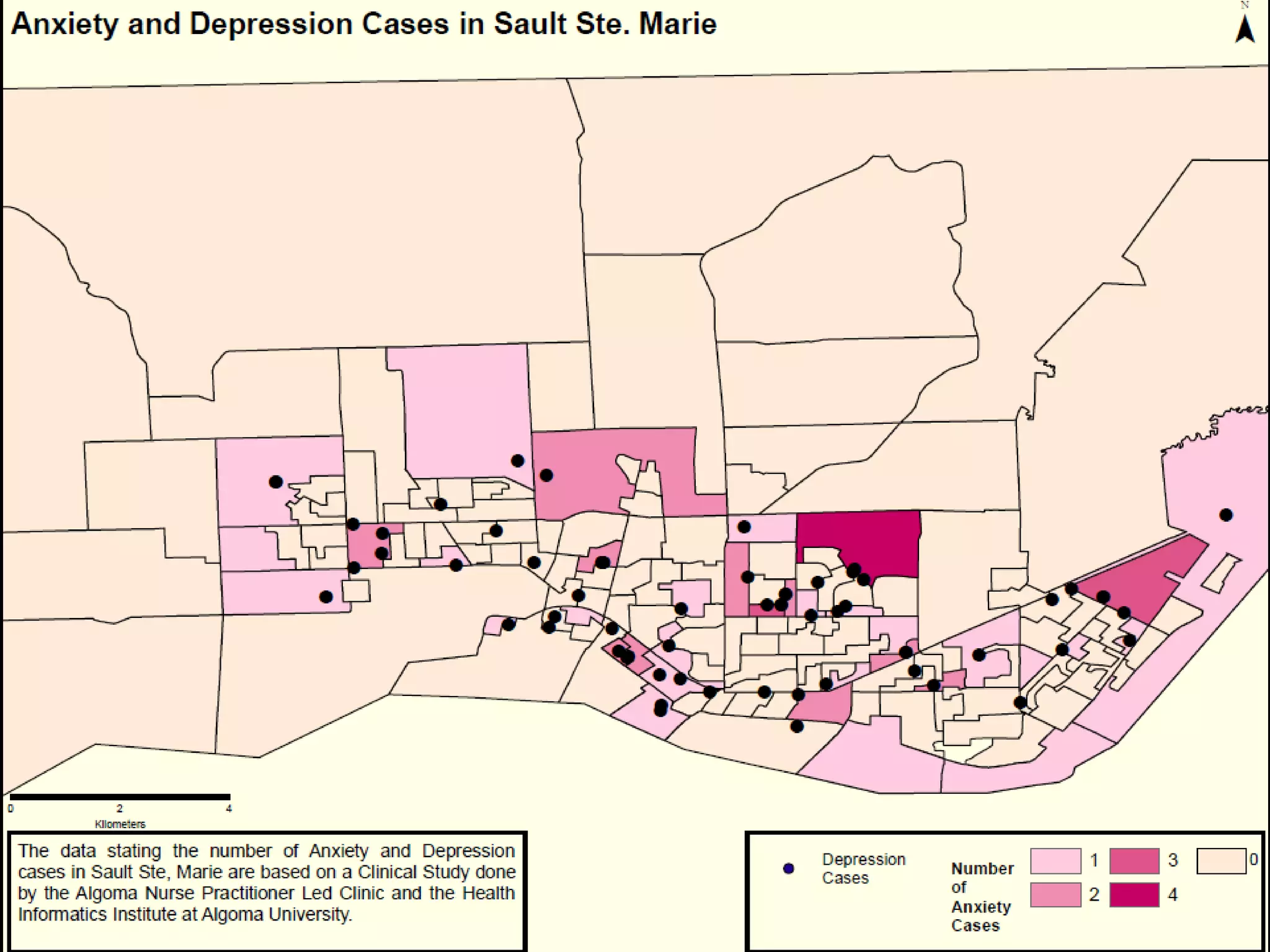
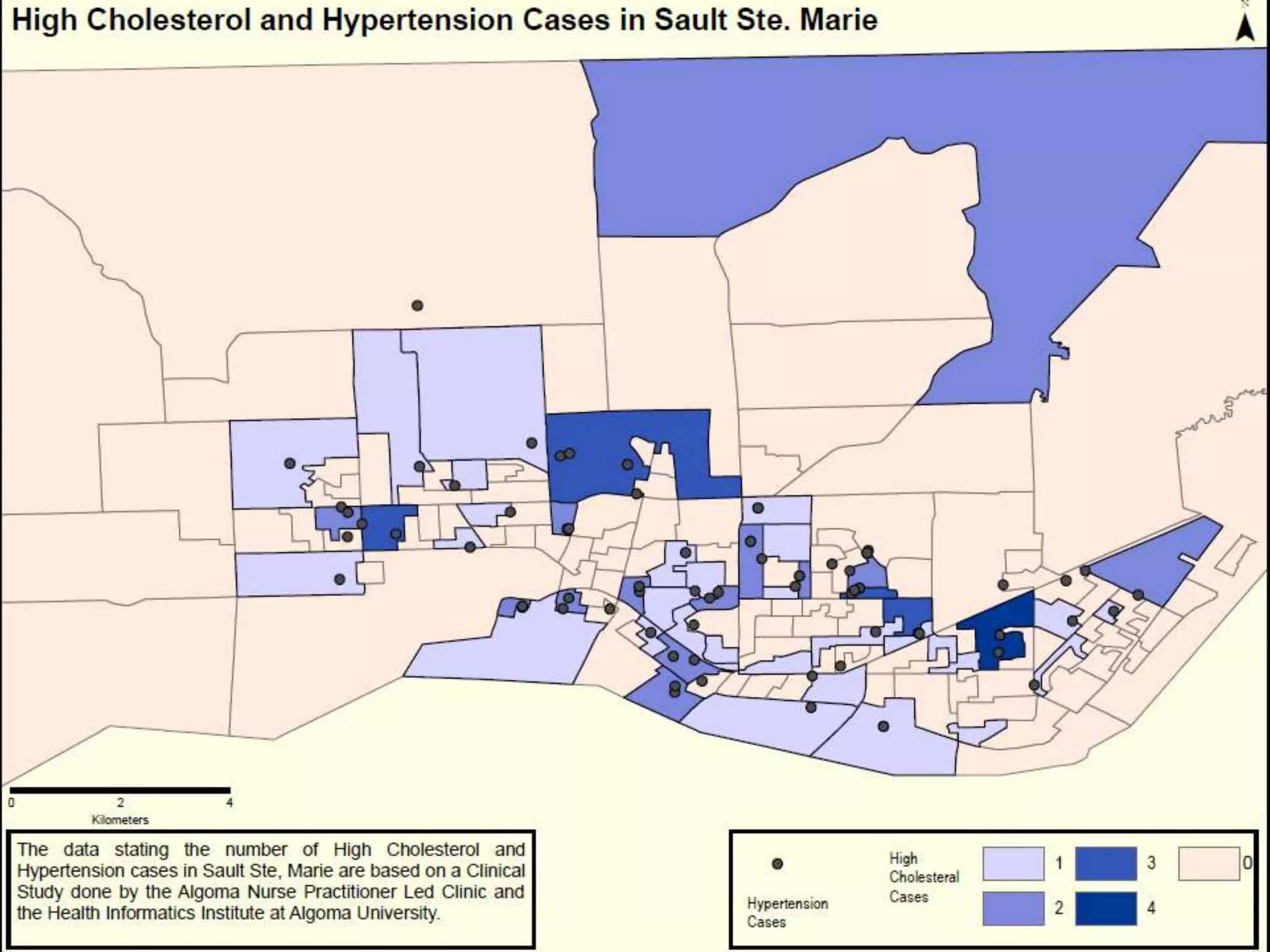
MAP EXAMPLES:
DISCUSSION
• Through analysis of spatial data, the Algoma
Nurse Practitioner Led Clinic was provided
with a picture of their patient population
• Application of GIS analyses to this data
provided an opportunity for increased
efficiency of health care and
individualization of patient care
CONCLUSIONS
• Information from this study was used to
guide the Algoma Nurse Practitioner Led
Clinic towards more personalized patient
care
• This study shows that a significant number of
patients are willing to disclose sensitive
information in exchange for more
personalized care
FUTURE DIRECTIONS
• Findings will be used at the individual level
as well as in health promotion and disease
prevention activities for public health
• Future studies should attempt to replicate
successful patient recruitment
REFERENCES
• Broemeling, A.M., Watson, D.E. & Prebtani, F. (2008). Population patterns of chronic
health conditions, co-morbidity and healthcare use in Canada: Implications for
policy and practice. Healthcare Quarterly,11, 70-76.
• Kamel Boulos, M.N., Roudsari, A. & Carson, E. (2001). Health geomatics: An
enabling suite of technologies in health and healthcare. Journal of Biomedical
Informatics, 34(3), 195-219. doi:10.1006/jbin.2001.1015.
• Lyseen, A.K., Nøhr, C., Sørensen, E.M., Gudes, O., Geraghty, E.M., Shaw, N.T. &
Bivona-Tellez, C. (2014). A review and framework for categorizing current research
and development in health related geographical information systems (GIS) studies.
IMIA Yearbook of Medical Informatics, 9(1), 110-124.
• Morgan, M.W., Zamora, N.E. & Hindmarsh, M.F. (2007). An inconvenient truth: A
sustainable healthcare system requires chronic disease prevention and
management transformation. HealthcarePapers, 7, 6–23.
• Pfeiffer, D.U., Robinson, T.P., Stevenson, M., Stevens, K.B. & Rogers, D.J. (2008).
Spatial analysis in epidemiology. United Kingdom: Oxford University Press; 2008.
• Schultz, S.G. (2007). From a pump handle to oral rehydration therapy : A model of
translational research. Advances in Physiology Education, 31(4), 288-293.
doi:10.1152/advan.00068.2007.
QUESTIONS?

ESRI user conference presentation

  • 1.
    GIS ANALYSIS OF ENVIRONMENTAL,SOCIO- DEMOGRAPHICAL & BEHAVIOURAL RISK 2015 ESRI User Conference Session: Disease Surveillance Thursday, July 23, 2015 Presented by: Suzanne McGuire Health Informatics Institute – Algoma University
  • 2.
    INTRODUCTION • The ideathat geography has an impact on health has been largely overlooked in the past • One of the earliest records of the connection between geography and health was made by Dr. John Snow during the 1854 outbreak of Cholera in London, England
  • 3.
    INTRO CON’T • Datathat can be mapped through GIS and collected in different databases can be layered to explore connections between different geographic attributes and population characteristics. • This provides the opportunity to analyze health issues in a different way – how geographic attributes contribute to the impact of an individualized chronic disease care plan.
  • 4.
    PURPOSE  Understand howchronic disease risk factors in different areas of the Algoma Region may affect nurse practitioner patients based on their location of residence.
  • 5.
    RESEARCH QUESTION • Howcan patient health information, layered with behavioral, environmental & sociodemographic information, facilitate individualized health promotion & disease prevention care plans for patients suffering from, or at risk of, developing chronic disease?
  • 6.
    PARTICIPANT RECRUITMENT • Comprehensive health& wellness survey mailed to 1250 patients who had had an appointment at the Clinic between 2012-2014 or recruited in the Clinic waiting room • Patients who didn’t consent after the first mailing were mailed another invitation. • Patients who had not yet participated were followed-up with a phone call. • 1100 follow-up phone calls made & a second mailing was completed • This increased the response rate by 100%
  • 7.
    DATA COLLECTION DEC. 2013-FEB.2014 • Geographic data extracted from Environment Canada, Statistics Canada & Manifold Data Mining Inc. • Patient data extracted from surveys & Clinic patient records in Nightingale • Patients asked to identify all past & present places of residence – This provided a demographic history of potential areas of risk • Longitude & latitude of patients’ home addresses obtained from Google Maps & entered into GIS
  • 8.
    HEALTH & WELLNESS SURVEY Addressedthe following variables: • Demographics • Overall health condition • Socioeconomic characteristics • Health status • Health insurance coverage • Beliefs about health conditions • Social support • Attitudes towards medications
  • 9.
    HEALTH & WELLNESS SURVEY Dataextracted from the patient’s electronic medical record included: • Smoking • Alcohol consumption • Medical conditions • Drug use • Height, weight, blood pressure • Cardiovascular disease risk • BMI
  • 10.
    ANALYSIS • GIS analysiswas applied to the following health risk factors: A) Behavioural (tobacco &alcohol use, fruit/vegetable consumption, inactivity, obesity) B) Socio-demographical (income, education level, employment status) C) Environmental (air & water quality)
  • 11.
    RESULTS • n=220 adultand n=15 child surveys were completed and returned with signed consent • Participants provided a significant response to surveys & allowed access to their personal information
  • 12.
  • 18.
    DISCUSSION • Through analysisof spatial data, the Algoma Nurse Practitioner Led Clinic was provided with a picture of their patient population • Application of GIS analyses to this data provided an opportunity for increased efficiency of health care and individualization of patient care
  • 19.
    CONCLUSIONS • Information fromthis study was used to guide the Algoma Nurse Practitioner Led Clinic towards more personalized patient care • This study shows that a significant number of patients are willing to disclose sensitive information in exchange for more personalized care
  • 20.
    FUTURE DIRECTIONS • Findingswill be used at the individual level as well as in health promotion and disease prevention activities for public health • Future studies should attempt to replicate successful patient recruitment
  • 21.
    REFERENCES • Broemeling, A.M.,Watson, D.E. & Prebtani, F. (2008). Population patterns of chronic health conditions, co-morbidity and healthcare use in Canada: Implications for policy and practice. Healthcare Quarterly,11, 70-76. • Kamel Boulos, M.N., Roudsari, A. & Carson, E. (2001). Health geomatics: An enabling suite of technologies in health and healthcare. Journal of Biomedical Informatics, 34(3), 195-219. doi:10.1006/jbin.2001.1015. • Lyseen, A.K., Nøhr, C., Sørensen, E.M., Gudes, O., Geraghty, E.M., Shaw, N.T. & Bivona-Tellez, C. (2014). A review and framework for categorizing current research and development in health related geographical information systems (GIS) studies. IMIA Yearbook of Medical Informatics, 9(1), 110-124. • Morgan, M.W., Zamora, N.E. & Hindmarsh, M.F. (2007). An inconvenient truth: A sustainable healthcare system requires chronic disease prevention and management transformation. HealthcarePapers, 7, 6–23. • Pfeiffer, D.U., Robinson, T.P., Stevenson, M., Stevens, K.B. & Rogers, D.J. (2008). Spatial analysis in epidemiology. United Kingdom: Oxford University Press; 2008. • Schultz, S.G. (2007). From a pump handle to oral rehydration therapy : A model of translational research. Advances in Physiology Education, 31(4), 288-293. doi:10.1152/advan.00068.2007.
  • 22.