
PRESENTATION ON
The process and stages of system design
Course Title – System Analysis and Design
Submitted By (Group 5)
Md. Zahirul Islam 11508040
Md. Abdullah Faruk 11508041
Nm Shanta Bhuiyan 11508042
Md.Mahedi Hasan 11508044
Md. Shimul Islam 11508045
Prince Talukdar Bj 11508047
Md. Jahidul Islam 11508048
Submitted To
Md. Hasan Hafizur Raham
Lecturer ,Dept of CSE
Comilla University
At A Glance
1.Process of Design
2.Design Methodologies
3.Functional Decomposition
4.HIPO and IPO Charts
5.Major Development Activities
6.Audit Consideration
System of Design
1.Logical Design
2.Physical Design
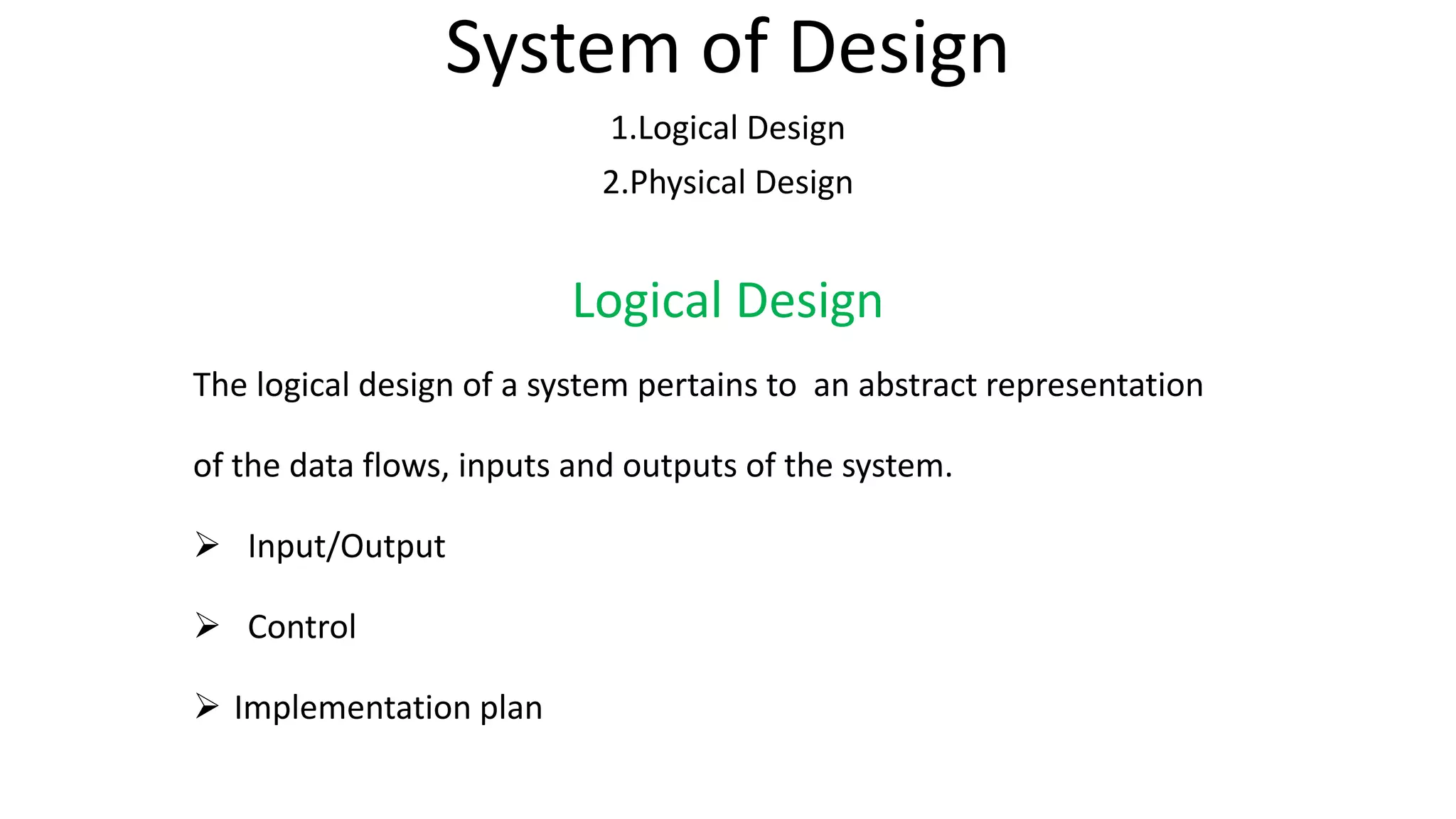
Logical Design
The logical design of a system pertains to an abstract representation
of the data flows, inputs and outputs of the system.
 Input/Output
 Control
 Implementation plan
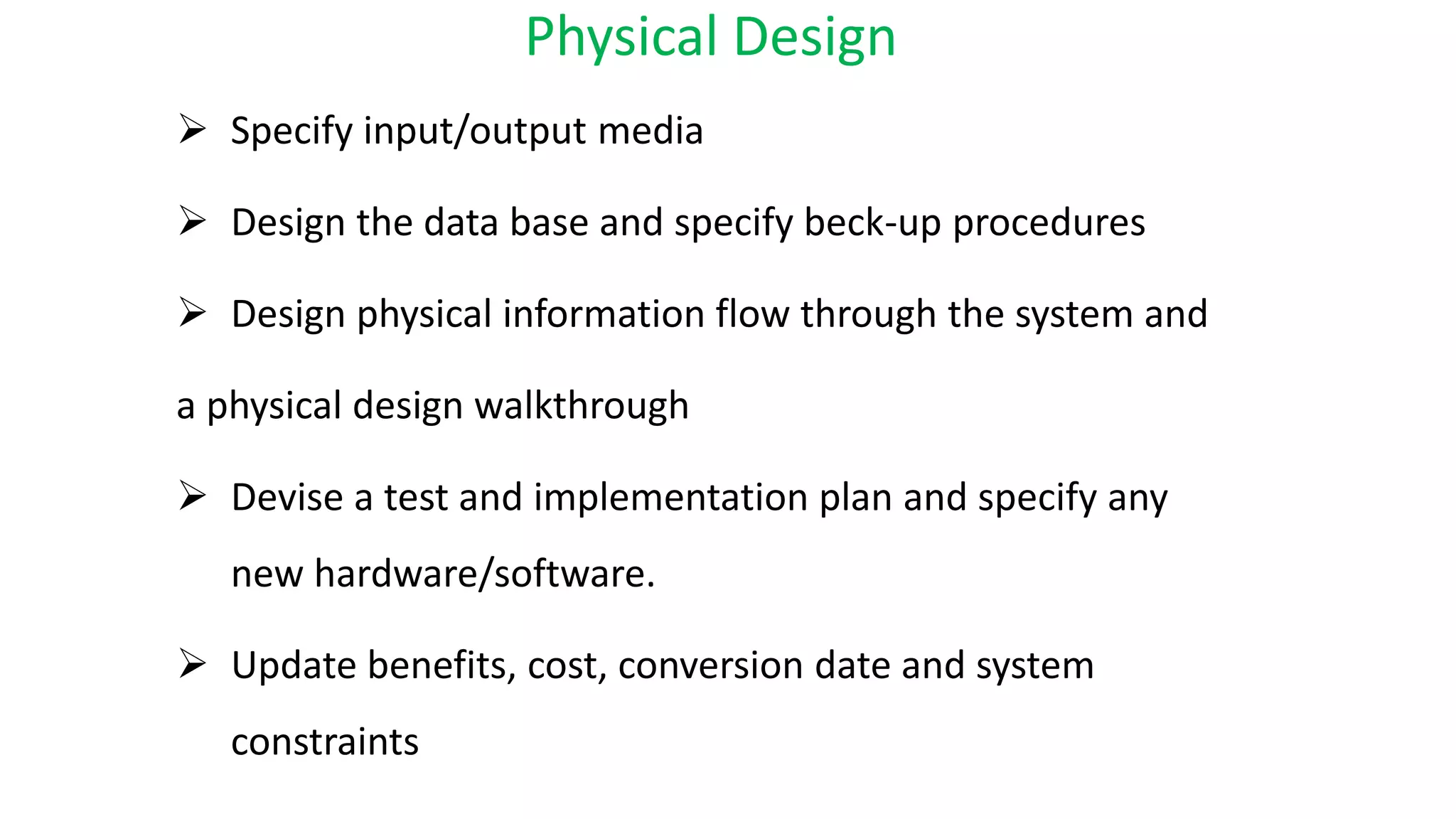
Physical Design
 Specify input/output media
 Design the data base and specify beck-up procedures
 Design physical information flow through the system and
a physical design walkthrough
 Devise a test and implementation plan and specify any
new hardware/software.
 Update benefits, cost, conversion date and system
constraints
Design Methodologies
Improve productivity of analysts and programmers
Improve documentation and subsequent maintenance
Cut down drastically on cost overruns and delays
Improve communication among the user ,analyst ,designer and
programmer
Standardize the approach to analysis and design
Simplify design by segmentation
Functional Decomposition
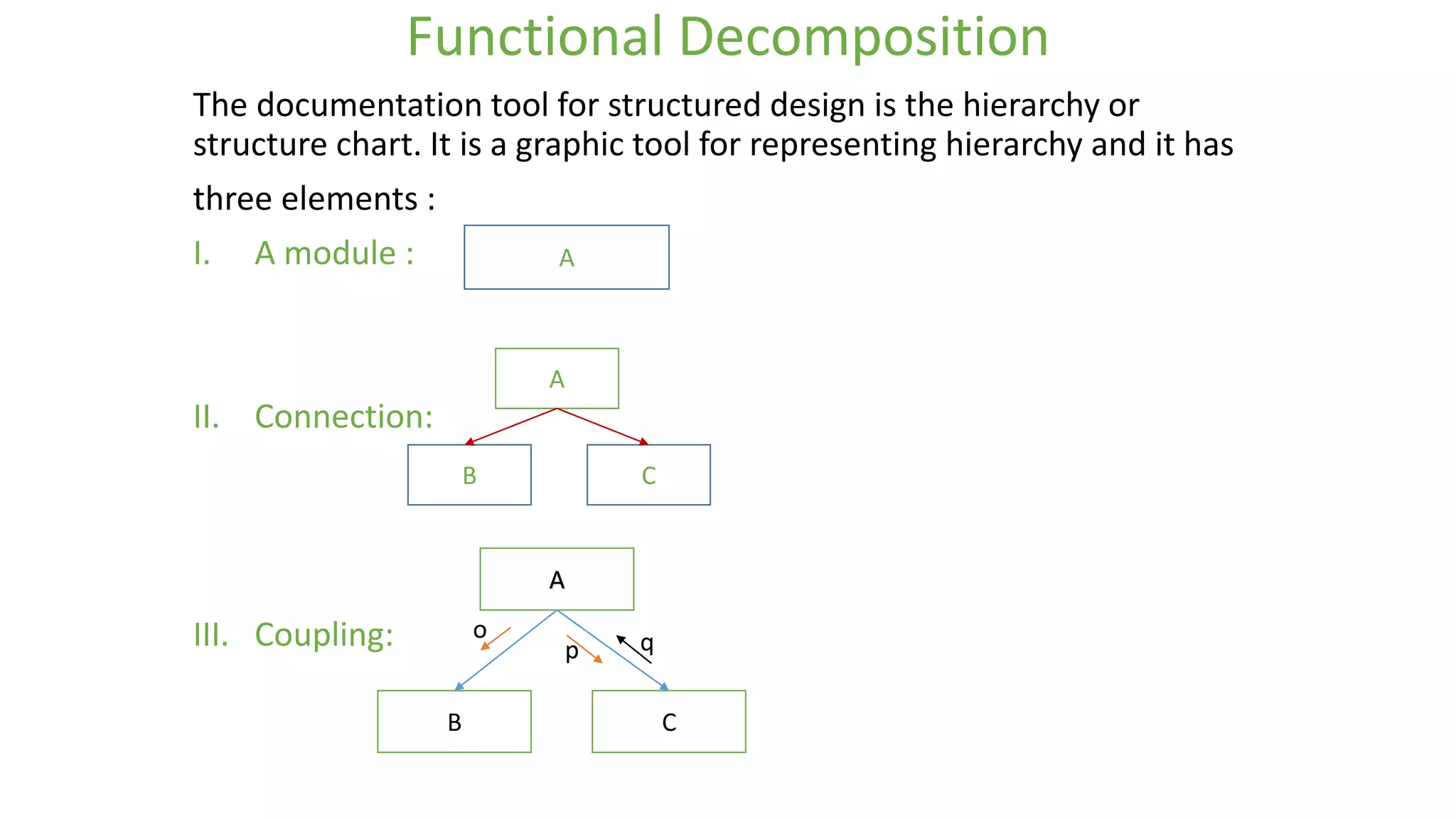
The documentation tool for structured design is the hierarchy or
structure chart. It is a graphic tool for representing hierarchy and it has
three elements :
I. A module :
II. Connection:
III. Coupling:
A
A
B C
A
CB
o
p q
HIPO/IPO
HIPO is a forms driven technique in that standard forms are used to
document the information.
 Developed by IBM
 To understand structure and
functions of systems
 To provide easily understandable description
of various parts of system.
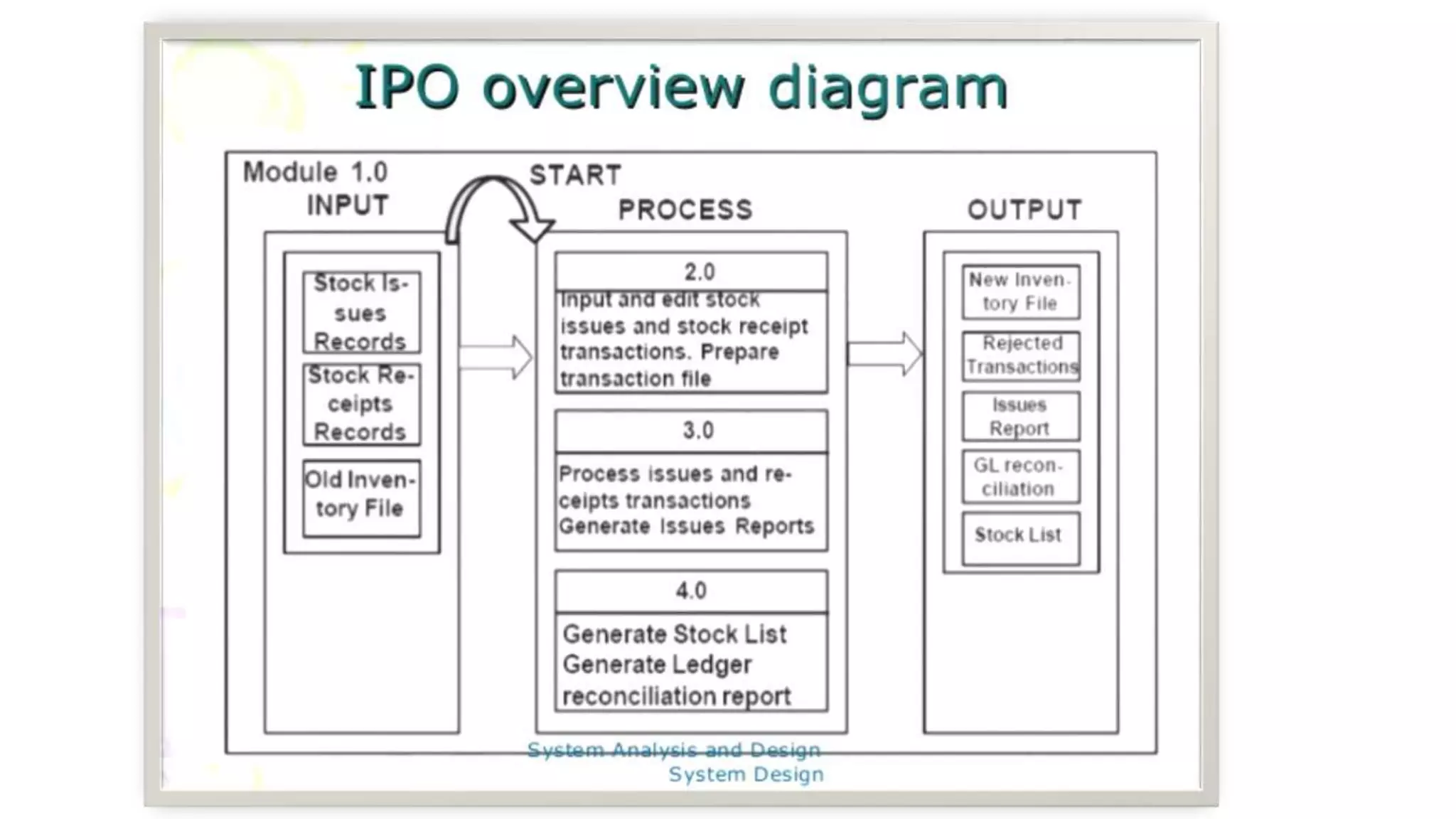
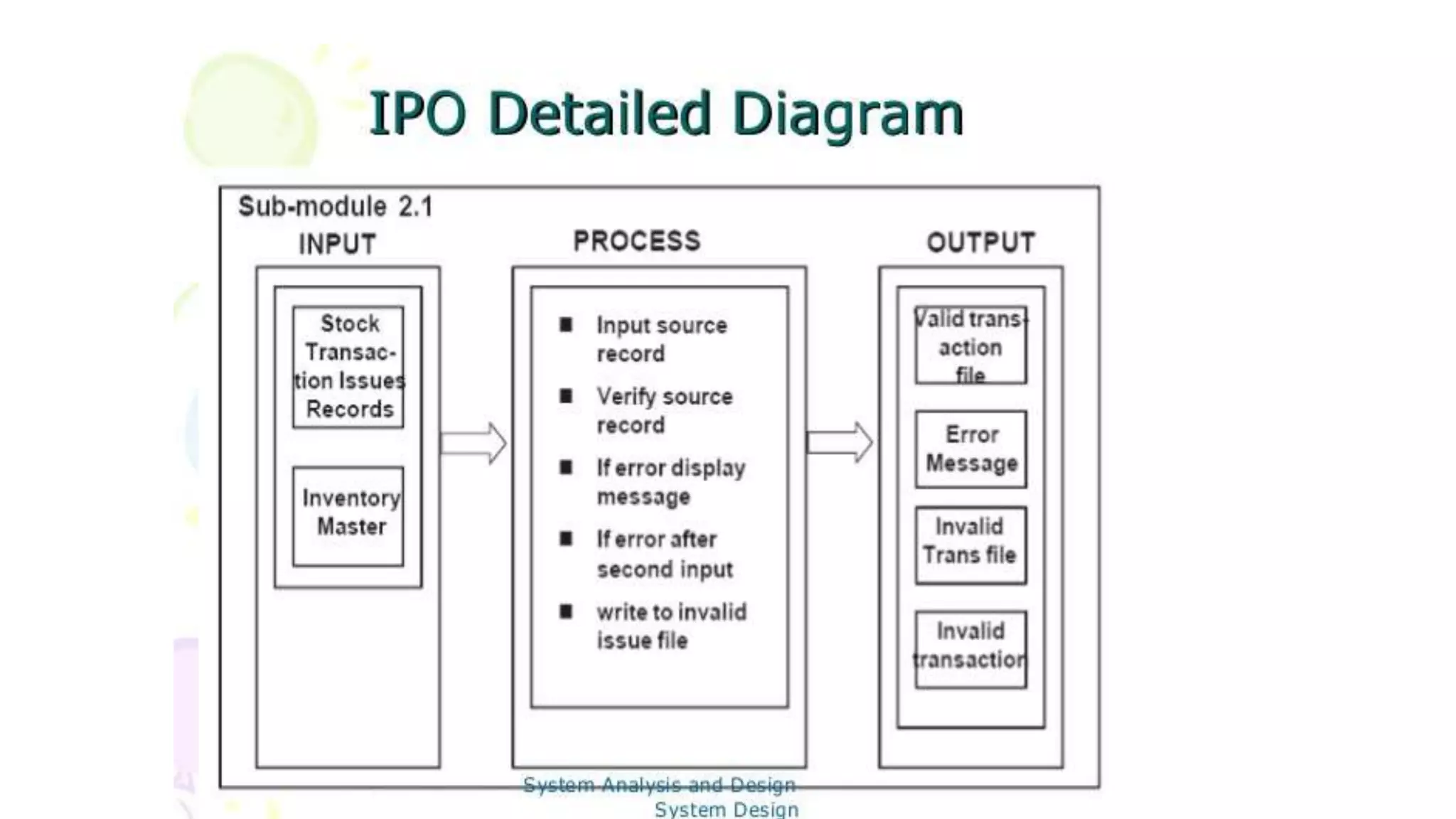
HIPO consists-
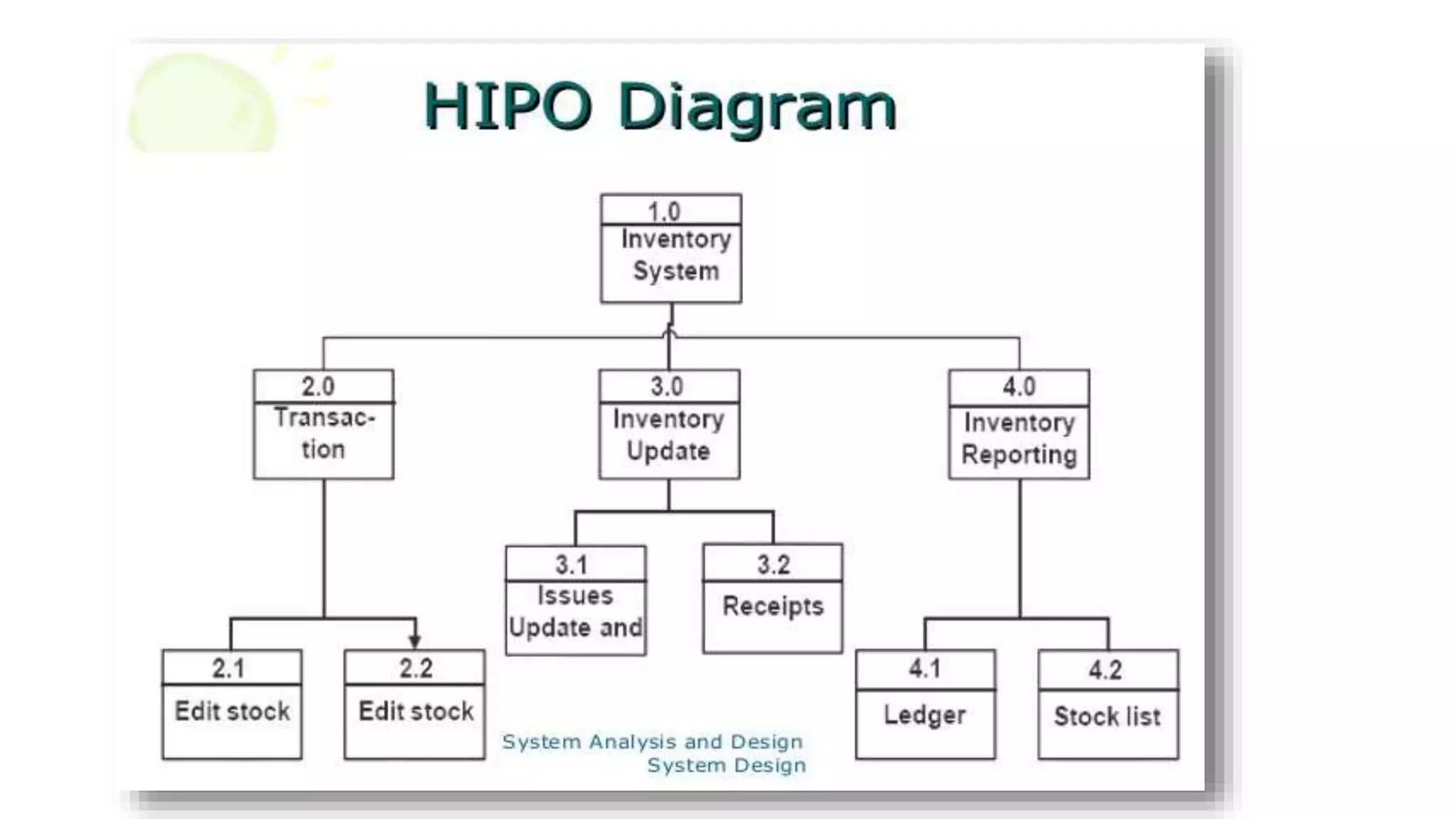
Hierarchy chart
IPO chart
IPO detailed diagram
Major Development Activities
Following Steps:
Data base design
Program Design
System and program test preparation
System interface specification
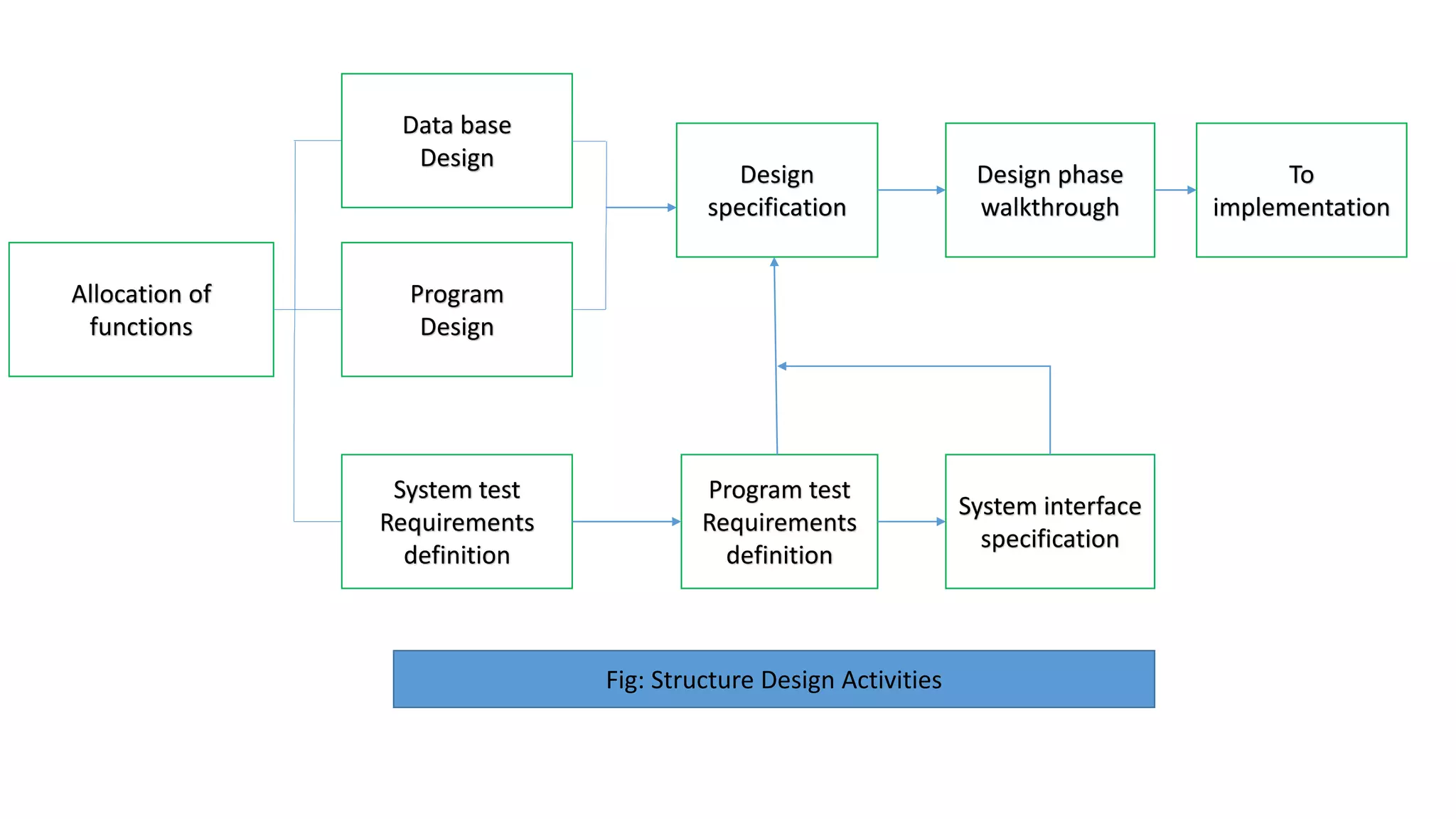
Program
Design
System test
Requirements
definition
Data base
Design
Design
specification
Design phase
walkthrough
To
implementation
Allocation of
functions
Program test
Requirements
definition
System interface
specification
Fig: Structure Design Activities
Audit Consideration
Specify the location of error control points
Evaluate them on the basis of
Error frequency
Cost
Timing of error detection
Handling error immediately at a reasonable cost.
The process and stages of system design

The process and stages of system design

  • 1.
    PRESENTATION ON The processand stages of system design Course Title – System Analysis and Design Submitted By (Group 5) Md. Zahirul Islam 11508040 Md. Abdullah Faruk 11508041 Nm Shanta Bhuiyan 11508042 Md.Mahedi Hasan 11508044 Md. Shimul Islam 11508045 Prince Talukdar Bj 11508047 Md. Jahidul Islam 11508048 Submitted To Md. Hasan Hafizur Raham Lecturer ,Dept of CSE Comilla University
  • 2.
    At A Glance 1.Processof Design 2.Design Methodologies 3.Functional Decomposition 4.HIPO and IPO Charts 5.Major Development Activities 6.Audit Consideration
  • 3.
    System of Design 1.LogicalDesign 2.Physical Design Logical Design The logical design of a system pertains to an abstract representation of the data flows, inputs and outputs of the system.  Input/Output  Control  Implementation plan
  • 4.
    Physical Design  Specifyinput/output media  Design the data base and specify beck-up procedures  Design physical information flow through the system and a physical design walkthrough  Devise a test and implementation plan and specify any new hardware/software.  Update benefits, cost, conversion date and system constraints
  • 5.
    Design Methodologies Improve productivityof analysts and programmers Improve documentation and subsequent maintenance Cut down drastically on cost overruns and delays Improve communication among the user ,analyst ,designer and programmer Standardize the approach to analysis and design Simplify design by segmentation
  • 6.
    Functional Decomposition The documentationtool for structured design is the hierarchy or structure chart. It is a graphic tool for representing hierarchy and it has three elements : I. A module : II. Connection: III. Coupling: A A B C A CB o p q
  • 7.
    HIPO/IPO HIPO is aforms driven technique in that standard forms are used to document the information.  Developed by IBM  To understand structure and functions of systems  To provide easily understandable description of various parts of system. HIPO consists- Hierarchy chart IPO chart IPO detailed diagram
  • 11.
    Major Development Activities FollowingSteps: Data base design Program Design System and program test preparation System interface specification
  • 12.
    Program Design System test Requirements definition Data base Design Design specification Designphase walkthrough To implementation Allocation of functions Program test Requirements definition System interface specification Fig: Structure Design Activities
  • 13.
    Audit Consideration Specify thelocation of error control points Evaluate them on the basis of Error frequency Cost Timing of error detection Handling error immediately at a reasonable cost.