Present tense
conjugation of –er and
–ir verbs
-ER& -IRVerbs-ER& -IRVerbs
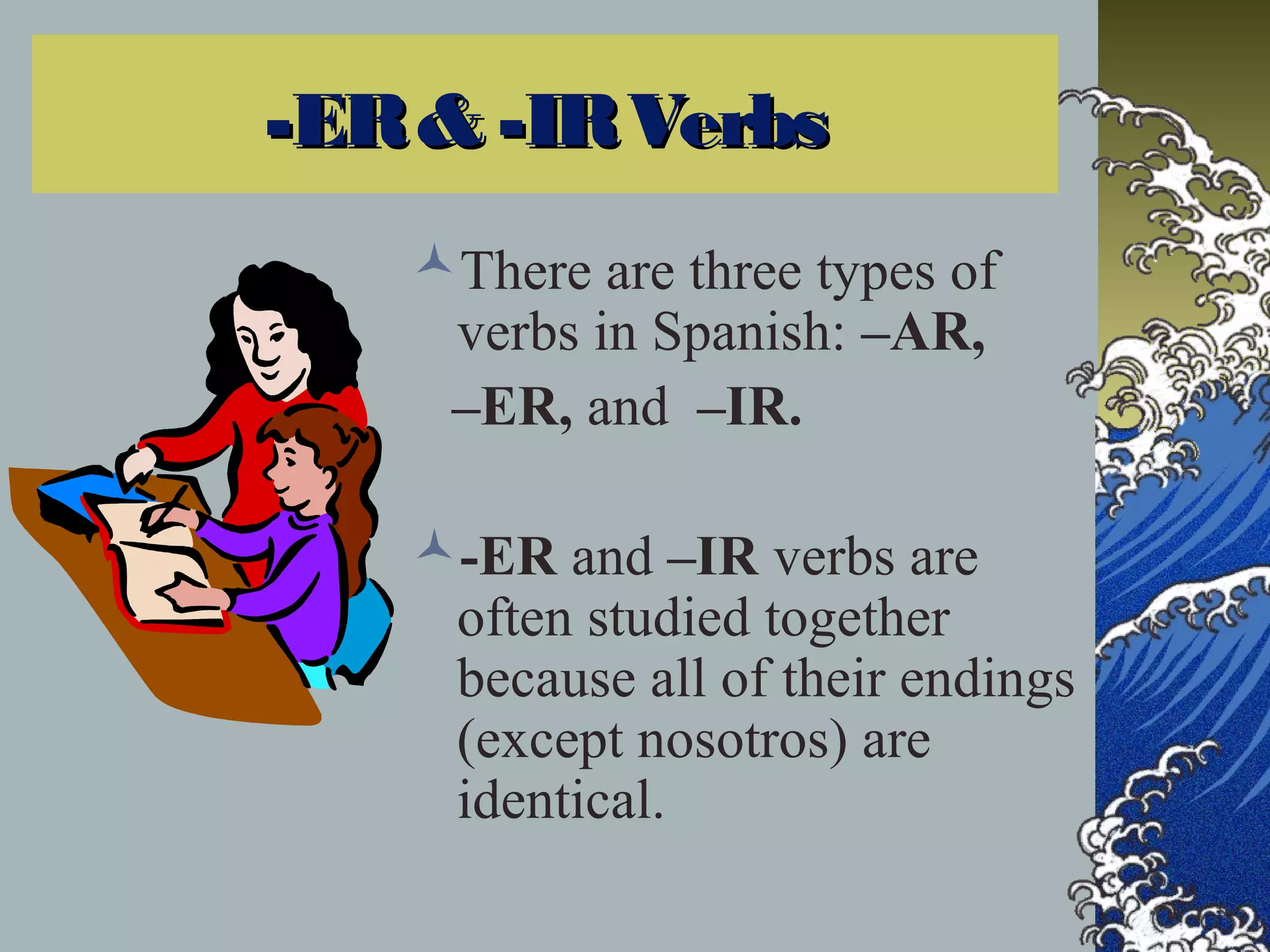
There are three types of
verbs in Spanish: –AR,
–ER, and –IR.
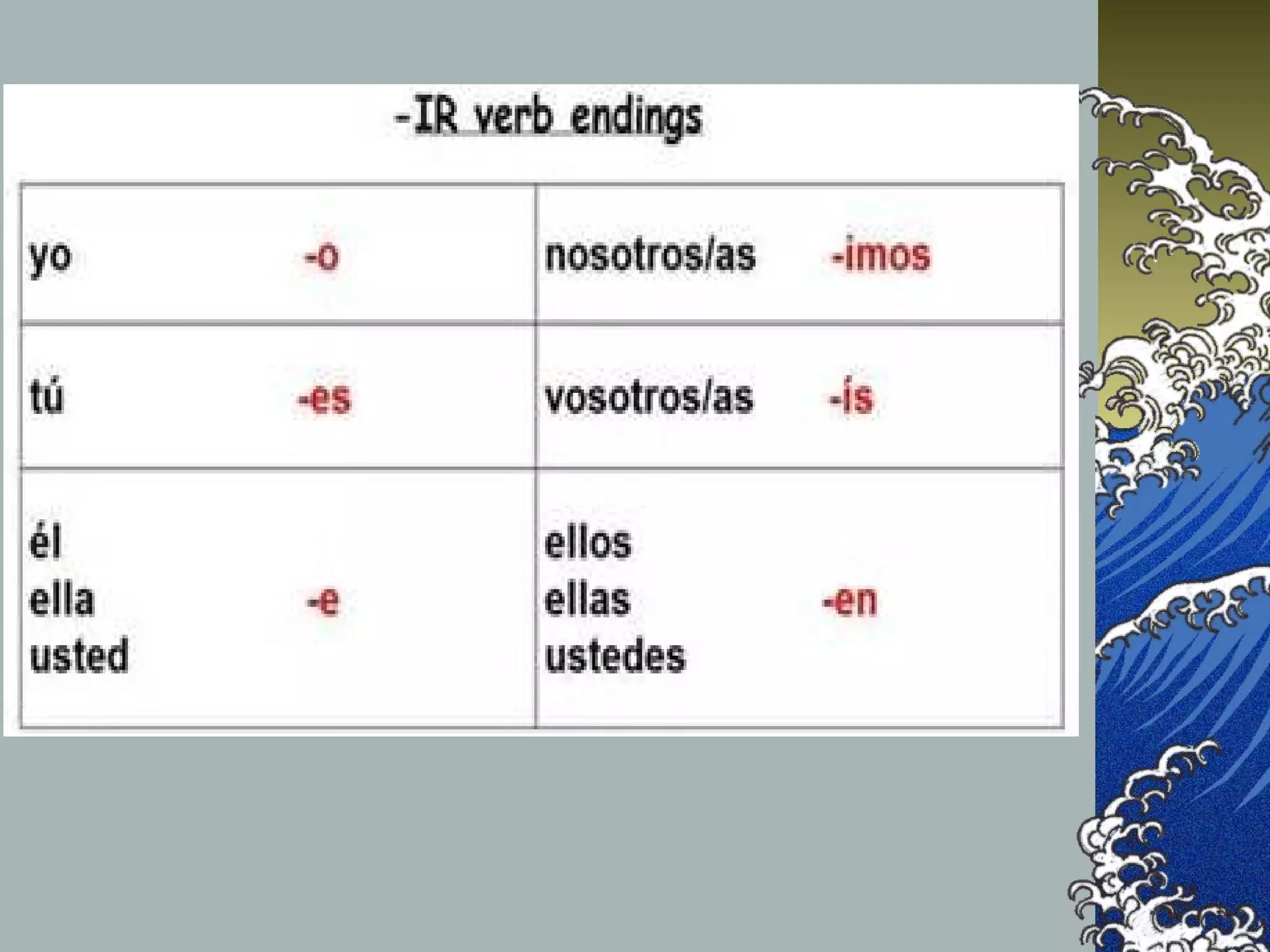
-ER and –IR verbs are
often studied together
because all of their endings
(except nosotros) are
identical.
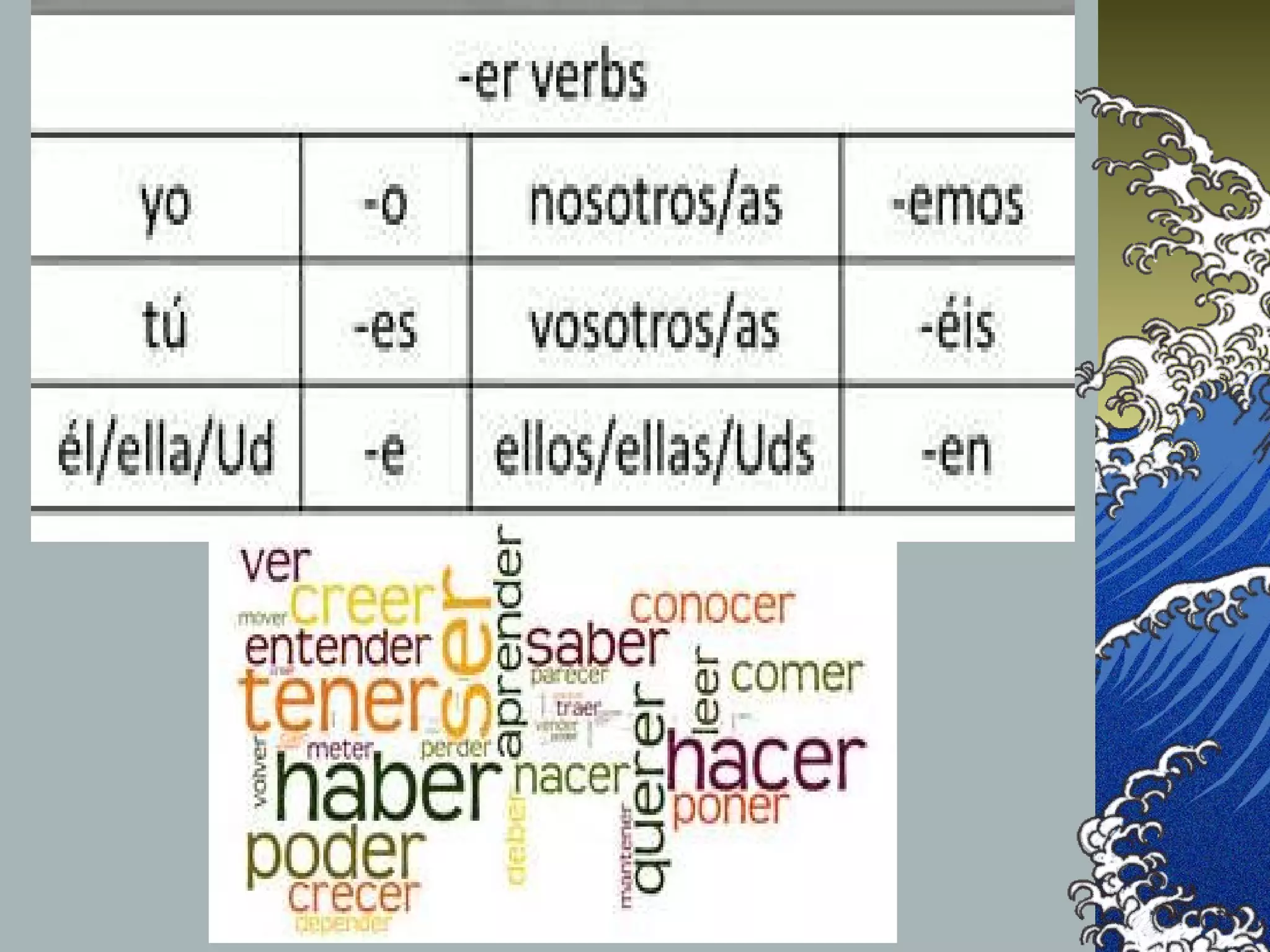
-ERendings-ERendings
The endings for regular
-ER verbs are the same
as for –AR verbs, except
that the vowel is E
instead of A!
yo - o
tú - es
él, ella, ud-. e
nosotros - emos
ellos, ustedes - en
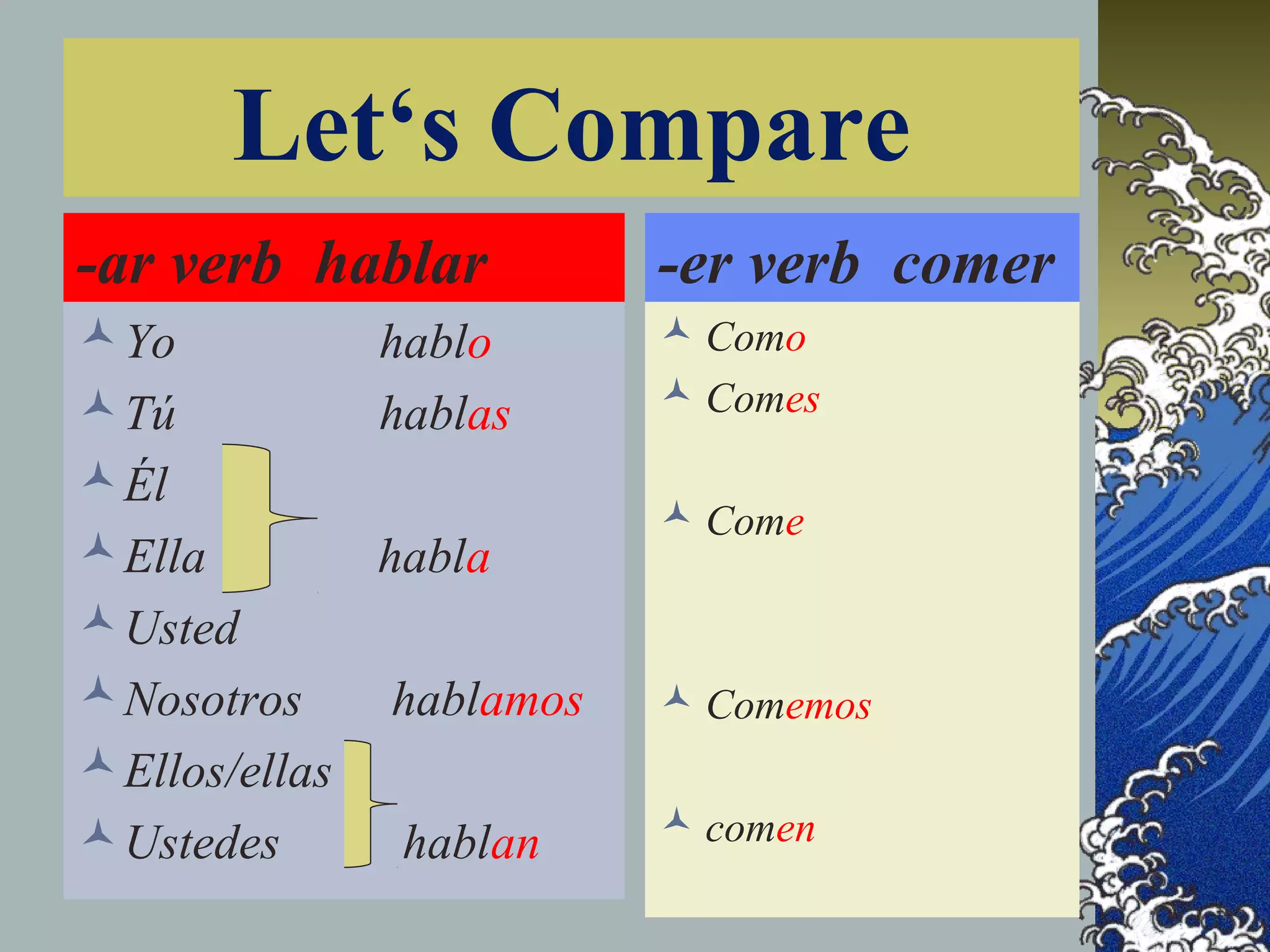
Let‘s Compare
-ar verb hablar
Yo hablo
Tú hablas
Él
Ella habla
Usted
Nosotros hablamos
Ellos/ellas
Ustedes hablan
-er verb comer
 Como
 Comes
 Come
 Comemos
 comen
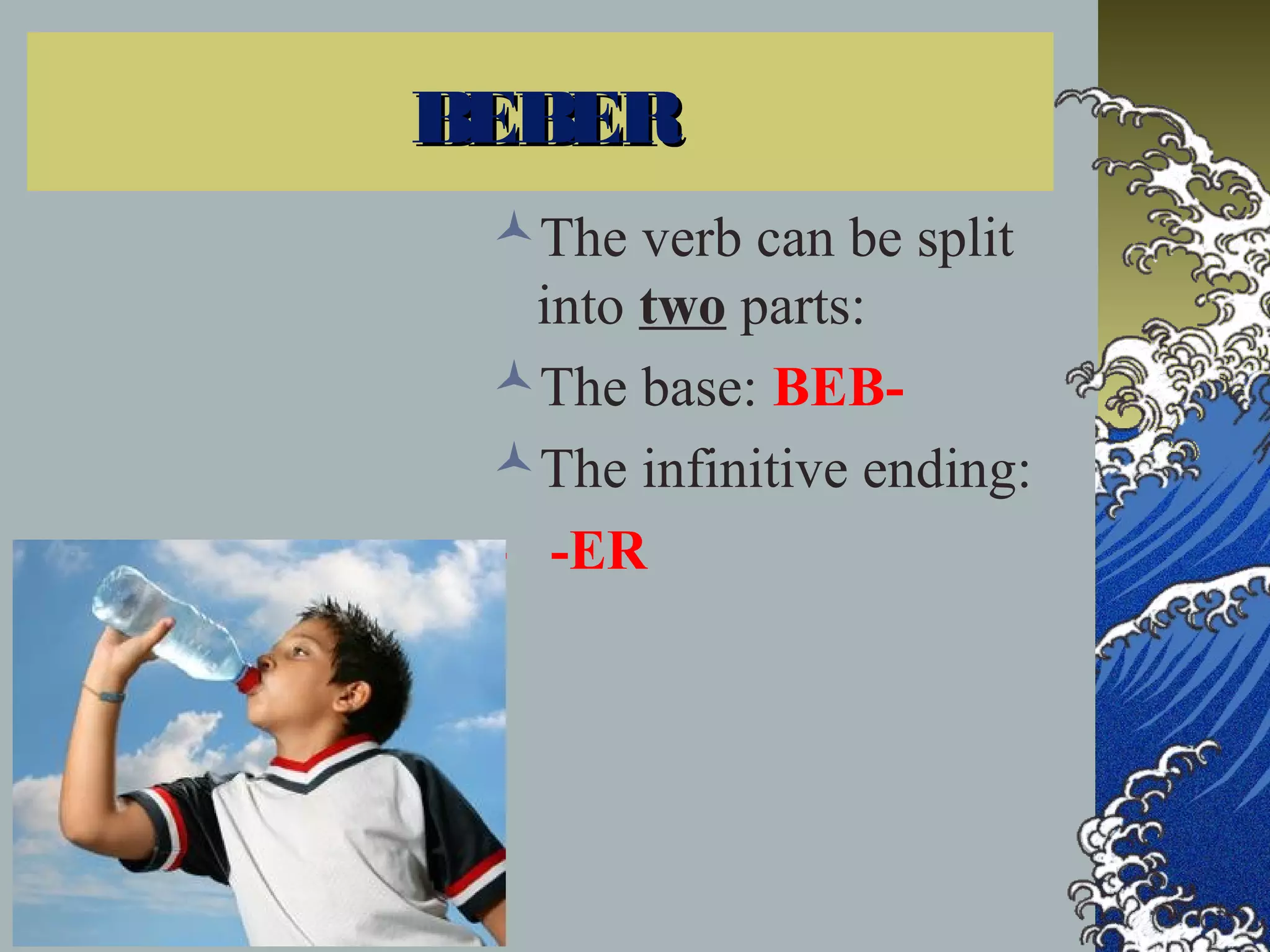
BEBERBEBER
Let’s look at an example,
the verb BEBER, which
means “to drink.” It ends
in –ER, so is an –ER verb.
BEBERBEBER
The verb can be split
into two parts:
The base: BEB-
The infinitive ending:
- -ER
BEBERBEBER
Now let’s say “I drink.”
Start with the base:
BEB-
When you talk about
yourself, add –O, just as
you did for the –AR
verbs.
Yo bebo
BEBERBEBER
Now let’s talk about
you. When the
subject is tú, you add
–ES because it is an
–ER verb.
Tú bebes
BEBERBEBER
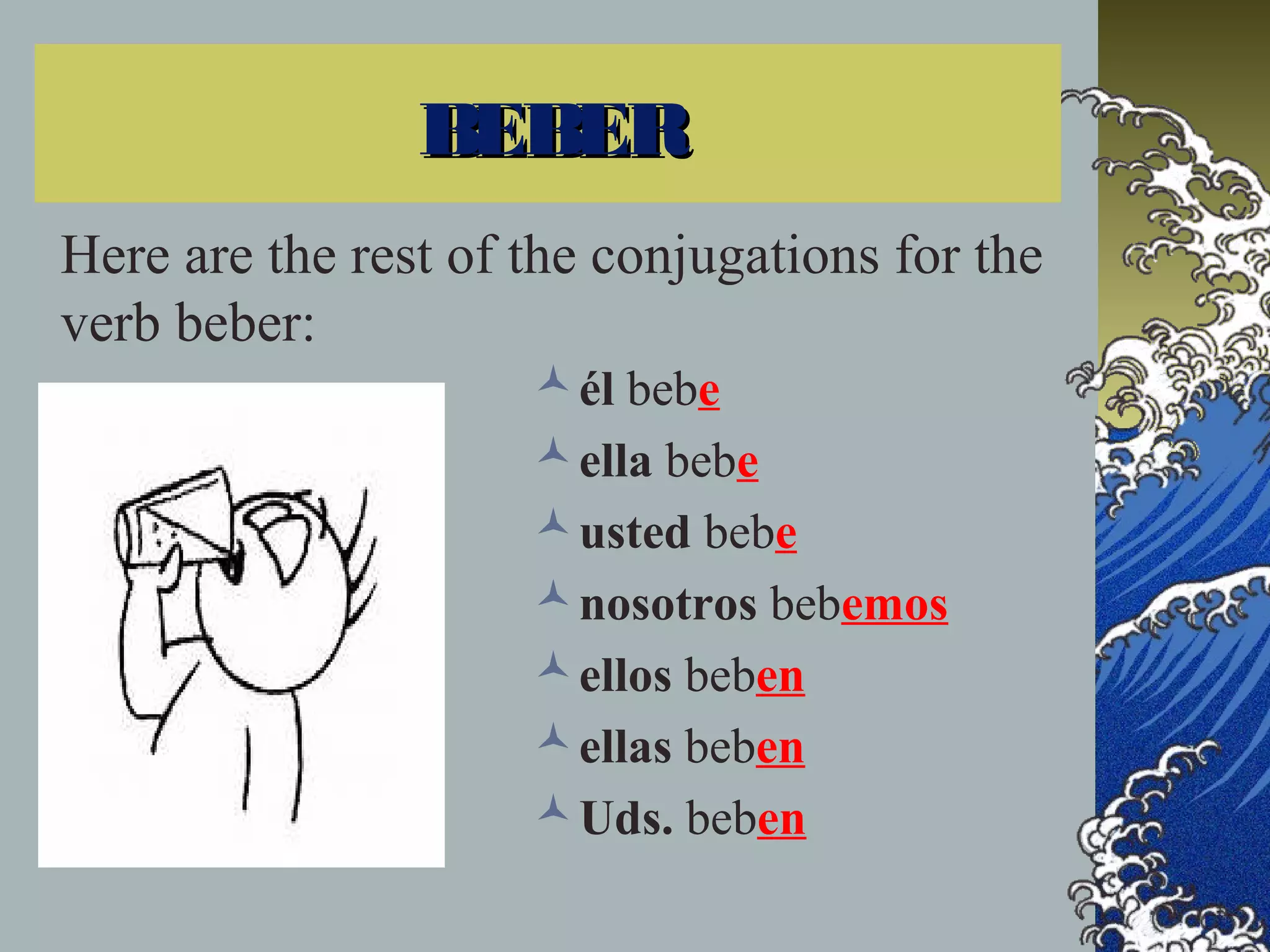
él bebe
ella bebe
usted bebe
nosotros bebemos
ellos beben
ellas beben
Uds. beben
Here are the rest of the conjugations for the
verb beber:
LEER, COMPRENDERLEER, COMPRENDER
Miguel ______
(leer) filosofía pero
no la ________
(comprender) muy
bien.
leelee
comprende
Don’t forget that the base of
leer is le-, so there is a
double –e on the él form.
Yo creo
Ellos escondenThey hide
Ella
responde
Élro m pe
He breaks
She answers
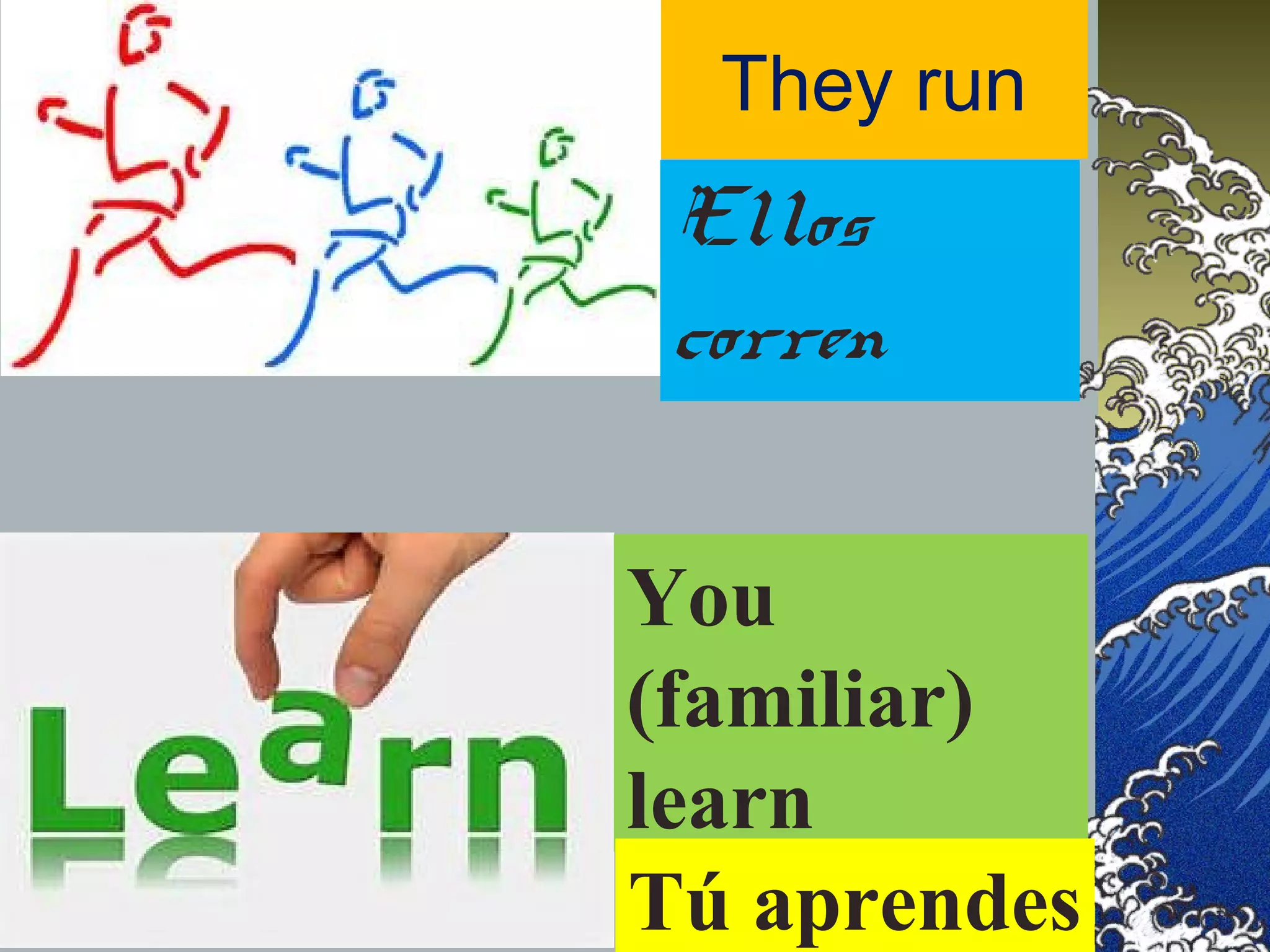
They run
Ellos
corren
You
(familiar)
learn
Tú aprendes
Ella vende
Yo comprendo
Common –erverbs
aprender
beber
comer
cometer
comprender
correr
creer
deber
esconder
to learn
to drink
to eat
to commit
to understand,comprehend
to run
to believe
to owe, should
to hide
leer
meter
responder
romper
suspender
vender
to read
to put
to answer, respond
to break
to suspend
to sell
What about the –IRVerbs?What about the –IRVerbs?
Well, take a look for
yourself. Can you find the
one difference?
beber vivir
bebo vivo
bebes vives
bebe vive
bebemos vivimos
beben viven
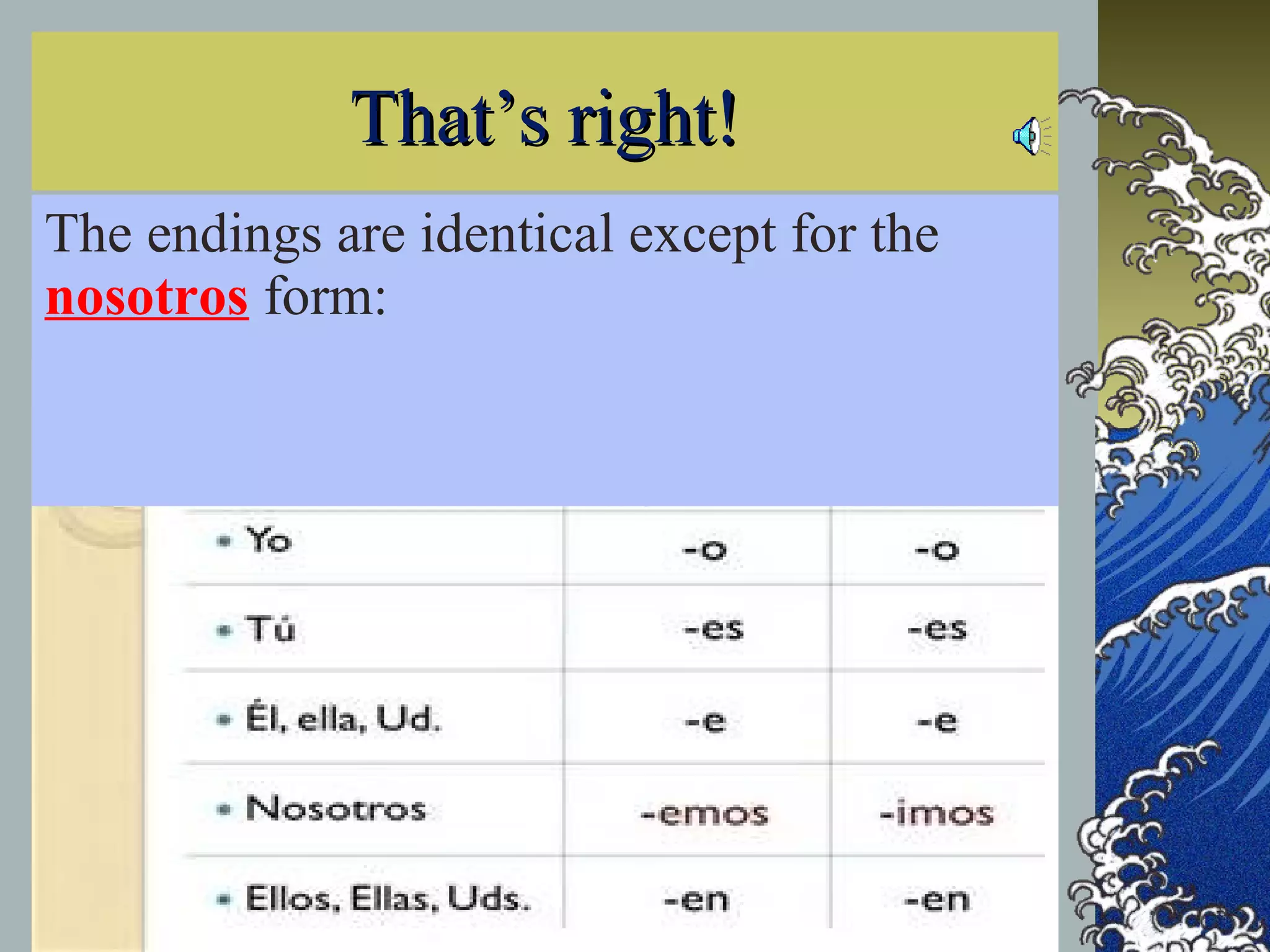
That’s right!That’s right!
The endings are identical except for the
nosotros form:
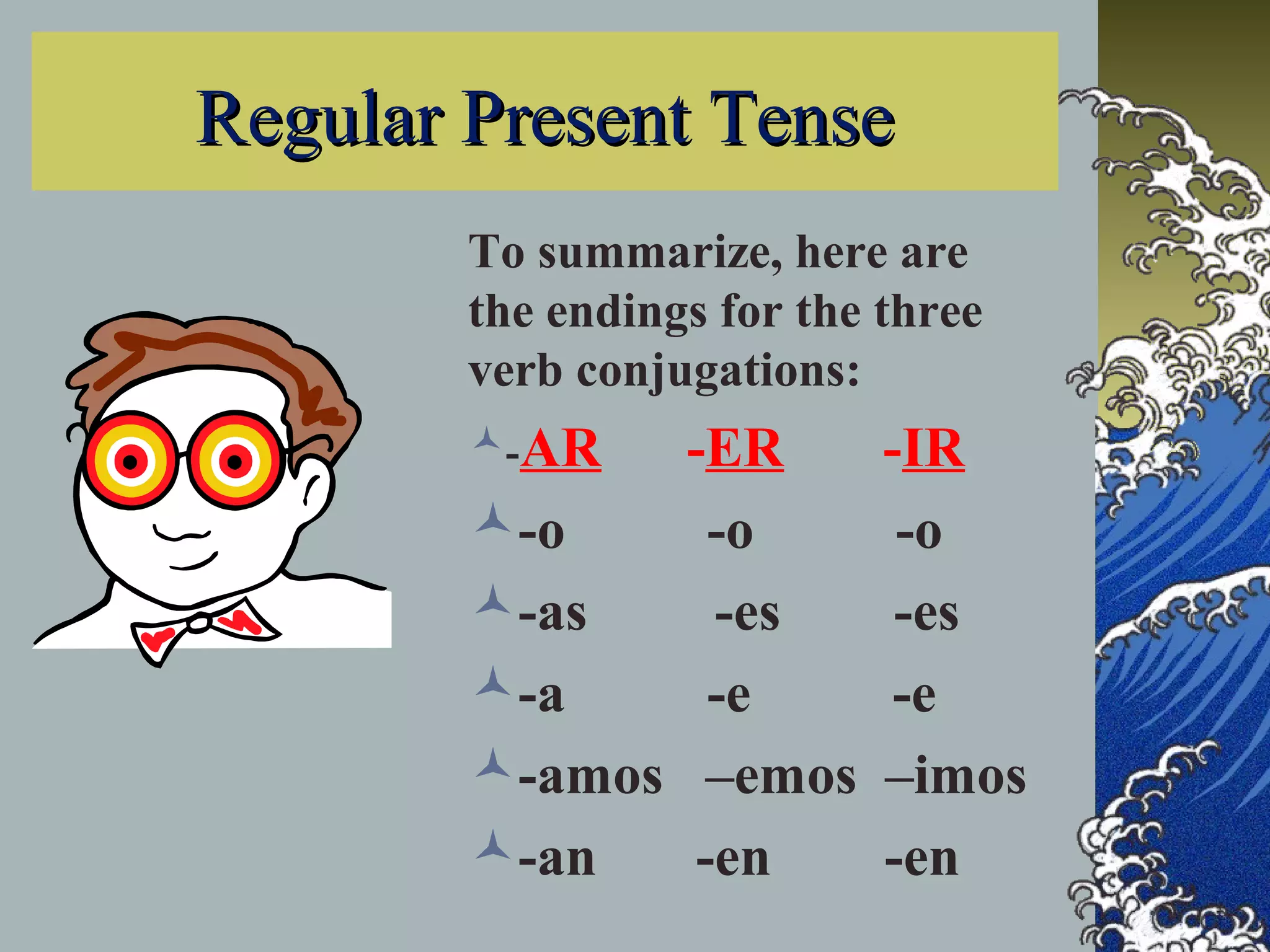
Regular Present TenseRegular Present Tense
To summarize, here are
the endings for the three
verb conjugations:
-AR -ER -IR
-o -o -o
-as -es -es
-a -e -e
-amos –emos –imos
-an -en -en
Let’s PracticeLet’s Practice
> ESCRIBIR
Yo _______ muchas
cartas, pero mi
hermana no _____
cartas.
escribo
escribe
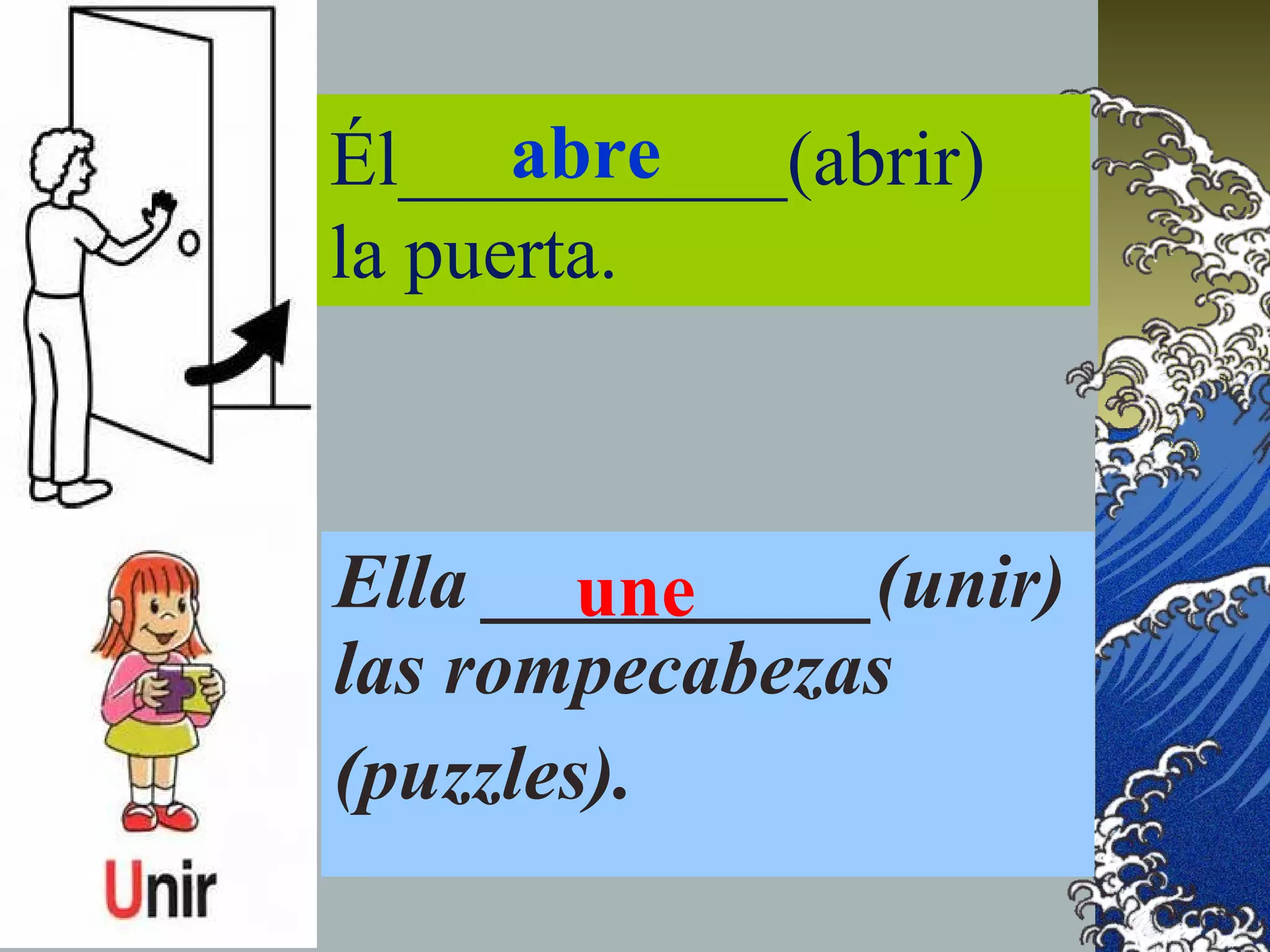
Él__________(abrir)
la puerta.
Ella __________(unir)
las rompecabezas
(puzzles).
abre
une
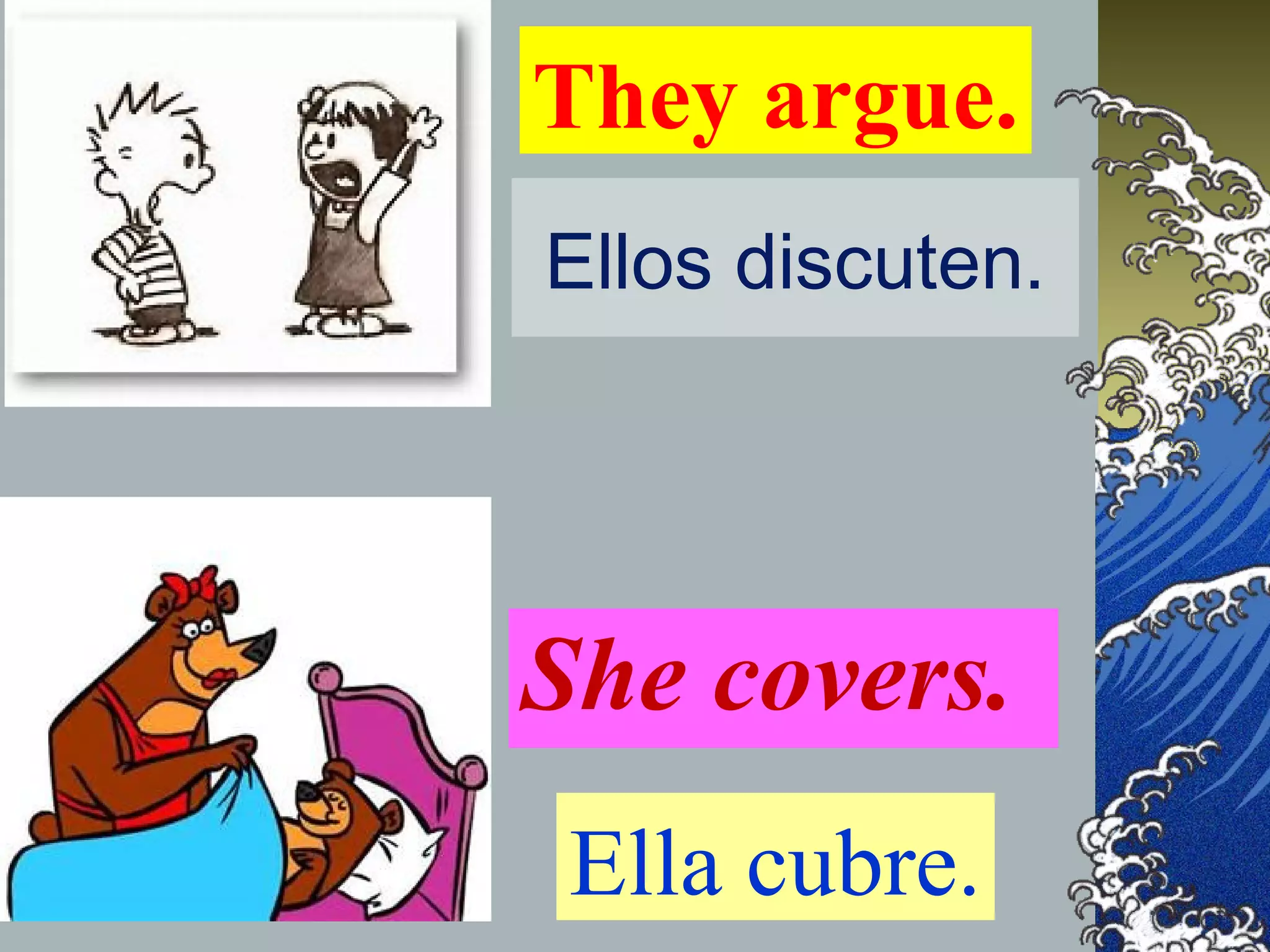
Ellos discuten.
She covers.
They argue.
Ella cubre.
I attend.
Usted
decide.
Yo asisto.
Formal
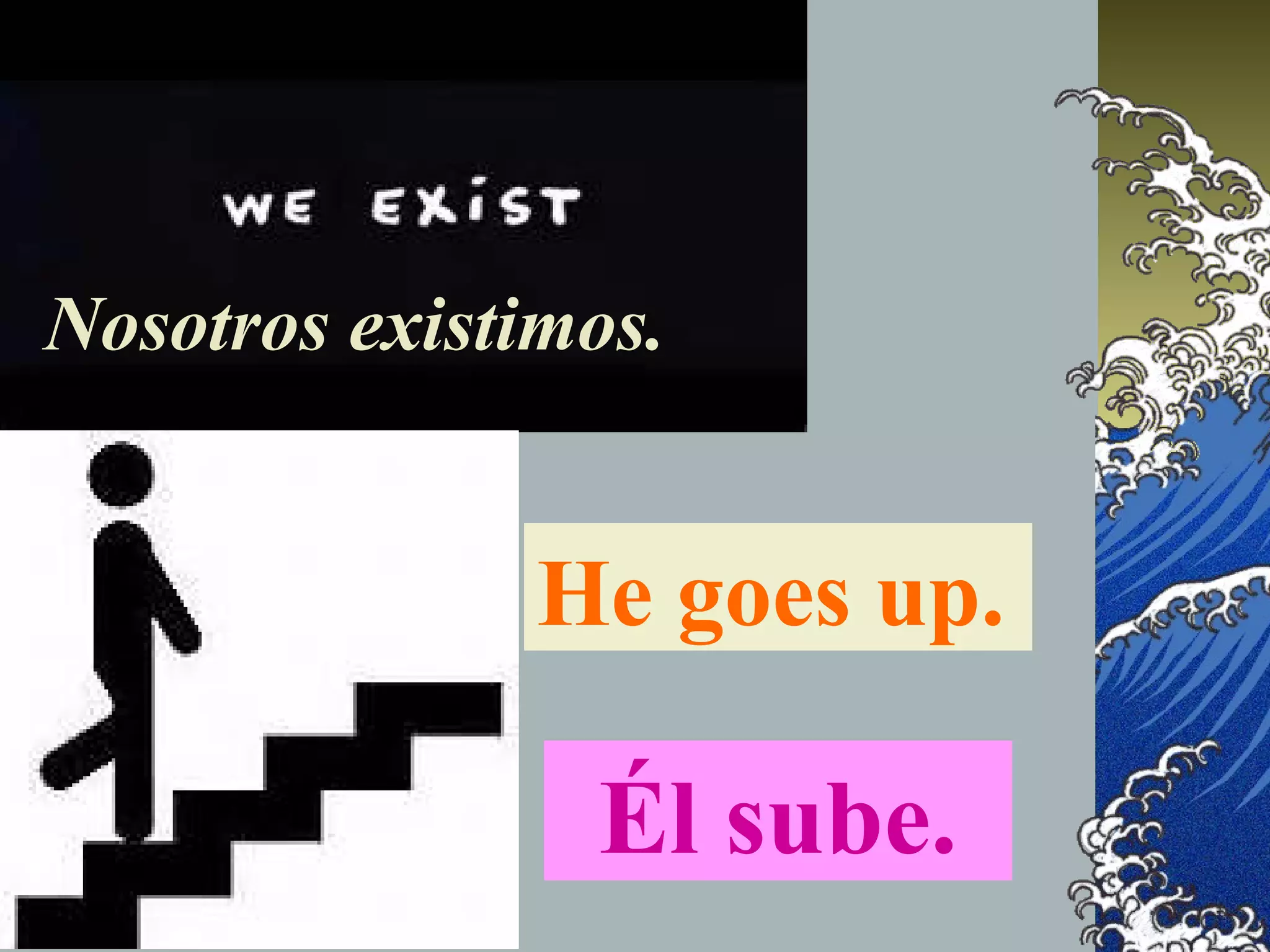
Nosotros existimos.
He goes up.
Él sube.
RECIBIR, DEBERRECIBIR, DEBER
Cuando yo _______
(recibir) una carta,
_______ (deber)
leerla [read it].
recibo
debo
Note there was no change in
subject, so “yo” was
understood to be the subject
for both verbs. It was not
necessary to repeat “yo.”
VIVIR, CORRERVIVIR, CORRER
Nosotros ________ (vivir)
cerca de [near] un parque
y ________ (correr) allí
[there] por la mañana.
vivimos
corremos
Don’t Forget “ir”
It is highly irregular and
does not follow the
regular conjugation.
Common –irverbs
abrir
admitir
asistir
cubrir
decidir
describir
descubrir
discutir
to open
to admit
to attend
to cover
to decide
to describe
to discover
to argue or
discuss
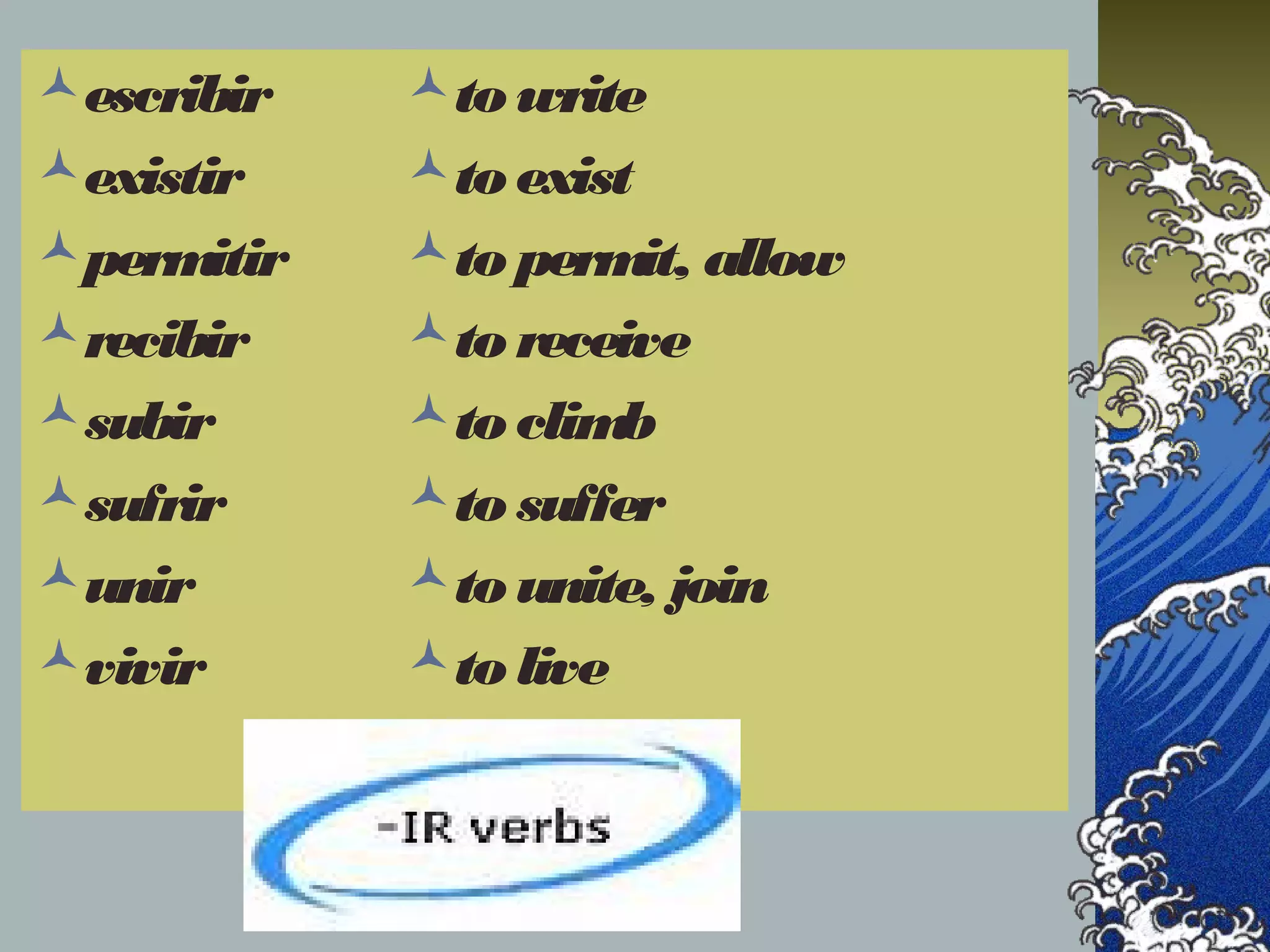
escribir
existir
permitir
recibir
subir
sufrir
unir
vivir
to write
to exist
to permit, allow
to receive
to climb
to suffer
to unite, join
to live

Er and ir Spanish verbs in the present tense